by Ana Maria B. Fresnido, DLSU Libraries
ana.fresnido@dlsu.edu.ph
Managing Today’s Learning Commons: Re-skilling Seminar for Information
Professionals
20-22 September 2016
Crown Legacy Hotel, Baguio City
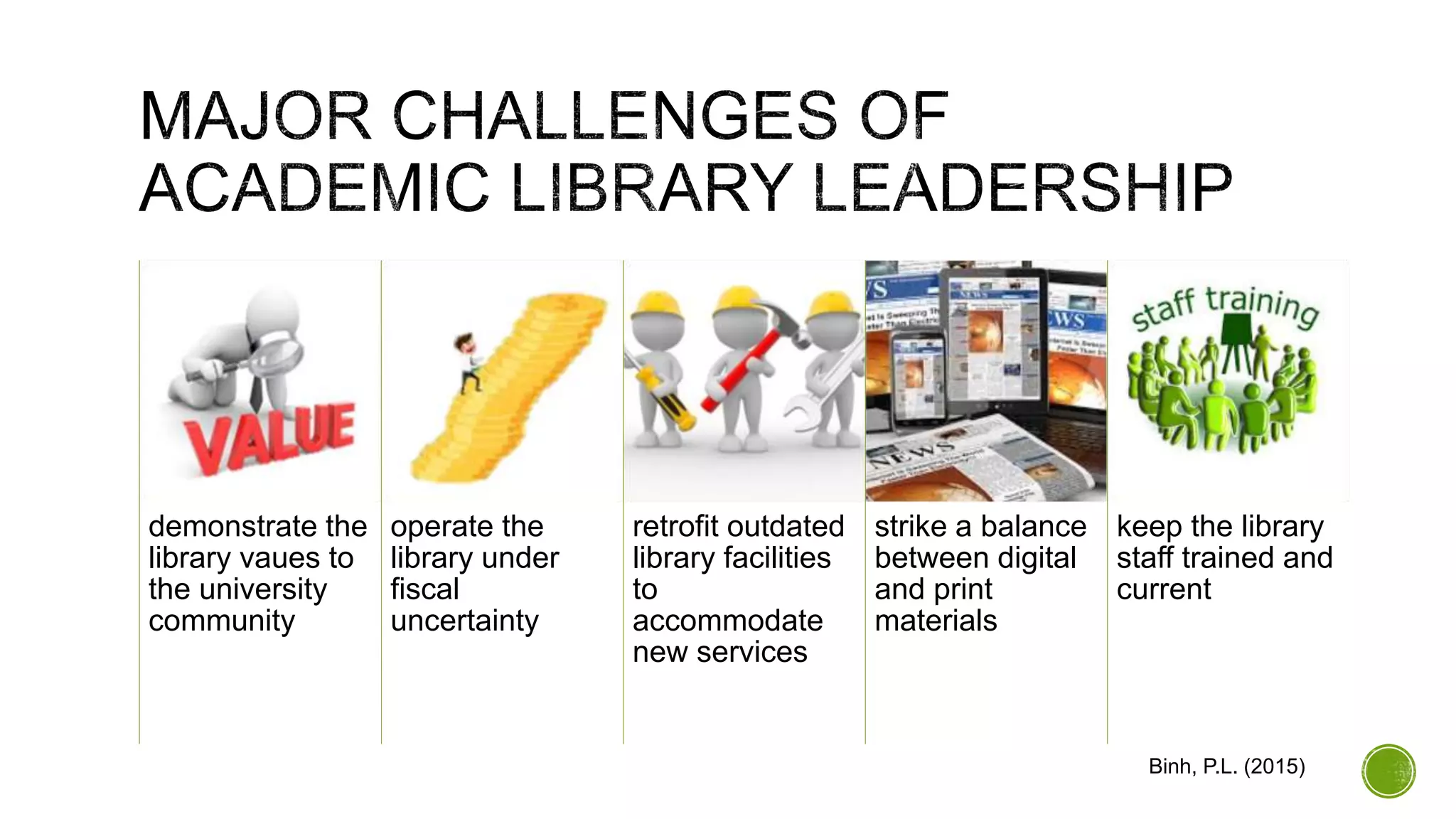
demonstrate the
library vaues to
the university
community
operate the
library under
fiscal
uncertainty
retrofit outdated
library facilities
to
accommodate
new services
strike a balance
between digital
and print
materials
keep the library
staff trained and
current
Binh, P.L. (2015)
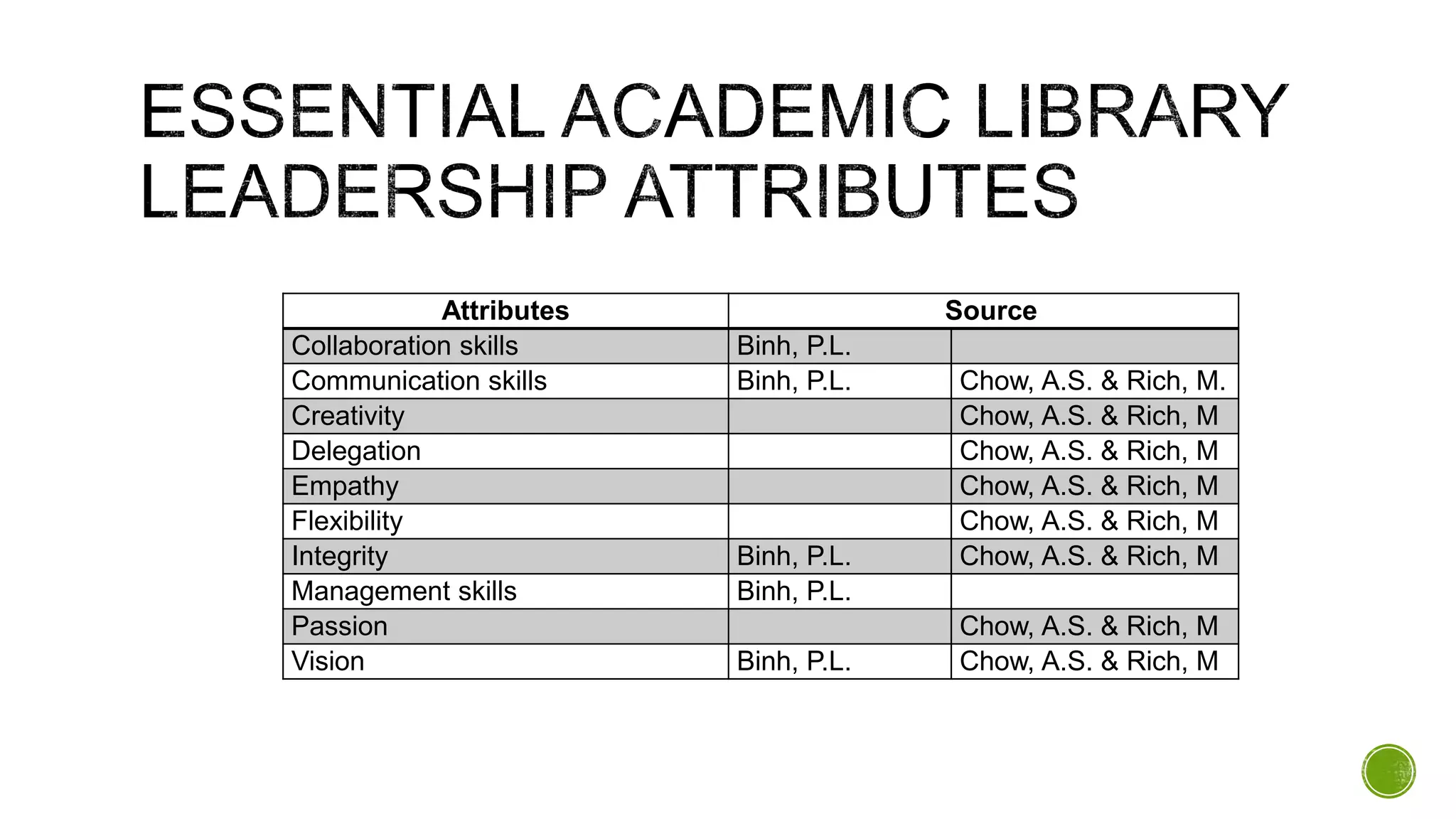
Attributes Source
Collaboration skills Binh, P.L.
Communication skills Binh, P.L. Chow, A.S. & Rich, M.
Creativity Chow, A.S. & Rich, M
Delegation Chow, A.S. & Rich, M
Empathy Chow, A.S. & Rich, M
Flexibility Chow, A.S. & Rich, M
Integrity Binh, P.L. Chow, A.S. & Rich, M
Management skills Binh, P.L.
Passion Chow, A.S. & Rich, M
Vision Binh, P.L. Chow, A.S. & Rich, M
Be a visionary
Understand the library and university environment and articulate a vision
based on them.
Conduct constant environmental scanning
Set a clear direction
Take strategic action
Persuade and guide others to a strategic vision and the goals and
objectives
THEN NOW
Be honest – sharing information and transparency
Be trustworthy – treat people fairly
Be a thought-leader (authoritative and influential)
Have integrity/honesty/trustworthiness/authenticity
Be responsible steward of financial, human, and
tangible (facilities and collections) resources
Have excellent communication skills (oral and written)
Be a good listener
Listen more and talk less
Be willing to accept criticism
Have good negotiation skills
Good management skills (personnel management, budgeting, time
management, planning, etc.)
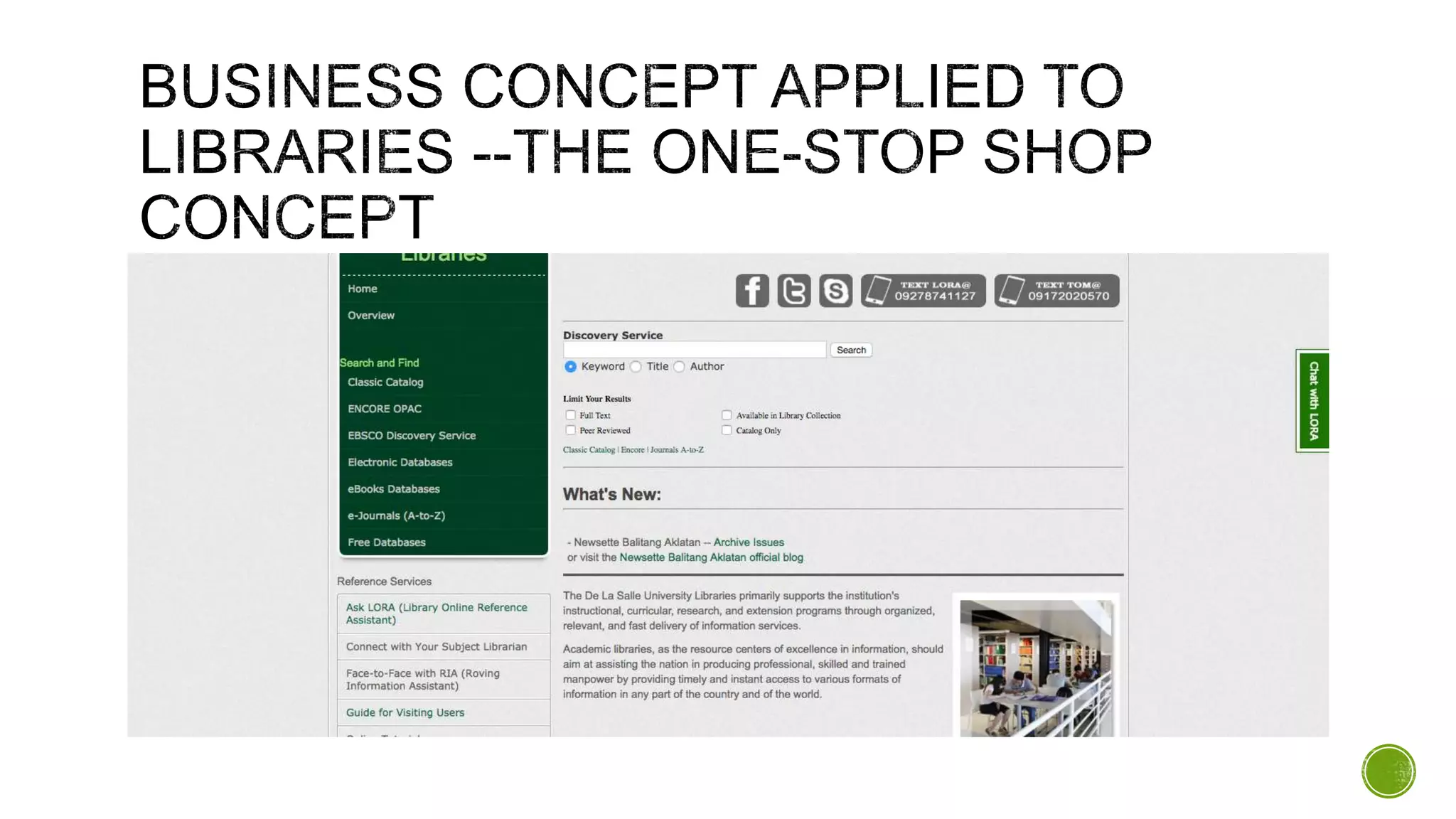
Apply business concepts and practices to improve library experience
Make difficult decisions about core mission and priorities within the library
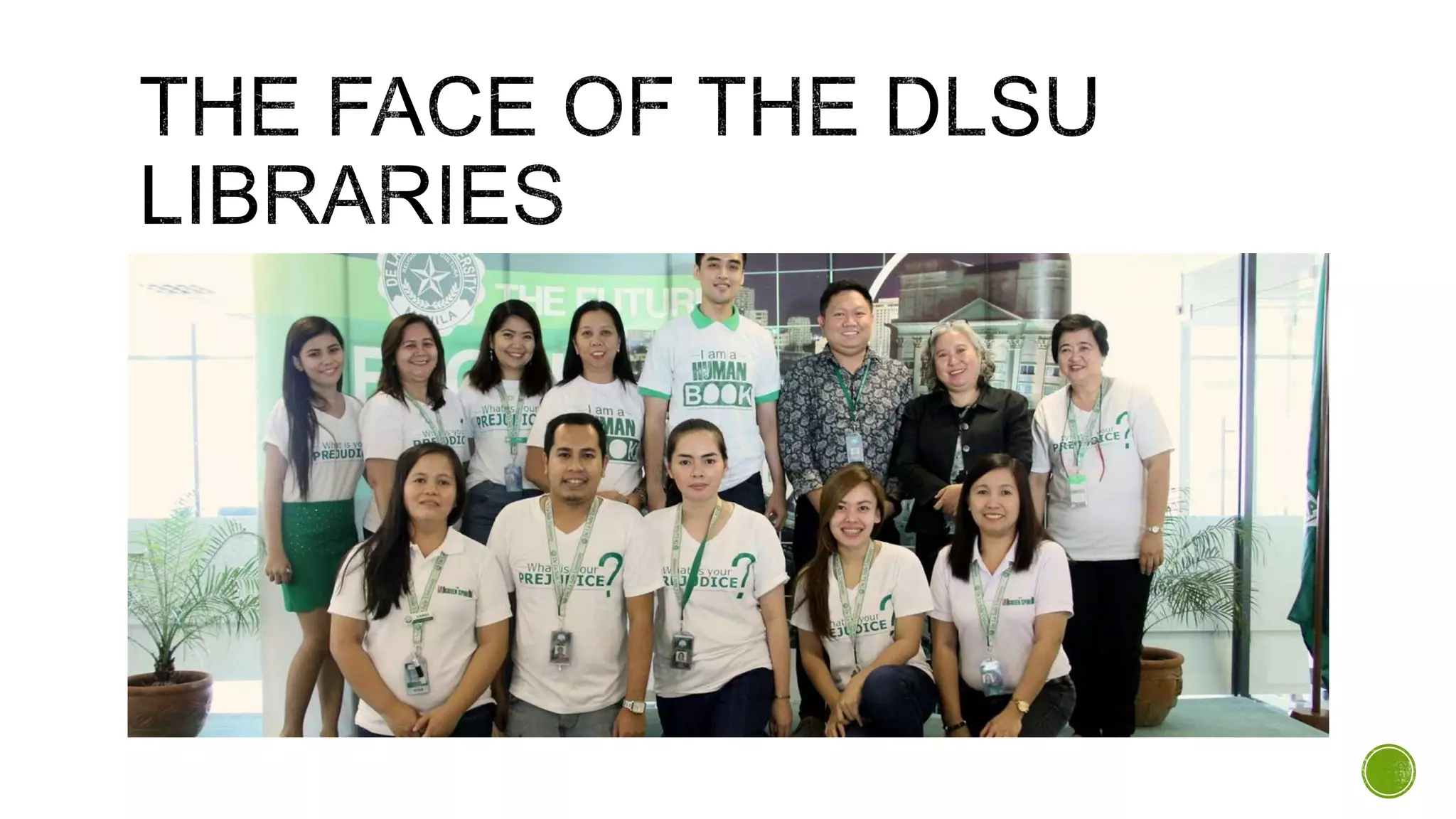
Presence – be the face of the library and share this role with other library
staff
Monitor the trends and predict their impact on the library
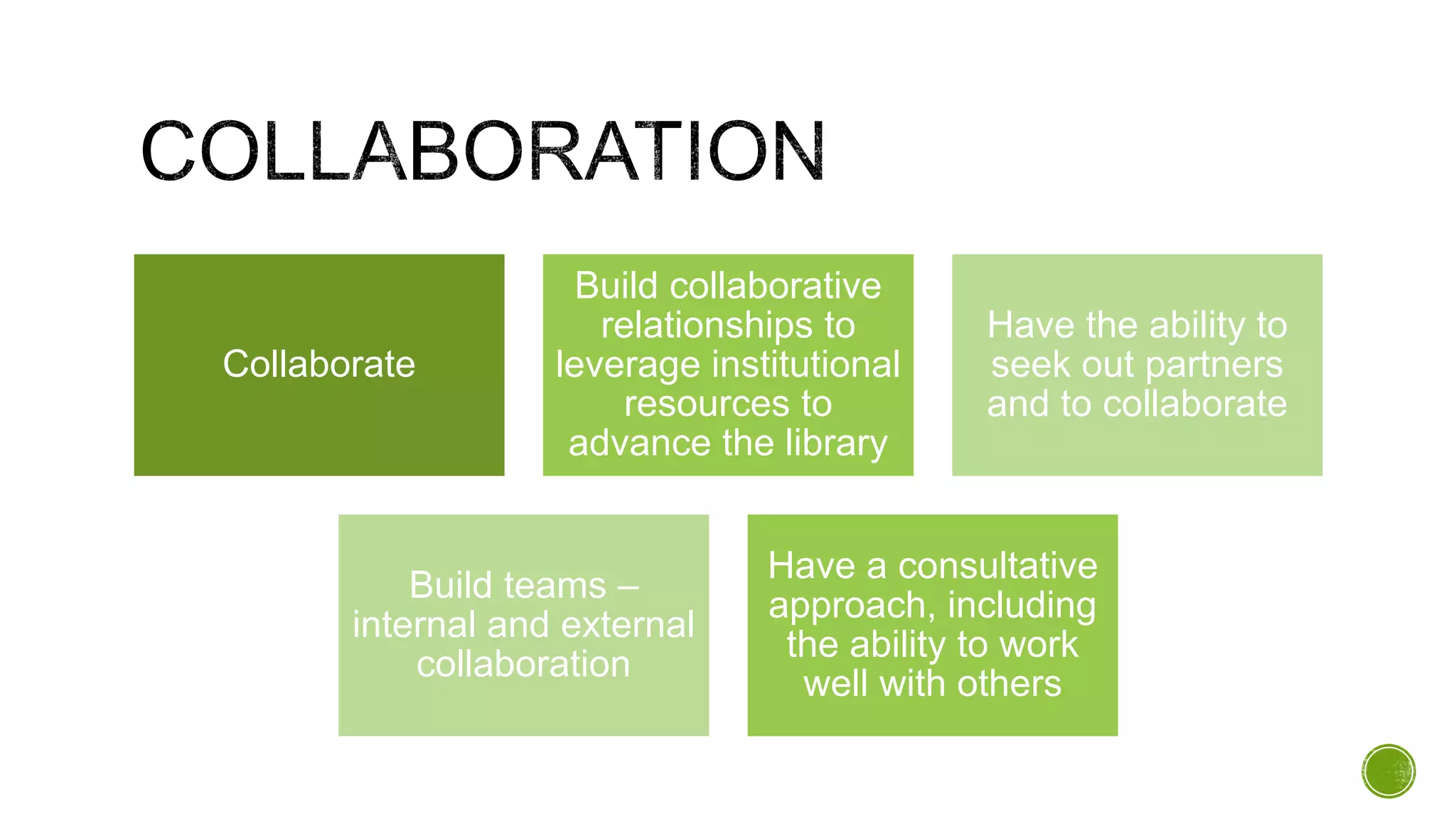
Collaborate
Build collaborative
relationships to
leverage institutional
resources to
advance the library
Have the ability to
seek out partners
and to collaborate
Build teams –
internal and external
collaboration
Have a consultative
approach, including
the ability to work
well with others
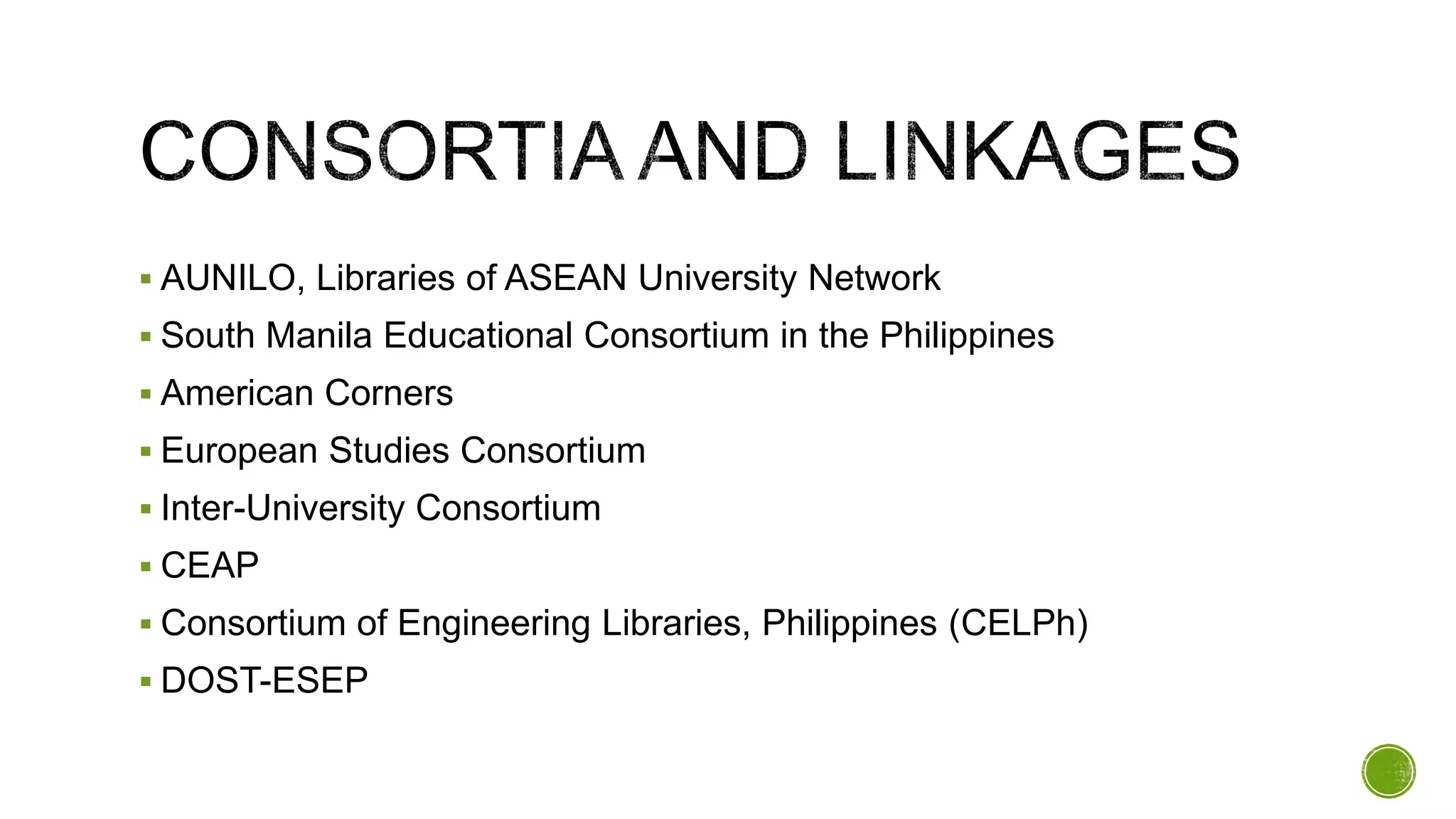
 AUNILO, Libraries of ASEAN University Network
 South Manila Educational Consortium in the Philippines
 American Corners
 European Studies Consortium
 Inter-University Consortium
 CEAP
 Consortium of Engineering Libraries, Philippines (CELPh)
 DOST-ESEP
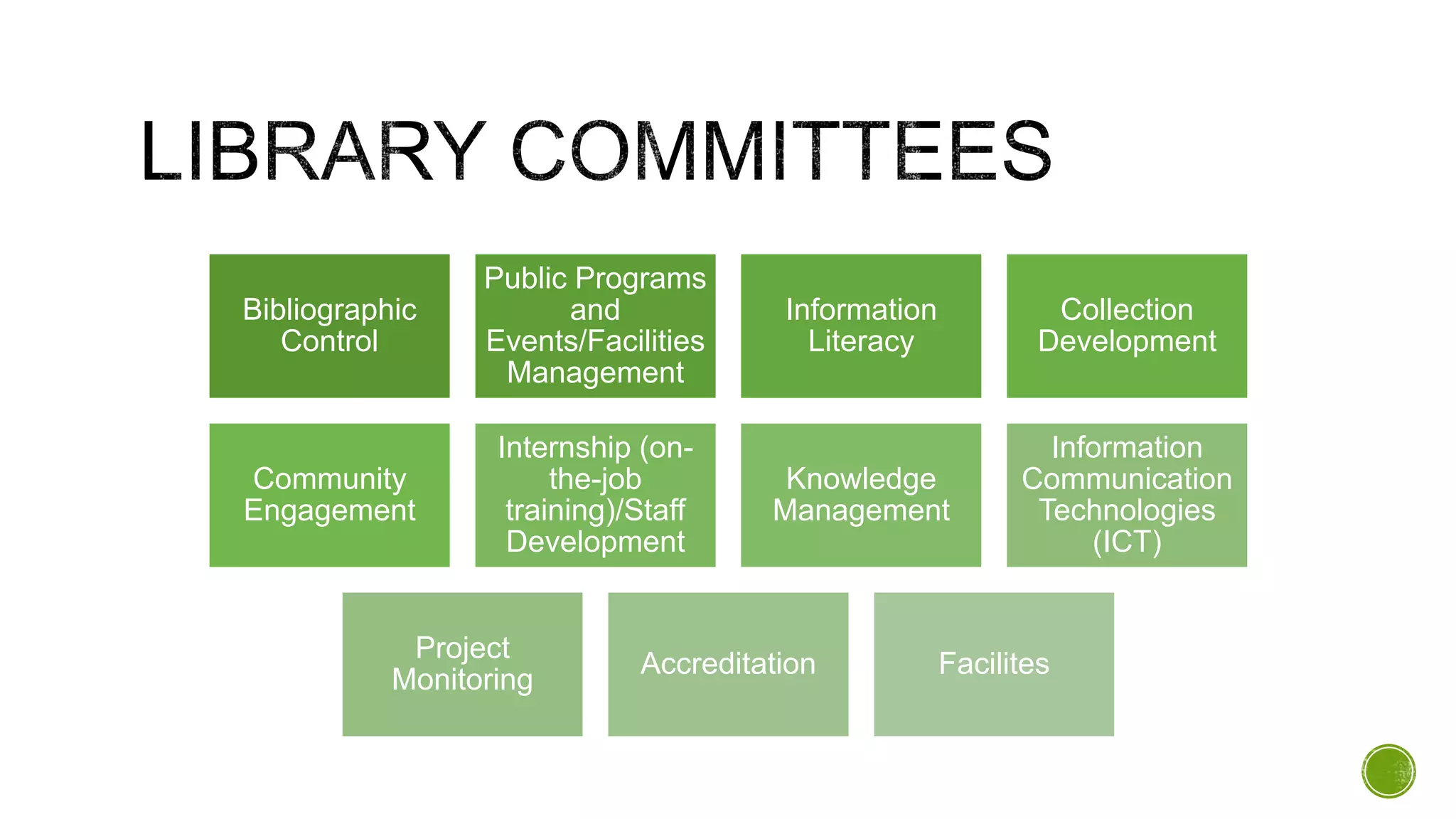
Bibliographic
Control
Public Programs
and
Events/Facilities
Management
Information
Literacy
Collection
Development
Community
Engagement
Internship (on-
the-job
training)/Staff
Development
Knowledge
Management
Information
Communication
Technologies
(ICT)
Project
Monitoring
Accreditation Facilites
De La Salle Philippines
(DLSP), Library Committee
•De La Salle Philippines is committed to
building up educational communities
that demonstrate commitment to young
people, especially those who are poor,
by providing them with access to a
human and Christian education that
enables them to participate in the
transformation of society.
National Library of the
Philippines. Children’s
Library
•The Children's Library promotes the
importance and enjoyment of reading to
the Filipino children and young adults.
[Activities carried out include the
following]: storytelling, read aloud,
puppet shows, arts and crafts, films
showing, Kidsmart Program (Computer
software), educational tour, and
outreach program
The Task Force Detainees of
the Philippines
•a non-profit, national human rights
organization concerned with
documenting human rights violations,
assisting the victims and their families in
their material and legal needs, and
conducting human rights education
work.
Linguistic Society of the
Philippines
•An organization that rallies for the
development of Philippine linguistic
research and its contribution to the
wider global academic community.
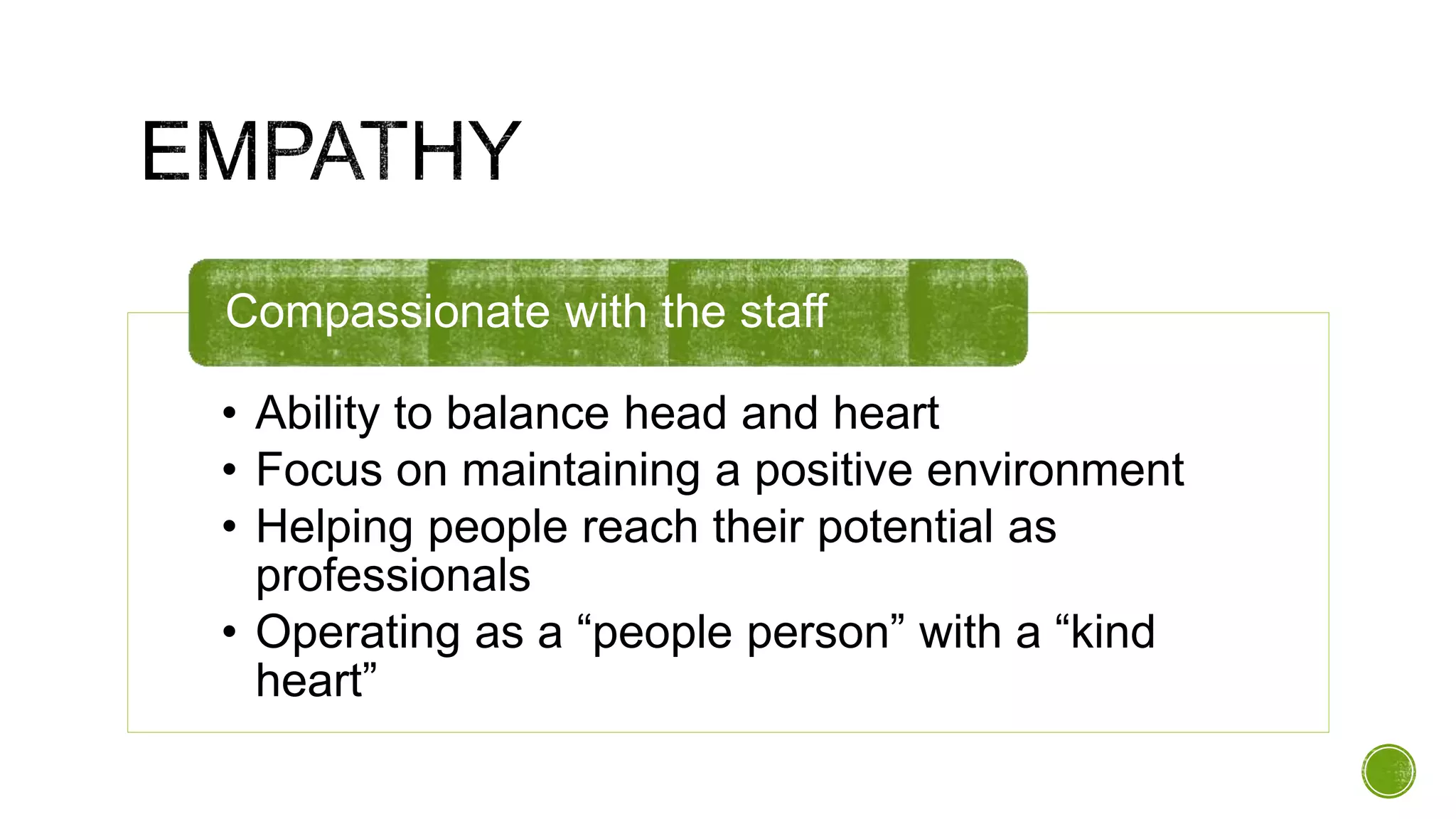
• Ability to balance head and heart
• Focus on maintaining a positive environment
• Helping people reach their potential as
professionals
• Operating as a “people person” with a “kind
heart”
Compassionate with the staff
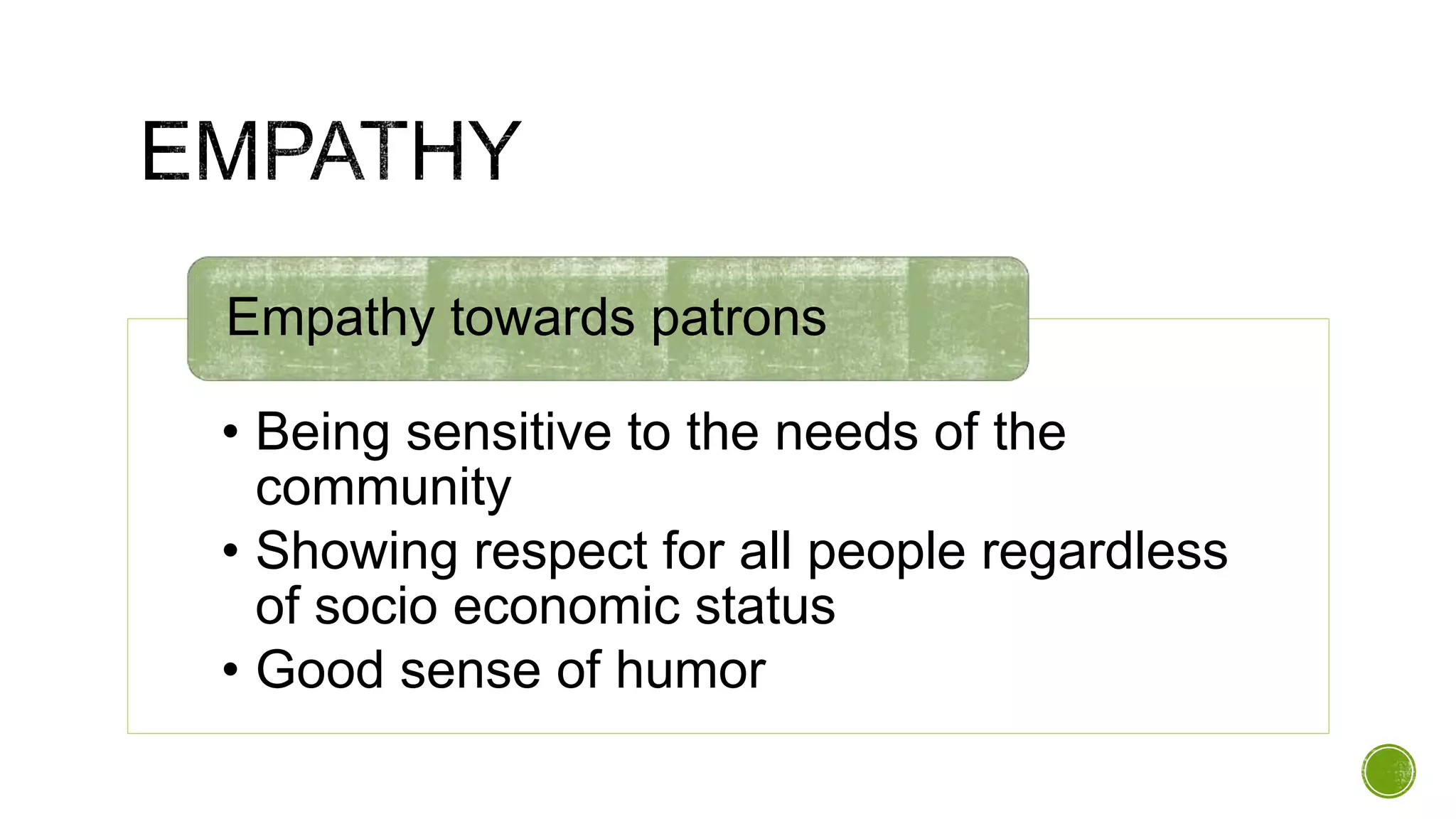
• Being sensitive to the needs of the
community
• Showing respect for all people regardless
of socio economic status
• Good sense of humor
Empathy towards patrons
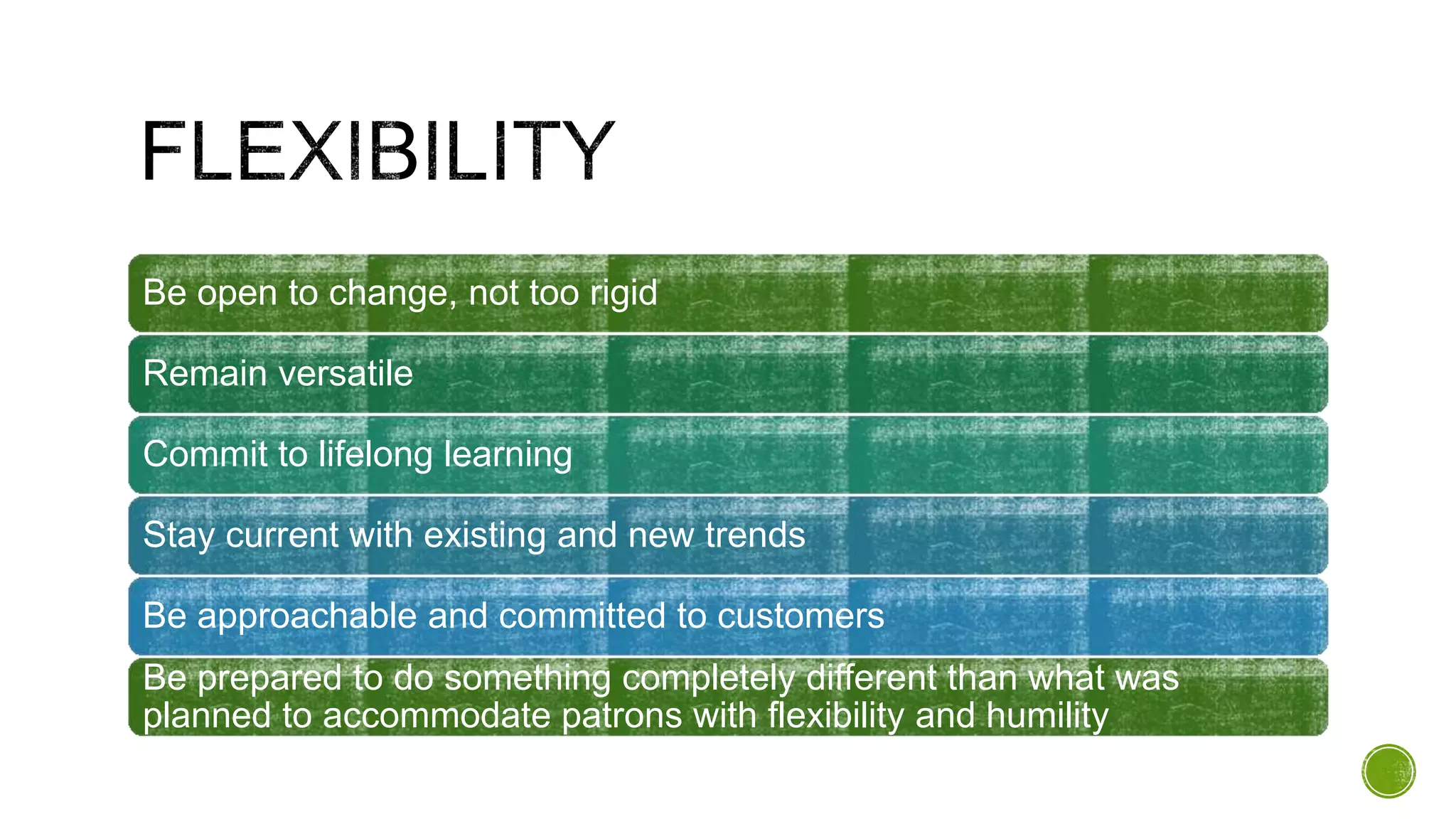
Be open to change, not too rigid
Remain versatile
Commit to lifelong learning
Stay current with existing and new trends
Be approachable and committed to customers
Be prepared to do something completely different than what was
planned to accommodate patrons with flexibility and humility
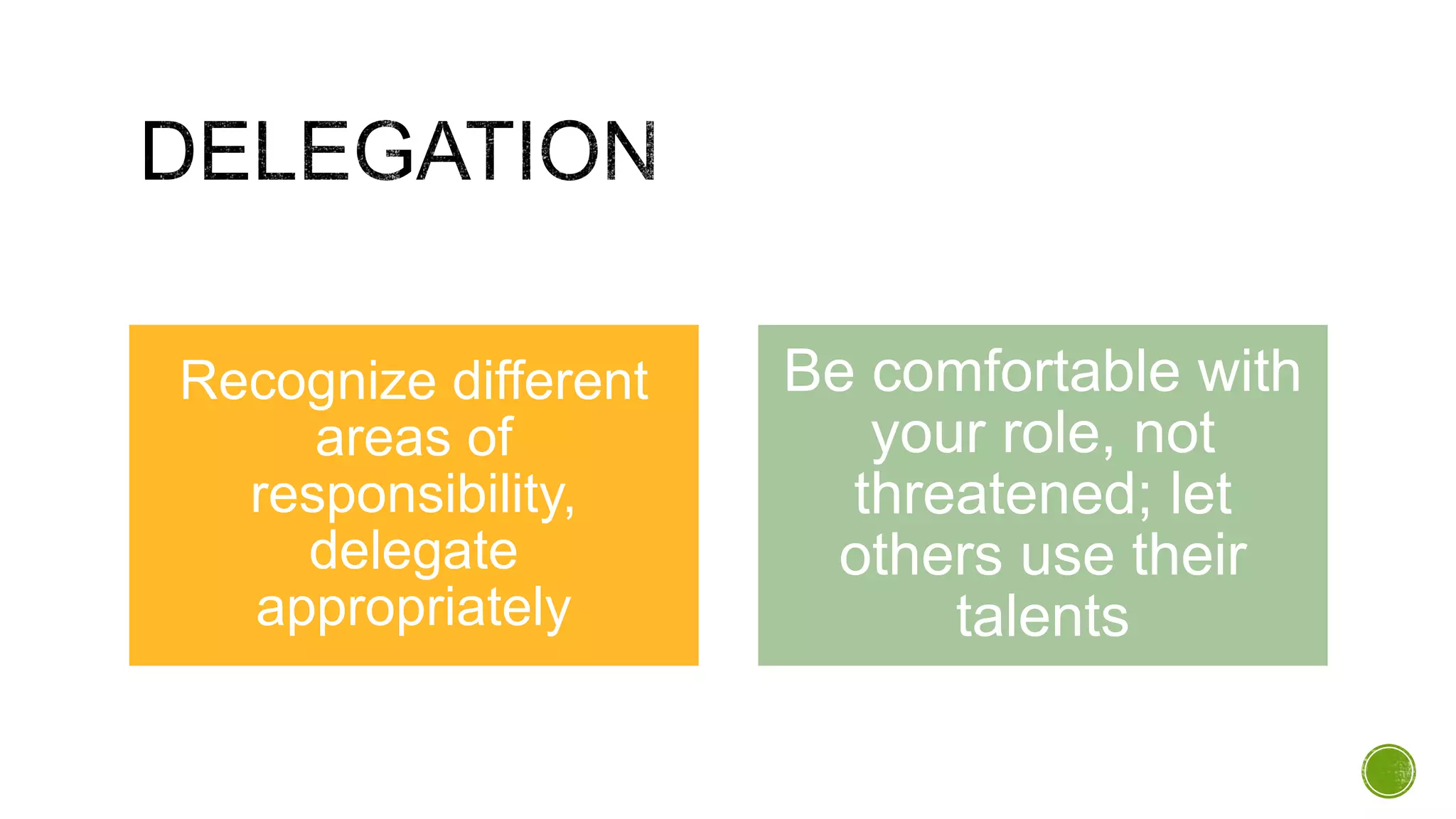
Recognize different
areas of
responsibility,
delegate
appropriately
Be comfortable with
your role, not
threatened; let
others use their
talents
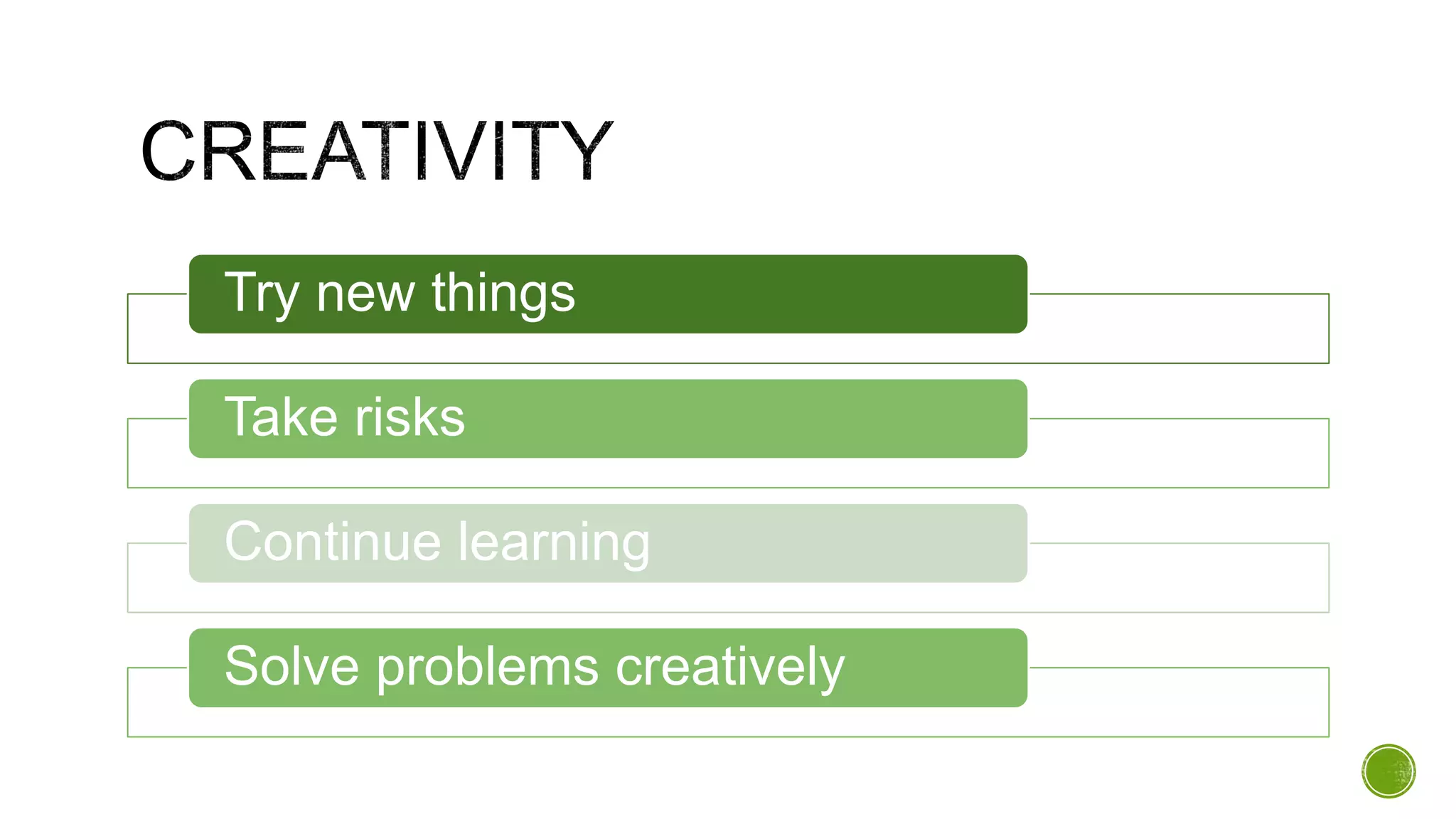
Try new things
Take risks
Continue learning
Solve problems creatively
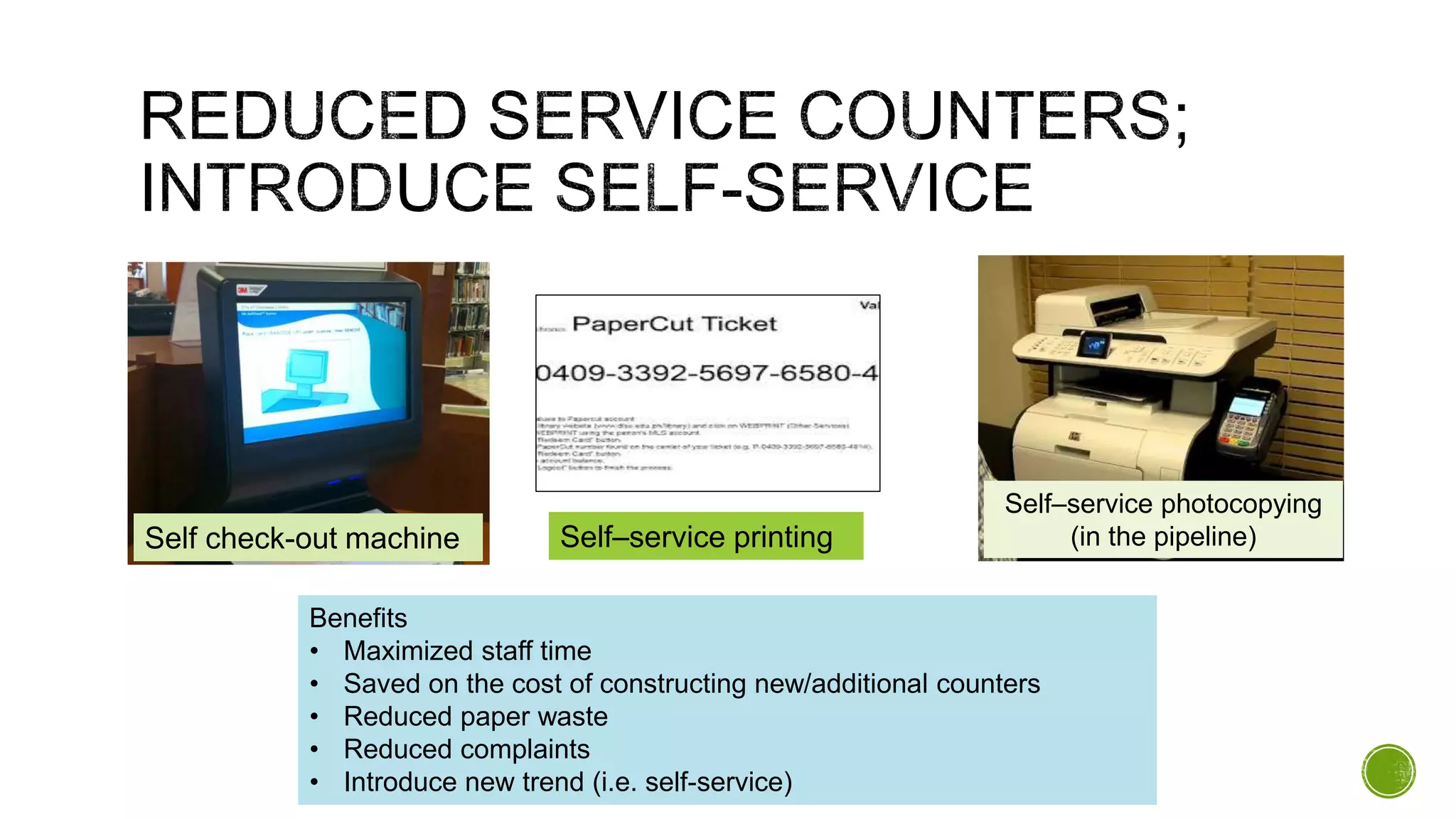
Self check-out machine Self–service printing
Benefits
• Maximized staff time
• Saved on the cost of constructing new/additional counters
• Reduced paper waste
• Reduced complaints
• Introduce new trend (i.e. self-service)
Self–service photocopying
(in the pipeline)
Being mentored by other leaders
Finding a mentor who has the skills you seek
Talking to other leaders, engaging in discussion, and
learning from them
Observing leaders who you feel are particularly effective, either in the
library or elsewhere
Identifying what characteristics make this person an effective leader and
assessing yourself for those characteristics
Christine M. Abrigo
Asst. Director for Operations
Marian R. Eclevia
Asst. Director for Support Services
Focus on learning how to be a better leader
Participate in leadership programs
Pursue other advance degrees (MBA, EdD,
PhD)
Participate in webinars, conference sessions,
etc.
Be a student of the leadership literature
Have experience – e.g. working in more than one institution
Experiment – try something new
Practice “mindful leadership” – be focused and thoughtful
Get out of your comfort zone
Practice – deal with difficult question involving human resource, budget,
strategic planning, etc.
Seek leadership
roles, especially on
campus
Be active in
professional
organizations
Pursue leadership
roles within the
library for internal
projects or initiatives
Look for
opportunities to lead
in professional
organizations
Offer service to the
college in the form of
committee work or by
assisting student
groups
Develop a personal mission and value statement (your priorities and core beliefs) as
well as a clear sense of WHY
Be self-aware and reflective
Share your thoughts with colleagues and supervisors, assess how those ideas and
thoughts are received, and determine if you need to modify or change your manner of
presenting yourself
Consult experts (e.g. management coach)
Submit to a 360 leadership evaluation to get honest feedback from staff on the quality
of leadership
Binh, P. L. (2015). Academic library leadership in the digital age. Library Management,
Vol. 36 Iss 4/5, pp. 300-314
Chow, A.S. & Rich, M. (2013). The ideal qualities and tasks of library leaders:
perspectives of academic, public, school, and special library administrators. Library
Leadership & Management, Vol. 27 Iss ½, pp. 1-24.

Dynamic Leadership and Management of Libraries/Learning Commons

  • 1.
    by Ana MariaB. Fresnido, DLSU Libraries ana.fresnido@dlsu.edu.ph Managing Today’s Learning Commons: Re-skilling Seminar for Information Professionals 20-22 September 2016 Crown Legacy Hotel, Baguio City
  • 2.
    demonstrate the library vauesto the university community operate the library under fiscal uncertainty retrofit outdated library facilities to accommodate new services strike a balance between digital and print materials keep the library staff trained and current Binh, P.L. (2015)
  • 4.
    Attributes Source Collaboration skillsBinh, P.L. Communication skills Binh, P.L. Chow, A.S. & Rich, M. Creativity Chow, A.S. & Rich, M Delegation Chow, A.S. & Rich, M Empathy Chow, A.S. & Rich, M Flexibility Chow, A.S. & Rich, M Integrity Binh, P.L. Chow, A.S. & Rich, M Management skills Binh, P.L. Passion Chow, A.S. & Rich, M Vision Binh, P.L. Chow, A.S. & Rich, M
  • 5.
    Be a visionary Understandthe library and university environment and articulate a vision based on them. Conduct constant environmental scanning Set a clear direction Take strategic action Persuade and guide others to a strategic vision and the goals and objectives
  • 9.
  • 11.
    Be honest –sharing information and transparency Be trustworthy – treat people fairly Be a thought-leader (authoritative and influential) Have integrity/honesty/trustworthiness/authenticity Be responsible steward of financial, human, and tangible (facilities and collections) resources
  • 13.
    Have excellent communicationskills (oral and written) Be a good listener Listen more and talk less Be willing to accept criticism Have good negotiation skills
  • 14.
    Good management skills(personnel management, budgeting, time management, planning, etc.) Apply business concepts and practices to improve library experience Make difficult decisions about core mission and priorities within the library Presence – be the face of the library and share this role with other library staff Monitor the trends and predict their impact on the library
  • 20.
    Collaborate Build collaborative relationships to leverageinstitutional resources to advance the library Have the ability to seek out partners and to collaborate Build teams – internal and external collaboration Have a consultative approach, including the ability to work well with others
  • 21.
     AUNILO, Librariesof ASEAN University Network  South Manila Educational Consortium in the Philippines  American Corners  European Studies Consortium  Inter-University Consortium  CEAP  Consortium of Engineering Libraries, Philippines (CELPh)  DOST-ESEP
  • 22.
  • 23.
    De La SallePhilippines (DLSP), Library Committee •De La Salle Philippines is committed to building up educational communities that demonstrate commitment to young people, especially those who are poor, by providing them with access to a human and Christian education that enables them to participate in the transformation of society. National Library of the Philippines. Children’s Library •The Children's Library promotes the importance and enjoyment of reading to the Filipino children and young adults. [Activities carried out include the following]: storytelling, read aloud, puppet shows, arts and crafts, films showing, Kidsmart Program (Computer software), educational tour, and outreach program The Task Force Detainees of the Philippines •a non-profit, national human rights organization concerned with documenting human rights violations, assisting the victims and their families in their material and legal needs, and conducting human rights education work. Linguistic Society of the Philippines •An organization that rallies for the development of Philippine linguistic research and its contribution to the wider global academic community.
  • 24.
    • Ability tobalance head and heart • Focus on maintaining a positive environment • Helping people reach their potential as professionals • Operating as a “people person” with a “kind heart” Compassionate with the staff
  • 25.
    • Being sensitiveto the needs of the community • Showing respect for all people regardless of socio economic status • Good sense of humor Empathy towards patrons
  • 26.
    Be open tochange, not too rigid Remain versatile Commit to lifelong learning Stay current with existing and new trends Be approachable and committed to customers Be prepared to do something completely different than what was planned to accommodate patrons with flexibility and humility
  • 27.
    Recognize different areas of responsibility, delegate appropriately Becomfortable with your role, not threatened; let others use their talents
  • 28.
    Try new things Takerisks Continue learning Solve problems creatively
  • 29.
    Self check-out machineSelf–service printing Benefits • Maximized staff time • Saved on the cost of constructing new/additional counters • Reduced paper waste • Reduced complaints • Introduce new trend (i.e. self-service) Self–service photocopying (in the pipeline)
  • 31.
    Being mentored byother leaders Finding a mentor who has the skills you seek Talking to other leaders, engaging in discussion, and learning from them Observing leaders who you feel are particularly effective, either in the library or elsewhere Identifying what characteristics make this person an effective leader and assessing yourself for those characteristics
  • 32.
    Christine M. Abrigo Asst.Director for Operations Marian R. Eclevia Asst. Director for Support Services
  • 33.
    Focus on learninghow to be a better leader Participate in leadership programs Pursue other advance degrees (MBA, EdD, PhD) Participate in webinars, conference sessions, etc. Be a student of the leadership literature
  • 34.
    Have experience –e.g. working in more than one institution Experiment – try something new Practice “mindful leadership” – be focused and thoughtful Get out of your comfort zone Practice – deal with difficult question involving human resource, budget, strategic planning, etc.
  • 36.
    Seek leadership roles, especiallyon campus Be active in professional organizations Pursue leadership roles within the library for internal projects or initiatives Look for opportunities to lead in professional organizations Offer service to the college in the form of committee work or by assisting student groups
  • 37.
    Develop a personalmission and value statement (your priorities and core beliefs) as well as a clear sense of WHY Be self-aware and reflective Share your thoughts with colleagues and supervisors, assess how those ideas and thoughts are received, and determine if you need to modify or change your manner of presenting yourself Consult experts (e.g. management coach) Submit to a 360 leadership evaluation to get honest feedback from staff on the quality of leadership
  • 39.
    Binh, P. L.(2015). Academic library leadership in the digital age. Library Management, Vol. 36 Iss 4/5, pp. 300-314 Chow, A.S. & Rich, M. (2013). The ideal qualities and tasks of library leaders: perspectives of academic, public, school, and special library administrators. Library Leadership & Management, Vol. 27 Iss ½, pp. 1-24.