Michael Crumpton 
Asst Dean for Administrative Services, UNC at Greensboro 
Chair, NCLA Leadership Institute Planning Committee 
macrumpt@uncg.edu 
*
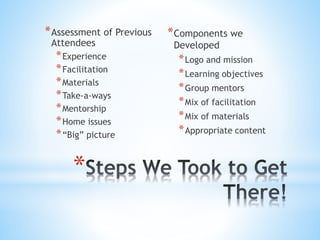
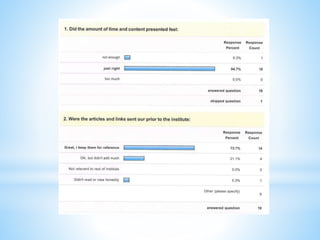
*Assessment of Previous 
Attendees 
*Experience 
*Facilitation 
*Materials 
*Take-a-ways 
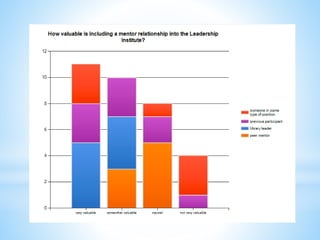
*Mentorship 
*Home issues 
*“Big” picture 
* 
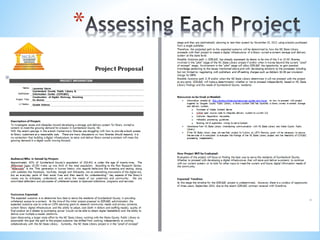
*Components we 
Developed 
*Logo and mission 
*Learning objectives 
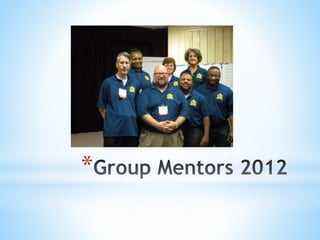
*Group mentors 
*Mix of facilitation 
*Mix of materials 
*Appropriate content
“The mission of the North Carolina Library Association (NCLA) 
Leadership Institute is to create opportunities for learning and 
skill building in leadership and mentoring. The Institute will 
cultivate an improved understanding of self and others, while 
inspiring participants to serve in leadership roles within the 
profession at local, state and national levels. 
*
*
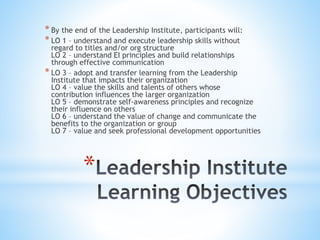
* By the end of the Leadership Institute, participants will: 
* LO 1 – understand and execute leadership skills without 
regard to titles and/or org structure 
LO 2 – understand EI principles and build relationships 
through effective communication 
* LO 3 – adopt and transfer learning from the Leadership 
Institute that impacts their organization 
LO 4 – value the skills and talents of others whose 
contribution influences the larger organization 
LO 5 – demonstrate self-awareness principles and recognize 
their influence on others 
LO 6 – understand the value of change and communicate the 
benefits to the organization or group 
LO 7 – value and seek professional development opportunities 
*
*
Outside Expertise on Leadership
*
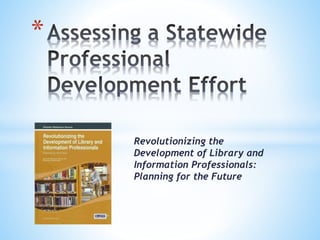
Revolutionizing the 
Development of Library and 
Information Professionals: 
Planning for the Future 
*
"This chapter will share assessment techniques 
used to influence the quality and significance of 
statewide professional development 
activities. The financial investment as well as 
collective time spent by committees and 
programmers should have a foundation of data to 
ensure those efforts are well utilized, this content 
will share the success of using assessment to 
produce successful professional development 
outcomes." 
*
*
* 
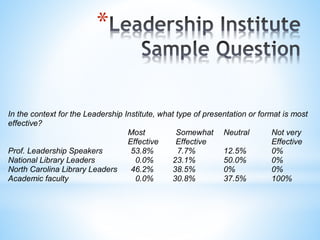
In the context for the Leadership Institute, what type of presentation or format is most 
effective? 
Most Somewhat Neutral Not very 
Effective Effective Effective 
Prof. Leadership Speakers 53.8% 7.7% 12.5% 0% 
National Library Leaders 0.0% 23.1% 50.0% 0% 
North Carolina Library Leaders 46.2% 38.5% 0% 0% 
Academic faculty 0.0% 30.8% 37.5% 100%
* 
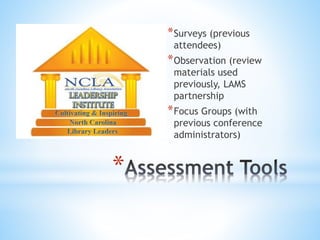
*Surveys (previous 
attendees) 
*Observation (review 
materials used 
previously, LAMS 
partnership 
*Focus Groups (with 
previous conference 
administrators)
*Project support 
*Bridge to next conference 
*Mid-term program to touch base and catch up 
*Group mentor best practices 
*
*
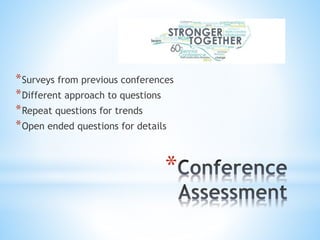
*Surveys from previous conferences 
*Different approach to questions 
*Repeat questions for trends 
*Open ended questions for details 
*
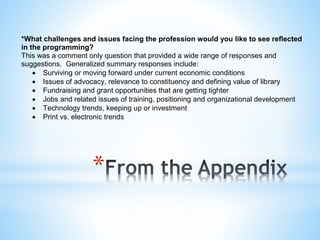
*What challenges and issues facing the profession would you like to see reflected 
in the programming? 
This was a comment only question that provided a wide range of responses and 
suggestions. Generalized summary responses include: 
 Surviving or moving forward under current economic conditions 
 Issues of advocacy, relevance to constituency and defining value of library 
 Fundraising and grant opportunities that are getting tighter 
 Jobs and related issues of training, positioning and organizational development 
 Technology trends, keeping up or investment 
 Print vs. electronic trends 
*
Assessment is the key to making these efforts 
meaningful and powerful tools for advocacy within the 
fight for resources. Assessment should be purposeful 
and focused and not layered with aesthetic or logistical 
dominance. Thoughtful assessment activities can 
provide deep insights for both individual and 
organizational needs and give association officers or 
planning committees the data needed to make 
appropriate and useful decisions. 
*
* 
Assessment: The process of evaluation and documentation of an activity or event in 
order to determine changes to be made if it is repeated or to learn what other actions 
would be needed. 
Effectiveness: The accuracy or performance indicator to an action in terms of how well it 
performed against expectation. 
Biennial: An event that occurs every other year. 
Content: Subject or topics delivered through presentation, lecture, readings, etc. 
Leadership: Having the skills, knowledge and abilities to influence and guide others 
toward common goals. 
Association: A group of people with common interest or professional attributes that 
share knowledge and insights to move forward together in each other’s best interest. 
Survey: Method for collecting information, usually quantitative about specific activities.
*
*
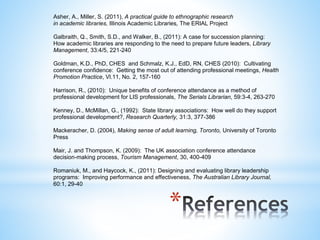
Asher, A., Miller, S. (2011), A practical guide to ethnographic research 
in academic libraries, Illinois Academic Libraries, The ERIAL Project 
Galbraith, Q., Smith, S.D., and Walker, B., (2011): A case for succession planning: 
How academic libraries are responding to the need to prepare future leaders, Library 
Management, 33:4/5, 221-240 
Goldman, K.D., PhD, CHES and Schmalz, K.J., EdD, RN, CHES (2010): Cultivating 
conference confidence: Getting the most out of attending professional meetings, Health 
Promotion Practice, Vl.11, No. 2, 157-160 
Harrison, R., (2010): Unique benefits of conference attendance as a method of 
professional development for LIS professionals, The Serials Librarian, 59:3-4, 263-270 
Kenney, D., McMillan, G., (1992): State library associations: How well do they support 
professional development?, Research Quarterly, 31:3, 377-386 
Mackeracher, D. (2004), Making sense of adult learning, Toronto, University of Toronto 
Press 
Mair, J. and Thompson, K. (2009): The UK association conference attendance 
decision-making process, Tourism Management, 30, 400-409 
Romaniuk, M., and Haycock, K., (2011): Designing and evaluating library leadership 
programs: Improving performance and effectiveness, The Australian Library Journal, 
60:1, 29-40 
*

Developing a Statewide Leadership Institute

  • 1.
    Michael Crumpton AsstDean for Administrative Services, UNC at Greensboro Chair, NCLA Leadership Institute Planning Committee macrumpt@uncg.edu *
  • 2.
    *Assessment of Previous Attendees *Experience *Facilitation *Materials *Take-a-ways *Mentorship *Home issues *“Big” picture * *Components we Developed *Logo and mission *Learning objectives *Group mentors *Mix of facilitation *Mix of materials *Appropriate content
  • 3.
    “The mission ofthe North Carolina Library Association (NCLA) Leadership Institute is to create opportunities for learning and skill building in leadership and mentoring. The Institute will cultivate an improved understanding of self and others, while inspiring participants to serve in leadership roles within the profession at local, state and national levels. *
  • 4.
  • 5.
    * By theend of the Leadership Institute, participants will: * LO 1 – understand and execute leadership skills without regard to titles and/or org structure LO 2 – understand EI principles and build relationships through effective communication * LO 3 – adopt and transfer learning from the Leadership Institute that impacts their organization LO 4 – value the skills and talents of others whose contribution influences the larger organization LO 5 – demonstrate self-awareness principles and recognize their influence on others LO 6 – understand the value of change and communicate the benefits to the organization or group LO 7 – value and seek professional development opportunities *
  • 6.
  • 8.
  • 9.
  • 10.
    Revolutionizing the Developmentof Library and Information Professionals: Planning for the Future *
  • 11.
    "This chapter willshare assessment techniques used to influence the quality and significance of statewide professional development activities. The financial investment as well as collective time spent by committees and programmers should have a foundation of data to ensure those efforts are well utilized, this content will share the success of using assessment to produce successful professional development outcomes." *
  • 12.
  • 13.
    * In thecontext for the Leadership Institute, what type of presentation or format is most effective? Most Somewhat Neutral Not very Effective Effective Effective Prof. Leadership Speakers 53.8% 7.7% 12.5% 0% National Library Leaders 0.0% 23.1% 50.0% 0% North Carolina Library Leaders 46.2% 38.5% 0% 0% Academic faculty 0.0% 30.8% 37.5% 100%
  • 14.
    * *Surveys (previous attendees) *Observation (review materials used previously, LAMS partnership *Focus Groups (with previous conference administrators)
  • 16.
    *Project support *Bridgeto next conference *Mid-term program to touch base and catch up *Group mentor best practices *
  • 18.
  • 19.
    *Surveys from previousconferences *Different approach to questions *Repeat questions for trends *Open ended questions for details *
  • 20.
    *What challenges andissues facing the profession would you like to see reflected in the programming? This was a comment only question that provided a wide range of responses and suggestions. Generalized summary responses include:  Surviving or moving forward under current economic conditions  Issues of advocacy, relevance to constituency and defining value of library  Fundraising and grant opportunities that are getting tighter  Jobs and related issues of training, positioning and organizational development  Technology trends, keeping up or investment  Print vs. electronic trends *
  • 21.
    Assessment is thekey to making these efforts meaningful and powerful tools for advocacy within the fight for resources. Assessment should be purposeful and focused and not layered with aesthetic or logistical dominance. Thoughtful assessment activities can provide deep insights for both individual and organizational needs and give association officers or planning committees the data needed to make appropriate and useful decisions. *
  • 22.
    * Assessment: Theprocess of evaluation and documentation of an activity or event in order to determine changes to be made if it is repeated or to learn what other actions would be needed. Effectiveness: The accuracy or performance indicator to an action in terms of how well it performed against expectation. Biennial: An event that occurs every other year. Content: Subject or topics delivered through presentation, lecture, readings, etc. Leadership: Having the skills, knowledge and abilities to influence and guide others toward common goals. Association: A group of people with common interest or professional attributes that share knowledge and insights to move forward together in each other’s best interest. Survey: Method for collecting information, usually quantitative about specific activities.
  • 25.
  • 27.
  • 28.
    Asher, A., Miller,S. (2011), A practical guide to ethnographic research in academic libraries, Illinois Academic Libraries, The ERIAL Project Galbraith, Q., Smith, S.D., and Walker, B., (2011): A case for succession planning: How academic libraries are responding to the need to prepare future leaders, Library Management, 33:4/5, 221-240 Goldman, K.D., PhD, CHES and Schmalz, K.J., EdD, RN, CHES (2010): Cultivating conference confidence: Getting the most out of attending professional meetings, Health Promotion Practice, Vl.11, No. 2, 157-160 Harrison, R., (2010): Unique benefits of conference attendance as a method of professional development for LIS professionals, The Serials Librarian, 59:3-4, 263-270 Kenney, D., McMillan, G., (1992): State library associations: How well do they support professional development?, Research Quarterly, 31:3, 377-386 Mackeracher, D. (2004), Making sense of adult learning, Toronto, University of Toronto Press Mair, J. and Thompson, K. (2009): The UK association conference attendance decision-making process, Tourism Management, 30, 400-409 Romaniuk, M., and Haycock, K., (2011): Designing and evaluating library leadership programs: Improving performance and effectiveness, The Australian Library Journal, 60:1, 29-40 *