

Anesthesia
A. Thangamani ramalingam
PT, MSc(PSY), MIAP
Anesthesia, or an aesthesia
( from Greek an-, "without"; and
aesthesis, "sensation"),
traditionally meant the condition
of having sensation (including
the feeling of pain) blocked or
temporarily taken away
Types of anesthesia



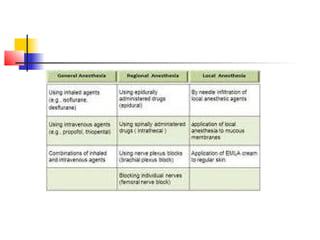
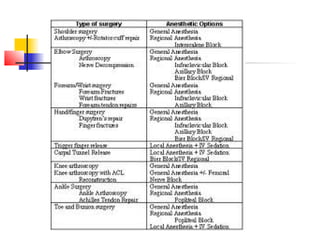
local anesthesia
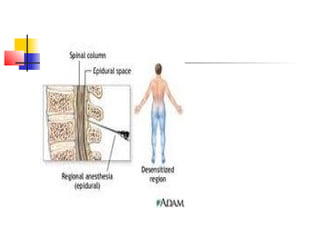
 regionalanesthesia
 spinal anesthesia and 
epidural anesthesia.



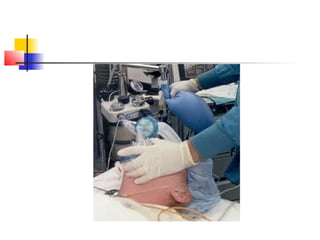
 general anesthesia



dissociative anesthesia.
Local anesthesia





Surface anesthesia
Infiltration anesthesia
Nerve block
Field block
Spinal anesthesia



Extra dural
caudal
General anesthesia





Stage of analgesia
Stage of excitement
Stage of surgical anesthesia
Stage of impending over dose
local anesthetics
Each of them have the suffix "-caine" in
their names.
procaine
amethocaine
cocaine
lidocaine (also known as Lignocaine)
prilocaine
bupivacaine
levobupivacaine
ropivacaine
mepivacaine
dibucaine
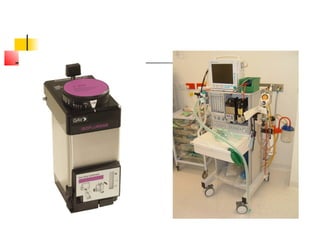
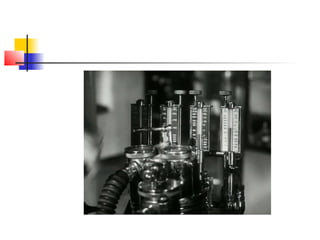
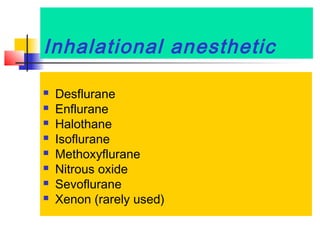
Inhalational anesthetic









Desflurane
Enflurane
Halothane
Isoflurane
Methoxyflurane
Nitrous oxide
Sevoflurane
Xenon (rarely used)
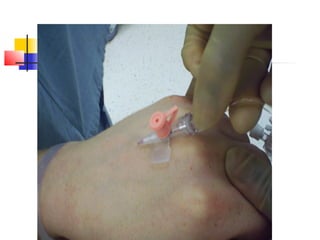
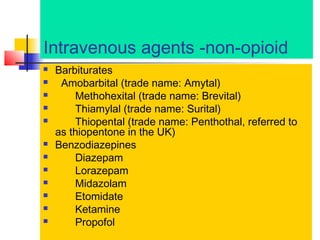
Intravenous agents -non-opioid














Barbiturates
Amobarbital (trade name: Amytal)
Methohexital (trade name: Brevital)
Thiamylal (trade name: Surital)
Thiopental (trade name: Penthothal, referred to
as thiopentone in the UK)
Benzodiazepines
Diazepam
Lorazepam
Midazolam
Etomidate
Ketamine
Propofol
Intravenous opioid
analgesic agents

following opioids have short
onset and duration of action and
are frequently used during
general anesthesia:
Alfentanil
Fentanyl
Remifentanil
Sufentanil 
The following agents have longer onset and
duration of action and are frequently used for
post-operative pain relief:















Buprenorphine
Butorphanol
Diamorphine, (diacetyl morphine, also known as heroin, not
available in U.S.)
Hydromorphone
Levorphanol
Meperidine, also called pethidine in the UK, New Zealand,
Australia and other countries
Methadone
Morphine
Nalbuphine
Oxycodone, (not available intravenously in U.S.)
Oxymorphone
Pentazocine
Muscle relaxants


Depolarizing muscle
relaxants
Succinylcholine (also known
as suxamethonium  in the
UK, New Zealand, Australia
and other countries,
"Celokurin" or "celo" for
short in Europe)

Decamethonium
Non-depolarizing muscle
relaxants











Short acting



Mivacurium
Rapacuronium

Intermediate acting
 Atracurium





Cisatracurium
Rocuronium
Vecuronium

Long acting








Alcuronium
Doxacurium
Gallamine
Metocurine
Pancuronium
Pipecuronium
Tubocurarine
Intravenous reversal agents








Flumazenil, reverses the effects of
benzodiazepines
Naloxone, reverses the effects of
opioids
Neostigmine, helps reverse the effects
of non-depolarizing muscle relaxants
Sugammadex, new agent that is
designed to bind Rocuronium therefore
terminating its action
Complications and risks
General anesthesia
 Vomiting
 Chest complications
 Thrombosis of leg veins
 CO retention (cyanosis)
 Pain
 Toxic effects
2
Spinal anesthesia
 Fall in BP due to paralysis of symp.nervous
system
 Headache
 Meningitis
 Vomiting
 Toxic reactions
 Neurological complications
advantages




Profound relaxation
Retention of consciousness
No chances of chest complications
Pre medication before
anesthesia
Atropine
 Hyoscine
Dry up secretions of Resp. tract, reduce
PR,HR, gut motility, sweat and salivary
secretions

Morphine, pethidine& papaveretum
 To reduce CNS activity
Chlorpromazine& promezathine
 Sedation
Metoclopramide &prochlorperazine
 Anti-emetic
Unwanted effects








Depresses resp& cough
Uncaring attitude
Inclination to sleep
Lowers BMR
Stimulates nausea& vomiting
Increased risk of urinary retention
Decreased peristalsis/constipation
Thank you

Understanding Anesthesia for physiotherapist