Intravenous anesthetic agents
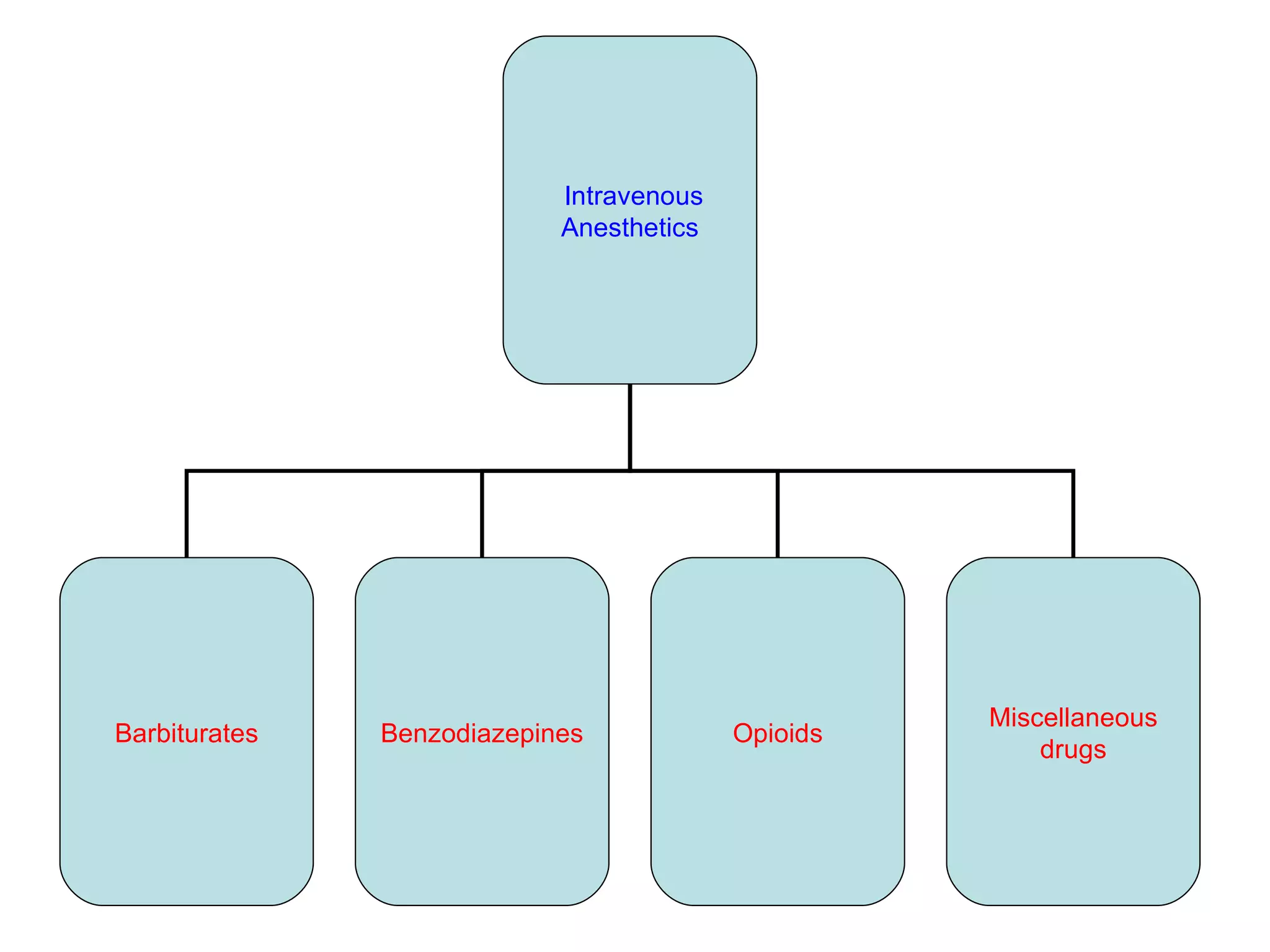
Intravenous  Anesthetics Barbiturates Benzodiazepines Opioids Miscellaneous drugs
Uses Induction of anesthesia (smother and more rapid than inhalational agents) Maintenance (alone or with inhalational agents) Sedation during regional anesthesia  Sedation in intensive care unit Treatment of status epilepticus
Barbiturates (thiopenton or thiopental) Indications: Induction of anesthesia  Maintenance of anesthesia (but has cumulative effects) Treatment of status epilepticus Reduction of intra-cranial pressure (ICP)
Adverse effects: Hypotension Respiratory depression Tissue necrosis (if injected extra-vascular) Laryngospasm Bronchospasm (avoid in asthma) Thrombophlibitis (less common in 2.5% conc.) Allergic reactions 1 in 14000-20000 Intra-arterial injection (lead to sever vasospasm and sever pain it may lead to gangrene of the limb, treatment by keeping the cannula in and inject papeverine 20 mg, heparin and fluid, using 2.5% conc. Is safer)
Contra indications: Airway obstruction (epiglottis or pharyngeal tumours) Porphyria Previous hypersensitivity to this drug
Benzodiazepines (Diazepam, Midazolam) Indications: Sedation during regional anesthesia Radiological procedures (children, anxious persons) Endoscopy ICU Supplementation to general anesthesia Amnesia Status epilepticus
Adverse effects: Prolong duration (diazepam) Painful on injection (diazepam) Hypotension if used with other agents like opioids Dependence Respiratory depression in over dosage Contraindications: Early pregnancy (teratogenic effect)
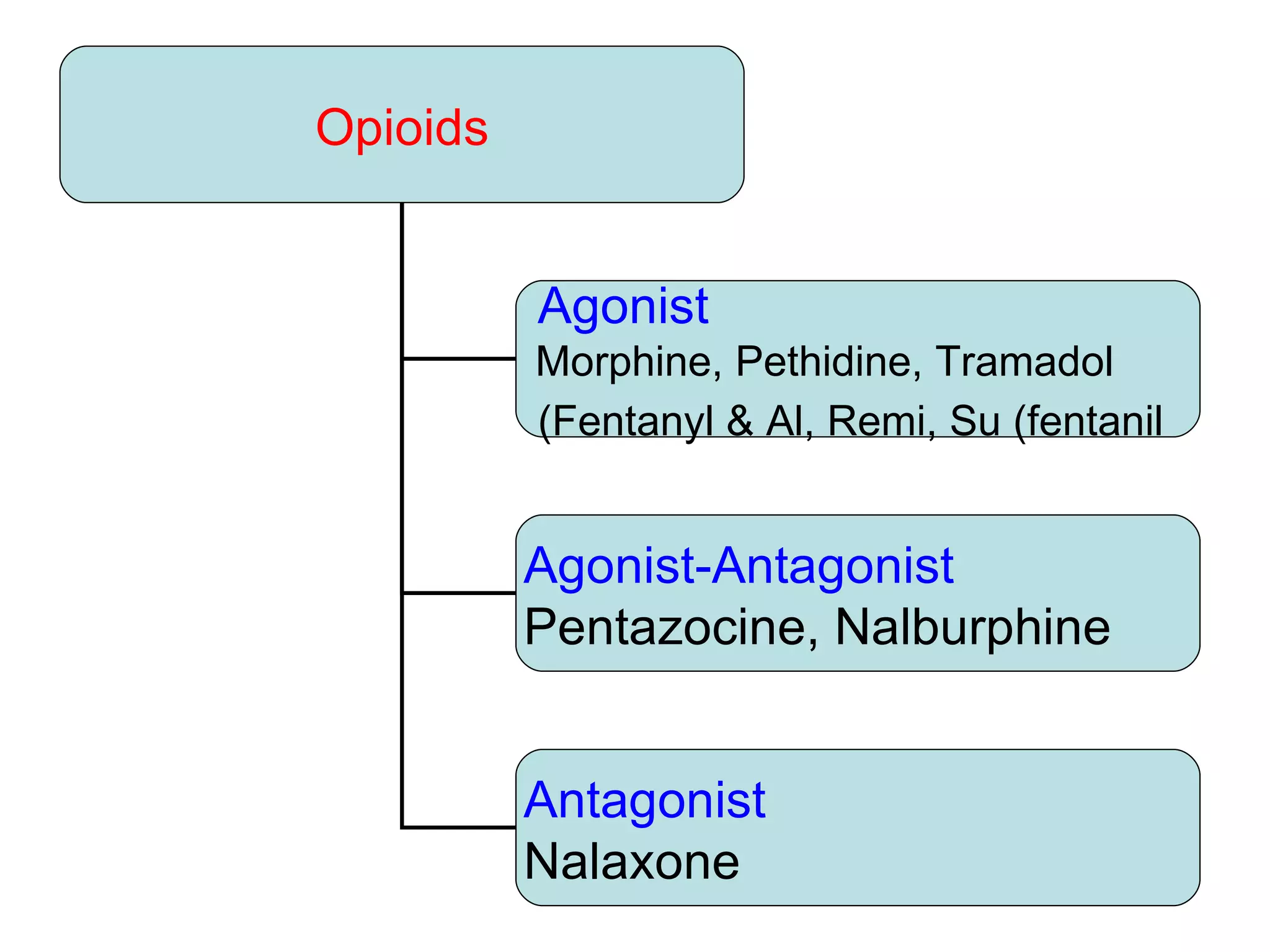
Opioids Agonist   Morphine, Pethidine, Tramadol  Fentanyl & Al, Remi, Su (fentanil)   Agonist-Antagonist Pentazocine, Nalburphine  Antagonist Nalaxone
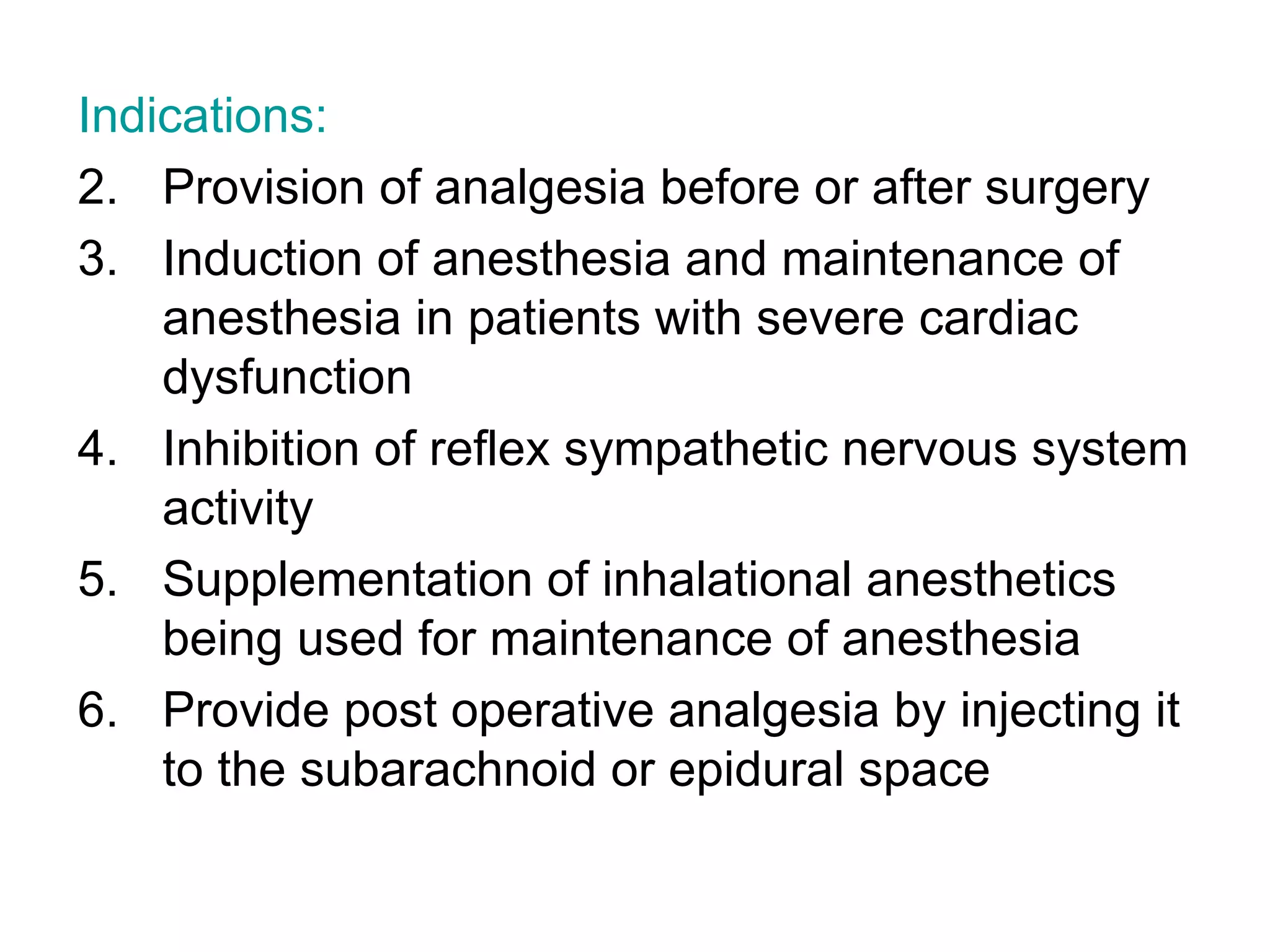
Indications: Provision of analgesia before or after surgery Induction of anesthesia and maintenance of anesthesia in patients with severe cardiac dysfunction Inhibition of reflex sympathetic nervous system activity Supplementation of inhalational anesthetics being used for maintenance of anesthesia Provide post operative analgesia by injecting it to the subarachnoid or epidural space
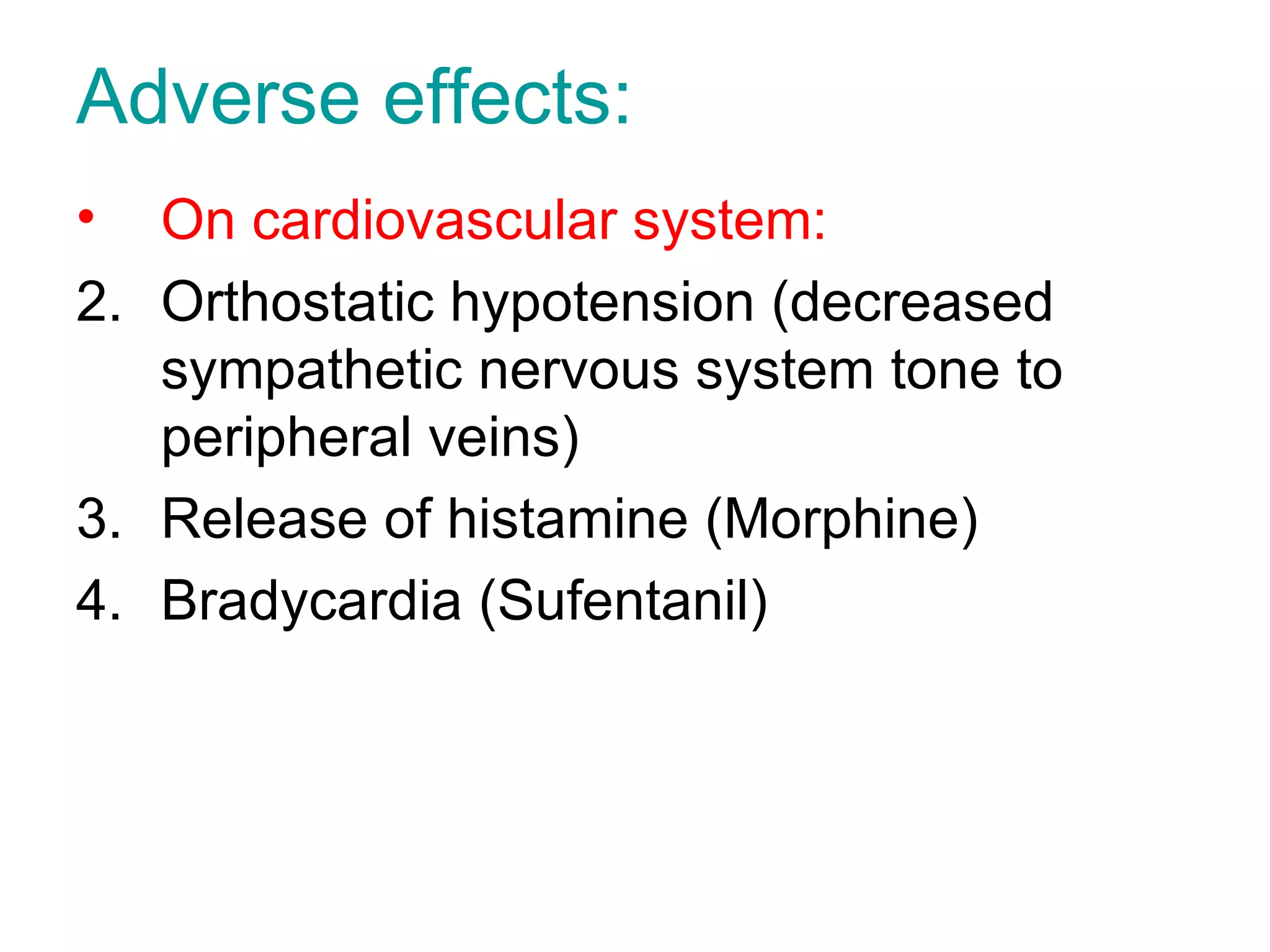
Adverse effects: On cardiovascular system: Orthostatic hypotension (decreased sympathetic nervous system tone to peripheral veins) Release of histamine (Morphine) Bradycardia (Sufentanil)
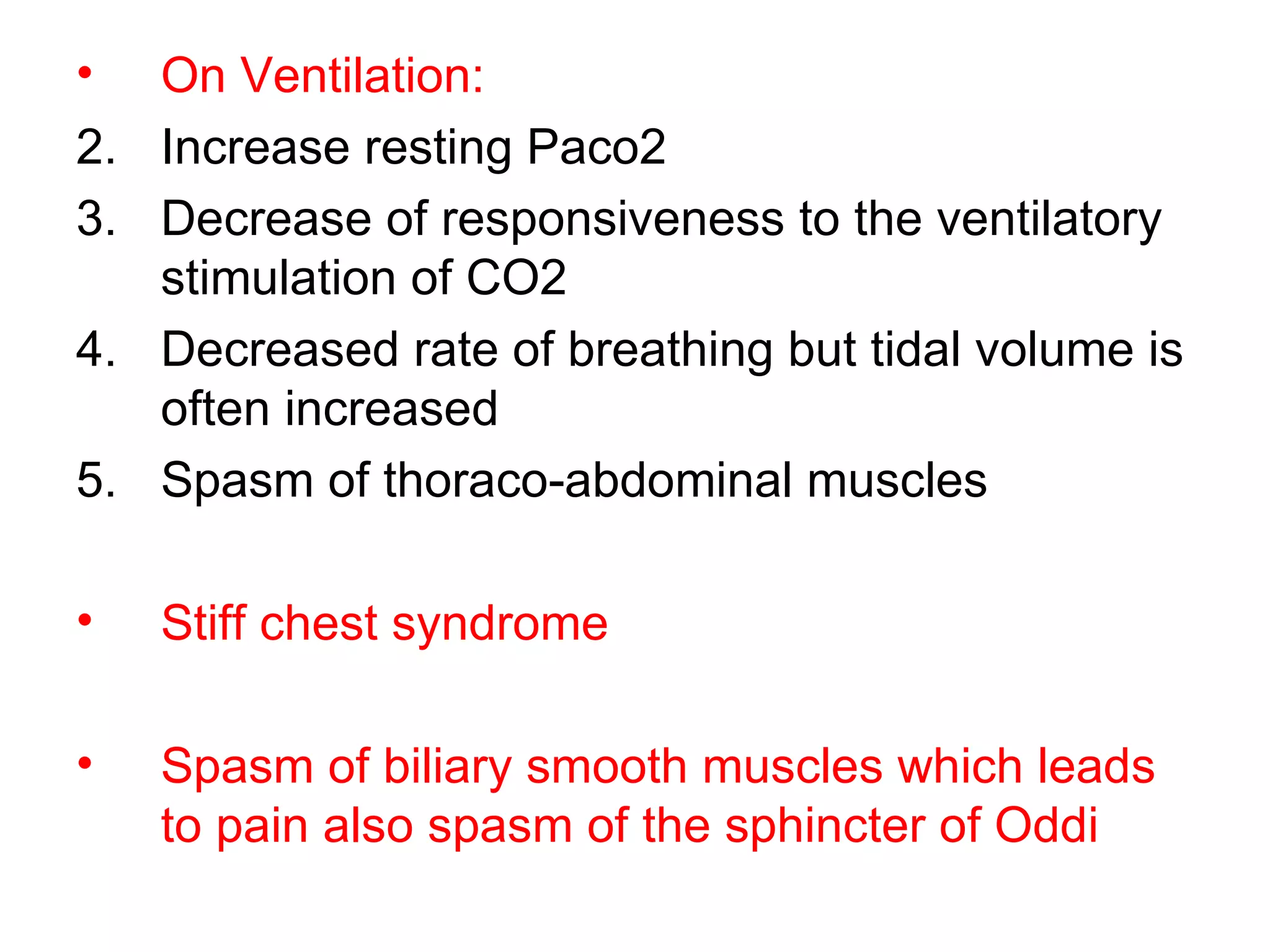
On Ventilation: Increase resting Paco2 Decrease of responsiveness to the ventilatory stimulation of CO2 Decreased rate of breathing but tidal volume is often increased Spasm of thoraco-abdominal muscles Stiff chest syndrome Spasm of biliary smooth muscles which leads to pain also spasm of the sphincter of Oddi
On CNS Miosis Stimulation of Dopamine receptors in the chemoreceptor trigger zone which cause nausea and vomiting Addiction  Enhancement of bladder sphincter tone which lead to urine retention Decrease peristalsis Increase the tone of the pyloric sphincter which lead to delayed gastric emptying
Preemptive analgesia Injection of an opioid before painful surgical stimulation occurs this may decrease the subsequent amount of opioid required in the postoperative period to provide analgesia
Morphine (10, 15mg) Can be Administered by variety of routes Has active metabolites Risk of accumulation in patient with renal impairment Avoid in asthma (histamine release) Pethidine (100mg) Shorter acting Its metabolites has long half life with risk of accumulation in patient with renal impairment, also the metabolites are neurotoxic and result in grand mal seizures Avoid in patient with history of epilepsy
Tramadol (100mg) Analgesic efficacy around one tenth that of morphine Avoid in patient with history of epilepsy Useful for elderly Useful For Patient-Controlled Analgesia (PCA) Fentanyl (100 μ g ) Very potent opioid used primarily for intra-operative analgesia Useful drug for PCA Cause respiratory depression
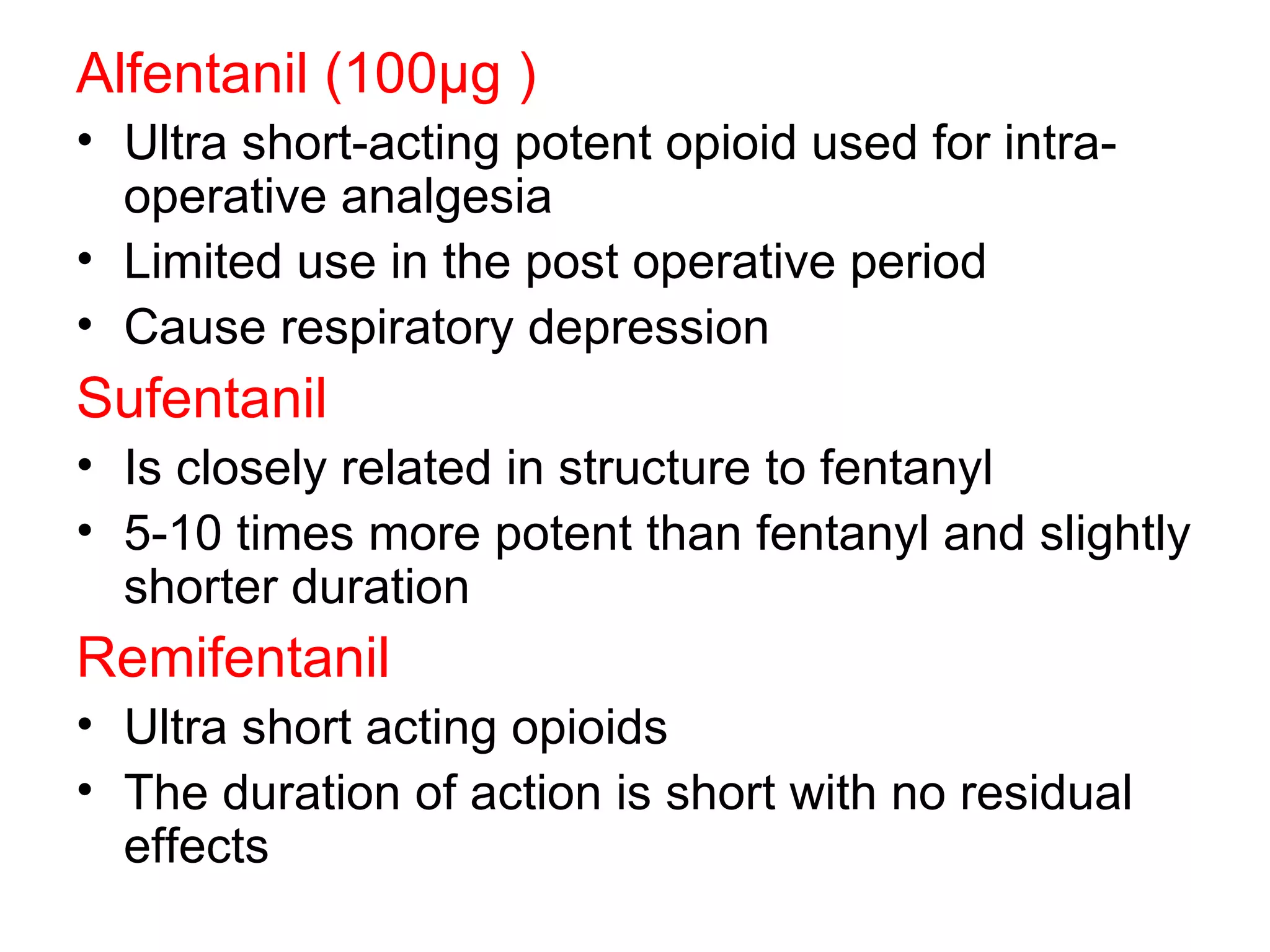
Alfentanil   (100 μ g ) Ultra short-acting potent opioid used for intra- operative analgesia Limited use in the post operative period  Cause respiratory depression Sufentanil Is closely related in structure to fentanyl  5-10 times more potent than fentanyl and slightly shorter duration Remifentanil Ultra short acting opioids The duration of action is short with no residual effects
Agonist-Antagonist Those drugs have limited analgesic properties (ceiling effect) above which increasing doses do not produce additional anesthesia, they usually used for treatment of addiction
Antagonist Is used as a short acting opioid antagonist because of its short duration of action opioid terminated depression may return when effect of Nalaxone have terminated Nalaxone may precipitate the sympathetic drive of unrelieved pain (tachycardia, hypertension, arrhythmias-----etc.)
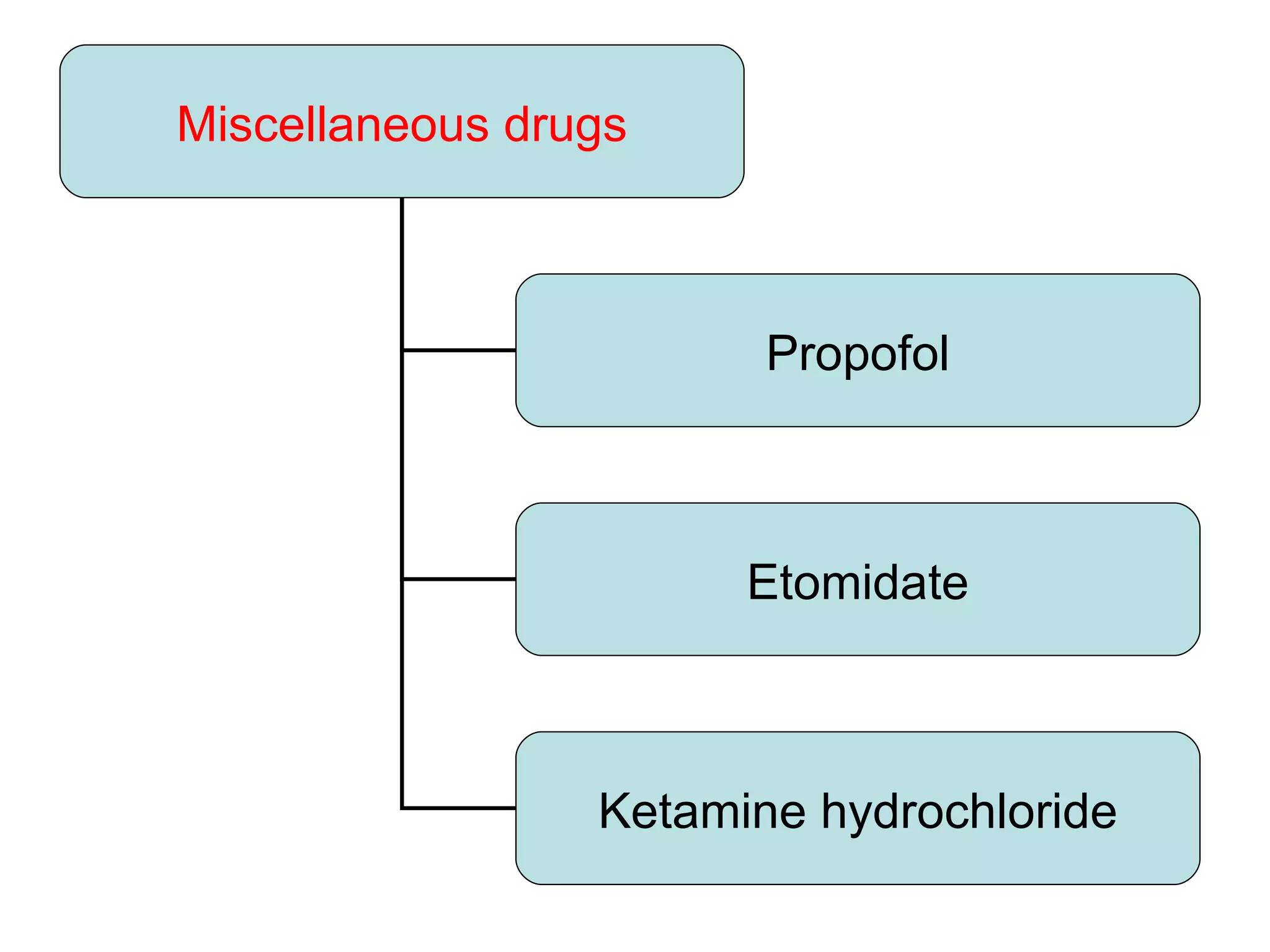
Miscellaneous drugs Propofol Etomidate Ketamine hydrochloride
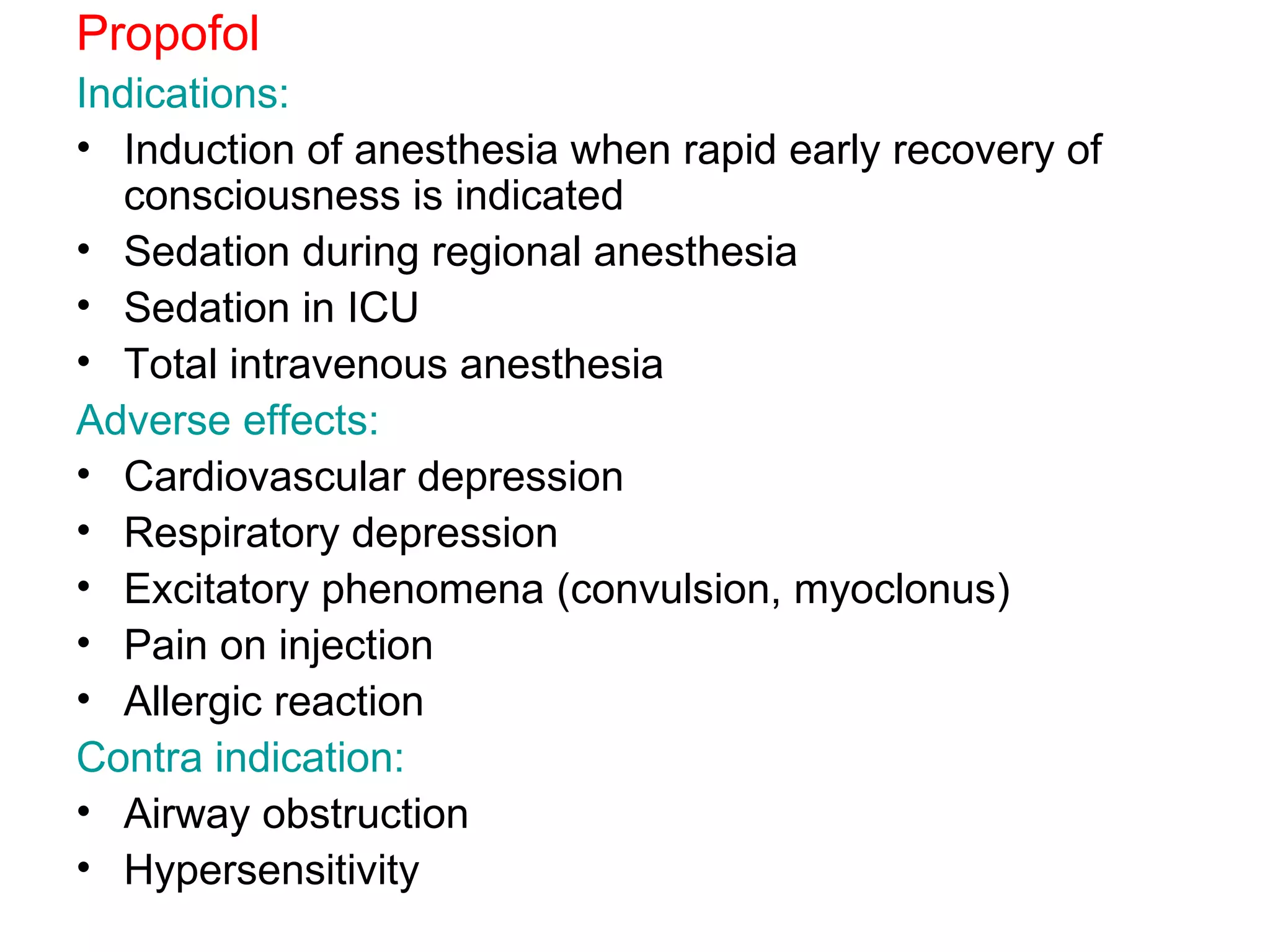
Propofol Indications: Induction of anesthesia when rapid early recovery of consciousness is indicated Sedation during regional anesthesia Sedation in ICU Total intravenous anesthesia Adverse effects: Cardiovascular depression  Respiratory depression Excitatory phenomena (convulsion, myoclonus) Pain on injection Allergic reaction Contra indication: Airway obstruction Hypersensitivity
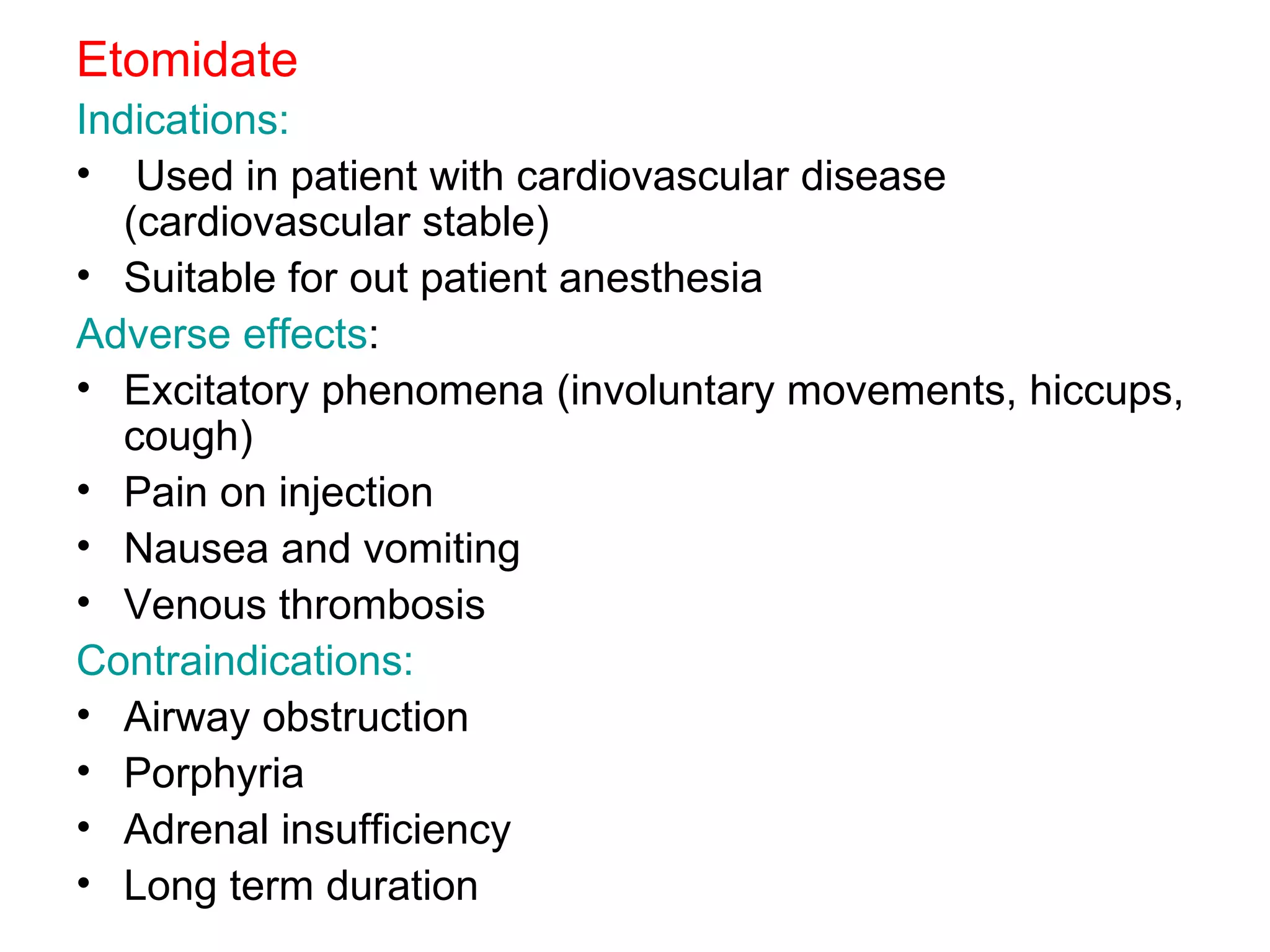
Etomidate Indications: Used in patient with cardiovascular disease (cardiovascular stable) Suitable for out patient anesthesia Adverse effects : Excitatory phenomena (involuntary movements, hiccups, cough) Pain on injection Nausea and vomiting Venous thrombosis Contraindications: Airway obstruction Porphyria Adrenal insufficiency Long term duration
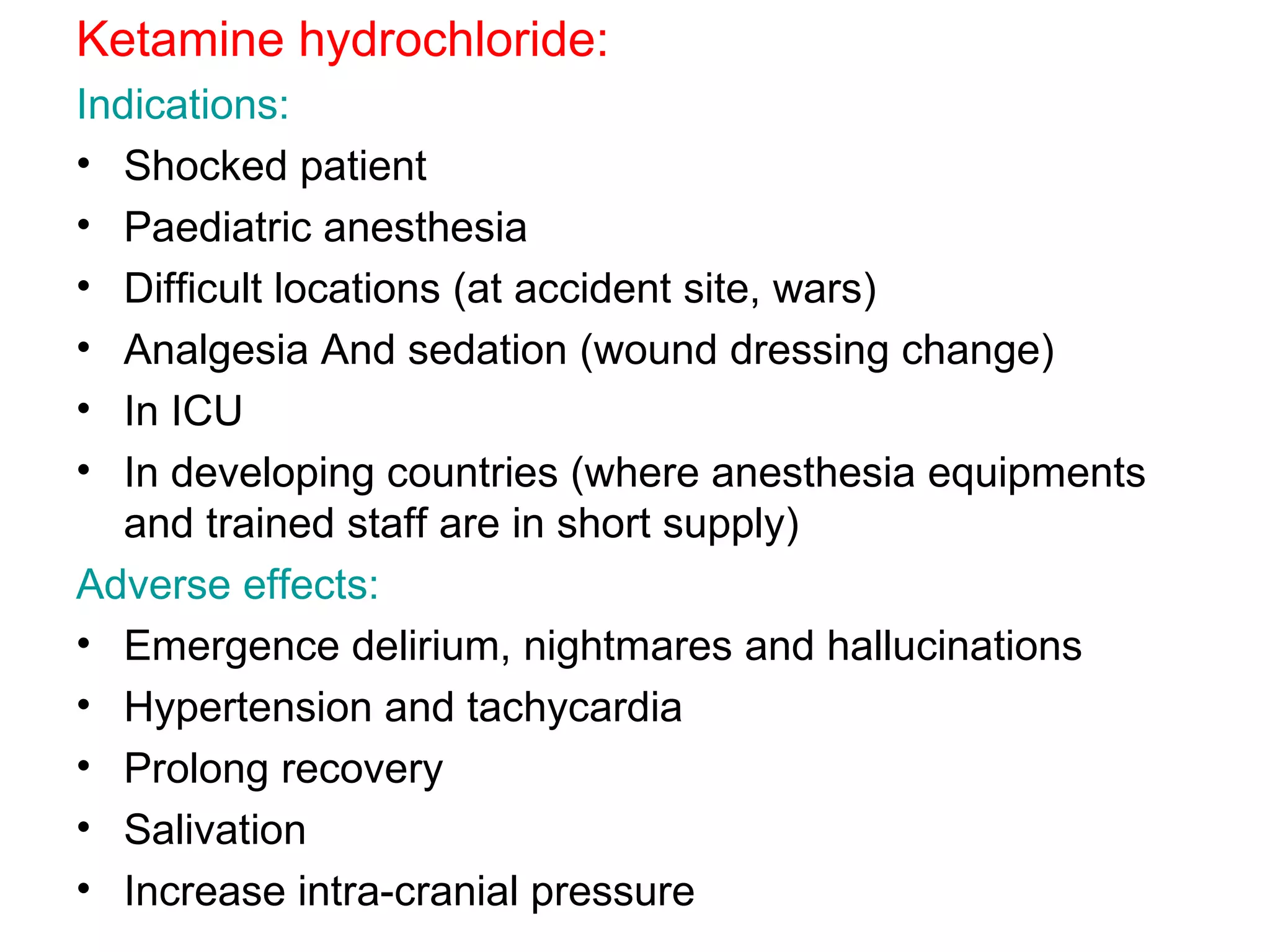
Ketamine hydrochloride: Indications: Shocked patient Paediatric anesthesia Difficult locations (at accident site, wars) Analgesia And sedation (wound dressing change) In ICU In developing countries (where anesthesia equipments and trained staff are in short supply) Adverse effects: Emergence delirium, nightmares and hallucinations Hypertension and tachycardia  Prolong recovery Salivation Increase intra-cranial pressure

Anesthesia 5th year, 7th & 8th lectures (Dr. Aamir)

  • 1.
  • 2.
    Intravenous AnestheticsBarbiturates Benzodiazepines Opioids Miscellaneous drugs
  • 3.
    Uses Induction ofanesthesia (smother and more rapid than inhalational agents) Maintenance (alone or with inhalational agents) Sedation during regional anesthesia Sedation in intensive care unit Treatment of status epilepticus
  • 4.
    Barbiturates (thiopenton orthiopental) Indications: Induction of anesthesia Maintenance of anesthesia (but has cumulative effects) Treatment of status epilepticus Reduction of intra-cranial pressure (ICP)
  • 5.
    Adverse effects: HypotensionRespiratory depression Tissue necrosis (if injected extra-vascular) Laryngospasm Bronchospasm (avoid in asthma) Thrombophlibitis (less common in 2.5% conc.) Allergic reactions 1 in 14000-20000 Intra-arterial injection (lead to sever vasospasm and sever pain it may lead to gangrene of the limb, treatment by keeping the cannula in and inject papeverine 20 mg, heparin and fluid, using 2.5% conc. Is safer)
  • 6.
    Contra indications: Airwayobstruction (epiglottis or pharyngeal tumours) Porphyria Previous hypersensitivity to this drug
  • 7.
    Benzodiazepines (Diazepam, Midazolam)Indications: Sedation during regional anesthesia Radiological procedures (children, anxious persons) Endoscopy ICU Supplementation to general anesthesia Amnesia Status epilepticus
  • 8.
    Adverse effects: Prolongduration (diazepam) Painful on injection (diazepam) Hypotension if used with other agents like opioids Dependence Respiratory depression in over dosage Contraindications: Early pregnancy (teratogenic effect)
  • 9.
    Opioids Agonist Morphine, Pethidine, Tramadol Fentanyl & Al, Remi, Su (fentanil) Agonist-Antagonist Pentazocine, Nalburphine Antagonist Nalaxone
  • 10.
    Indications: Provision ofanalgesia before or after surgery Induction of anesthesia and maintenance of anesthesia in patients with severe cardiac dysfunction Inhibition of reflex sympathetic nervous system activity Supplementation of inhalational anesthetics being used for maintenance of anesthesia Provide post operative analgesia by injecting it to the subarachnoid or epidural space
  • 11.
    Adverse effects: Oncardiovascular system: Orthostatic hypotension (decreased sympathetic nervous system tone to peripheral veins) Release of histamine (Morphine) Bradycardia (Sufentanil)
  • 12.
    On Ventilation: Increaseresting Paco2 Decrease of responsiveness to the ventilatory stimulation of CO2 Decreased rate of breathing but tidal volume is often increased Spasm of thoraco-abdominal muscles Stiff chest syndrome Spasm of biliary smooth muscles which leads to pain also spasm of the sphincter of Oddi
  • 13.
    On CNS MiosisStimulation of Dopamine receptors in the chemoreceptor trigger zone which cause nausea and vomiting Addiction Enhancement of bladder sphincter tone which lead to urine retention Decrease peristalsis Increase the tone of the pyloric sphincter which lead to delayed gastric emptying
  • 14.
    Preemptive analgesia Injectionof an opioid before painful surgical stimulation occurs this may decrease the subsequent amount of opioid required in the postoperative period to provide analgesia
  • 15.
    Morphine (10, 15mg)Can be Administered by variety of routes Has active metabolites Risk of accumulation in patient with renal impairment Avoid in asthma (histamine release) Pethidine (100mg) Shorter acting Its metabolites has long half life with risk of accumulation in patient with renal impairment, also the metabolites are neurotoxic and result in grand mal seizures Avoid in patient with history of epilepsy
  • 16.
    Tramadol (100mg) Analgesicefficacy around one tenth that of morphine Avoid in patient with history of epilepsy Useful for elderly Useful For Patient-Controlled Analgesia (PCA) Fentanyl (100 μ g ) Very potent opioid used primarily for intra-operative analgesia Useful drug for PCA Cause respiratory depression
  • 17.
    Alfentanil (100 μ g ) Ultra short-acting potent opioid used for intra- operative analgesia Limited use in the post operative period Cause respiratory depression Sufentanil Is closely related in structure to fentanyl 5-10 times more potent than fentanyl and slightly shorter duration Remifentanil Ultra short acting opioids The duration of action is short with no residual effects
  • 18.
    Agonist-Antagonist Those drugshave limited analgesic properties (ceiling effect) above which increasing doses do not produce additional anesthesia, they usually used for treatment of addiction
  • 19.
    Antagonist Is usedas a short acting opioid antagonist because of its short duration of action opioid terminated depression may return when effect of Nalaxone have terminated Nalaxone may precipitate the sympathetic drive of unrelieved pain (tachycardia, hypertension, arrhythmias-----etc.)
  • 20.
    Miscellaneous drugs PropofolEtomidate Ketamine hydrochloride
  • 21.
    Propofol Indications: Inductionof anesthesia when rapid early recovery of consciousness is indicated Sedation during regional anesthesia Sedation in ICU Total intravenous anesthesia Adverse effects: Cardiovascular depression Respiratory depression Excitatory phenomena (convulsion, myoclonus) Pain on injection Allergic reaction Contra indication: Airway obstruction Hypersensitivity
  • 22.
    Etomidate Indications: Usedin patient with cardiovascular disease (cardiovascular stable) Suitable for out patient anesthesia Adverse effects : Excitatory phenomena (involuntary movements, hiccups, cough) Pain on injection Nausea and vomiting Venous thrombosis Contraindications: Airway obstruction Porphyria Adrenal insufficiency Long term duration
  • 23.
    Ketamine hydrochloride: Indications:Shocked patient Paediatric anesthesia Difficult locations (at accident site, wars) Analgesia And sedation (wound dressing change) In ICU In developing countries (where anesthesia equipments and trained staff are in short supply) Adverse effects: Emergence delirium, nightmares and hallucinations Hypertension and tachycardia Prolong recovery Salivation Increase intra-cranial pressure