Text
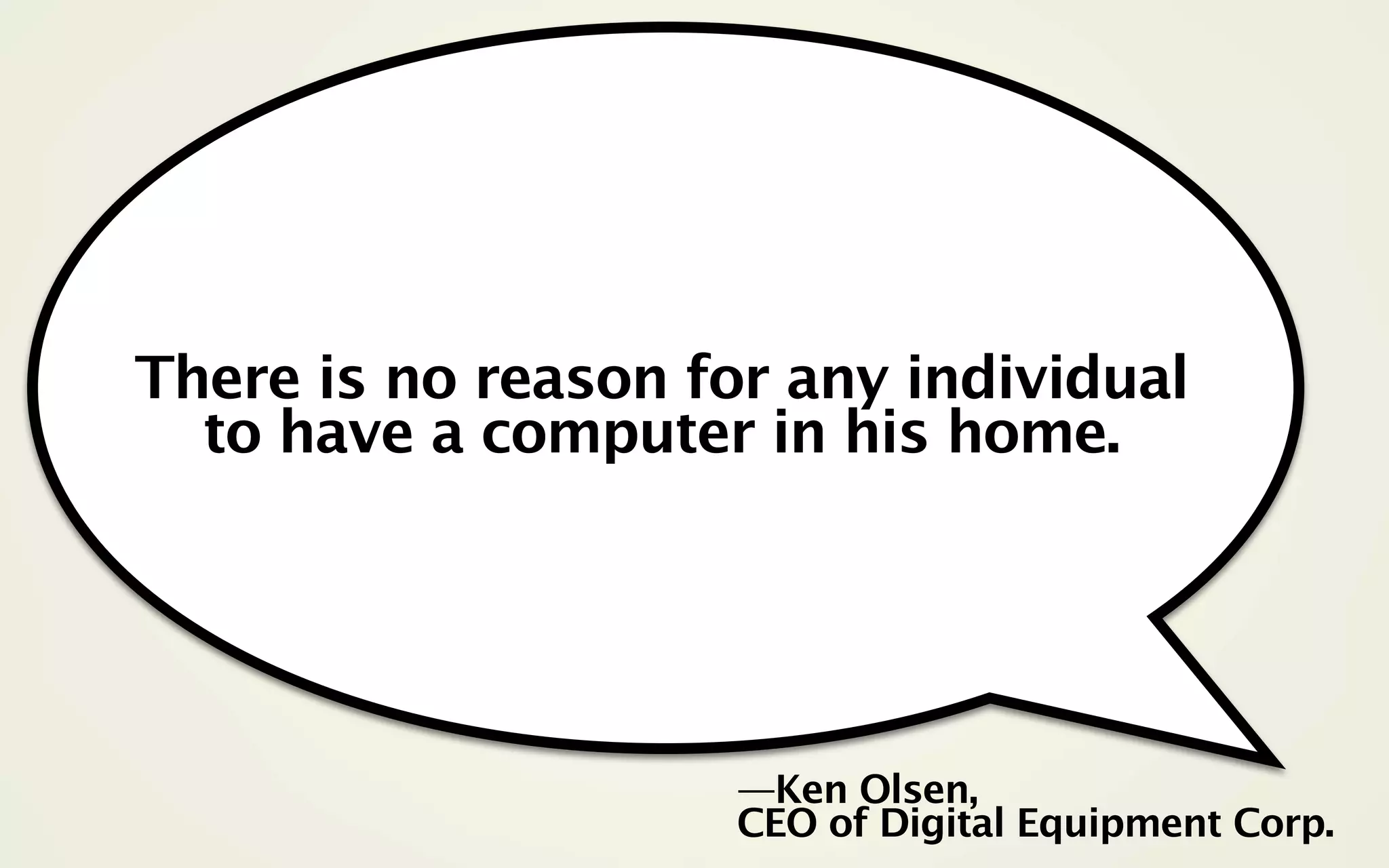
There is no reason for any individual
  to have a computer in his home.


                     —Ken Olsen,
                     CEO of Digital Equipment Corp.
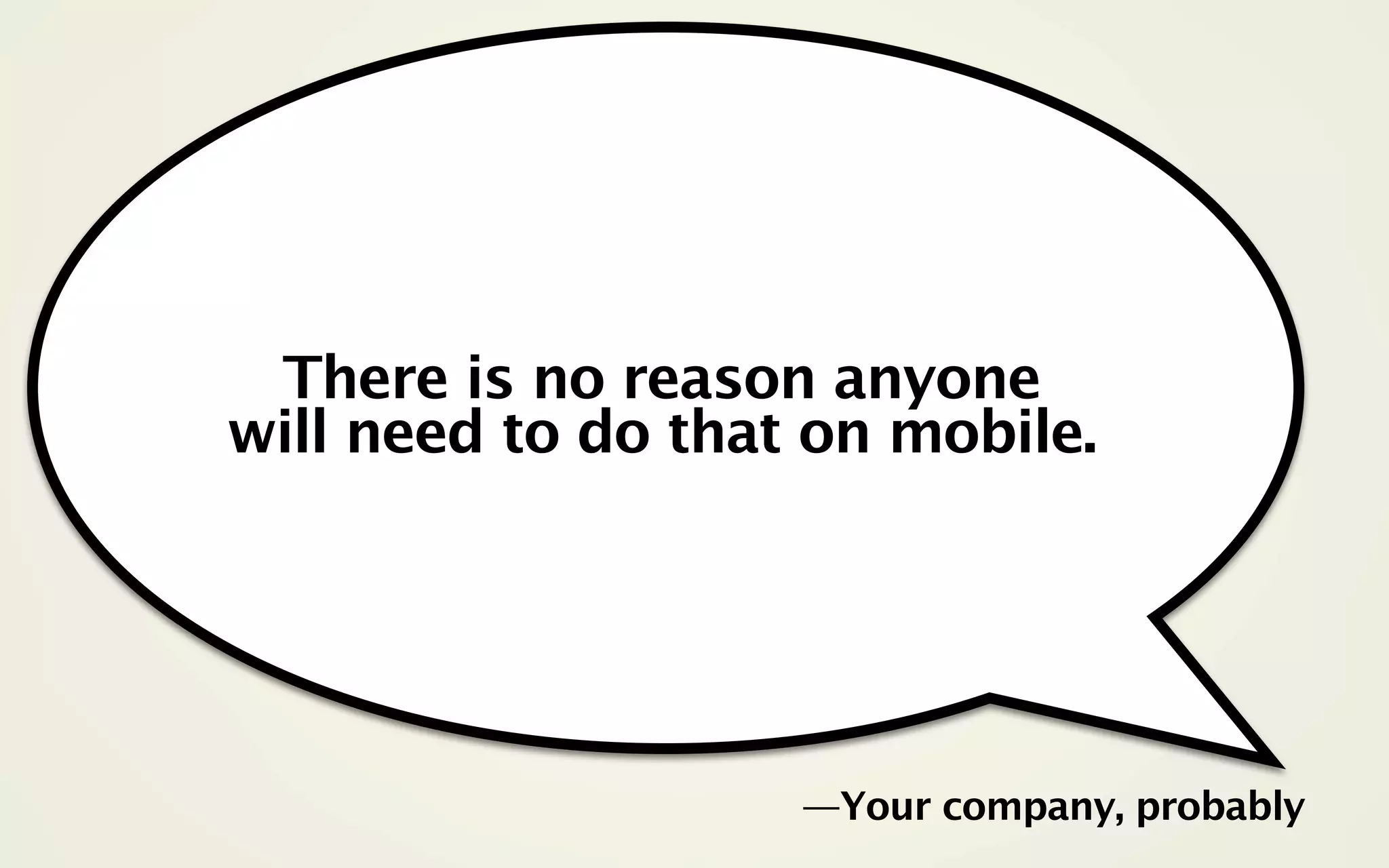
There is no reason anyone
will need to do that on mobile.


                    —Your company, probably
DISRUPTIVE INNOVATION
“   In industry after industry, the
    new technologies that had
    brought the big, established
    companies to their knees
    weren’t better or more advanced
    — they were actually worse. The
    new products were
    low-end, dumb, shoddy, and in
    almost every way inferior.
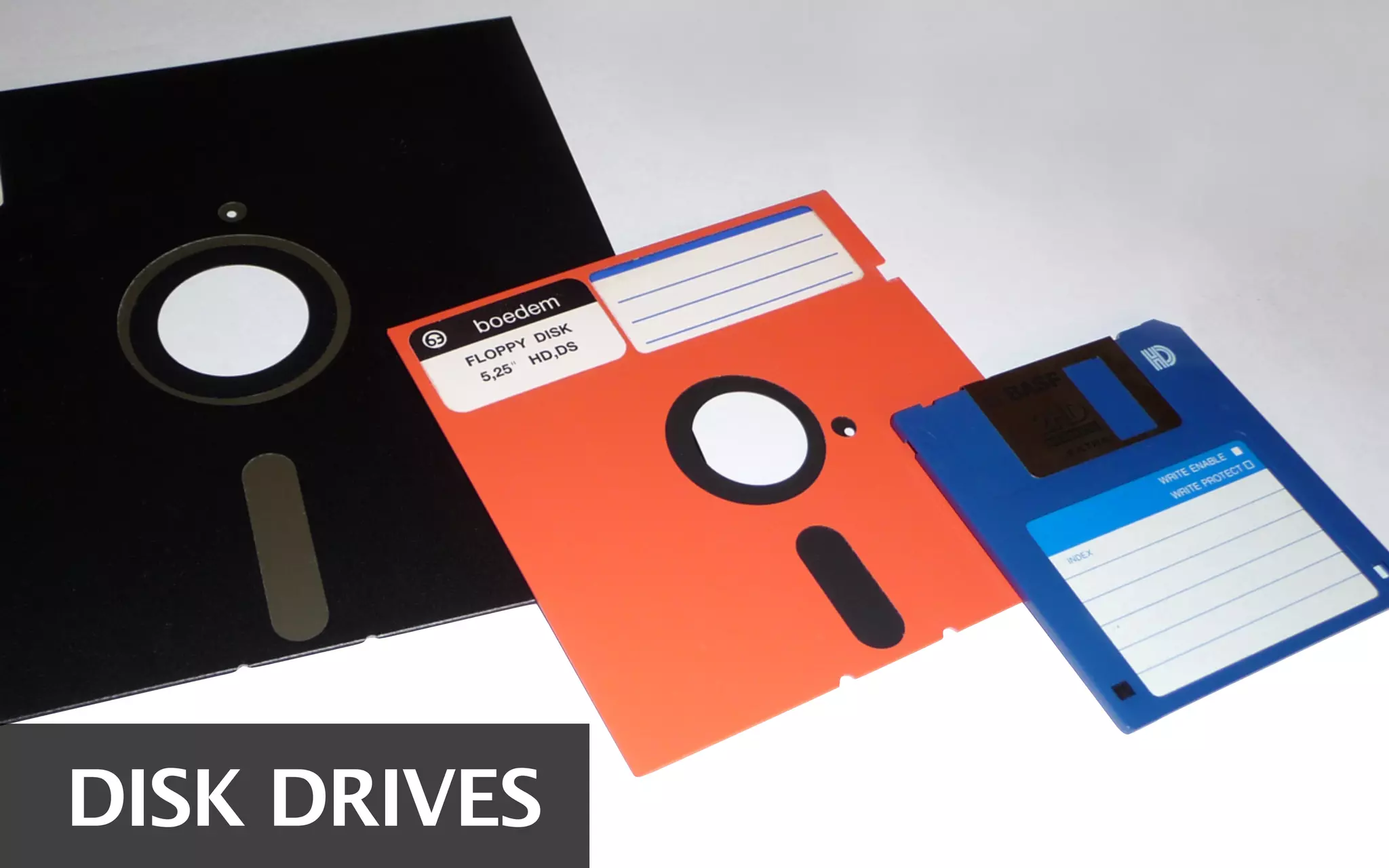
DISK DRIVES
RADIOS
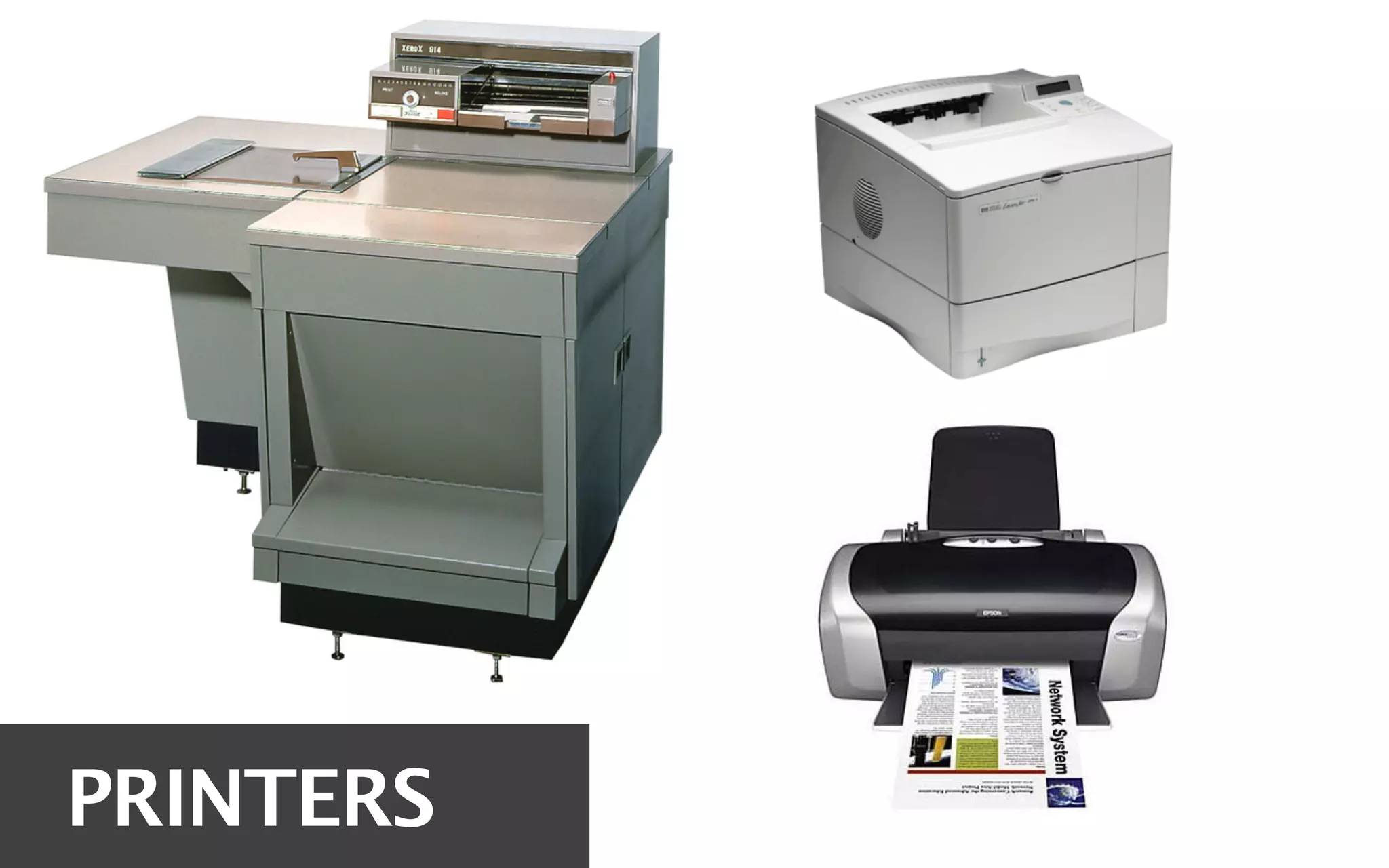
PRINTERS
PHOTOGRAPHY
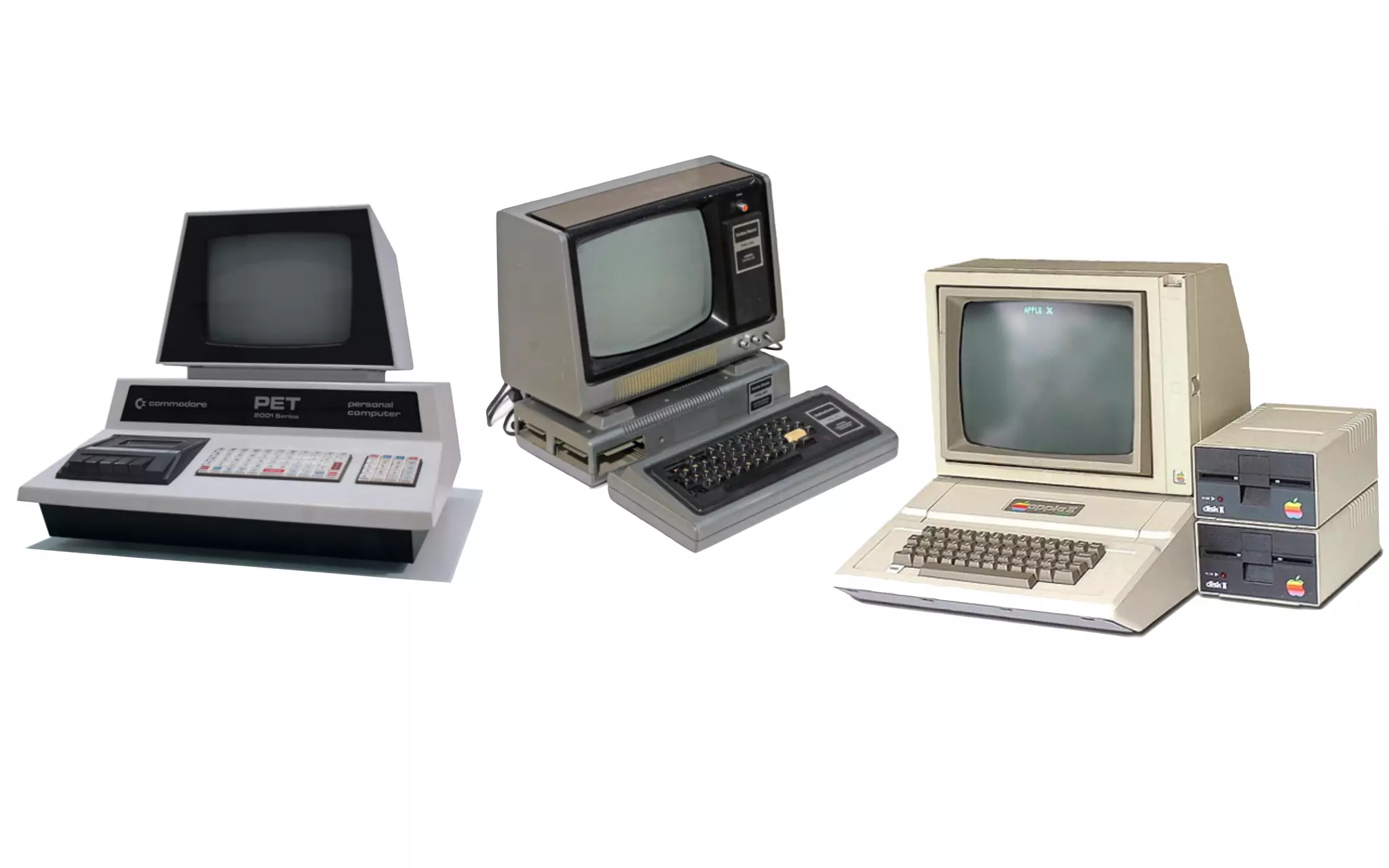
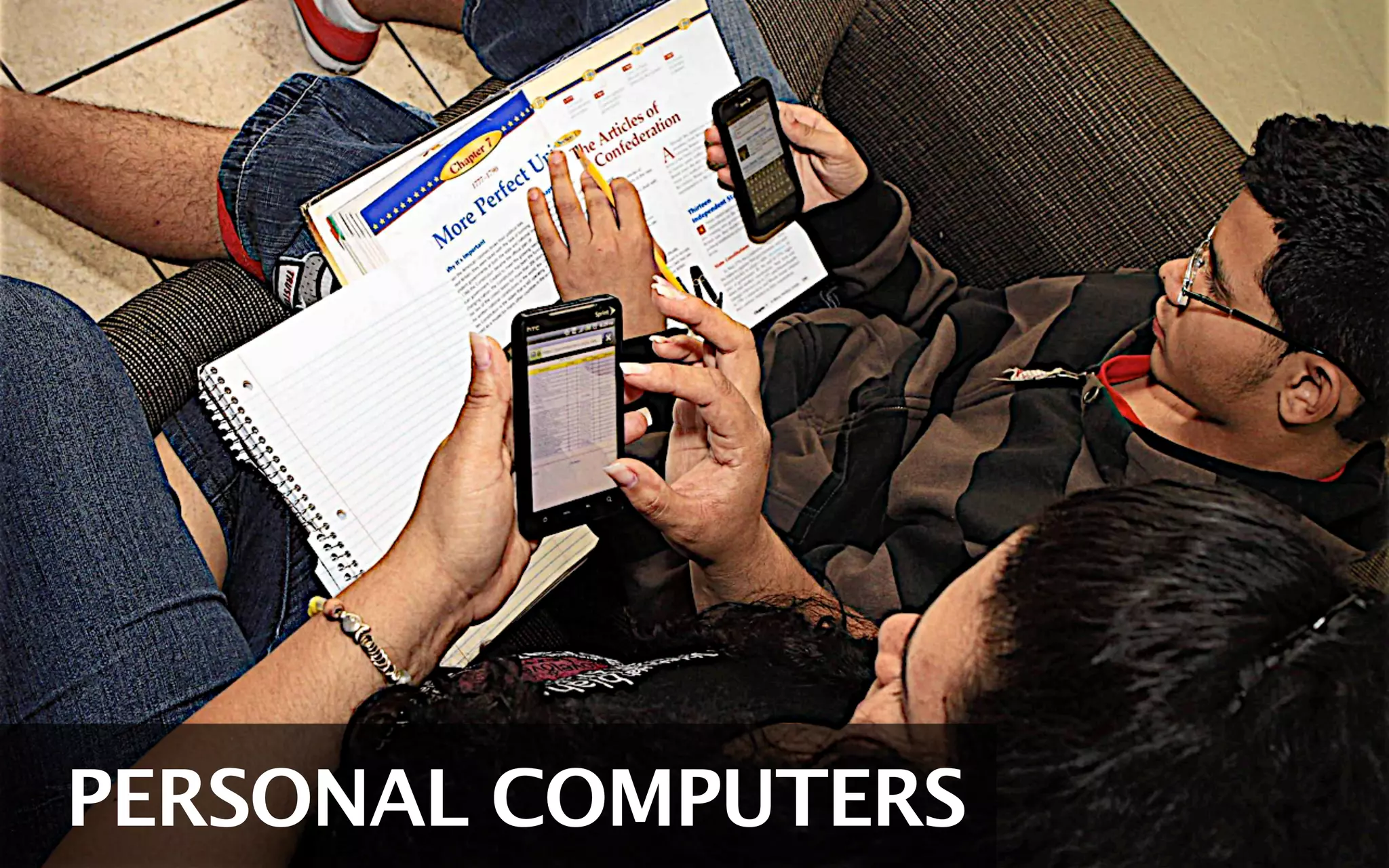
PERSONAL COMPUTERS
THE DIGITAL DIVIDE
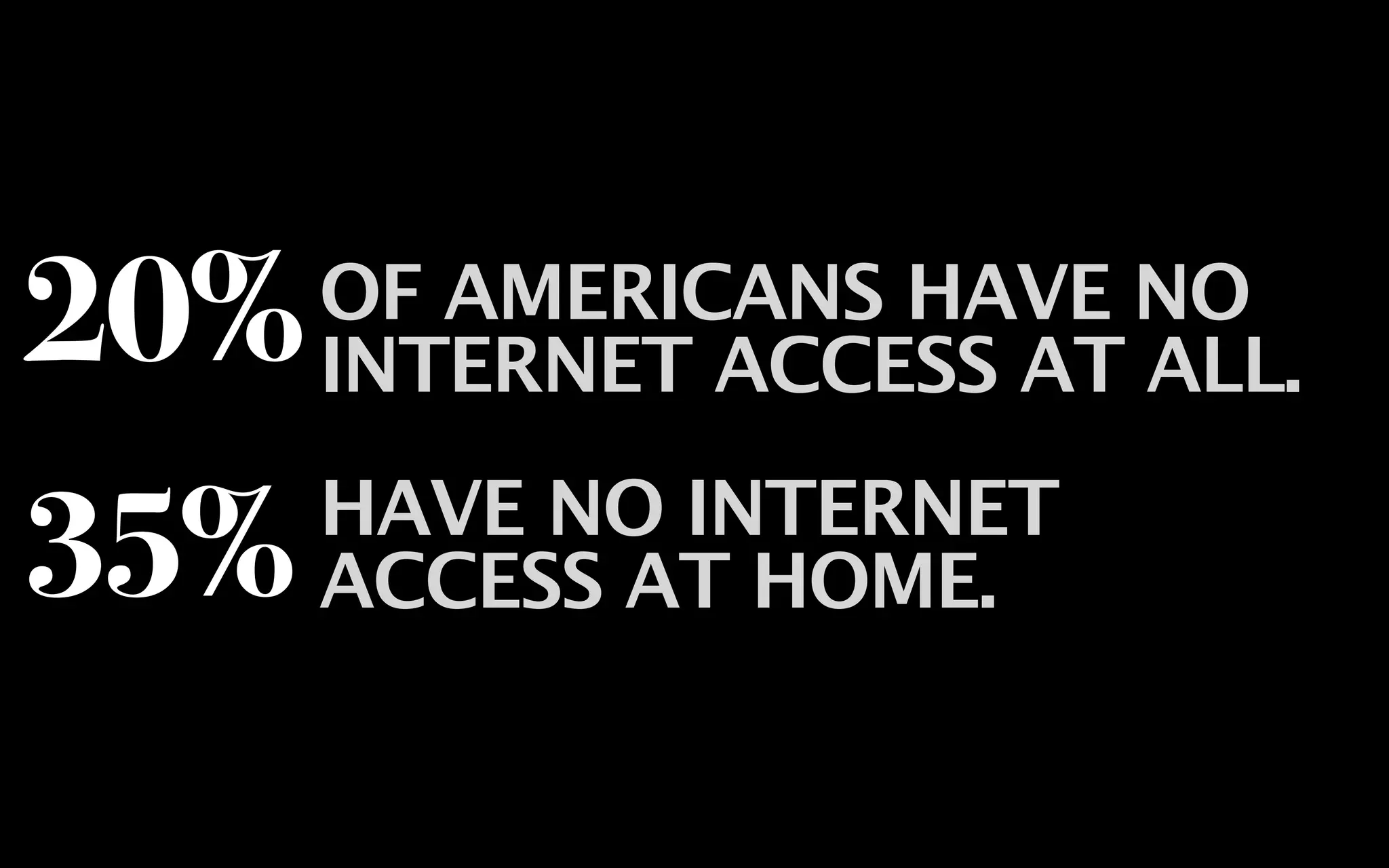
20%   OF AMERICANS HAVE NO
      INTERNET ACCESS AT ALL.

35%   HAVE NO INTERNET
      ACCESS AT HOME.
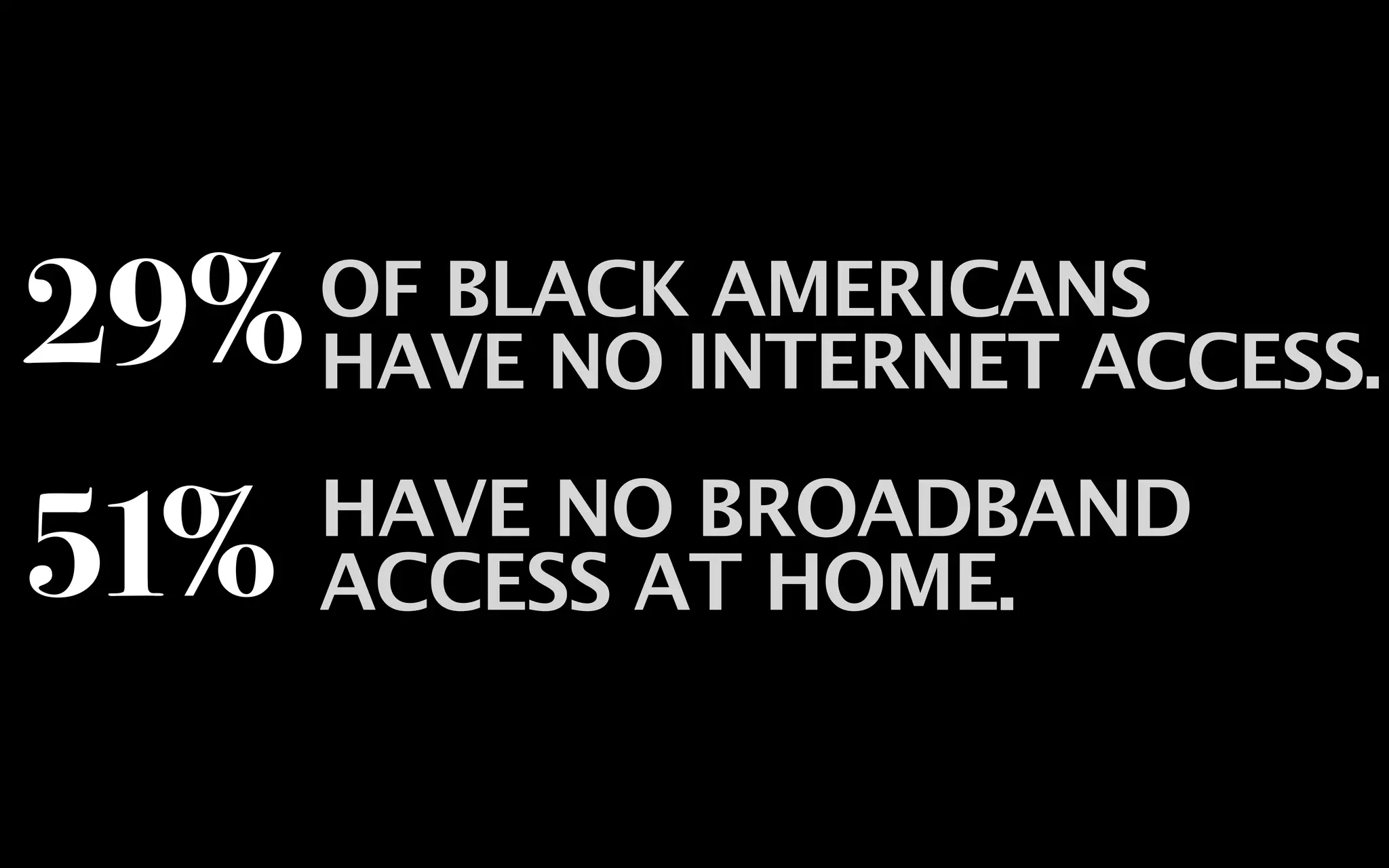
29%  OF BLACK AMERICANS
     HAVE NO INTERNET ACCESS.

51% ACCESS AT HOME.
    HAVE NO BROADBAND
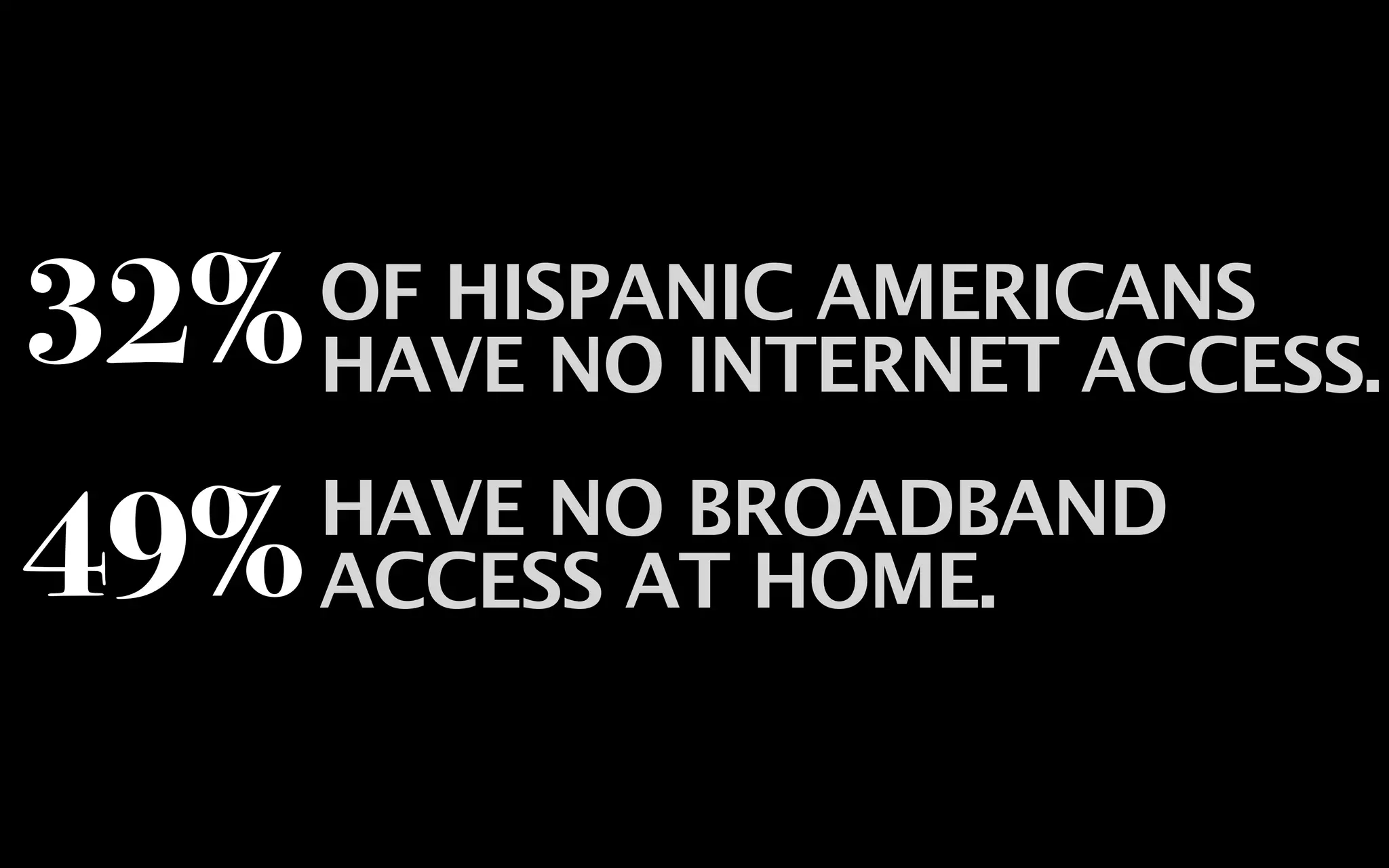
32%  OF HISPANIC AMERICANS
     HAVE NO INTERNET ACCESS.

49% ACCESS AT HOME.
    HAVE NO BROADBAND
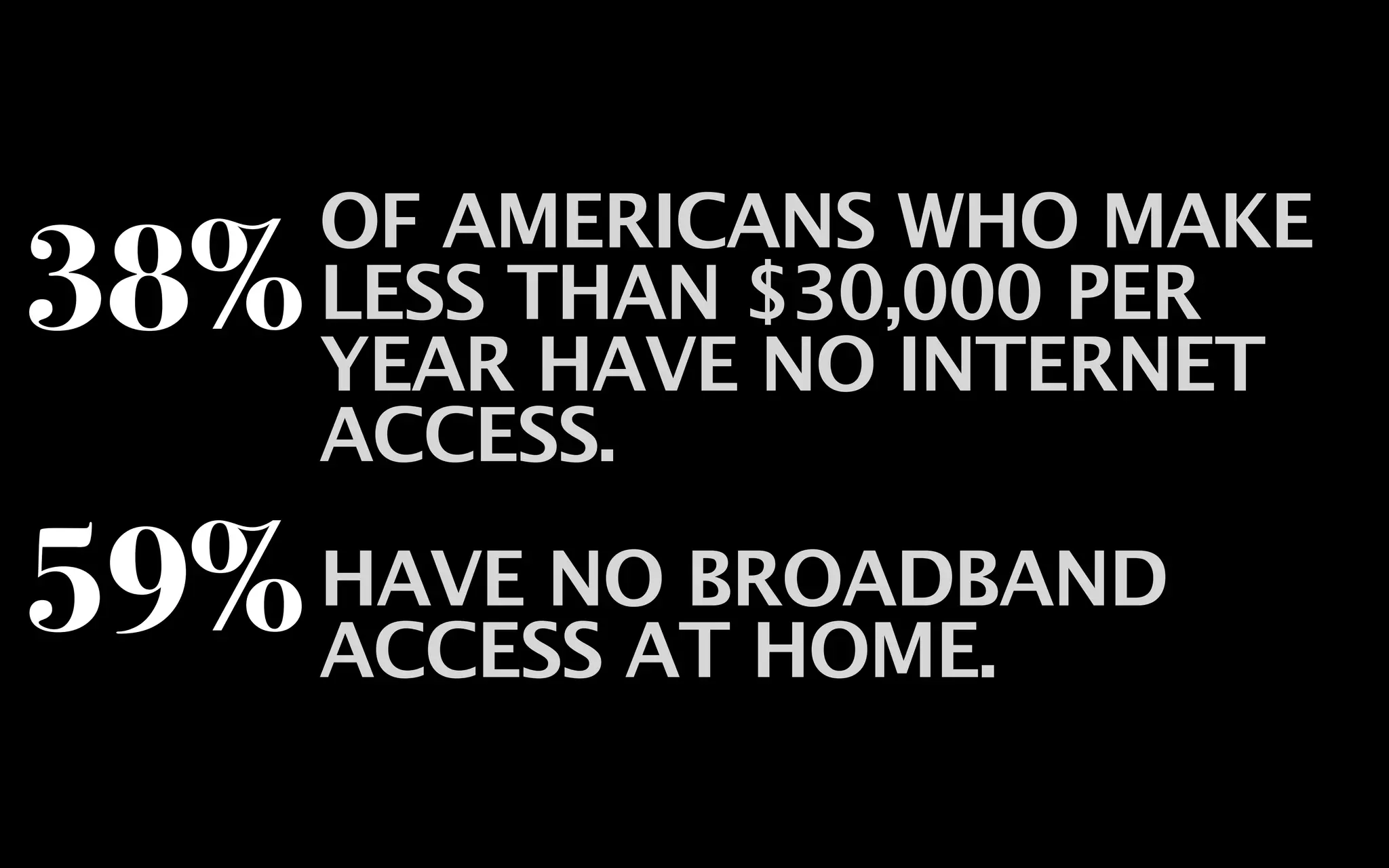
OF AMERICANS WHO MAKE
38%   LESS THAN $30,000 PER
      YEAR HAVE NO INTERNET
      ACCESS.

59%   HAVE NO BROADBAND
      ACCESS AT HOME.
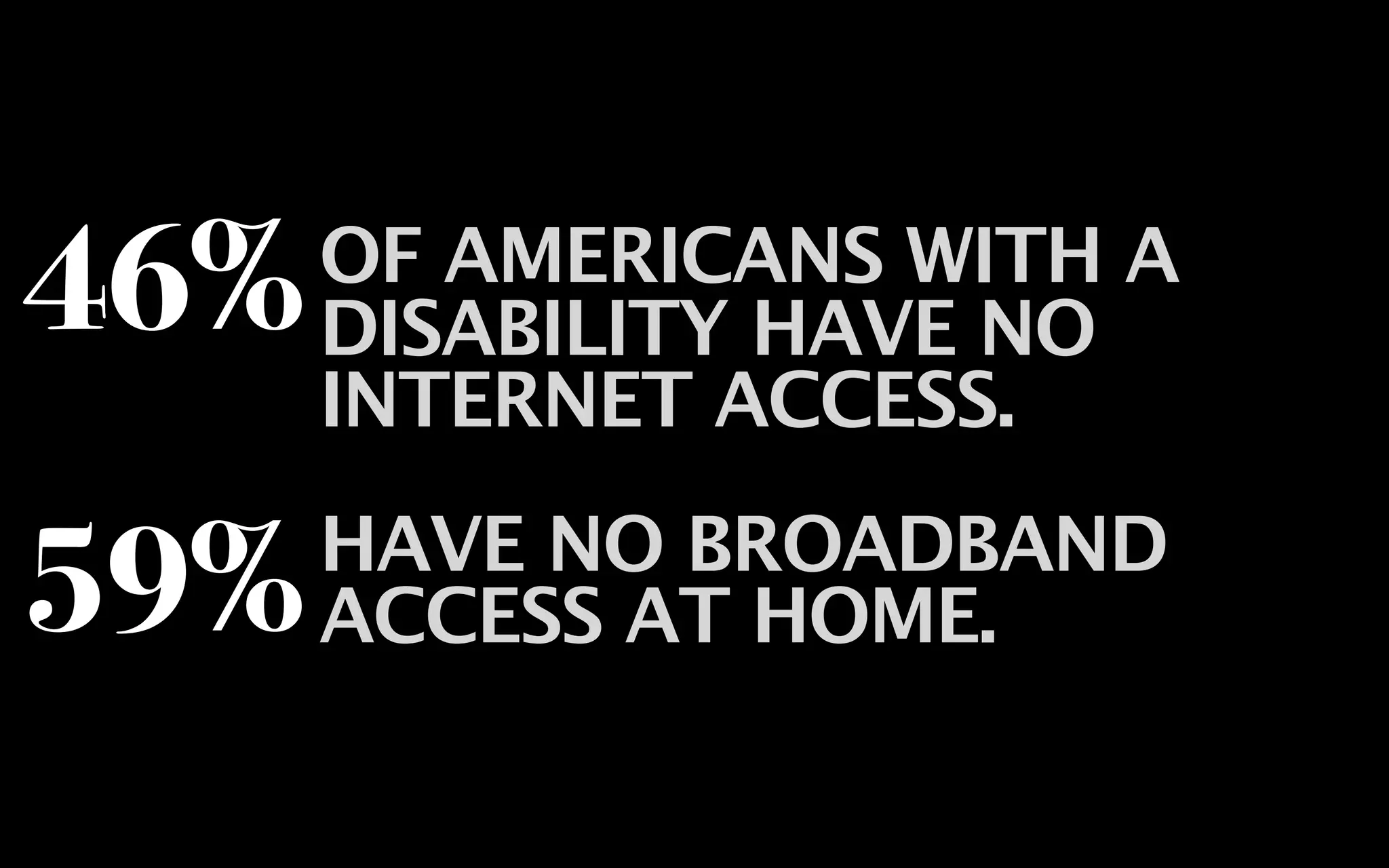
46%   OF AMERICANS WITH A
      DISABILITY HAVE NO
      INTERNET ACCESS.

59%   HAVE NO BROADBAND
      ACCESS AT HOME.
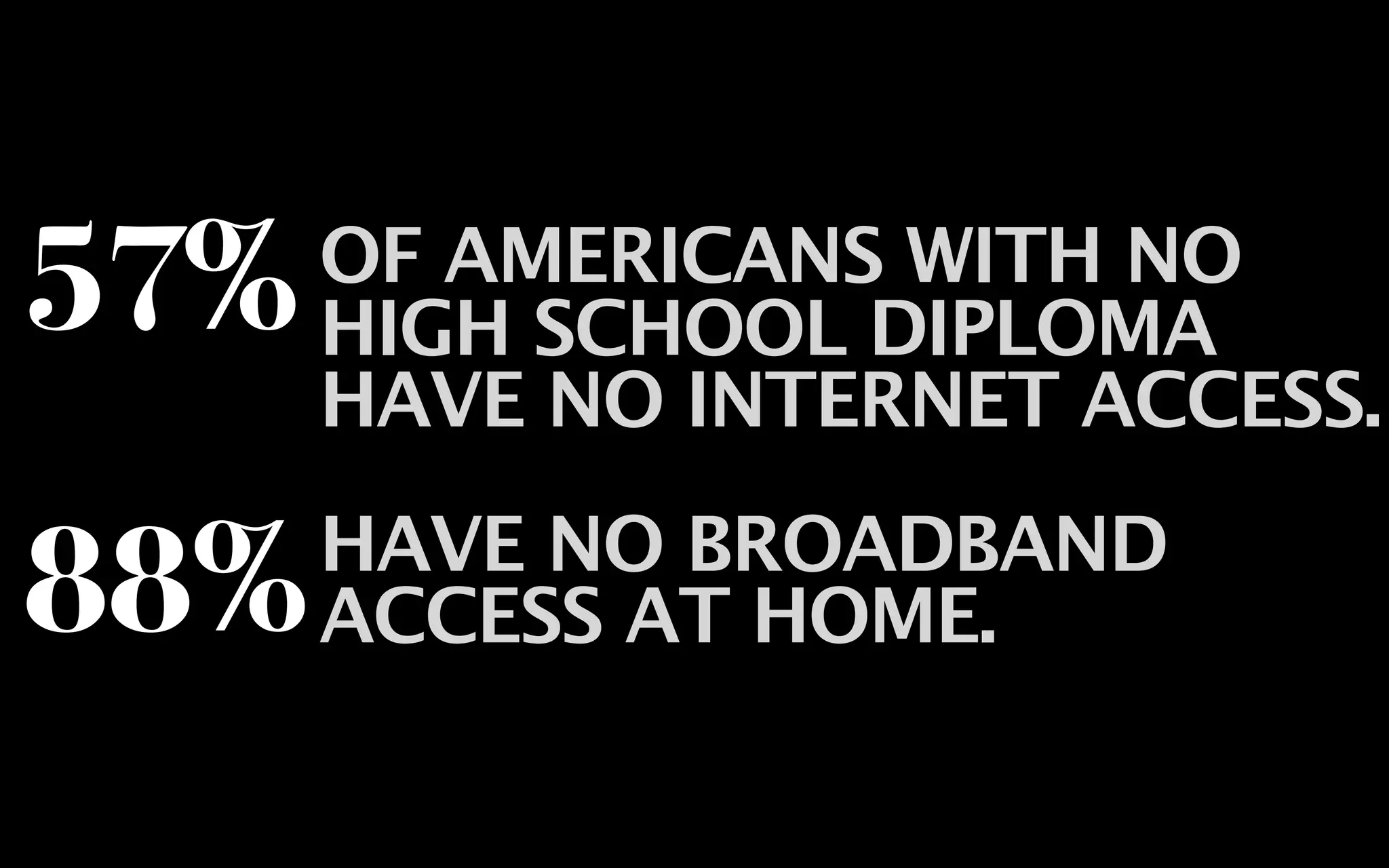
57%   OF AMERICANS WITH NO
      HIGH SCHOOL DIPLOMA
      HAVE NO INTERNET ACCESS.

88%   HAVE NO BROADBAND
      ACCESS AT HOME.
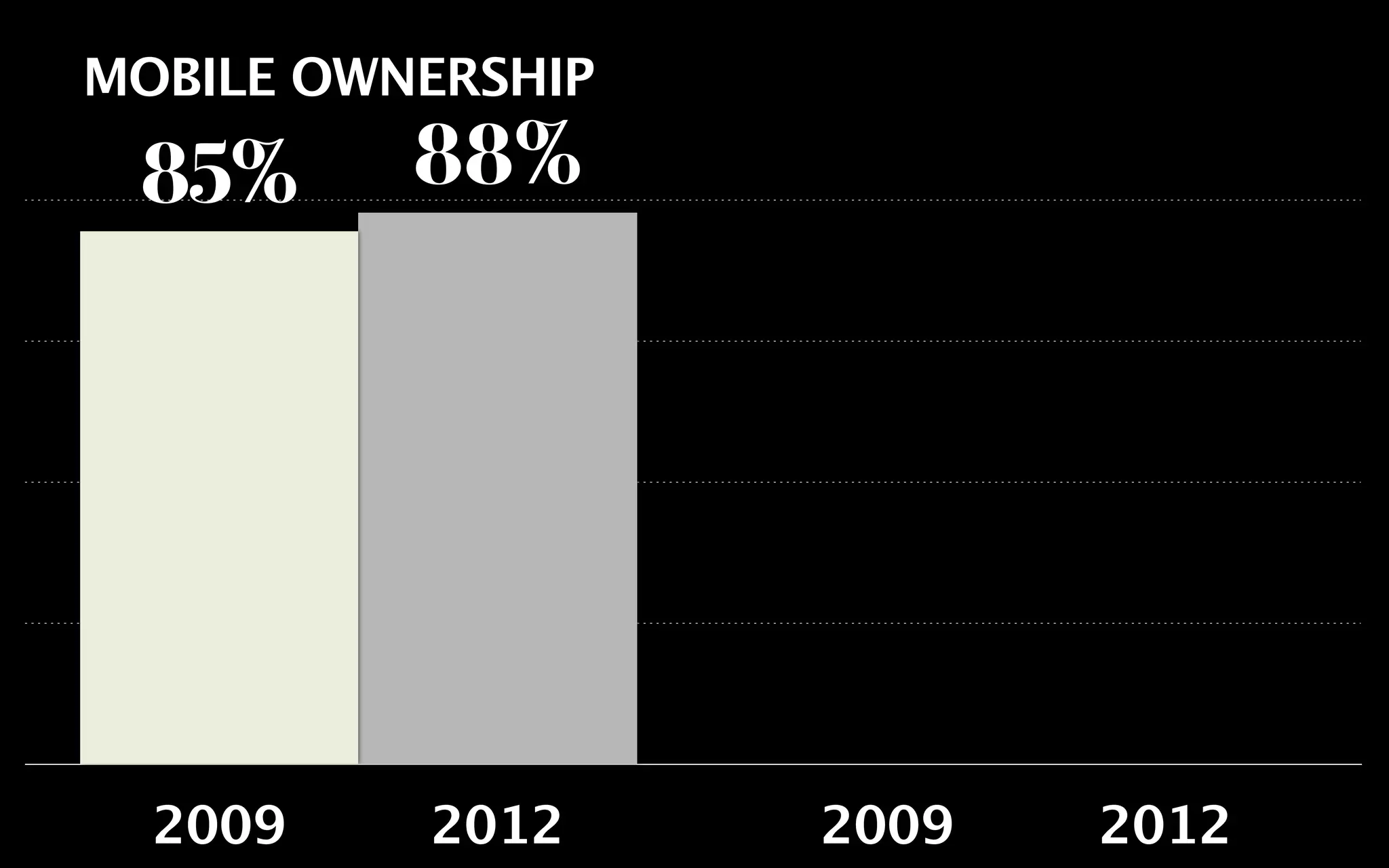
MOBILE OWNERSHIP

 85%      88%


  2009    2012     2009   2012
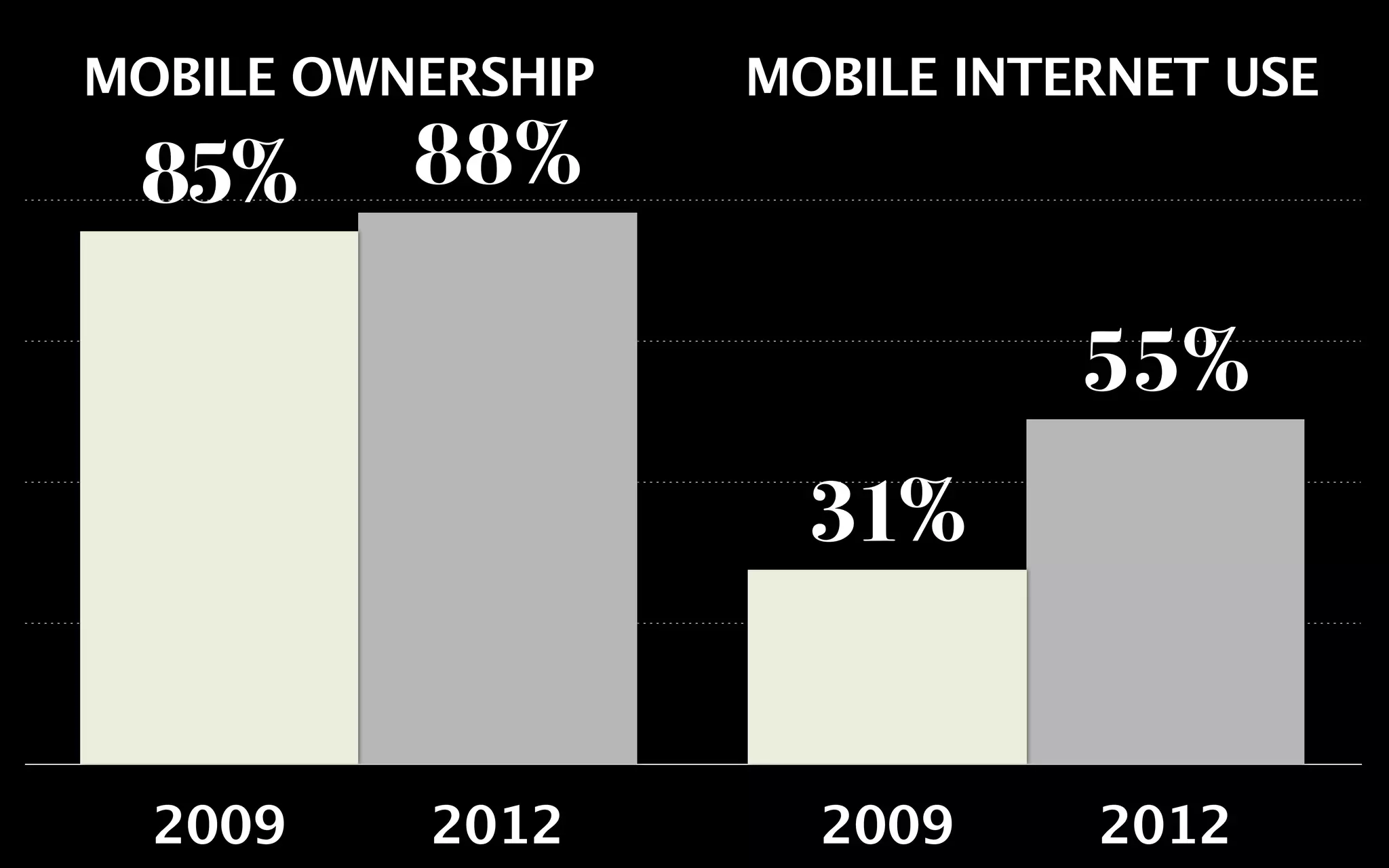
MOBILE OWNERSHIP   MOBILE INTERNET USE

 85%      88%

                              55%
                     31%


  2009    2012       2009     2012
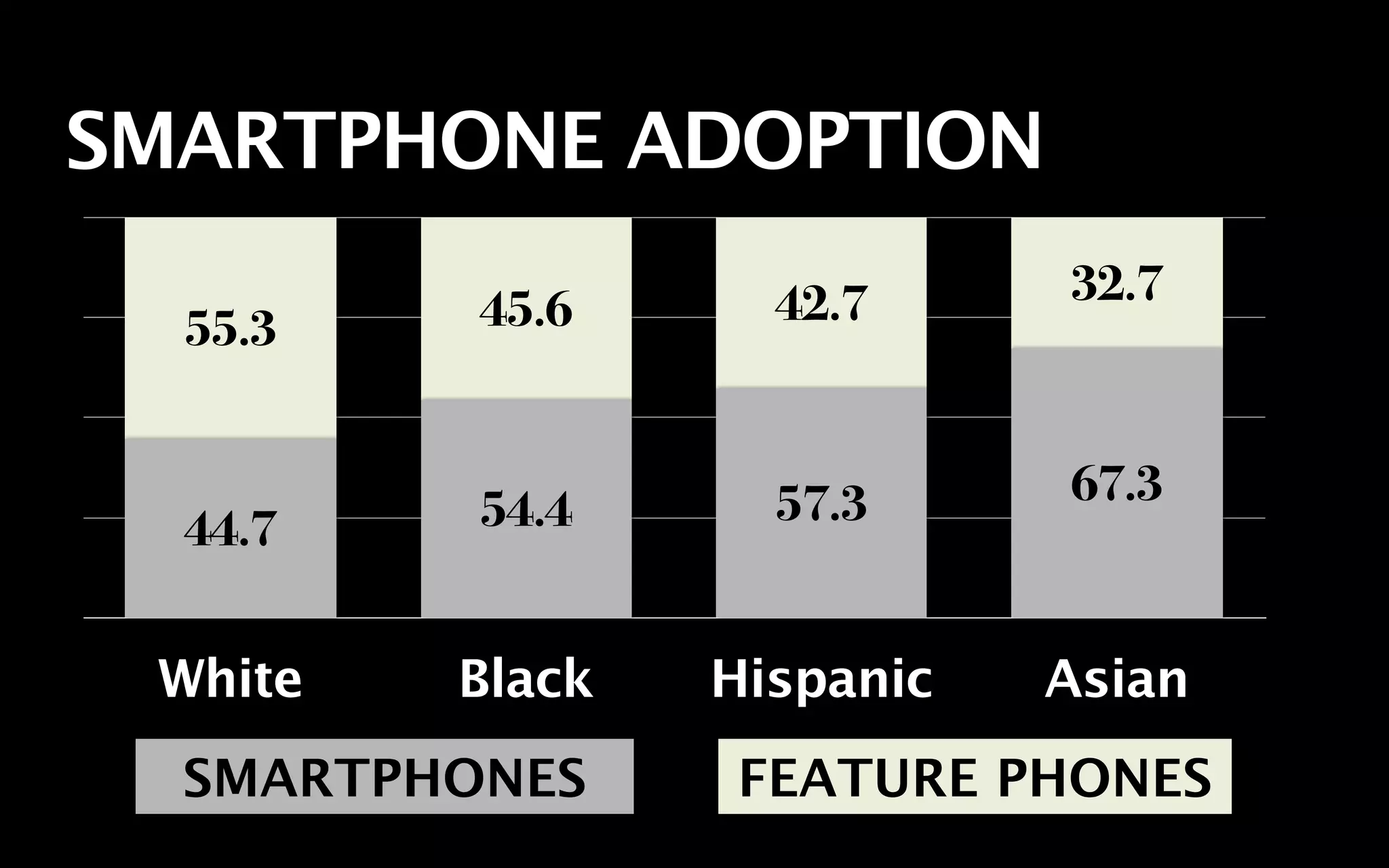
SMARTPHONE ADOPTION

          45.6     42.7     32.7
  55.3


          54.4     57.3     67.3
  44.7

 White   Black   Hispanic   Asian
  SMARTPHONES    FEATURE PHONES
THE “MOBILE MOSTLY” USER
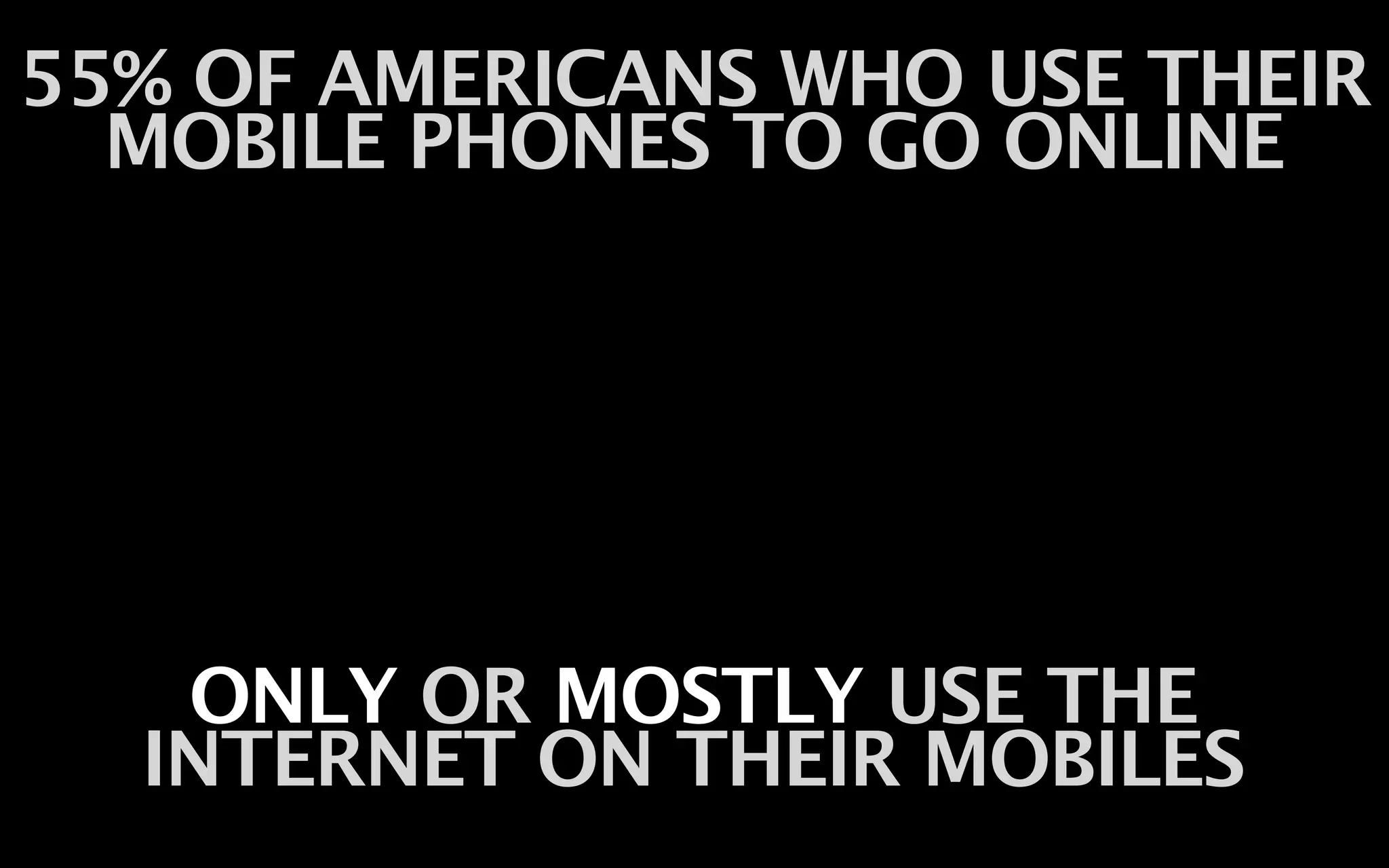
55% OF AMERICANS WHO USE THEIR
  MOBILE PHONES TO GO ONLINE


   ONLY OR MOSTLY USE THE
  INTERNET ON THEIR MOBILES
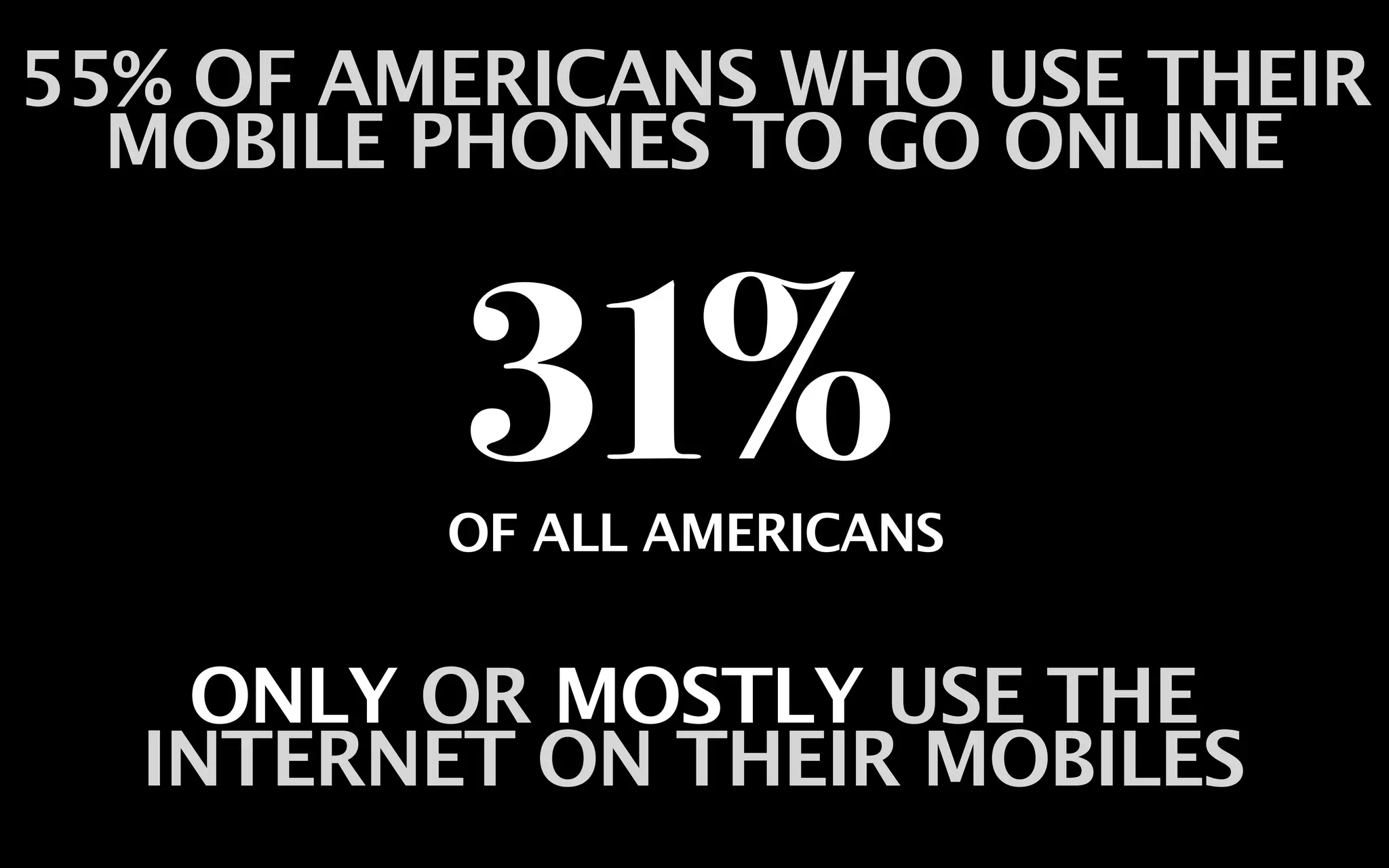
55% OF AMERICANS WHO USE THEIR
  MOBILE PHONES TO GO ONLINE


         31%
         OF ALL AMERICANS


   ONLY OR MOSTLY USE THE
  INTERNET ON THEIR MOBILES
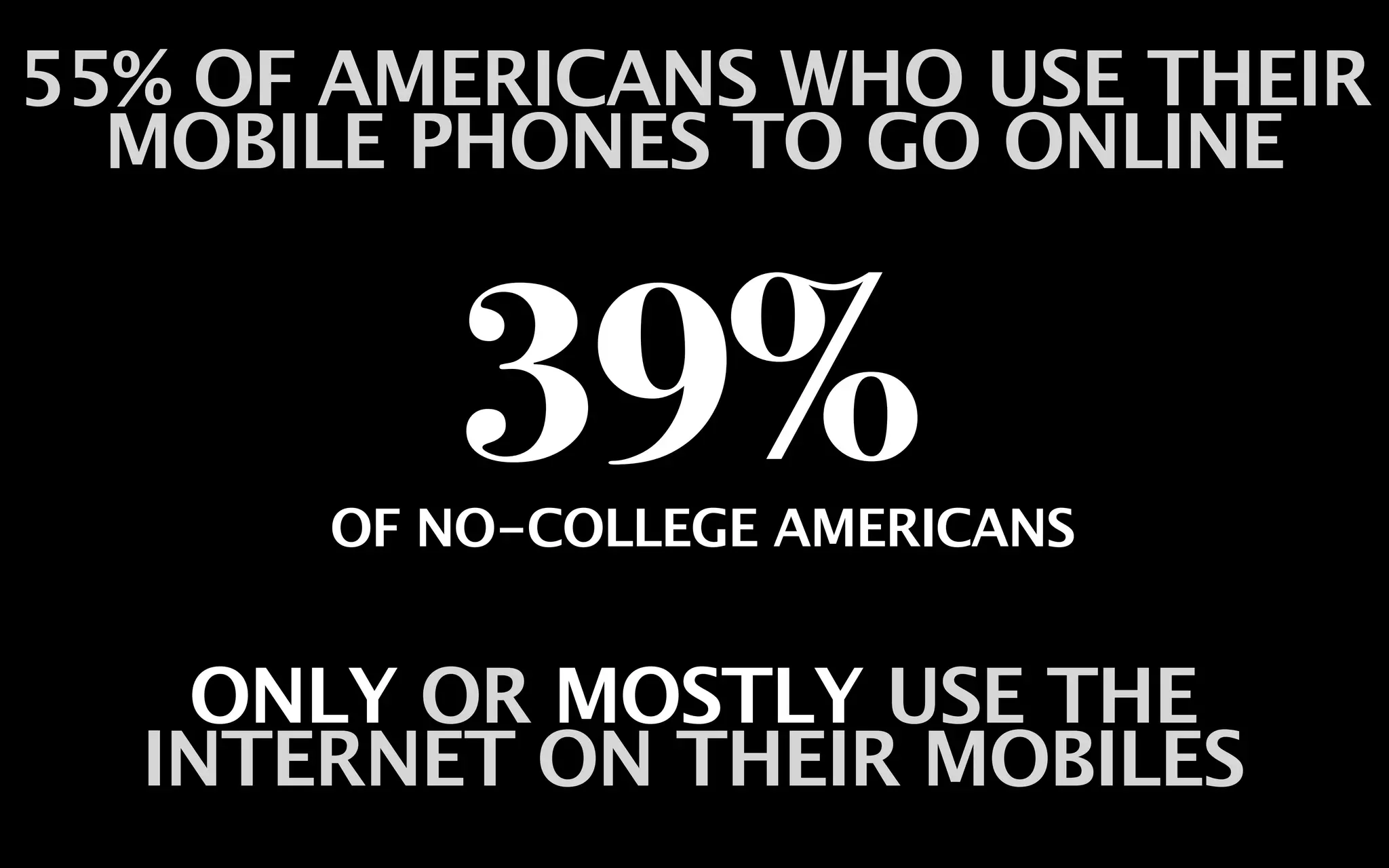
55% OF AMERICANS WHO USE THEIR
  MOBILE PHONES TO GO ONLINE


         39%
      OF NO-COLLEGE AMERICANS


   ONLY OR MOSTLY USE THE
  INTERNET ON THEIR MOBILES
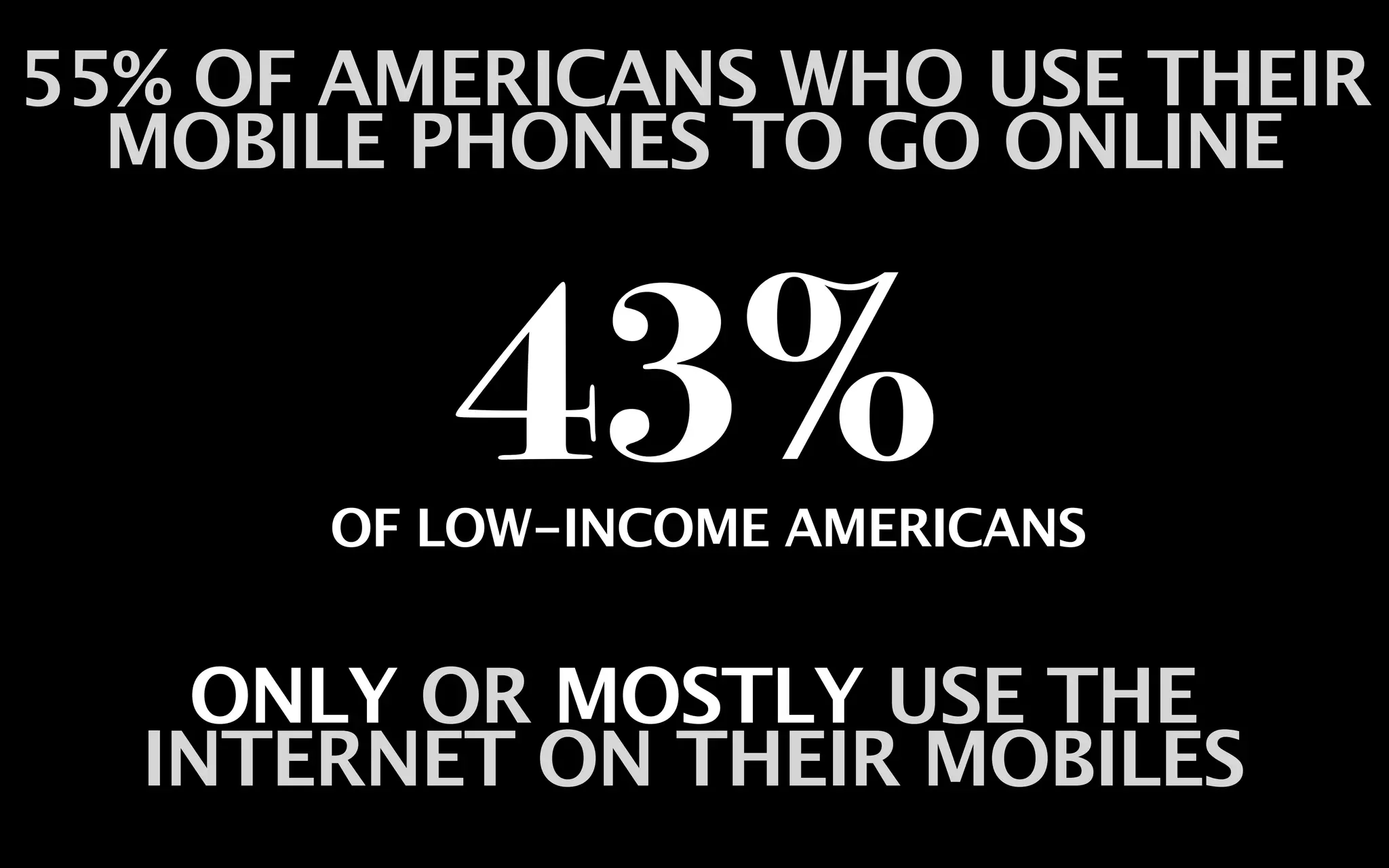
55% OF AMERICANS WHO USE THEIR
  MOBILE PHONES TO GO ONLINE


         43%
      OF LOW-INCOME AMERICANS


   ONLY OR MOSTLY USE THE
  INTERNET ON THEIR MOBILES
55% OF AMERICANS WHO USE THEIR
  MOBILE PHONES TO GO ONLINE


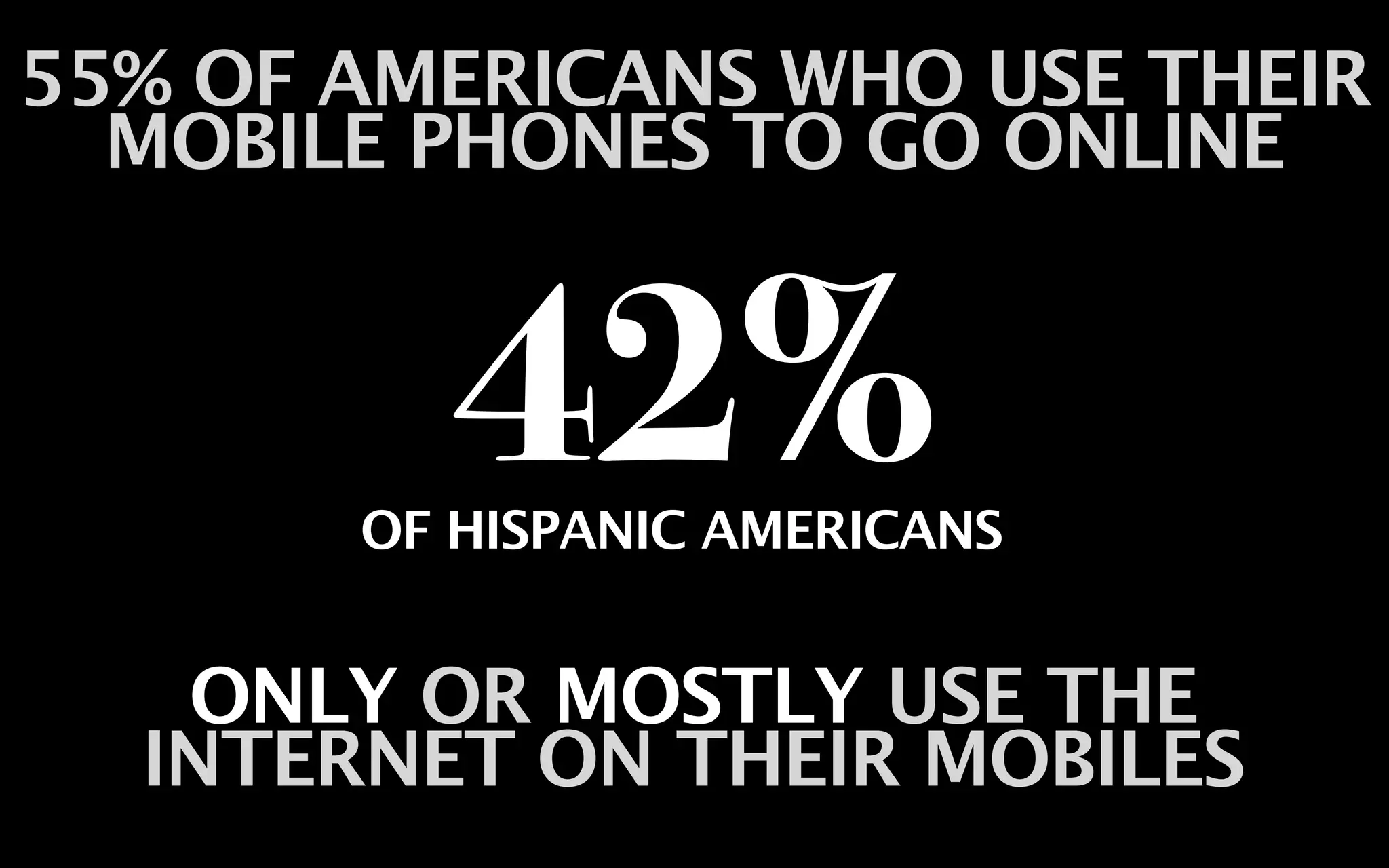
         42%
       OF HISPANIC AMERICANS


   ONLY OR MOSTLY USE THE
  INTERNET ON THEIR MOBILES
55% OF AMERICANS WHO USE THEIR
  MOBILE PHONES TO GO ONLINE


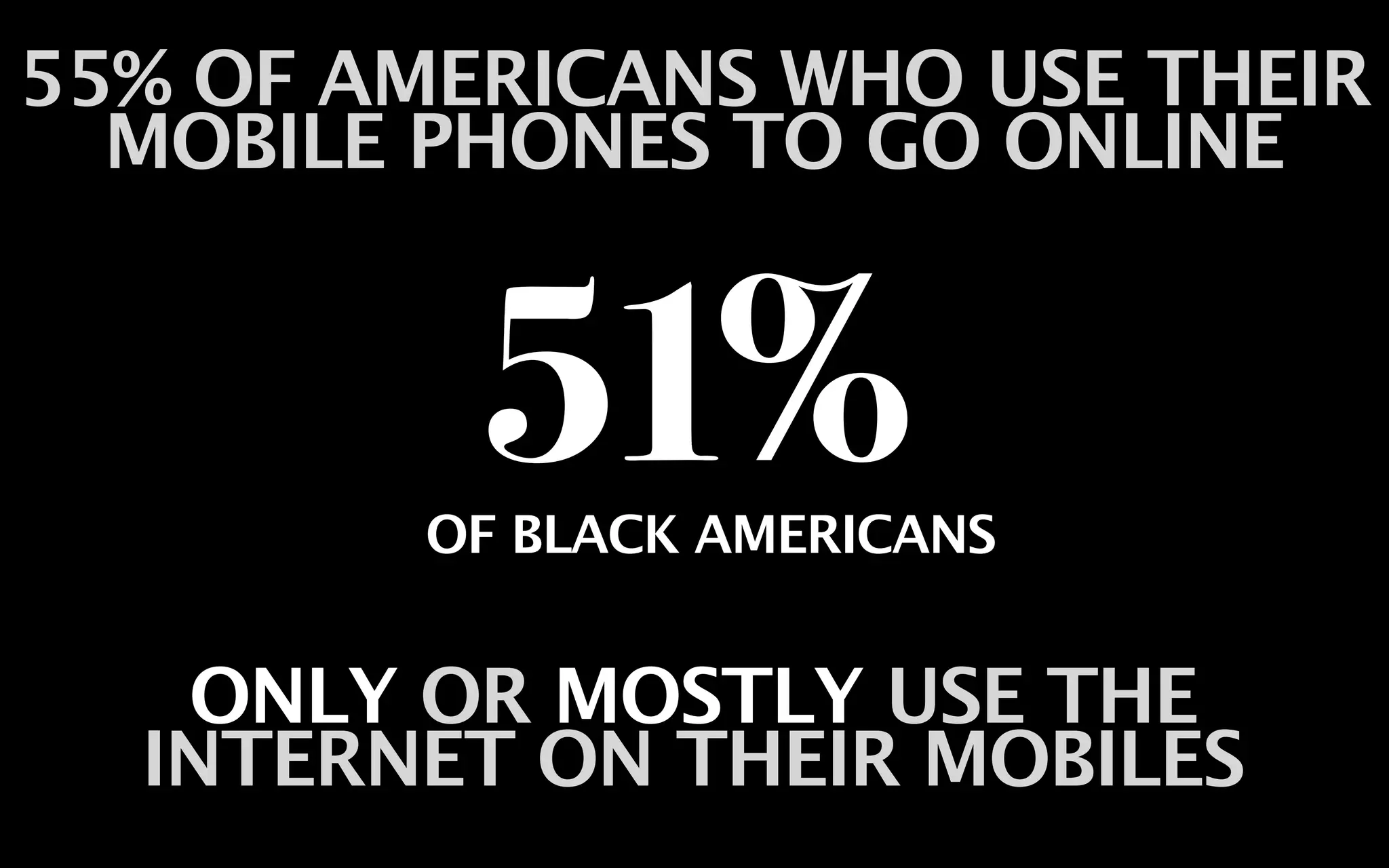
          51%
         OF BLACK AMERICANS


   ONLY OR MOSTLY USE THE
  INTERNET ON THEIR MOBILES
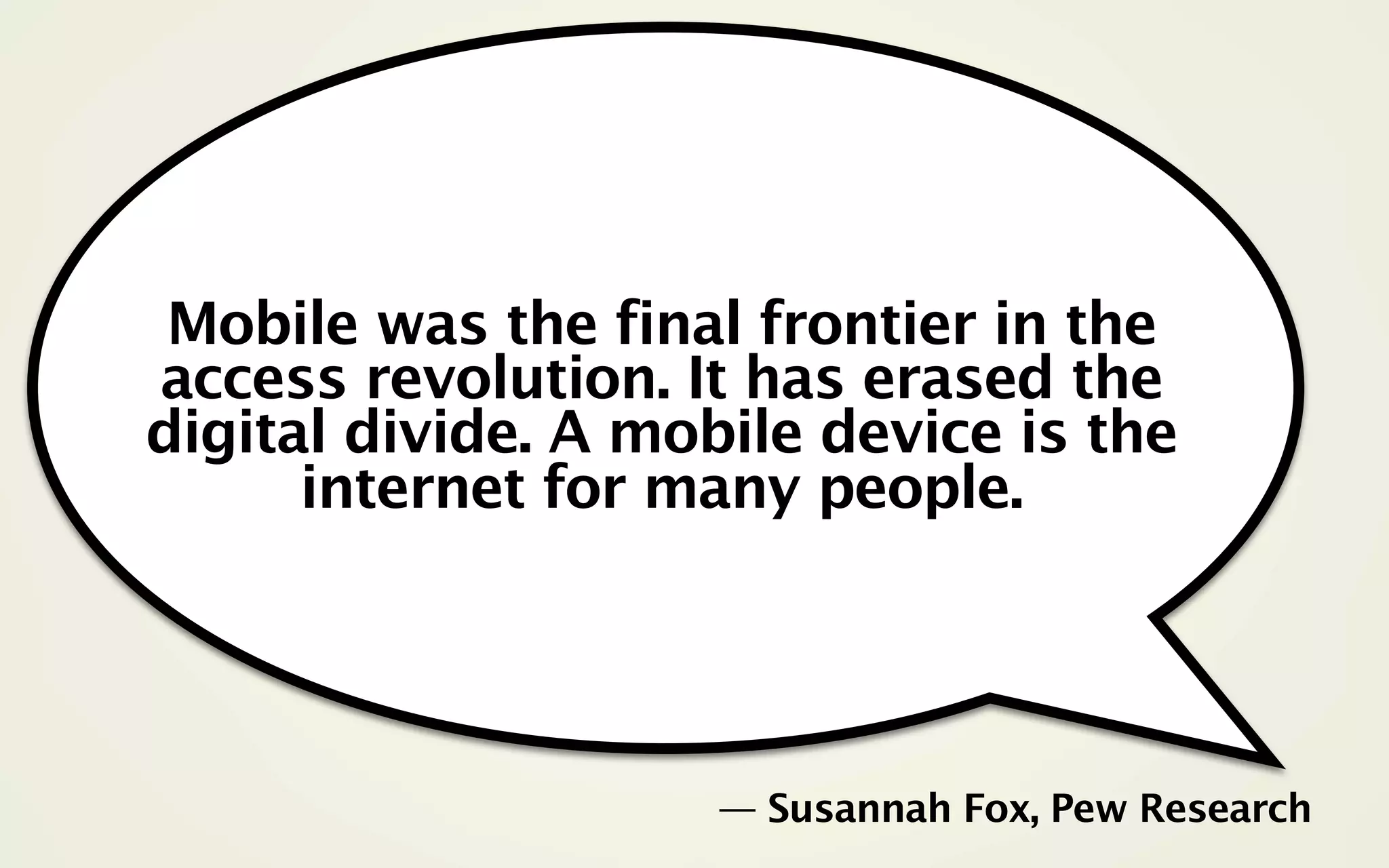
Mobile was the final frontier in the
access revolution. It has erased the
digital divide. A mobile device is the
      internet for many people.


                     — Susannah Fox, Pew Research
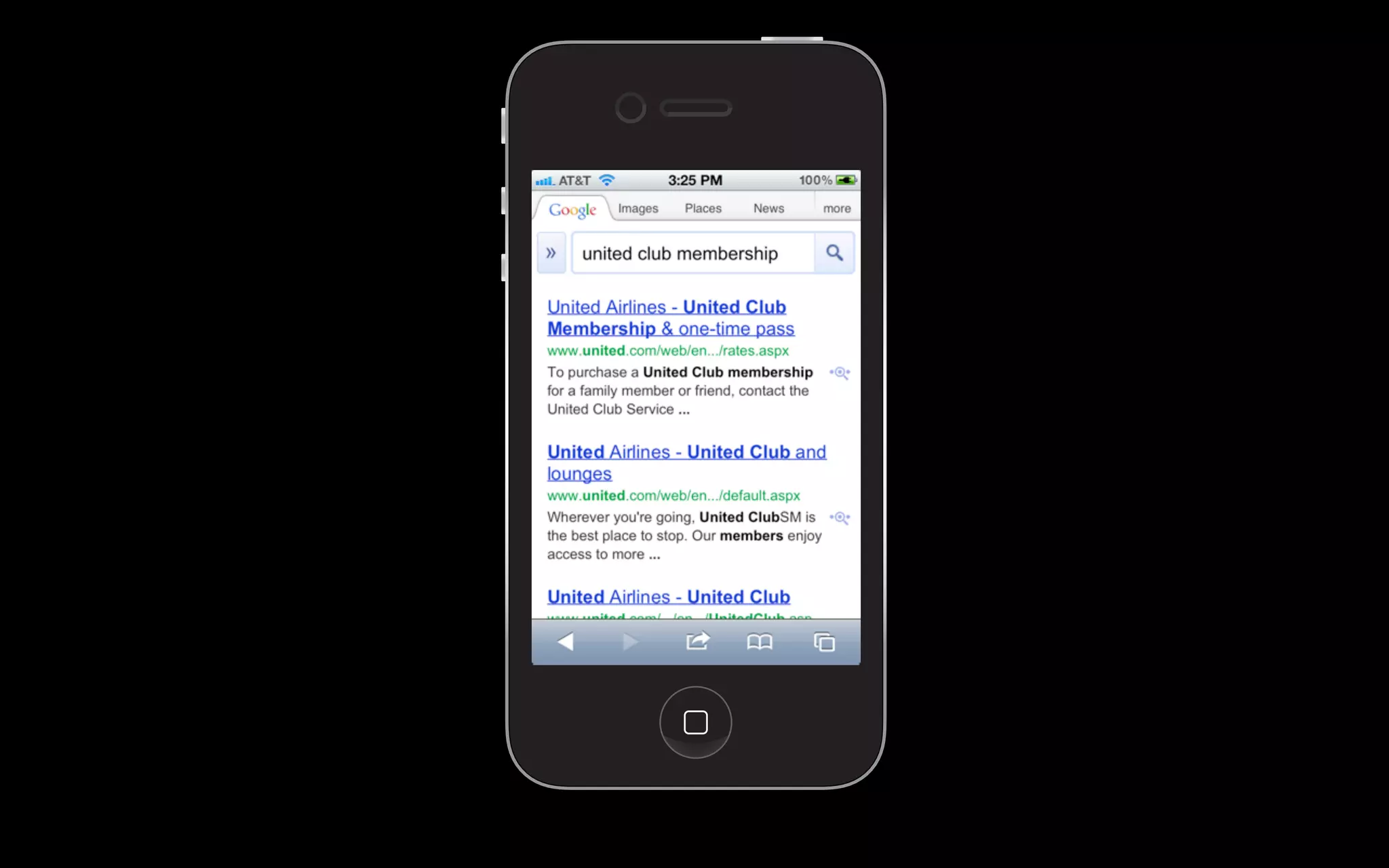
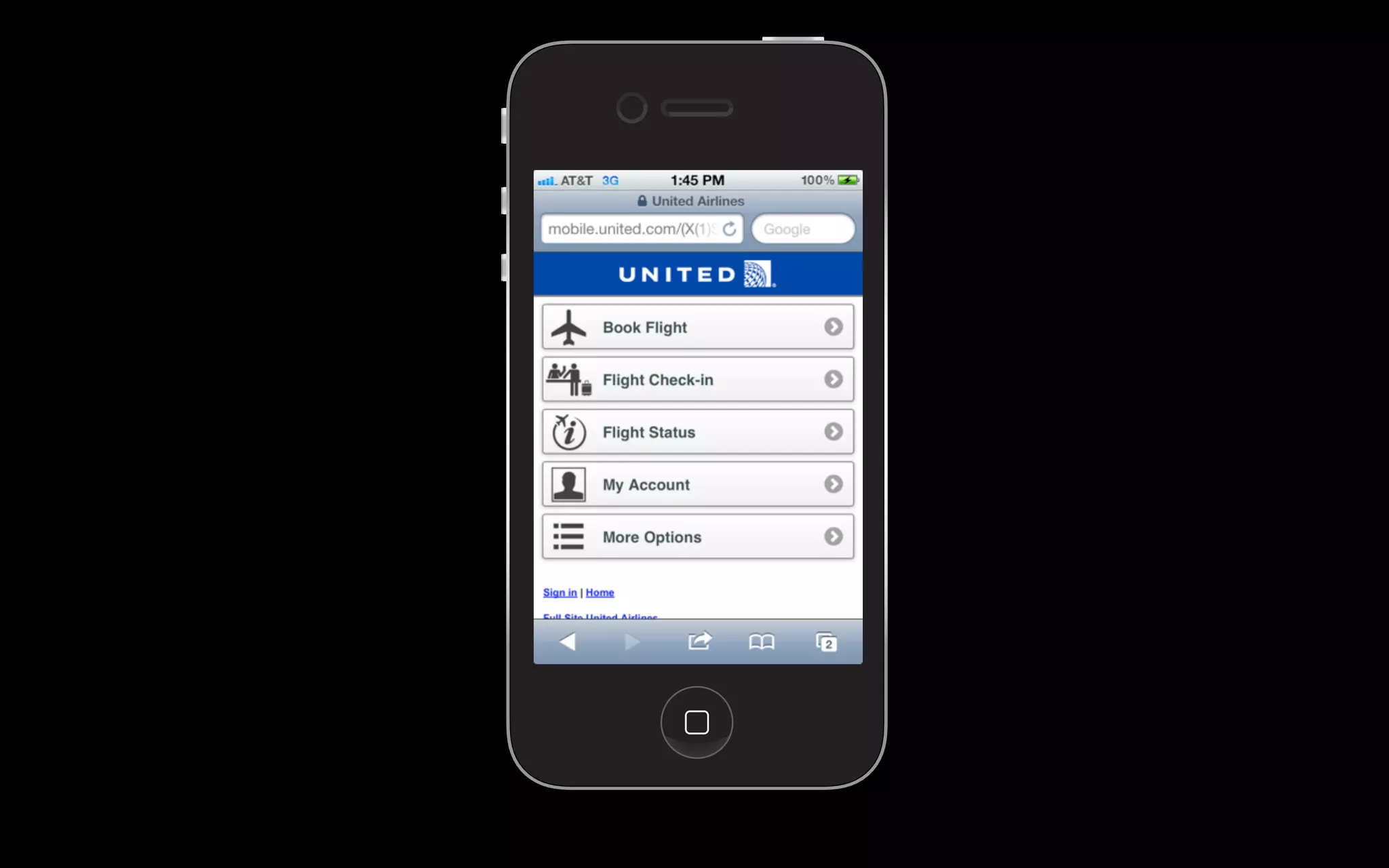
united club membership
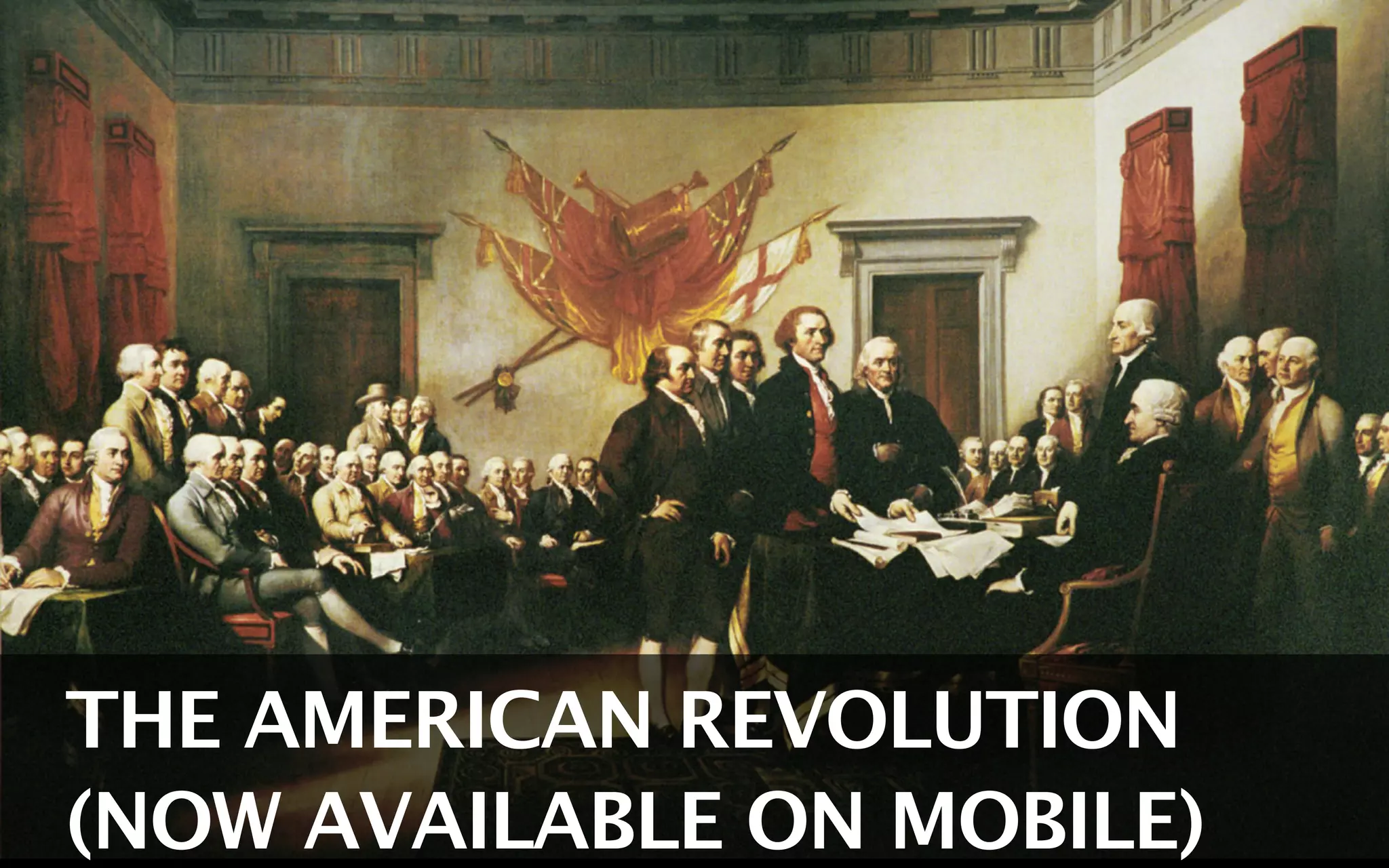
THE AMERICAN REVOLUTION
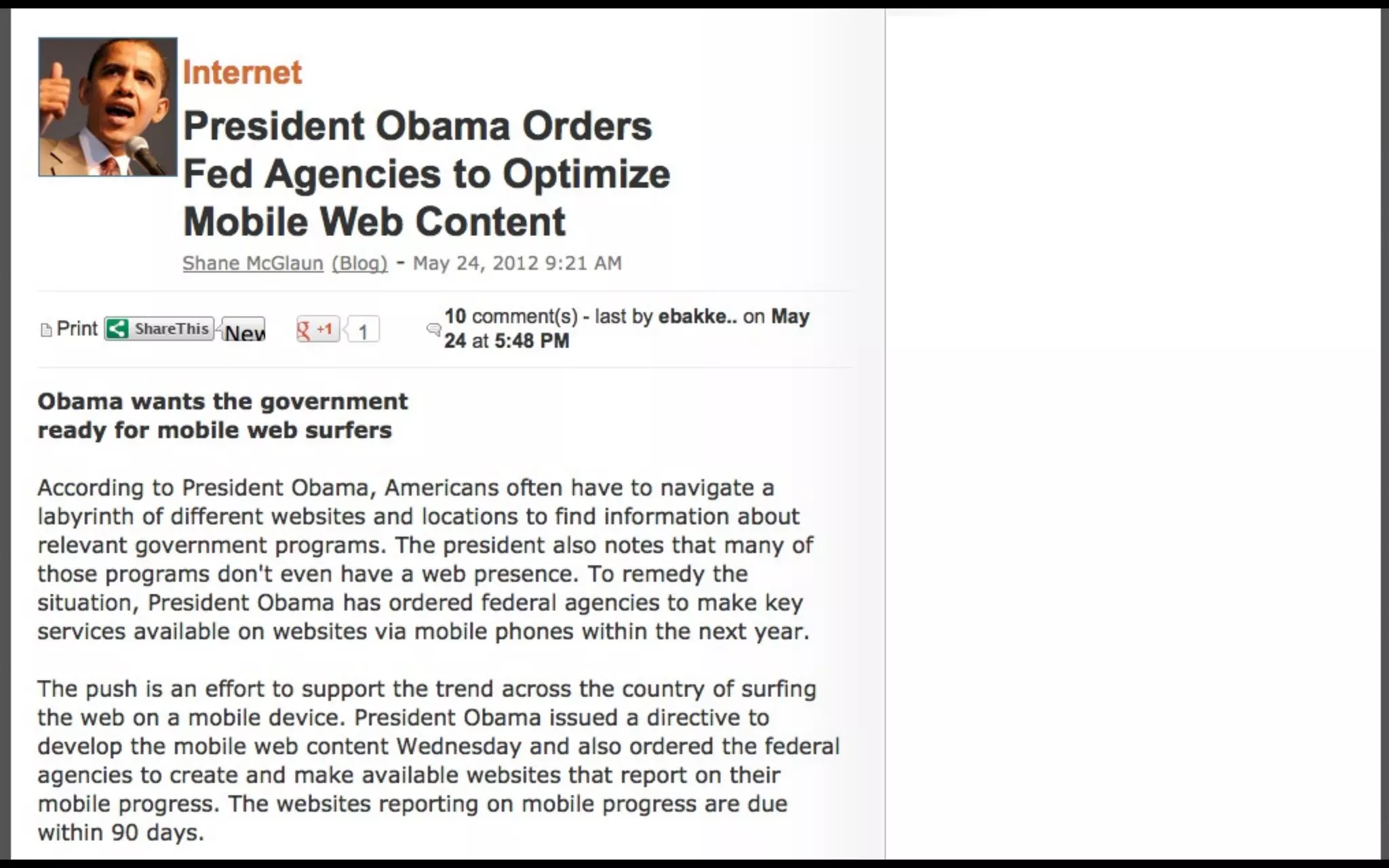
(NOW AVAILABLE ON MOBILE)
THIS
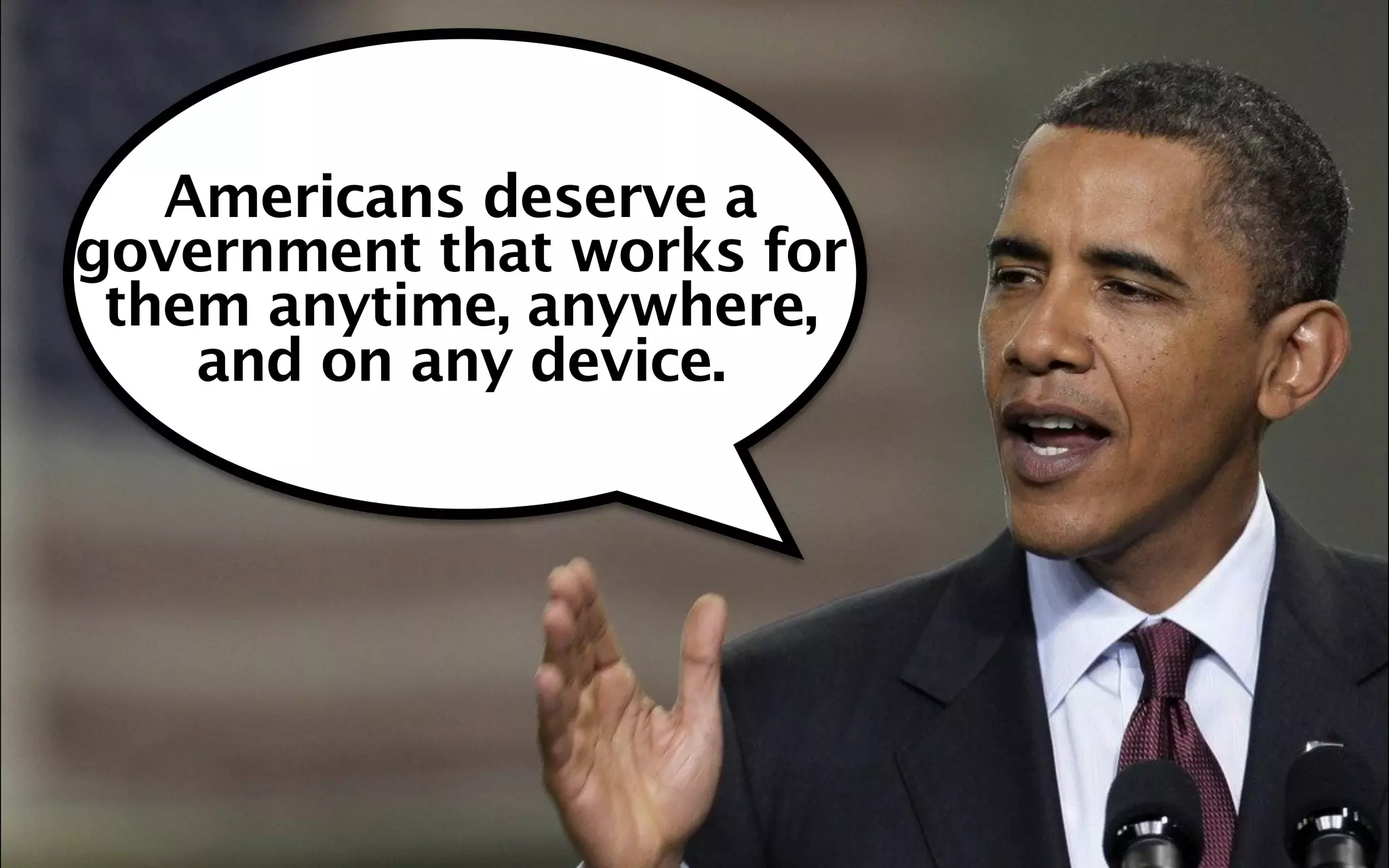
Americans deserve a
government that works for
 them anytime, anywhere,
    and on any device.
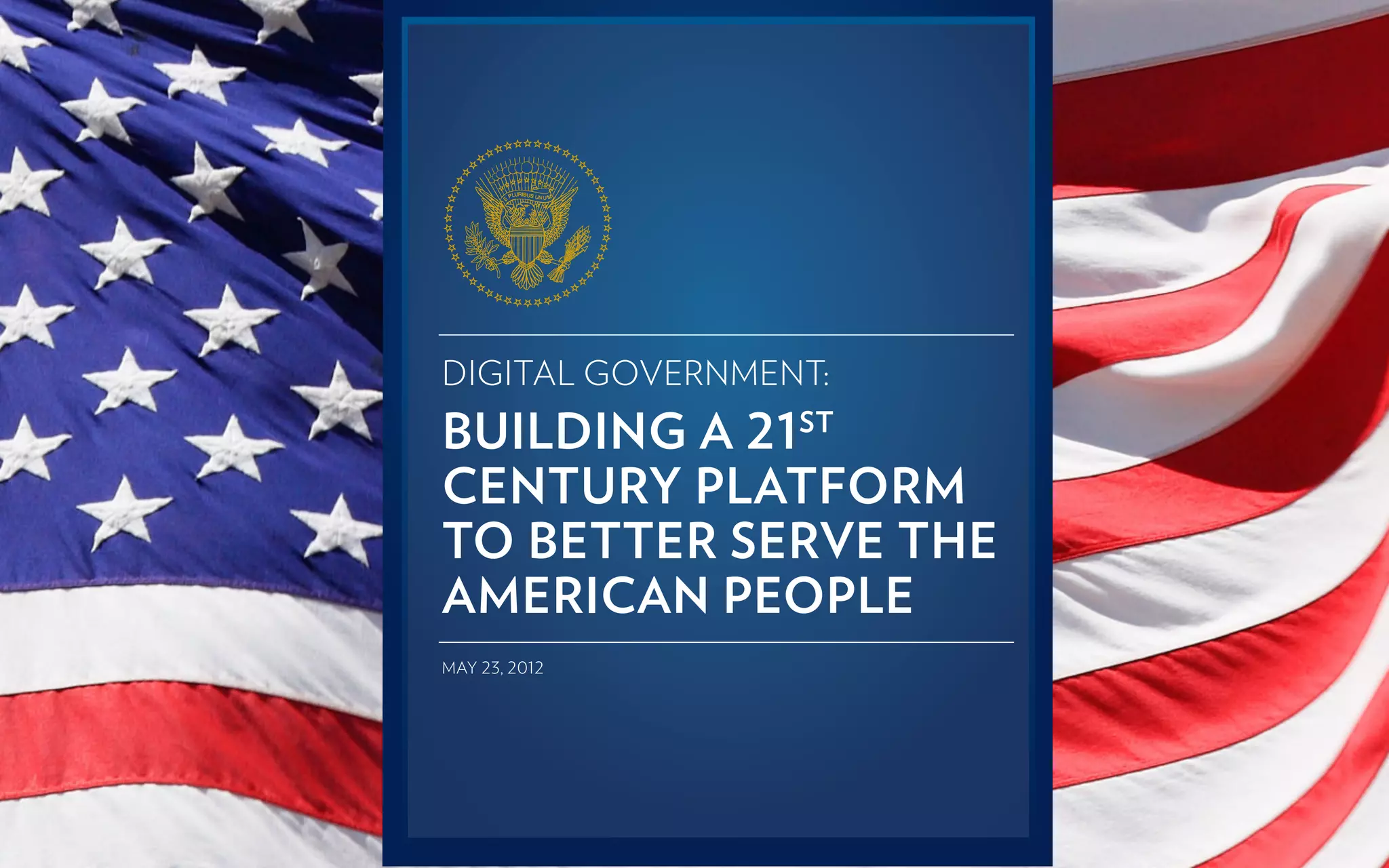
DIGITAL GOVERNMENT:
BUILDING A 21    ST

CENTURY PLATFORM
TO BETTER SERVE THE
AMERICAN PEOPLE
MAY 23, 2012
The Federal Government must
also focus on the fundamentals of
     customer-centric design.
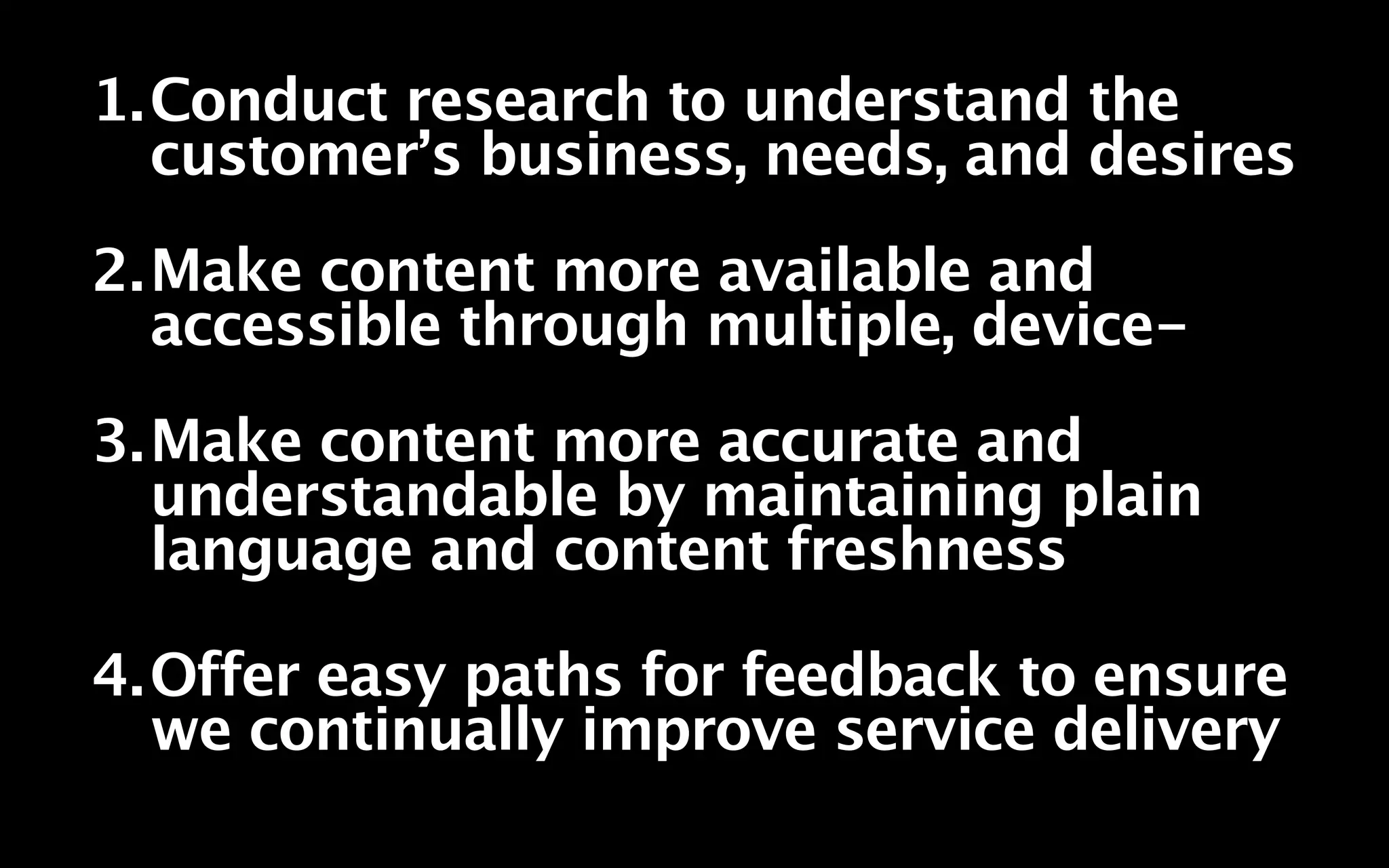
1.Conduct research to understand the
  customer’s business, needs, and desires
1.Conduct research to understand the
  customer’s business, needs, and desires
2.Make content more available and
  accessible through multiple, device-
1.Conduct research to understand the
  customer’s business, needs, and desires
2.Make content more available and
  accessible through multiple, device-
3.Make content more accurate and
  understandable by maintaining plain
  language and content freshness
1.Conduct research to understand the
  customer’s business, needs, and desires
2.Make content more available and
  accessible through multiple, device-
3.Make content more accurate and
  understandable by maintaining plain
  language and content freshness

4.Offer easy paths for feedback to ensure
  we continually improve service delivery
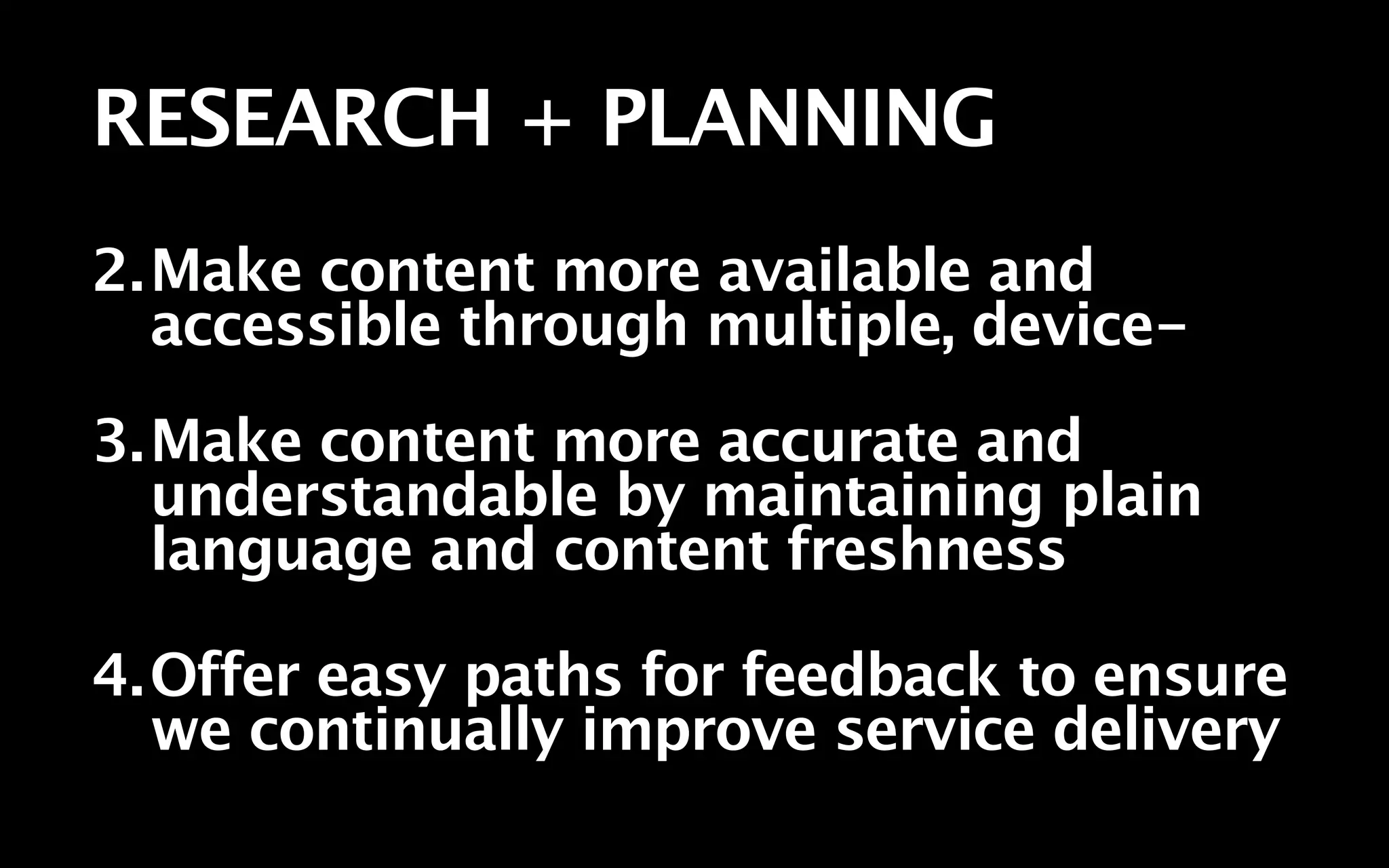
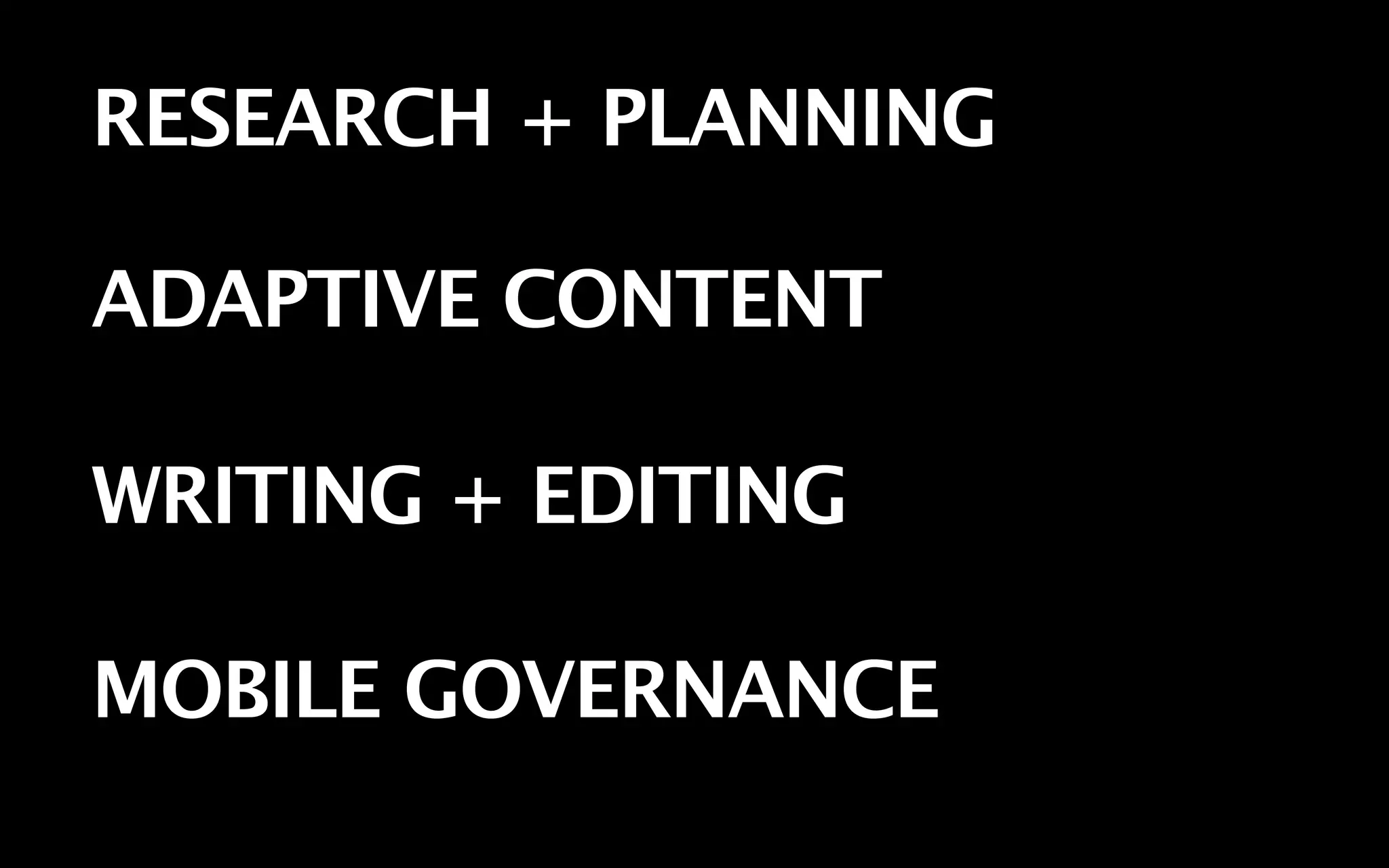
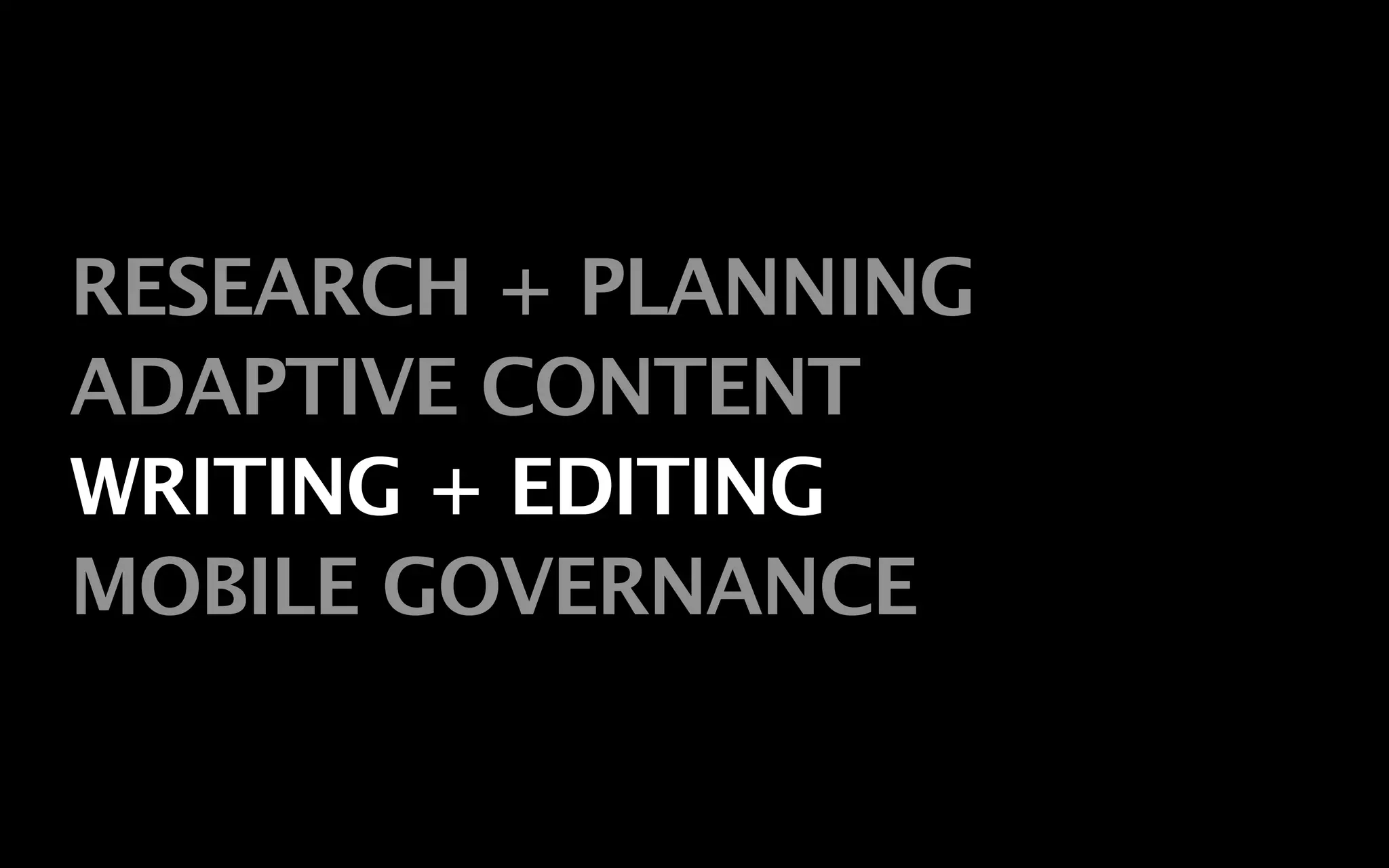
RESEARCH + PLANNING
2.Make content more available and
  accessible through multiple, device-
3.Make content more accurate and
  understandable by maintaining plain
  language and content freshness

4.Offer easy paths for feedback to ensure
  we continually improve service delivery
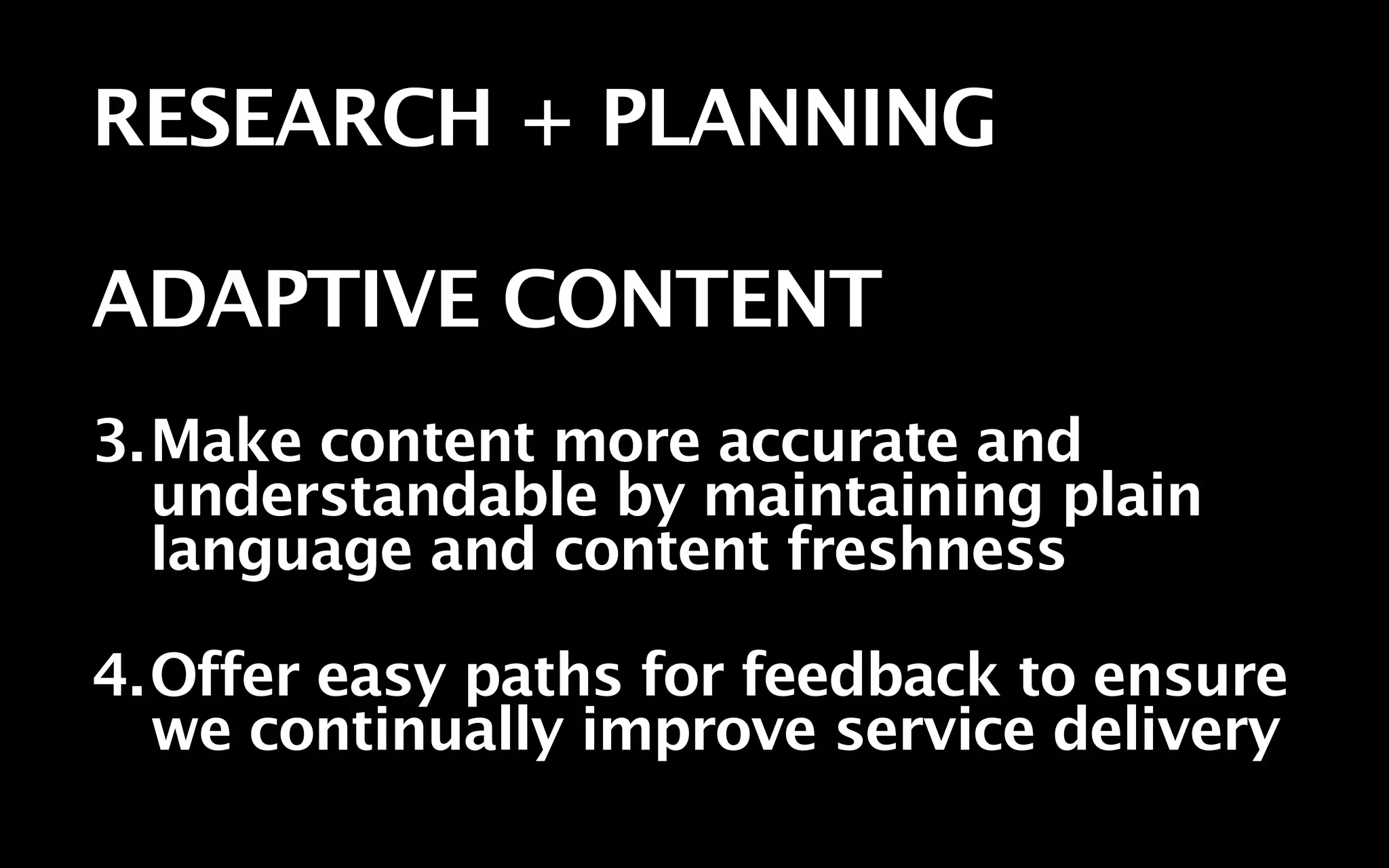
RESEARCH + PLANNING

ADAPTIVE CONTENT
3.Make content more accurate and
  understandable by maintaining plain
  language and content freshness

4.Offer easy paths for feedback to ensure
  we continually improve service delivery
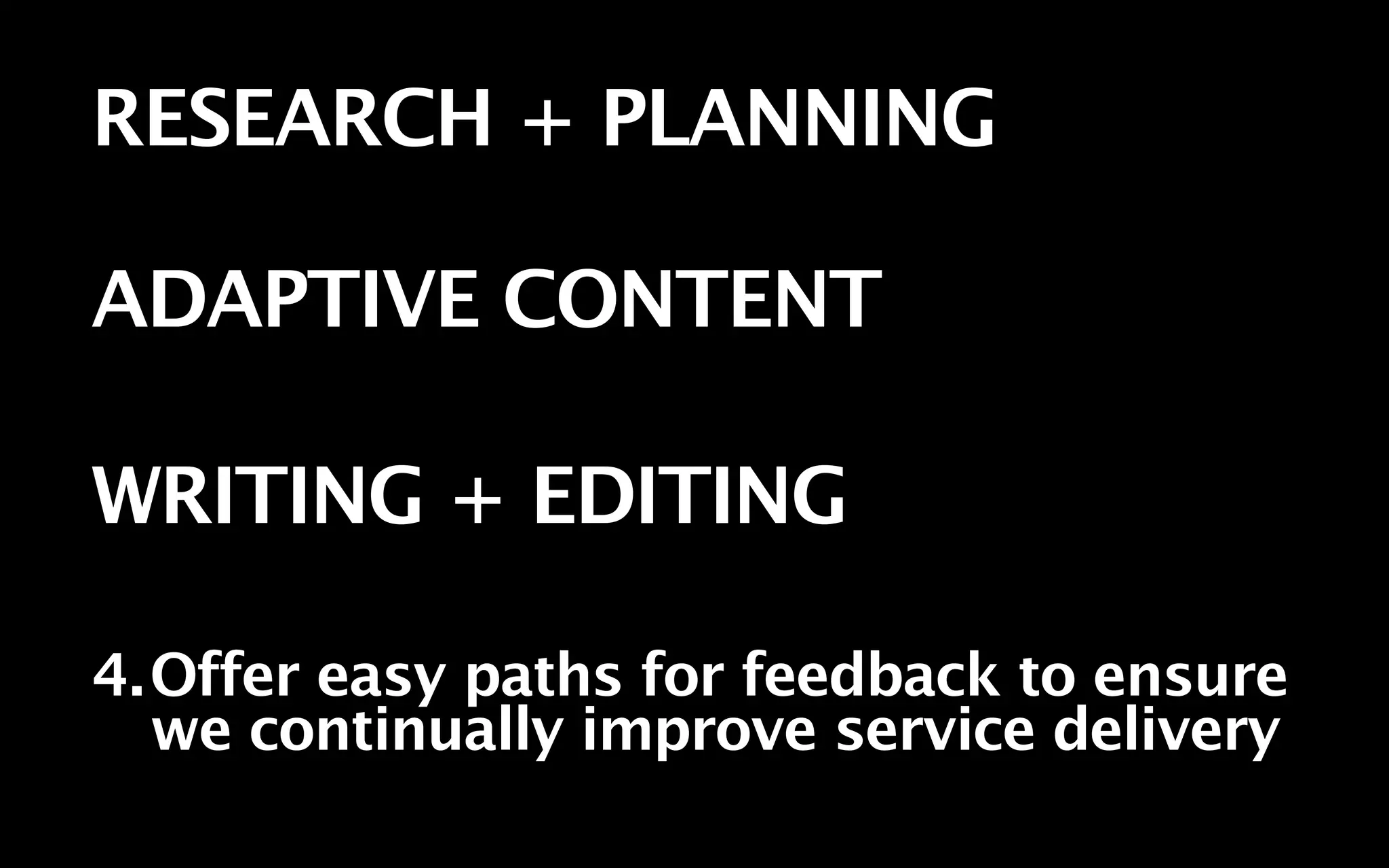
RESEARCH + PLANNING

ADAPTIVE CONTENT

WRITING + EDITING

4.Offer easy paths for feedback to ensure
  we continually improve service delivery
RESEARCH + PLANNING

ADAPTIVE CONTENT

WRITING + EDITING

MOBILE GOVERNANCE
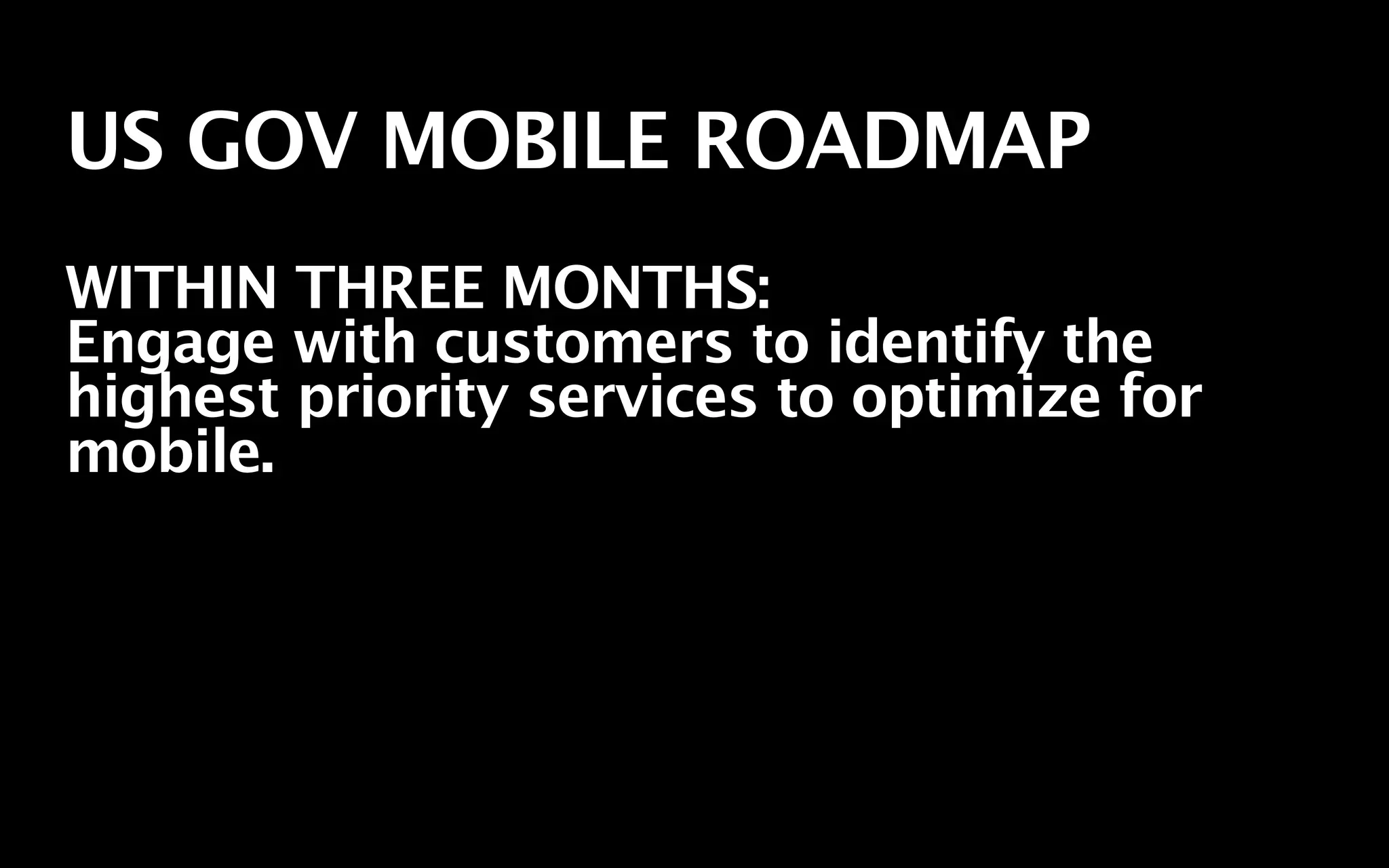
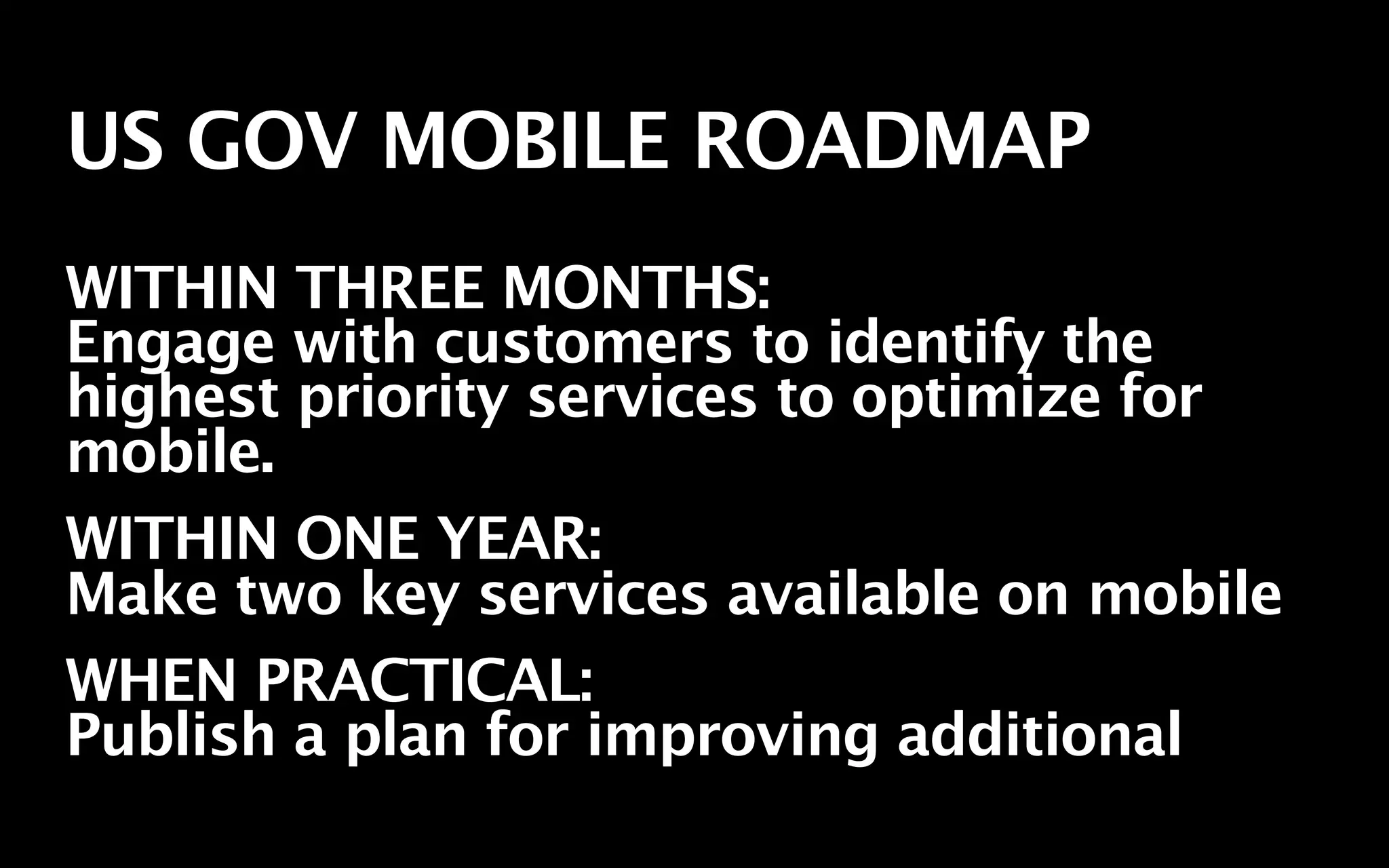
US GOV MOBILE ROADMAP
WITHIN THREE MONTHS:
Engage with customers to identify the
highest priority services to optimize for
mobile.
US GOV MOBILE ROADMAP
WITHIN THREE MONTHS:
Engage with customers to identify the
highest priority services to optimize for
mobile.
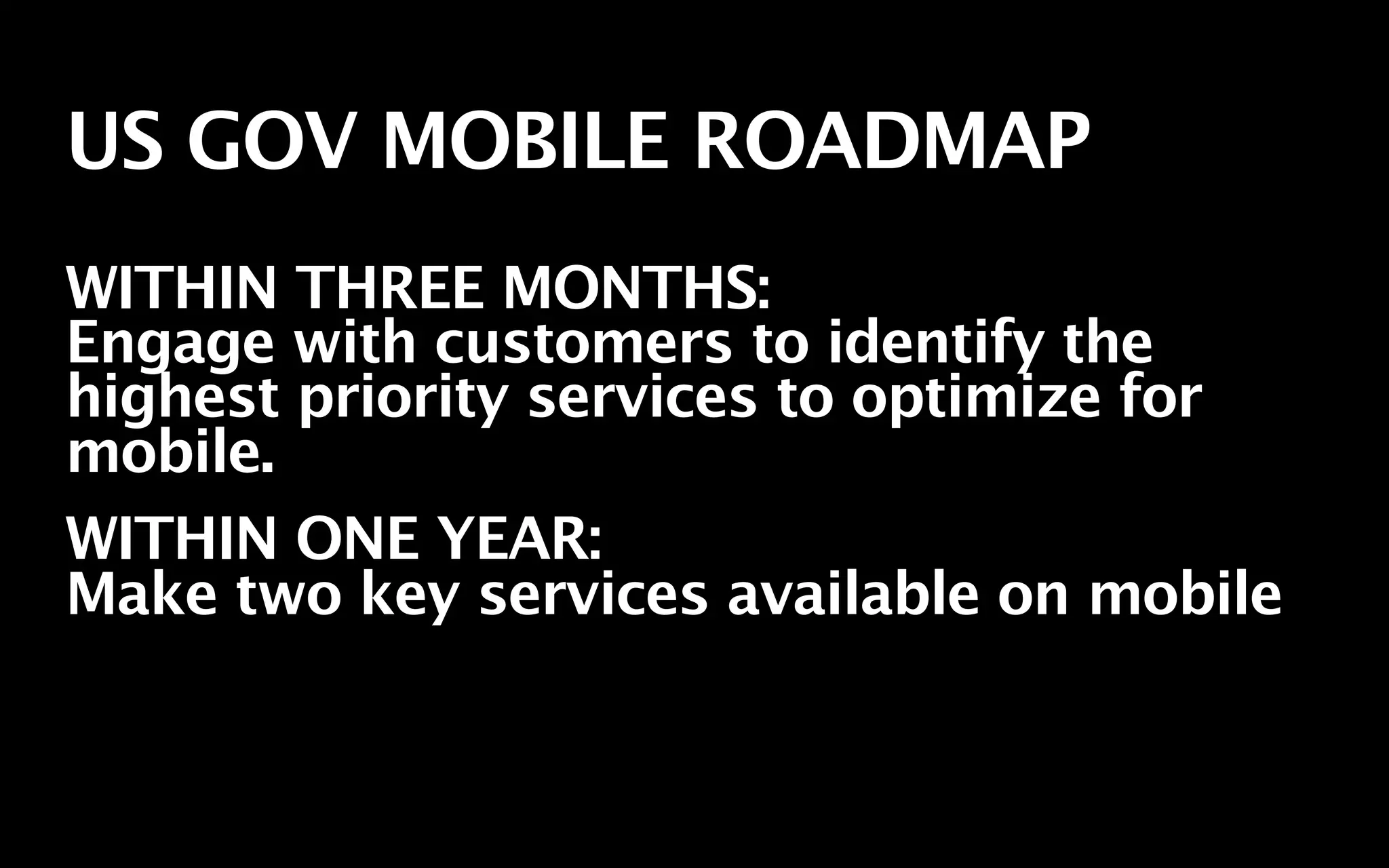
WITHIN ONE YEAR:
Make two key services available on mobile
US GOV MOBILE ROADMAP
WITHIN THREE MONTHS:
Engage with customers to identify the
highest priority services to optimize for
mobile.
WITHIN ONE YEAR:
Make two key services available on mobile
WHEN PRACTICAL:
Publish a plan for improving additional
BABY STEPS VS. LONG TERM
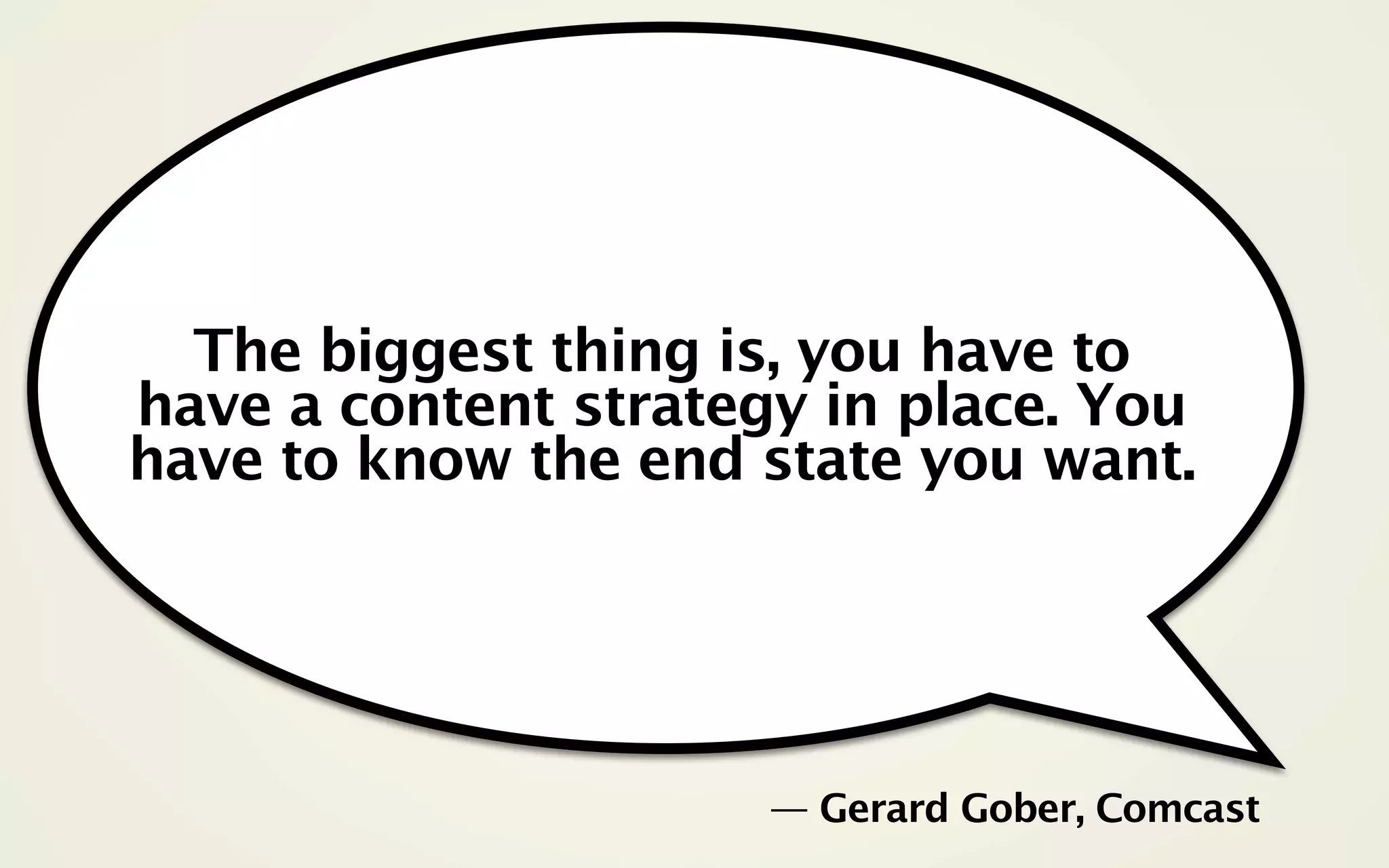
The biggest thing is, you have to
have a content strategy in place. You
have to know the end state you want.


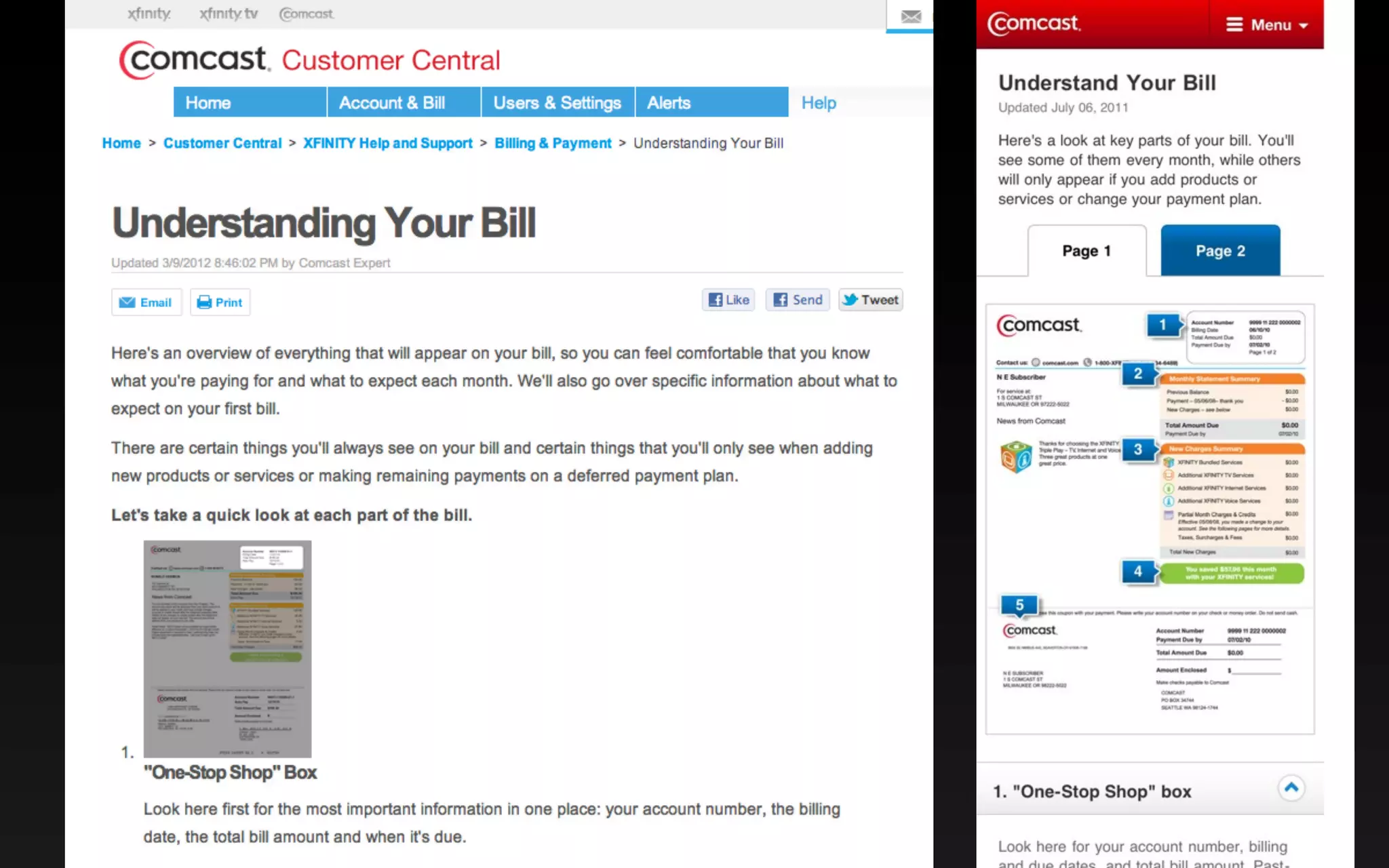
                      — Gerard Gober, Comcast
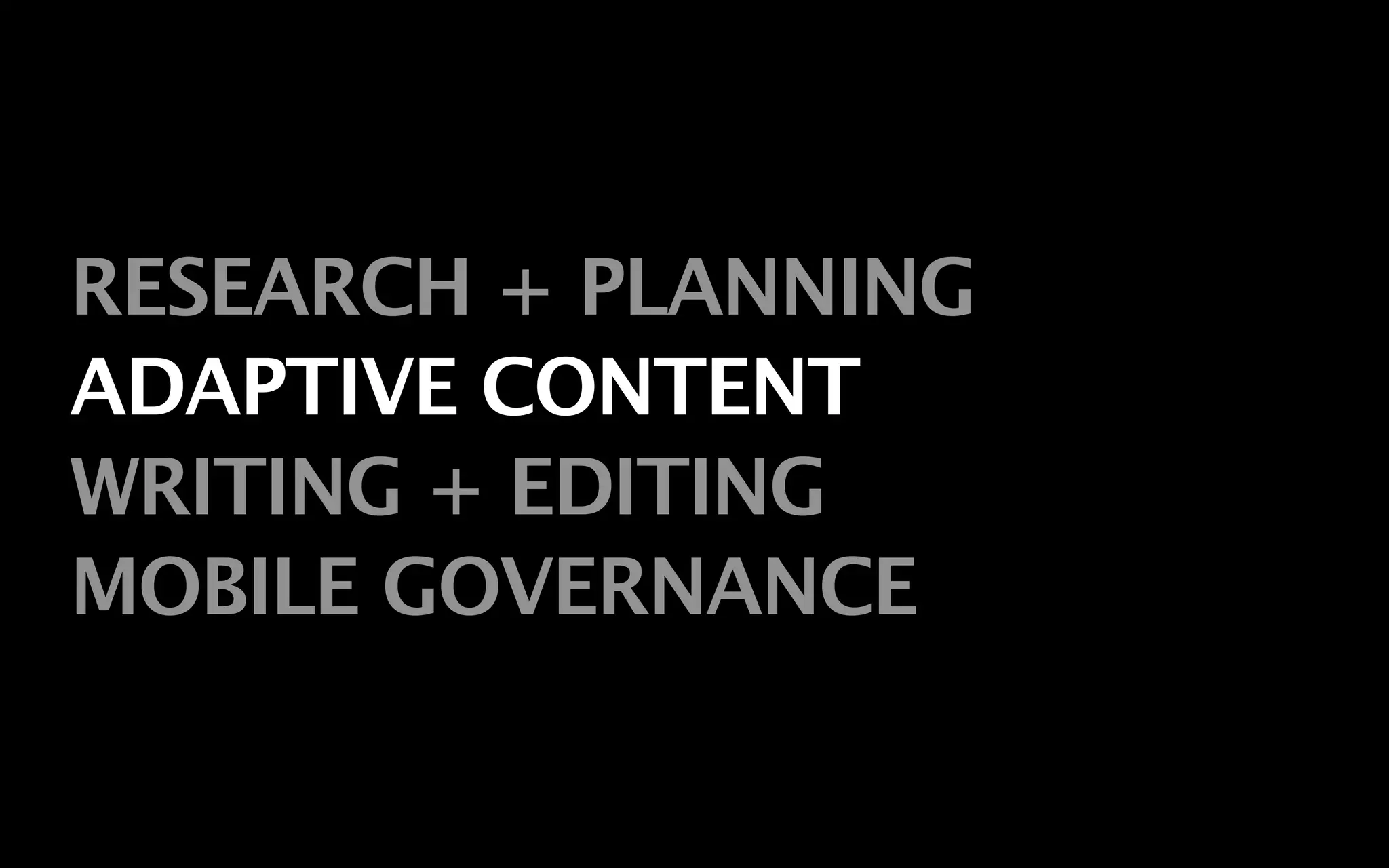
RESEARCH + PLANNING
ADAPTIVE CONTENT
WRITING + EDITING
MOBILE GOVERNANCE
Adaptive content is flexible, so it can
  adapt to different screen sizes and
    can be presented in different
formats as appropriate for the device.
MANAGE STRUCTURED
CONTENT
We need to treat all content as data,
  turning any unstructured content
into structured data, then ensure all
structured data are associated with
           valid metadata.
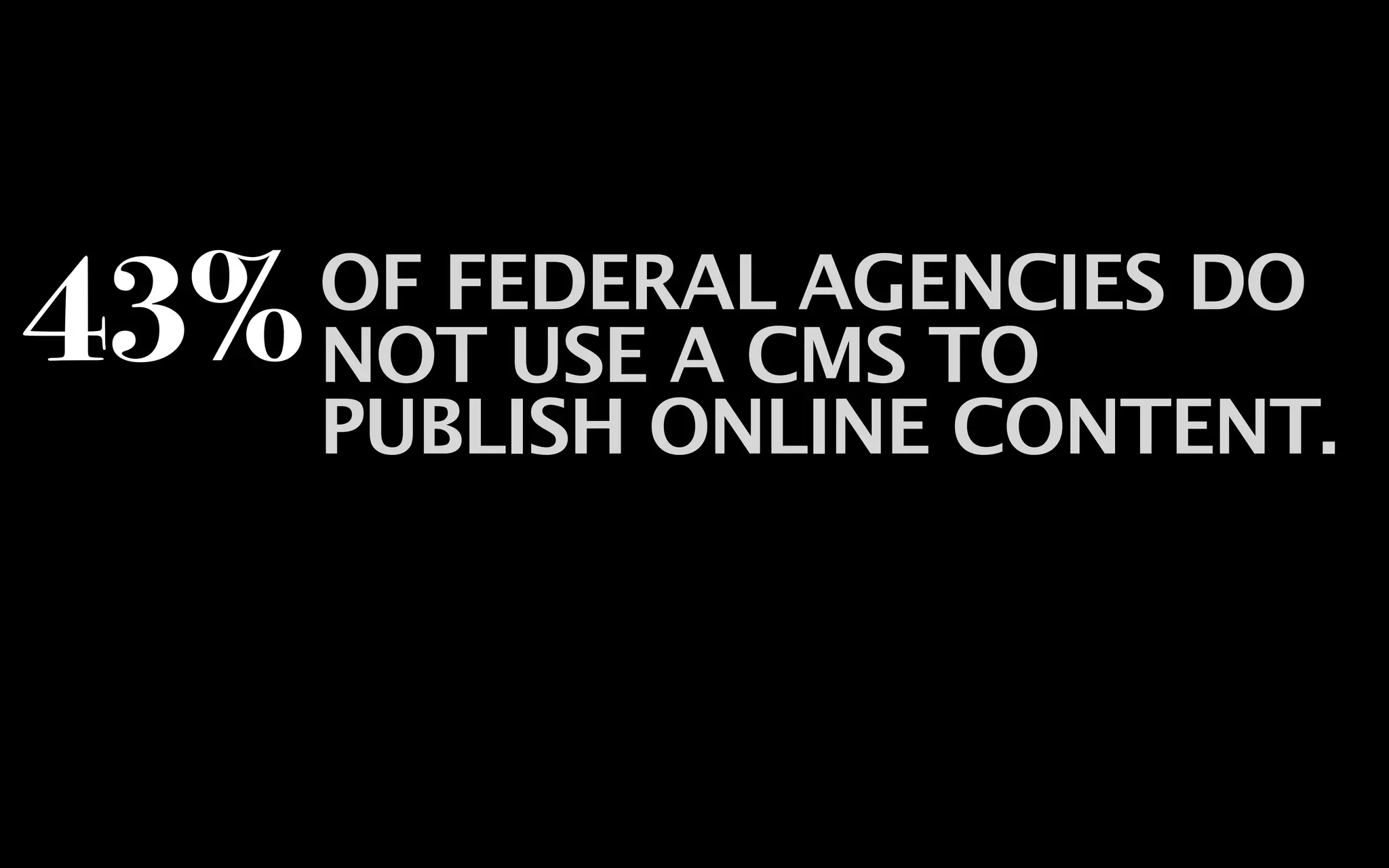
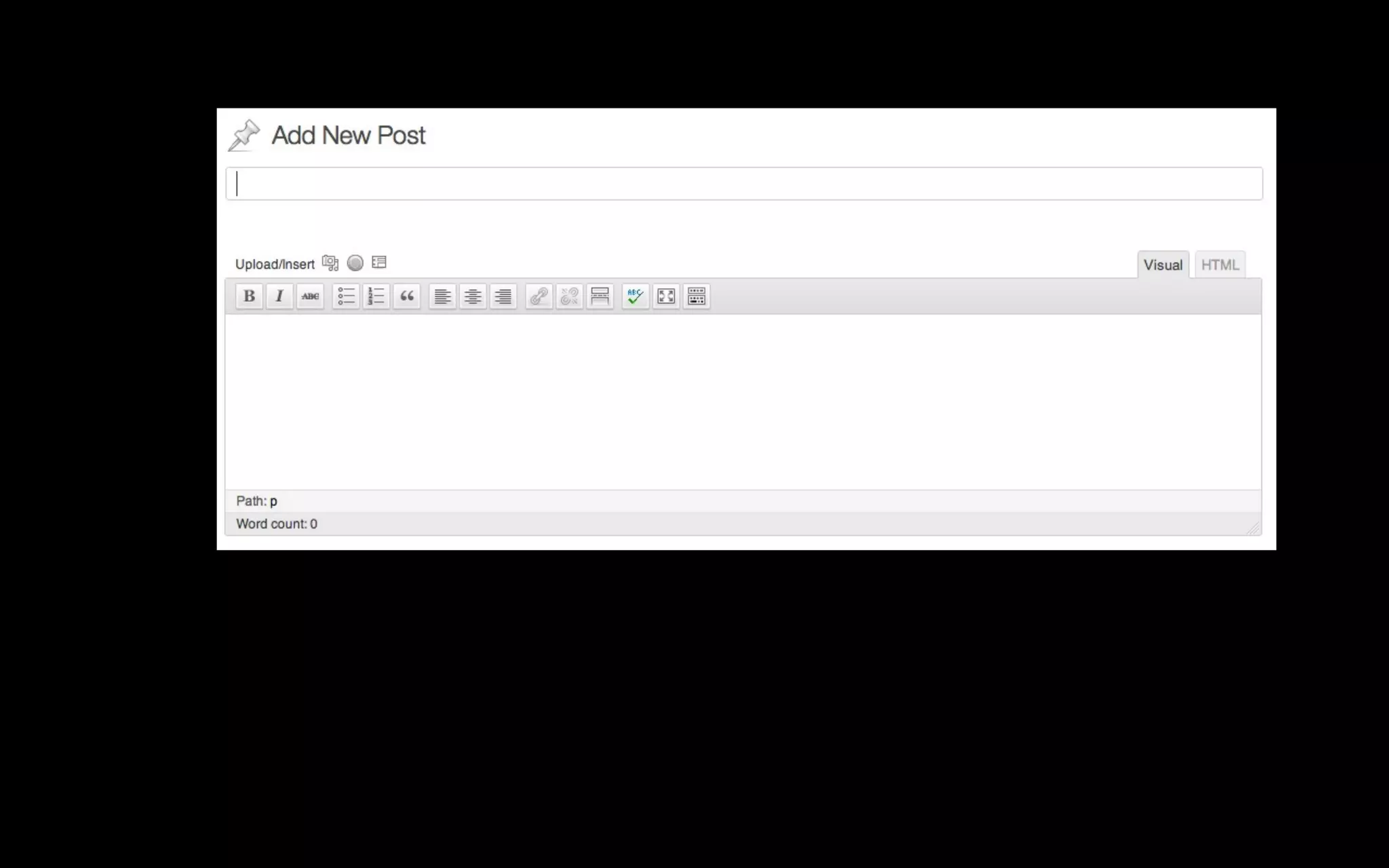
43%   OF FEDERAL AGENCIES DO
      NOT USE A CMS TO
      PUBLISH ONLINE CONTENT.
CHUNKS, NOT BLOBS
CREATE PRESENTATION-
INDEPENDENT CONTENT
Rather than thinking primarily about
 the final presentation—publishing
 web pages, mobile applications, or
 brochures— government agencies
   need to take an “information-
          centric” approach.
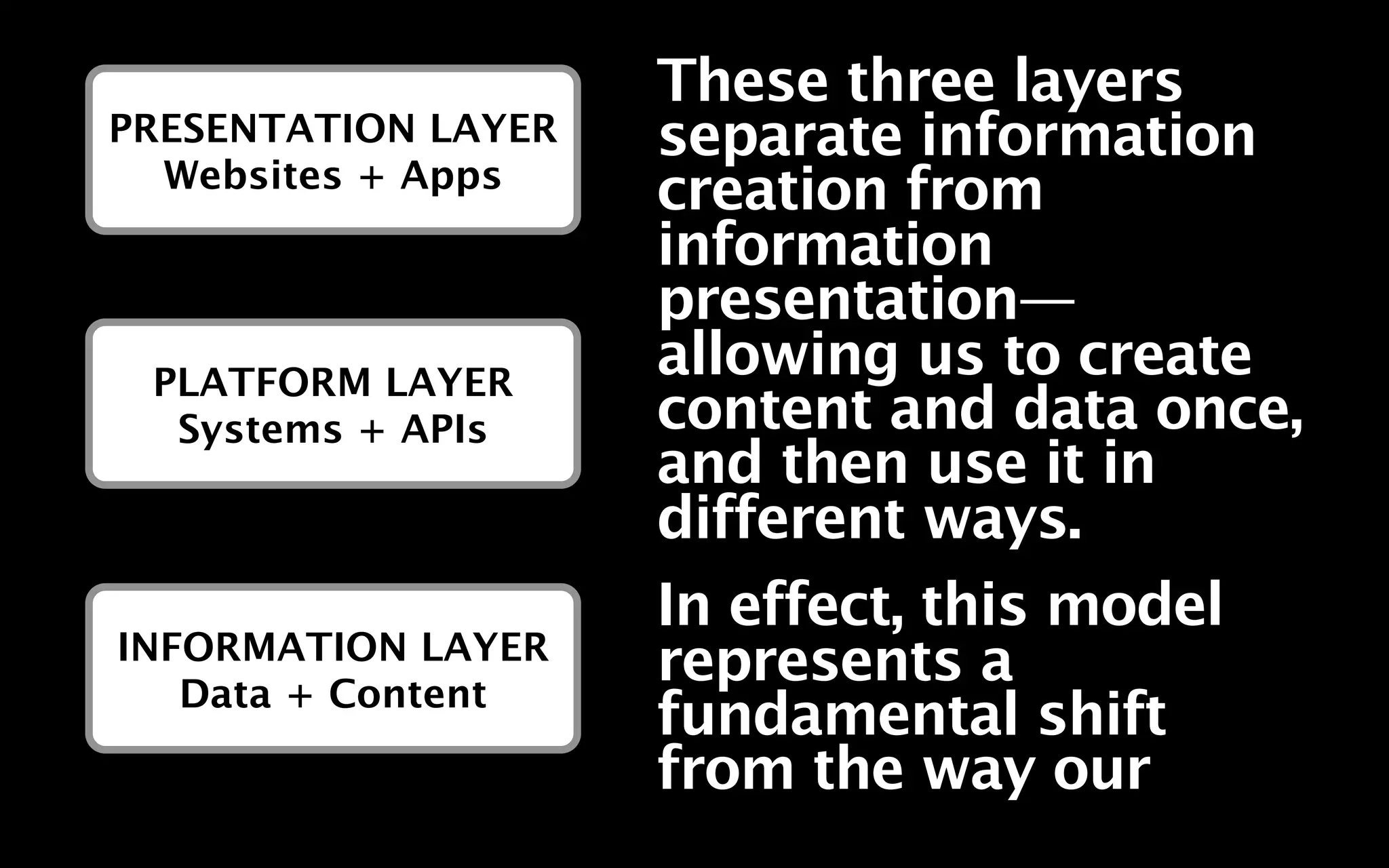
These three layers
PRESENTATION LAYER   separate information
  Websites + Apps
                     creation from
                     information
                     presentation—
 PLATFORM LAYER
                     allowing us to create
  Systems + APIs     content and data once,
                     and then use it in
                     different ways.
                     In effect, this model
INFORMATION LAYER
   Data + Content
                     represents a
                     fundamental shift
                     from the way our
TREAT CONTENT AS A SERVICE
“   Providing information through
    web APIs helps us architect for
    interoperability and openness,
    and makes data assets freely
    available for use within
    agencies, between agencies, in
    the private sector, or by citizens.
Just look at how the government’s
 release of GPS and weather data
  fueled billion dollar industries.
C
O
N
T
E
N
T

P
R
O
V
I
D
E
R
S


M
U
S
I
C

P
A
R
T
N
E
R
S


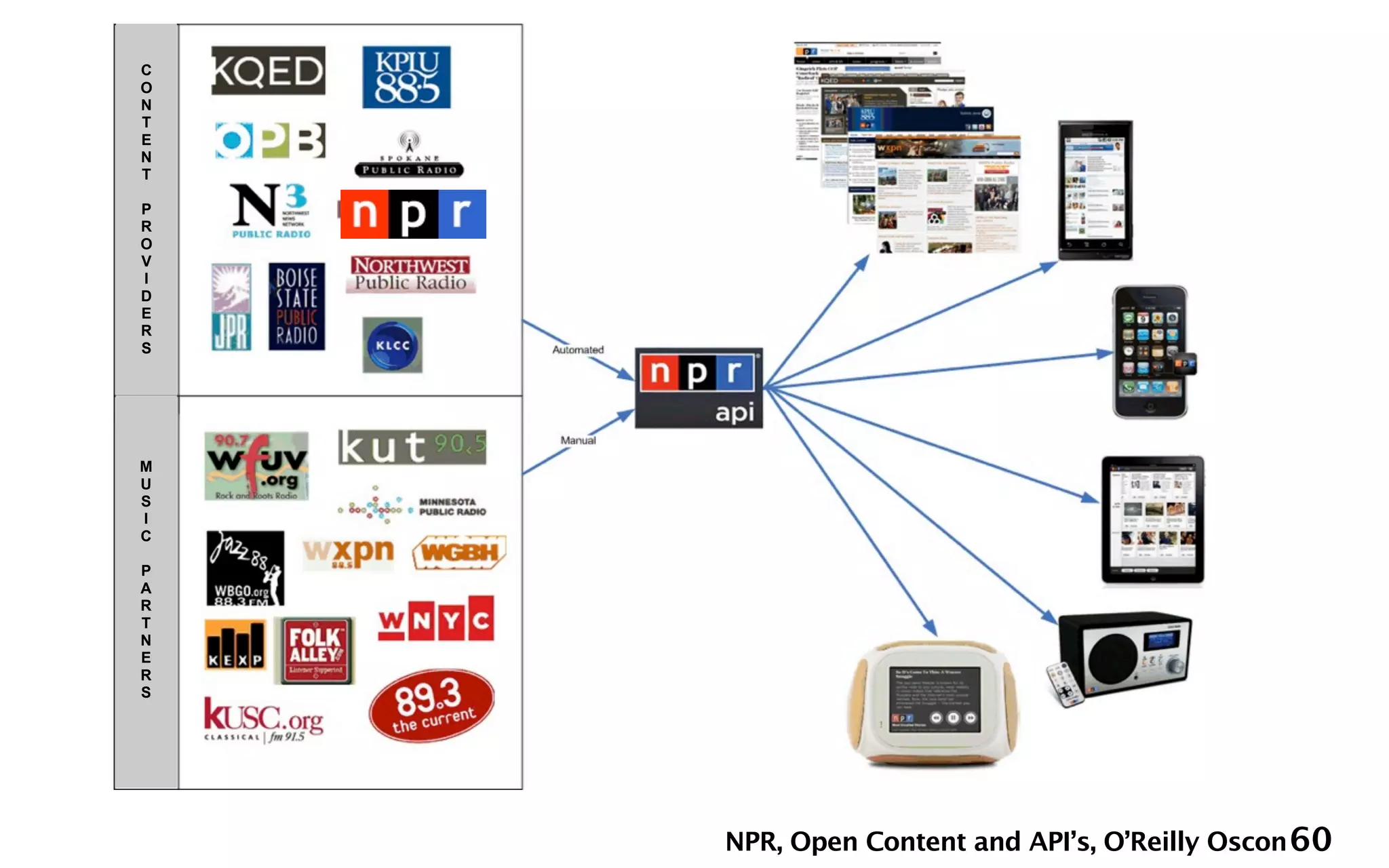
    NPR, Open Content and API’s, O’Reilly Oscon 60
RESEARCH + PLANNING
ADAPTIVE CONTENT
WRITING + EDITING
MOBILE GOVERNANCE
Federal agencies are required to
write all new publications, forms and
publicly distributed documents in a
  “clear, concise, well-organized”
               manner.
MOBILE IS A CATALYST
GREAT CONTENT TRANSCENDS
PLATFORM
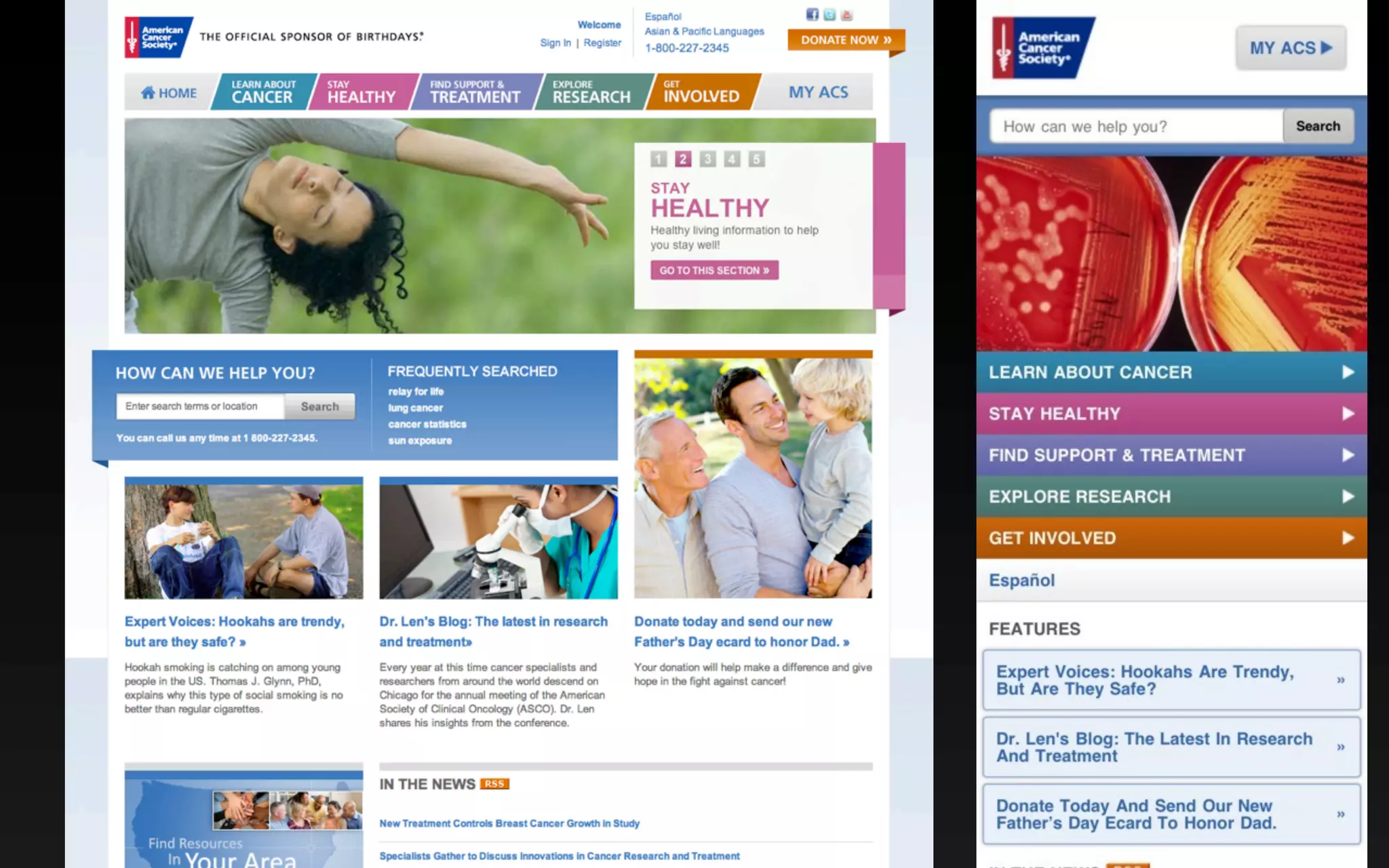
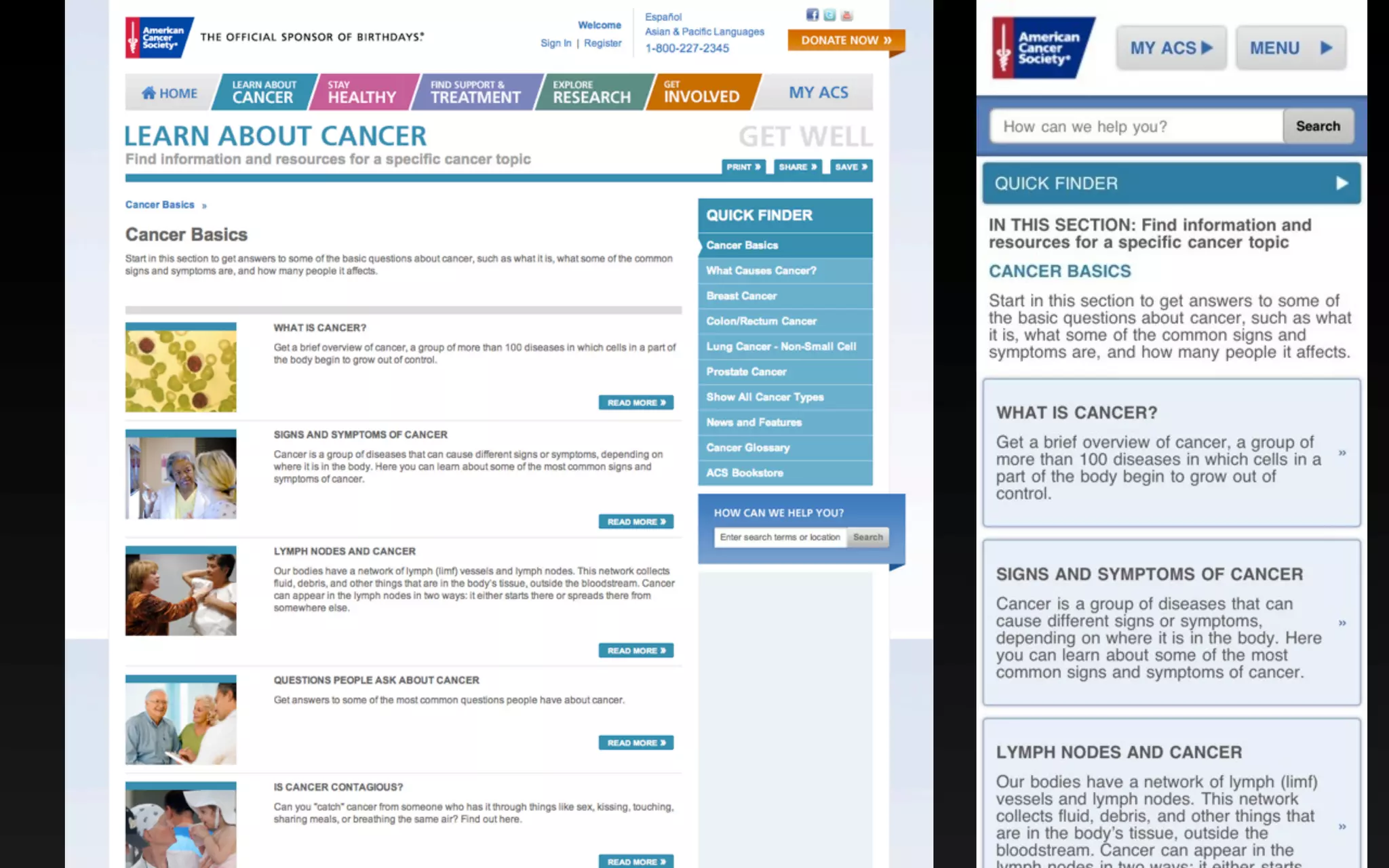
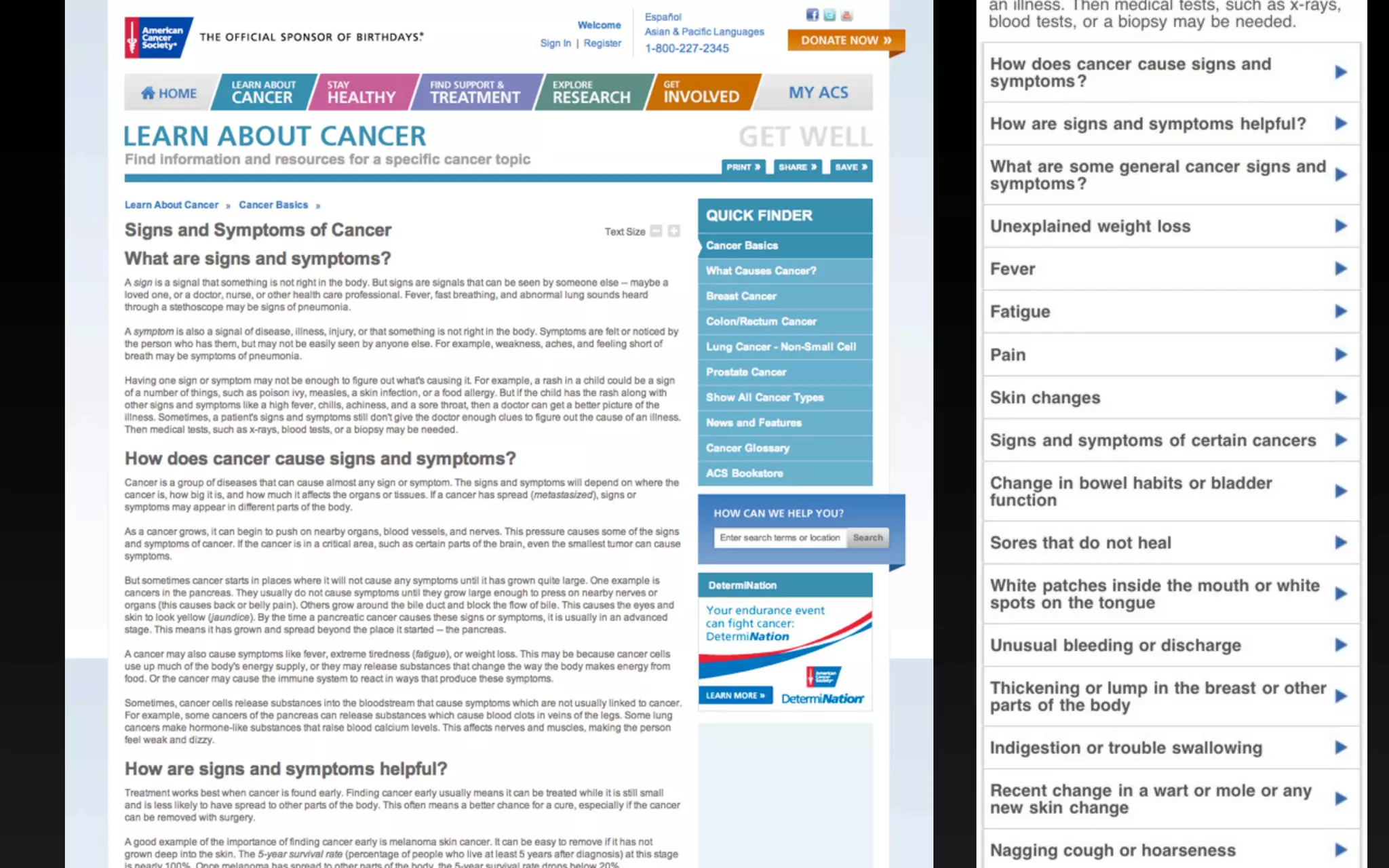
We felt it was a life-saving
imperative to have all of our content
             on mobile.


               — David Balcom, American Cancer
                           Society
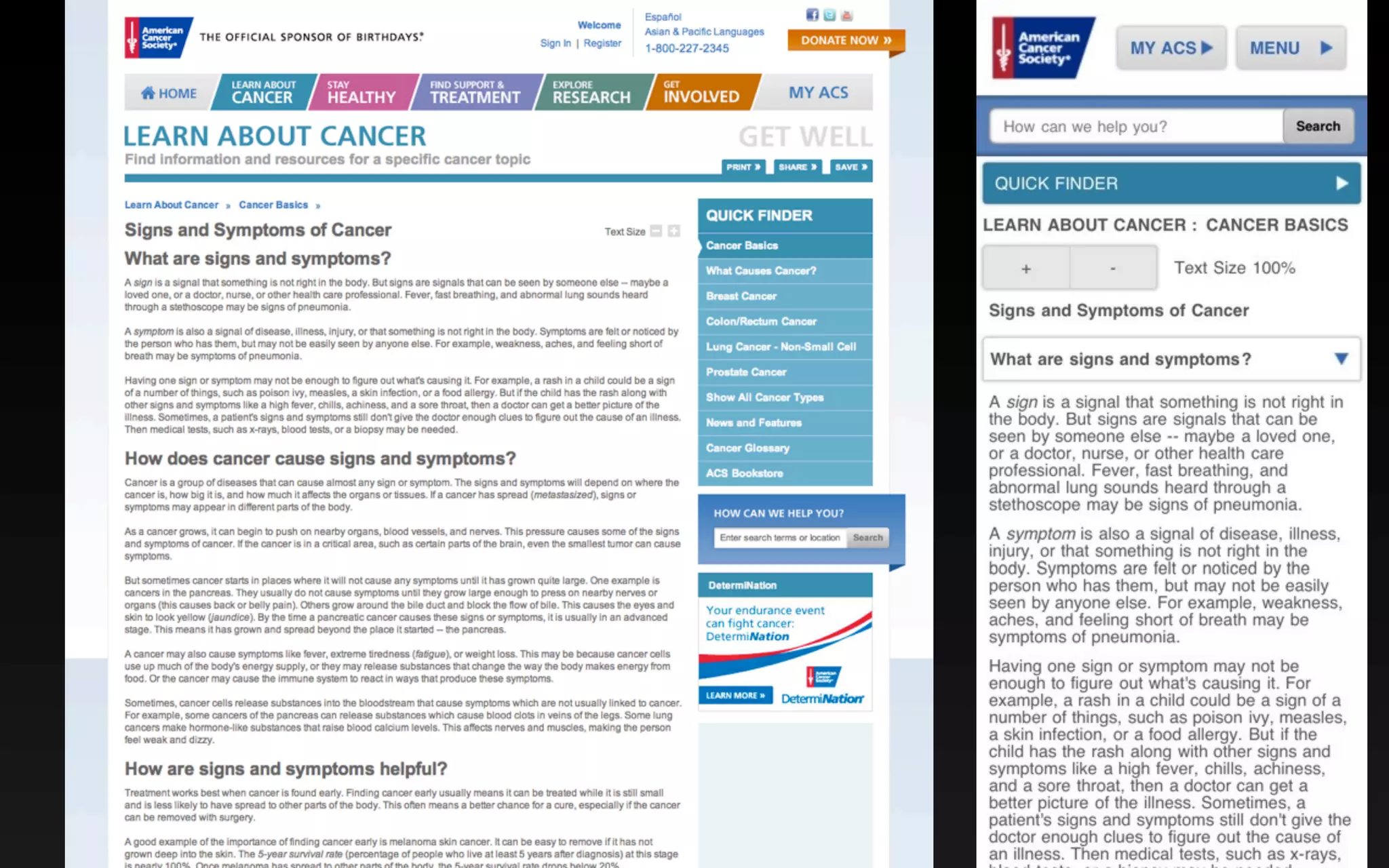
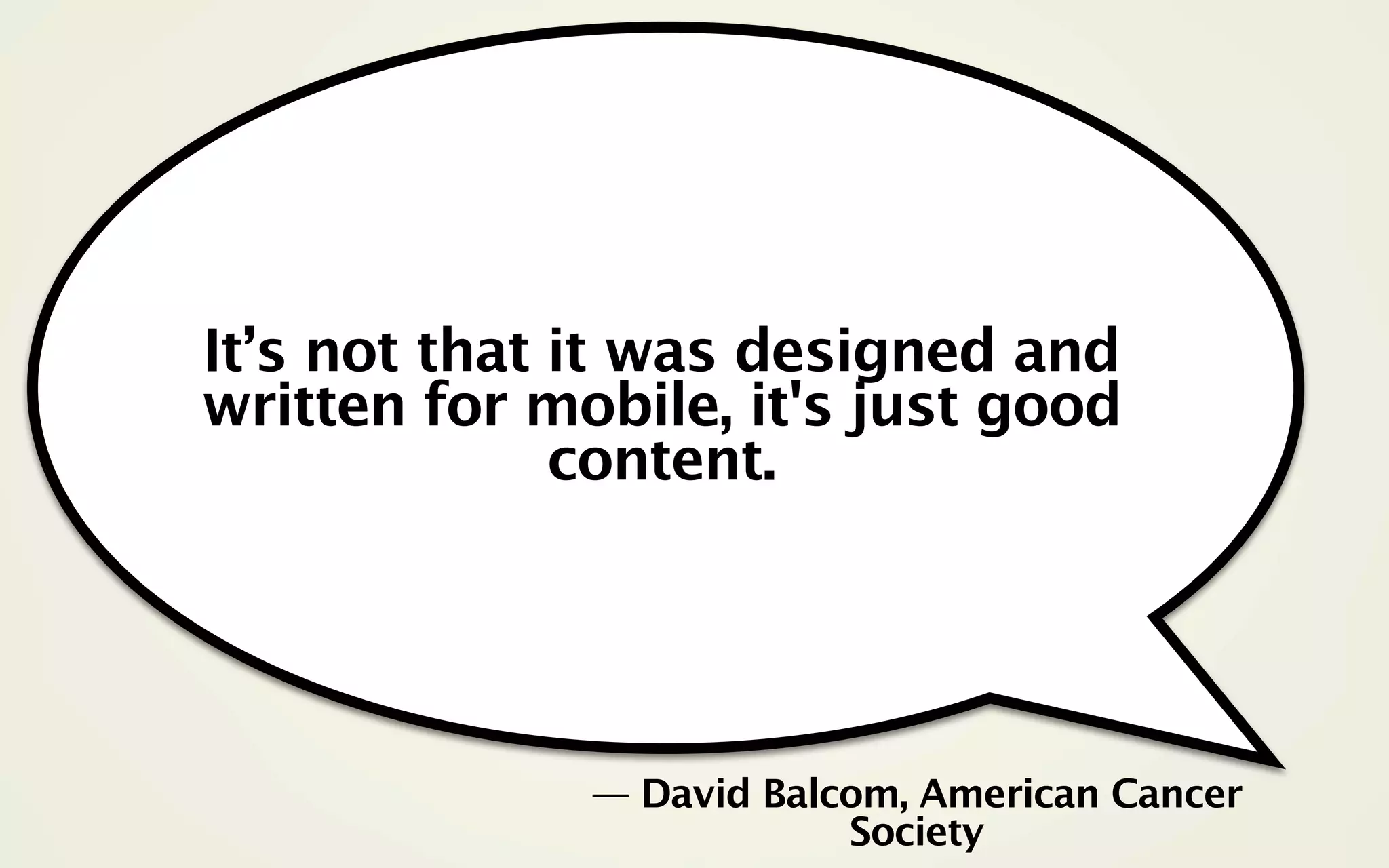
It’s not that it was designed and
written for mobile, it's just good
              content.


              — David Balcom, American Cancer
                          Society
DEVELOP MOBILE GOVERNANCE
PEOPLE + PROCESS
CONTINUOUS MEASUREMENT
AND IMPROVEMENT
“   We now have an opportunity to
    break free from the inefficient,
    costly, and fragmented practices
    of the past, build a sound
    governance structure for digital
    services, and do mobile “right”
    from the beginning.
YOU DON'T GET TO DECIDE
WHICH DEVICE PEOPLE USE TO
ACCESS YOUR CONTENT.
THEY DO.
There’s no wrong door for
accessing government services.


              — Federal CIO Steven VanRoekel
DISRUPTIVE TECHNOLOGIES
EVENTUALLY GET GOOD.
OR THEY REDEFINE WHAT
GOOD IS.
Ultimately, this strategy aims to be
 disruptive. It provides a platform to
fundamentally shift how government
connects with, and provides services
      to, the American people.


                  — Federal CIO Steven VanRoekel
DO MOBILE RIGHT.
RIGHT FROM THE START.
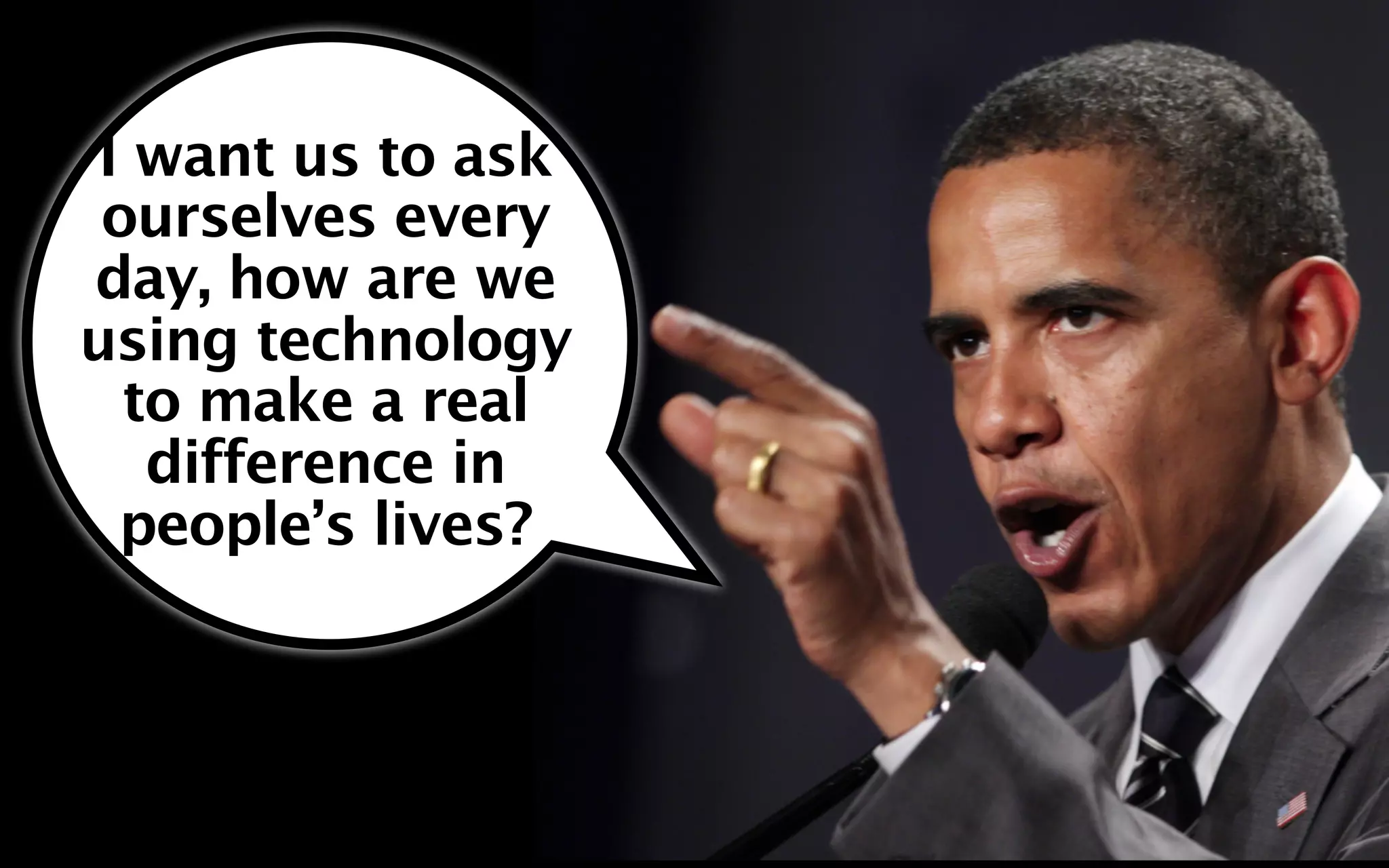
I want us to ask
 ourselves every
day, how are we
using technology
  to make a real
   difference in
  people’s lives?
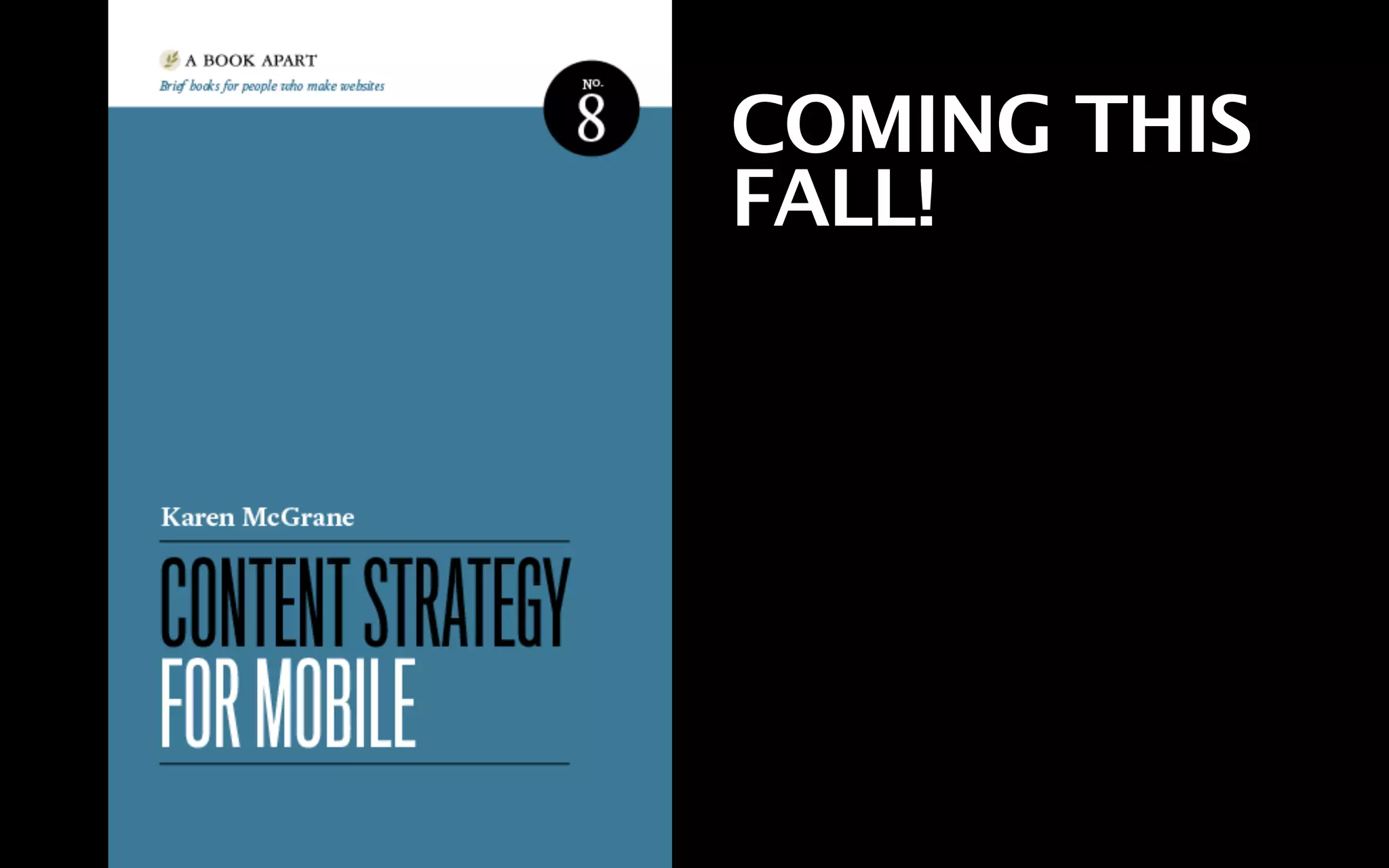
COMING THIS
FALL!
THAN
K YOU
@karenmcgra

Uncle Sam Wants You (To Optimize Your Content For Mobile)

  • 1.
  • 6.
    There is noreason for any individual to have a computer in his home. —Ken Olsen, CEO of Digital Equipment Corp.
  • 7.
    There is noreason anyone will need to do that on mobile. —Your company, probably
  • 10.
  • 11.
    In industry after industry, the new technologies that had brought the big, established companies to their knees weren’t better or more advanced — they were actually worse. The new products were low-end, dumb, shoddy, and in almost every way inferior.
  • 12.
  • 13.
  • 14.
  • 15.
  • 16.
  • 17.
  • 18.
    20% OF AMERICANS HAVE NO INTERNET ACCESS AT ALL. 35% HAVE NO INTERNET ACCESS AT HOME.
  • 19.
    29% OFBLACK AMERICANS HAVE NO INTERNET ACCESS. 51% ACCESS AT HOME. HAVE NO BROADBAND
  • 20.
    32% OFHISPANIC AMERICANS HAVE NO INTERNET ACCESS. 49% ACCESS AT HOME. HAVE NO BROADBAND
  • 21.
    OF AMERICANS WHOMAKE 38% LESS THAN $30,000 PER YEAR HAVE NO INTERNET ACCESS. 59% HAVE NO BROADBAND ACCESS AT HOME.
  • 22.
    46% OF AMERICANS WITH A DISABILITY HAVE NO INTERNET ACCESS. 59% HAVE NO BROADBAND ACCESS AT HOME.
  • 23.
    57% OF AMERICANS WITH NO HIGH SCHOOL DIPLOMA HAVE NO INTERNET ACCESS. 88% HAVE NO BROADBAND ACCESS AT HOME.
  • 25.
    MOBILE OWNERSHIP 85% 88% 2009 2012 2009 2012
  • 26.
    MOBILE OWNERSHIP MOBILE INTERNET USE 85% 88% 55% 31% 2009 2012 2009 2012
  • 27.
    SMARTPHONE ADOPTION 45.6 42.7 32.7 55.3 54.4 57.3 67.3 44.7 White Black Hispanic Asian SMARTPHONES FEATURE PHONES
  • 28.
  • 29.
    55% OF AMERICANSWHO USE THEIR MOBILE PHONES TO GO ONLINE ONLY OR MOSTLY USE THE INTERNET ON THEIR MOBILES
  • 30.
    55% OF AMERICANSWHO USE THEIR MOBILE PHONES TO GO ONLINE 31% OF ALL AMERICANS ONLY OR MOSTLY USE THE INTERNET ON THEIR MOBILES
  • 31.
    55% OF AMERICANSWHO USE THEIR MOBILE PHONES TO GO ONLINE 39% OF NO-COLLEGE AMERICANS ONLY OR MOSTLY USE THE INTERNET ON THEIR MOBILES
  • 32.
    55% OF AMERICANSWHO USE THEIR MOBILE PHONES TO GO ONLINE 43% OF LOW-INCOME AMERICANS ONLY OR MOSTLY USE THE INTERNET ON THEIR MOBILES
  • 33.
    55% OF AMERICANSWHO USE THEIR MOBILE PHONES TO GO ONLINE 42% OF HISPANIC AMERICANS ONLY OR MOSTLY USE THE INTERNET ON THEIR MOBILES
  • 34.
    55% OF AMERICANSWHO USE THEIR MOBILE PHONES TO GO ONLINE 51% OF BLACK AMERICANS ONLY OR MOSTLY USE THE INTERNET ON THEIR MOBILES
  • 35.
    Mobile was thefinal frontier in the access revolution. It has erased the digital divide. A mobile device is the internet for many people. — Susannah Fox, Pew Research
  • 40.
  • 41.
  • 45.
    THE AMERICAN REVOLUTION (NOWAVAILABLE ON MOBILE)
  • 47.
  • 48.
    Americans deserve a governmentthat works for them anytime, anywhere, and on any device.
  • 49.
    DIGITAL GOVERNMENT: BUILDING A21 ST CENTURY PLATFORM TO BETTER SERVE THE AMERICAN PEOPLE MAY 23, 2012
  • 50.
    The Federal Governmentmust also focus on the fundamentals of customer-centric design.
  • 52.
    1.Conduct research tounderstand the customer’s business, needs, and desires
  • 53.
    1.Conduct research tounderstand the customer’s business, needs, and desires 2.Make content more available and accessible through multiple, device-
  • 54.
    1.Conduct research tounderstand the customer’s business, needs, and desires 2.Make content more available and accessible through multiple, device- 3.Make content more accurate and understandable by maintaining plain language and content freshness
  • 55.
    1.Conduct research tounderstand the customer’s business, needs, and desires 2.Make content more available and accessible through multiple, device- 3.Make content more accurate and understandable by maintaining plain language and content freshness 4.Offer easy paths for feedback to ensure we continually improve service delivery
  • 56.
    RESEARCH + PLANNING 2.Makecontent more available and accessible through multiple, device- 3.Make content more accurate and understandable by maintaining plain language and content freshness 4.Offer easy paths for feedback to ensure we continually improve service delivery
  • 57.
    RESEARCH + PLANNING ADAPTIVECONTENT 3.Make content more accurate and understandable by maintaining plain language and content freshness 4.Offer easy paths for feedback to ensure we continually improve service delivery
  • 58.
    RESEARCH + PLANNING ADAPTIVECONTENT WRITING + EDITING 4.Offer easy paths for feedback to ensure we continually improve service delivery
  • 59.
    RESEARCH + PLANNING ADAPTIVECONTENT WRITING + EDITING MOBILE GOVERNANCE
  • 60.
  • 61.
    US GOV MOBILEROADMAP WITHIN THREE MONTHS: Engage with customers to identify the highest priority services to optimize for mobile.
  • 62.
    US GOV MOBILEROADMAP WITHIN THREE MONTHS: Engage with customers to identify the highest priority services to optimize for mobile. WITHIN ONE YEAR: Make two key services available on mobile
  • 63.
    US GOV MOBILEROADMAP WITHIN THREE MONTHS: Engage with customers to identify the highest priority services to optimize for mobile. WITHIN ONE YEAR: Make two key services available on mobile WHEN PRACTICAL: Publish a plan for improving additional
  • 64.
    BABY STEPS VS.LONG TERM
  • 65.
    The biggest thingis, you have to have a content strategy in place. You have to know the end state you want. — Gerard Gober, Comcast
  • 66.
    RESEARCH + PLANNING ADAPTIVECONTENT WRITING + EDITING MOBILE GOVERNANCE
  • 67.
    Adaptive content isflexible, so it can adapt to different screen sizes and can be presented in different formats as appropriate for the device.
  • 68.
  • 69.
    We need totreat all content as data, turning any unstructured content into structured data, then ensure all structured data are associated with valid metadata.
  • 70.
    43% OF FEDERAL AGENCIES DO NOT USE A CMS TO PUBLISH ONLINE CONTENT.
  • 71.
  • 77.
  • 78.
    Rather than thinkingprimarily about the final presentation—publishing web pages, mobile applications, or brochures— government agencies need to take an “information- centric” approach.
  • 79.
    These three layers PRESENTATIONLAYER separate information Websites + Apps creation from information presentation— PLATFORM LAYER allowing us to create Systems + APIs content and data once, and then use it in different ways. In effect, this model INFORMATION LAYER Data + Content represents a fundamental shift from the way our
  • 81.
  • 82.
    Providing information through web APIs helps us architect for interoperability and openness, and makes data assets freely available for use within agencies, between agencies, in the private sector, or by citizens.
  • 83.
    Just look athow the government’s release of GPS and weather data fueled billion dollar industries.
  • 84.
    C O N T E N T P R O V I D E R S M U S I C P A R T N E R S NPR, Open Content and API’s, O’Reilly Oscon 60
  • 85.
    RESEARCH + PLANNING ADAPTIVECONTENT WRITING + EDITING MOBILE GOVERNANCE
  • 86.
    Federal agencies arerequired to write all new publications, forms and publicly distributed documents in a “clear, concise, well-organized” manner.
  • 87.
    MOBILE IS ACATALYST
  • 89.
  • 90.
    We felt itwas a life-saving imperative to have all of our content on mobile. — David Balcom, American Cancer Society
  • 95.
    It’s not thatit was designed and written for mobile, it's just good content. — David Balcom, American Cancer Society
  • 96.
  • 97.
  • 98.
  • 99.
    We now have an opportunity to break free from the inefficient, costly, and fragmented practices of the past, build a sound governance structure for digital services, and do mobile “right” from the beginning.
  • 100.
    YOU DON'T GETTO DECIDE WHICH DEVICE PEOPLE USE TO ACCESS YOUR CONTENT. THEY DO.
  • 101.
    There’s no wrongdoor for accessing government services. — Federal CIO Steven VanRoekel
  • 102.
    DISRUPTIVE TECHNOLOGIES EVENTUALLY GETGOOD. OR THEY REDEFINE WHAT GOOD IS.
  • 103.
    Ultimately, this strategyaims to be disruptive. It provides a platform to fundamentally shift how government connects with, and provides services to, the American people. — Federal CIO Steven VanRoekel
  • 104.
    DO MOBILE RIGHT. RIGHTFROM THE START.
  • 105.
    I want usto ask ourselves every day, how are we using technology to make a real difference in people’s lives?
  • 107.
  • 108.