TYPES OF PACKAGES: -
1. Parallel wound packages
(a)Warp beam
(b)Weavers beam
2. Near parallel wound package
(a)Pirn
(b)COP
3. Cross wound package
(a)Cone
(b)Cheese
1. Parallel Wound package: -
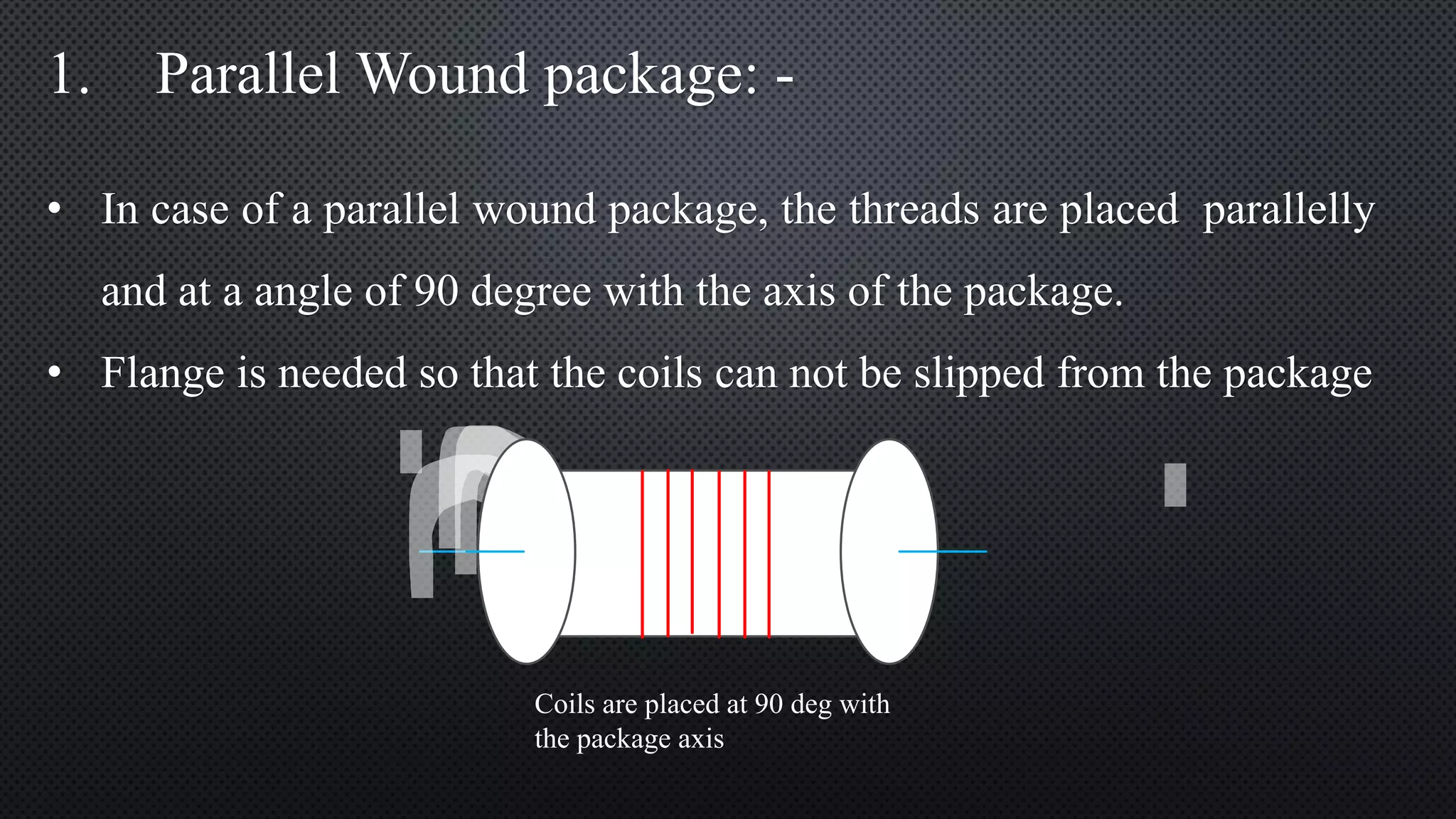
• In case of a parallel wound package, the threads are placed parallelly
and at a angle of 90 degree with the axis of the package.
• Flange is needed so that the coils can not be slipped from the package
Coils are placed at 90 deg with
the package axis
(a)Warp Beam: -
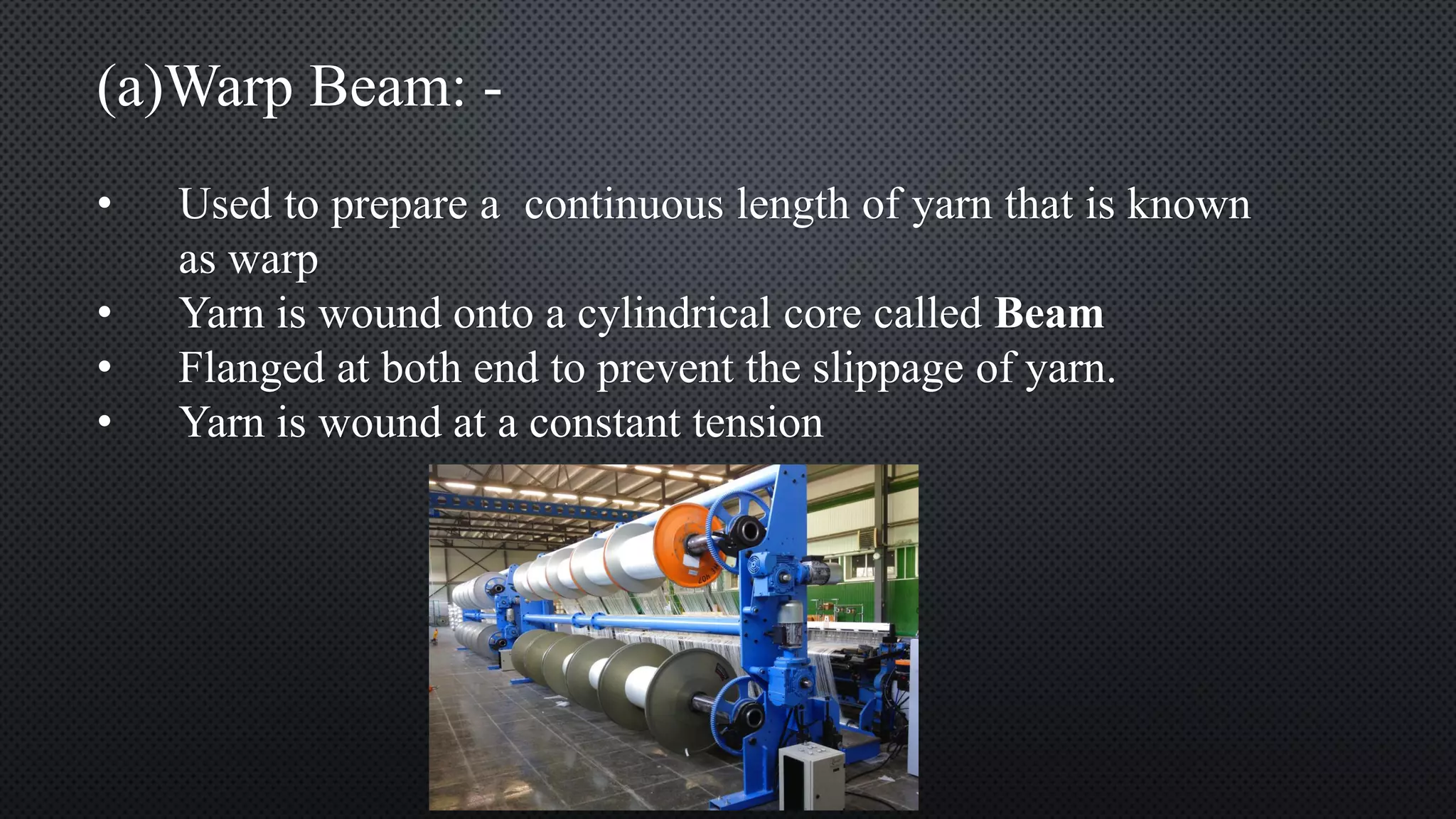
• Used to prepare a continuous length of yarn that is known
as warp
• Yarn is wound onto a cylindrical core called Beam
• Flanged at both end to prevent the slippage of yarn.
• Yarn is wound at a constant tension
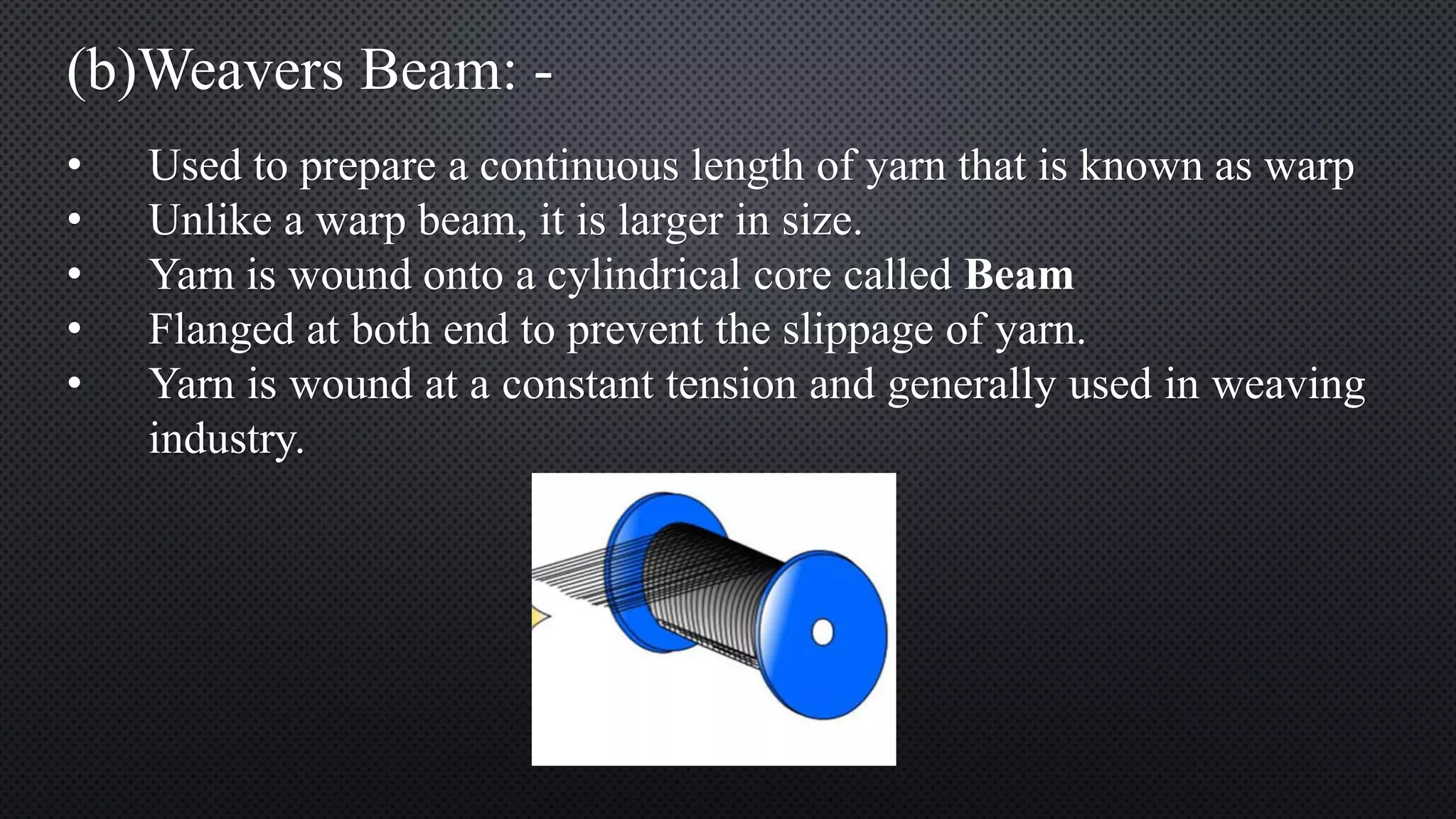
(b)Weavers Beam: -
• Used to prepare a continuous length of yarn that is known as warp
• Unlike a warp beam, it is larger in size.
• Yarn is wound onto a cylindrical core called Beam
• Flanged at both end to prevent the slippage of yarn.
• Yarn is wound at a constant tension and generally used in weaving
industry.
Advantages:-
• Sideway withdrawal is possible
• Many yarns can be wound at a time
• No need of traversing machine here.
• The density of yarn is more.
Disadvantages: -
• Flange is necessary at each end
• Can not be over withdrawal
2. Near Parallel Wound package: -
• Threads are placed nearly parallel with the axis of the package.
• Flange is not needed
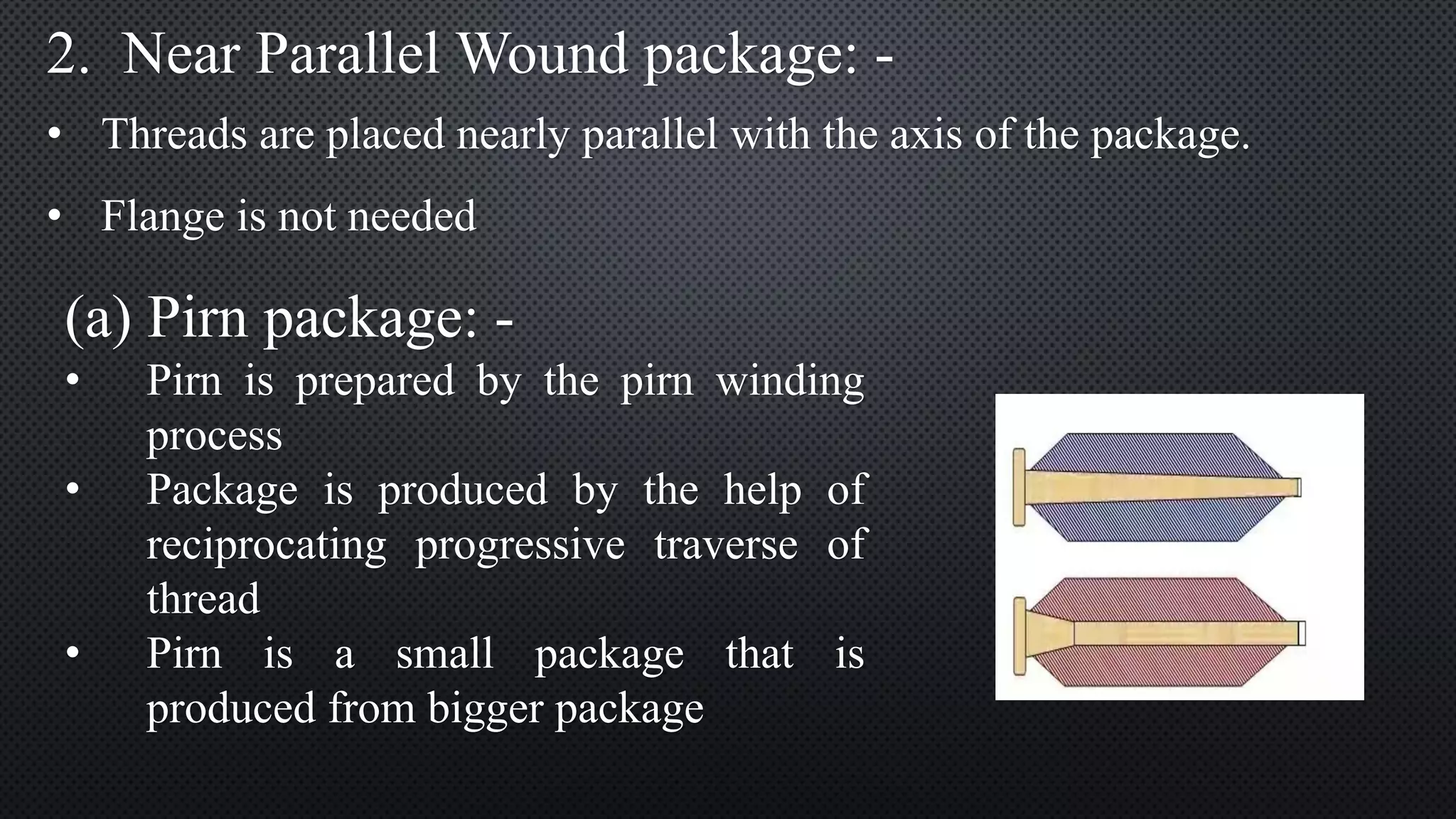
(a) Pirn package: -
• Pirn is prepared by the pirn winding
process
• Package is produced by the help of
reciprocating progressive traverse of
thread
• Pirn is a small package that is
produced from bigger package
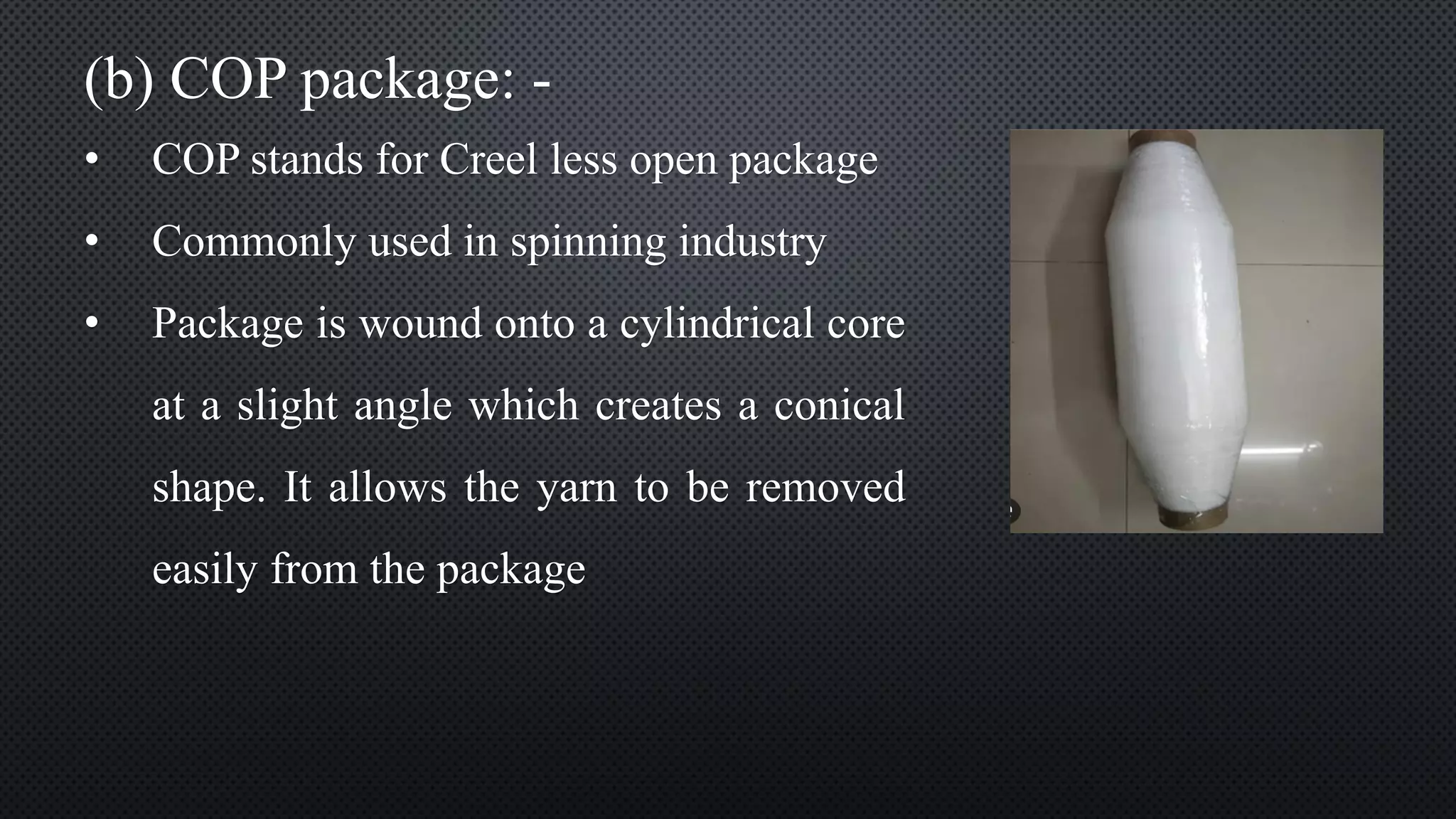
(b) COP package: -
• COP stands for Creel less open package
• Commonly used in spinning industry
• Package is wound onto a cylindrical core
at a slight angle which creates a conical
shape. It allows the yarn to be removed
easily from the package
Advantages:-
• No need of flange
• Can be side and over withdrawal
• No change of yarn turns per inch during winding
Disadvantages: -
• Need of traversing mechanism
• The Package is not stable.
3. Cross Wound package: -
• Consist of single thread, which is laid on the package at an
appreciable helix angle
• Most stable package and no need of flange.
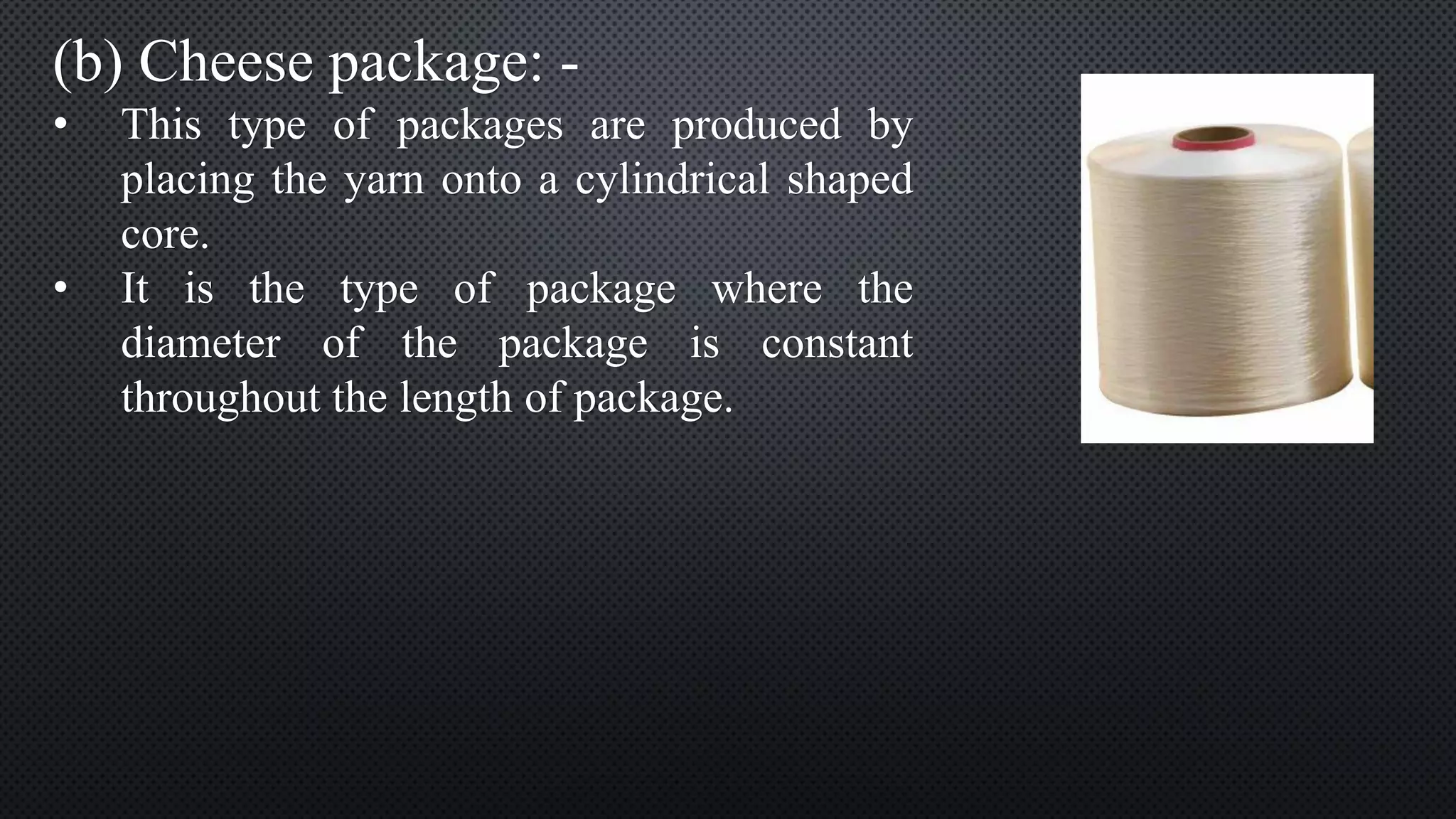
(a) Cone package: -
• Most commonly used package
• This type of packages are produced by
placing the yarn onto a conical shaped core.
• It is the type of package where the diameter
of the package is changed throughout the
length
• The top end is Nose and the bottom end is
Base.
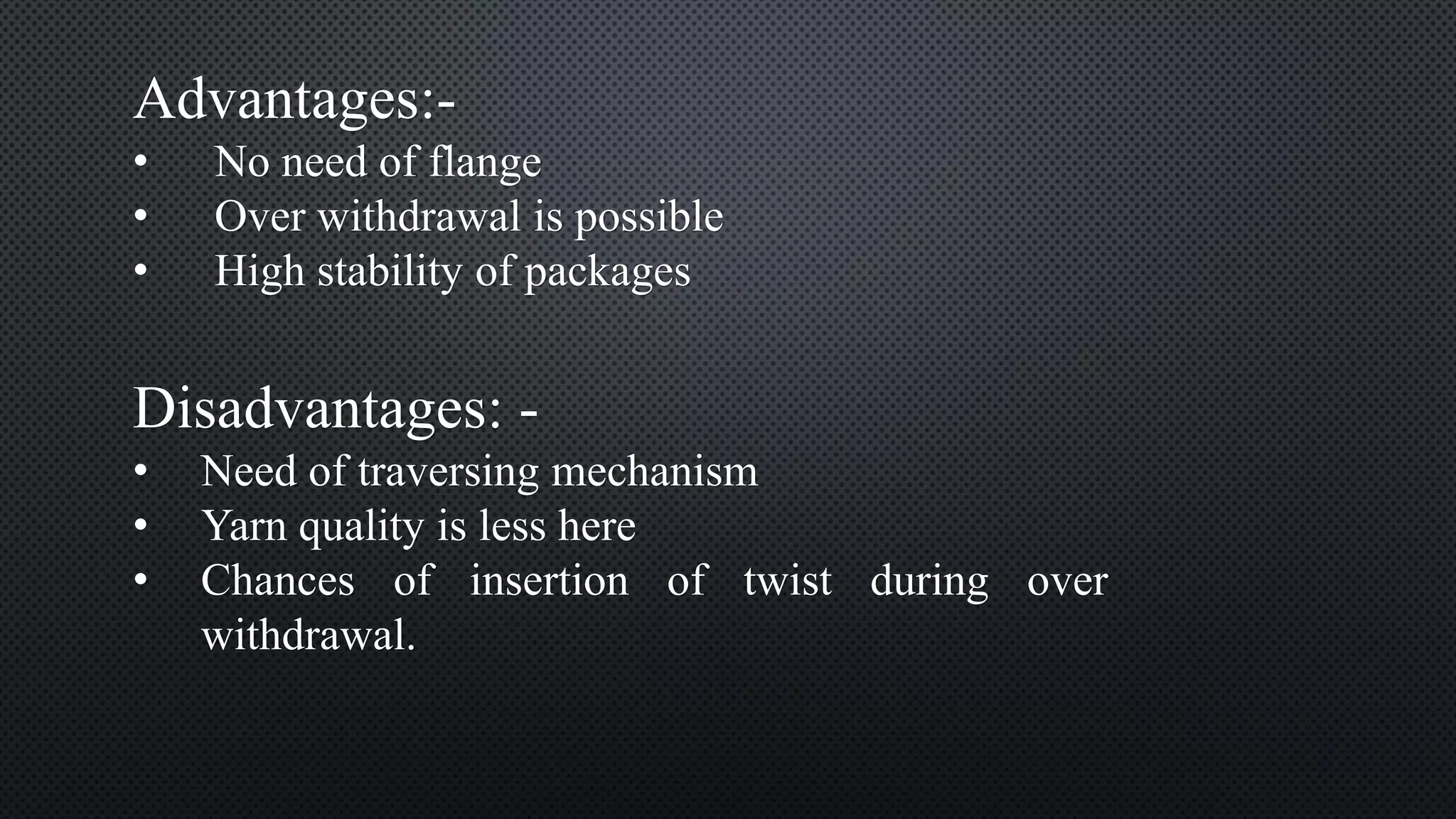
(b) Cheese package: -
• This type of packages are produced by
placing the yarn onto a cylindrical shaped
core.
• It is the type of package where the
diameter of the package is constant
throughout the length of package.
Advantages:-
• No need of flange
• Over withdrawal is possible
• High stability of packages
Disadvantages: -
• Need of traversing mechanism
• Yarn quality is less here
• Chances of insertion of twist during over
withdrawal.
TYPES OF YARN PACKAGES.pdf

TYPES OF YARN PACKAGES.pdf

  • 2.
    TYPES OF PACKAGES:- 1. Parallel wound packages (a)Warp beam (b)Weavers beam 2. Near parallel wound package (a)Pirn (b)COP 3. Cross wound package (a)Cone (b)Cheese
  • 3.
    1. Parallel Woundpackage: - • In case of a parallel wound package, the threads are placed parallelly and at a angle of 90 degree with the axis of the package. • Flange is needed so that the coils can not be slipped from the package Coils are placed at 90 deg with the package axis
  • 4.
    (a)Warp Beam: - •Used to prepare a continuous length of yarn that is known as warp • Yarn is wound onto a cylindrical core called Beam • Flanged at both end to prevent the slippage of yarn. • Yarn is wound at a constant tension
  • 5.
    (b)Weavers Beam: - •Used to prepare a continuous length of yarn that is known as warp • Unlike a warp beam, it is larger in size. • Yarn is wound onto a cylindrical core called Beam • Flanged at both end to prevent the slippage of yarn. • Yarn is wound at a constant tension and generally used in weaving industry.
  • 6.
    Advantages:- • Sideway withdrawalis possible • Many yarns can be wound at a time • No need of traversing machine here. • The density of yarn is more. Disadvantages: - • Flange is necessary at each end • Can not be over withdrawal
  • 7.
    2. Near ParallelWound package: - • Threads are placed nearly parallel with the axis of the package. • Flange is not needed (a) Pirn package: - • Pirn is prepared by the pirn winding process • Package is produced by the help of reciprocating progressive traverse of thread • Pirn is a small package that is produced from bigger package
  • 8.
    (b) COP package:- • COP stands for Creel less open package • Commonly used in spinning industry • Package is wound onto a cylindrical core at a slight angle which creates a conical shape. It allows the yarn to be removed easily from the package
  • 9.
    Advantages:- • No needof flange • Can be side and over withdrawal • No change of yarn turns per inch during winding Disadvantages: - • Need of traversing mechanism • The Package is not stable.
  • 10.
    3. Cross Woundpackage: - • Consist of single thread, which is laid on the package at an appreciable helix angle • Most stable package and no need of flange. (a) Cone package: - • Most commonly used package • This type of packages are produced by placing the yarn onto a conical shaped core. • It is the type of package where the diameter of the package is changed throughout the length • The top end is Nose and the bottom end is Base.
  • 11.
    (b) Cheese package:- • This type of packages are produced by placing the yarn onto a cylindrical shaped core. • It is the type of package where the diameter of the package is constant throughout the length of package.
  • 12.
    Advantages:- • No needof flange • Over withdrawal is possible • High stability of packages Disadvantages: - • Need of traversing mechanism • Yarn quality is less here • Chances of insertion of twist during over withdrawal.