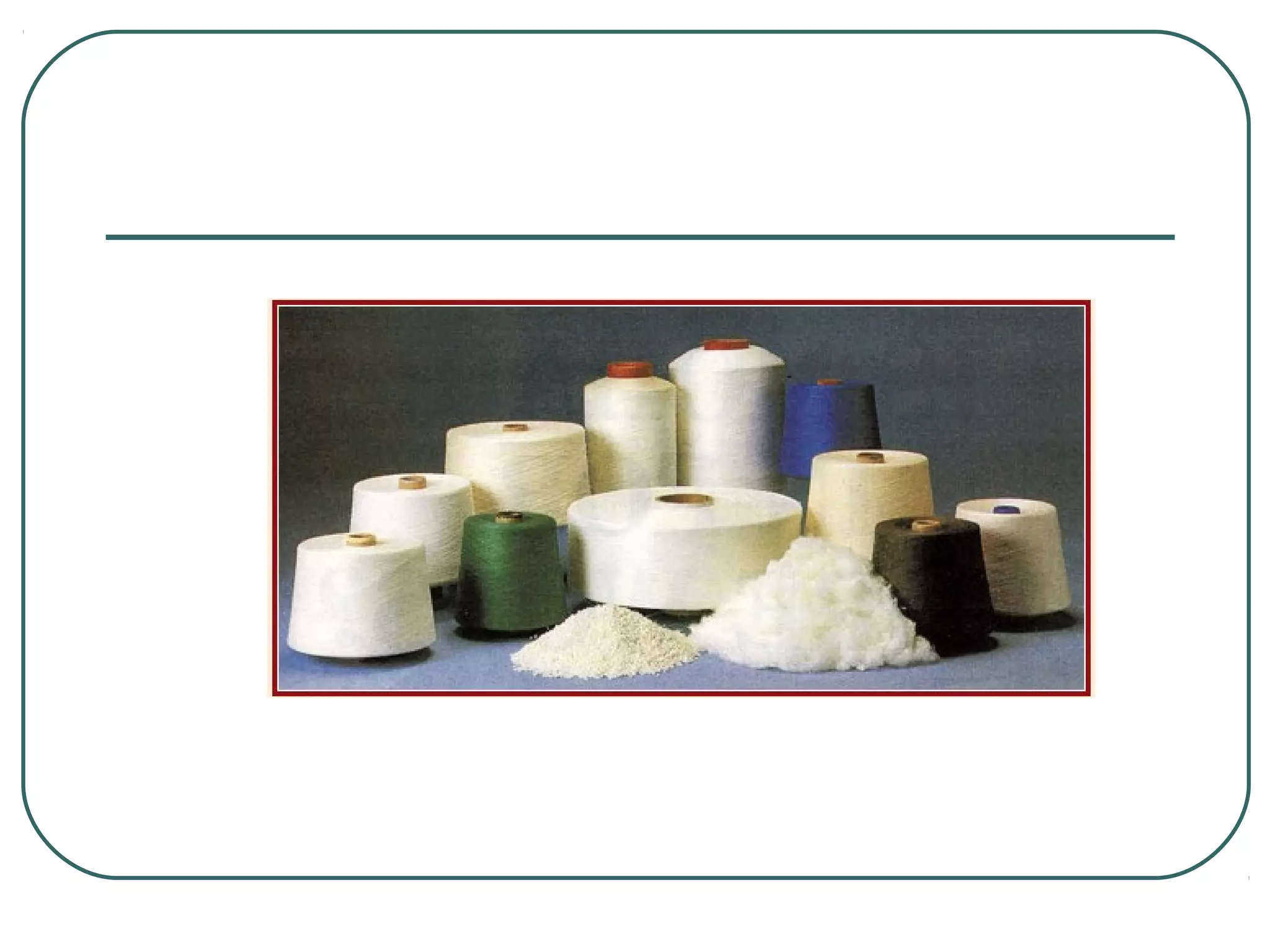

Yarn
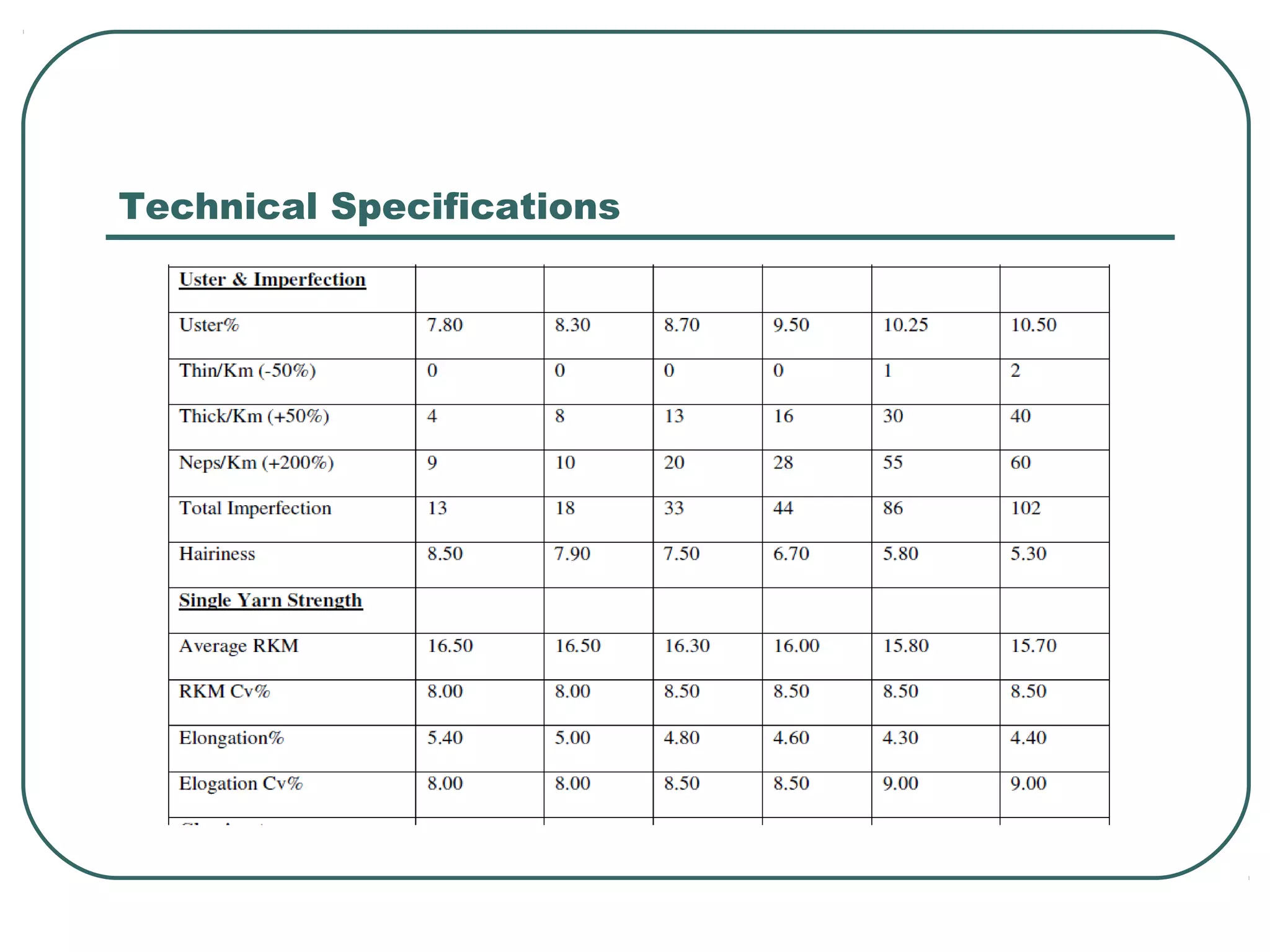
Technical Specifications &
selection guidelines
Part 1
Selection guidelines
 Fabric quality means different properties of finished
fabric which depends on yarn properties and fabrics
construction.
 Knit goods are known for their high structural
sensitiveness to deformation during manufacturing
process or at their end use.
Selection guidelines
 Yarn is the fundamental unit of fabric.
 Yarn contains a lot of properties (variables) which
can affect knitted fabric finished quality.
 The quality of hosiery yarn has to be considered with
due weightage to Fluidity of knit structures and their
influence on quality of knit fabrics.
Selection guidelines
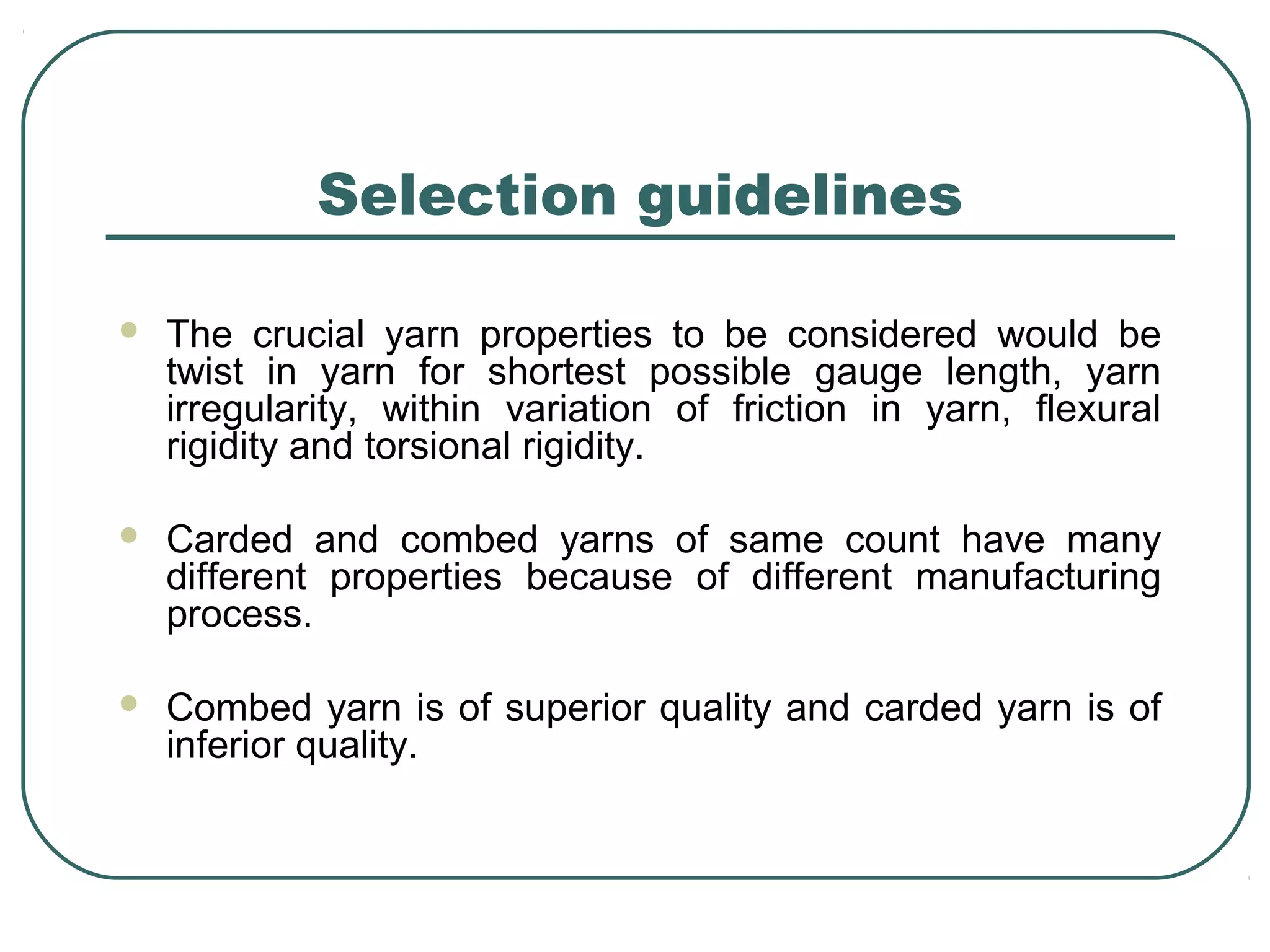
 The crucial yarn properties to be considered would be
twist in yarn for shortest possible gauge length, yarn
irregularity, within variation of friction in yarn, flexural
rigidity and torsional rigidity.
 Carded and combed yarns of same count have many
different properties because of different manufacturing
process.
 Combed yarn is of superior quality and carded yarn is of
inferior quality.
Knitting
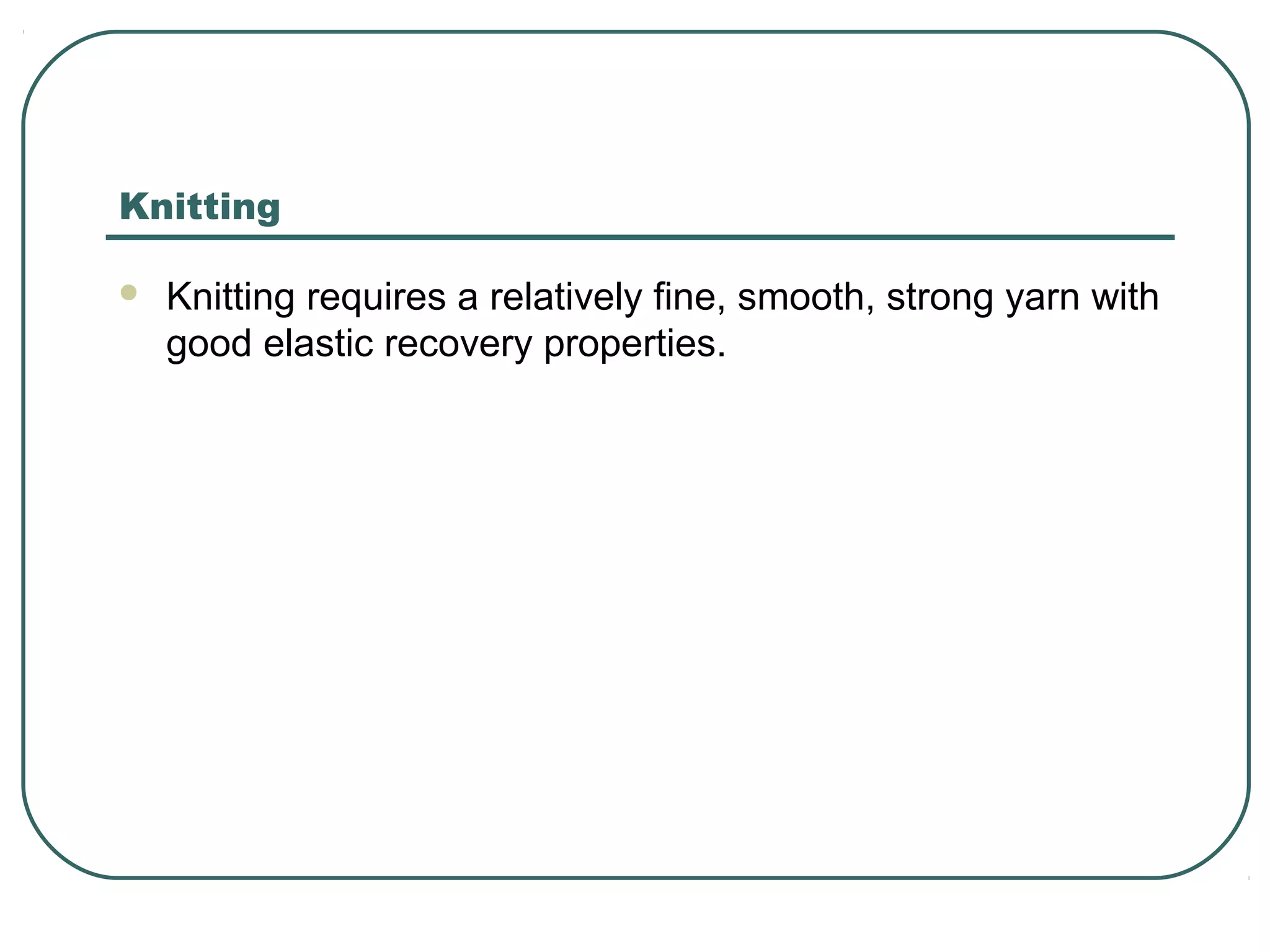
 Knitting requires a relatively fine, smooth, strong yarn with
good elastic recovery properties.
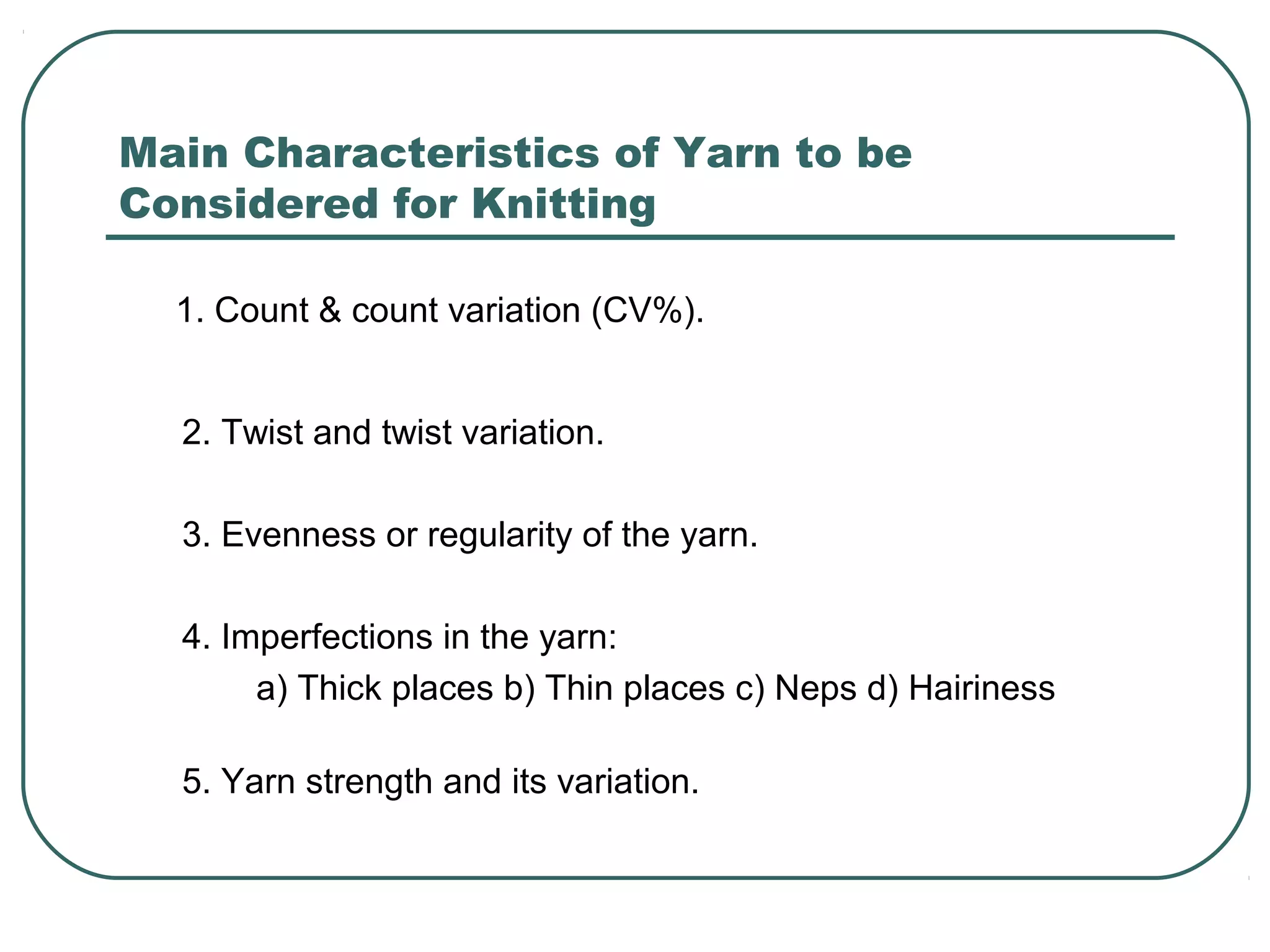
Main Characteristics of Yarn to be
Considered for Knitting
1. Count & count variation (CV%).
2. Twist and twist variation.
3. Evenness or regularity of the yarn.
4. Imperfections in the yarn:
a) Thick places b) Thin places c) Neps d) Hairiness
5. Yarn strength and its variation.
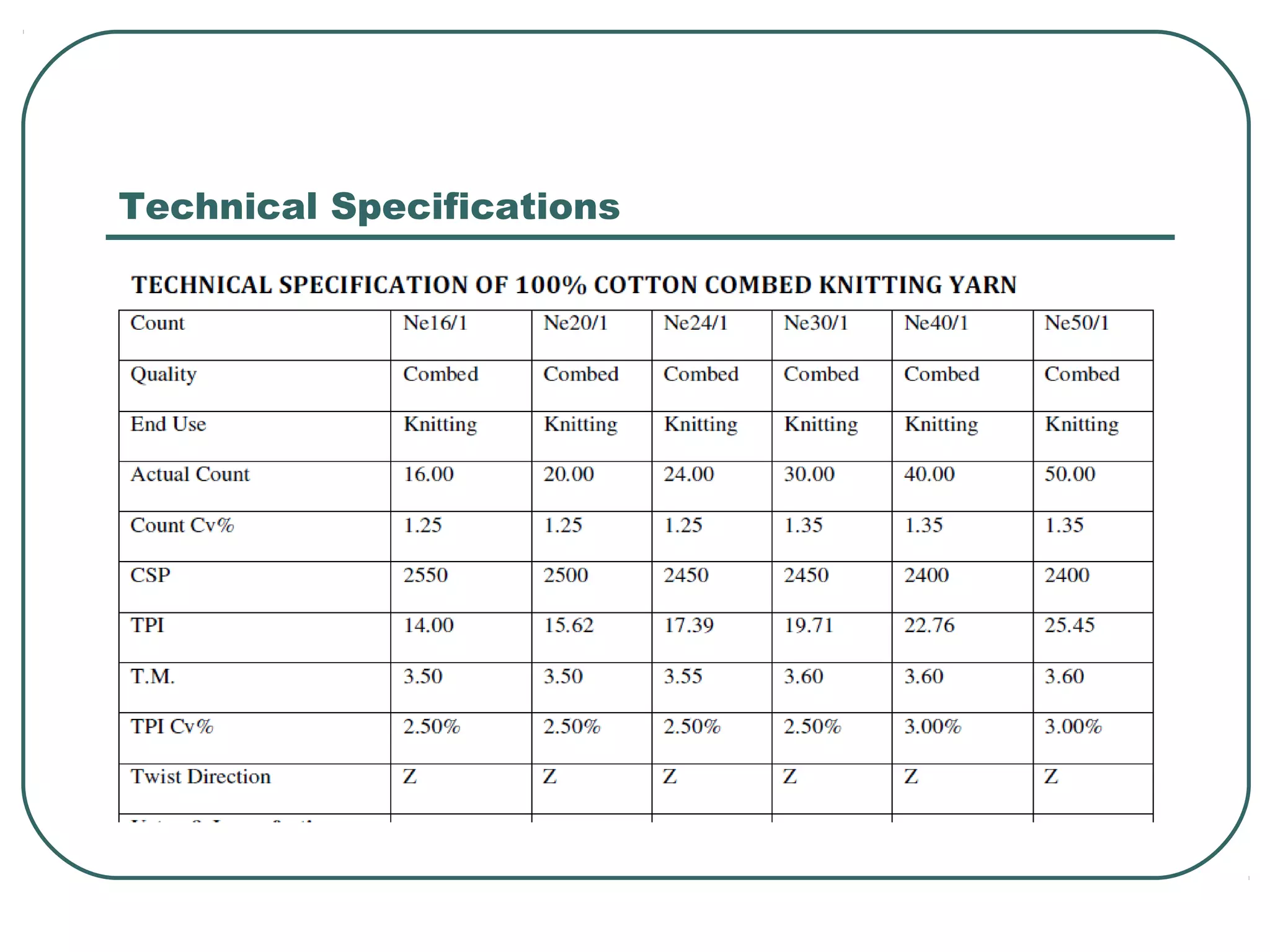
Technical Specifications
Combed vs Carded
 A same count carded and combed yarns have many
different properties which influence the fabric quality.
Combed vs Carded
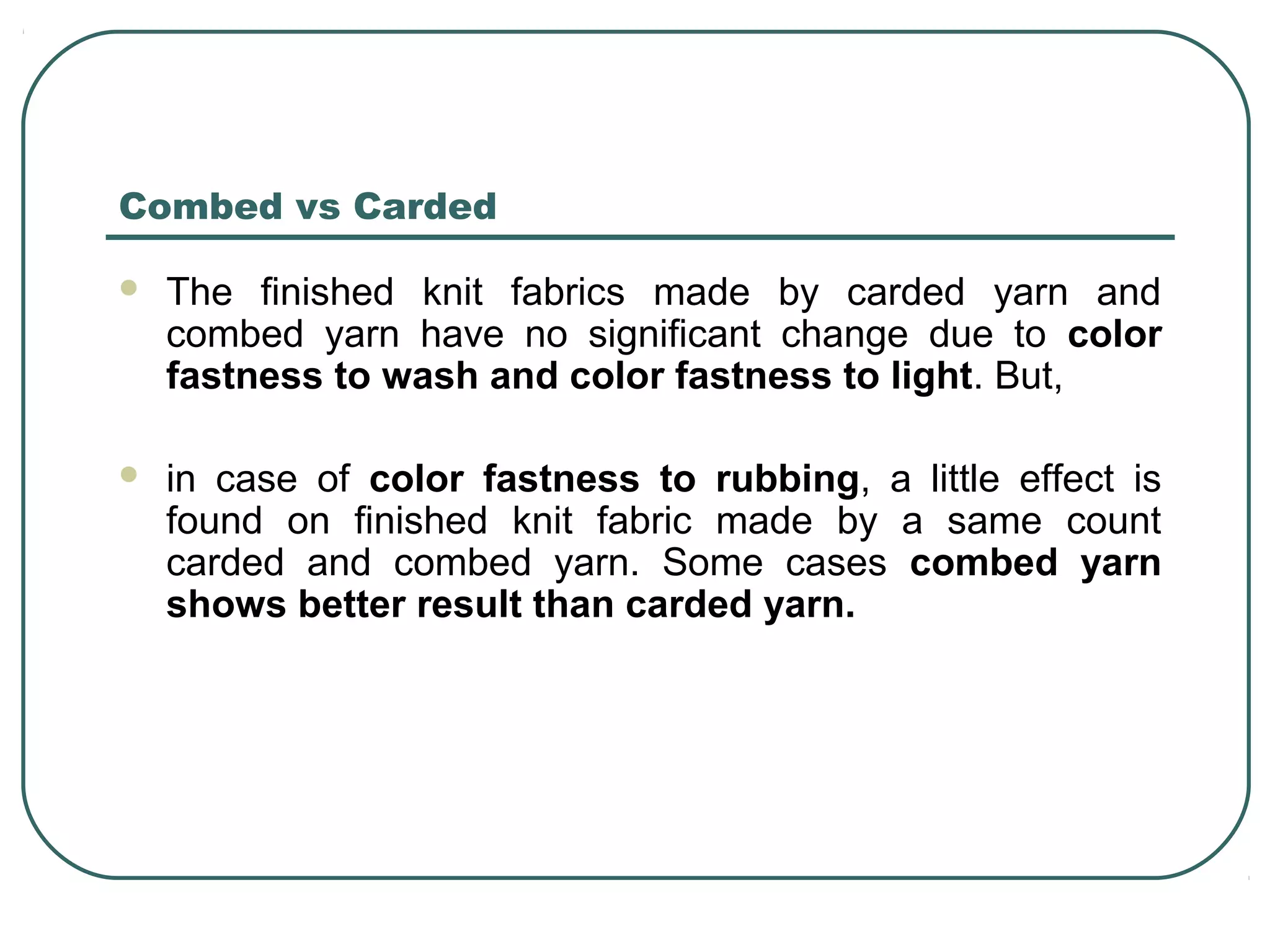
 The finished knit fabrics made by carded yarn and
combed yarn have no significant change due to color
fastness to wash and color fastness to light. But,
 in case of color fastness to rubbing, a little effect is
found on finished knit fabric made by a same count
carded and combed yarn. Some cases combed yarn
shows better result than carded yarn.
Combed vs Carded
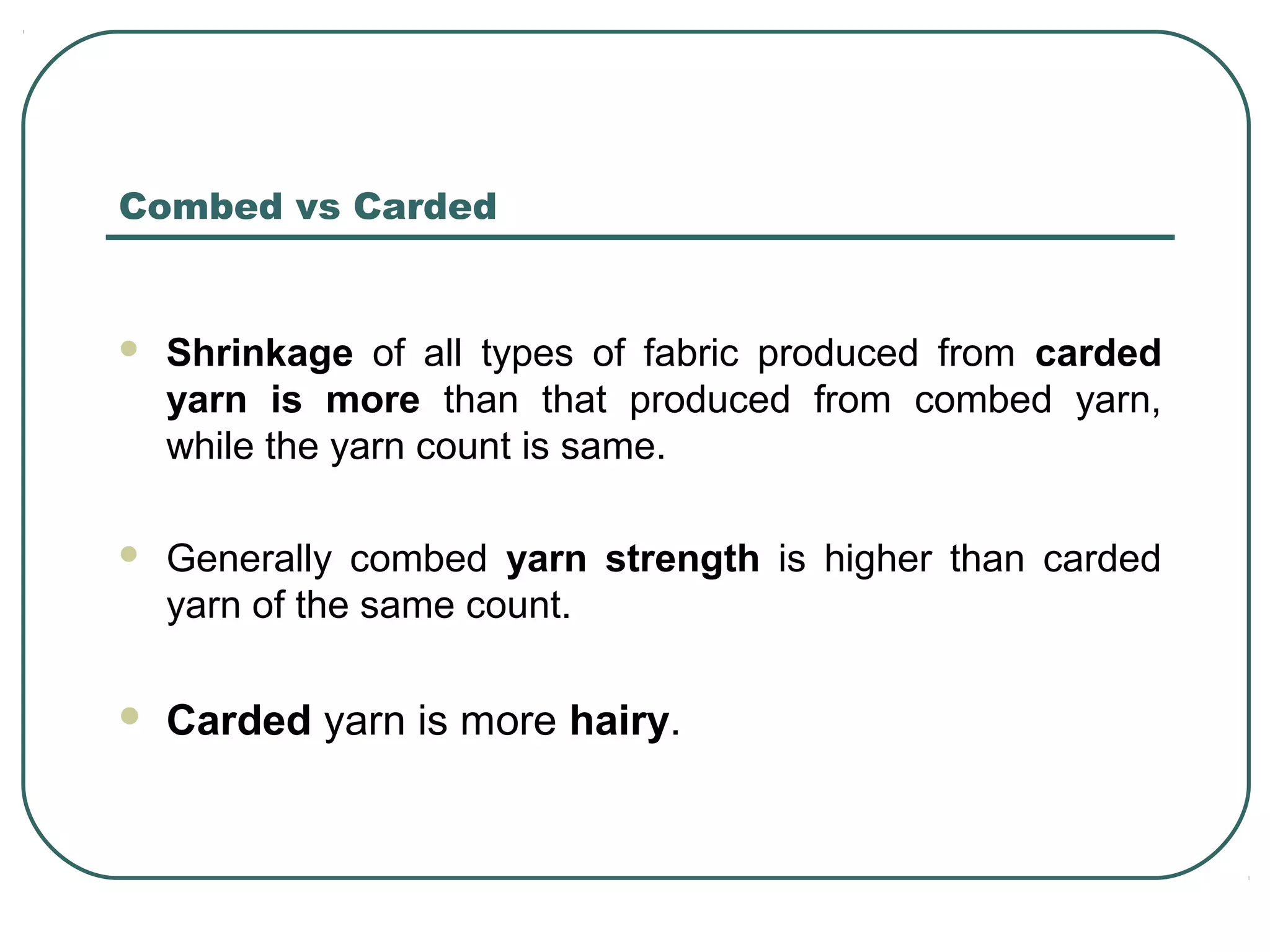
 Shrinkage of all types of fabric produced from carded
yarn is more than that produced from combed yarn,
while the yarn count is same.
 Generally combed yarn strength is higher than carded
yarn of the same count.
 Carded yarn is more hairy.
Combed vs Carded
 Pilling is a fabric surface fault which gives the garment
unsightly appearance.
 Pills are formed in fabric by entangling the loose fibers or
hairy fibers.
 When the garment undergoes wear & washing these pills
are formed on the fabric surface.
 The resistance of pilling effect on fabric produced by
combed yarn gives better result than same count carded
yarn.
Combed vs Carded
 Carded yarn and combed yarn have great effect on GSM.
Combed yarn produces higher GSM fabric than carded
yarn, while using the same count for both yarn types.
 More loose hairy fibers are removed from carded yarn by
knitting process and pretreatment process than combed yarn.
As a result fabric produced from combed yarn shows more
GSM than fabric produced from carded yarn after finishing.
 From this discussion, it can be said that in case of producing
fabric from carded yarn should maintain higher GSM than
combed yarn fabric to achieve same finished GSM.
Combed vs Carded
 Normally combed yarns are more uniform and more
lustrous than carded yarns.
 Fabric made of Combed yarn is gentle against the skin.
 Carded yarn TPI is more than combed yarn.
 A fabric knitted with a highly twisted yarn will have
higher Spirality.
Combed vs Carded
 However,
Carded yarn production process is easier than combed
yarn production process and carded yarn is also cheaper
than combed yarn.
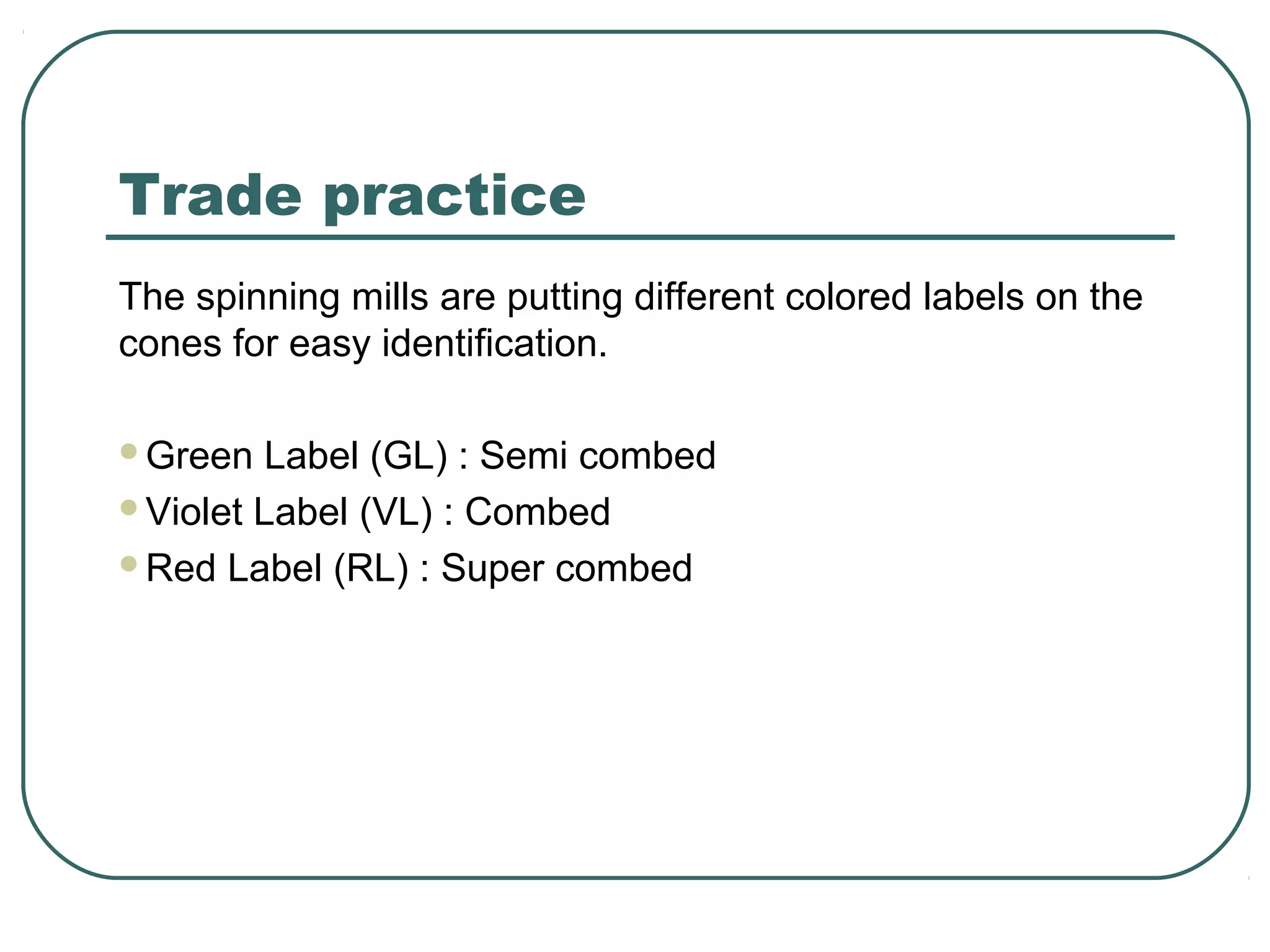
Trade practice
The spinning mills are putting different colored labels on the
cones for easy identification.
Green Label (GL) : Semi combed
Violet Label (VL) : Combed
Red Label (RL) : Super combed
Yarn Count
 Yarn Count is the numerical expression of fineness.
 The number indicating the mass per unit length or length
per unit mass of yarn is called count.
Count CV%
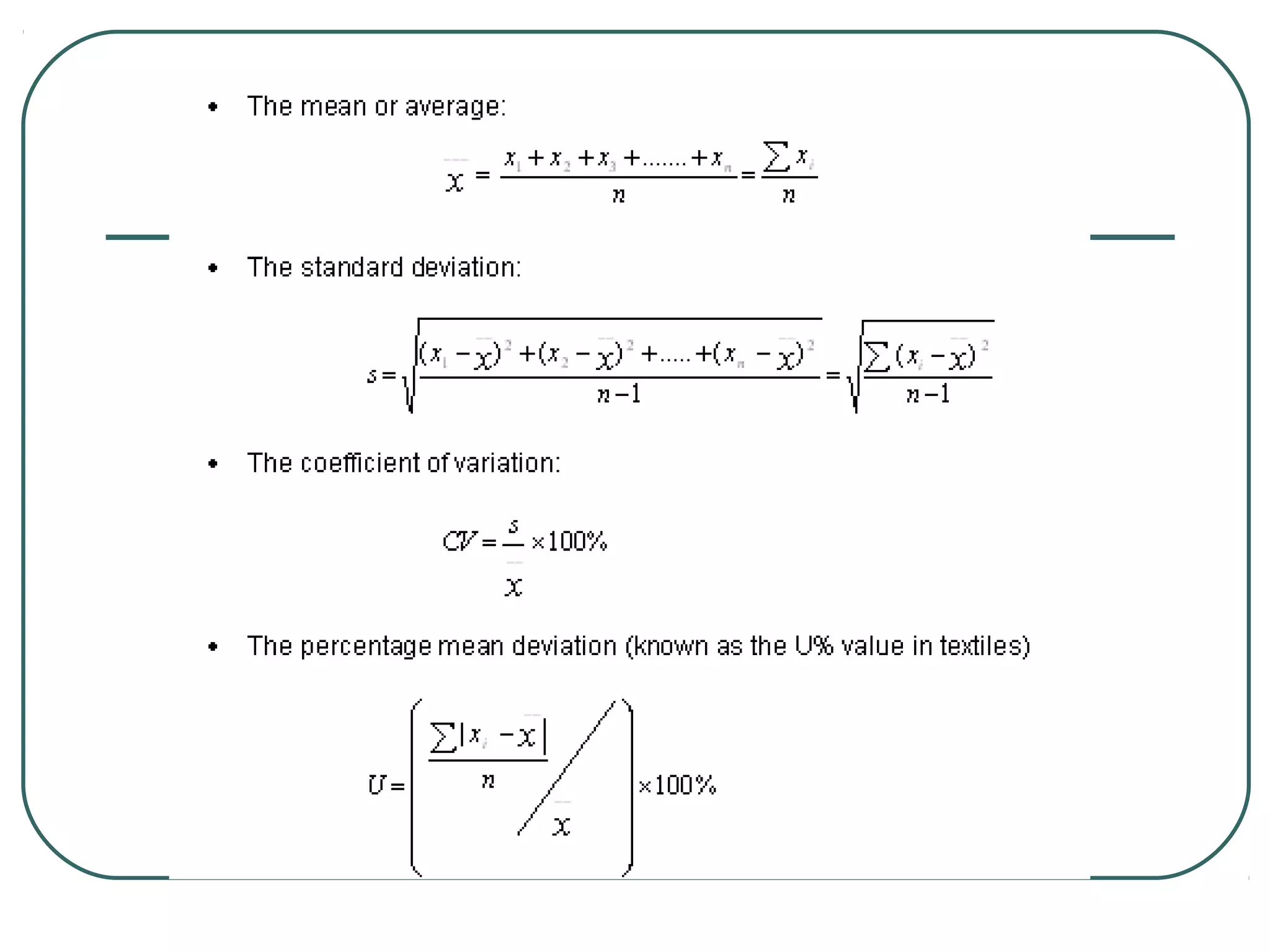
 CV% is a statistical measure of the variation of the
individual readings.
 The variation of the yarn count (CV count) is the variation
of count from one bobbin (or, cone) to the other.
 The lower the value the better.
 If this variation is more than 2% the difference in the
fabric is visible with bare eyes.
U%
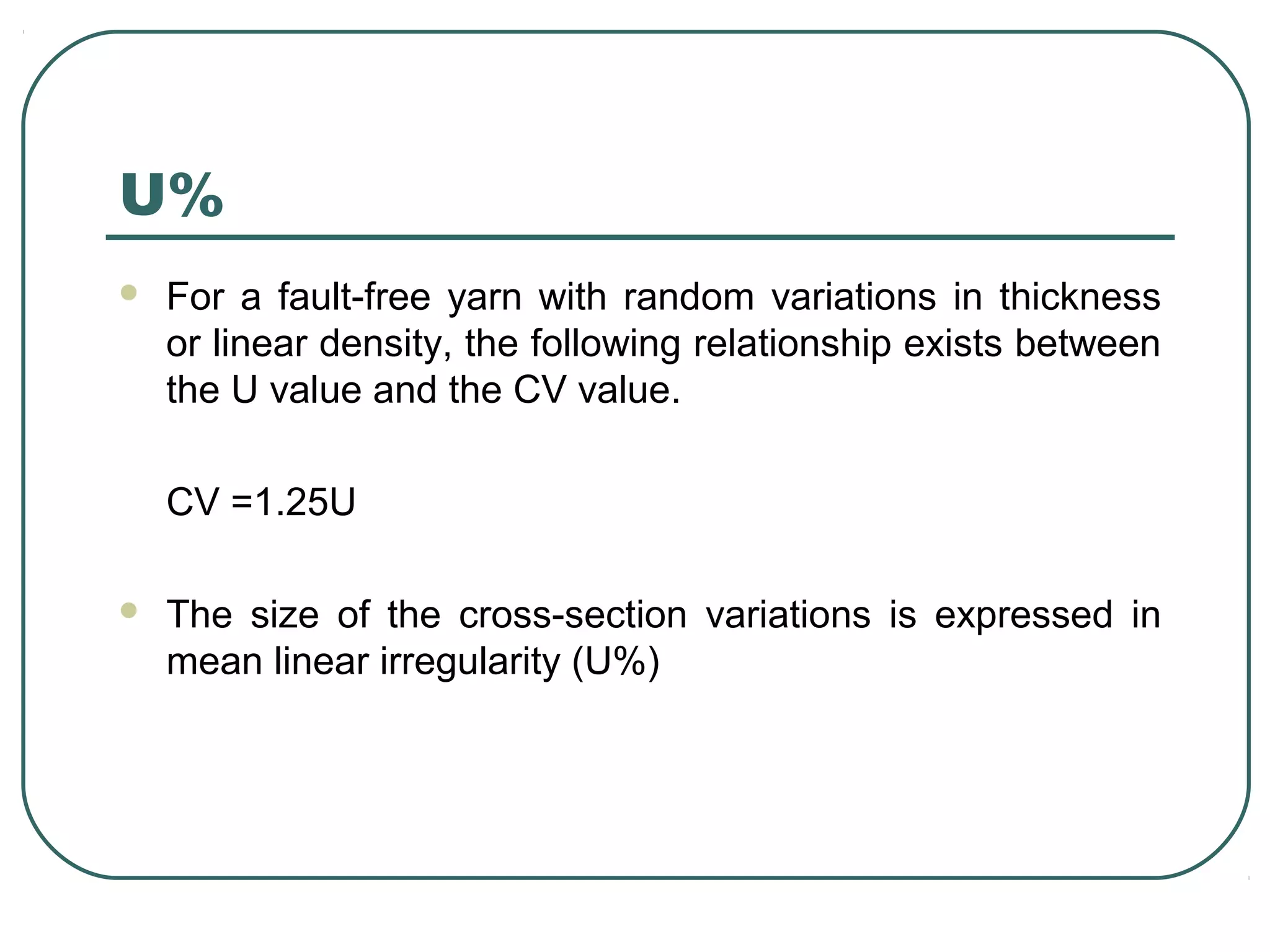
 For a fault-free yarn with random variations in thickness
or linear density, the following relationship exists between
the U value and the CV value.
CV =1.25U
 The size of the cross-section variations is expressed in
mean linear irregularity (U%)
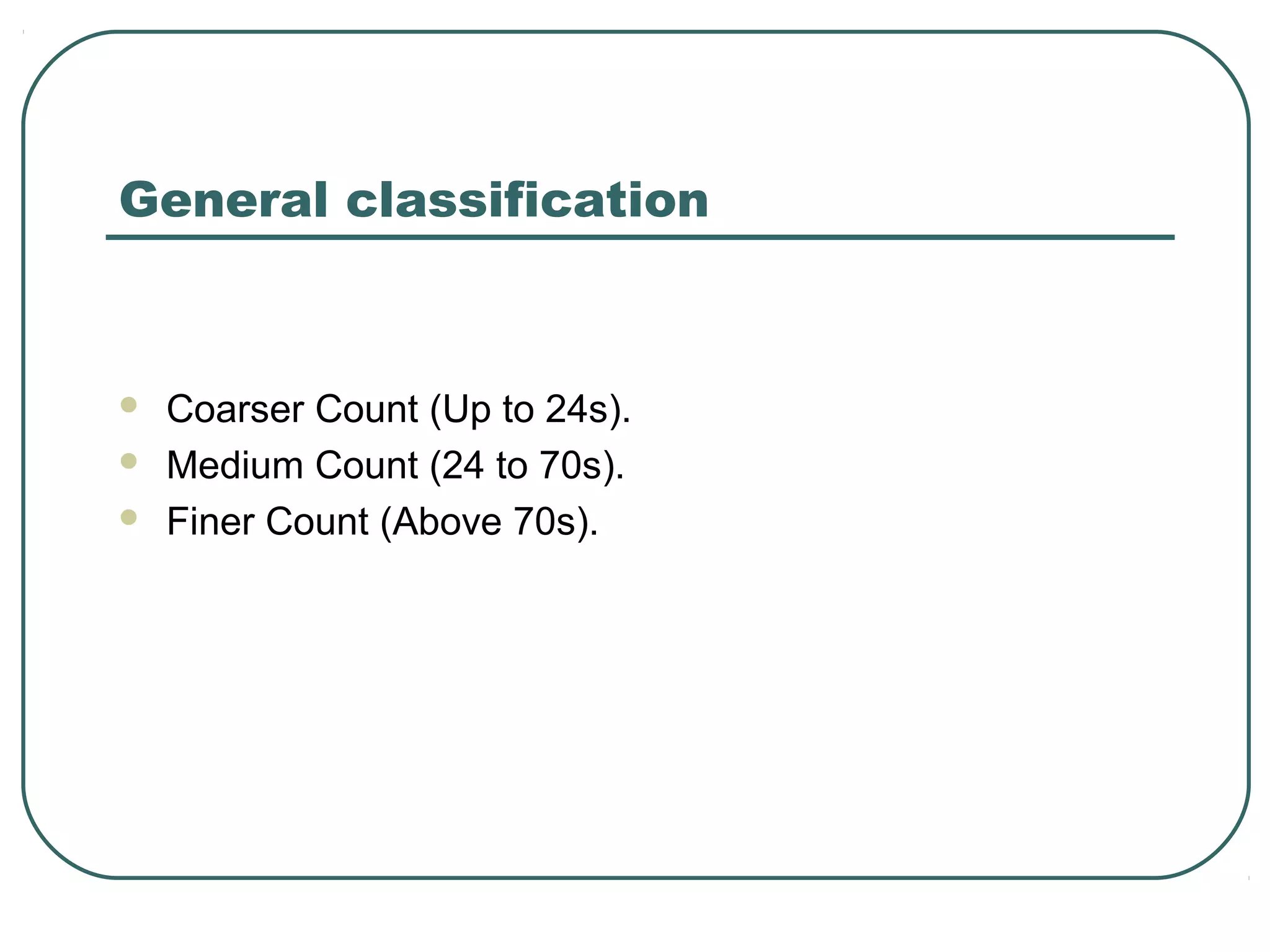
General classification
 Coarser Count (Up to 24s).
 Medium Count (24 to 70s).
 Finer Count (Above 70s).
 We will discuss other parameters in next edition.
 Until then,
Bye Bye.
 Note:
This is a Training material prepared for internal training purpose.

Yarn Quality part 1

  • 1.
  • 3.
    Selection guidelines  Fabricquality means different properties of finished fabric which depends on yarn properties and fabrics construction.  Knit goods are known for their high structural sensitiveness to deformation during manufacturing process or at their end use.
  • 4.
    Selection guidelines  Yarnis the fundamental unit of fabric.  Yarn contains a lot of properties (variables) which can affect knitted fabric finished quality.  The quality of hosiery yarn has to be considered with due weightage to Fluidity of knit structures and their influence on quality of knit fabrics.
  • 5.
    Selection guidelines  Thecrucial yarn properties to be considered would be twist in yarn for shortest possible gauge length, yarn irregularity, within variation of friction in yarn, flexural rigidity and torsional rigidity.  Carded and combed yarns of same count have many different properties because of different manufacturing process.  Combed yarn is of superior quality and carded yarn is of inferior quality.
  • 6.
    Knitting  Knitting requiresa relatively fine, smooth, strong yarn with good elastic recovery properties.
  • 7.
    Main Characteristics ofYarn to be Considered for Knitting 1. Count & count variation (CV%). 2. Twist and twist variation. 3. Evenness or regularity of the yarn. 4. Imperfections in the yarn: a) Thick places b) Thin places c) Neps d) Hairiness 5. Yarn strength and its variation.
  • 8.
  • 9.
  • 10.
    Combed vs Carded A same count carded and combed yarns have many different properties which influence the fabric quality.
  • 11.
    Combed vs Carded The finished knit fabrics made by carded yarn and combed yarn have no significant change due to color fastness to wash and color fastness to light. But,  in case of color fastness to rubbing, a little effect is found on finished knit fabric made by a same count carded and combed yarn. Some cases combed yarn shows better result than carded yarn.
  • 12.
    Combed vs Carded Shrinkage of all types of fabric produced from carded yarn is more than that produced from combed yarn, while the yarn count is same.  Generally combed yarn strength is higher than carded yarn of the same count.  Carded yarn is more hairy.
  • 13.
    Combed vs Carded Pilling is a fabric surface fault which gives the garment unsightly appearance.  Pills are formed in fabric by entangling the loose fibers or hairy fibers.  When the garment undergoes wear & washing these pills are formed on the fabric surface.  The resistance of pilling effect on fabric produced by combed yarn gives better result than same count carded yarn.
  • 14.
    Combed vs Carded Carded yarn and combed yarn have great effect on GSM. Combed yarn produces higher GSM fabric than carded yarn, while using the same count for both yarn types.  More loose hairy fibers are removed from carded yarn by knitting process and pretreatment process than combed yarn. As a result fabric produced from combed yarn shows more GSM than fabric produced from carded yarn after finishing.  From this discussion, it can be said that in case of producing fabric from carded yarn should maintain higher GSM than combed yarn fabric to achieve same finished GSM.
  • 15.
    Combed vs Carded Normally combed yarns are more uniform and more lustrous than carded yarns.  Fabric made of Combed yarn is gentle against the skin.  Carded yarn TPI is more than combed yarn.  A fabric knitted with a highly twisted yarn will have higher Spirality.
  • 16.
    Combed vs Carded However, Carded yarn production process is easier than combed yarn production process and carded yarn is also cheaper than combed yarn.
  • 17.
    Trade practice The spinningmills are putting different colored labels on the cones for easy identification. Green Label (GL) : Semi combed Violet Label (VL) : Combed Red Label (RL) : Super combed
  • 18.
    Yarn Count  YarnCount is the numerical expression of fineness.  The number indicating the mass per unit length or length per unit mass of yarn is called count.
  • 19.
    Count CV%  CV%is a statistical measure of the variation of the individual readings.  The variation of the yarn count (CV count) is the variation of count from one bobbin (or, cone) to the other.  The lower the value the better.  If this variation is more than 2% the difference in the fabric is visible with bare eyes.
  • 21.
    U%  For afault-free yarn with random variations in thickness or linear density, the following relationship exists between the U value and the CV value. CV =1.25U  The size of the cross-section variations is expressed in mean linear irregularity (U%)
  • 22.
    General classification  CoarserCount (Up to 24s).  Medium Count (24 to 70s).  Finer Count (Above 70s).
  • 23.
     We willdiscuss other parameters in next edition.  Until then, Bye Bye.  Note: This is a Training material prepared for internal training purpose.