Types of Graphs and Charts
and Their Uses in Research
DR. SANJAY SHEDMAKE
PVDT COLLEGE OF EDUCATION FOR WOMEN
Graph:
 A graph is a visual representation of data that uses points, lines, bars, or other
symbols to represent the relationships, patterns, or trends between different sets
of values. Graphs are often used to display numerical data in a structured and
visual manner, making it easier to analyze and understand complex information.
They provide a visual representation of the data, allowing researchers to identify
patterns, trends, and correlations.
Chart:
 A chart is a visual representation of data that presents information in a graphical
format, typically using different shapes, colors, and patterns to convey meaning.
Charts are used to illustrate data in a simplified and organized manner, making it
easier to interpret and communicate information effectively. They are often used
to summarize and present data in a visually appealing way, allowing for quick
comparisons, trends, and insights to be identified.
Line Graph
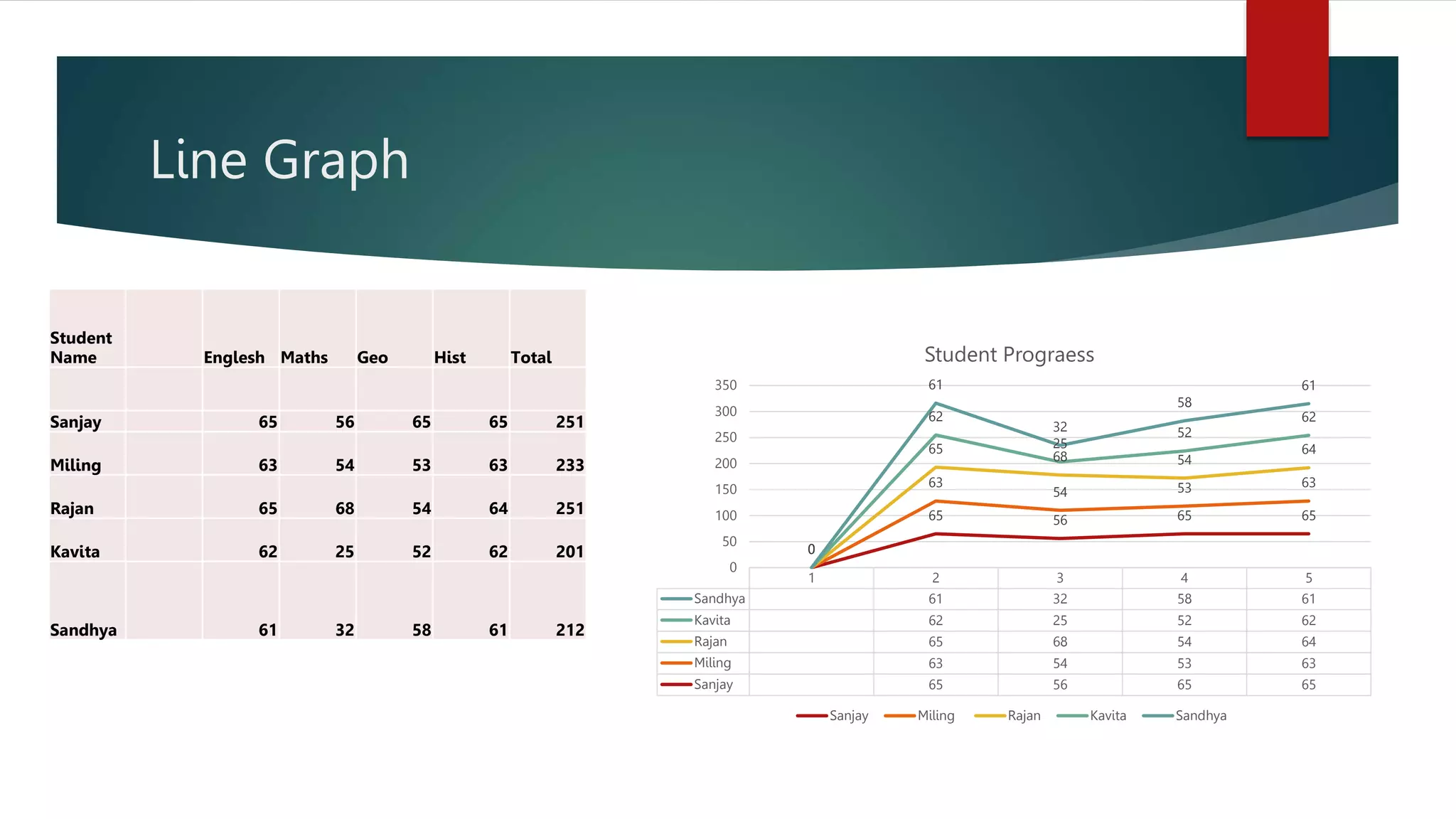
 A line chart graphically displays data that changes continuously over time. Each
line graph consists of points that connect data to show a trend (continuous
change). Line graphs have an x-axis and a y-axis. In the most cases, time is
distributed on the horizontal axis.
 When you want to show trends. For example, how Student performance have
increased over time.
 When you want to make predictions based on a data history over time.
 When comparing two or more different variables, situations, and information over
a given period of time.
Line Graph
Student
Name Englesh Maths Geo Hist Total
Sanjay 65 56 65 65 251
Miling 63 54 53 63 233
Rajan 65 68 54 64 251
Kavita 62 25 52 62 201
Sandhya 61 32 58 61 212
1 2 3 4 5
Sandhya 61 32 58 61
Kavita 62 25 52 62
Rajan 65 68 54 64
Miling 63 54 53 63
Sanjay 65 56 65 65
0
65 56 65 65
0
63
54 53 63
0
65
68 54
64
0
62
25
52
62
0
61
32
58
61
0
50
100
150
200
250
300
350
Student Prograess
Sanjay Miling Rajan Kavita Sandhya
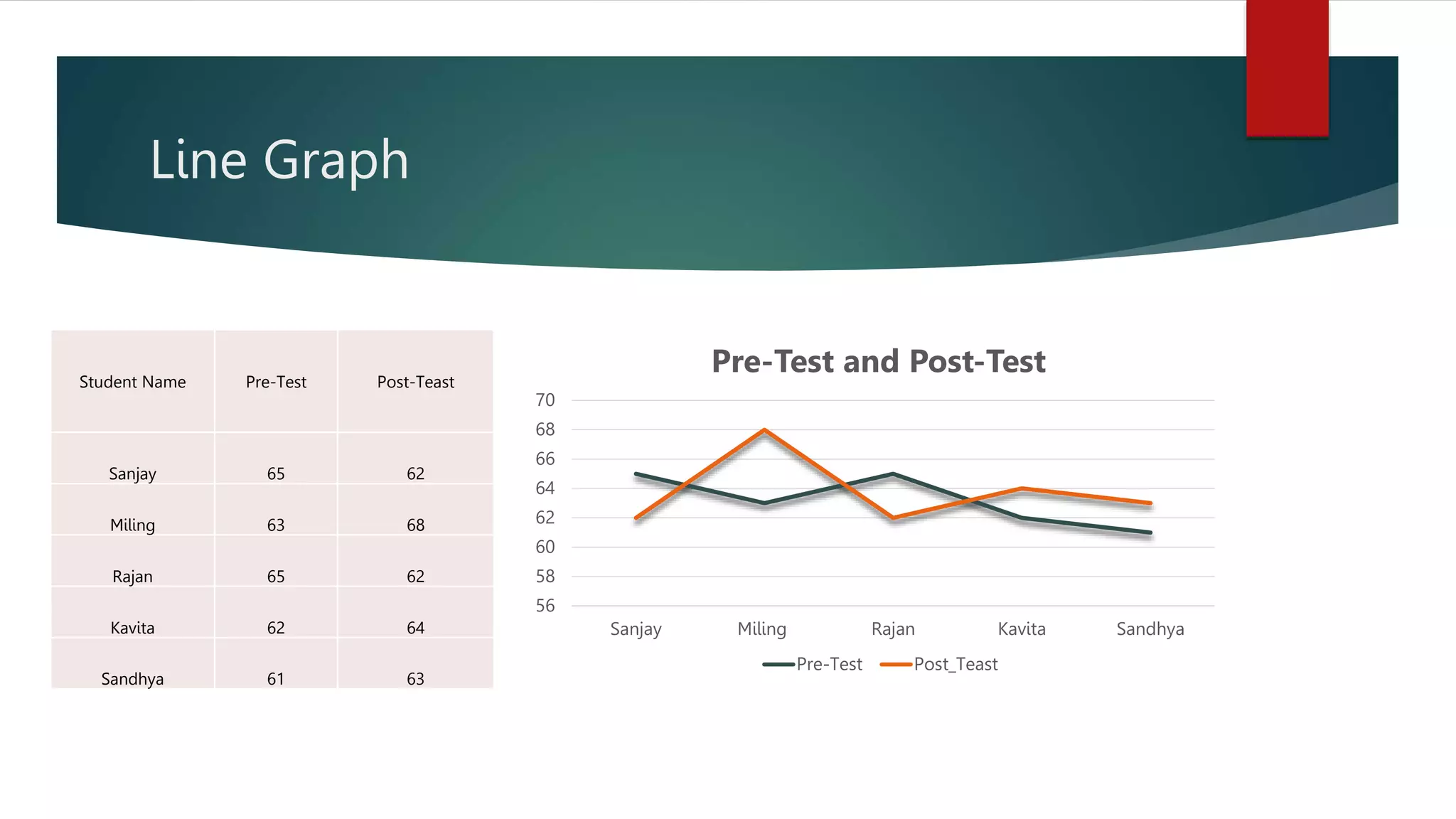
Line Graph
Student Name Pre-Test Post-Teast
Sanjay 65 62
Miling 63 68
Rajan 65 62
Kavita 62 64
Sandhya 61 63
56
58
60
62
64
66
68
70
Sanjay Miling Rajan Kavita Sandhya
Pre-Test and Post-Test
Pre-Test Post_Teast
Bar Graph
 A bar graph is a visual representation that uses rectangular bars to compare data
categories. In educational research,
 Bar graphs are commonly used to display categorical data or compare different
groups.
 Bar graphs can be use to compare present survey results
 To compare data among different categories.
 Bar charts can also show large data changes over time.
 Bar charts are ideal for visualizing the distribution of data when we have more
than three categories.
Bar Graph
Degree obtained by location
Area
Degree
BA BSc B Com
Rural 67 35 45
Urban 62 65 54
BA BSc B Com
Degree
Rural 67 35 45
Urban 62 65 54
67
35
45
62
65
54
DEGREE OBTAINED BY LOCATION
Rural Urban
Pie Chart
 A pie chart is a circular graph that uses slices to represent parts of a whole. In
educational research,
 Pie charts are often used to display proportions or percentages. They can be
effective in illustrating the distribution of student majors or representing the
percentage of students involved in extracurricular activities.
 When you want to create and represent the composition of something.
 To show percentage or proportional data.
 When comparing areas of growth.
Pie Chart
Distribution sample in Maharashtra
District Samples
Mumbai 52
Nagpur 35
Dhule 42
Pune 69
Kolhapur 82
Satara 65
Chandrapur 51
Mumbai, 52, 13%
Nagpur, 35, 9%
Dhule, 42, 11%
Pune, 69, 17%
Kolhapur, 82, 21%
Satara, 65, 16%
Chandrapur , 51, 13%
DISTRIBUTION SAMPLE IN MAHARASHTRA SAMPLES
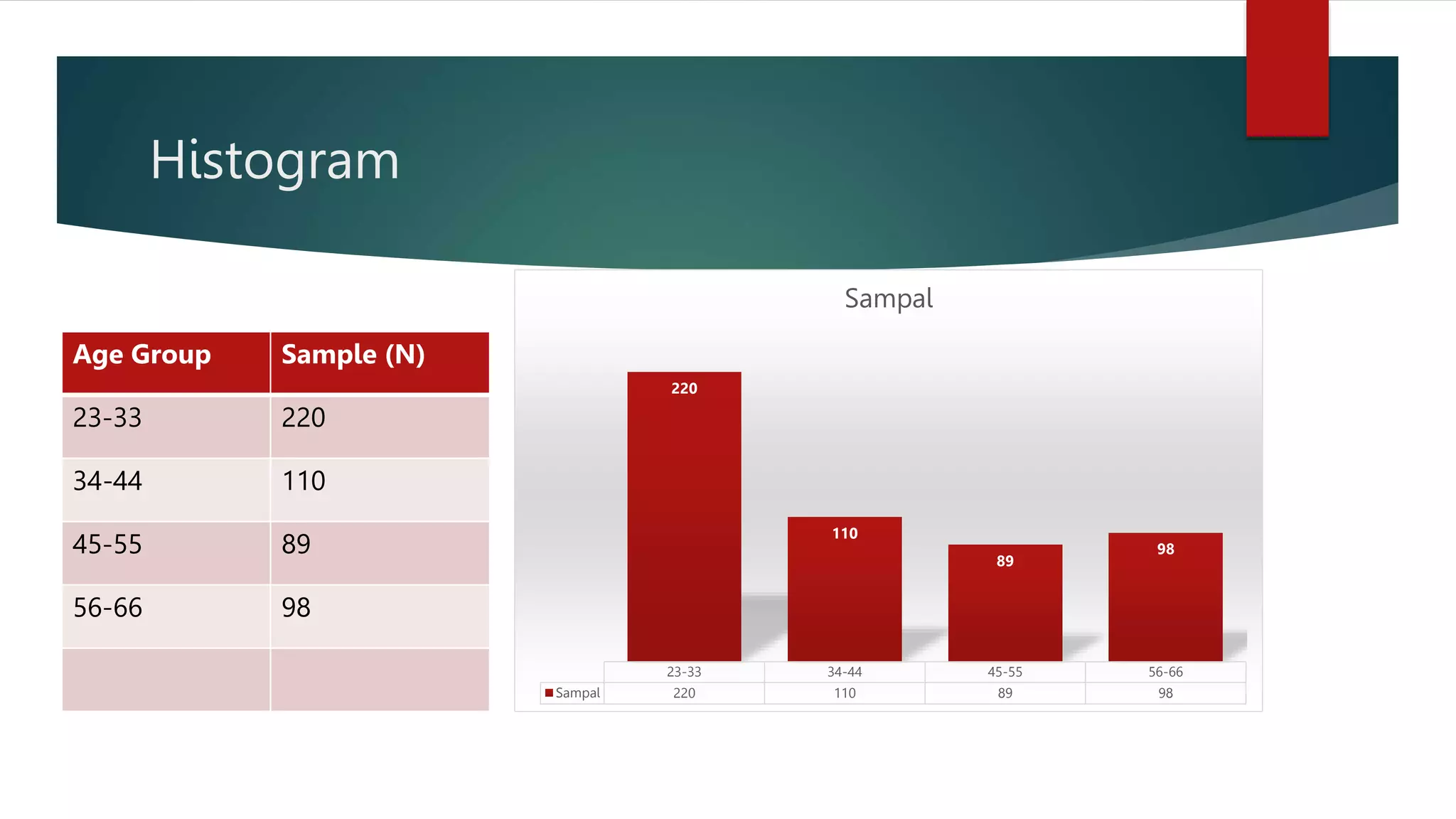
Histogram
 Histograms are frequently used to analyze frequency distributions or understand
performance levels.
 When you want to represent the shape of the data’s distribution.
 When you want to see whether the outputs of two or more processes are different.
 To summarize large data sets graphically.
 To communicate the data distribution quickly to others.
Histogram
Age Group Sample (N)
23-33 220
34-44 110
45-55 89
56-66 98
23-33 34-44 45-55 56-66
Sampal 220 110 89 98
220
110
89
98
Sampal

Types of Graphs and Charts.pptx

  • 1.
    Types of Graphsand Charts and Their Uses in Research DR. SANJAY SHEDMAKE PVDT COLLEGE OF EDUCATION FOR WOMEN
  • 2.
    Graph:  A graphis a visual representation of data that uses points, lines, bars, or other symbols to represent the relationships, patterns, or trends between different sets of values. Graphs are often used to display numerical data in a structured and visual manner, making it easier to analyze and understand complex information. They provide a visual representation of the data, allowing researchers to identify patterns, trends, and correlations.
  • 3.
    Chart:  A chartis a visual representation of data that presents information in a graphical format, typically using different shapes, colors, and patterns to convey meaning. Charts are used to illustrate data in a simplified and organized manner, making it easier to interpret and communicate information effectively. They are often used to summarize and present data in a visually appealing way, allowing for quick comparisons, trends, and insights to be identified.
  • 4.
    Line Graph  Aline chart graphically displays data that changes continuously over time. Each line graph consists of points that connect data to show a trend (continuous change). Line graphs have an x-axis and a y-axis. In the most cases, time is distributed on the horizontal axis.  When you want to show trends. For example, how Student performance have increased over time.  When you want to make predictions based on a data history over time.  When comparing two or more different variables, situations, and information over a given period of time.
  • 5.
    Line Graph Student Name EngleshMaths Geo Hist Total Sanjay 65 56 65 65 251 Miling 63 54 53 63 233 Rajan 65 68 54 64 251 Kavita 62 25 52 62 201 Sandhya 61 32 58 61 212 1 2 3 4 5 Sandhya 61 32 58 61 Kavita 62 25 52 62 Rajan 65 68 54 64 Miling 63 54 53 63 Sanjay 65 56 65 65 0 65 56 65 65 0 63 54 53 63 0 65 68 54 64 0 62 25 52 62 0 61 32 58 61 0 50 100 150 200 250 300 350 Student Prograess Sanjay Miling Rajan Kavita Sandhya
  • 6.
    Line Graph Student NamePre-Test Post-Teast Sanjay 65 62 Miling 63 68 Rajan 65 62 Kavita 62 64 Sandhya 61 63 56 58 60 62 64 66 68 70 Sanjay Miling Rajan Kavita Sandhya Pre-Test and Post-Test Pre-Test Post_Teast
  • 7.
    Bar Graph  Abar graph is a visual representation that uses rectangular bars to compare data categories. In educational research,  Bar graphs are commonly used to display categorical data or compare different groups.  Bar graphs can be use to compare present survey results  To compare data among different categories.  Bar charts can also show large data changes over time.  Bar charts are ideal for visualizing the distribution of data when we have more than three categories.
  • 8.
    Bar Graph Degree obtainedby location Area Degree BA BSc B Com Rural 67 35 45 Urban 62 65 54 BA BSc B Com Degree Rural 67 35 45 Urban 62 65 54 67 35 45 62 65 54 DEGREE OBTAINED BY LOCATION Rural Urban
  • 9.
    Pie Chart  Apie chart is a circular graph that uses slices to represent parts of a whole. In educational research,  Pie charts are often used to display proportions or percentages. They can be effective in illustrating the distribution of student majors or representing the percentage of students involved in extracurricular activities.  When you want to create and represent the composition of something.  To show percentage or proportional data.  When comparing areas of growth.
  • 10.
    Pie Chart Distribution samplein Maharashtra District Samples Mumbai 52 Nagpur 35 Dhule 42 Pune 69 Kolhapur 82 Satara 65 Chandrapur 51 Mumbai, 52, 13% Nagpur, 35, 9% Dhule, 42, 11% Pune, 69, 17% Kolhapur, 82, 21% Satara, 65, 16% Chandrapur , 51, 13% DISTRIBUTION SAMPLE IN MAHARASHTRA SAMPLES
  • 11.
    Histogram  Histograms arefrequently used to analyze frequency distributions or understand performance levels.  When you want to represent the shape of the data’s distribution.  When you want to see whether the outputs of two or more processes are different.  To summarize large data sets graphically.  To communicate the data distribution quickly to others.
  • 12.
    Histogram Age Group Sample(N) 23-33 220 34-44 110 45-55 89 56-66 98 23-33 34-44 45-55 56-66 Sampal 220 110 89 98 220 110 89 98 Sampal