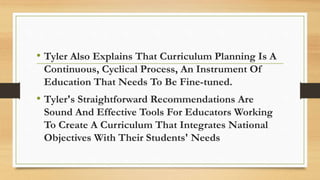
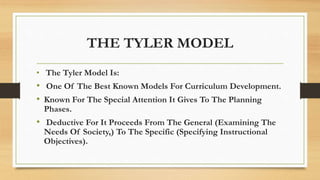
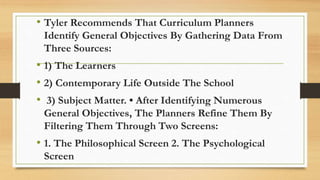
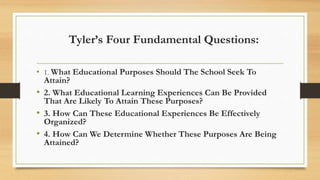
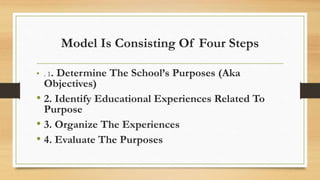
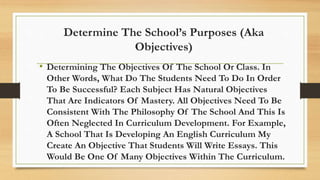
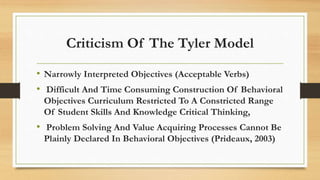
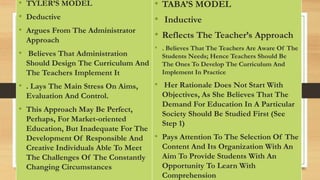
The Tyler model of curriculum development emphasizes a dynamic and cyclical approach to planning, evaluation, and revision based on four fundamental questions. It involves determining educational objectives, identifying related experiences, organizing these experiences, and evaluating their effectiveness, allowing for both societal needs and student requirements to be taken into account. While the model is praised for its clarity and involvement of learners, it faces criticism for its narrowly defined objectives and potential limitations in fostering critical thinking and creativity.