Department of MME
BUET, Dhaka
 We have seen how the properties of materials reflect their
microstructures. The microstructure are controlled by the
composition of the material and how it is processed.
 So it is important that we must know
 know about the structure of a material that has been developed
during its manufacture, and
 learn how to control (and/or modify) the structure to enhance
its properties.
 Phase diagram is an important tool for materials scientists that
tells which phases are stable in a system under specified
conditions (e.g. of temperature, overall composition, pressure)
 Reading a phase diagram will also tell what phase
transformations we can expect when we change one or
more parameters of the system (T, P, X).
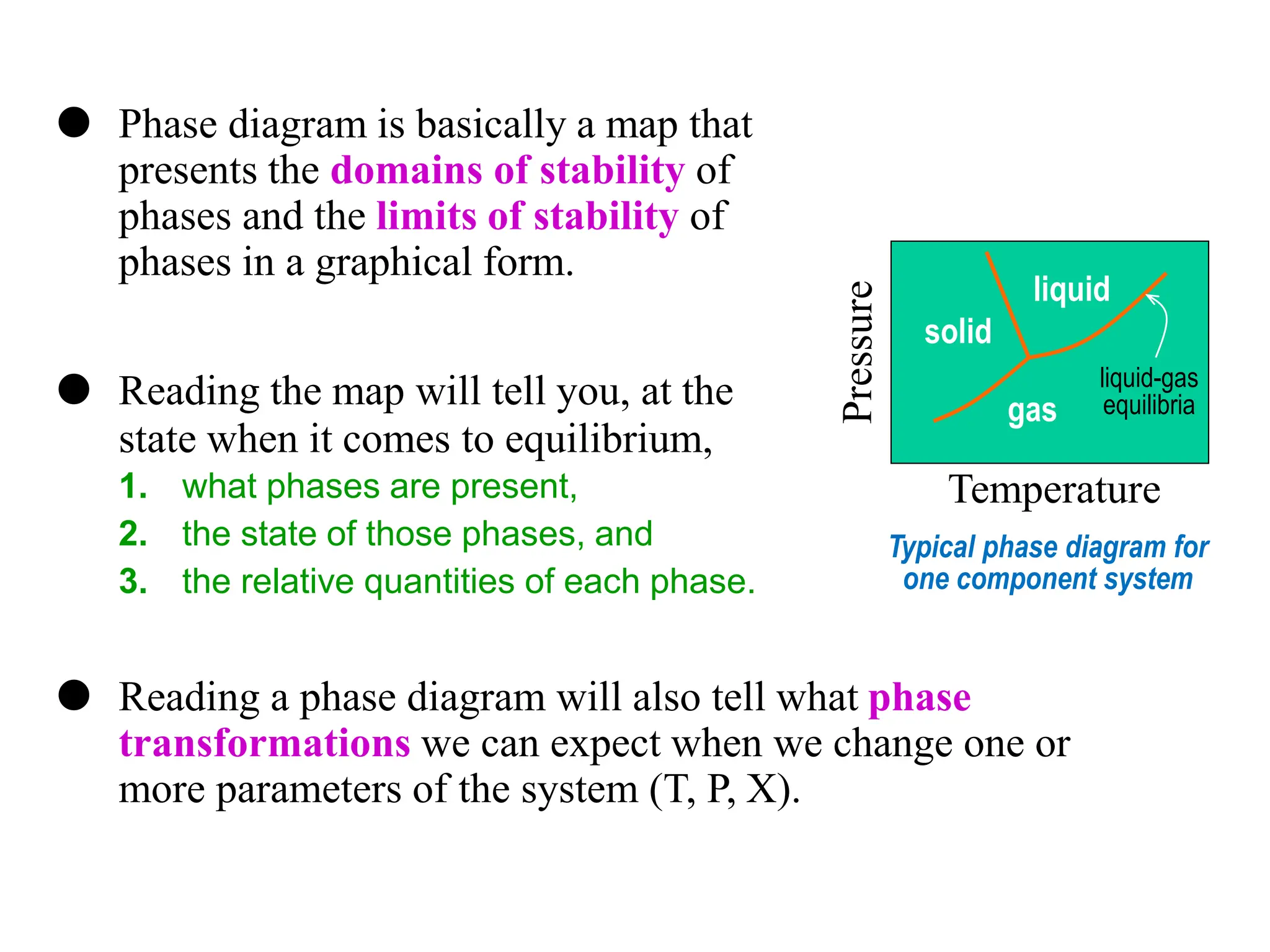
Temperature
solid
liquid
gas
liquid-gas
equilibria
Typical phase diagram for
one component system
 Phase diagram is basically a map that
presents the domains of stability of
phases and the limits of stability of
phases in a graphical form.
 Reading the map will tell you, at the
state when it comes to equilibrium,
1. what phases are present,
2. the state of those phases, and
3. the relative quantities of each phase.
 Chemically recognisable species that are mixed to form
the alloy.
 In Brass: Cu, Zn (element)
 In steels: Fe, C (element)
 In ceramics: SiO2, Al2O3 (compound)
 Binary alloy contains 2 components, ternary 3, etc.
Components
Phase
 A phase is a homogenous, physically distinct and
mechanically separable portion of the material with a
given chemical composition and structure.
What and how many phases materials
possess?
 Solid, liquid, or gas, (and plasma)?
 Is it possible to have more than one solid phases?
Iron, being an allotropic material, has more than one solid phases:
 When iron freezes at 1538 C from its liquid state, the first solid
formed has BCC structure (which is known as d-iron)
 As it cools down to 1401 C, it changes to FCC structure
(which is known as g-iron)
 Upon further cooling down to 910 C, it changes again to
BCC structure (which is known as a-iron)
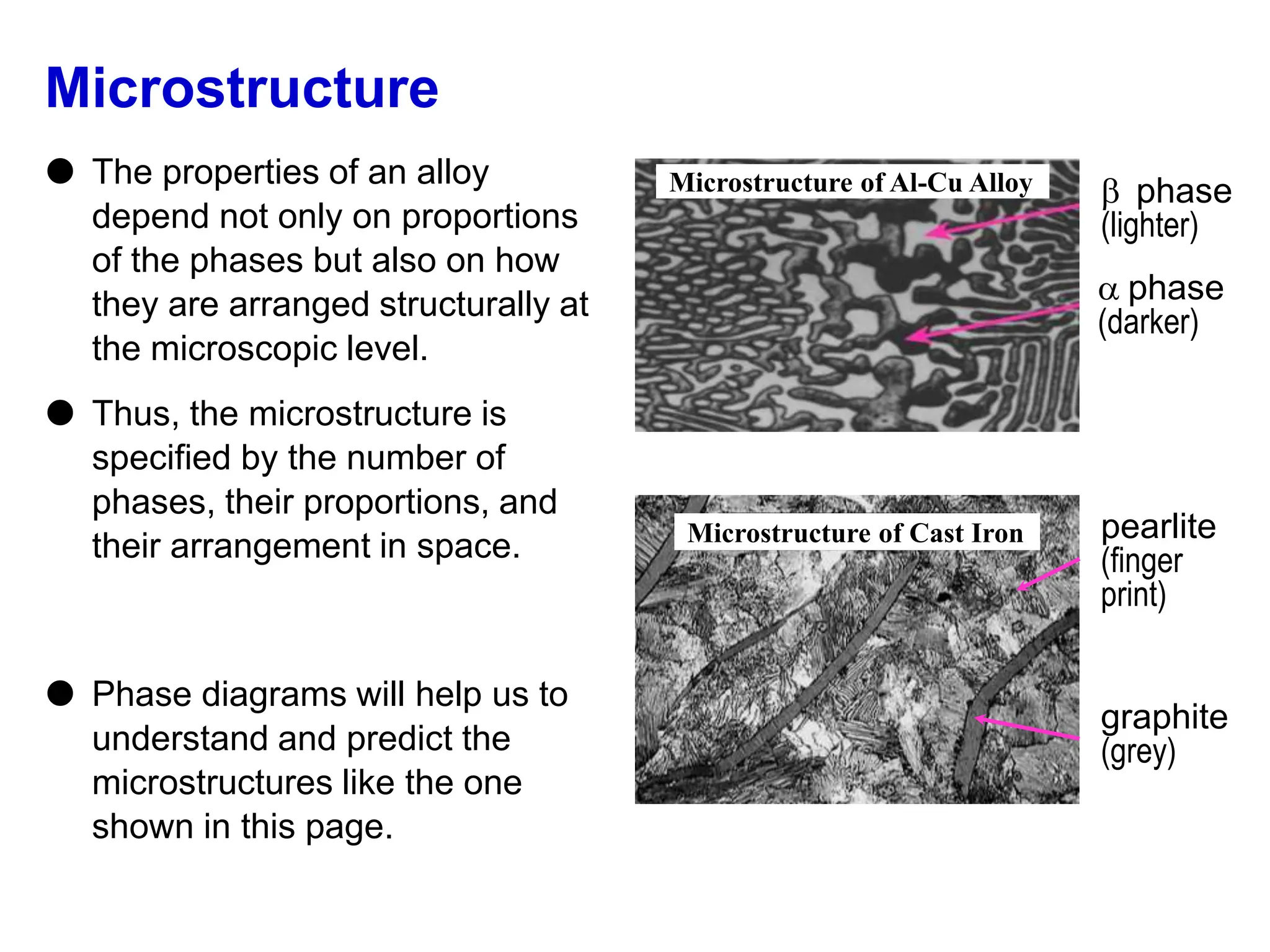
 The properties of an alloy
depend not only on proportions
of the phases but also on how
they are arranged structurally at
the microscopic level.
 Thus, the microstructure is
specified by the number of
phases, their proportions, and
their arrangement in space.
Microstructure
pearlite
(finger
print)
graphite
(grey)
b phase
(lighter)
a phase
(darker)
Microstructure of Al-Cu Alloy
Microstructure of Cast Iron
 Phase diagrams will help us to
understand and predict the
microstructures like the one
shown in this page.
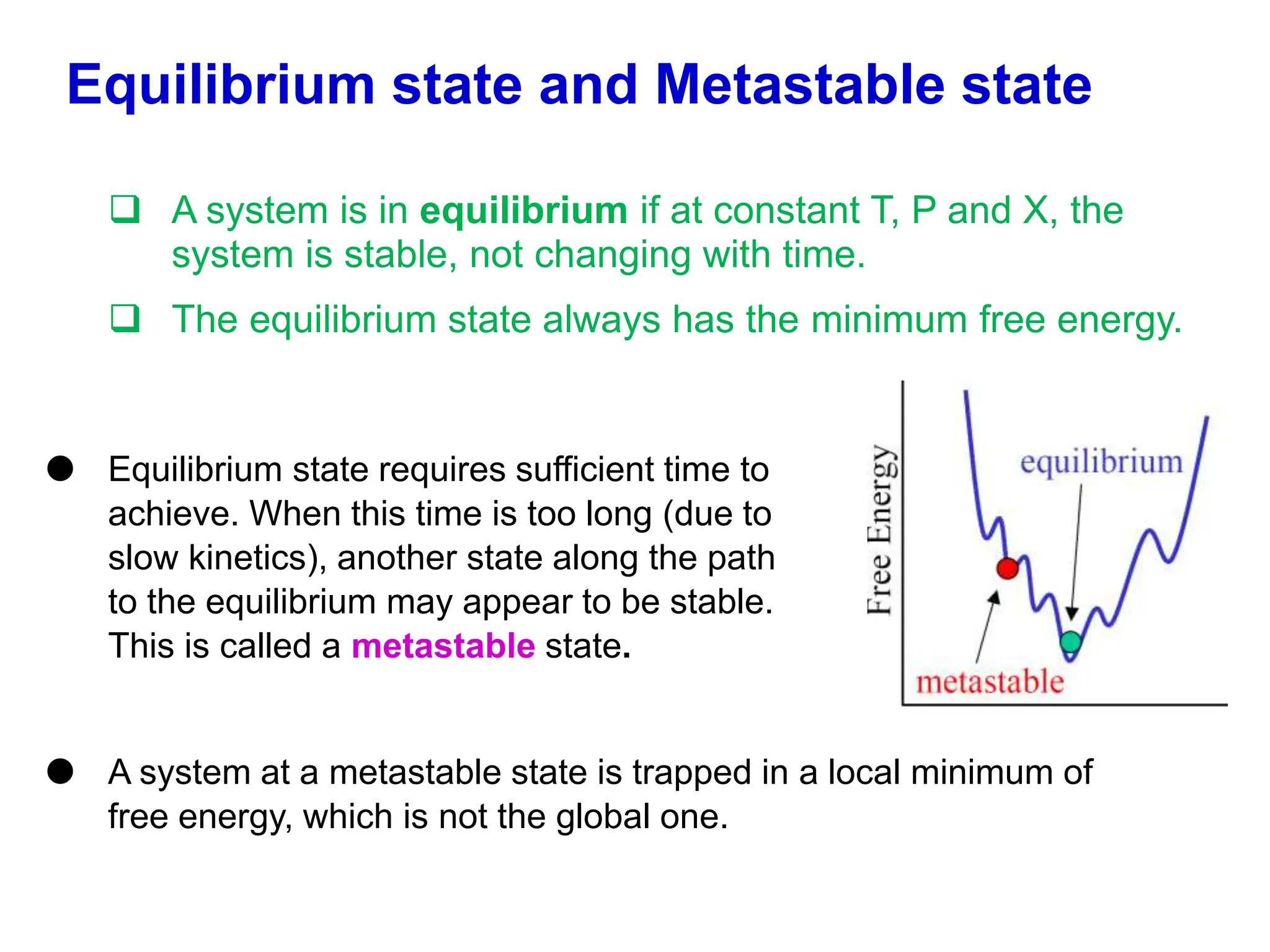
 A system is in equilibrium if at constant T, P and X, the
system is stable, not changing with time.
 The equilibrium state always has the minimum free energy.
Equilibrium state and Metastable state
 Equilibrium state requires sufficient time to
achieve. When this time is too long (due to
slow kinetics), another state along the path
to the equilibrium may appear to be stable.
This is called a metastable state.
 A system at a metastable state is trapped in a local minimum of
free energy, which is not the global one.
Advantages of Using Phase Diagrams
 Selection of alloys having enhanced properties for a specific set
of applications.
 Manipulation of phase transformations of materials to control
their properties.
Limitations of Using Phase Diagrams
 Phase diagrams are also known as the equilibrium diagrams;
structures produced by non-equilibrium cooling cannot be
explained.
 Rate of phase transformations is missing; TTT (Temperature-
Time-Transformation) diagrams are more useful in this regard.
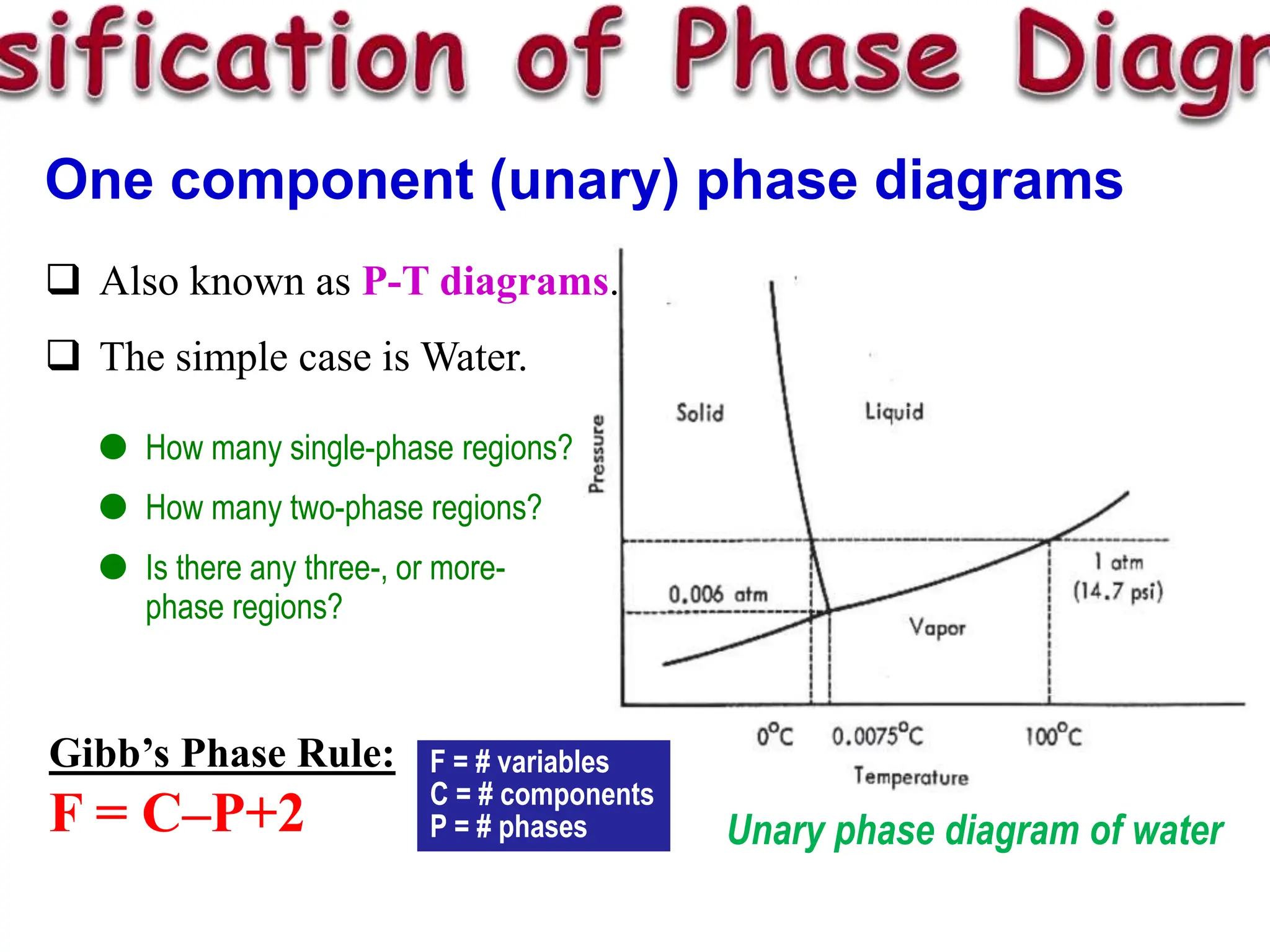
One component (unary) phase diagrams
Unary phase diagram of water
 How many single-phase regions?
 How many two-phase regions?
 Is there any three-, or more-
phase regions?
Gibb’s Phase Rule:
F = C–P+2
F = # variables
C = # components
P = # phases
 Also known as P-T diagrams.
 The simple case is Water.
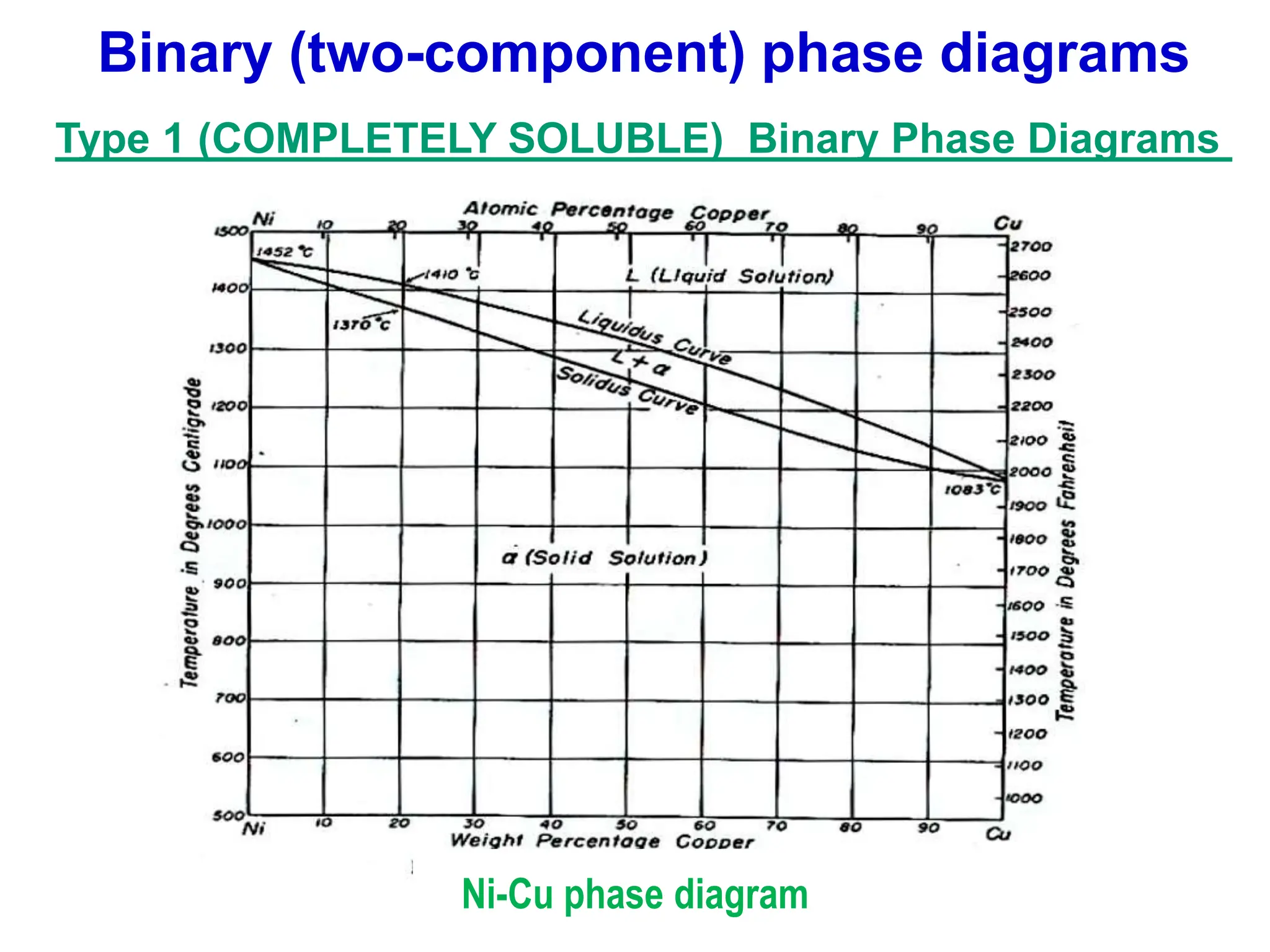
Binary (two-component) phase diagrams
Ni-Cu phase diagram
Type 1 (COMPLETELY SOLUBLE) Binary Phase Diagrams
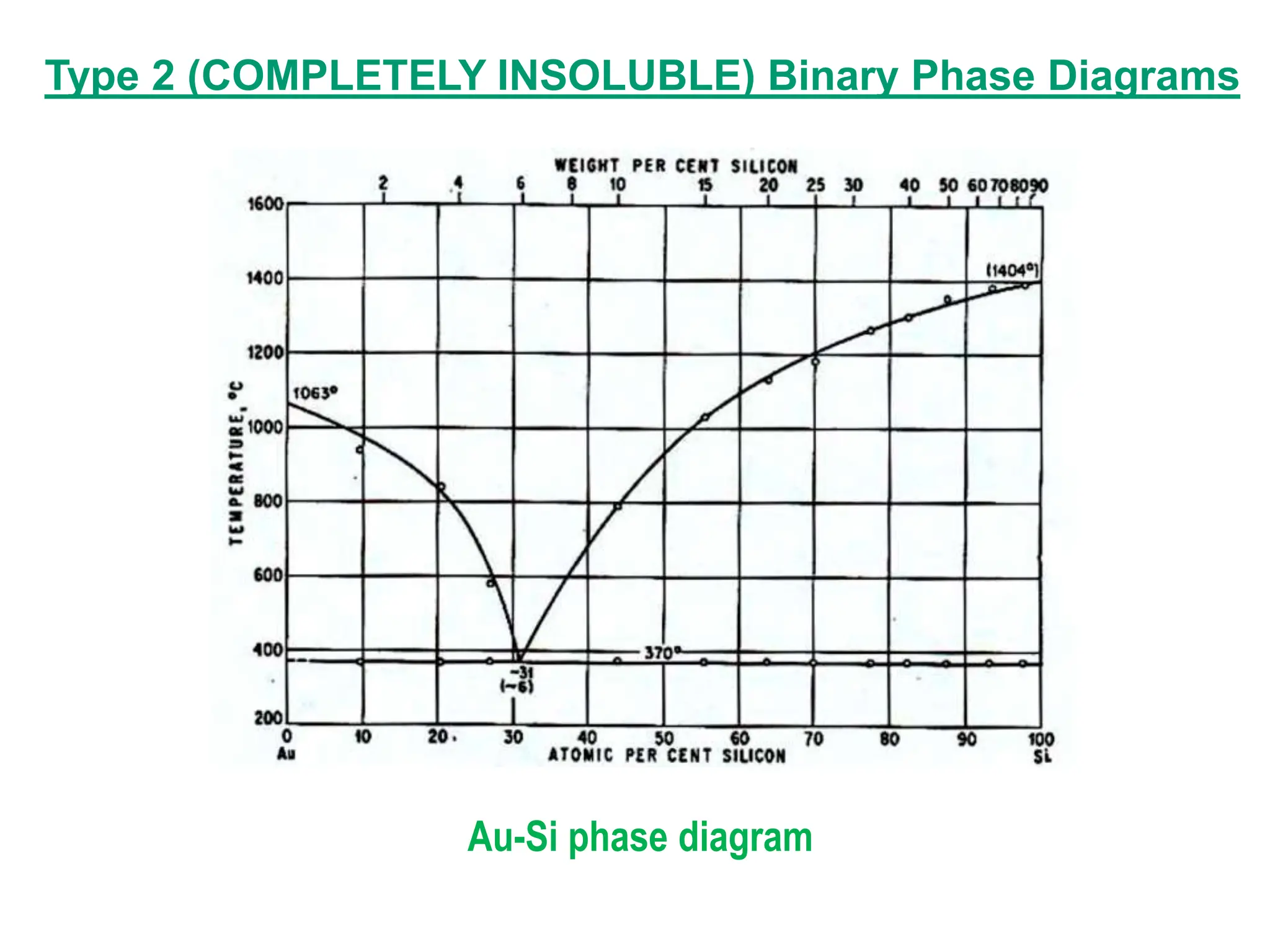
Au-Si phase diagram
Type 2 (COMPLETELY INSOLUBLE) Binary Phase Diagrams
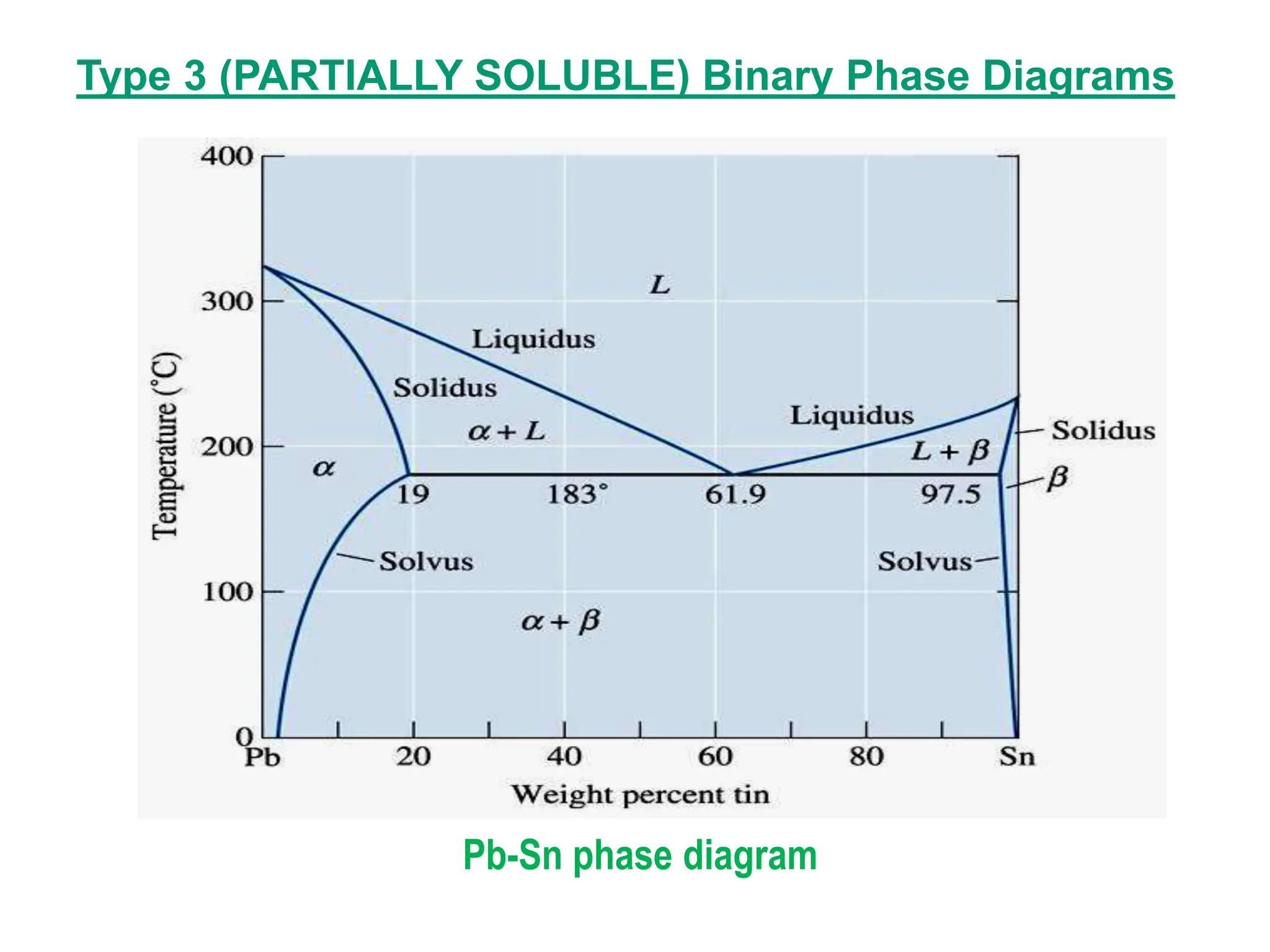
Pb-Sn phase diagram
Type 3 (PARTIALLY SOLUBLE) Binary Phase Diagrams
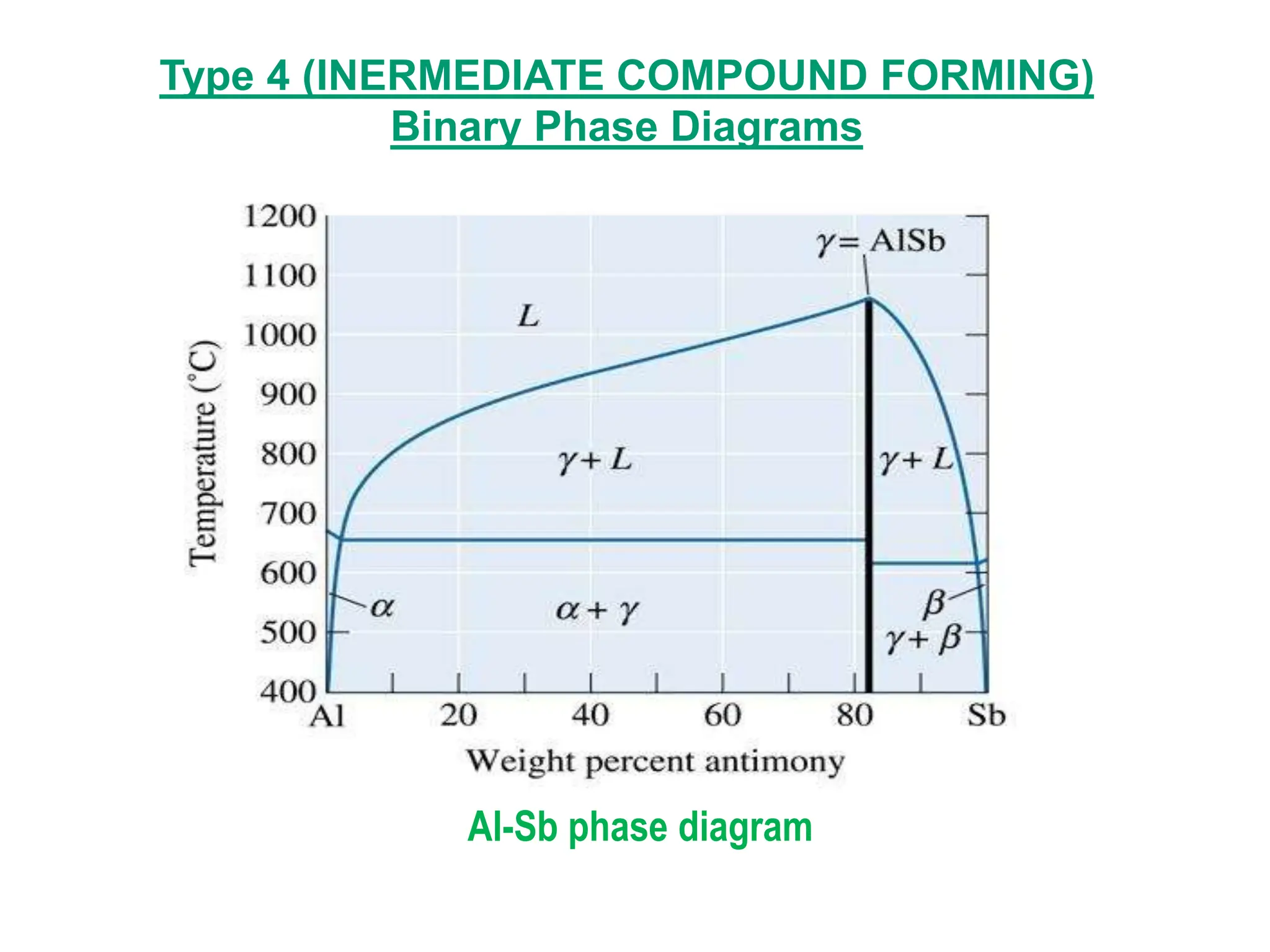
Al-Sb phase diagram
Type 4 (INERMEDIATE COMPOUND FORMING)
Binary Phase Diagrams
Theoretical Construction
 By applying thermodynamic principles
 Use of software like Thermocalc
Experimental Methods
 Thermal analysis
 Generation of cooling curves (temperature vs. time) for a number of alloys
of the alloy system to obtain arrest points (temperatures where a change in
slope is observed)
 Solid-state phase changes are difficult to obtained in this method
 Metallographic method
 Heating samples of an alloy to different temperatures, and quench them
after equilibrium to retain the high-temperature structure
 Observe the structure microscopically
 Rapidly cooled samples do not always retain high-temperature structures;
considerable skill is required to interpret the microstructure correctly

Introduction to the Phase Diagrams 16136946.ppt

  • 1.
  • 2.
     We haveseen how the properties of materials reflect their microstructures. The microstructure are controlled by the composition of the material and how it is processed.  So it is important that we must know  know about the structure of a material that has been developed during its manufacture, and  learn how to control (and/or modify) the structure to enhance its properties.  Phase diagram is an important tool for materials scientists that tells which phases are stable in a system under specified conditions (e.g. of temperature, overall composition, pressure)
  • 3.
     Reading aphase diagram will also tell what phase transformations we can expect when we change one or more parameters of the system (T, P, X). Temperature solid liquid gas liquid-gas equilibria Typical phase diagram for one component system  Phase diagram is basically a map that presents the domains of stability of phases and the limits of stability of phases in a graphical form.  Reading the map will tell you, at the state when it comes to equilibrium, 1. what phases are present, 2. the state of those phases, and 3. the relative quantities of each phase.
  • 4.
     Chemically recognisablespecies that are mixed to form the alloy.  In Brass: Cu, Zn (element)  In steels: Fe, C (element)  In ceramics: SiO2, Al2O3 (compound)  Binary alloy contains 2 components, ternary 3, etc. Components Phase  A phase is a homogenous, physically distinct and mechanically separable portion of the material with a given chemical composition and structure.
  • 5.
    What and howmany phases materials possess?  Solid, liquid, or gas, (and plasma)?  Is it possible to have more than one solid phases? Iron, being an allotropic material, has more than one solid phases:  When iron freezes at 1538 C from its liquid state, the first solid formed has BCC structure (which is known as d-iron)  As it cools down to 1401 C, it changes to FCC structure (which is known as g-iron)  Upon further cooling down to 910 C, it changes again to BCC structure (which is known as a-iron)
  • 6.
     The propertiesof an alloy depend not only on proportions of the phases but also on how they are arranged structurally at the microscopic level.  Thus, the microstructure is specified by the number of phases, their proportions, and their arrangement in space. Microstructure pearlite (finger print) graphite (grey) b phase (lighter) a phase (darker) Microstructure of Al-Cu Alloy Microstructure of Cast Iron  Phase diagrams will help us to understand and predict the microstructures like the one shown in this page.
  • 7.
     A systemis in equilibrium if at constant T, P and X, the system is stable, not changing with time.  The equilibrium state always has the minimum free energy. Equilibrium state and Metastable state  Equilibrium state requires sufficient time to achieve. When this time is too long (due to slow kinetics), another state along the path to the equilibrium may appear to be stable. This is called a metastable state.  A system at a metastable state is trapped in a local minimum of free energy, which is not the global one.
  • 8.
    Advantages of UsingPhase Diagrams  Selection of alloys having enhanced properties for a specific set of applications.  Manipulation of phase transformations of materials to control their properties. Limitations of Using Phase Diagrams  Phase diagrams are also known as the equilibrium diagrams; structures produced by non-equilibrium cooling cannot be explained.  Rate of phase transformations is missing; TTT (Temperature- Time-Transformation) diagrams are more useful in this regard.
  • 9.
    One component (unary)phase diagrams Unary phase diagram of water  How many single-phase regions?  How many two-phase regions?  Is there any three-, or more- phase regions? Gibb’s Phase Rule: F = C–P+2 F = # variables C = # components P = # phases  Also known as P-T diagrams.  The simple case is Water.
  • 10.
    Binary (two-component) phasediagrams Ni-Cu phase diagram Type 1 (COMPLETELY SOLUBLE) Binary Phase Diagrams
  • 11.
    Au-Si phase diagram Type2 (COMPLETELY INSOLUBLE) Binary Phase Diagrams
  • 12.
    Pb-Sn phase diagram Type3 (PARTIALLY SOLUBLE) Binary Phase Diagrams
  • 13.
    Al-Sb phase diagram Type4 (INERMEDIATE COMPOUND FORMING) Binary Phase Diagrams
  • 14.
    Theoretical Construction  Byapplying thermodynamic principles  Use of software like Thermocalc Experimental Methods  Thermal analysis  Generation of cooling curves (temperature vs. time) for a number of alloys of the alloy system to obtain arrest points (temperatures where a change in slope is observed)  Solid-state phase changes are difficult to obtained in this method  Metallographic method  Heating samples of an alloy to different temperatures, and quench them after equilibrium to retain the high-temperature structure  Observe the structure microscopically  Rapidly cooled samples do not always retain high-temperature structures; considerable skill is required to interpret the microstructure correctly