Hypothyroidism
Terms
 Adult hypothyroidism
 Myxoedema
 Cretinism
Cretinism
 Fetal or infantile hypothyroidism
 Endemic and sporadic
 Sporadic –agenesis ,dyshormonogenesis
 Hoarse cry , macroglossia , umbilical
hernia
 Immediate diagnosis and treatment
Adult type
 • bradycardia
 • cold extremities
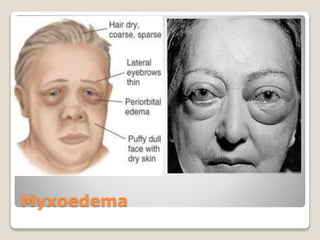
 • dry skin and hair
 • periorbital puffiness
 • hoarse voice
 • bradykinesis, slow movements
 • delayed relaxation phase of ankle jerks.
The symptoms are:
 • tiredness
 • mental lethargy
 • cold intolerance
 • weight gain
 • constipation
 • menstrual disturbance
 • carpal tunnel syndrome.
Myxoedema
Classification of hypothyroidism
 Autoimmune thyroiditis (chronic
lymphocytic thyroiditis
1) Non-goitrous: primary myxoedema
2) Goitrous: Hashimoto’s disease
Classification
Iatrogenic
 After thyroidectomy
 After radioiodine therapy
 Drug induced (antithyroid drugs,para-
aminosalicylic acid and iodides in excess)
Classification
 Dyshormonogenesis
 Goitrogens
 Secondary to pituitary or hypothalamic
disease
 Thyroid agenesis
 Endemic cretinism- Often goitrous and
due to iodine deficiency
Dyshormonogenesis
 Deficient enzymes
 Autosomal recessive
 Young patients , thyromegaly , euthyroid
state
 Pendred syndrome – TPO deficiency
goitre , sensorineural deafness ,
abnormal bony labyrinth
Investigations and management
 TFT- low T3 , T4 and high TSH
 High titres of TPO antibodies
 Oral thyroxine (0.1 to 0.2 mg/day) or
triiodothyronine (20mcg tds)
 Myxoedema – bolus 500mg of T4 or 10
mcg of T3 oral or IV 4-6 hourly
 Corticosteroids and broad spectrum
antibiotics

Hypothyroidism

  • 1.
  • 2.
    Terms  Adult hypothyroidism Myxoedema  Cretinism
  • 3.
    Cretinism  Fetal orinfantile hypothyroidism  Endemic and sporadic  Sporadic –agenesis ,dyshormonogenesis  Hoarse cry , macroglossia , umbilical hernia  Immediate diagnosis and treatment
  • 4.
    Adult type  •bradycardia  • cold extremities  • dry skin and hair  • periorbital puffiness  • hoarse voice  • bradykinesis, slow movements  • delayed relaxation phase of ankle jerks. The symptoms are:  • tiredness  • mental lethargy  • cold intolerance  • weight gain  • constipation  • menstrual disturbance  • carpal tunnel syndrome.
  • 5.
  • 6.
    Classification of hypothyroidism Autoimmune thyroiditis (chronic lymphocytic thyroiditis 1) Non-goitrous: primary myxoedema 2) Goitrous: Hashimoto’s disease
  • 7.
    Classification Iatrogenic  After thyroidectomy After radioiodine therapy  Drug induced (antithyroid drugs,para- aminosalicylic acid and iodides in excess)
  • 8.
    Classification  Dyshormonogenesis  Goitrogens Secondary to pituitary or hypothalamic disease  Thyroid agenesis  Endemic cretinism- Often goitrous and due to iodine deficiency
  • 9.
    Dyshormonogenesis  Deficient enzymes Autosomal recessive  Young patients , thyromegaly , euthyroid state  Pendred syndrome – TPO deficiency goitre , sensorineural deafness , abnormal bony labyrinth
  • 10.
    Investigations and management TFT- low T3 , T4 and high TSH  High titres of TPO antibodies  Oral thyroxine (0.1 to 0.2 mg/day) or triiodothyronine (20mcg tds)  Myxoedema – bolus 500mg of T4 or 10 mcg of T3 oral or IV 4-6 hourly  Corticosteroids and broad spectrum antibiotics