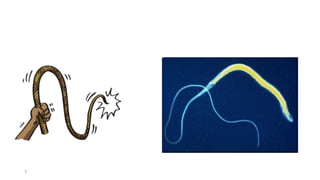
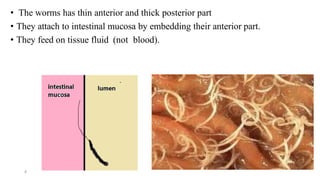
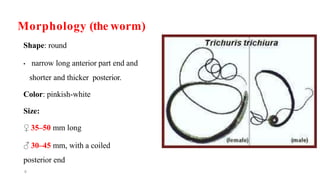
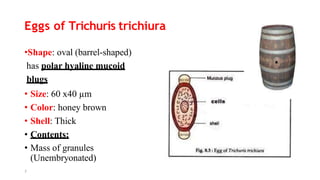
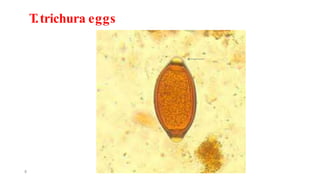
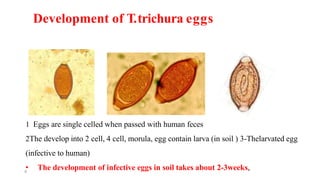
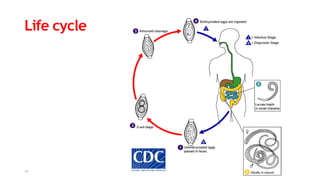
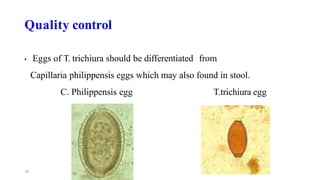
Trichuris trichiura, also known as the whipworm, inhabits the large intestine of humans. The female produces 2,000-10,000 eggs per day which are passed in stool and can develop into infective larvae in soil within 2-3 weeks. People can become infected by ingesting these infective eggs. Stool is suitable for diagnosis through direct wet examination or concentration techniques to detect eggs. The eggs are oval, brown, and thick-shelled measuring 60 x 40 μm. Treatment involves anthelmintic drugs such as albendazole or mebendazole. Prevention relies on proper sanitation including handwashing and avoiding use of untreated human waste as fertilizer.









![Trichocephaliasis[1]](https://cdn.slidesharecdn.com/ss_thumbnails/trichocephaliasis1-210321153837-thumbnail.jpg?width=640&height=640&fit=bounds)


