Trees
Introduction
 Is a non linear data structure.
 Is a hierarchical data structure.
 Is a finite set of nodes.
 Contains a special node called root node.
 All nodes are connecting through an edge.
Terminologies…
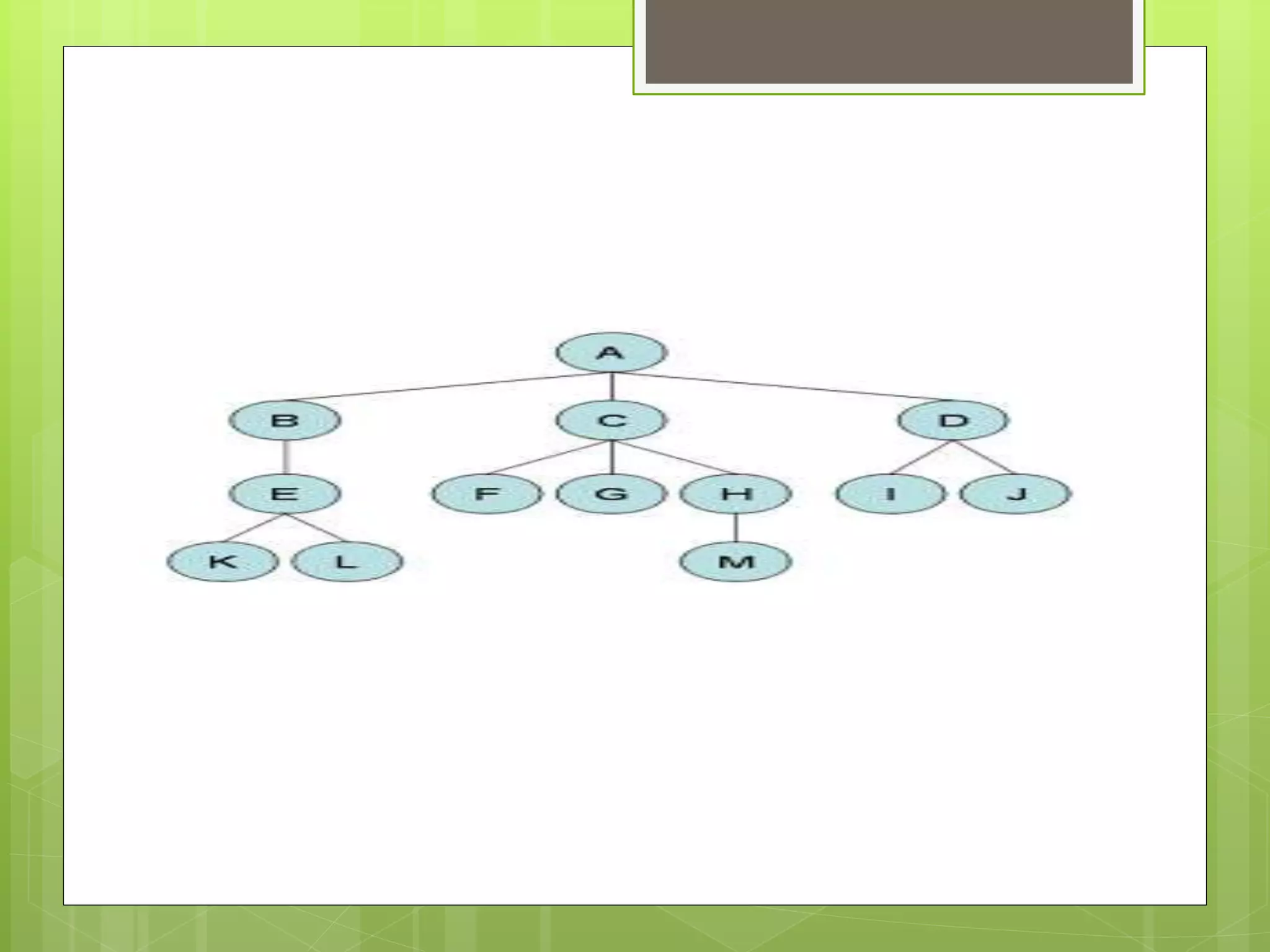
 Degree of a Node
Means number of child nodes a node have.
 Leaf
Nodes that have no child nodes.
 Terminal Nodes
Leaf nodes are also called terminal nodes.
 Degree of a tree
Maximum degree of tree is called degree of
tree.
 Ancestors
All the parent nodes of a node till rood node
path called its ancestors.
 Descendants
All the child nodes of a node till leaf node
path called its ancestors.
 Generation
All nodes with same level called a generation.
 Height/Depth
Number of levels / Generations .
 Edge
Connecting lines that are used to connect
nodes.
 Path
sequence of consective edges from 1 node
to other node.
 Branch
if a path ends at leaf nodes called branch.
How to construct tree data
structure.
 We can construct it using Linked List.
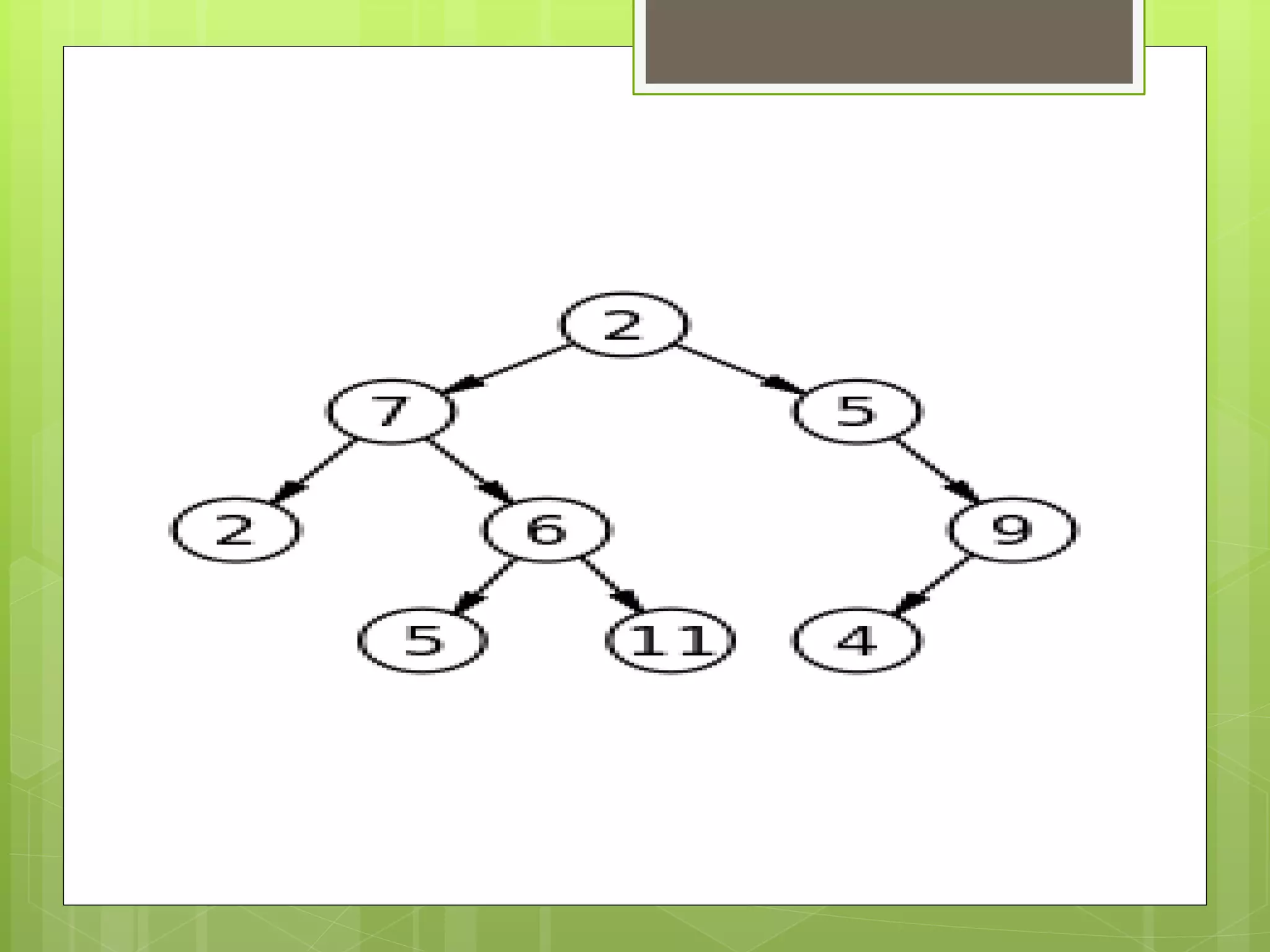
Binary Tree
 A tree having a property that all nodes should
have minimum 0 nodes or maximum 2 nodes.
>=0 nodes <=2.
 If 0 nodes called empty tree/null tree.
Types
1: Full BT
- a tree in which each level is filled
completely.
- non leaf nodes should have left as well as
right child's.
- all the leaf nodes should be at same level.
2: Complete Binary tree
each node must have 2 child's (left and right
as well) except leaf nodes.
3: Incomplete binary tree
tree may violate the property of complete
binary tree.
Almost complete binary tree
 A tree having all leaf nodes at last or second
last level called almost complete binary tree.
Binary Search Tree
 A binary tree in which minimum value is
placed at the left side of node and maximum
value at right side of node.
Operations
 Insertion
 Searching
 Deletion
Insertion in BST
 Place first at root node.
 Now compare each node value to decide
whether your coming value will be placed at
right or left side of node.
 Takes O(n) in worst case
 Takes Big-Theta (log n) in average case.
Searching
 Compare the target value by moving from one
node to other starting from root node.
 Move left if targeted value is smaller than
node value else move right.
 Takes O(n) in worst case
 Takes Big-Theta (log n) in average case.
Deletion
 Cases
 If the node is leaf
 If node in non-leaf and have 1 child node.
 If node is non-leaf and have 2 child nodes.
If the node is leaf
 Delete that node and make its father node
pointing to Null.
 Left pointer in case of left leaf
 Right pointer in case of right leaf
If node is non-leaf and having 1
child node.
 If deleted node is right child of its parent
 Delete the node.
 If have right child or Left Child
 Make it the Right child of deleted node’s
parent.
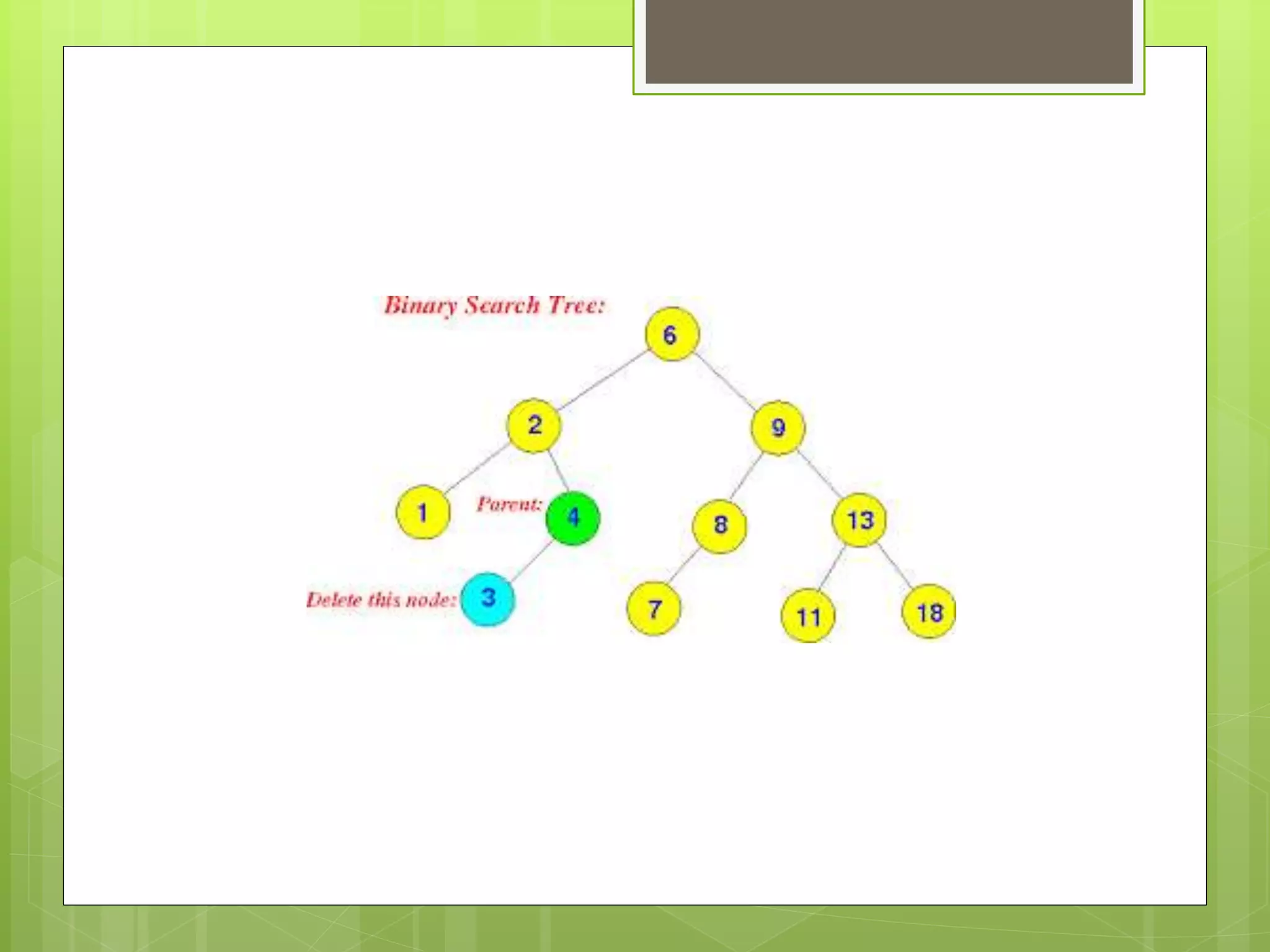
 If deleted node is left child of its parent
 Delete the node.
 If have right child or Left Child
 Make it the left child of deleted node’s
parent.
Trees

Trees

  • 1.
  • 2.
    Introduction  Is anon linear data structure.  Is a hierarchical data structure.  Is a finite set of nodes.  Contains a special node called root node.  All nodes are connecting through an edge.
  • 4.
    Terminologies…  Degree ofa Node Means number of child nodes a node have.  Leaf Nodes that have no child nodes.  Terminal Nodes Leaf nodes are also called terminal nodes.
  • 5.
     Degree ofa tree Maximum degree of tree is called degree of tree.  Ancestors All the parent nodes of a node till rood node path called its ancestors.  Descendants All the child nodes of a node till leaf node path called its ancestors.
  • 6.
     Generation All nodeswith same level called a generation.  Height/Depth Number of levels / Generations .  Edge Connecting lines that are used to connect nodes.
  • 7.
     Path sequence ofconsective edges from 1 node to other node.  Branch if a path ends at leaf nodes called branch.
  • 8.
    How to constructtree data structure.  We can construct it using Linked List.
  • 9.
    Binary Tree  Atree having a property that all nodes should have minimum 0 nodes or maximum 2 nodes. >=0 nodes <=2.  If 0 nodes called empty tree/null tree.
  • 11.
    Types 1: Full BT -a tree in which each level is filled completely. - non leaf nodes should have left as well as right child's. - all the leaf nodes should be at same level.
  • 13.
    2: Complete Binarytree each node must have 2 child's (left and right as well) except leaf nodes. 3: Incomplete binary tree tree may violate the property of complete binary tree.
  • 15.
    Almost complete binarytree  A tree having all leaf nodes at last or second last level called almost complete binary tree.
  • 16.
    Binary Search Tree A binary tree in which minimum value is placed at the left side of node and maximum value at right side of node.
  • 17.
  • 18.
    Insertion in BST Place first at root node.  Now compare each node value to decide whether your coming value will be placed at right or left side of node.  Takes O(n) in worst case  Takes Big-Theta (log n) in average case.
  • 19.
    Searching  Compare thetarget value by moving from one node to other starting from root node.  Move left if targeted value is smaller than node value else move right.  Takes O(n) in worst case  Takes Big-Theta (log n) in average case.
  • 20.
    Deletion  Cases  Ifthe node is leaf  If node in non-leaf and have 1 child node.  If node is non-leaf and have 2 child nodes.
  • 21.
    If the nodeis leaf  Delete that node and make its father node pointing to Null.  Left pointer in case of left leaf  Right pointer in case of right leaf
  • 22.
    If node isnon-leaf and having 1 child node.  If deleted node is right child of its parent  Delete the node.  If have right child or Left Child  Make it the Right child of deleted node’s parent.
  • 23.
     If deletednode is left child of its parent  Delete the node.  If have right child or Left Child  Make it the left child of deleted node’s parent.