Prepared By – Kartik Tiwari (Lecturer)
Hygia College of Pharmacy, Lucknow (U.P)
Content as Per D. Pharm Syllabus
ANTIBIOTICS KARTIK TIWARI
One Page Notes
History of Antibiotics
 The term antibiotic was coined from the word “antibiosis” which literally means “against life”. Antibiotics, also known as
antimicrobial agents, are medications that destroy or slow down the growth of other species of microorganisms. They
include a range of powerful drugs and are used to treat diseases caused by bacteria, fungi, actinomycetes, etc.
1928: Alexander Fleming discovered the first antibiotic, Penicillin.
1930s: The first commercially available antibacterial was
Prontosil, a sulfonamide developed by the German biochemist
Gerhard Domagk.
1945: Penicillin was introduced on a large scale as a treatment for
bacterial infections.
Classification of antibiotics
1. B-lactam antibiotics: Penicillins, Cephalosporins,
carbapenams, monobactams.
2. Amino glycoside antibiotics: Streptomycin, Neomycin,
Kanamycin, Gentamycin, Tobramycin, Amikacin.
3. Tetracyclines: Tetracycline, Chlortetracycline,
Oxytetracycline, Doxycycline, Minocycline, Methacycline,
Meclocycline.
4. Macrolide antibiotics: (i.e. large macrolide structure):
Erythromycin, Clarithromycin, Azithromycin, Roxithromycin.
5. Polypeptide antibiotics: Actinomycin, Bacitracin, Colistin,
PolymyxinB, tyrothricin.
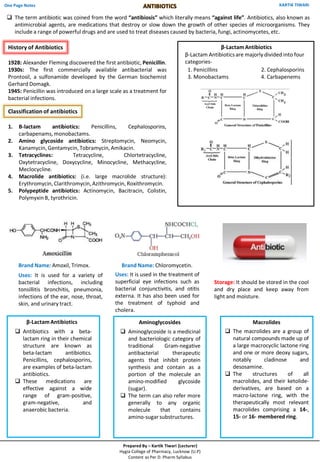
β-LactamAntibiotics
β-Lactam Antibiotics are majorly divided into four
categories-
1. Penicillins 2. Cephalosporins
3. Monobactams 4. Carbapenems
Brand Name: Amoxil, Trimox.
Uses: It is used for a variety of
bacterial infections, including
tonsillitis bronchitis, pneumonia,
infections of the ear, nose, throat,
skin, and urinary tract.
Brand Name: Chloromycetin.
Uses: It is used in the treatment of
superficial eye infections such as
bacterial conjunctivitis, and otitis
externa. It has also been used for
the treatment of typhoid and
cholera.
Storage: It should be stored in the cool
and dry place and keep away from
light and moisture.
β-LactamAntibiotics Aminoglycosides Macrolides
 Antibiotics with a beta-
lactam ring in their chemical
structure are known as
beta-lactam antibiotics.
Penicillins, cephalosporins,
are examples of beta-lactam
antibiotics.
 These medications are
effective against a wide
range of gram-positive,
gram-negative, and
anaerobic bacteria.
 Aminoglycoside is a medicinal
and bacteriologic category of
traditional Gram-negative
antibacterial therapeutic
agents that inhibit protein
synthesis and contain as a
portion of the molecule an
amino-modified glycoside
(sugar).
 The term can also refer more
generally to any organic
molecule that contains
amino-sugarsubstructures.
 The macrolides are a group of
natural compounds made up of
a large macrocyclic lactone ring
and one or more deoxy sugars,
notably cladinose and
desosamine.
 The structures of all
macrolides, and their ketolide-
derivatives, are based on a
macro-lactone ring, with the
therapeutically most relevant
macrolides comprising a 14-,
15- or 16- membered ring.

Chapter -12, Antibiotics (One Page Notes).pdf

  • 1.
    Prepared By –Kartik Tiwari (Lecturer) Hygia College of Pharmacy, Lucknow (U.P) Content as Per D. Pharm Syllabus ANTIBIOTICS KARTIK TIWARI One Page Notes History of Antibiotics  The term antibiotic was coined from the word “antibiosis” which literally means “against life”. Antibiotics, also known as antimicrobial agents, are medications that destroy or slow down the growth of other species of microorganisms. They include a range of powerful drugs and are used to treat diseases caused by bacteria, fungi, actinomycetes, etc. 1928: Alexander Fleming discovered the first antibiotic, Penicillin. 1930s: The first commercially available antibacterial was Prontosil, a sulfonamide developed by the German biochemist Gerhard Domagk. 1945: Penicillin was introduced on a large scale as a treatment for bacterial infections. Classification of antibiotics 1. B-lactam antibiotics: Penicillins, Cephalosporins, carbapenams, monobactams. 2. Amino glycoside antibiotics: Streptomycin, Neomycin, Kanamycin, Gentamycin, Tobramycin, Amikacin. 3. Tetracyclines: Tetracycline, Chlortetracycline, Oxytetracycline, Doxycycline, Minocycline, Methacycline, Meclocycline. 4. Macrolide antibiotics: (i.e. large macrolide structure): Erythromycin, Clarithromycin, Azithromycin, Roxithromycin. 5. Polypeptide antibiotics: Actinomycin, Bacitracin, Colistin, PolymyxinB, tyrothricin. β-LactamAntibiotics β-Lactam Antibiotics are majorly divided into four categories- 1. Penicillins 2. Cephalosporins 3. Monobactams 4. Carbapenems Brand Name: Amoxil, Trimox. Uses: It is used for a variety of bacterial infections, including tonsillitis bronchitis, pneumonia, infections of the ear, nose, throat, skin, and urinary tract. Brand Name: Chloromycetin. Uses: It is used in the treatment of superficial eye infections such as bacterial conjunctivitis, and otitis externa. It has also been used for the treatment of typhoid and cholera. Storage: It should be stored in the cool and dry place and keep away from light and moisture. β-LactamAntibiotics Aminoglycosides Macrolides  Antibiotics with a beta- lactam ring in their chemical structure are known as beta-lactam antibiotics. Penicillins, cephalosporins, are examples of beta-lactam antibiotics.  These medications are effective against a wide range of gram-positive, gram-negative, and anaerobic bacteria.  Aminoglycoside is a medicinal and bacteriologic category of traditional Gram-negative antibacterial therapeutic agents that inhibit protein synthesis and contain as a portion of the molecule an amino-modified glycoside (sugar).  The term can also refer more generally to any organic molecule that contains amino-sugarsubstructures.  The macrolides are a group of natural compounds made up of a large macrocyclic lactone ring and one or more deoxy sugars, notably cladinose and desosamine.  The structures of all macrolides, and their ketolide- derivatives, are based on a macro-lactone ring, with the therapeutically most relevant macrolides comprising a 14-, 15- or 16- membered ring.