CS221A – Data Structures &
Algorithms
Trees
Agenda
 Trees Concepts and Preliminaries
 Tree Implementation
 TreeTraversal
Trees
 An ADT that can store data hierarchically.With a parent
child relationship.
 Widely-used data structure that emulates a hierarchical
tree structure with a set of linked nodes.
 It is a connected graph where each node has a set of zero
or more children nodes, and at most one parent node.
Trees
 Node is a structure which may contain a value, a
condition, or represent a separate data structure (which
could be a tree of its own).
 Each node in a tree has zero or more child nodes, which are
below it in the tree (by convention, trees grow down, not up as
they do in nature).
 A node that has a child is called the child's parent node (or
ancestor node, or superior).
 A node has at most one parent.
 Nodes that do not have any children are called leaf nodes.
They are also referred to as terminal nodes.
Trees
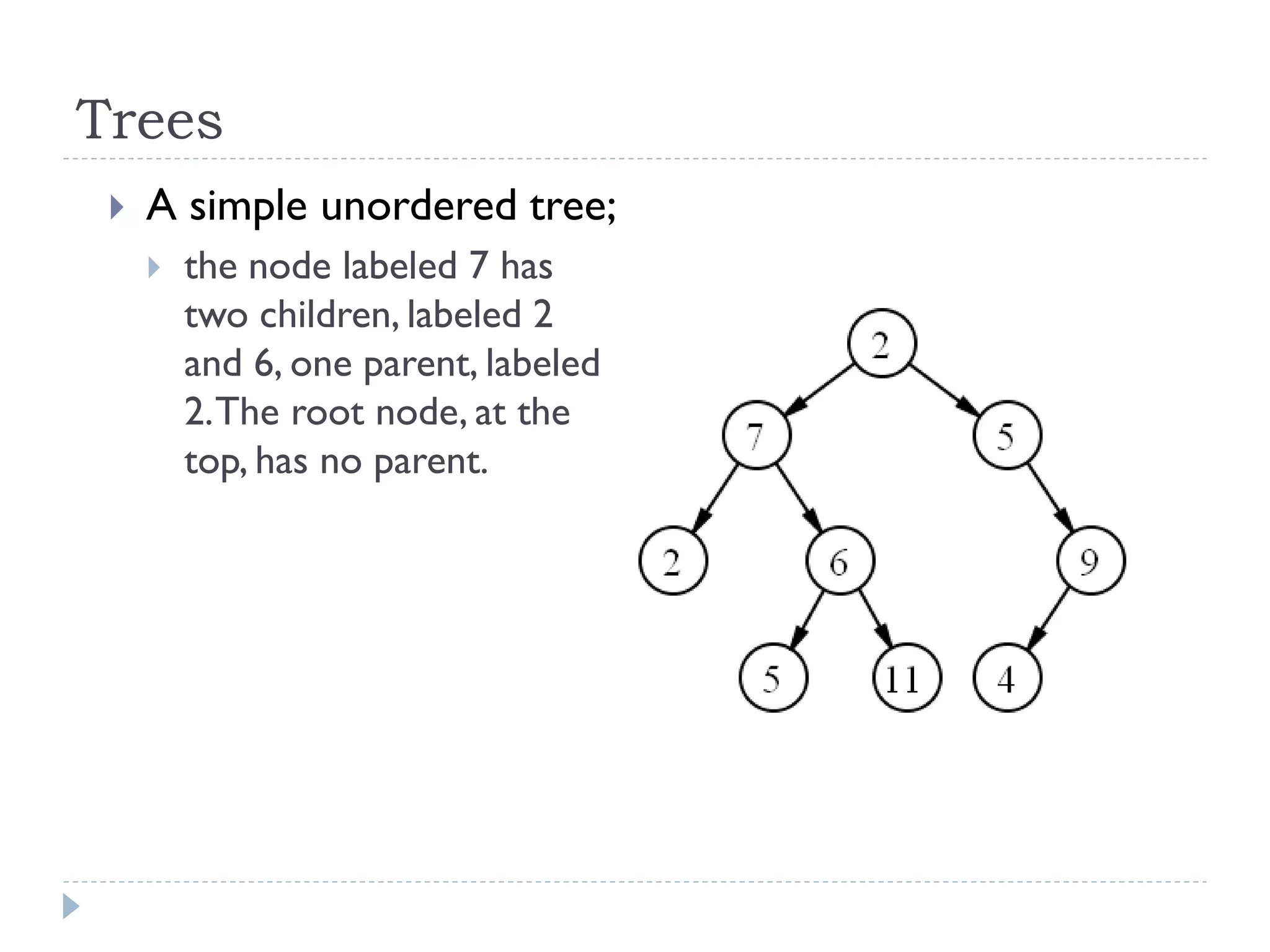
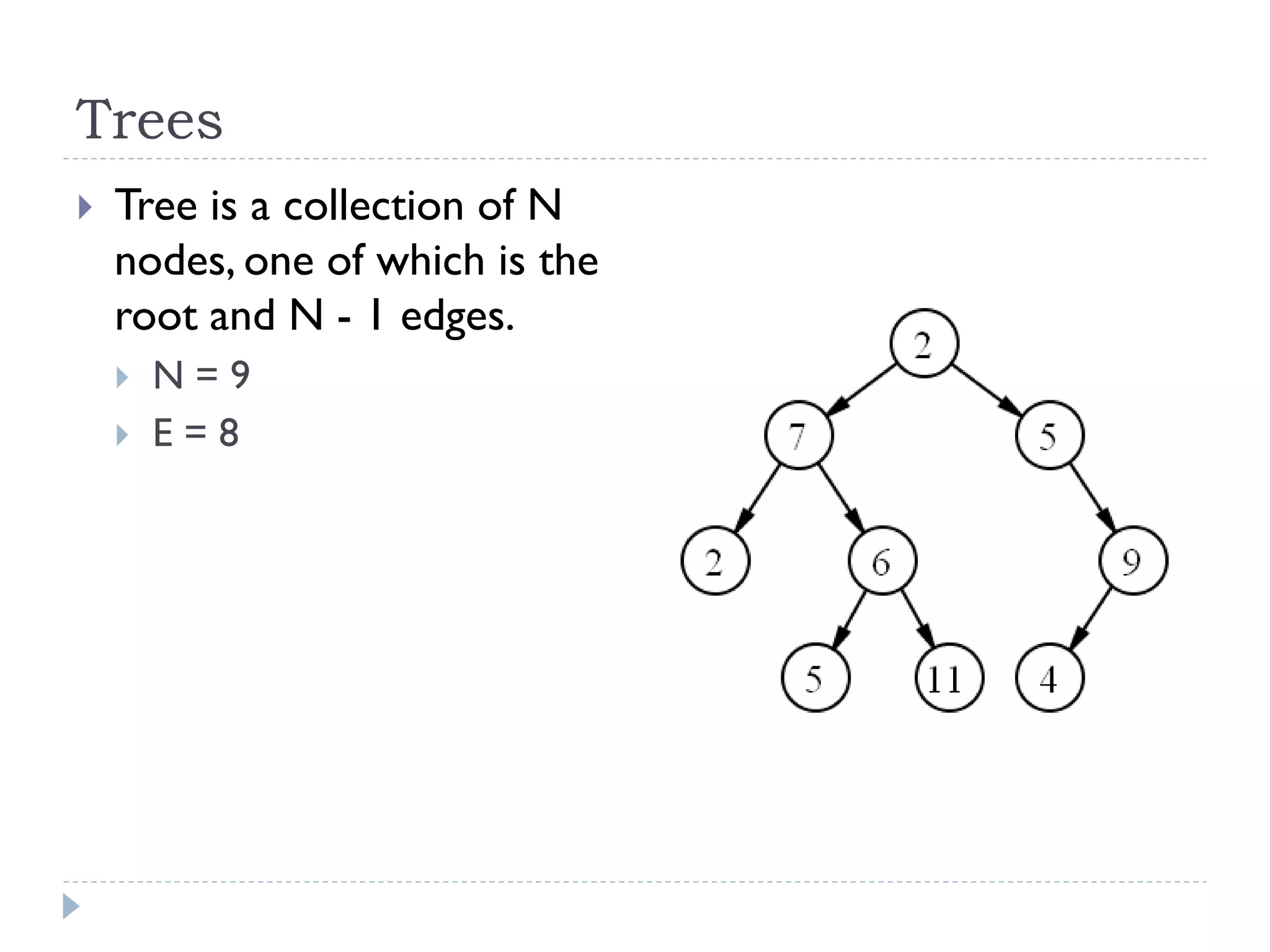
 A simple unordered tree;
 the node labeled 7 has
two children, labeled 2
and 6, one parent, labeled
2.The root node, at the
top, has no parent.
Trees
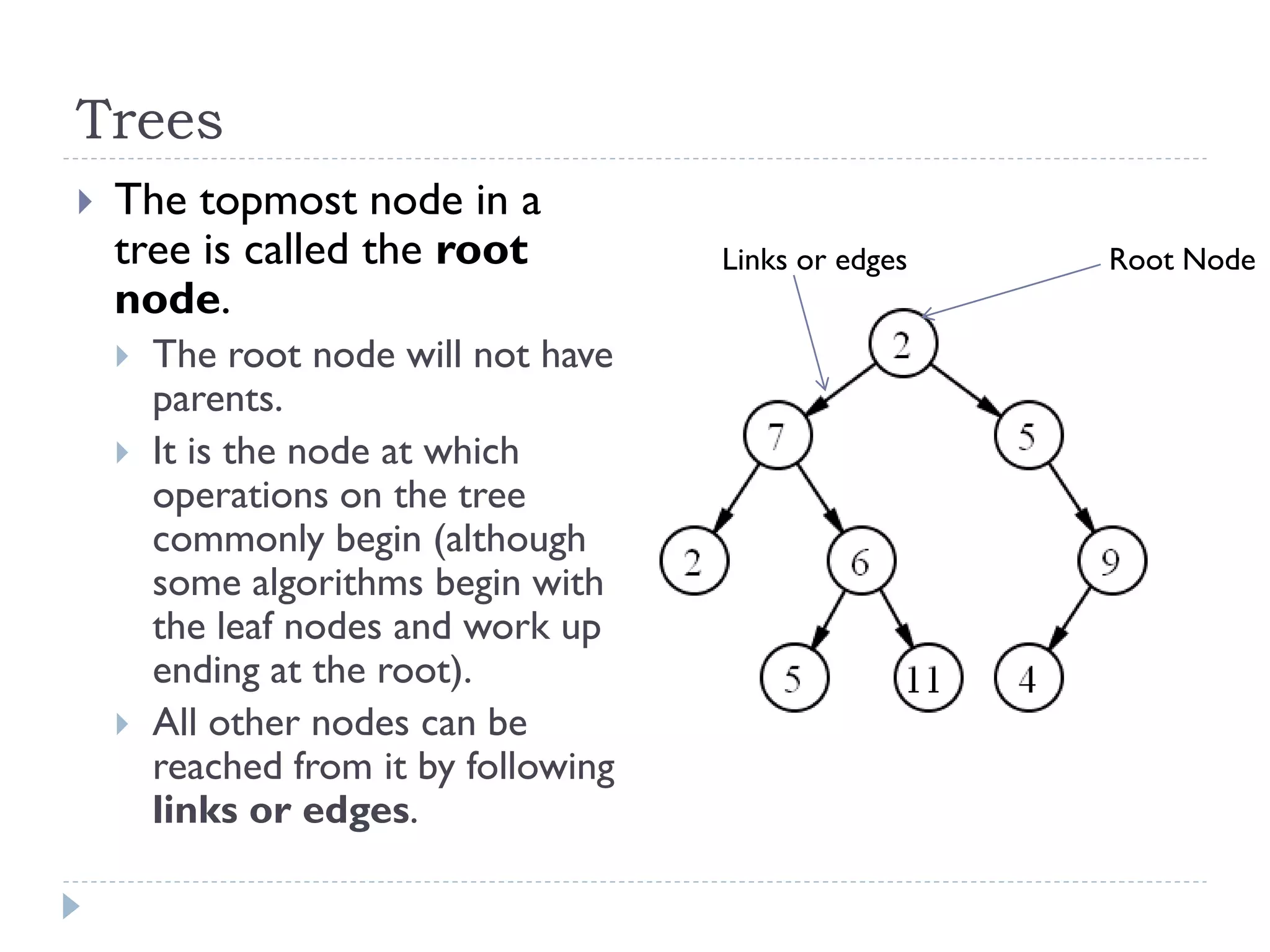
 The topmost node in a
tree is called the root
node.
 The root node will not have
parents.
 It is the node at which
operations on the tree
commonly begin (although
some algorithms begin with
the leaf nodes and work up
ending at the root).
 All other nodes can be
reached from it by following
links or edges.
Root NodeLinks or edges
Trees
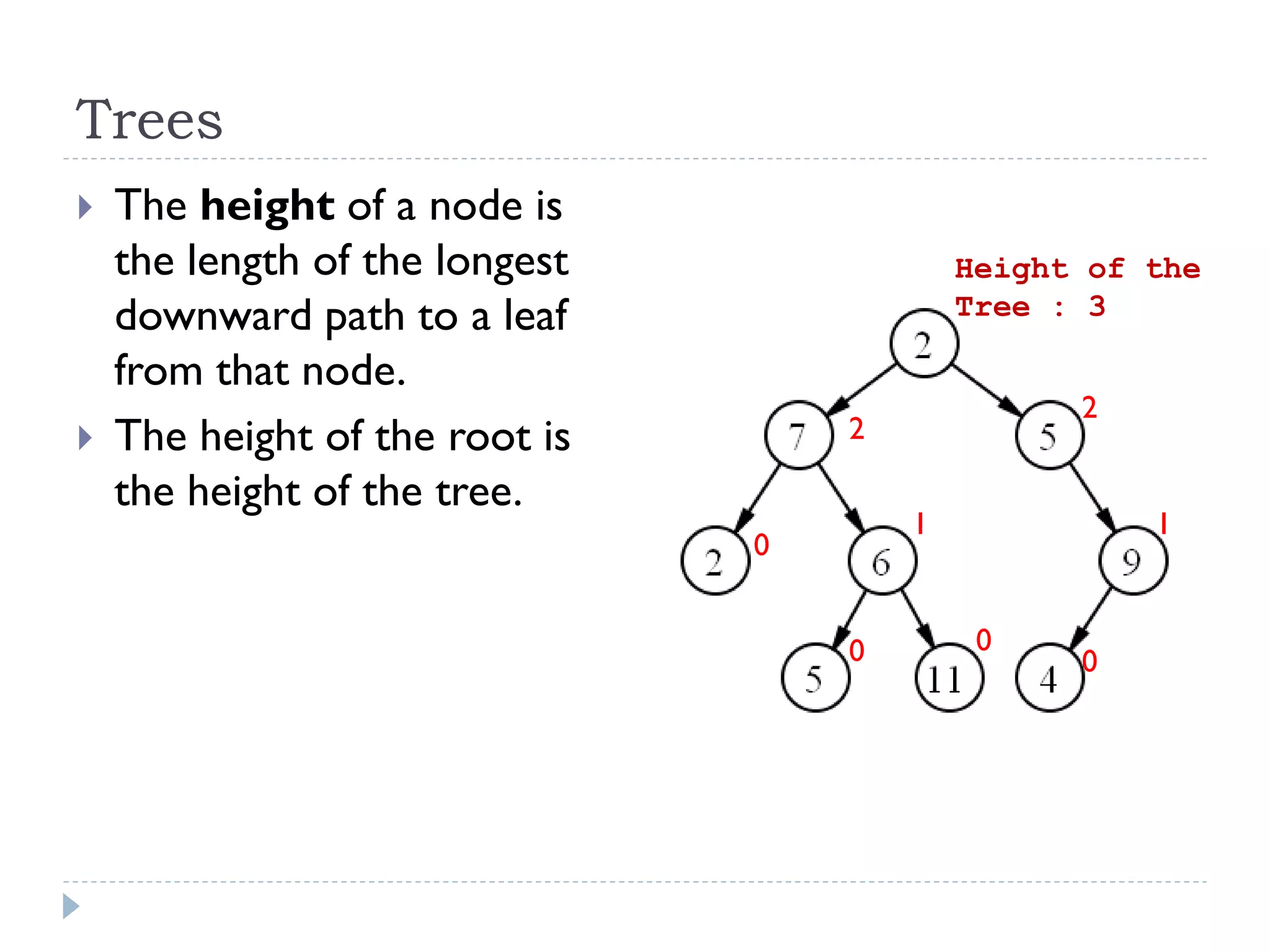
 The height of a node is
the length of the longest
downward path to a leaf
from that node.
 The height of the root is
the height of the tree.
0
1
2
Height of the
Tree : 3
00
1
2
0
Trees
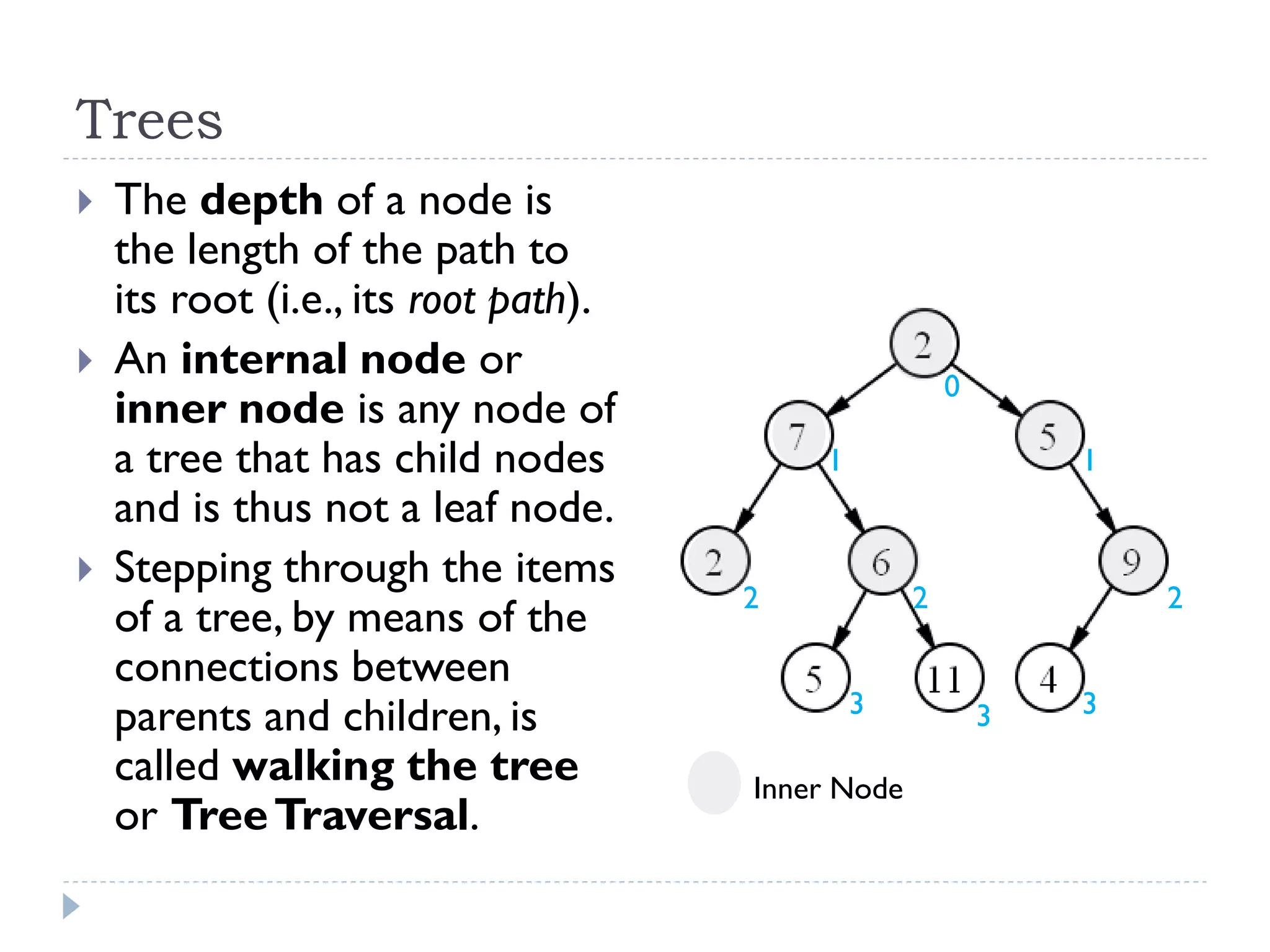
 The depth of a node is
the length of the path to
its root (i.e., its root path).
 An internal node or
inner node is any node of
a tree that has child nodes
and is thus not a leaf node.
 Stepping through the items
of a tree, by means of the
connections between
parents and children, is
called walking the tree
or TreeTraversal.
3
1
2
33
1
2
0
2
Inner Node
Trees
 Tree is a collection of N
nodes, one of which is the
root and N - 1 edges.
 N = 9
 E = 8
Trees Implementation
Tree Implementation
Trees Implementation
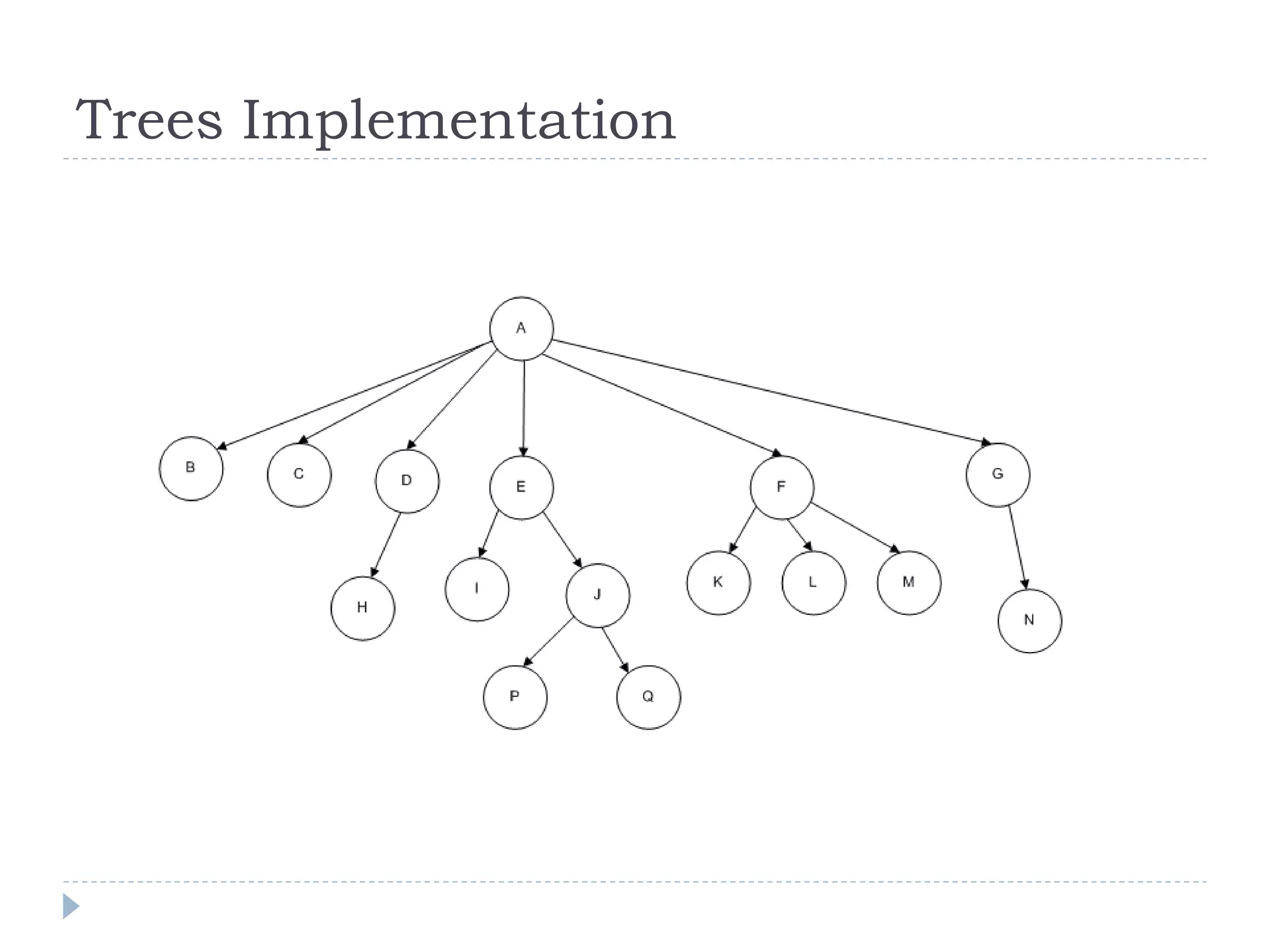
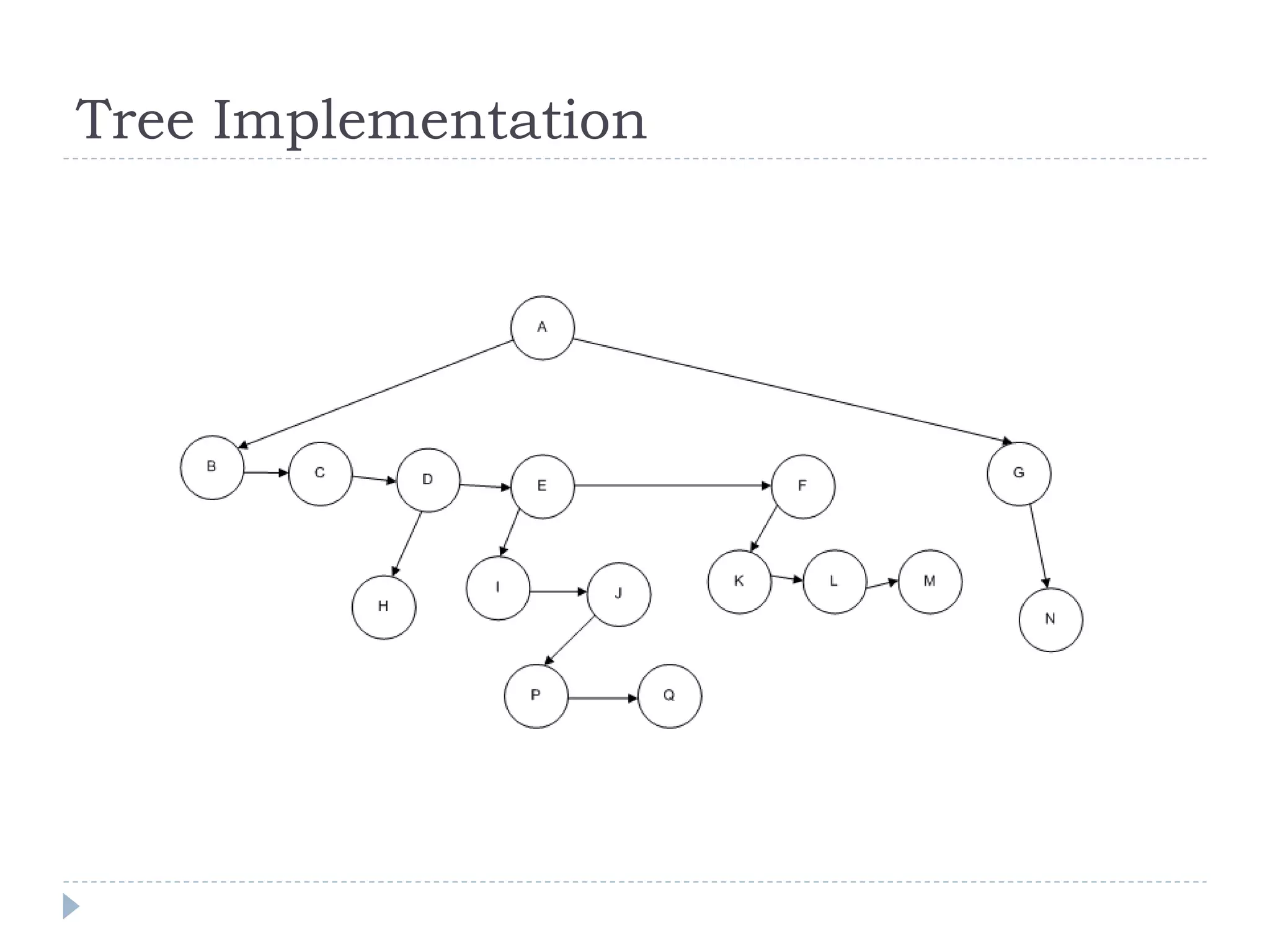
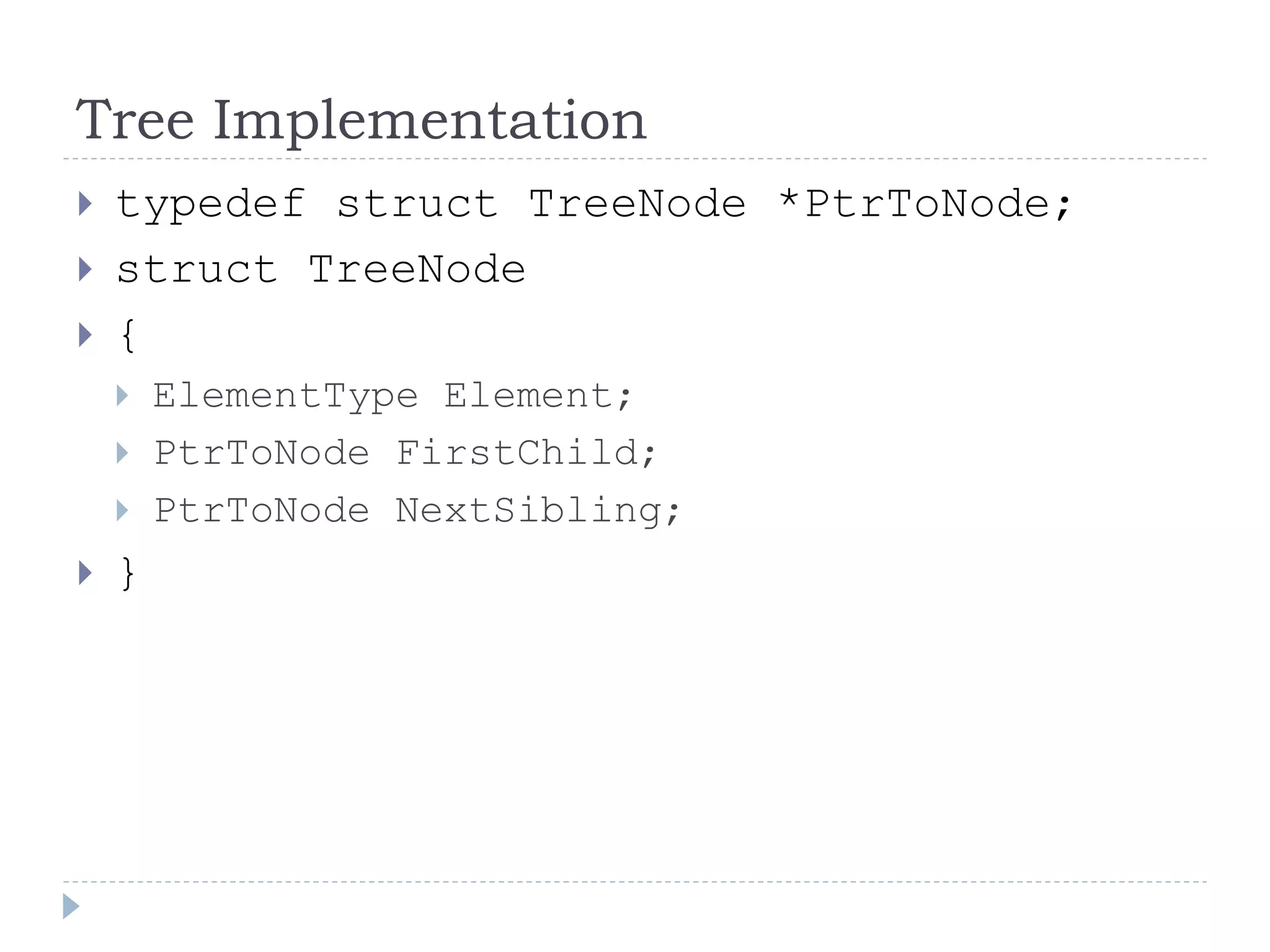
 Each Node Maintains Data and a pointer to each of its
child nodes.
 As Number of Children per Node is an unknown , we
keep the children of each node in a linked list of tree
nodes.
Tree Implementation
 typedef struct TreeNode *PtrToNode;
 struct TreeNode
 {
 ElementType Element;
 PtrToNode FirstChild;
 PtrToNode NextSibling;
 }
Tree Implementation
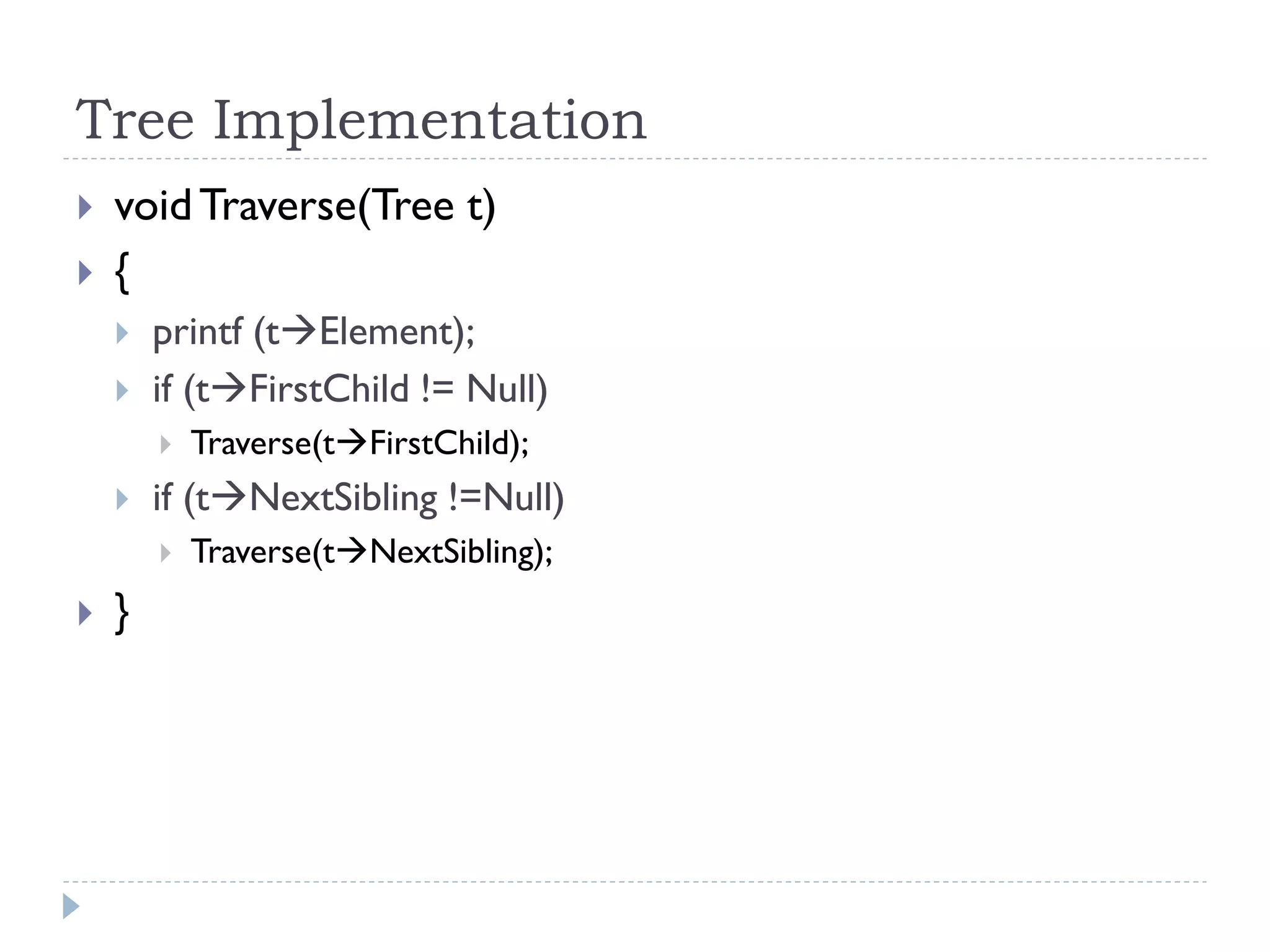
 voidTraverse(Tree t)
 {
 printf (tElement);
 if (tFirstChild != Null)
 Traverse(tFirstChild);
 if (tNextSibling !=Null)
 Traverse(tNextSibling);
 }

Trees

  • 1.
    CS221A – DataStructures & Algorithms Trees
  • 2.
    Agenda  Trees Conceptsand Preliminaries  Tree Implementation  TreeTraversal
  • 3.
    Trees  An ADTthat can store data hierarchically.With a parent child relationship.  Widely-used data structure that emulates a hierarchical tree structure with a set of linked nodes.  It is a connected graph where each node has a set of zero or more children nodes, and at most one parent node.
  • 4.
    Trees  Node isa structure which may contain a value, a condition, or represent a separate data structure (which could be a tree of its own).  Each node in a tree has zero or more child nodes, which are below it in the tree (by convention, trees grow down, not up as they do in nature).  A node that has a child is called the child's parent node (or ancestor node, or superior).  A node has at most one parent.  Nodes that do not have any children are called leaf nodes. They are also referred to as terminal nodes.
  • 5.
    Trees  A simpleunordered tree;  the node labeled 7 has two children, labeled 2 and 6, one parent, labeled 2.The root node, at the top, has no parent.
  • 6.
    Trees  The topmostnode in a tree is called the root node.  The root node will not have parents.  It is the node at which operations on the tree commonly begin (although some algorithms begin with the leaf nodes and work up ending at the root).  All other nodes can be reached from it by following links or edges. Root NodeLinks or edges
  • 7.
    Trees  The heightof a node is the length of the longest downward path to a leaf from that node.  The height of the root is the height of the tree. 0 1 2 Height of the Tree : 3 00 1 2 0
  • 8.
    Trees  The depthof a node is the length of the path to its root (i.e., its root path).  An internal node or inner node is any node of a tree that has child nodes and is thus not a leaf node.  Stepping through the items of a tree, by means of the connections between parents and children, is called walking the tree or TreeTraversal. 3 1 2 33 1 2 0 2 Inner Node
  • 9.
    Trees  Tree isa collection of N nodes, one of which is the root and N - 1 edges.  N = 9  E = 8
  • 10.
  • 11.
  • 12.
    Trees Implementation  EachNode Maintains Data and a pointer to each of its child nodes.  As Number of Children per Node is an unknown , we keep the children of each node in a linked list of tree nodes.
  • 13.
    Tree Implementation  typedefstruct TreeNode *PtrToNode;  struct TreeNode  {  ElementType Element;  PtrToNode FirstChild;  PtrToNode NextSibling;  }
  • 14.
    Tree Implementation  voidTraverse(Treet)  {  printf (tElement);  if (tFirstChild != Null)  Traverse(tFirstChild);  if (tNextSibling !=Null)  Traverse(tNextSibling);  }