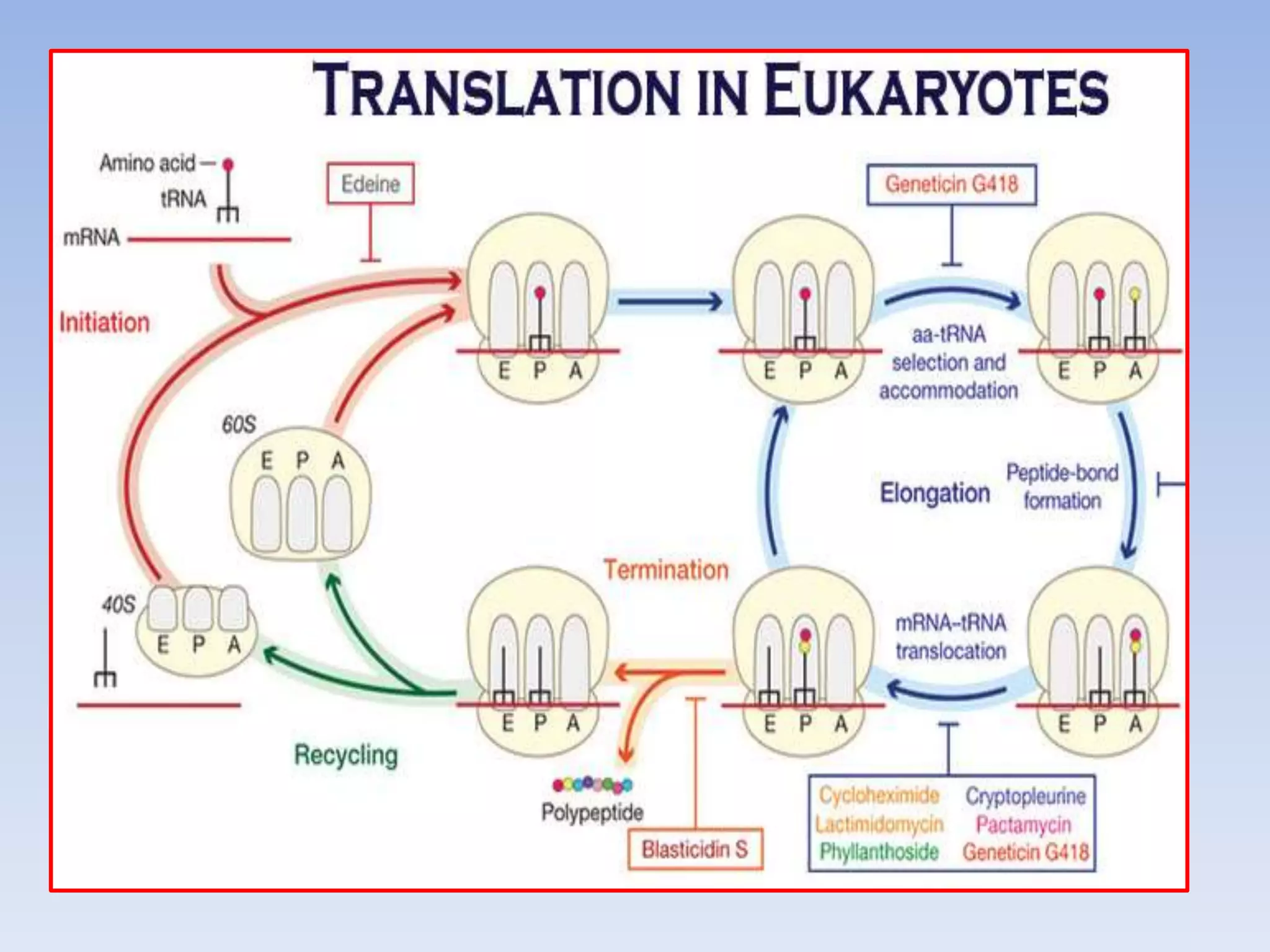
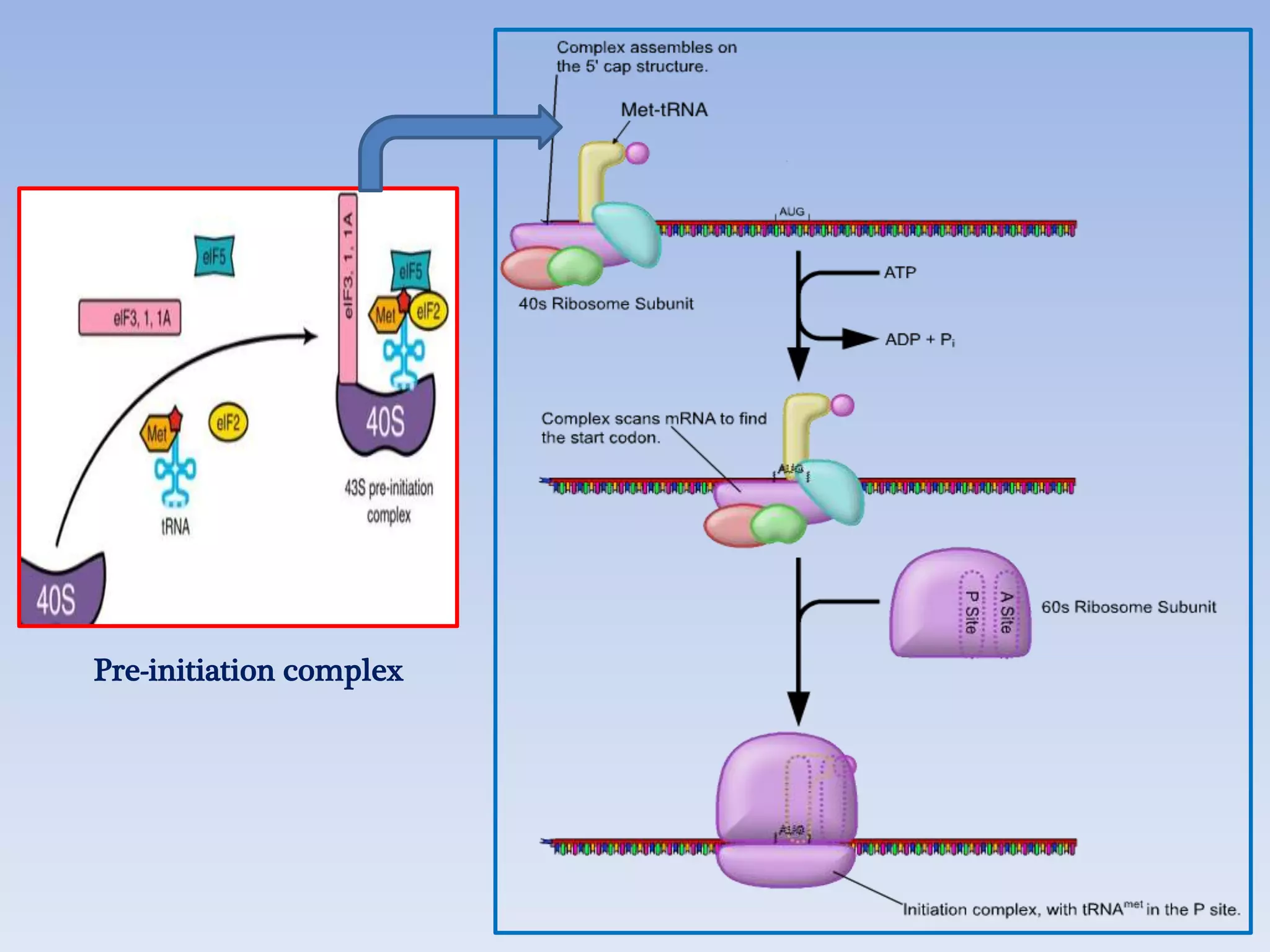
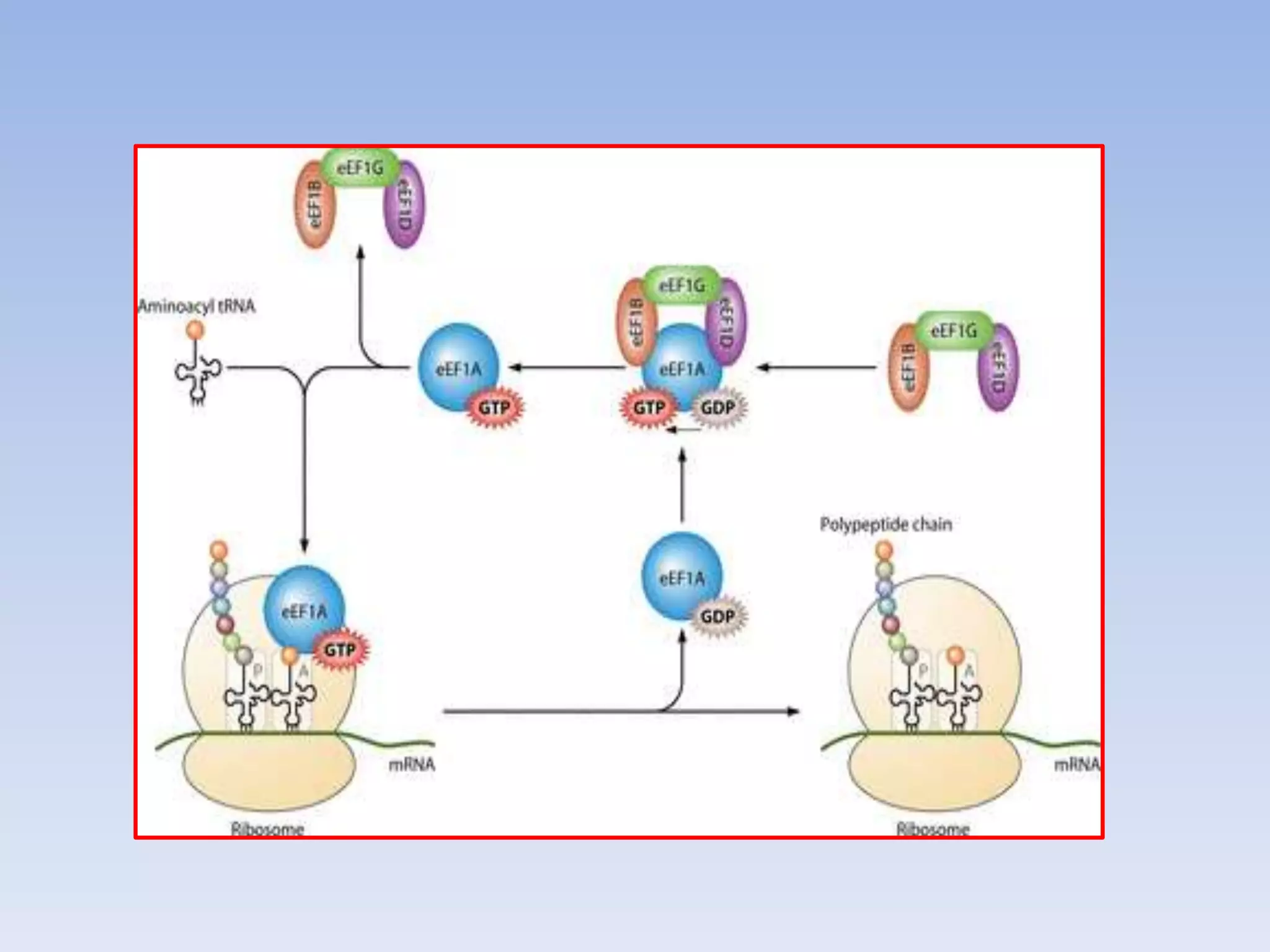
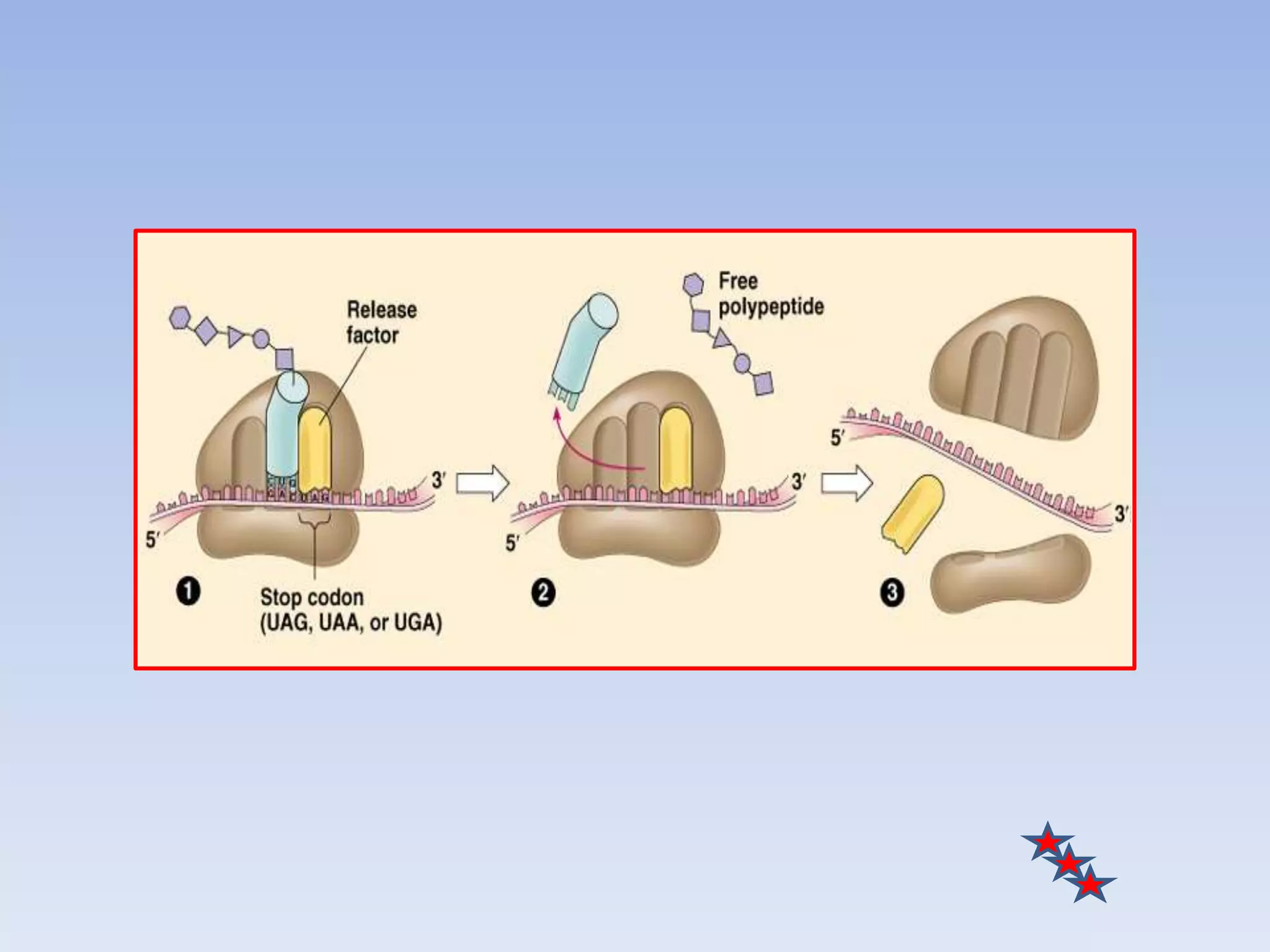
Eukaryotic translation is the process by which messenger RNA is translated into proteins. It involves three main phases: initiation, elongation, and termination. Initiation requires several eukaryotic initiation factors to form a pre-initiation complex and recruit the small ribosomal subunit to the 5' end of mRNA. Elongation then adds amino acids to the growing polypeptide chain via three elongation factors. Termination occurs when release factors recognize a stop codon and allow dissociation of the ribosome and release of the completed protein. The process is more complex in eukaryotes compared to prokaryotes due to the larger ribosome size and additional initiation factors required.





![translation in eukaryotes[1].pptx deatiled explaination](https://cdn.slidesharecdn.com/ss_thumbnails/translationineukaryotes1-250505053443-1349647d-thumbnail.jpg?width=640&height=640&fit=bounds)


