 Spermatogenesis is directed by genes on the
Y chromosome
 Testes: seminiferous tubules, sertoli cells,
leydig cells
 LH, FSH
 Epididymis, vas deferens
 Seminal fluid
 Normal sperm count- 20 million/mL or
more*
 Oligospermia (low counts)- concentration
of fewer than 20 million/mL*; less than 5
million/mL-severe
 Azoospermia- total absence of sperm in
semen
Classified:
 Obstructive causes- Obstructive
azoospermia
(spermatozoa production in testes is
defective)
 Non-obstructive causes-Non-Obstructive
azoopermia (inability of produced
spermatozoa to reach the emitted semen)
 Defects in any of the “ducts” involved in the sperm
delivery system such as:
 1) epididymis, 2) vas deferens, 3) ampulla of the vas
and 4) ejaculatory duct.
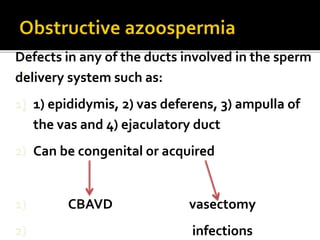
Defects in any of the ducts involved in the sperm
delivery system such as:
1) 1) epididymis, 2) vas deferens, 3) ampulla of
the vas and 4) ejaculatory duct
2) Can be congenital or acquired
1) CBAVD vasectomy
2) infections
 Karyotypic abnormality such as Klinefelter
syndrome (47,XXY)
tall, gynaecomastia, small firm testes
 Deletion of a small portion of theY
chromosome (microdeletion)-Azoospermia
factor(AZF)
 Testicular failure
 Pretesticular
 Testicular
 Post-testicular
 Due to a hypothalamus or pituitary
abnormality- secondary testicular failure
Hypothalamic disorders
Hypogonadotropic hypogondanism
Tumors
Infiltrative diseases-TB, sarcoidosis, histocytosis
Drugs
Pituitary disorders
congenita;l
Tumors
radiation
granuloma
Peripheral organs
Adrenal disorders
Liver failure
 Causes non-obstructive type
 Due to primary testicular failure
Chromosomal abnormalities
klinefelter
Mixed gonadal dysgenesis
Partial androgen insenstivity
Genetic disorders of spermatogenesis
Local conditions
varicocele
cryptochirdism
trauma
orchitis
radiation
chemotherapy
Tight underclothing
Substance abuse
Alchohol, smoking, caffeine
Occupational exposure to heat and toxins
Abnormalities of epididymis
Congenital block in the ducts
CBAVD
Acquired blocks in the ejaculatory ducts-infection, trauma
Antisperm antibodies
Erectile dysfuction
Idiopathic male infertility
 Endocrine evaluation
FSH, LH, prolactin, serum testosterone
 Karyotyping
Klinefelter,Y microdeletions
 Genetic testing
 Transrectal ultrasonography
Site of obstruction(ejaculatory duct obstruction)
 Scrotal ultrasonography
Evaluation of testes, epidymis
 Vasography
Patency of vas deferens
 Testicular biopsy
Spermatogenesis, atrophy
 Pretesticular azoospermia
GnRH therapy
hCG followed by hMG
Donor insemination
 Testicular azoospermia
TESE
TESA
Donor insemination
 Post testicular azoospermia
End to end anastomosis of epididymis
Vasoepididymostomy
MESA
PESA
 Williams, 2nd edition
 Lakshmi Seshadri, 2nd edition
 Dutta, 5th edition

Azoospermia

  • 2.
     Spermatogenesis isdirected by genes on the Y chromosome  Testes: seminiferous tubules, sertoli cells, leydig cells  LH, FSH  Epididymis, vas deferens  Seminal fluid
  • 4.
     Normal spermcount- 20 million/mL or more*  Oligospermia (low counts)- concentration of fewer than 20 million/mL*; less than 5 million/mL-severe  Azoospermia- total absence of sperm in semen
  • 5.
    Classified:  Obstructive causes-Obstructive azoospermia (spermatozoa production in testes is defective)  Non-obstructive causes-Non-Obstructive azoopermia (inability of produced spermatozoa to reach the emitted semen)
  • 6.
     Defects inany of the “ducts” involved in the sperm delivery system such as:  1) epididymis, 2) vas deferens, 3) ampulla of the vas and 4) ejaculatory duct. Defects in any of the ducts involved in the sperm delivery system such as: 1) 1) epididymis, 2) vas deferens, 3) ampulla of the vas and 4) ejaculatory duct 2) Can be congenital or acquired 1) CBAVD vasectomy 2) infections
  • 7.
     Karyotypic abnormalitysuch as Klinefelter syndrome (47,XXY) tall, gynaecomastia, small firm testes  Deletion of a small portion of theY chromosome (microdeletion)-Azoospermia factor(AZF)  Testicular failure
  • 8.
  • 9.
     Due toa hypothalamus or pituitary abnormality- secondary testicular failure Hypothalamic disorders Hypogonadotropic hypogondanism Tumors Infiltrative diseases-TB, sarcoidosis, histocytosis Drugs Pituitary disorders congenita;l Tumors radiation granuloma
  • 10.
  • 11.
     Causes non-obstructivetype  Due to primary testicular failure Chromosomal abnormalities klinefelter Mixed gonadal dysgenesis Partial androgen insenstivity Genetic disorders of spermatogenesis
  • 12.
    Local conditions varicocele cryptochirdism trauma orchitis radiation chemotherapy Tight underclothing Substanceabuse Alchohol, smoking, caffeine Occupational exposure to heat and toxins
  • 13.
    Abnormalities of epididymis Congenitalblock in the ducts CBAVD Acquired blocks in the ejaculatory ducts-infection, trauma Antisperm antibodies Erectile dysfuction Idiopathic male infertility
  • 14.
     Endocrine evaluation FSH,LH, prolactin, serum testosterone  Karyotyping Klinefelter,Y microdeletions  Genetic testing  Transrectal ultrasonography Site of obstruction(ejaculatory duct obstruction)  Scrotal ultrasonography Evaluation of testes, epidymis  Vasography Patency of vas deferens  Testicular biopsy Spermatogenesis, atrophy
  • 15.
     Pretesticular azoospermia GnRHtherapy hCG followed by hMG Donor insemination  Testicular azoospermia TESE TESA Donor insemination  Post testicular azoospermia End to end anastomosis of epididymis Vasoepididymostomy MESA PESA
  • 16.
     Williams, 2ndedition  Lakshmi Seshadri, 2nd edition  Dutta, 5th edition