Acute & Chronic Tonsillitis
Introduction
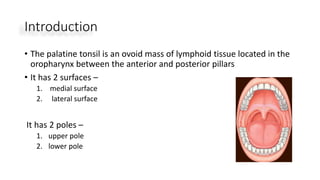
โ€ข The palatine tonsil is an ovoid mass of lymphoid tissue located in the
oropharynx between the anterior and posterior pillars
โ€ข It has 2 surfaces โ€“
1. medial surface
2. lateral surface
It has 2 poles โ€“
1. upper pole
2. lower pole
Medial surface
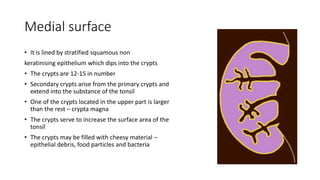
โ€ข It is lined by stratified squamous non
keratinising epithelium which dips into the crypts
โ€ข The crypts are 12-15 in number
โ€ข Secondary crypts arise from the primary crypts and
extend into the substance of the tonsil
โ€ข One of the crypts located in the upper part is larger
than the rest โ€“ crypta magna
โ€ข The crypts serve to increase the surface area of the
tonsil
โ€ข The crypts may be filled with cheesy material โ€“
epithelial debris, food particles and bacteria
Lateral surface
โ€ข It is covered by the fibrous capsule of the tonsil
โ€ข The tonsillar bed is separated from the capsule by loose
areolar tissue
โ€ข This makes it is easy to dissect the tonsil from its bed
during tonsillectomy
โ€ข It is the site of collection of pus in peritonsillar
abscess(quinsy)
โ€ข Some fibers of palatoglossus and palatopharyngeus
muscles get attached to the capsule of tonsil
Upper pole
โ€ข It extends into the soft palate
โ€ข There is a semilunar fold of mucous membrane which covers the
medial part of the upper pole
โ€ข It extends from anterior pillar to posterior pillar
โ€ข It encloses a potential space โ€“ supratonsillar fossa
Lower pole
โ€ข It is attached to the tongue
โ€ข A triangular fold of mucous membrane extends from the anterior tonsillar
pillar to the lower pole
โ€ข It encloses a space โ€“ anterior tonsillar space
โ€ข The lower pole is separated from the tongue by the tonsillo-lingual sulcus
โ€ข This sulcus may harbour carcinoma
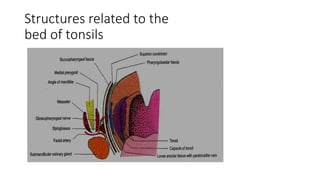
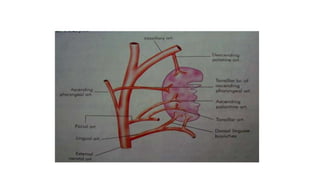
Structures related to the
bed of tonsils
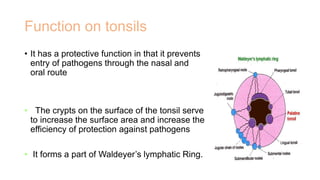
Function on tonsils
โ€ข It has a protective function in that it prevents
entry of pathogens through the nasal and
oral route
โ€ข The crypts on the surface of the tonsil serve
to increase the surface area and increase the
efficiency of protection against pathogens
โ€ข It forms a part of Waldeyerโ€™s lymphatic Ring.
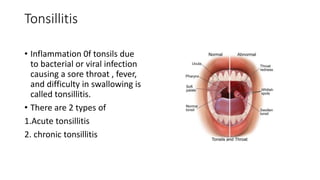
Tonsillitis
โ€ข Inflammation 0f tonsils due
to bacterial or viral infection
causing a sore throat , fever,
and difficulty in swallowing is
called tonsillitis.
โ€ข There are 2 types of
1.Acute tonsillitis
2. chronic tonsillitis
Acute tonsillitis
โ€ข Mostly affects children in the age group of 5-15 years, may also affect
adults
โ€ข Organisms beta-hemolytic streptococci (most common),
โ€ข staphylococci,
โ€ข pneumococci,
โ€ข H.influenza
โ€ข Symptoms: sore throat, difficulty in swallowing,fever, ear ache,
constitutional symptoms
Types of acute
tonsillitis
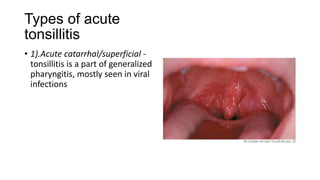
โ€ข 1).Acute catarrhal/superficial -
tonsillitis is a part of generalized
pharyngitis, mostly seen in viral
infections
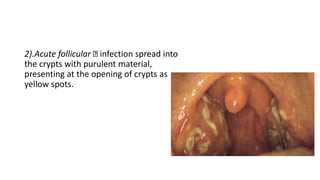
2).Acute follicular infection spread into
the crypts with purulent material,
presenting at the opening of crypts as
yellow spots.
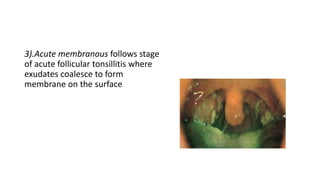
3).Acute membranous follows stage
of acute follicular tonsillitis where
exudates coalesce to form
membrane on the surface
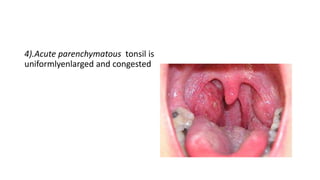
4).Acute parenchymatous tonsil is
uniformlyenlarged and congested
TREATMENT
โ€ข Bed rest
โ€ข Plenty of oral fluids
โ€ข Analgesics
โ€ข Antimicrobial therapy penicillin
โ€ข In case of penicillin sensitivity
โ€ข erythromycin are given.
โ€ข Antibiotics should be continued for 7-10days
COMPLICATIONS
โ€ข chronic tonsillitis
โ€ข peritonsillar abscess
โ€ข parapharyngeal abscess
โ€ข cervical abscess
โ€ข acute otitis media
โ€ข rheumatic fever
โ€ข acute glomerulo nephritis
โ€ข sub acute bacterial endocarditis
CHRONIC TONSILLITIS
โ€ข Aetiology:
โ€ข Complication of acute tonsillitis
โ€ข Sub clinical infection of tonsil
โ€ข Chronic sinusitis or dental sepsis
โ€ข Mostly affects children and young adults
TYPES OF CHRONIC
TONSILLITIS
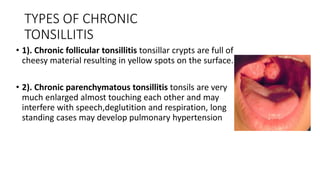
โ€ข 1). Chronic follicular tonsillitis tonsillar crypts are full of
cheesy material resulting in yellow spots on the surface.
โ€ข 2). Chronic parenchymatous tonsillitis tonsils are very
much enlarged almost touching each other and may
interfere with speech,deglutition and respiration, long
standing cases may develop pulmonary hypertension
3).Chronic fibroid tonsillitis Tonsils are small but infected , with history
of repeated sore throat.
CLINICAL FEATURES
โ€ข recurrent attacks of sore throat
โ€ข chronic irritation in throat with cough
โ€ข halitosis
โ€ข dysphagia
โ€ข odynophagia
โ€ข thick speech
Examination
โ€ข Tonsil may show varying degree of enlargement
depending on the type
โ€ข Irwin-Moore sign tonsils are small but pressure on the
anterior pillar expresses pus or cheesy material mainly
seen in fibroid type
โ€ข There may be yellowish beads of pus on the medial
surface of tonsils chronic follicular tonsillitis
โ€ข Flushing of the anterior pillar compared to rest of the
pharyngeal mucosa
โ€ข Enlargement of the jugulo-digastric node soft non
tender
Treatment
Conservative management
โ€ข Pay attention to the general health ,diet, and treatment of co-
existent infections of teeth , nose , and sinuses.
Tonsillectomy
โ€ข when recurrent attacks , interference with speech , deglutination &
respiration.

acute & chronic tonsillitis.pptx

  • 1.
    Acute & ChronicTonsillitis
  • 2.
    Introduction โ€ข The palatinetonsil is an ovoid mass of lymphoid tissue located in the oropharynx between the anterior and posterior pillars โ€ข It has 2 surfaces โ€“ 1. medial surface 2. lateral surface It has 2 poles โ€“ 1. upper pole 2. lower pole
  • 3.
    Medial surface โ€ข Itis lined by stratified squamous non keratinising epithelium which dips into the crypts โ€ข The crypts are 12-15 in number โ€ข Secondary crypts arise from the primary crypts and extend into the substance of the tonsil โ€ข One of the crypts located in the upper part is larger than the rest โ€“ crypta magna โ€ข The crypts serve to increase the surface area of the tonsil โ€ข The crypts may be filled with cheesy material โ€“ epithelial debris, food particles and bacteria
  • 4.
    Lateral surface โ€ข Itis covered by the fibrous capsule of the tonsil โ€ข The tonsillar bed is separated from the capsule by loose areolar tissue โ€ข This makes it is easy to dissect the tonsil from its bed during tonsillectomy โ€ข It is the site of collection of pus in peritonsillar abscess(quinsy) โ€ข Some fibers of palatoglossus and palatopharyngeus muscles get attached to the capsule of tonsil
  • 5.
    Upper pole โ€ข Itextends into the soft palate โ€ข There is a semilunar fold of mucous membrane which covers the medial part of the upper pole โ€ข It extends from anterior pillar to posterior pillar โ€ข It encloses a potential space โ€“ supratonsillar fossa
  • 6.
    Lower pole โ€ข Itis attached to the tongue โ€ข A triangular fold of mucous membrane extends from the anterior tonsillar pillar to the lower pole โ€ข It encloses a space โ€“ anterior tonsillar space โ€ข The lower pole is separated from the tongue by the tonsillo-lingual sulcus โ€ข This sulcus may harbour carcinoma
  • 7.
    Structures related tothe bed of tonsils
  • 9.
    Function on tonsils โ€ขIt has a protective function in that it prevents entry of pathogens through the nasal and oral route โ€ข The crypts on the surface of the tonsil serve to increase the surface area and increase the efficiency of protection against pathogens โ€ข It forms a part of Waldeyerโ€™s lymphatic Ring.
  • 10.
    Tonsillitis โ€ข Inflammation 0ftonsils due to bacterial or viral infection causing a sore throat , fever, and difficulty in swallowing is called tonsillitis. โ€ข There are 2 types of 1.Acute tonsillitis 2. chronic tonsillitis
  • 11.
    Acute tonsillitis โ€ข Mostlyaffects children in the age group of 5-15 years, may also affect adults โ€ข Organisms beta-hemolytic streptococci (most common), โ€ข staphylococci, โ€ข pneumococci, โ€ข H.influenza โ€ข Symptoms: sore throat, difficulty in swallowing,fever, ear ache, constitutional symptoms
  • 12.
    Types of acute tonsillitis โ€ข1).Acute catarrhal/superficial - tonsillitis is a part of generalized pharyngitis, mostly seen in viral infections
  • 13.
    2).Acute follicular infectionspread into the crypts with purulent material, presenting at the opening of crypts as yellow spots.
  • 14.
    3).Acute membranous followsstage of acute follicular tonsillitis where exudates coalesce to form membrane on the surface
  • 15.
    4).Acute parenchymatous tonsilis uniformlyenlarged and congested
  • 16.
    TREATMENT โ€ข Bed rest โ€ขPlenty of oral fluids โ€ข Analgesics โ€ข Antimicrobial therapy penicillin โ€ข In case of penicillin sensitivity โ€ข erythromycin are given. โ€ข Antibiotics should be continued for 7-10days
  • 17.
    COMPLICATIONS โ€ข chronic tonsillitis โ€ขperitonsillar abscess โ€ข parapharyngeal abscess โ€ข cervical abscess โ€ข acute otitis media โ€ข rheumatic fever โ€ข acute glomerulo nephritis โ€ข sub acute bacterial endocarditis
  • 18.
    CHRONIC TONSILLITIS โ€ข Aetiology: โ€ขComplication of acute tonsillitis โ€ข Sub clinical infection of tonsil โ€ข Chronic sinusitis or dental sepsis โ€ข Mostly affects children and young adults
  • 19.
    TYPES OF CHRONIC TONSILLITIS โ€ข1). Chronic follicular tonsillitis tonsillar crypts are full of cheesy material resulting in yellow spots on the surface. โ€ข 2). Chronic parenchymatous tonsillitis tonsils are very much enlarged almost touching each other and may interfere with speech,deglutition and respiration, long standing cases may develop pulmonary hypertension
  • 20.
    3).Chronic fibroid tonsillitisTonsils are small but infected , with history of repeated sore throat.
  • 21.
    CLINICAL FEATURES โ€ข recurrentattacks of sore throat โ€ข chronic irritation in throat with cough โ€ข halitosis โ€ข dysphagia โ€ข odynophagia โ€ข thick speech
  • 22.
    Examination โ€ข Tonsil mayshow varying degree of enlargement depending on the type โ€ข Irwin-Moore sign tonsils are small but pressure on the anterior pillar expresses pus or cheesy material mainly seen in fibroid type โ€ข There may be yellowish beads of pus on the medial surface of tonsils chronic follicular tonsillitis โ€ข Flushing of the anterior pillar compared to rest of the pharyngeal mucosa โ€ข Enlargement of the jugulo-digastric node soft non tender
  • 23.
    Treatment Conservative management โ€ข Payattention to the general health ,diet, and treatment of co- existent infections of teeth , nose , and sinuses. Tonsillectomy โ€ข when recurrent attacks , interference with speech , deglutination & respiration.