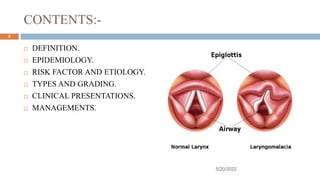
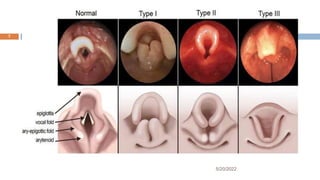
This document defines and discusses laryngomalacia, which is an anomaly in newborns characterized by inward collapse of the supraglottic structures causing upper airway obstruction. It affects more white males and symptoms typically present between 4-8 weeks of age. Risk factors include cartilage immaturity, anatomical abnormalities, and neuromuscular issues. Types are classified based on the site of collapse. Clinical presentations include stridor, feeding difficulties, and apnea. Diagnosis involves laryngoscopy and management includes observation, feeding modifications, acid suppression, and in severe cases, supraglottoplasty or tracheostomy.