ALLERGIC 
RHINITIS
ALLERGIC RHINITIS 
• IgE – mediated immunologic response to nasal mucosa to air-borne 
allergens.
Allergic 
rhinitis 
seasonal 
perennial 
Symptoms appear in or around a 
particular season. 
Pollen grains 
Symptoms are present 
throughout the year 
dust mites,insect 
parts,cockroaches,animal 
danders
AETIOLOGY : 
• Inhalant allergens – 
• Seasonal 
• perennial 
• Genetic predisposition
pathogenesis 
In a genetically predisposed individual 
Inhaled allergen 
IgE production 
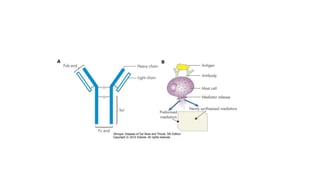
IgE binds to basophils & mast cells by its Fc end 
On subsequent exposure allergen binds to Fab fragment 
Degranulation 
Chemical mediators (preformed & newly synthesized)
Sensitized 
Mast cell 
Antigen 
Release of mediators 
Performed 
• Histamine 
• ECF – A 
• NCF – A 
• Heparin 
•Others 
Newly synthesized 
• Prostaglandins e.g. PGD2 
• Leukotrienes e.g. SRS-A 
• PAG 
• Thromboxane A 
• TNFa
CHEMICAL MEDIATORS 
SYMPTOMATOLOGY 
• VASODILATION 
• MUCOSAL EDEMA 
• INFILTRATION WITH E.PHILS 
• EXCESSIVE SECRETION 
• SMOOTH MUSCLE CONTRACTION
2 PHASES OF ALLERGIC IMMUNE RESPONSE 
Acute or early phase 
• Within 5-30 min, 
• Due to release of vasoactive amines like histamine 
• sneezing, rhinorrhea nasal blockage and/or bronchospasm. 
Late or delayed phase 
• : 2-8 hours after exposure to allergen without additional exposure. 
• Due to infiltration of inflammatory cells at the site of antigen deposition ( E 
phils, N phils, B phil, monocytes and CD4+ T cells) 
• swelling.,congestion, thick secretion
Clinical features 
• No age or sex predilection 
• Symptoms of seasonal nasal allergy. 
• Paroxysmal sneezing (10-20 sneezes at a time), 
• nasal obstruction, 
• watery nasal discharge and 
• itching in the nose. 
• Symptoms of perennial allergy. 
• Frequent colds, 
• persistently stuffy nose, 
• loss of sense of smell due to mucosal oedema, 
• postnasal drip, 
• chronic cough. 
• Itching in the nose, eyes, pharynx or larynx.
Signs
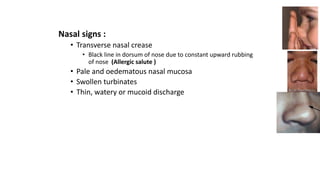
Nasal signs : 
• Transverse nasal crease 
• Black line in dorsum of nose due to constant upward rubbing 
of nose (Allergic salute ) 
• Pale and oedematous nasal mucosa 
• Swollen turbinates 
• Thin, watery or mucoid discharge
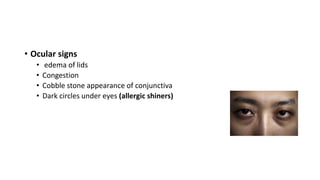
• Ocular signs 
• edema of lids 
• Congestion 
• Cobble stone appearance of conjunctiva 
• Dark circles under eyes (allergic shiners)
• Otologic signs 
E tube blockage 
↓ 
Retracted T M 
& 
Serous otitis medis
• Pharyngeal signs 
Hyperplasia of submucosal lymphoid tissue 
↓ 
Granular pharyngitis
• Mouth breathing 
• Ortho dontic changes
• Laryngeal signs 
• Hoarseness of voice 
• Edema of vocal cords
Diagnosis : 
• Detailed history and physical examination.
Investigations : 
1. Total and differential count. 
• Peripheral eosinophilia. 
2. Nasal smear 
• large number of eosinophils. 
• Also seen in NARES 
3. Skin tests. 
• Prick, scratch and intradermal tests. 
4. Radioallergosorbent test (RAST). 
• Measures specific IgE antibody concentration in the 
patient’s serum. 
5. Nasal provocation test.
Complications : 
1. Obstruction of sinus ostia Recurrent sinusitis. 
2. Nasal polyp 
3. Blocking of E tube  Serous otitis media 
4. Bronchial asthma. 
5. Mouth breathing  orthodontic changes
Treatment : 
1. Avoidance of allergen. 
2. Treatment with drugs. 
a. Antihistaminics 
• Decrease rhinorrhea ,sneezing ,nasal itch 
• A/E :drowsiness 
b. Sympathomimetics 
a. topically / orally 
b. Oral pseudoephedrine & phenylephrine in combn with antihistamines 
c. Cause vasoconstriction  ↓ nasal congestion & edema 
d. CNS activation  ↓dowsiness due to antihistamines 
e. Topical aerosols } phenylephrine , xylometazoline & oxymetazoline 
a. ↓ nasal obstruction 
b. A/E rebound congestion  RHINITIS MEDICAMENTOSA 
c. Corticosteorids 
• Oral corticosteorids 
• acute episodes not relieved by other drugs 
• Topical steroids } aerosols }beclomethasone budesonide, flunisolide , fluticasone 
• Inhibit recruitment of inflammatory cells  trt of late allergic phase 
• Trt of RHINITIS MEDICAMENTOSA
a) Sodium chromoglycate 
• Stabilizes the mast cells & prevents degraulation. 
• 2% solution for nasal drops or spray or as an aerosol powder 
• anticholinergics  ↓rhinorrhea 
• Ipratropium bromide 
• Trt of allergic & nonallergic 
• leukotriene receptor antagonist 
• monteleukast 
• anti ig E  ↓igE 
• omalizumab 
3. Immunotherapy 
• Allergen is given in gradually increasing doses till the 
maintenance dose is reached. 
• ↓ formation of IgE & ↑ IgG 
• Upto 3 years
Allergic rhinitis symptoms signs treatment ent ppt

Allergic rhinitis symptoms signs treatment ent ppt

  • 1.
  • 2.
    ALLERGIC RHINITIS •IgE – mediated immunologic response to nasal mucosa to air-borne allergens.
  • 3.
    Allergic rhinitis seasonal perennial Symptoms appear in or around a particular season. Pollen grains Symptoms are present throughout the year dust mites,insect parts,cockroaches,animal danders
  • 4.
    AETIOLOGY : •Inhalant allergens – • Seasonal • perennial • Genetic predisposition
  • 5.
    pathogenesis In agenetically predisposed individual Inhaled allergen IgE production IgE binds to basophils & mast cells by its Fc end On subsequent exposure allergen binds to Fab fragment Degranulation Chemical mediators (preformed & newly synthesized)
  • 7.
    Sensitized Mast cell Antigen Release of mediators Performed • Histamine • ECF – A • NCF – A • Heparin •Others Newly synthesized • Prostaglandins e.g. PGD2 • Leukotrienes e.g. SRS-A • PAG • Thromboxane A • TNFa
  • 8.
    CHEMICAL MEDIATORS SYMPTOMATOLOGY • VASODILATION • MUCOSAL EDEMA • INFILTRATION WITH E.PHILS • EXCESSIVE SECRETION • SMOOTH MUSCLE CONTRACTION
  • 9.
    2 PHASES OFALLERGIC IMMUNE RESPONSE Acute or early phase • Within 5-30 min, • Due to release of vasoactive amines like histamine • sneezing, rhinorrhea nasal blockage and/or bronchospasm. Late or delayed phase • : 2-8 hours after exposure to allergen without additional exposure. • Due to infiltration of inflammatory cells at the site of antigen deposition ( E phils, N phils, B phil, monocytes and CD4+ T cells) • swelling.,congestion, thick secretion
  • 10.
    Clinical features •No age or sex predilection • Symptoms of seasonal nasal allergy. • Paroxysmal sneezing (10-20 sneezes at a time), • nasal obstruction, • watery nasal discharge and • itching in the nose. • Symptoms of perennial allergy. • Frequent colds, • persistently stuffy nose, • loss of sense of smell due to mucosal oedema, • postnasal drip, • chronic cough. • Itching in the nose, eyes, pharynx or larynx.
  • 11.
  • 12.
    Nasal signs : • Transverse nasal crease • Black line in dorsum of nose due to constant upward rubbing of nose (Allergic salute ) • Pale and oedematous nasal mucosa • Swollen turbinates • Thin, watery or mucoid discharge
  • 13.
    • Ocular signs • edema of lids • Congestion • Cobble stone appearance of conjunctiva • Dark circles under eyes (allergic shiners)
  • 14.
    • Otologic signs E tube blockage ↓ Retracted T M & Serous otitis medis
  • 15.
    • Pharyngeal signs Hyperplasia of submucosal lymphoid tissue ↓ Granular pharyngitis
  • 16.
    • Mouth breathing • Ortho dontic changes
  • 17.
    • Laryngeal signs • Hoarseness of voice • Edema of vocal cords
  • 18.
    Diagnosis : •Detailed history and physical examination.
  • 19.
    Investigations : 1.Total and differential count. • Peripheral eosinophilia. 2. Nasal smear • large number of eosinophils. • Also seen in NARES 3. Skin tests. • Prick, scratch and intradermal tests. 4. Radioallergosorbent test (RAST). • Measures specific IgE antibody concentration in the patient’s serum. 5. Nasal provocation test.
  • 21.
    Complications : 1.Obstruction of sinus ostia Recurrent sinusitis. 2. Nasal polyp 3. Blocking of E tube  Serous otitis media 4. Bronchial asthma. 5. Mouth breathing  orthodontic changes
  • 22.
    Treatment : 1.Avoidance of allergen. 2. Treatment with drugs. a. Antihistaminics • Decrease rhinorrhea ,sneezing ,nasal itch • A/E :drowsiness b. Sympathomimetics a. topically / orally b. Oral pseudoephedrine & phenylephrine in combn with antihistamines c. Cause vasoconstriction  ↓ nasal congestion & edema d. CNS activation  ↓dowsiness due to antihistamines e. Topical aerosols } phenylephrine , xylometazoline & oxymetazoline a. ↓ nasal obstruction b. A/E rebound congestion  RHINITIS MEDICAMENTOSA c. Corticosteorids • Oral corticosteorids • acute episodes not relieved by other drugs • Topical steroids } aerosols }beclomethasone budesonide, flunisolide , fluticasone • Inhibit recruitment of inflammatory cells  trt of late allergic phase • Trt of RHINITIS MEDICAMENTOSA
  • 23.
    a) Sodium chromoglycate • Stabilizes the mast cells & prevents degraulation. • 2% solution for nasal drops or spray or as an aerosol powder • anticholinergics  ↓rhinorrhea • Ipratropium bromide • Trt of allergic & nonallergic • leukotriene receptor antagonist • monteleukast • anti ig E  ↓igE • omalizumab 3. Immunotherapy • Allergen is given in gradually increasing doses till the maintenance dose is reached. • ↓ formation of IgE & ↑ IgG • Upto 3 years