QUINSY
(Peritonsillar Abscess)
INTRODUCTION :
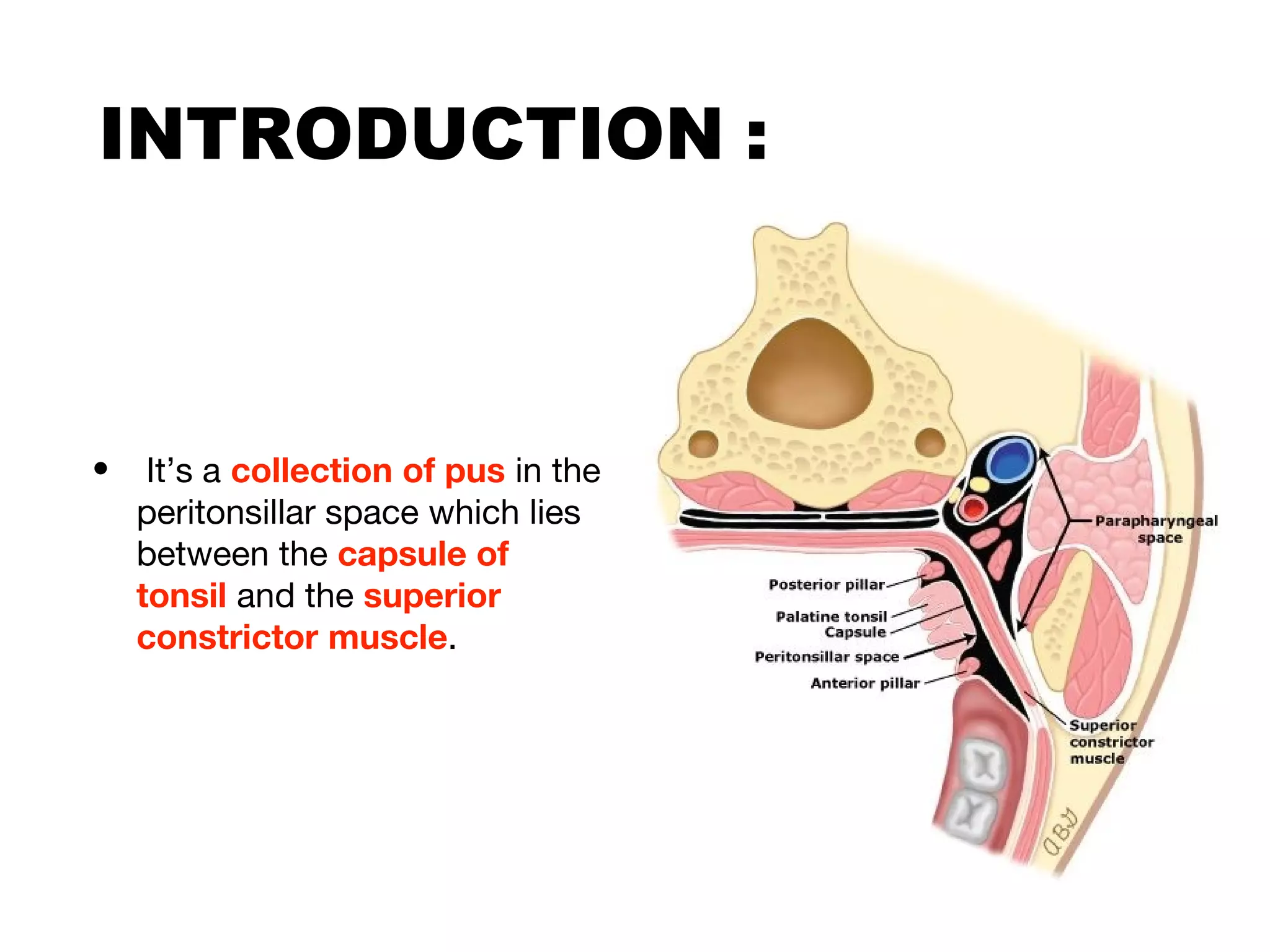
• It’s a collection of pus in the
peritonsillar space which lies
between the capsule of
tonsil and the superior
constrictor muscle.
AETIOLOGY :
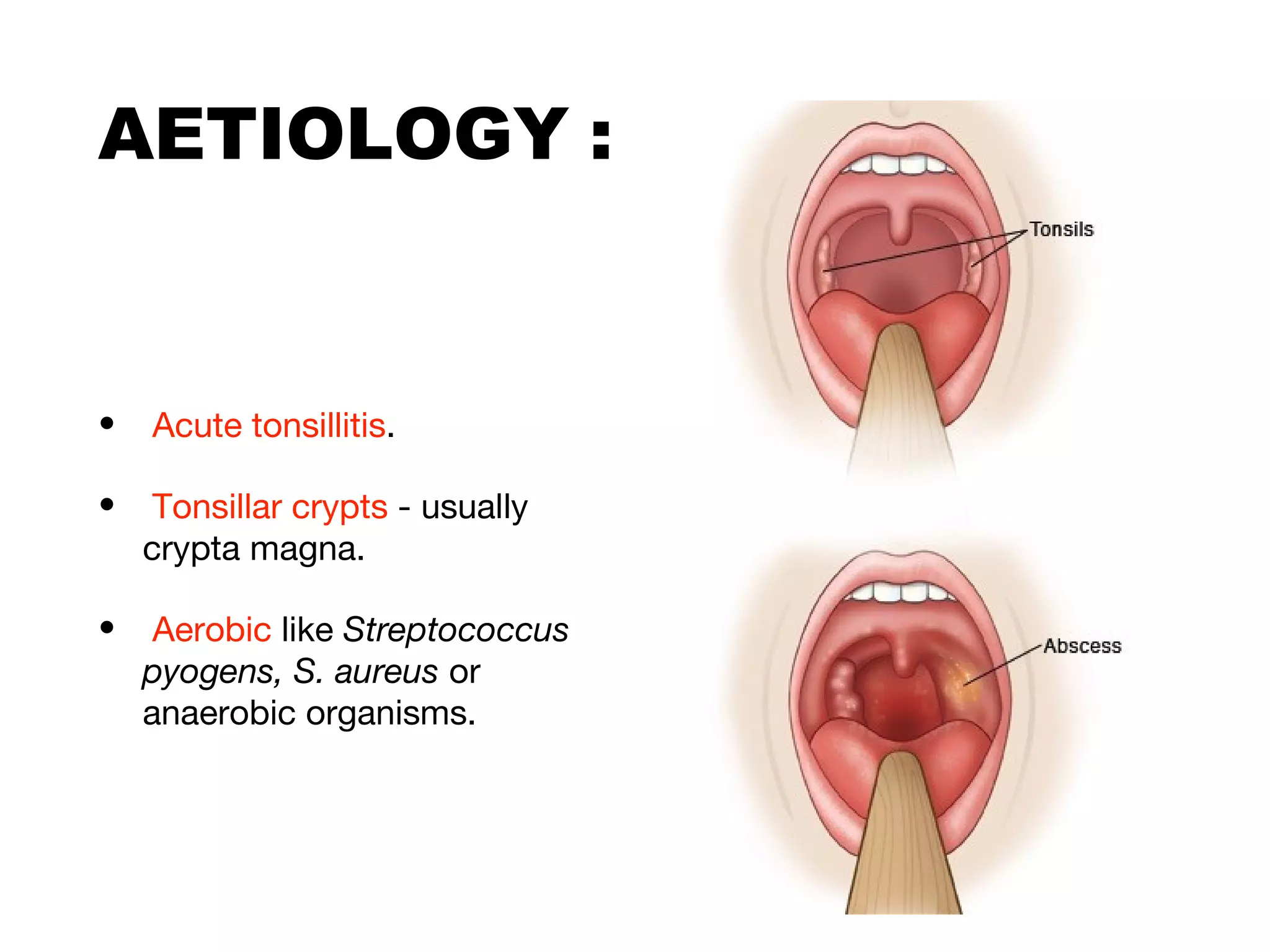
• Acute tonsillitis.
• Tonsillar crypts - usually
crypta magna.
• Aerobic like Streptococcus
pyogens, S. aureus or
anaerobic organisms.
CLINICAL
FEATURES :
• General.
• Local
GENERAL :
• Fever (upto 104°F) with
chills.
• Malaise.
• Body aches.
• Headache.
• Nausea and Constipation.
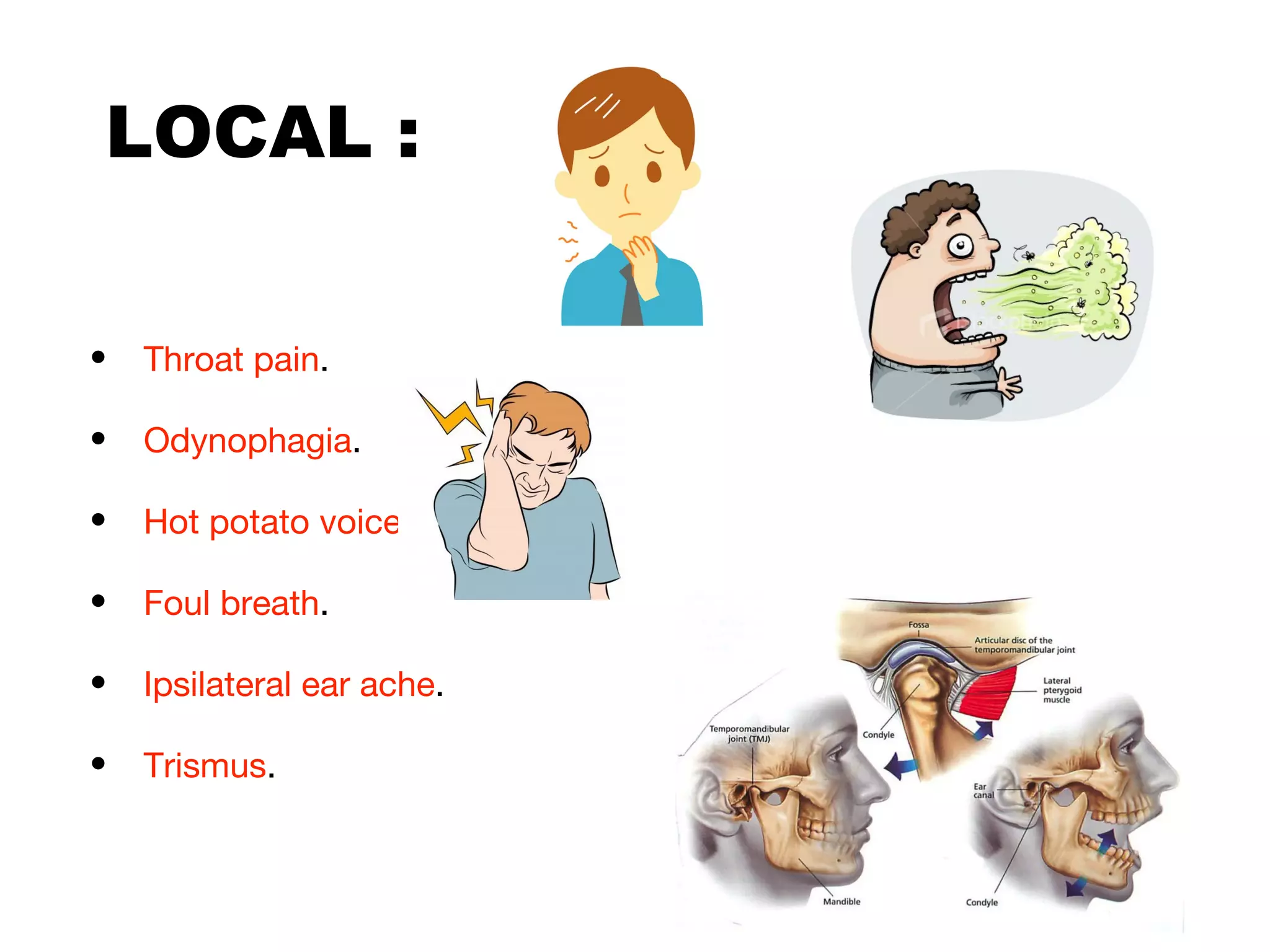
LOCAL :
• Throat pain.
• Odynophagia.
• Hot potato voice.
• Foul breath.
• Ipsilateral ear ache.
• Trismus.
EXAMINATION :
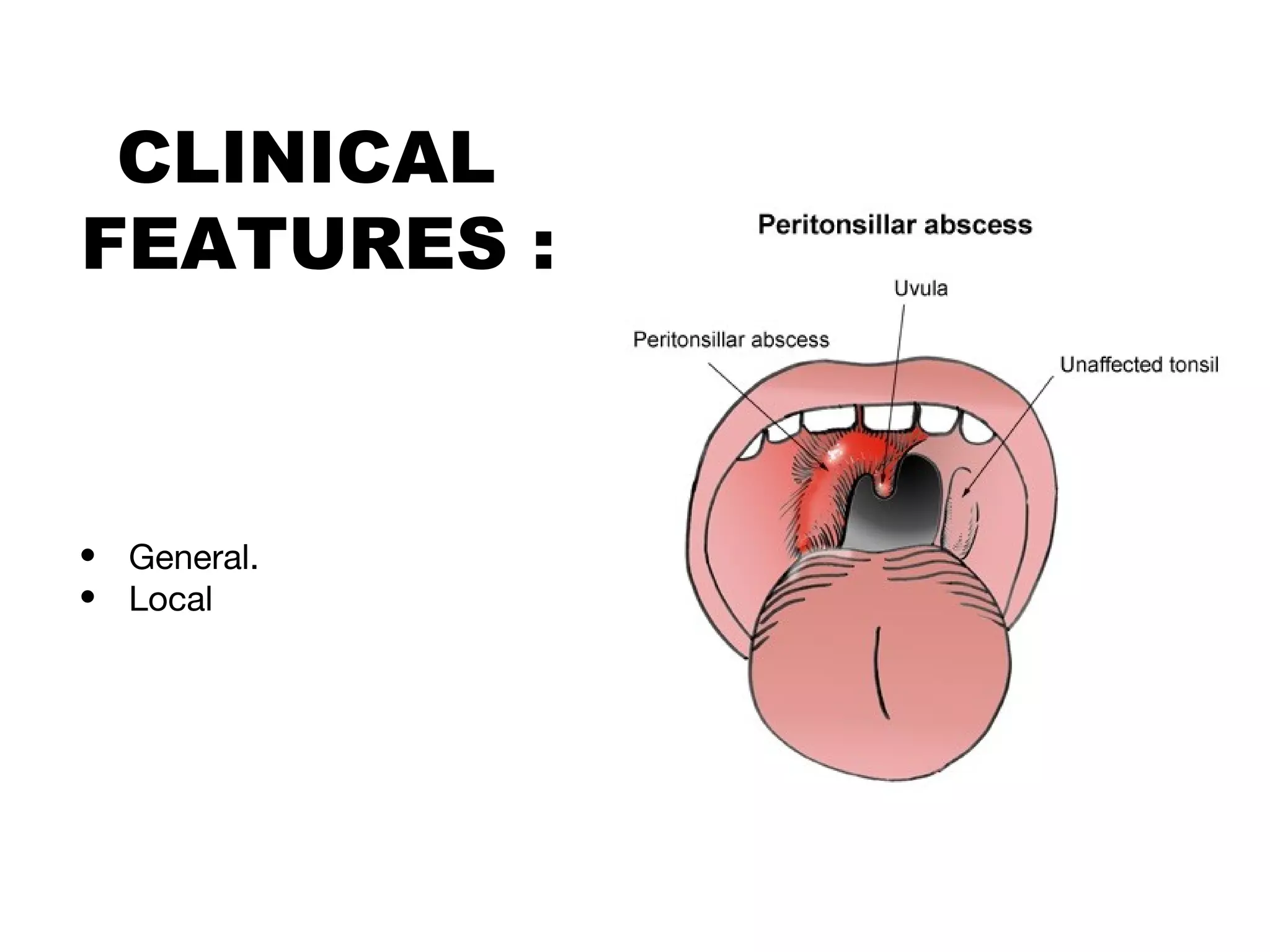
• Tonsils, pillars and soft palate
- Congested and swollen.
• Uvula - swollen and
oedematous.
• Bulging of the soft palate.
• Mucopus - tonsillar region.
• Cervical lymphadenopathy -
jugulodigastric lymph nodes.
• Torticollis.
TREATMENT :
• Hospitalisation.
• Intravenous fluids.
• Antibiotics.
• Analgesics.
• Oral hygiene.
( Peritonsillitis )
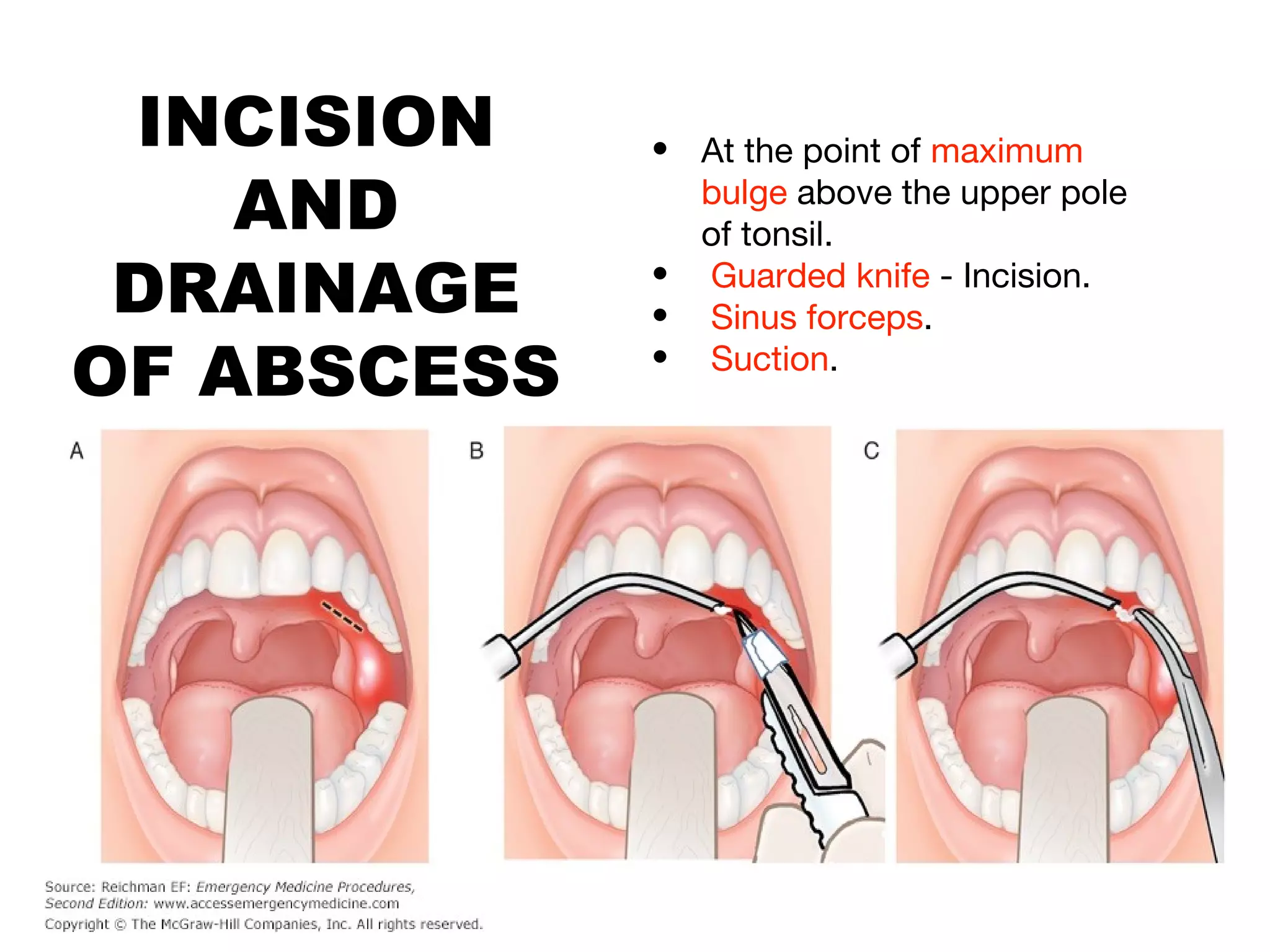
INCISION
AND
DRAINAGE
OF ABSCESS
• At the point of maximum
bulge above the upper pole
of tonsil.
• Guarded knife - Incision.
• Sinus forceps.
• Suction.
INTERVAL
TONSILLECTOM
Y
• 4 - 6 weeks following the
attack of quinsy.
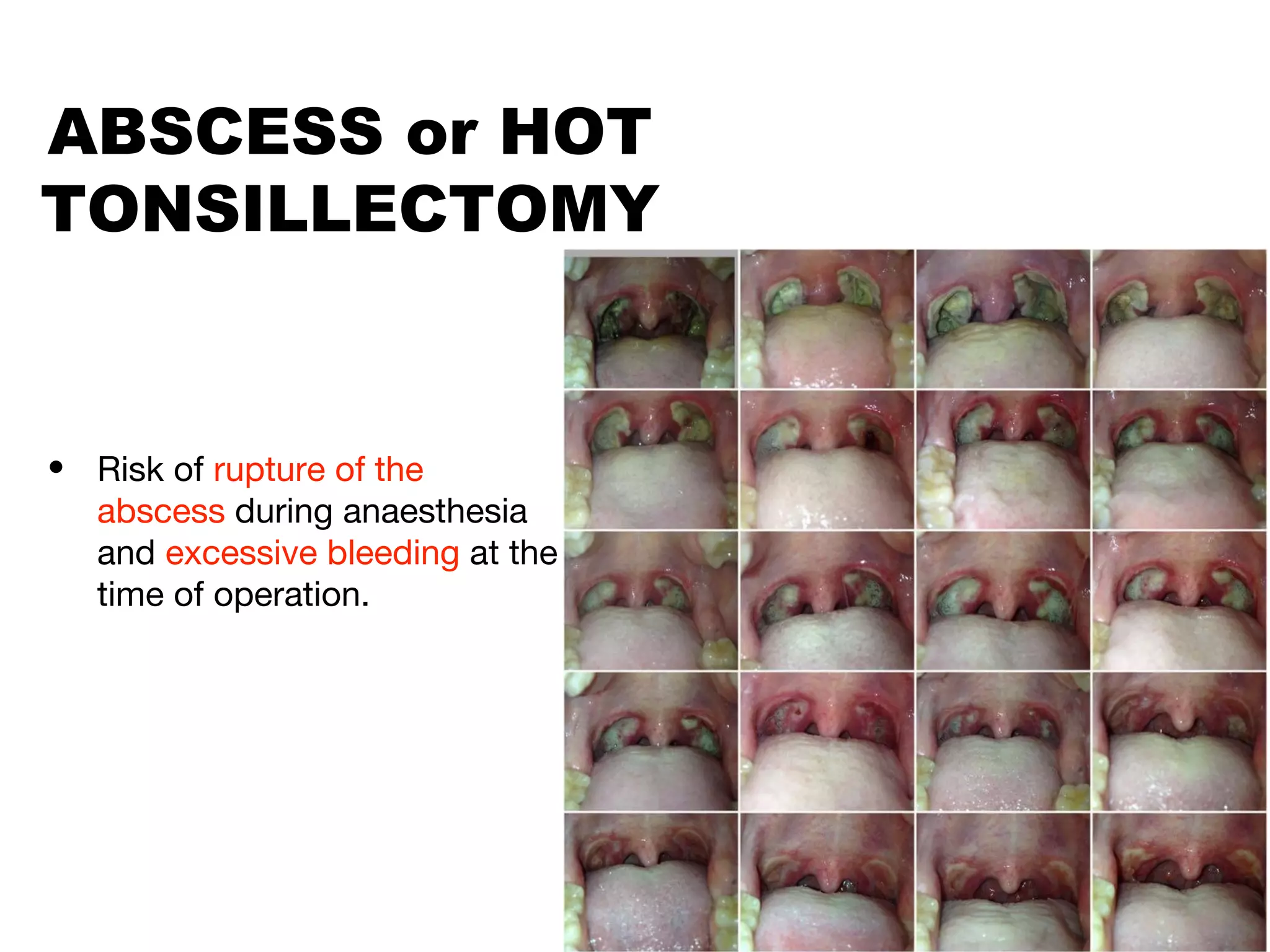
ABSCESS or HOT
TONSILLECTOMY
• Risk of rupture of the
abscess during anaesthesia
and excessive bleeding at the
time of operation.
COMPLICATIONS :
• Parapharyngeal abscess.
• Oedema of larynx
(Tracheostomy).
• Septicaemia.
• Pneumonitis or lung
abscess.
• Jugular vein thrombosis.
• Spontaneous haemorrhage.
PREVENTION :
• Do not smoke.
• Good oral hygiene.
• Oral infections.
• Antibiotics.
THANK YOU

QUINSY (Peritonsillar Abscess)