Tips for soil and water sampling
Out line
Sampling
Factors Influence Sampling
Errors in Sampling
Tools for sampling
Why Sample?
Get information about large populations
Lower cost
More accuracy of results
High speed of data collection
Availability of Population elements.
Less field time
When it’s impossible to study the whole population
FACTORS INFLUENCE
SAMPLING…….
3 factors that influence sample representative-ness
Sampling procedure
Sample size
Participation (response)
When might you sample the entire population?
When your population is very small
When you have extensive resources
When you don’t expect a very high response
The sample must be:
 representative of the population;
 appropriately sized (the larger the better);
 unbiased;
random (selections occur by chance);
What is Good Sample?
Merits of Sampling
Size of population
Fund required for the study
Facilities
Time
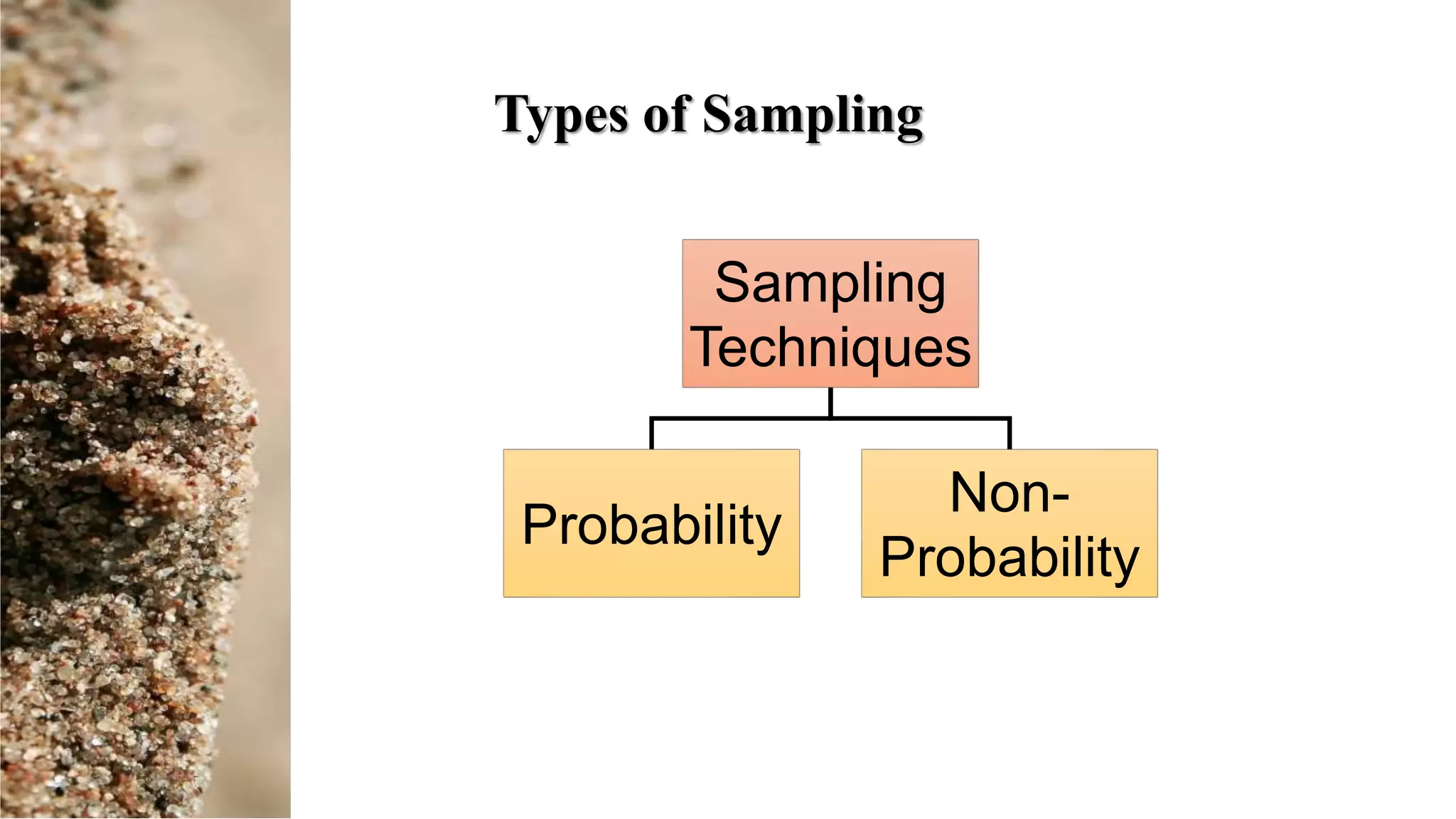
Types of Sampling
Sampling
Techniques
Probability
Non-
Probability
Errors in Sampling
Non-Observation Errors:-
Sampling error: naturally occurs
Coverage error: people sampled do not match
the population of interest
Non-response: won’t or can’t participate
Errors of Observation
Respondent error: respondents have difficult time
answering the question
Measurement error: inaccurate responses when
person doesn’t understand question or poorly worded
question
Errors in data collection
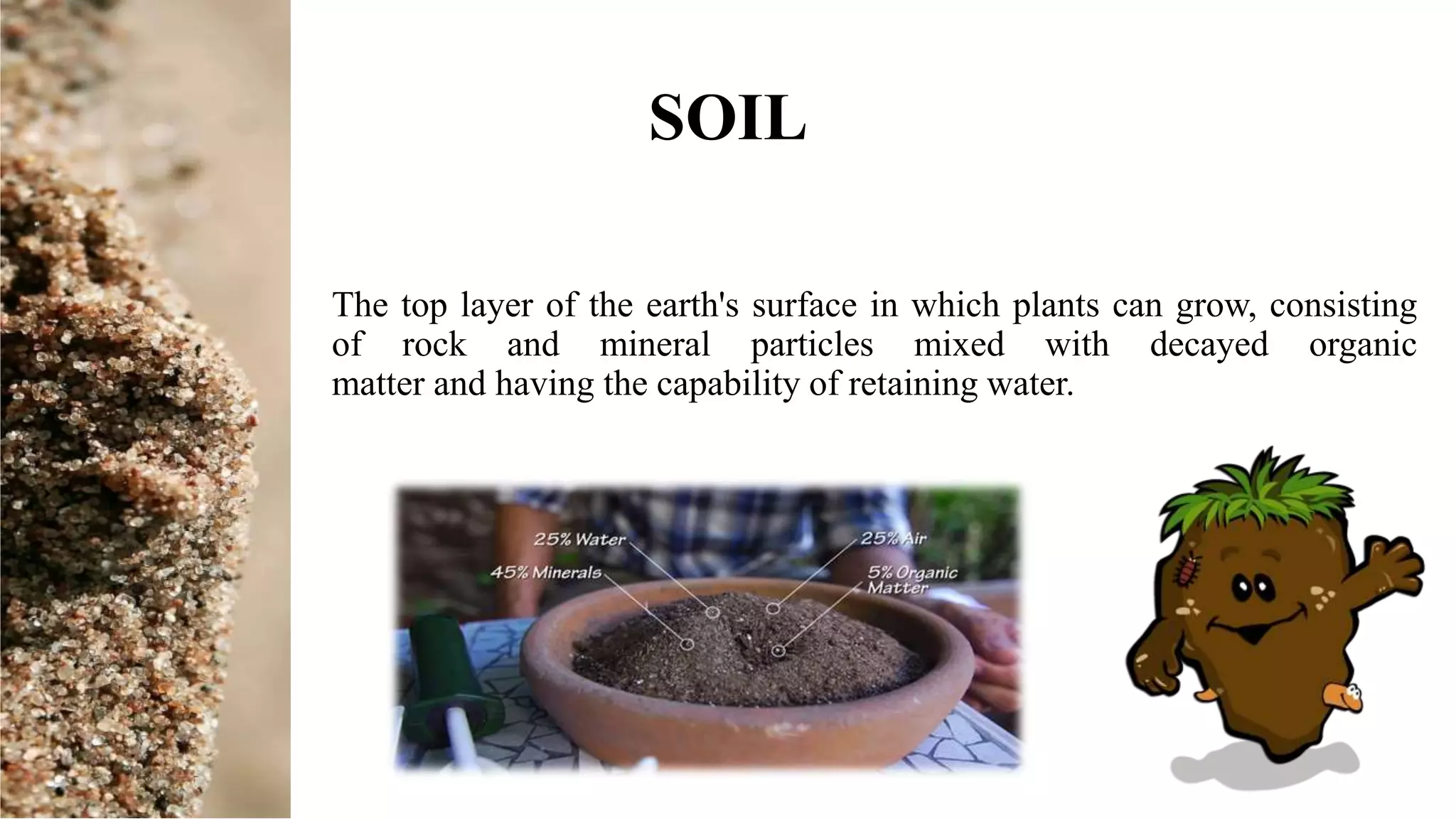
The top layer of the earth's surface in which plants can grow, consisting
of rock and mineral particles mixed with decayed organic
matter and having the capability of retaining water.
SOIL
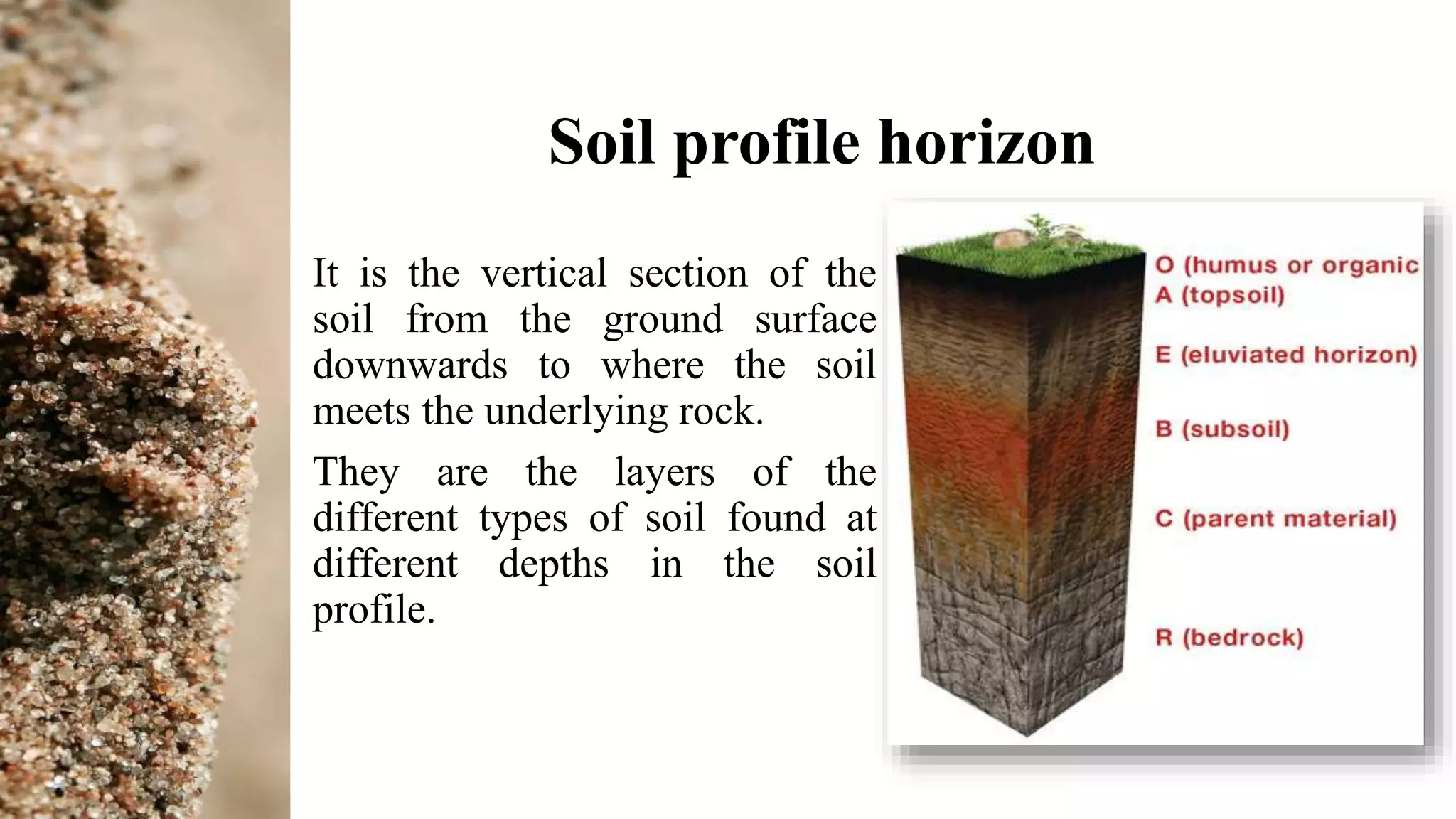
Soil profile horizon
It is the vertical section of the
soil from the ground surface
downwards to where the soil
meets the underlying rock.
They are the layers of the
different types of soil found at
different depths in the soil
profile.
soil sampling
Main purpose is to evaluate the fertility status of the soil
It provide a basis for fertilizer, lime and gypsum recommendation
Take sample from ,
15 cm depth- ordinary crop
25 cm depth- perennial crop
5 cm depth-pasture and Lawn
In line sown crop, take sample between the line
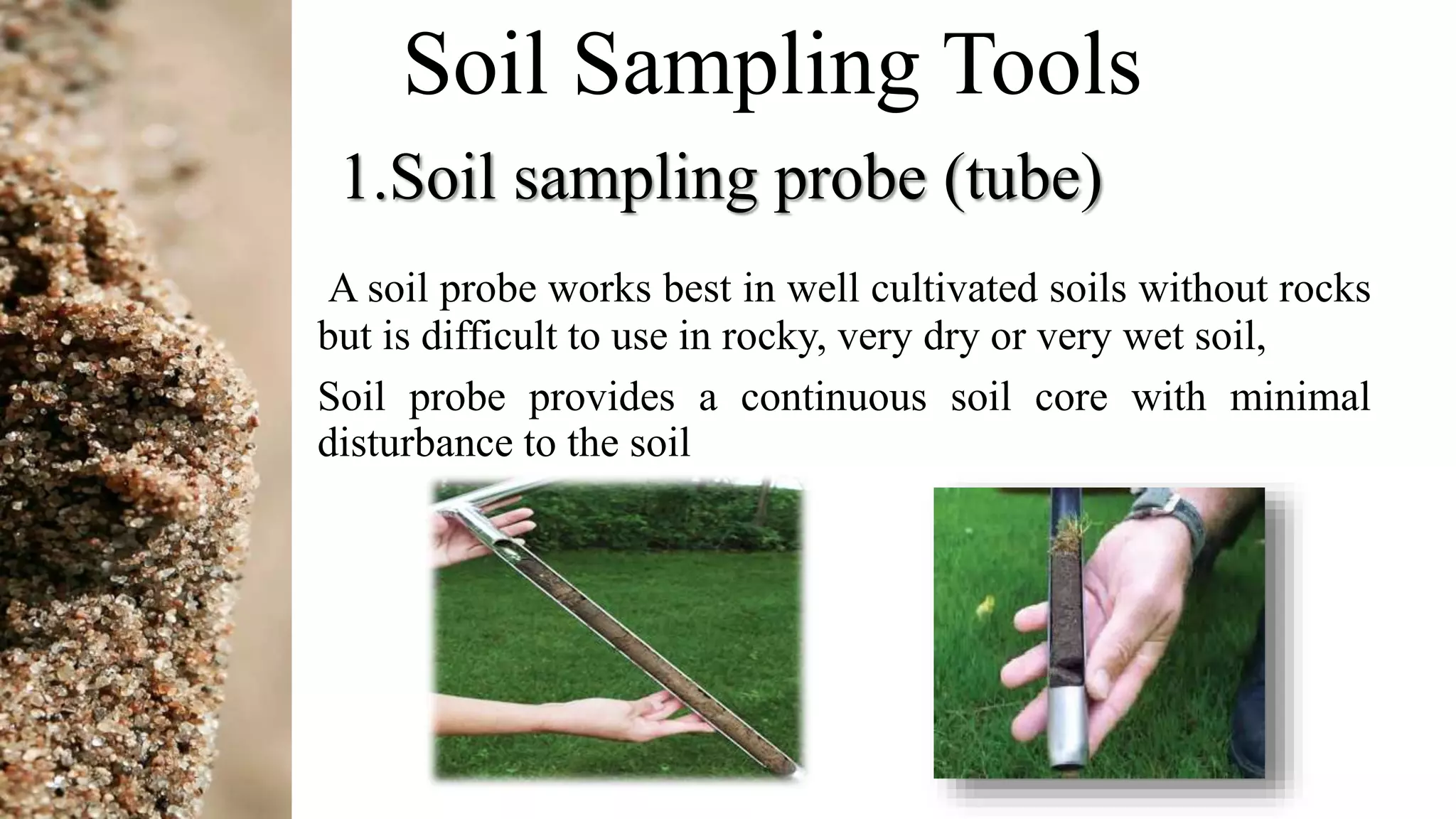
Soil Sampling Tools
1.Soil sampling probe (tube)
A soil probe works best in well cultivated soils without rocks
but is difficult to use in rocky, very dry or very wet soil,
Soil probe provides a continuous soil core with minimal
disturbance to the soil
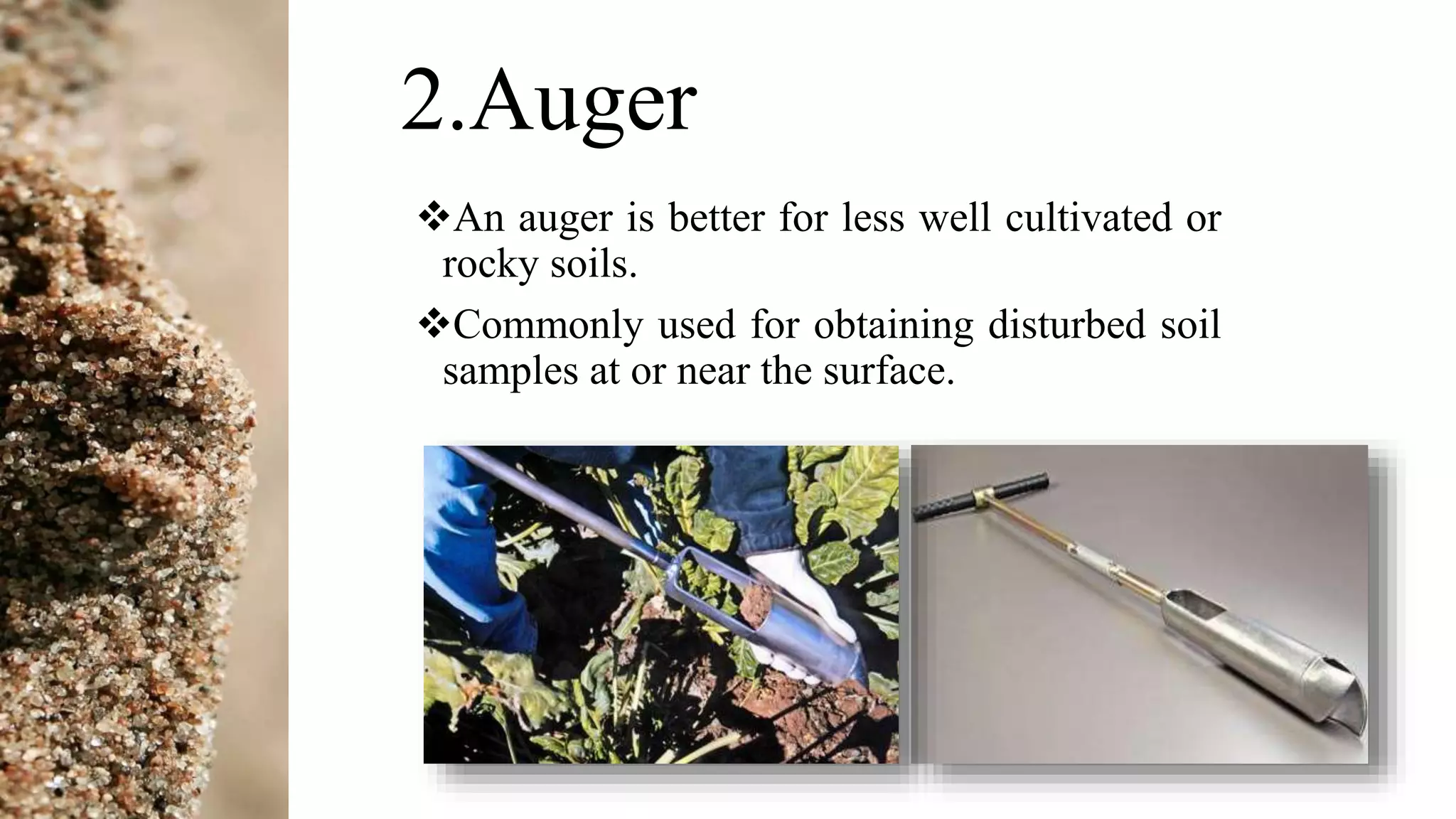
2.Auger
An auger is better for less well cultivated or
rocky soils.
Commonly used for obtaining disturbed soil
samples at or near the surface.
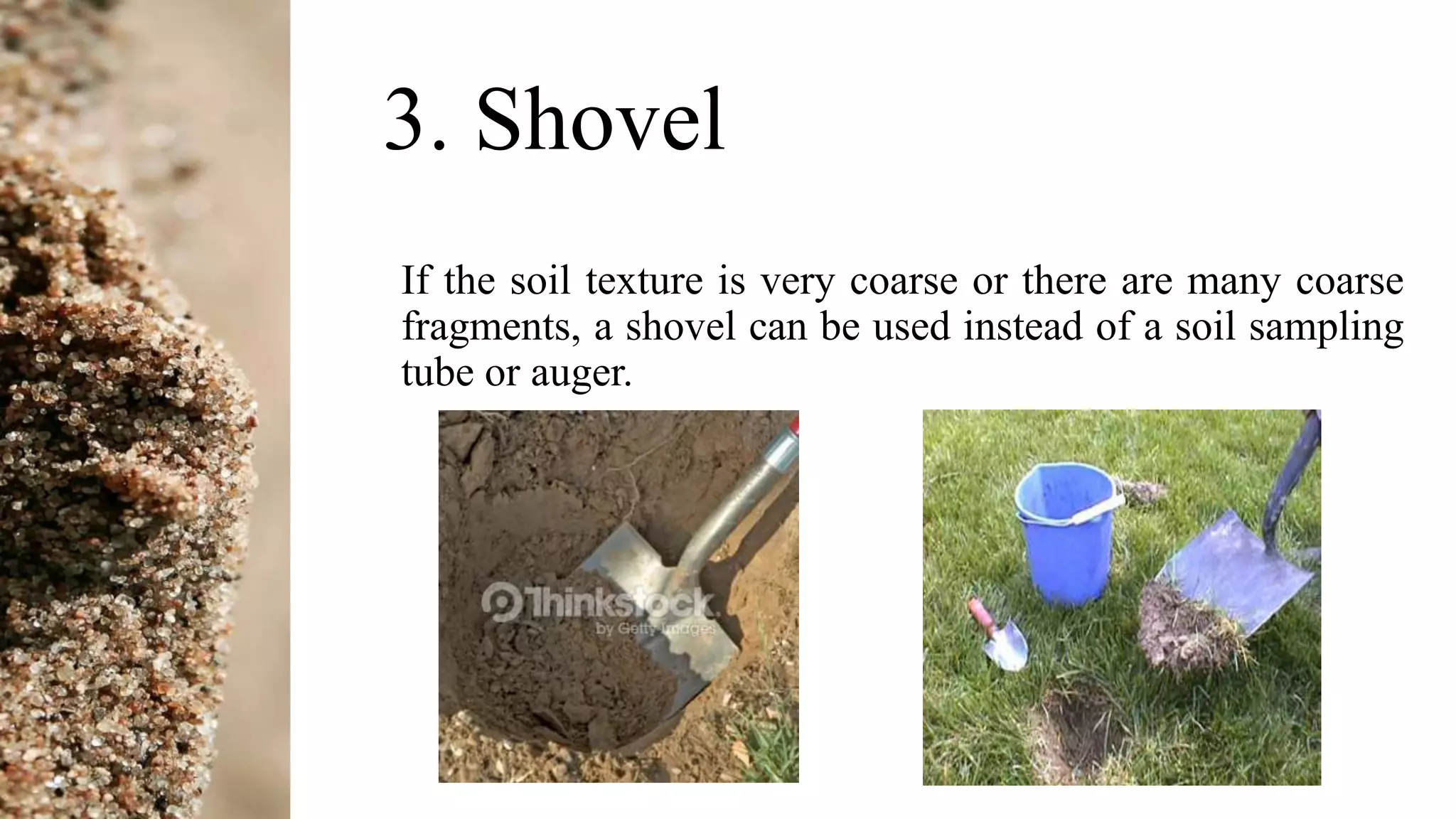
3. Shovel
If the soil texture is very coarse or there are many coarse
fragments, a shovel can be used instead of a soil sampling
tube or auger.
Procedure for sampling
Scrape the litter from the surface of the soil
Then dig a ‘V’ shaped cut to the required
depth(15-20cm)
Cut a thin slice(1 inch) from one side of the hole
Collect the soil and put it in a clean bucket
Collect atleast 10 samples like this
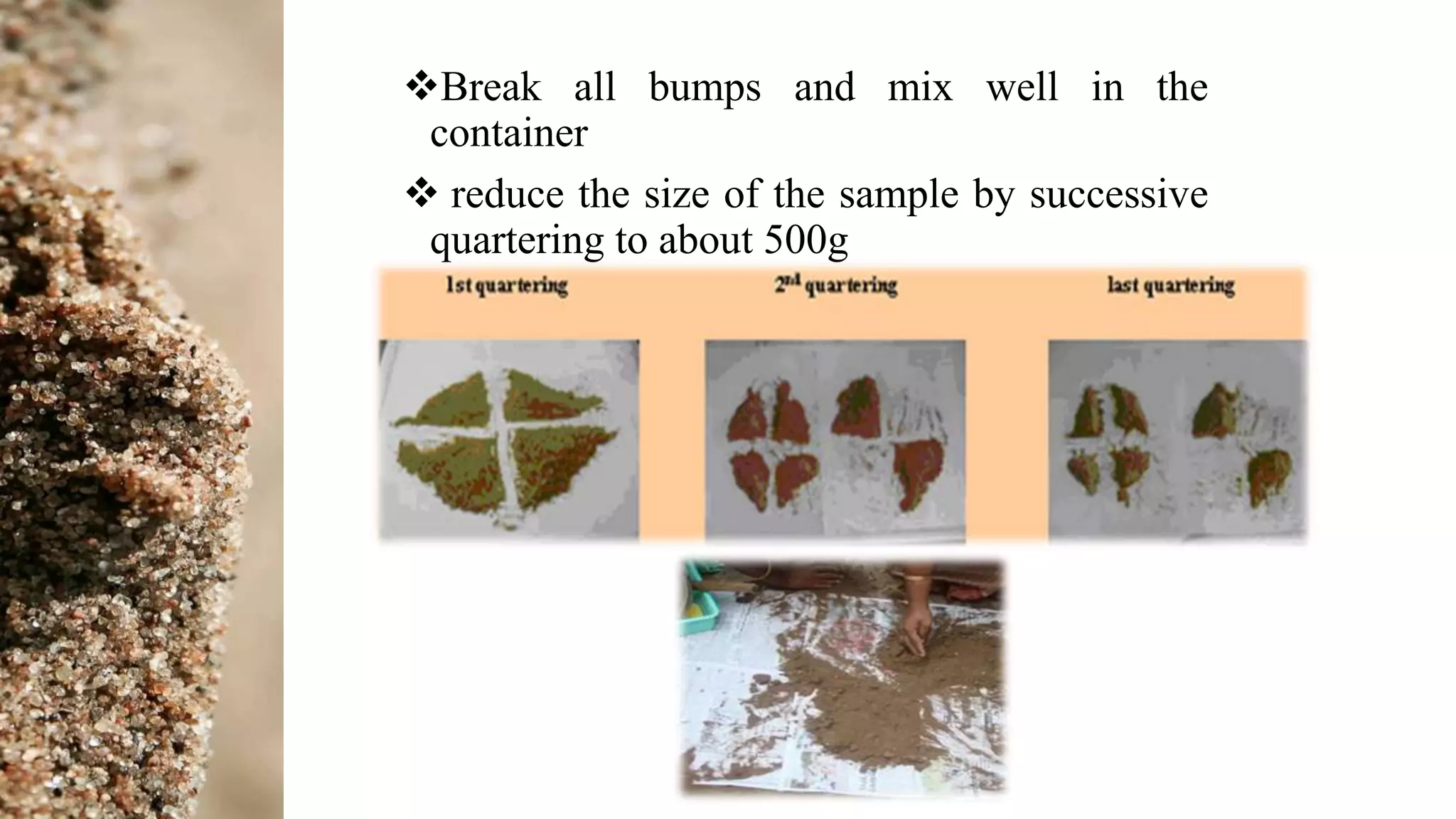
Break all bumps and mix well in the
container
 reduce the size of the sample by successive
quartering to about 500g
Dry the sample in shade for 1-2 hours by spreading over a
paper or a polythene sheet
Use polythene bags for bagging the sample
Then put it in a cloth bag
Fine a paper tag for identification
Fill the information sheet and send it along with soil
sample to the soil testing laboratory
Information sheet contain
following details
1. Name of the person, address
2. Village, district, survey number
3. Wet/dry/garden land
4. Area of the field
5. Depth of sampling
6. Processed crop or variety
7. existing crop or variety
8. Cropping history of the field for 3 years
9. Signature of farmer
General Rules for Water Sampling
Do Not:
 Contaminate the bottle by touching the inside of the
bottle.
 Contaminate the bottle lid by touching the inside rim.
 Put the bottle lid on the ground while sampling.
 Rinse the bottle.
Transport aquatic facility water samples with other
water samples, e.g. effluent or drinking water.
Always:
Collect microbiological samples before
collecting other samples.
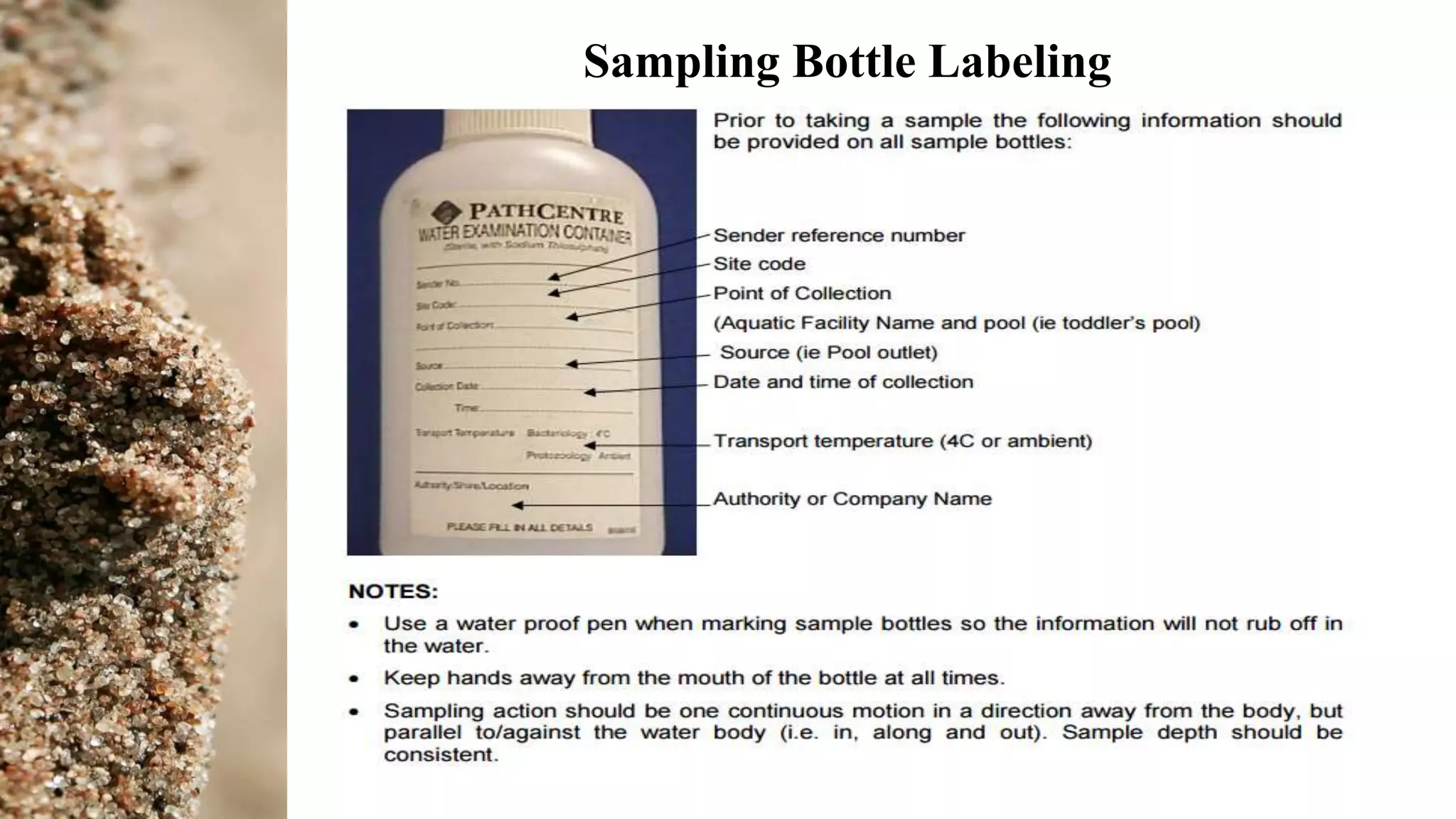
Label the bottle before sampling.
Discard damaged or contaminated bottles. If
in doubt throw it out and take sample in a
new bottle.
Wash your hands thoroughly before and
collecting samples.
Take extra care to avoid contaminating the
sample container and water sample.
Sampling Bottle Labeling
Sampling Methods
There are two methods of water sampling
Static system
Dynamic system
A static system is one which does not change much
with time. It must be sampled so that the sample
reflects all the inhomogeneity of the system
A dynamic system is one whose content changes with
time. When a river or a waste effluent stream is to be
characterized, its concentration will probably change
over a period of minutes, days, or hours.
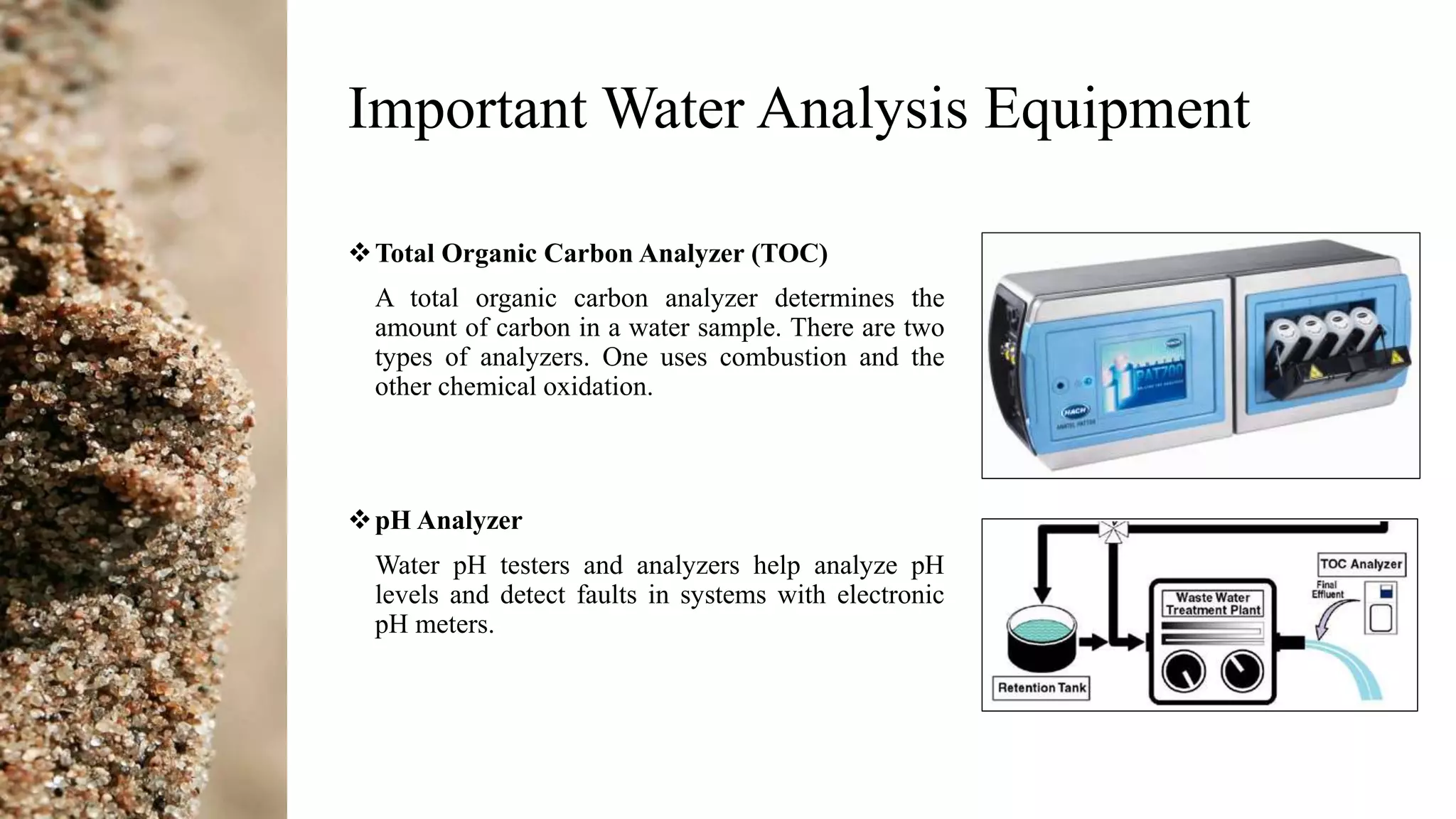
Important Water Analysis Equipment
Total Organic Carbon Analyzer (TOC)
A total organic carbon analyzer determines the
amount of carbon in a water sample. There are two
types of analyzers. One uses combustion and the
other chemical oxidation.
pH Analyzer
Water pH testers and analyzers help analyze pH
levels and detect faults in systems with electronic
pH meters.
Tips for soil and water sampling

Tips for soil and water sampling

  • 1.
    Tips for soiland water sampling
  • 2.
    Out line Sampling Factors InfluenceSampling Errors in Sampling Tools for sampling
  • 3.
    Why Sample? Get informationabout large populations Lower cost More accuracy of results High speed of data collection Availability of Population elements. Less field time When it’s impossible to study the whole population
  • 4.
    FACTORS INFLUENCE SAMPLING……. 3 factorsthat influence sample representative-ness Sampling procedure Sample size Participation (response) When might you sample the entire population? When your population is very small When you have extensive resources When you don’t expect a very high response
  • 5.
    The sample mustbe:  representative of the population;  appropriately sized (the larger the better);  unbiased; random (selections occur by chance); What is Good Sample? Merits of Sampling Size of population Fund required for the study Facilities Time
  • 6.
  • 7.
    Errors in Sampling Non-ObservationErrors:- Sampling error: naturally occurs Coverage error: people sampled do not match the population of interest Non-response: won’t or can’t participate
  • 8.
    Errors of Observation Respondenterror: respondents have difficult time answering the question Measurement error: inaccurate responses when person doesn’t understand question or poorly worded question Errors in data collection
  • 9.
    The top layerof the earth's surface in which plants can grow, consisting of rock and mineral particles mixed with decayed organic matter and having the capability of retaining water. SOIL
  • 10.
    Soil profile horizon Itis the vertical section of the soil from the ground surface downwards to where the soil meets the underlying rock. They are the layers of the different types of soil found at different depths in the soil profile.
  • 11.
    soil sampling Main purposeis to evaluate the fertility status of the soil It provide a basis for fertilizer, lime and gypsum recommendation Take sample from , 15 cm depth- ordinary crop 25 cm depth- perennial crop 5 cm depth-pasture and Lawn In line sown crop, take sample between the line
  • 12.
    Soil Sampling Tools 1.Soilsampling probe (tube) A soil probe works best in well cultivated soils without rocks but is difficult to use in rocky, very dry or very wet soil, Soil probe provides a continuous soil core with minimal disturbance to the soil
  • 13.
    2.Auger An auger isbetter for less well cultivated or rocky soils. Commonly used for obtaining disturbed soil samples at or near the surface.
  • 14.
    3. Shovel If thesoil texture is very coarse or there are many coarse fragments, a shovel can be used instead of a soil sampling tube or auger.
  • 15.
    Procedure for sampling Scrapethe litter from the surface of the soil Then dig a ‘V’ shaped cut to the required depth(15-20cm) Cut a thin slice(1 inch) from one side of the hole Collect the soil and put it in a clean bucket Collect atleast 10 samples like this
  • 16.
    Break all bumpsand mix well in the container  reduce the size of the sample by successive quartering to about 500g
  • 17.
    Dry the samplein shade for 1-2 hours by spreading over a paper or a polythene sheet Use polythene bags for bagging the sample Then put it in a cloth bag Fine a paper tag for identification Fill the information sheet and send it along with soil sample to the soil testing laboratory
  • 18.
    Information sheet contain followingdetails 1. Name of the person, address 2. Village, district, survey number 3. Wet/dry/garden land 4. Area of the field 5. Depth of sampling 6. Processed crop or variety 7. existing crop or variety 8. Cropping history of the field for 3 years 9. Signature of farmer
  • 19.
    General Rules forWater Sampling Do Not:  Contaminate the bottle by touching the inside of the bottle.  Contaminate the bottle lid by touching the inside rim.  Put the bottle lid on the ground while sampling.  Rinse the bottle. Transport aquatic facility water samples with other water samples, e.g. effluent or drinking water.
  • 20.
    Always: Collect microbiological samplesbefore collecting other samples. Label the bottle before sampling. Discard damaged or contaminated bottles. If in doubt throw it out and take sample in a new bottle. Wash your hands thoroughly before and collecting samples. Take extra care to avoid contaminating the sample container and water sample.
  • 21.
  • 22.
    Sampling Methods There aretwo methods of water sampling Static system Dynamic system
  • 23.
    A static systemis one which does not change much with time. It must be sampled so that the sample reflects all the inhomogeneity of the system A dynamic system is one whose content changes with time. When a river or a waste effluent stream is to be characterized, its concentration will probably change over a period of minutes, days, or hours.
  • 24.
    Important Water AnalysisEquipment Total Organic Carbon Analyzer (TOC) A total organic carbon analyzer determines the amount of carbon in a water sample. There are two types of analyzers. One uses combustion and the other chemical oxidation. pH Analyzer Water pH testers and analyzers help analyze pH levels and detect faults in systems with electronic pH meters.

Editor's Notes