Geotechnical Engineering
Laboratory 1
Disturbed Soil Sampling,
Labelling and Storage
Objective:
To obtain soil sample and proper handling and
storage for testing.
Discussion:
Disturbed soil sampling is an important factor
in the determination of the properties of soil. The
correct method of sampling will lead to more
accurate results in the determination of soil
properties and structure. The storage of a sample,
after it has been obtained, is as important as sampling
itself. If the storage is not done adequately it will lead
to a change in some of the properties of the sample.
The labelling of a sample is necessary for easy
identification of the sample and to avoid confusion if
different persons undertake the sampling and testing
ofthe soil sample. A better filing of soil samples will
also mean better control of data acquisition.
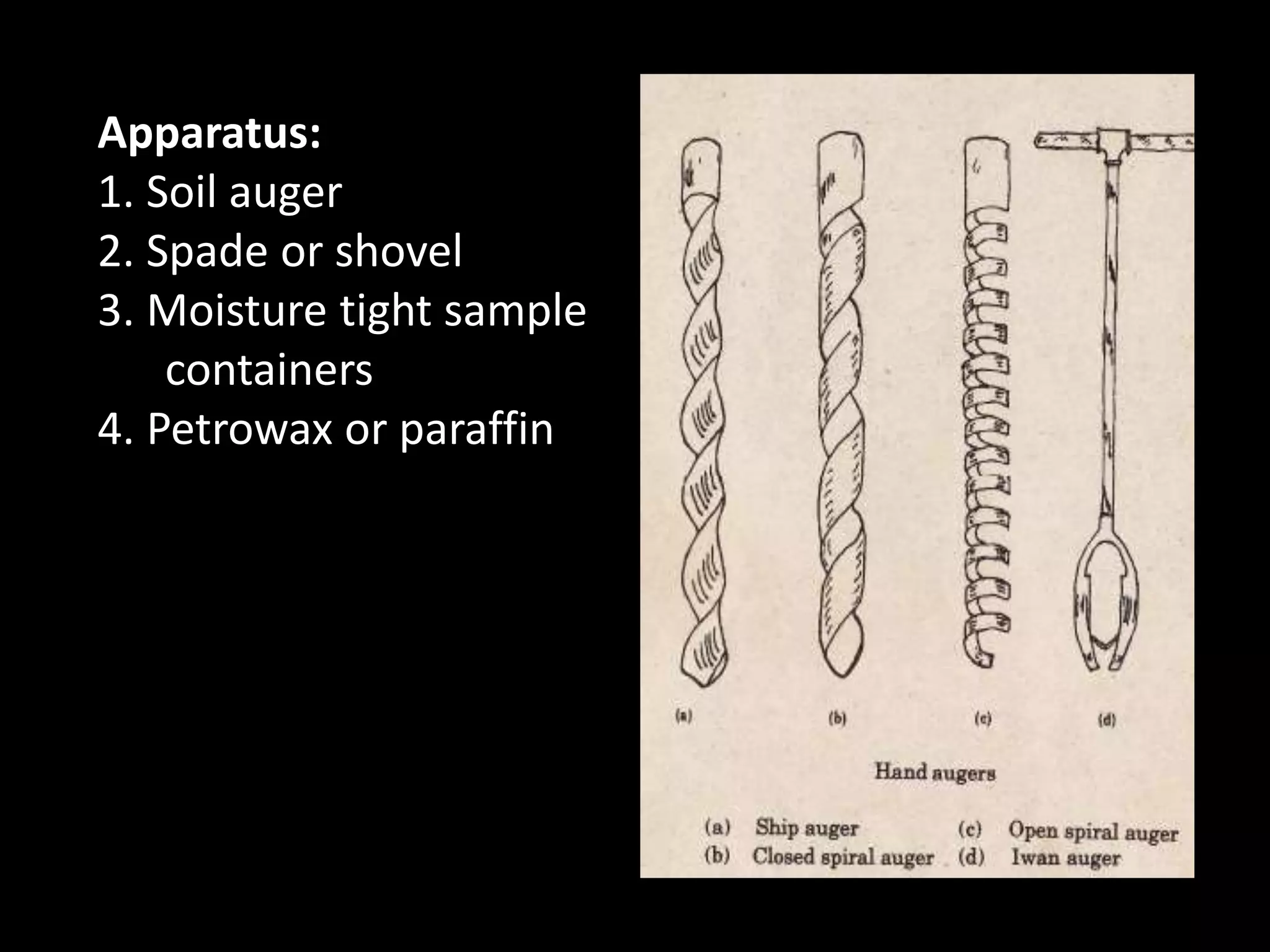
Apparatus:
1. Soil auger
2. Spade or shovel
3. Moisture tight sample
containers
4. Petrowax or paraffin
Procedure:
1. Clear the area of grass and vegetation where the
sample is to be obtained.
2. With the use of soil auger, the soil is bored until
desired depth is reached and obtain a disturbed
sample.
3. Record the depth of each type of soil strata.
4. If an undisturbed sample is to be obtained a large
hole should be dug but the middle portion of the
hole ig not taken out.
5. Trim the middle portion of the soil until exact size is
obtained. Make sure that the sides are enclosed in a
container to prevent crumbling.
7. Place a cover of paraffin wax or other means of
covering on the sample. Classify and label the
sample.
8. Place the soil in a container with adequate space
such as canvass, bags, cans and bins for large
quantities and glass jars for small samples.
9. Place a label on sample and prepare the
corresponding sample data for filing purposes. .
10. For disturbed sample, cover sample with petrowax
or parafin after it has been placed in a container.
11. Store sample in a cool room.
12. Plot the soil profile based on the record of each
group.
Geotech lab 1
Geotech lab 1
Geotech lab 1

Geotech lab 1

  • 1.
    Geotechnical Engineering Laboratory 1 DisturbedSoil Sampling, Labelling and Storage
  • 2.
    Objective: To obtain soilsample and proper handling and storage for testing.
  • 3.
    Discussion: Disturbed soil samplingis an important factor in the determination of the properties of soil. The correct method of sampling will lead to more accurate results in the determination of soil properties and structure. The storage of a sample, after it has been obtained, is as important as sampling itself. If the storage is not done adequately it will lead to a change in some of the properties of the sample. The labelling of a sample is necessary for easy identification of the sample and to avoid confusion if different persons undertake the sampling and testing ofthe soil sample. A better filing of soil samples will also mean better control of data acquisition.
  • 4.
    Apparatus: 1. Soil auger 2.Spade or shovel 3. Moisture tight sample containers 4. Petrowax or paraffin
  • 5.
    Procedure: 1. Clear thearea of grass and vegetation where the sample is to be obtained. 2. With the use of soil auger, the soil is bored until desired depth is reached and obtain a disturbed sample. 3. Record the depth of each type of soil strata. 4. If an undisturbed sample is to be obtained a large hole should be dug but the middle portion of the hole ig not taken out. 5. Trim the middle portion of the soil until exact size is obtained. Make sure that the sides are enclosed in a container to prevent crumbling.
  • 6.
    7. Place acover of paraffin wax or other means of covering on the sample. Classify and label the sample. 8. Place the soil in a container with adequate space such as canvass, bags, cans and bins for large quantities and glass jars for small samples. 9. Place a label on sample and prepare the corresponding sample data for filing purposes. . 10. For disturbed sample, cover sample with petrowax or parafin after it has been placed in a container. 11. Store sample in a cool room. 12. Plot the soil profile based on the record of each group.