Sample preparation and
Presentation
    XRD Webinar June 19 2012
Contents
 The goal of sample preparation
 Different analytical questions may
 require different sample preparation
 techniques
 Sample related issues in X-ray
 diffraction
 An overview of various sample
 preparation and presentation
 techniques
 Some Special cases
An ideal ‘powder’
  Consists of very many, randomly
  oriented crystallites
  Depending on the analytical needs the
  optimal crystallite size may vary from
  40µm down to <1µm
  Crystallites too big
  Unreliable intensities
  Crystallite size of 40µm only 12 crystals
  contributing to the intensity profile at any
  time
  To obtain a 1% you need about 53000
  contributing crystals
An ideal powder
  Particles too small, or wrongly ground
  Peaks get broader at the cost of the
  maximum intensity
  Crystallites not randomly oriented
  (preferred orientation, or texture)
  Deviating relative intensities
  One very dominant orientation
  Sometimes just one reflection is visible
  (Mica and Muscovite, for example)
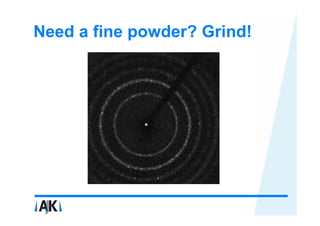
Need a fine powder? Grind!
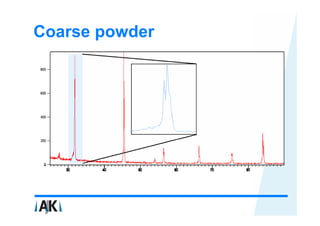
Coarse powder
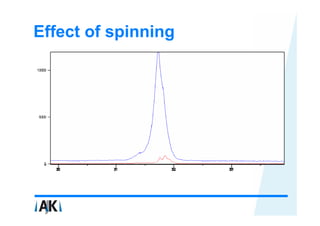
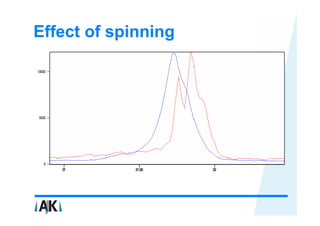
Effect of spinning
Effect of spinning
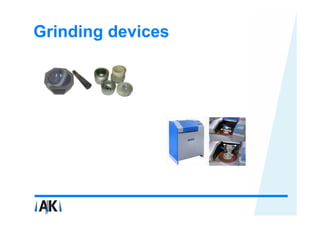
Grinding devices
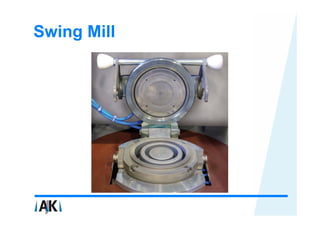
Swing Mill
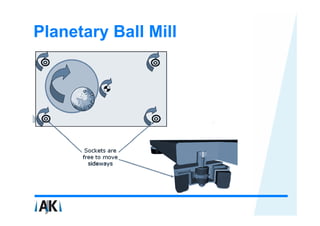
Planetary Ball Mill
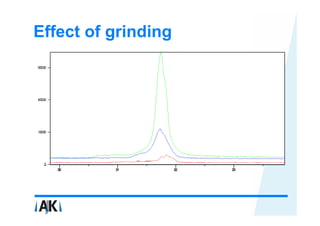
Effect of grinding
Issues to pay attention to
  Take care that you grinding doesn’t
  affect the crystal structure, or
  induces strain into the crystallites
  (pharmaceuticals, but also cryolite;
  the solvent of alumina for the
  elctrolysis must be dealt with
  carefully)
  The material of the grinding vessel
  is of paramount importance
  (Cross) Contamination
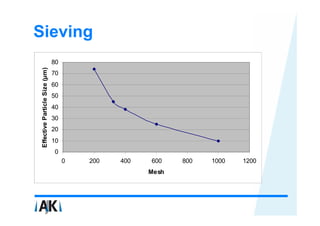
Sieving
                                80
 Effective Particle Size (µm)


                                70
                                60
                                50
                                40
                                30
                                20
                                10
                                0
                                     0   200   400   600    800   1000   1200
                                                     Mesh
Preparing a flat specimen
  Cavity front loading
  Cavity Back loading
  Spray (atomizing) (on a zero
  background holder)
  Suspending (on a zero background
  holder)
  Side drifting
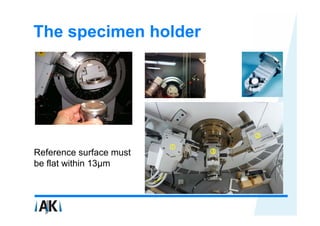
The specimen holder


Reference surface must
be flat within 13µm
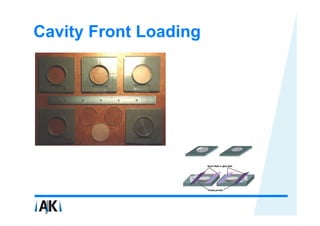
Cavity Front Loading
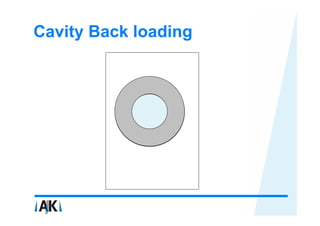
Cavity Back loading
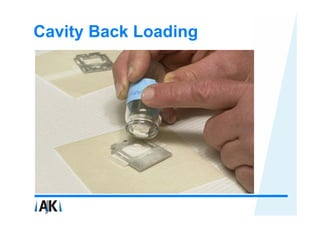
Cavity Back Loading
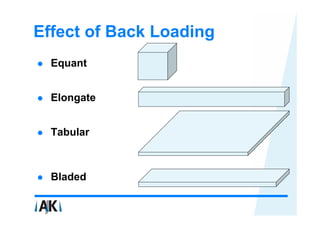
Effect of Back Loading
  Equant


  Elongate


  Tabular


  Bladed
Effect of Back loading
  For Equant particle shape the effect
  of Back Loading versus Front
  Loading is small and BL is usually
  not needed
  For Elongate and Tabular shapes
  the effect of BL is not always
  sufficient
  Most effect of BL is expected for
  Bladed particle shape
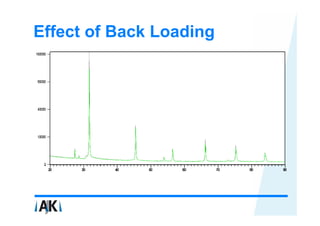
Effect of Back Loading
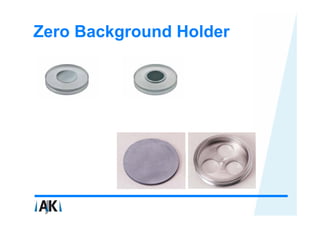
Zero Background holder
 Needed when:
 Sample is transparent to X-rays
 Very small amount of sample is
 available and the specimen must be
 presented as a flat plate
 Sample cannot be packed properly
Zero Background Holder
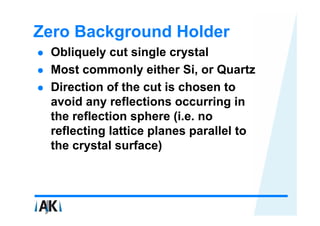
 Obliquely cut single crystal
 Most commonly either Si, or Quartz
 Direction of the cut is chosen to
 avoid any reflections occurring in
 the reflection sphere (i.e. no
 reflecting lattice planes parallel to
 the crystal surface)
Zero Background Holder
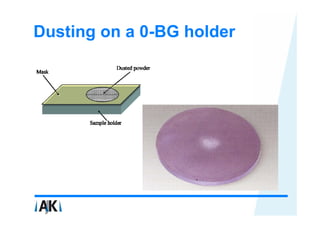
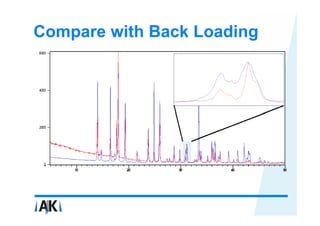
Dusting on a 0-BG holder
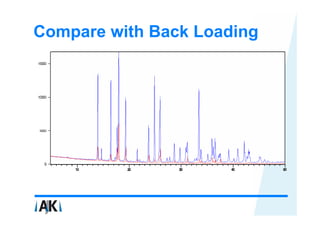
Compare with Back Loading
Alternative Presentations
  Protect the specimen during the
  measurement
  Specimen presentation for
  transmission measurements
  Capillaries
Protecting your specimen
  Mount your specimen in a reaction
  chamber (the Anton Paar XRK900,
  for example) and flush with an inert
  gas
  Cover your specimen with a
  transparent foil, which does not
  give a diffraction pattern
  Mount the specimen inside a glass
  capillary tube (Mark tube)
Transmission
 Het monster wordt in een holle ring
 tussen twee folieën geklemd
 De folieën worden m.b.v. drie in
 elkaar passende ringen (vaak teflon)
 gespannen
 Of het monster wordt in een capillair
 gemonteerd
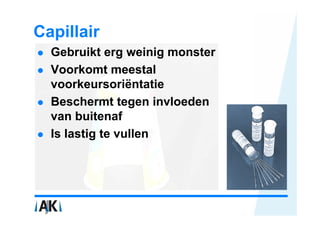
Capillair
  Gebruikt erg weinig monster
  Voorkomt meestal
  voorkeursoriëntatie
  Beschermt tegen invloeden
  van buitenaf
  Is lastig te vullen

Sample preparation and Presentation XRD Webinar June 19 2012 AJK Analytical Services

  • 1.
    Sample preparation and Presentation XRD Webinar June 19 2012
  • 2.
    Contents The goalof sample preparation Different analytical questions may require different sample preparation techniques Sample related issues in X-ray diffraction An overview of various sample preparation and presentation techniques Some Special cases
  • 3.
    An ideal ‘powder’ Consists of very many, randomly oriented crystallites Depending on the analytical needs the optimal crystallite size may vary from 40µm down to <1µm Crystallites too big Unreliable intensities Crystallite size of 40µm only 12 crystals contributing to the intensity profile at any time To obtain a 1% you need about 53000 contributing crystals
  • 4.
    An ideal powder Particles too small, or wrongly ground Peaks get broader at the cost of the maximum intensity Crystallites not randomly oriented (preferred orientation, or texture) Deviating relative intensities One very dominant orientation Sometimes just one reflection is visible (Mica and Muscovite, for example)
  • 5.
    Need a finepowder? Grind!
  • 6.
  • 7.
  • 8.
  • 9.
  • 10.
  • 11.
  • 12.
  • 13.
    Issues to payattention to Take care that you grinding doesn’t affect the crystal structure, or induces strain into the crystallites (pharmaceuticals, but also cryolite; the solvent of alumina for the elctrolysis must be dealt with carefully) The material of the grinding vessel is of paramount importance (Cross) Contamination
  • 14.
    Sieving 80 Effective Particle Size (µm) 70 60 50 40 30 20 10 0 0 200 400 600 800 1000 1200 Mesh
  • 15.
    Preparing a flatspecimen Cavity front loading Cavity Back loading Spray (atomizing) (on a zero background holder) Suspending (on a zero background holder) Side drifting
  • 16.
    The specimen holder Referencesurface must be flat within 13µm
  • 17.
  • 18.
  • 19.
  • 20.
    Effect of BackLoading Equant Elongate Tabular Bladed
  • 21.
    Effect of Backloading For Equant particle shape the effect of Back Loading versus Front Loading is small and BL is usually not needed For Elongate and Tabular shapes the effect of BL is not always sufficient Most effect of BL is expected for Bladed particle shape
  • 22.
  • 23.
    Zero Background holder Needed when: Sample is transparent to X-rays Very small amount of sample is available and the specimen must be presented as a flat plate Sample cannot be packed properly
  • 24.
    Zero Background Holder Obliquely cut single crystal Most commonly either Si, or Quartz Direction of the cut is chosen to avoid any reflections occurring in the reflection sphere (i.e. no reflecting lattice planes parallel to the crystal surface)
  • 25.
  • 26.
    Dusting on a0-BG holder
  • 27.
  • 28.
  • 29.
    Alternative Presentations Protect the specimen during the measurement Specimen presentation for transmission measurements Capillaries
  • 30.
    Protecting your specimen Mount your specimen in a reaction chamber (the Anton Paar XRK900, for example) and flush with an inert gas Cover your specimen with a transparent foil, which does not give a diffraction pattern Mount the specimen inside a glass capillary tube (Mark tube)
  • 31.
    Transmission Het monsterwordt in een holle ring tussen twee folieën geklemd De folieën worden m.b.v. drie in elkaar passende ringen (vaak teflon) gespannen Of het monster wordt in een capillair gemonteerd
  • 32.
    Capillair Gebruikterg weinig monster Voorkomt meestal voorkeursoriëntatie Beschermt tegen invloeden van buitenaf Is lastig te vullen