Recommended
PPTX
Disaster_Management_ubhPresentation.pptx
PPTX
Natural Disasters: Natural disasters are primarily natural events. The natura...
PPT
PPTX
Disaster_management_ppt.pptx
PPTX
SEA – DISASTER MANAGEMENT.pptx . Awakening World
PPTX
disaster management ppt by vansh khurana 9th a.pptx
PDF
Marathon session of disaster management .pdf
PPTX
PPTX
future of the planet EarthNatural_Disaster_Management_Presentation.pptx
PDF
Disaster_Management_according_to_class_9
PPT
Disastermanagementppt 130128141146-phpapp02
PDF
disastermanagementppt-130128141146-phpapp02.pdf
PPT
PPTX
DISASowkwnkwkwkowjwowhbwTER MANAGEMENT.pptx
PPT
PPT
Disaster Management in India Past, Present and Future
PPTX
Disaster_management_ppt-60540371.pptx
PPTX
Disaster_management_.pptx
PPTX
Disaster_management_ppt.pptx
PPTX
DISASTER MANAGEMENT, types, steps and much more
PPT
Disastermanagementppt 130128141146-phpapp02
PDF
Disaster_Management_Project_for_Class_9_and_10_PDF_Download.pdf
PPT
PPTX
Data management value for money by class 10 .pptx
PPTX
Disaster Management key points and aspects.pptx
PPTX
Disaster_Management_Presentation_Class_12.pptx
PPT
Disaster management in india
PPT
DOCX
Holm Commnunity Heritage 2024 AGM Minutes (5.4.2024).docx
PPTX
Rainwater Harvesting System Methods - Retas Water Solutions
More Related Content
PPTX
Disaster_Management_ubhPresentation.pptx
PPTX
Natural Disasters: Natural disasters are primarily natural events. The natura...
PPT
PPTX
Disaster_management_ppt.pptx
PPTX
SEA – DISASTER MANAGEMENT.pptx . Awakening World
PPTX
disaster management ppt by vansh khurana 9th a.pptx
PDF
Marathon session of disaster management .pdf
PPTX
Similar to Disaster_Management_Detailed_25Slides.pptx
PPTX
future of the planet EarthNatural_Disaster_Management_Presentation.pptx
PDF
Disaster_Management_according_to_class_9
PPT
Disastermanagementppt 130128141146-phpapp02
PDF
disastermanagementppt-130128141146-phpapp02.pdf
PPT
PPTX
DISASowkwnkwkwkowjwowhbwTER MANAGEMENT.pptx
PPT
PPT
Disaster Management in India Past, Present and Future
PPTX
Disaster_management_ppt-60540371.pptx
PPTX
Disaster_management_.pptx
PPTX
Disaster_management_ppt.pptx
PPTX
DISASTER MANAGEMENT, types, steps and much more
PPT
Disastermanagementppt 130128141146-phpapp02
PDF
Disaster_Management_Project_for_Class_9_and_10_PDF_Download.pdf
PPT
PPTX
Data management value for money by class 10 .pptx
PPTX
Disaster Management key points and aspects.pptx
PPTX
Disaster_Management_Presentation_Class_12.pptx
PPT
Disaster management in india
PPT
Recently uploaded
DOCX
Holm Commnunity Heritage 2024 AGM Minutes (5.4.2024).docx
PPTX
Rainwater Harvesting System Methods - Retas Water Solutions
PDF
Step-by-Step Guides To Buy Verified Binance Accounts.pdf
PDF
Understanding User Concerns and Platform
PPTX
The Rachel Carson Quiz : Environment Ministry
PPTX
Forest governance and policy in the Philippines.pptx
PPTX
Untitlmmmmmmmmmmmmmmmmmmmmmmkkkkked.pptx
PPTX
Rooftop Rainwater Harvesting System.pptx
PPTX
Household Water Treatment & Safe Storage.pptx
PPTX
Meteorological drought analyze in upper Helmand sub river.pptx
PDF
animal science presentation agricultural
PDF
BIOLOGY PROJECT (study the competition between weeds and grass) (1).pdf
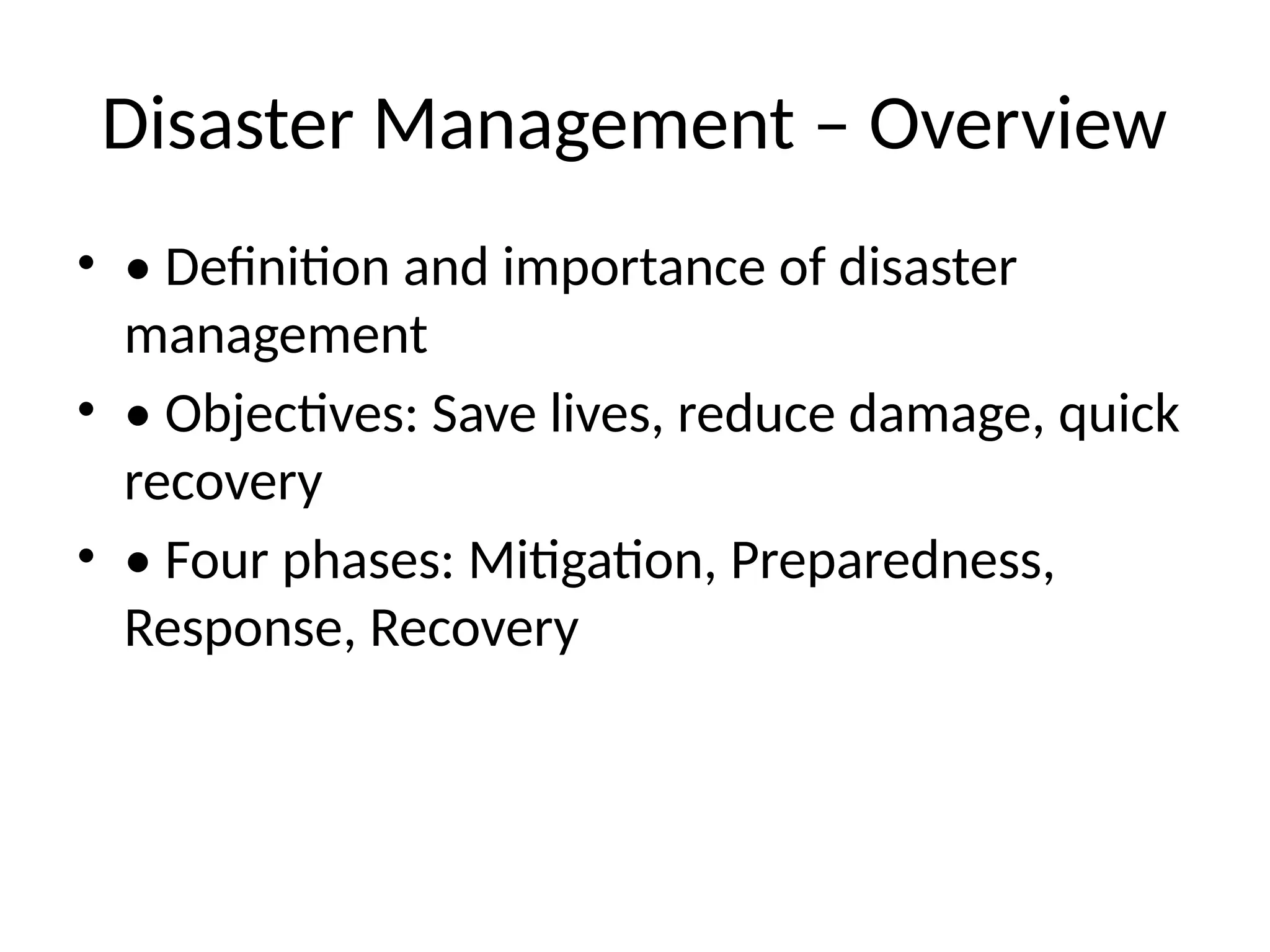
Disaster_Management_Detailed_25Slides.pptx 1. Disaster Management – Overview
• • Definition and importance of disaster
management
• • Objectives: Save lives, reduce damage, quick
recovery
• • Four phases: Mitigation, Preparedness,
Response, Recovery
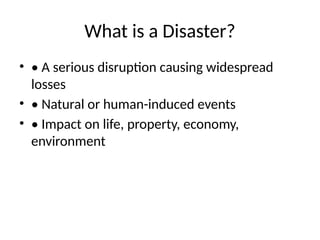
2. What is a Disaster?
• • A serious disruption causing widespread
losses
• • Natural or human-induced events
• • Impact on life, property, economy,
environment
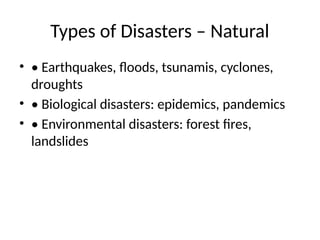
3. Types of Disasters – Natural
• • Earthquakes, floods, tsunamis, cyclones,
droughts
• • Biological disasters: epidemics, pandemics
• • Environmental disasters: forest fires,
landslides
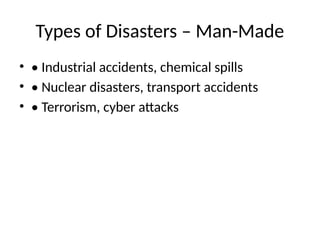
4. Types of Disasters – Man-Made
• • Industrial accidents, chemical spills
• • Nuclear disasters, transport accidents
• • Terrorism, cyber attacks
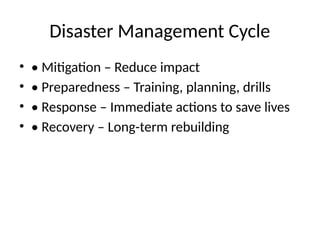
5. Disaster Management Cycle
• • Mitigation – Reduce impact
• • Preparedness – Training, planning, drills
• • Response – Immediate actions to save lives
• • Recovery – Long-term rebuilding
6. Prevention & Mitigation
• • Risk assessment and hazard mapping
• • Building codes and land-use planning
• • Infrastructure strengthening
7. Preparedness Measures
• • Community training and awareness
• • Mock drills and emergency planning
• • Resource stockpiling and coordination
8. Early Warning Systems
• • Weather monitoring technologies
• • Public alert systems (SMS, sirens, radio)
• • Role of IMD, NDMA, local authorities
9. 10. Search and Rescue Operations
• • NDRF, SDRF, police and community teams
• • Use of specialized equipment
• • Rapid response and evacuation
11. 12. Relief & Rehabilitation
• • Distribution of food, water, shelter
• • Rebuilding homes and infrastructure
• • Supporting affected families
13. Role of Government Agencies
• • NDMA, NDRF, State Disaster Authorities
• • Policy-making and coordination
• • Funding and emergency resource
management
14. Role of NGOs & Communities
• • Local volunteer groups
• • NGOs like Red Cross, UNICEF
• • Community resilience building
15. 16. GIS & Remote Sensing in Disaster
Mgmt
• • Mapping hazard zones
• • Damage assessment using satellite data
• • Supporting planning and mitigation
17. 18. Incident Command System (ICS)
• • Standardized emergency response structure
• • Roles and responsibilities clearly defined
• • Ensures coordination and clarity
19. Disaster Risk Reduction (DRR)
• • Reducing vulnerability
• • Improving capacity building
• • Implementing risk-based policies
20. Climate Change & Disaster Risks
• • Rising sea levels and extreme weather
• • Increased droughts and storms
• • Need for climate adaptation strategies
21. Urban Disaster Management
• • High population density risks
• • Smart city-based monitoring systems
• • Urban flood control and planning
22. School & Workplace Safety Plans
• • Evacuation routes and drills
• • Emergency response teams
• • Safety equipment and training
23. Case Study – Cyclone/Flood
Response
• • Example: Cyclone Fani / Chennai Floods
• • Steps taken by government and volunteers
• • Lessons learned
24. Lessons Learned & Best Practices
• • Early warnings save lives
• • Community participation is crucial
• • Coordination between agencies improves
outcomes
25. Conclusion – Building Resilient
Communities
• • Need for preparedness and mitigation
• • Technology-enabled disaster response
• • Stronger infrastructure and awareness