Dr. R.B. Yadav Dr. S.P.Singh
Course Coordinator Unit incharge
Associate Prof. Assistant Prof.
Dept. of Agronomy Dept. of Soil Science
1. We can start a diploma programme for one month
education upon soil testing analysis by fifty hundred
rupees per month.
2.We can provide better transport facilities related to
Our work..For example after testing we can send the
result of testing at our responsibility.
3.For advertisement I have also put ads in the
newspaper and weekly classified pages. All in all
,though ,my posters pinups have brought me the
majority of my customers.
4. along with each set of test results . I send a cover
letter and ,if the customer tells me where he or she saw
my ad, a plant pH-preference chart by this I could
know what is my feedback.
5.We can also open many collection centers on which
we can collect the soil sample on the basic level by this
we can collect and test many types of sample per day.
6. Purity in the work must be essential fallow al the
criteria of testing and analysis.
7.From my point of view this work is based on your
ability ,skill , knowledge and interest .
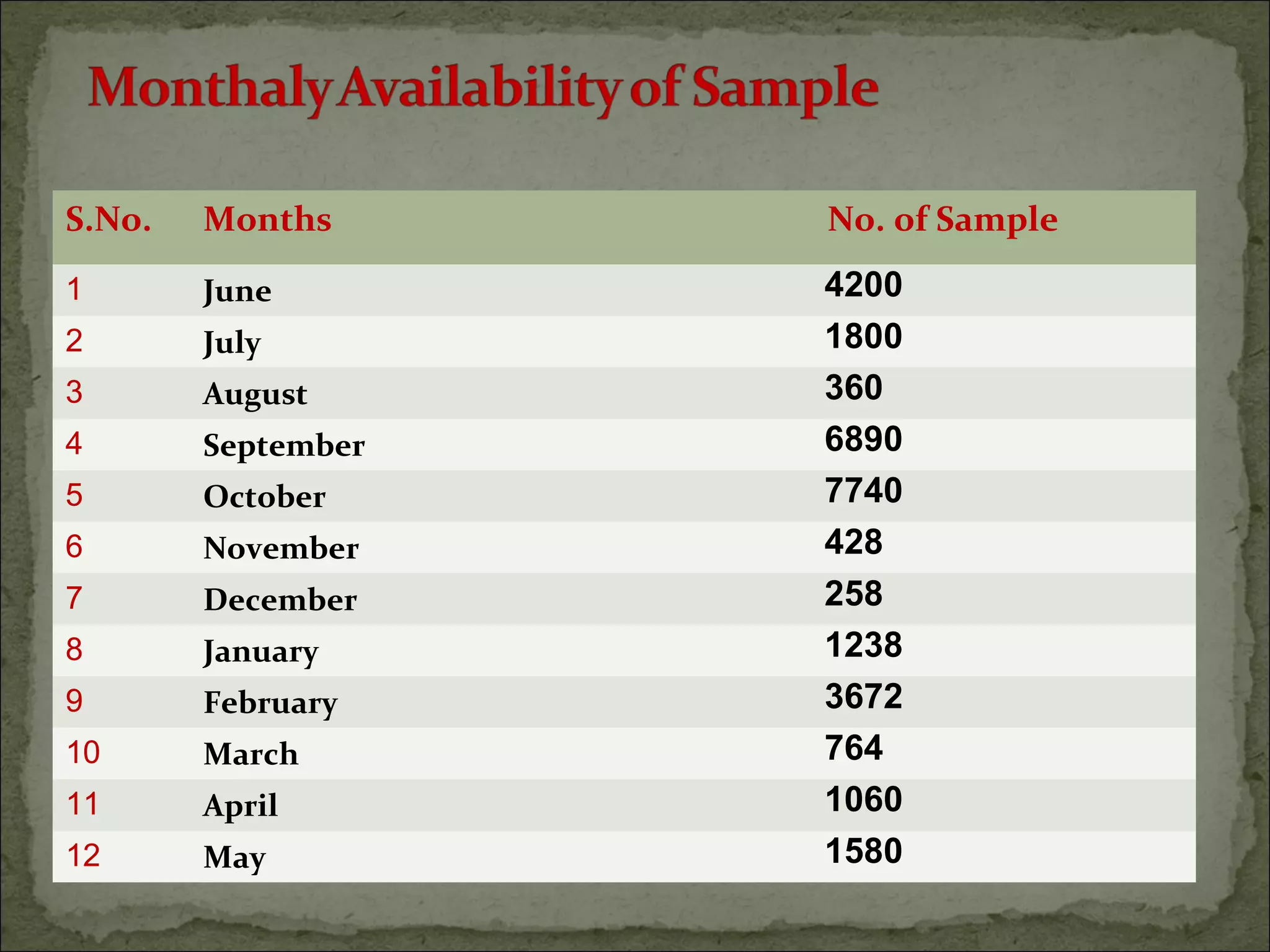
S.No. Months No. of Sample
1 June 4200
2 July 1800
3 August 360
4 September 6890
5 October 7740
6 November 428
7 December 258
8 January 1238
9 February 3672
10 March 764
11 April 1060
12 May 1580
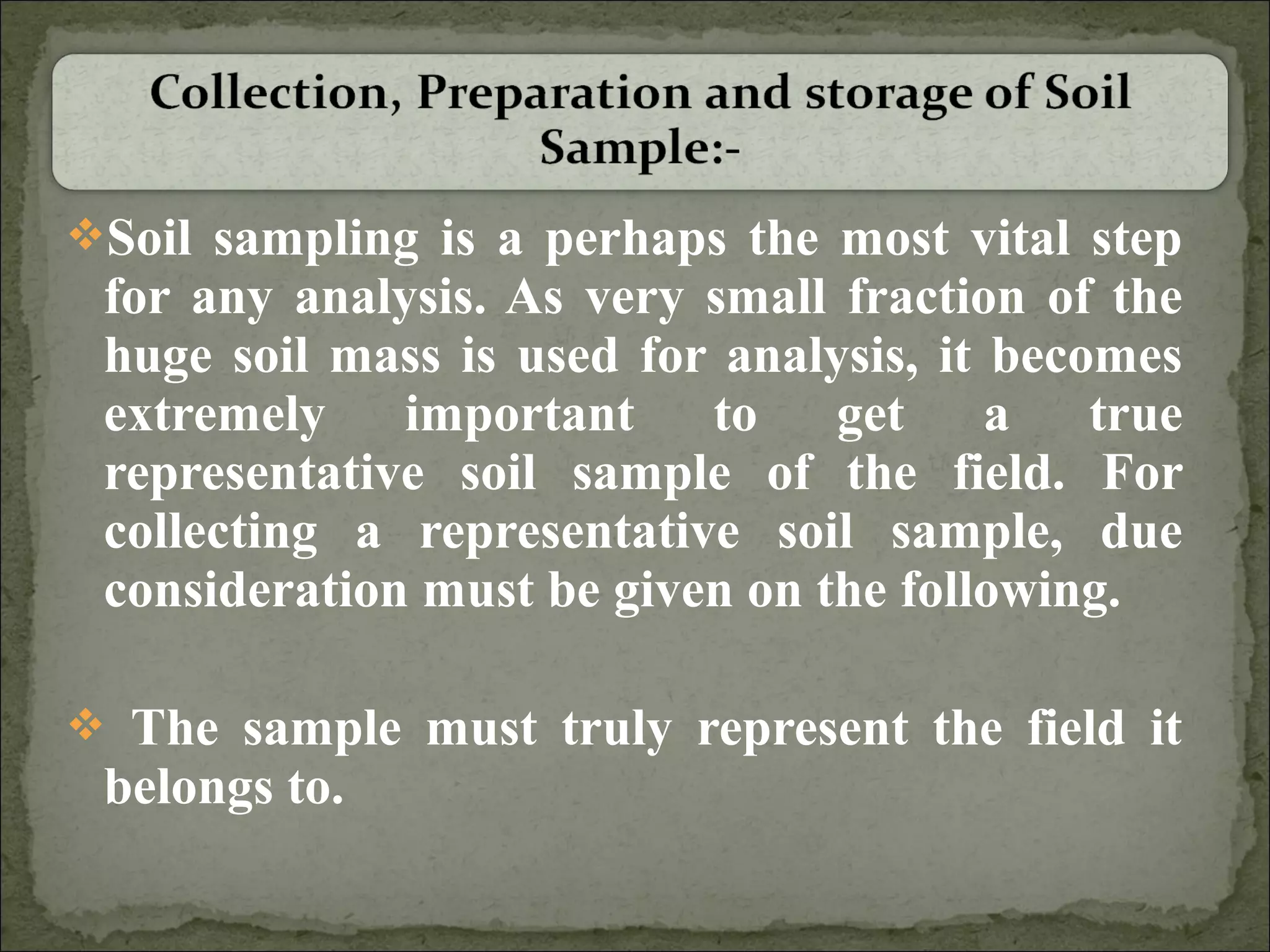
Soil sampling is a perhaps the most vital step
for any analysis. As very small fraction of the
huge soil mass is used for analysis, it becomes
extremely important to get a true
representative soil sample of the field. For
collecting a representative soil sample, due
consideration must be given on the following.
 The sample must truly represent the field it
belongs to.
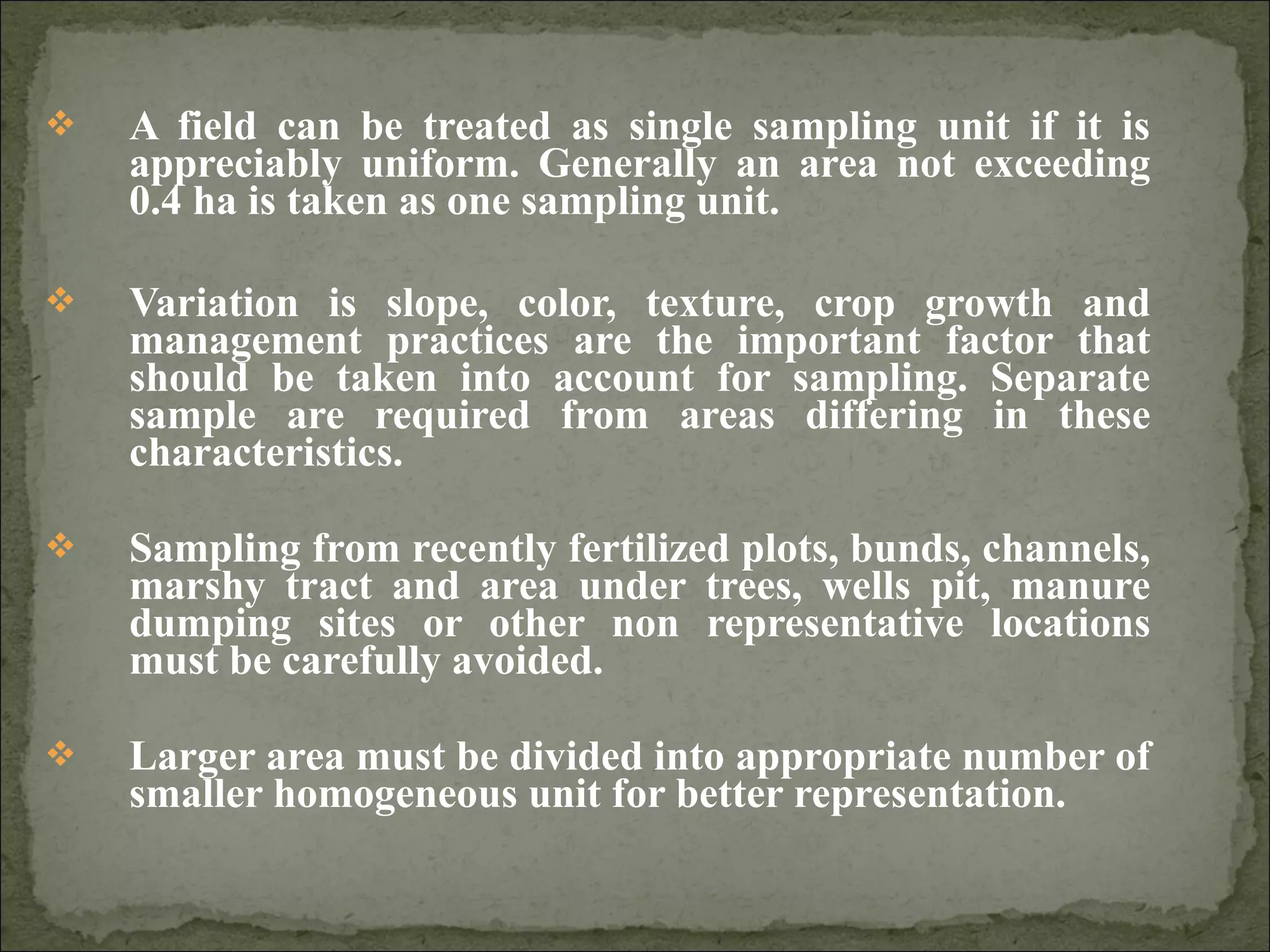
 A field can be treated as single sampling unit if it is
appreciably uniform. Generally an area not exceeding
0.4 ha is taken as one sampling unit.
 Variation is slope, color, texture, crop growth and
management practices are the important factor that
should be taken into account for sampling. Separate
sample are required from areas differing in these
characteristics.
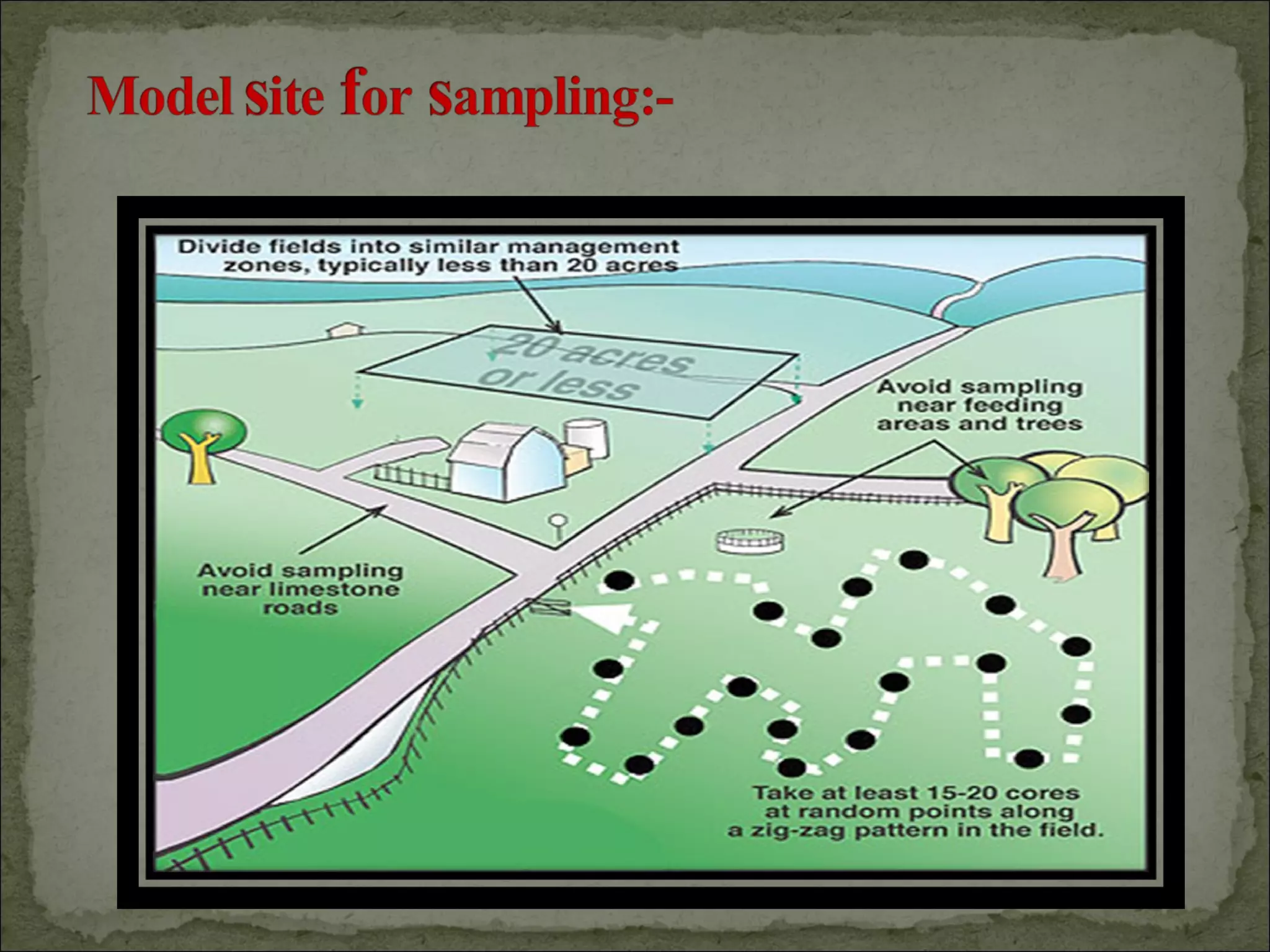
 Sampling from recently fertilized plots, bunds, channels,
marshy tract and area under trees, wells pit, manure
dumping sites or other non representative locations
must be carefully avoided.
 Larger area must be divided into appropriate number of
smaller homogeneous unit for better representation.
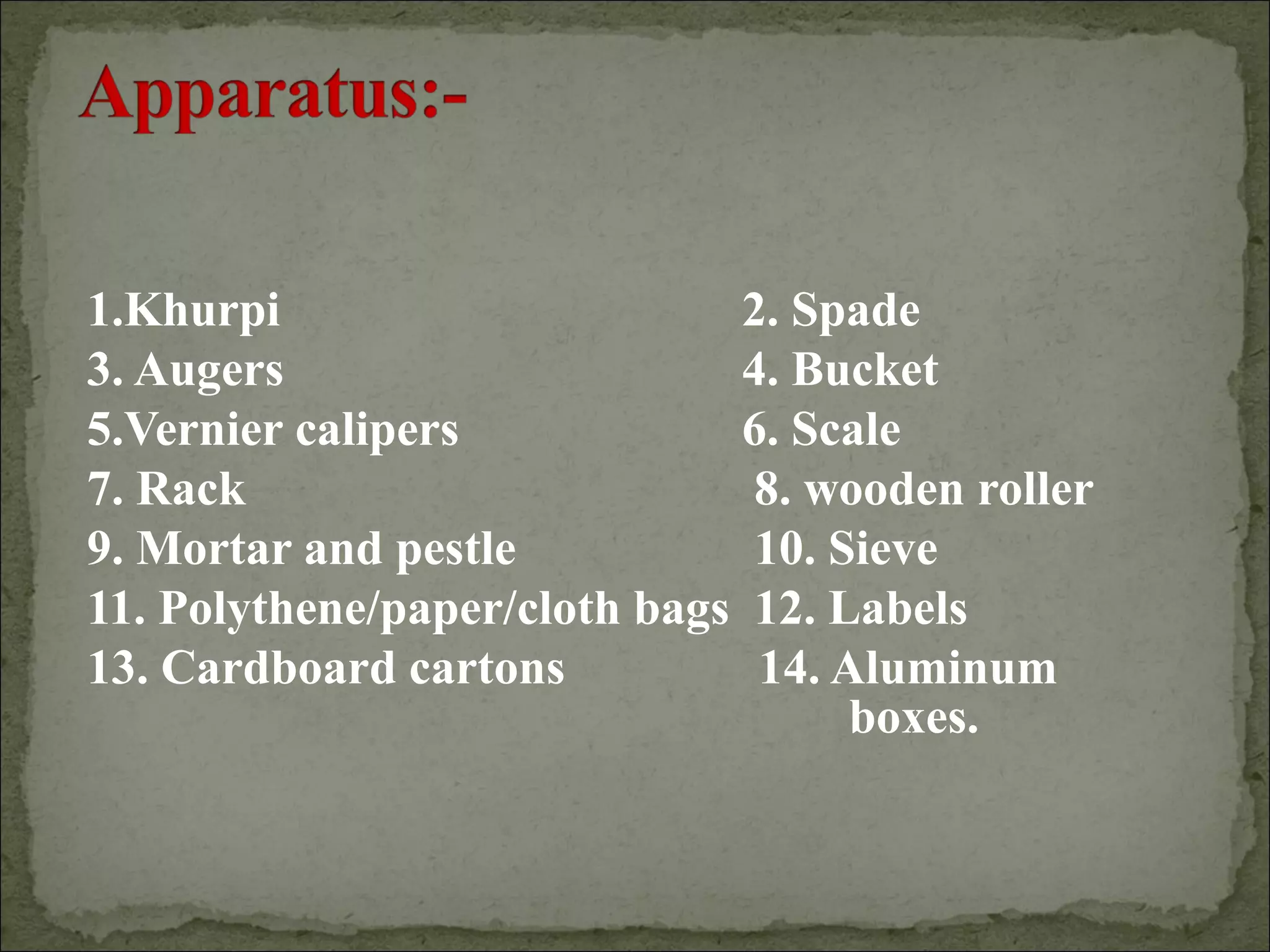
1.Khurpi 2. Spade
3. Augers 4. Bucket
5.Vernier calipers 6. Scale
7. Rack 8. wooden roller
9. Mortar and pestle 10. Sieve
11. Polythene/paper/cloth bags 12. Labels
13. Cardboard cartons 14. Aluminum
boxes.
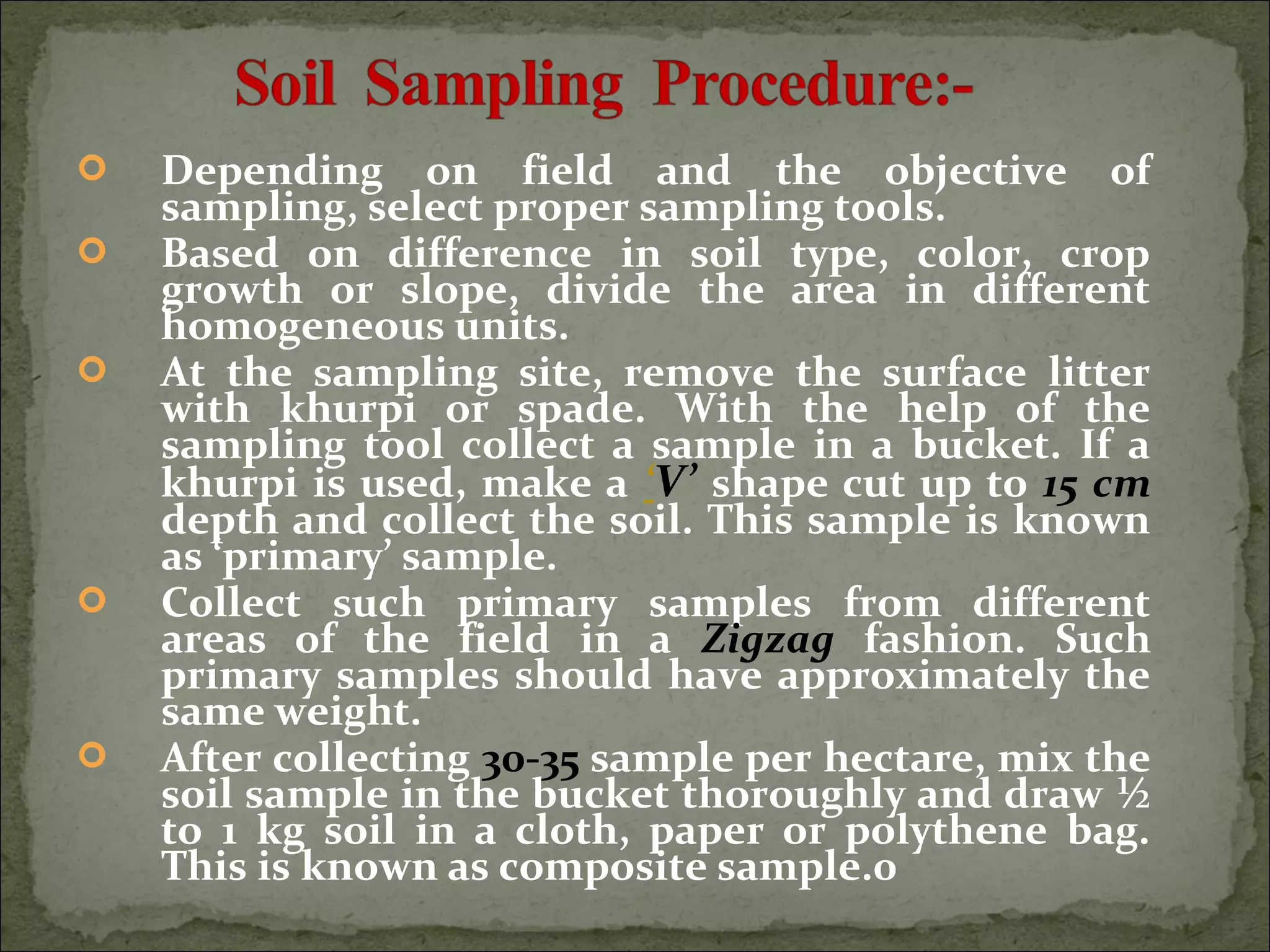
 Depending on field and the objective of
sampling, select proper sampling tools.
 Based on difference in soil type, color, crop
growth or slope, divide the area in different
homogeneous units.
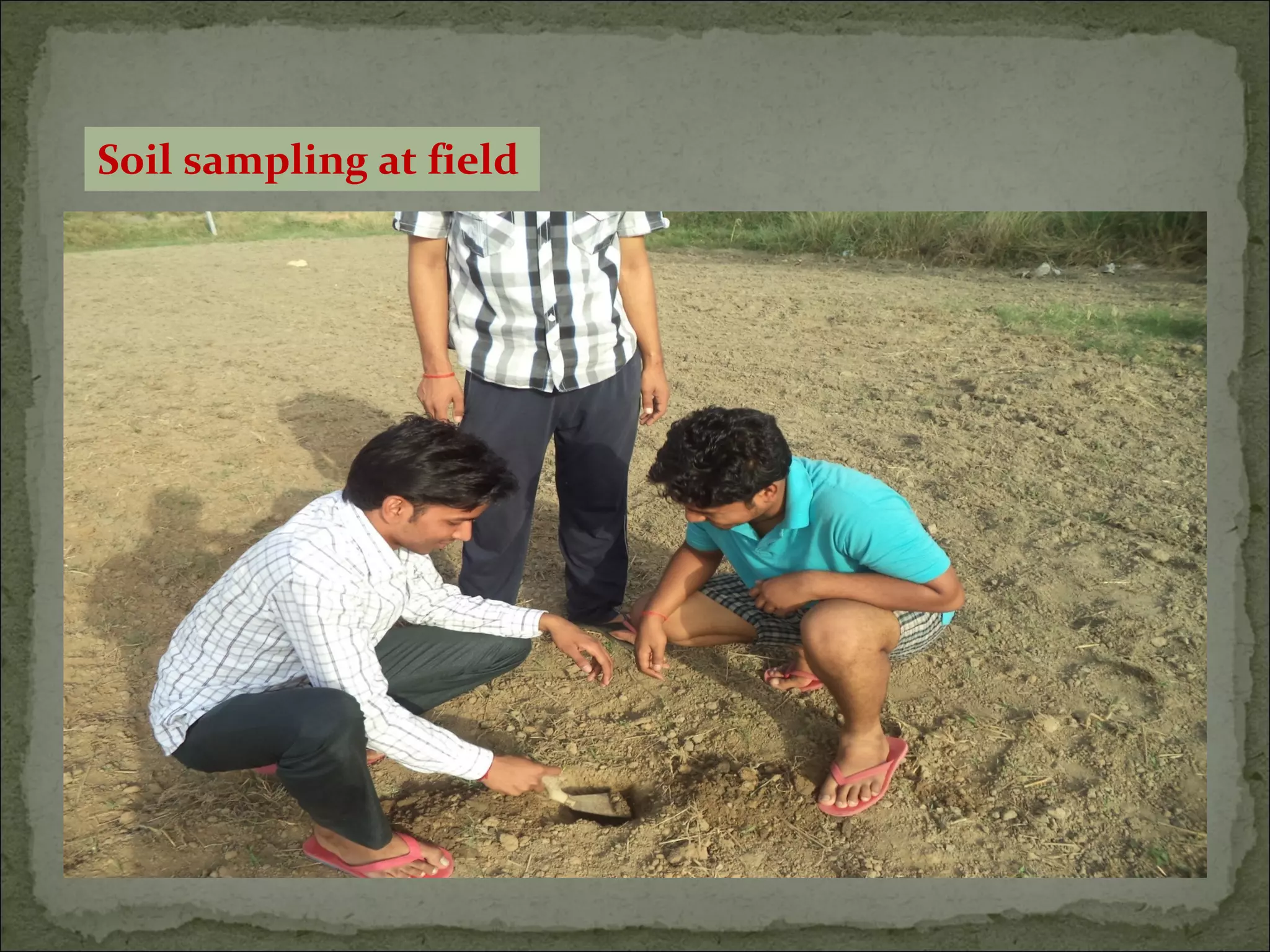
 At the sampling site, remove the surface litter
with khurpi or spade. With the help of the
sampling tool collect a sample in a bucket. If a
khurpi is used, make a ‘V’ shape cut up to 15 cm
depth and collect the soil. This sample is known
as ‘primary’ sample.
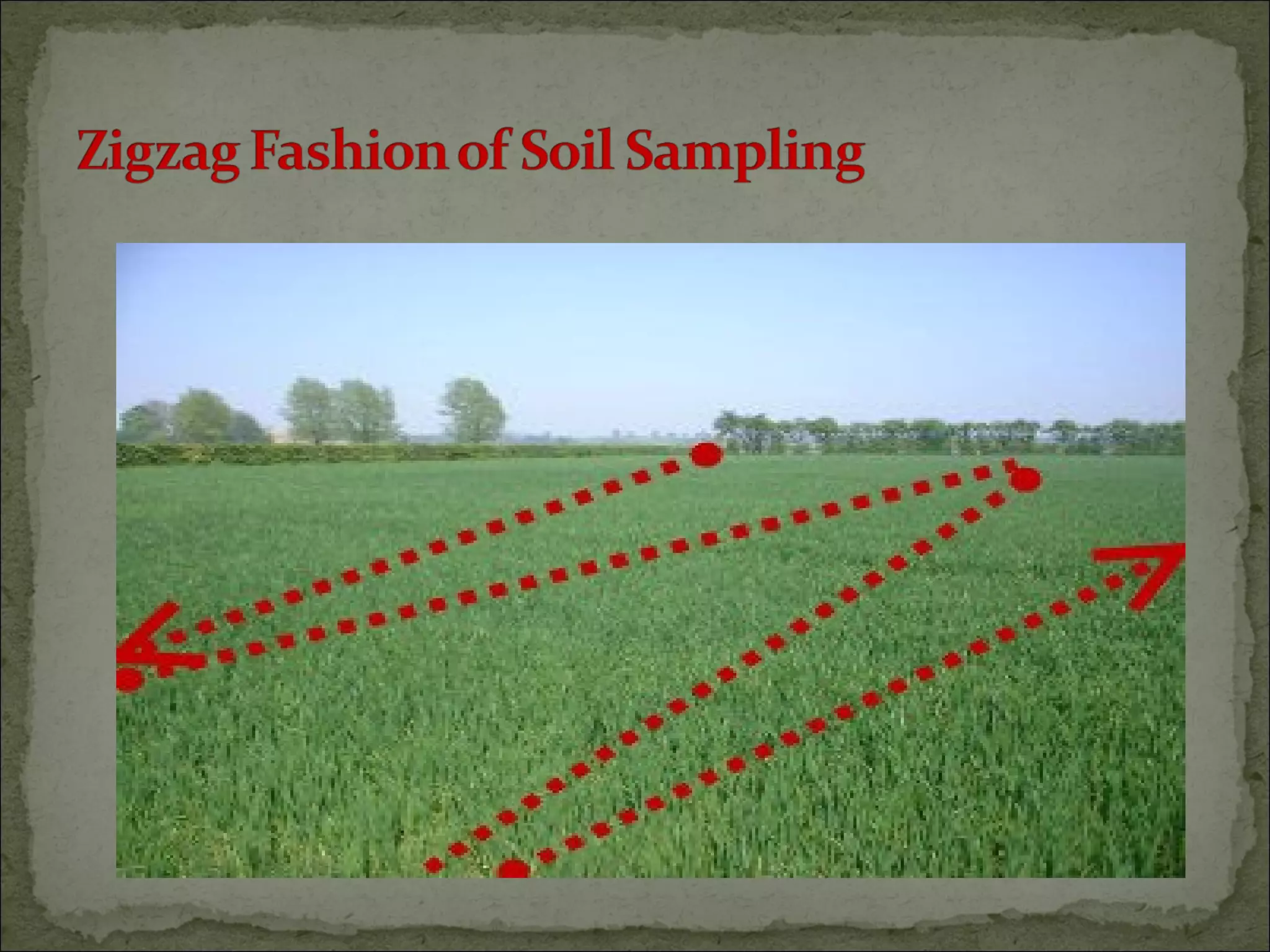
 Collect such primary samples from different
areas of the field in a Zigzag fashion. Such
primary samples should have approximately the
same weight.
 After collecting 30-35 sample per hectare, mix the
soil sample in the bucket thoroughly and draw ½
to 1 kg soil in a cloth, paper or polythene bag.
This is known as composite sample.0
Soil sampling at field
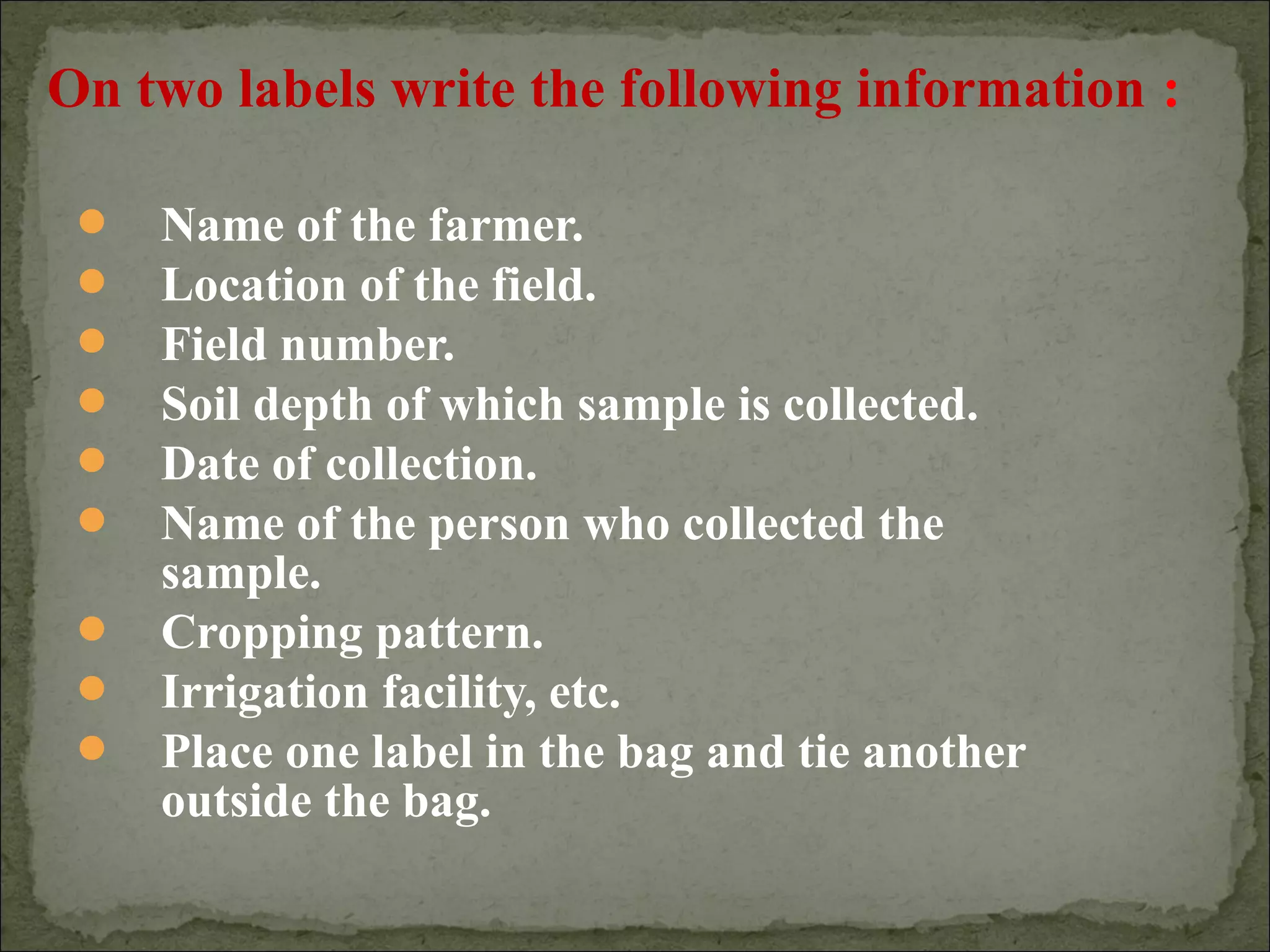
 Name of the farmer.
 Location of the field.
 Field number.
 Soil depth of which sample is collected.
 Date of collection.
 Name of the person who collected the
sample.
 Cropping pattern.
 Irrigation facility, etc.
 Place one label in the bag and tie another
outside the bag.
On two labels write the following information :
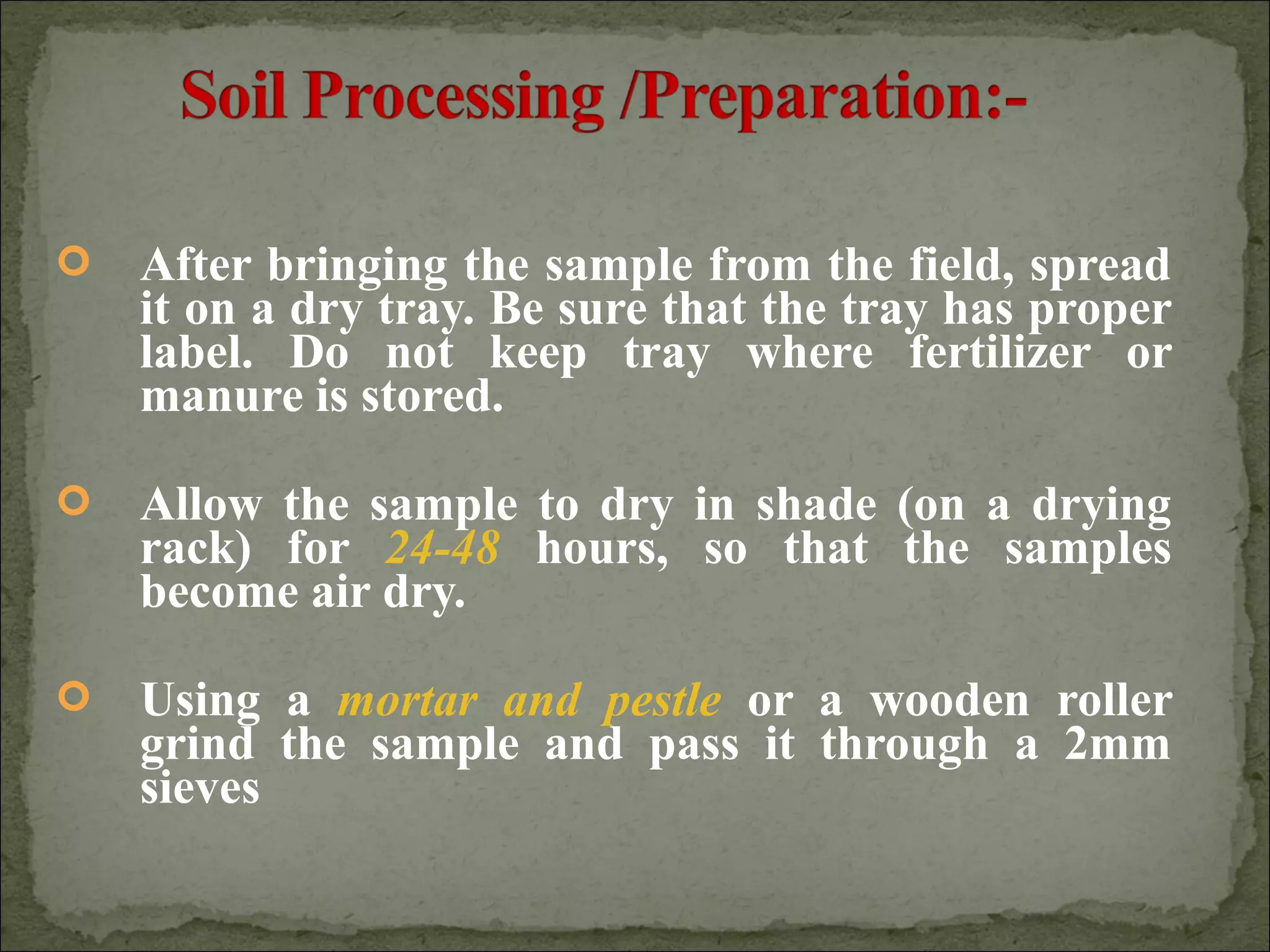
 After bringing the sample from the field, spread
it on a dry tray. Be sure that the tray has proper
label. Do not keep tray where fertilizer or
manure is stored.
 Allow the sample to dry in shade (on a drying
rack) for 24-48 hours, so that the samples
become air dry.
 Using a mortar and pestle or a wooden roller
grind the sample and pass it through a 2mm
sieves
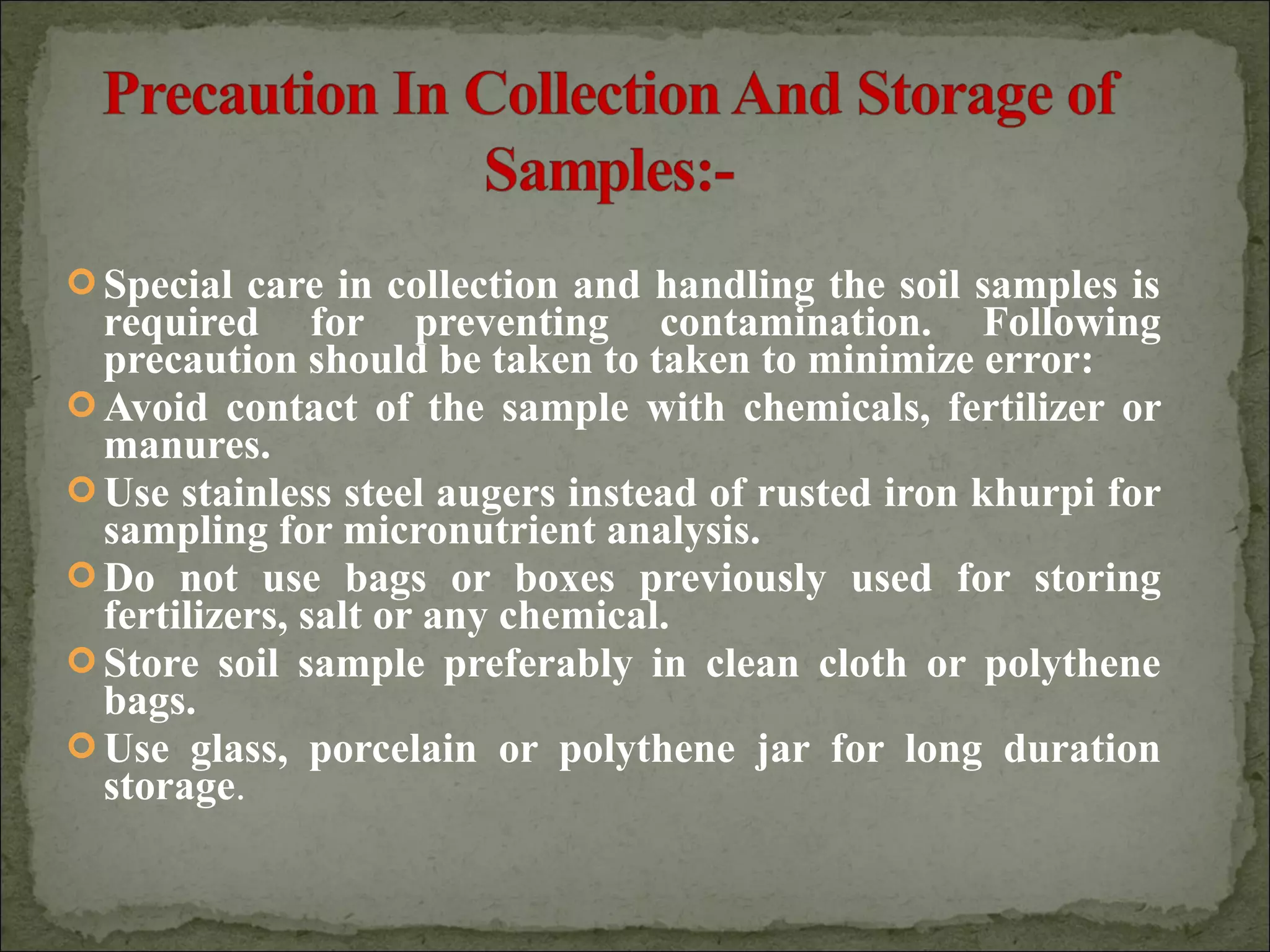
 Special care in collection and handling the soil samples is
required for preventing contamination. Following
precaution should be taken to taken to minimize error:
 Avoid contact of the sample with chemicals, fertilizer or
manures.
 Use stainless steel augers instead of rusted iron khurpi for
sampling for micronutrient analysis.
 Do not use bags or boxes previously used for storing
fertilizers, salt or any chemical.
 Store soil sample preferably in clean cloth or polythene
bags.
 Use glass, porcelain or polythene jar for long duration
storage.
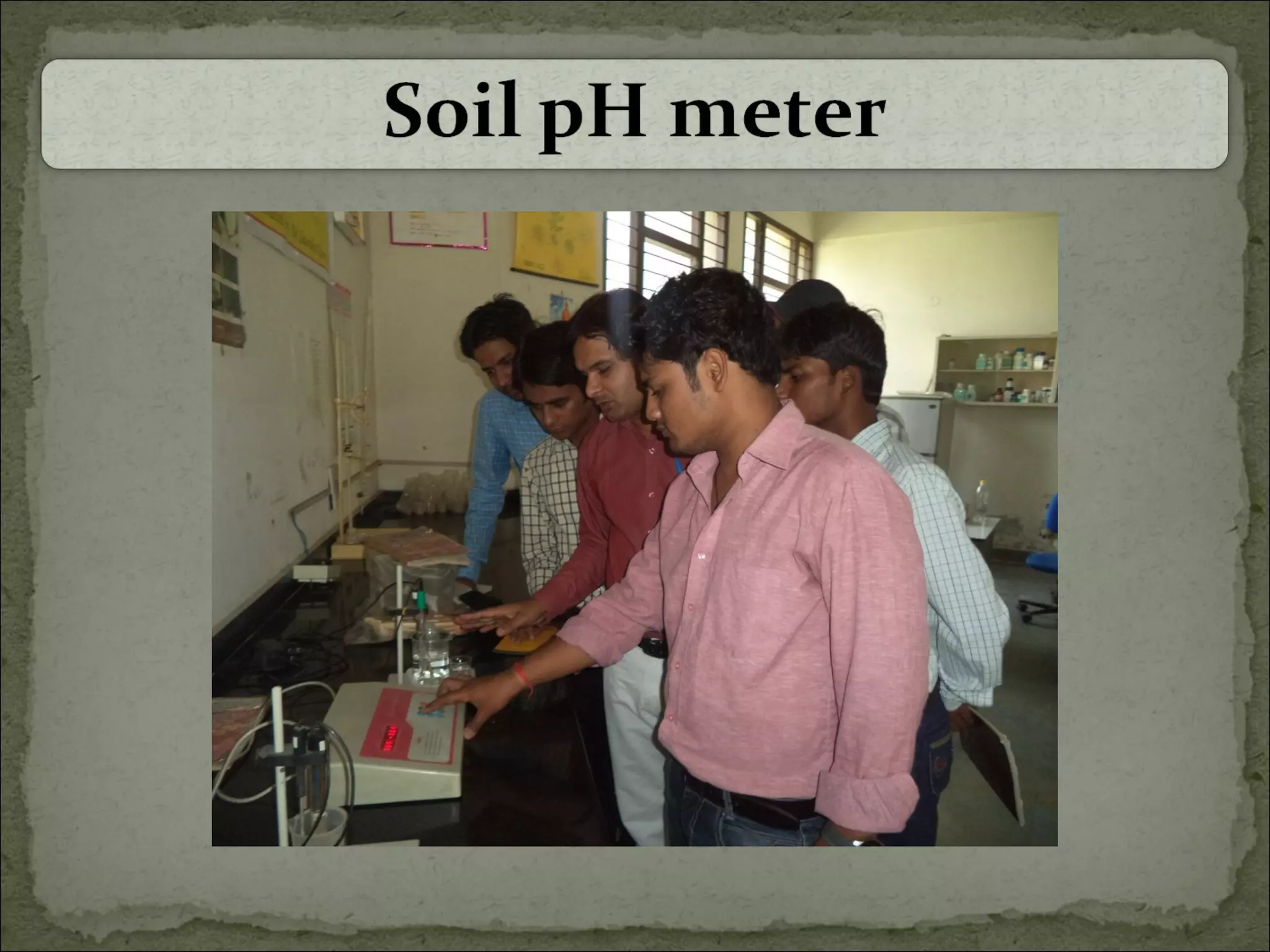
Scope and Application:-
This standard operating procedure (SOP)
describes the measurement of pH (the ratio of
hydrogen [H+] and hydroxyl [OH-] ion
activities at a given temperature) of soils using
a Cole-Palmer Digi-Sense® digital
pH/millivolt/oxidation reduction potential
(pH/mV/ORP) meter
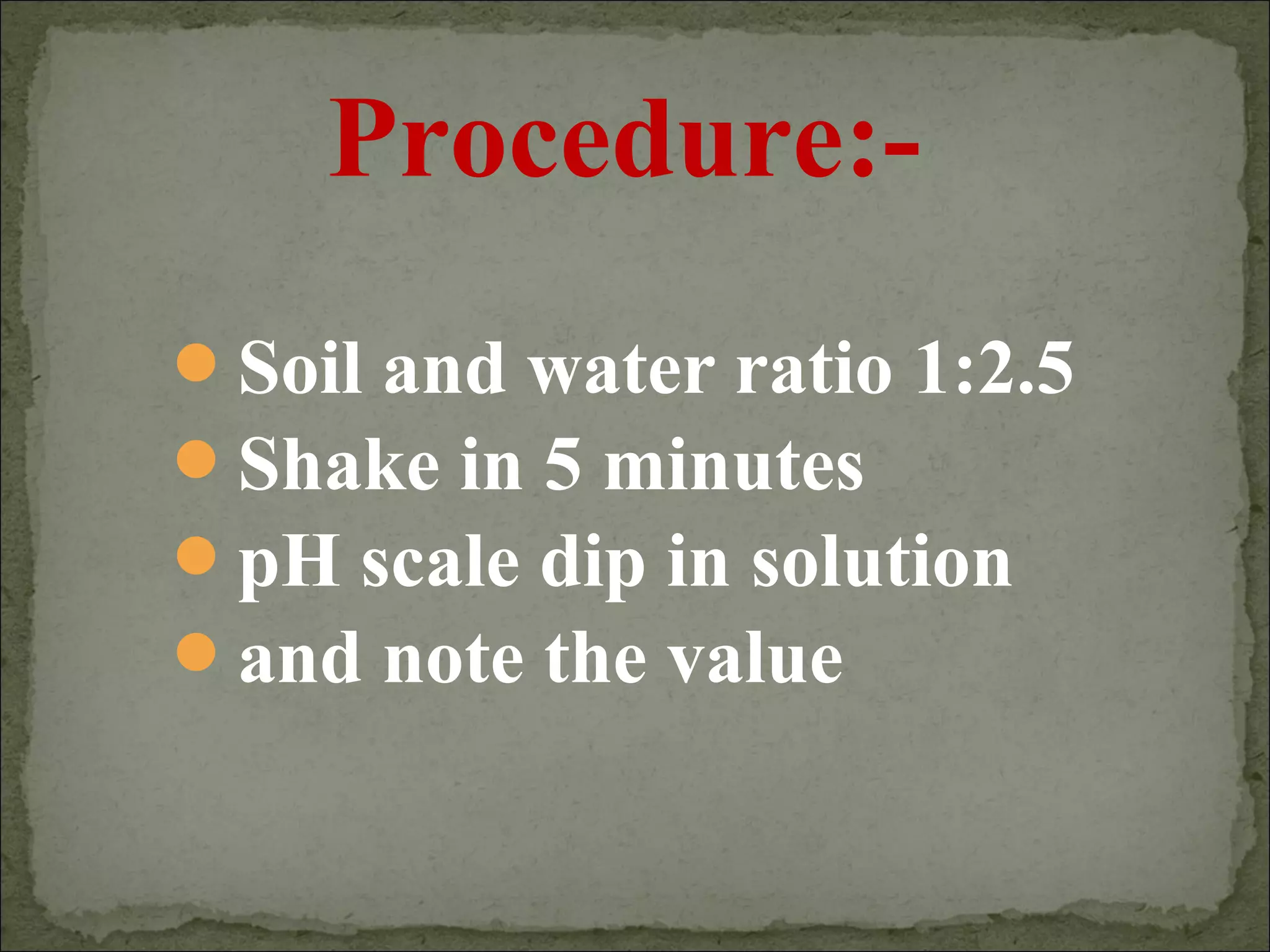
Soil and water ratio 1:2.5
Shake in 5 minutes
pH scale dip in solution
and note the value
Procedure:-
Scope:-
The electrical conductivity indicates the
amount of soluble (salt) ions in soil.
Principle:-
The determination of electrical conductivity (EC) is
made with a conductivity cell by measuring the
electrical resistance of a 1:2 soil:water suspension.
Special Apparatus:-
 .Conductivity meter and cell.
 Shaking bottles.
Distilled or deionised water
The water is to have an electrical conductivity
of <1 µS/cm and have a CO2 concentration no
more than atmosphere equilibrium.
0.01M Potassium Chloride Reference Solution
Dissolve 0.746 g KCl AR (previously dried at 105 °C
for 2 hours and make volume to 1 L with CO2 free
deionised water. This solution has an electrical
conductivity of 1.413 dS/m at 25 °C.
1. Prepare a 1:5 soil:water suspension by weighing
10gm air-dry soil (<2 mm) into a bottle. Add 50 ml
deionised water. Mechanically shake at 15 rpm for 1
hour to dissolve soluble salts.
2. Calibrate the conductivity meter according to the
manufacturer's instructions using the KCl reference
solution to obtain the cell constant.
3. Rinse the cell thoroughly. Measure the electrical
conductivity of the 0.01M KCl at the same
temperature as the soil suspensions.
Principle:-
The determination of soil organic carbon is
based on the Walkey-Black chromic acid wet
oxidation method. Oxidisable matter in the
soil is oxidised by 1 N K2Cr2O7 solution. The
reaction is assisted by the heat generated
when two volumes of H2SO4 are mixed with
one volume of the dichromate. The remaining
dichromate is titrated with ferrous sulphate.
The titre is inversely related to the amount of
C present in the soil sample.
 Hot plate with simmerstate control or electric nest as
used in macro-nitrogen determinations burner with
tripod and gauze.
 Heat-resistant sheet on which to cool flasks.
 Fume cupboard.
 10 ml automatic zero pipette or syringe pipette.
 250 ml dry conical flasks. 250 ml tall form beakers can
be used as an alternative to conical flasks for titration.
 200 °C thermometer.
 50 ml burette or automatic titration unit.
 1000 ml volumetric flask.
 100 ml volumetric flask.
Diphenyl amine ( DPA) :
=0.5 gm (DPA)
=100 ml concentrated Sulphuric acid.
Ferrous ammonium sulphate :
=196 gm (FAS).
=500 ml d.water
=20 ml concentrated Sulphuric acid.
=Make up the volume 1 litre.
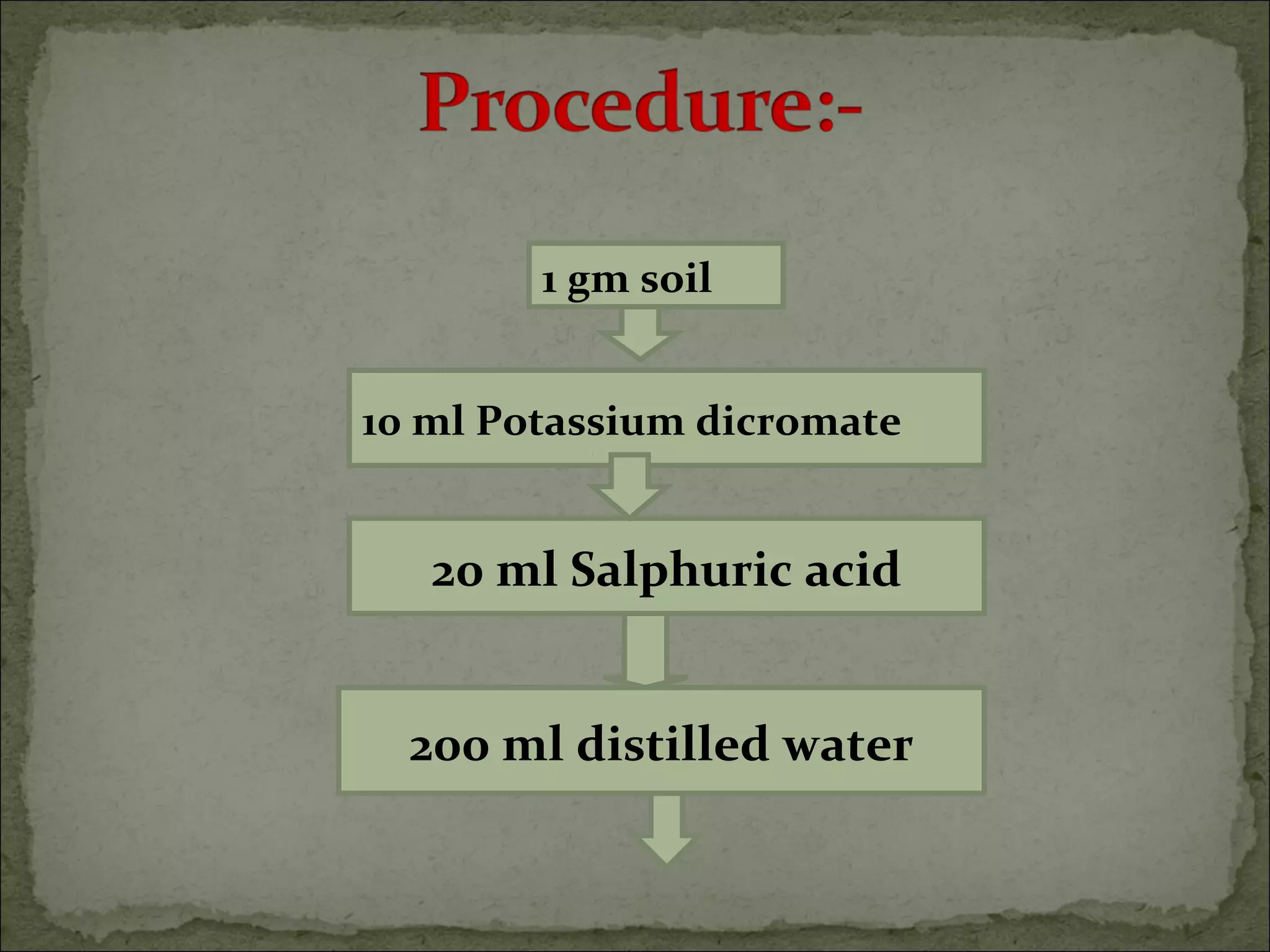
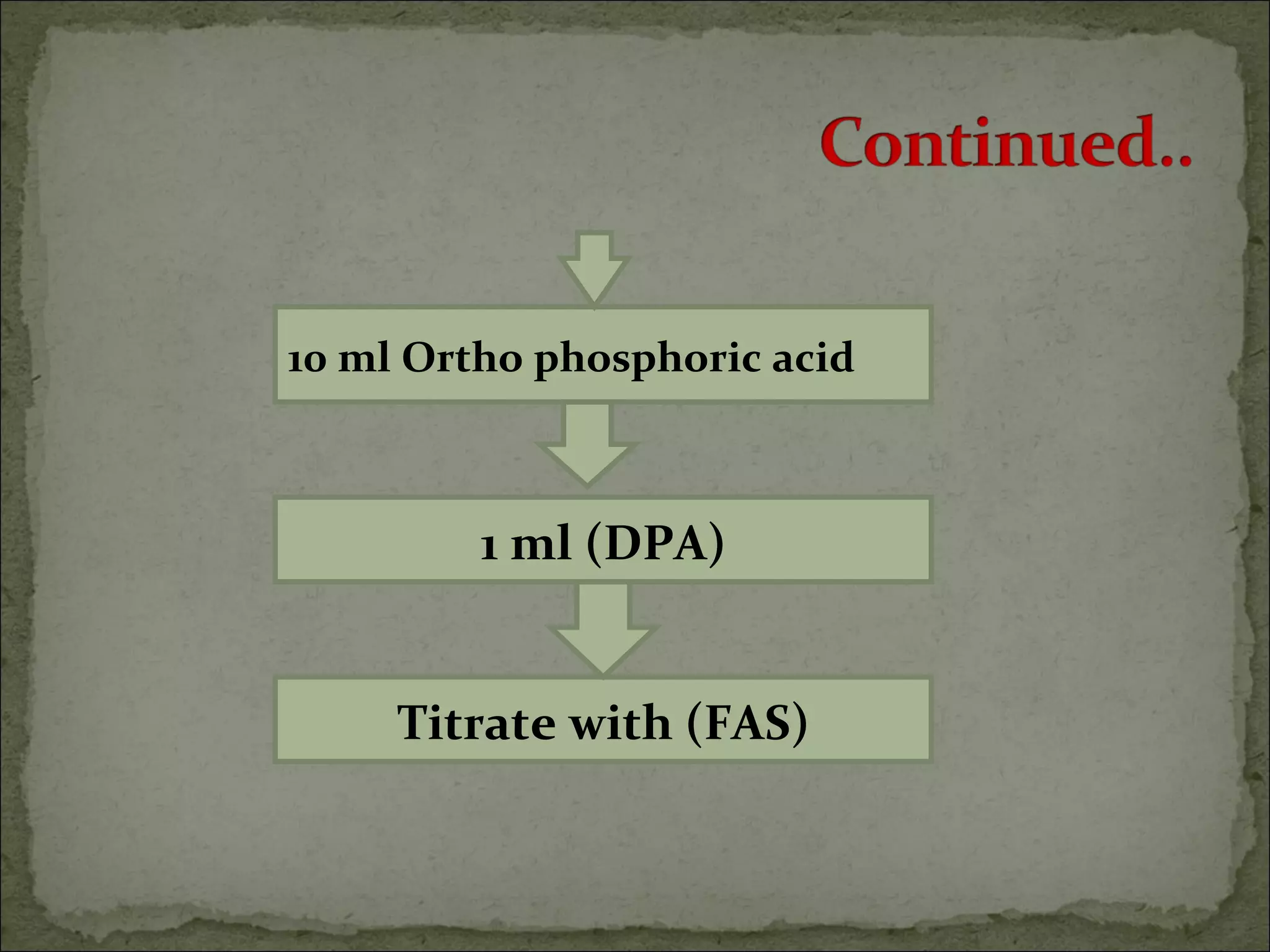
1 gm soil
10 ml Potassium dicromate
20 ml Salphuric acid
200 ml distilled water
1 ml (DPA)
Titrate with (FAS)
10 ml Ortho phosphoric acid
Apparatus :-
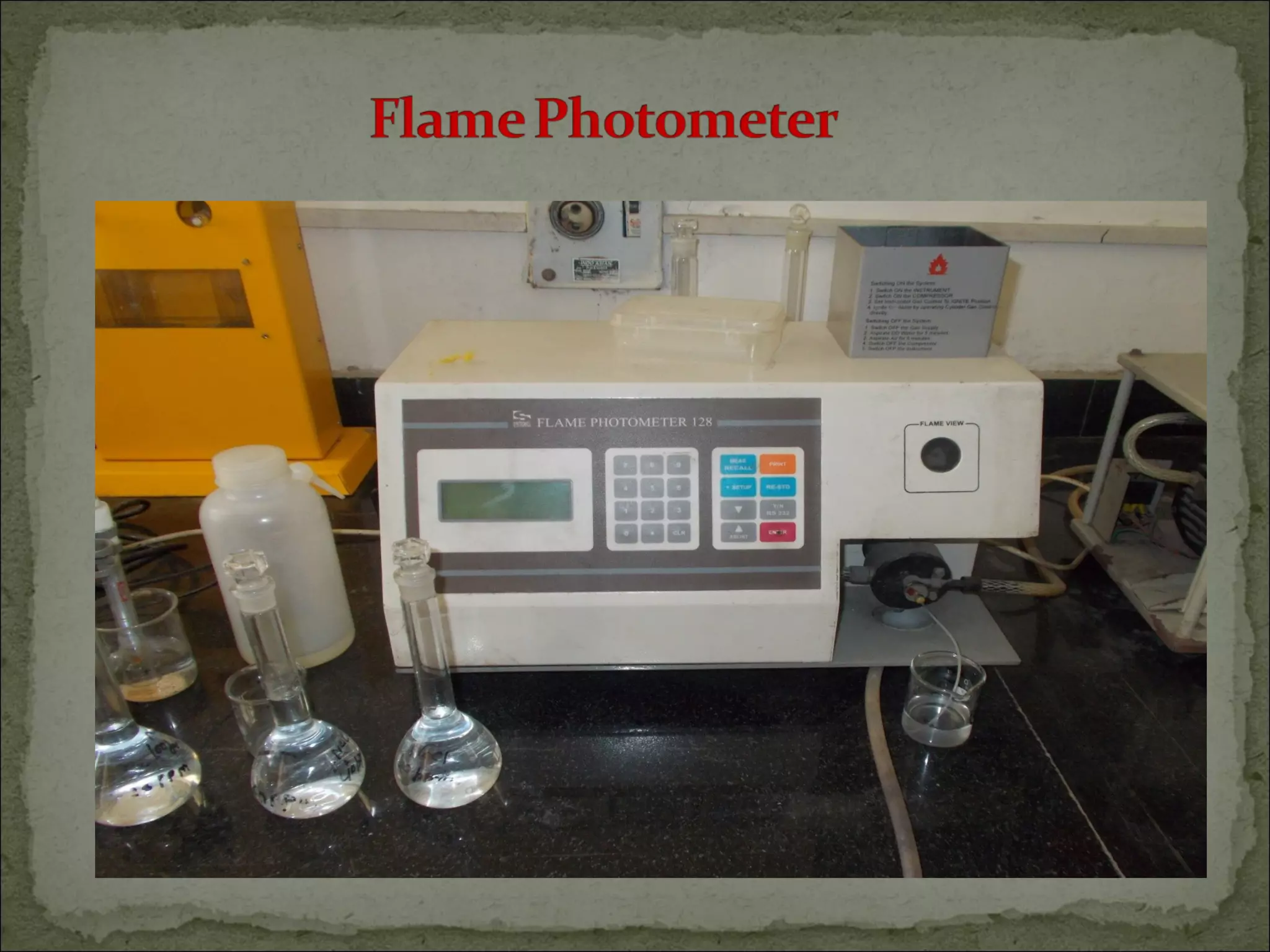
1. Flame photometer
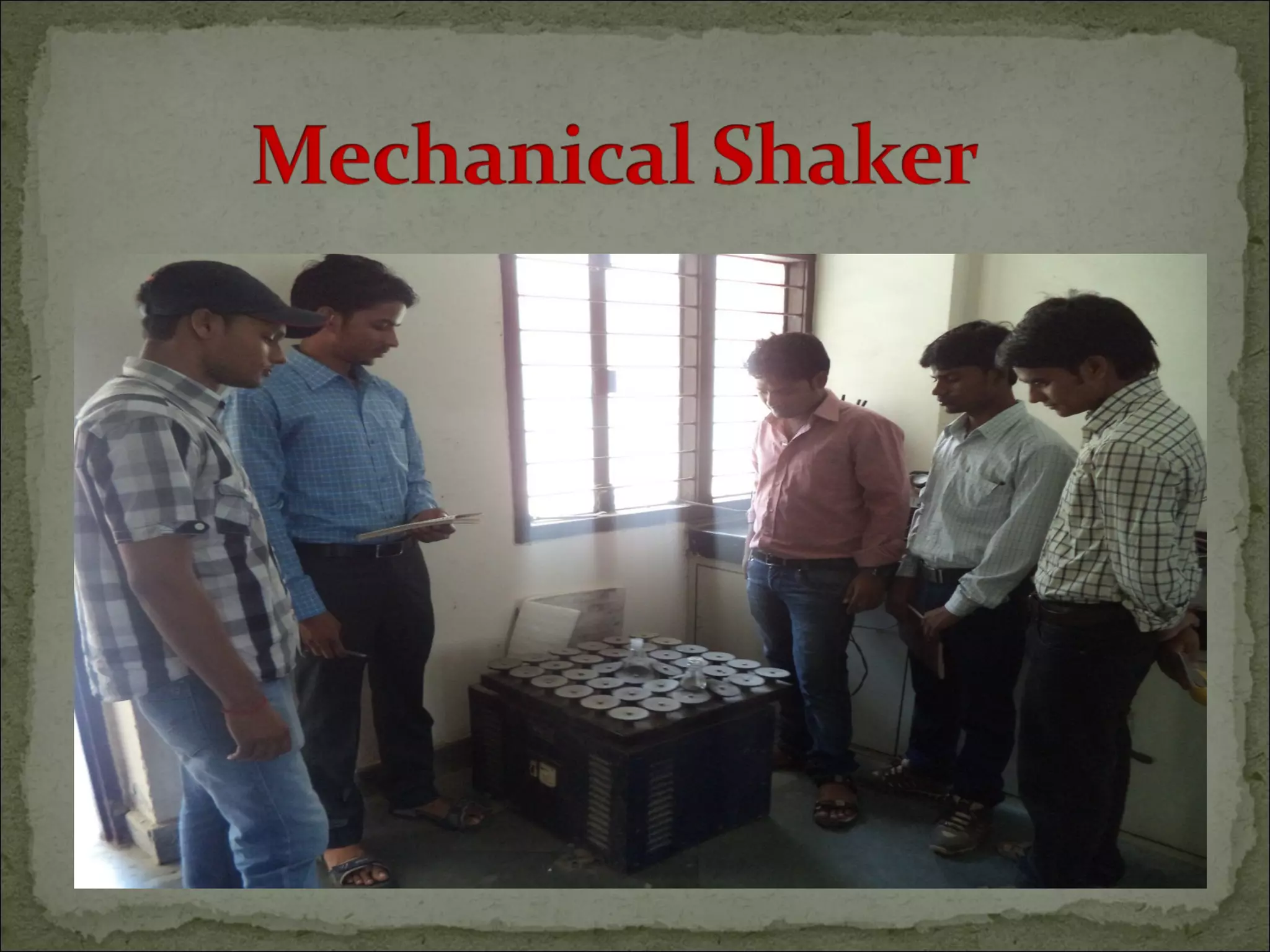
2. Mechanical shaker
3. pH meter
1 1N Ammonium acetate:-
Dissolve 77.09 gm of ammonium acetate in about 500 ml of
distilled water and make the volume to 1 liter. Adjust the pH
to 7.0 with glacial acetic solution. This reagent may also
prepared by taking 800 ml of distilled water and adding to it
57 ml of glacial acetic acid and 68 ml of ammonia solution (sp.
gr. 0.91), followed by dilution to 1 liter and adjusting pH at 7.0
after cooling.
2 Standard K solution:-
Prepare 1000 mg /l K solution b K solution b dissolving 1.908 gm
of AR grade potassium chloride (dried in oven at 700C for two
hours) per liter solution. Dilute suitable volume of this
solution to get 100ml of working standards containing 5, 10,
15, 20, 25, 30, and 40 mg K L-1. The working standards should
be prepared in the medium of extraction (ammonium acetate
in this case).
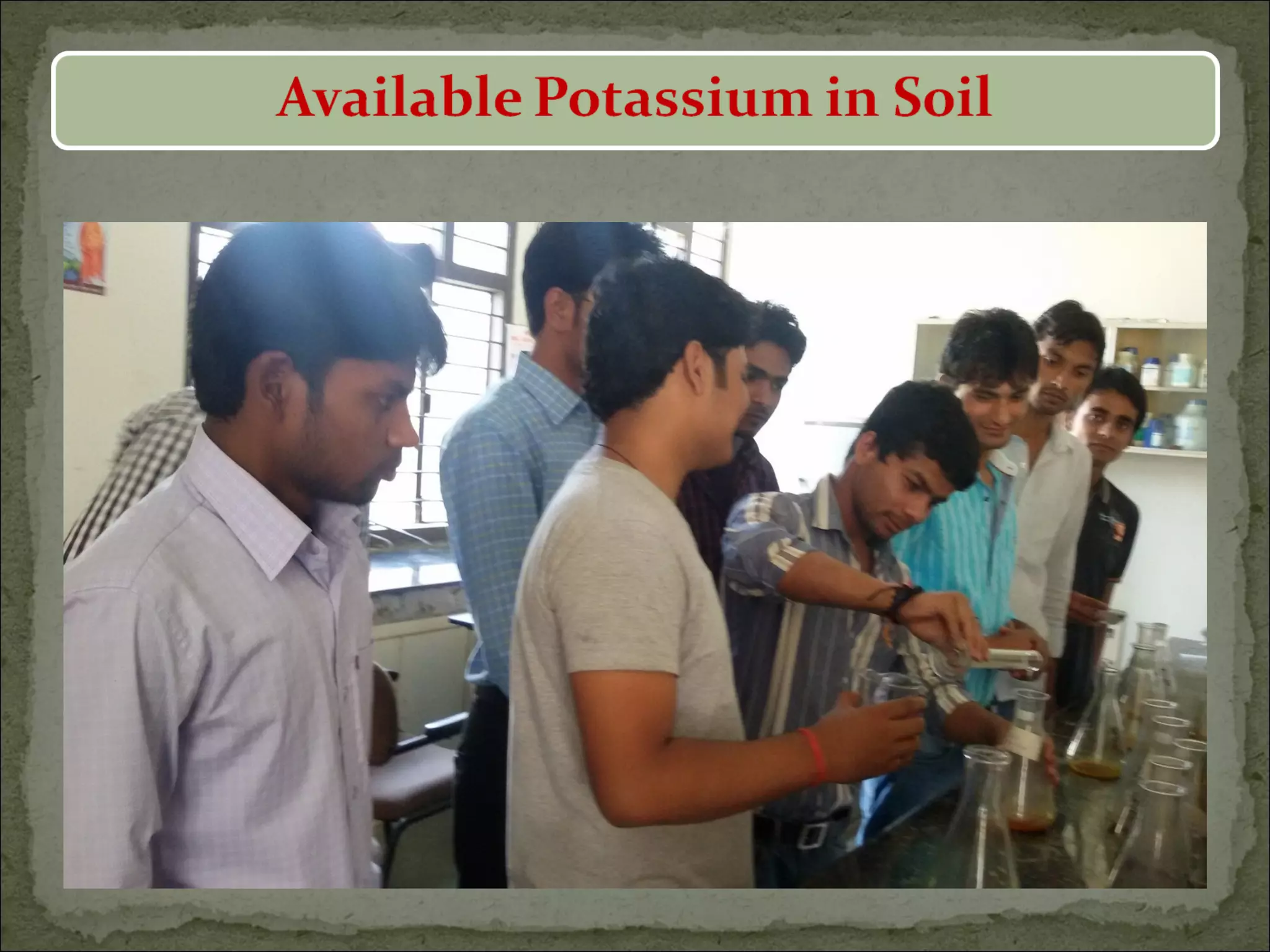
Weigh 5 gm of soil sample in 100 ml
conical flask.
 Add 25 ml of the neutral 1N ammonium
acetate solution and shake for 5 minutes.
Filter through Whatman No. 1 filter
paper.
 Measure K concentration in the filtrate
using flame photometer
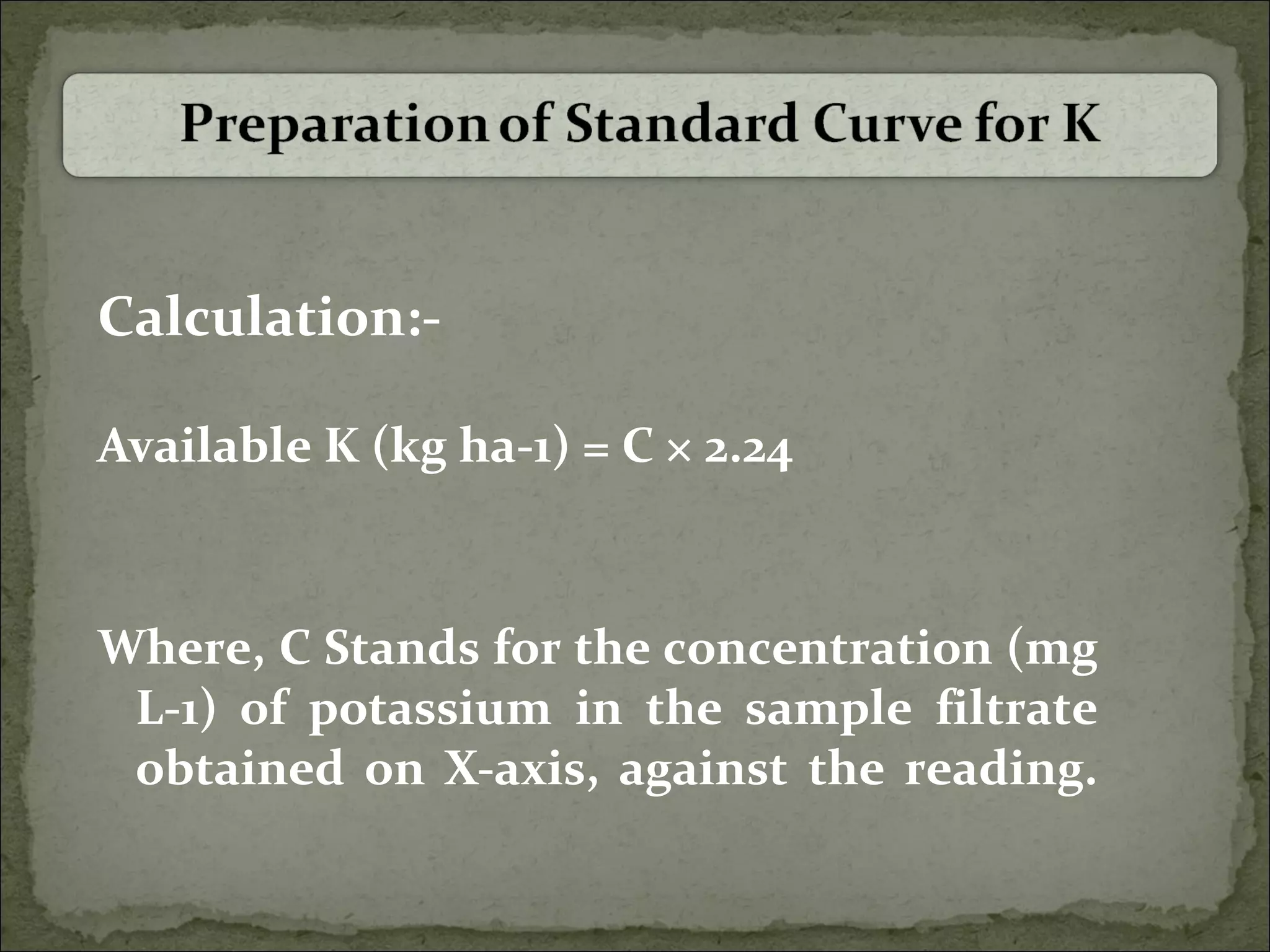
Calculation:-
Available K (kg ha-1) = C × 2.24
Where, C Stands for the concentration (mg
L-1) of potassium in the sample filtrate
obtained on X-axis, against the reading.
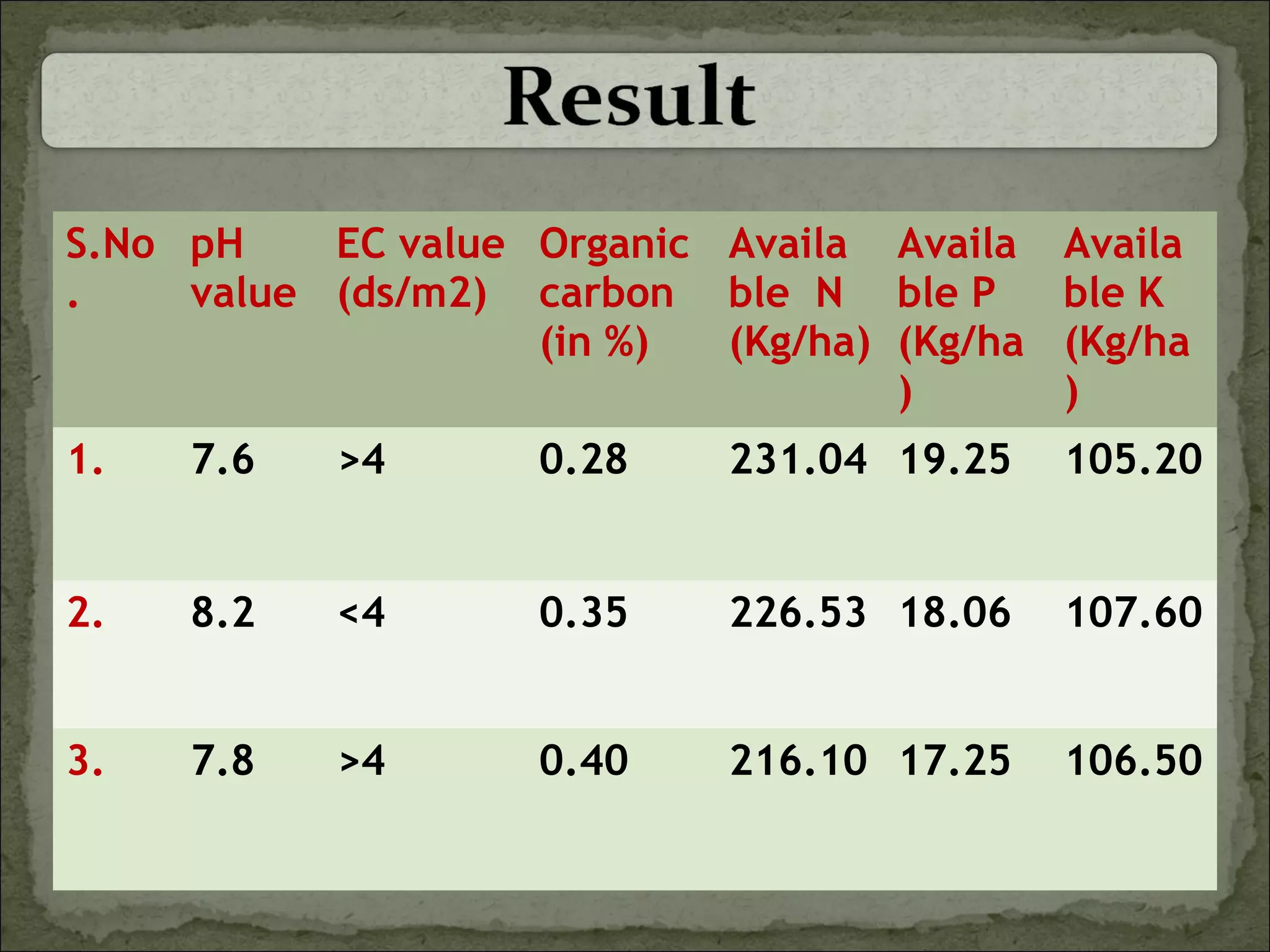
S.No
.
pH
value
EC value
(ds/m2)
Organic
carbon
(in %)
Availa
ble N
(Kg/ha)
Availa
ble P
(Kg/ha
)
Availa
ble K
(Kg/ha
)
1. 7.6 >4 0.28 231.04 19.25 105.20
2. 8.2 <4 0.35 226.53 18.06 107.60
3. 7.8 >4 0.40 216.10 17.25 106.50
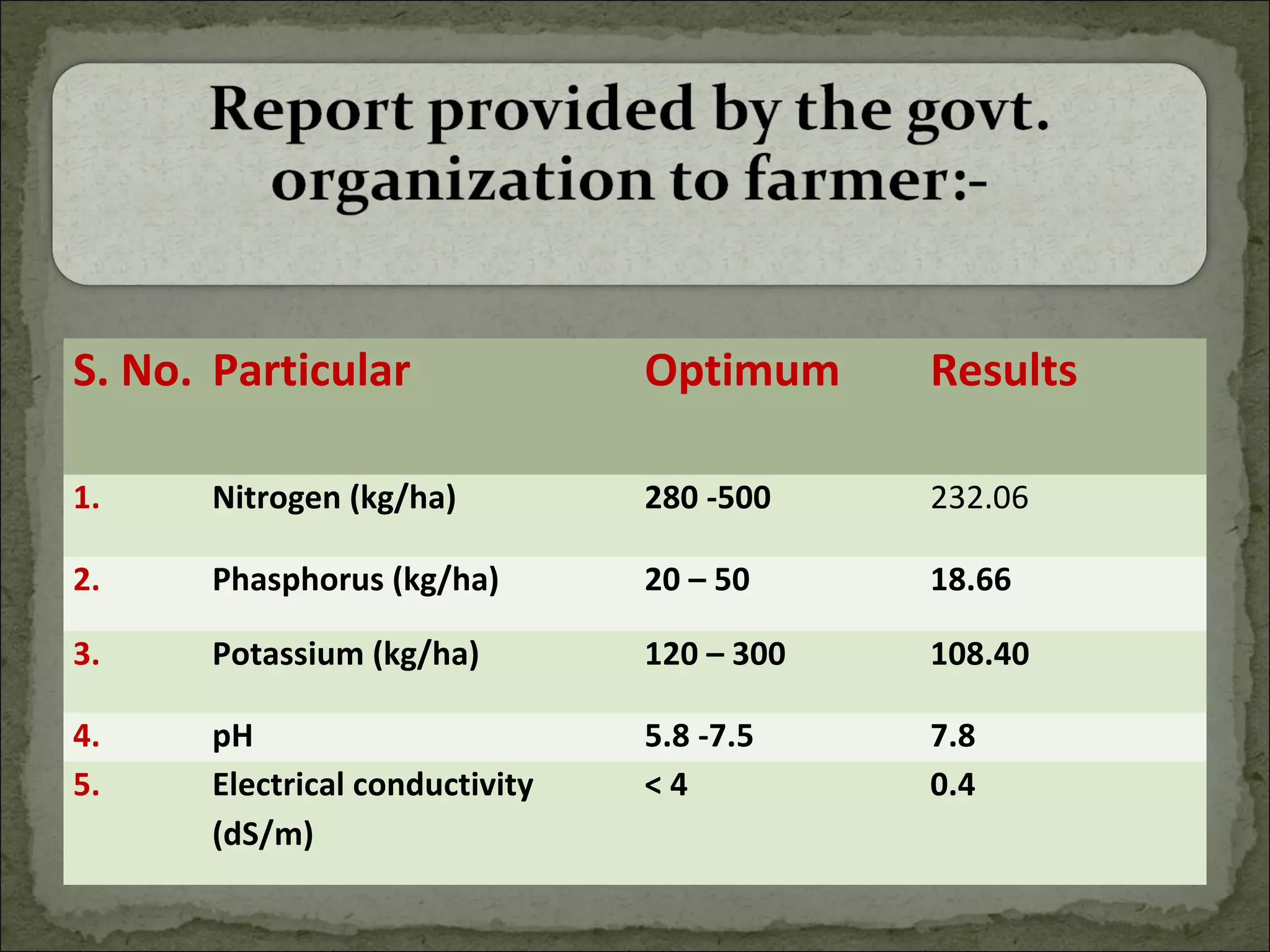
S. No. Particular Optimum Results
1. Nitrogen (kg/ha) 280 -500 232.06
2. Phasphorus (kg/ha) 20 – 50 18.66
3. Potassium (kg/ha) 120 – 300 108.40
4. pH 5.8 -7.5 7.8
5. Electrical conductivity
(dS/m)
< 4 0.4
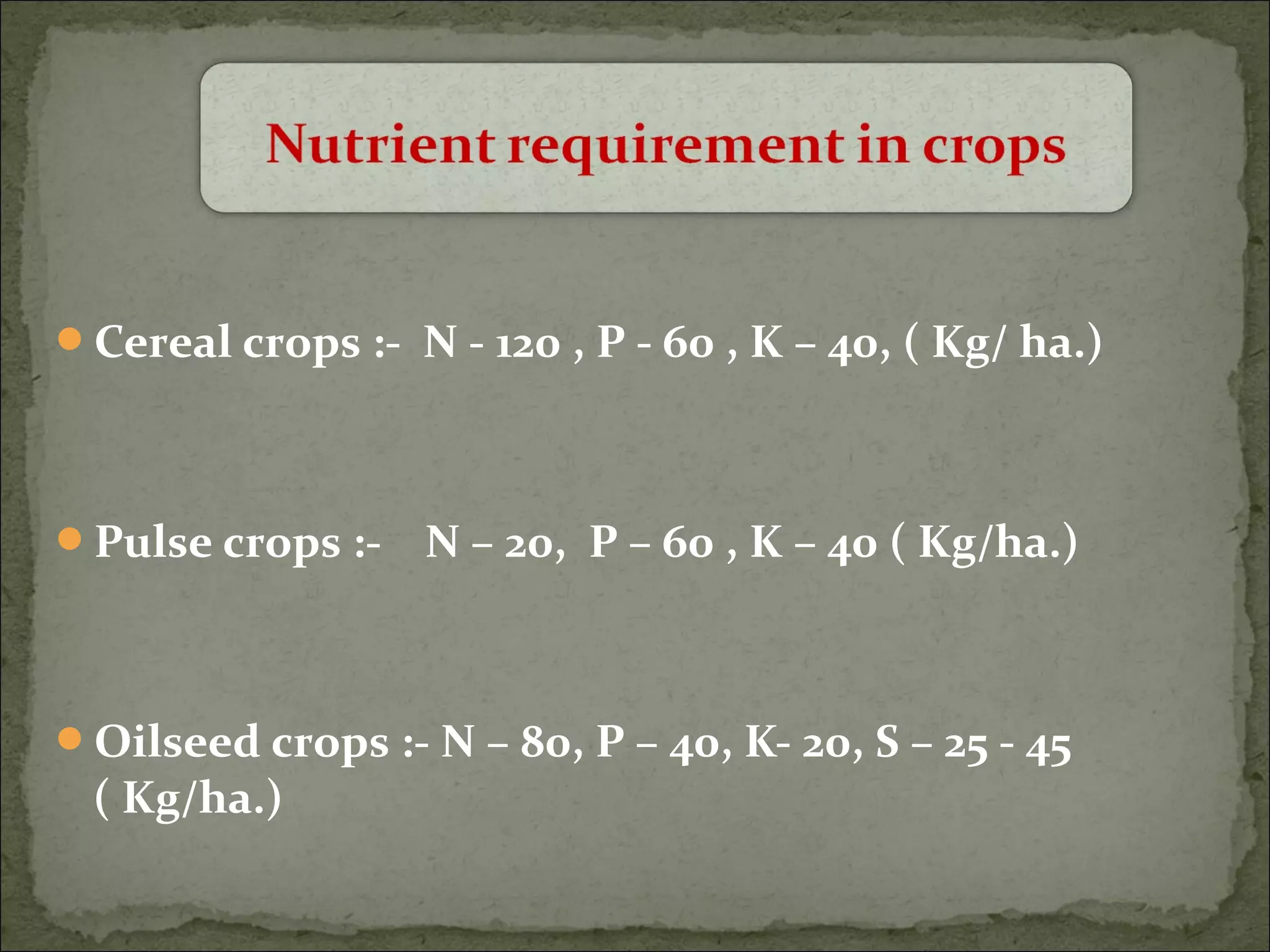
Cereal crops :- N - 120 , P - 60 , K – 40, ( Kg/ ha.)
Pulse crops :- N – 20, P – 60 , K – 40 ( Kg/ha.)
Oilseed crops :- N – 80, P – 40, K- 20, S – 25 - 45
( Kg/ha.)
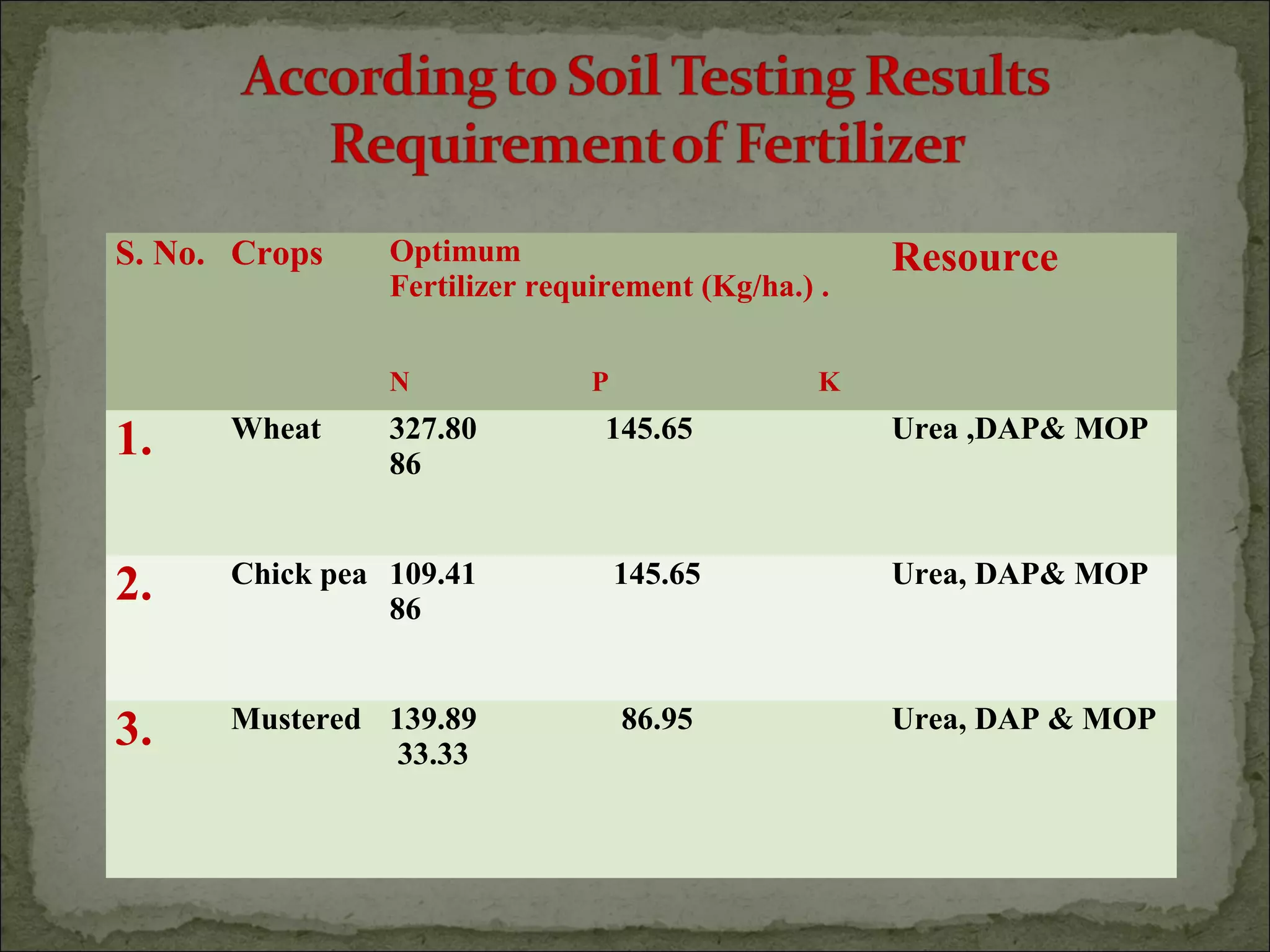
S. No. Crops Optimum
Fertilizer requirement (Kg/ha.) .
N P K
Resource
1. Wheat 327.80 145.65
86
Urea ,DAP& MOP
2. Chick pea 109.41 145.65
86
Urea, DAP& MOP
3. Mustered 139.89 86.95
33.33
Urea, DAP & MOP
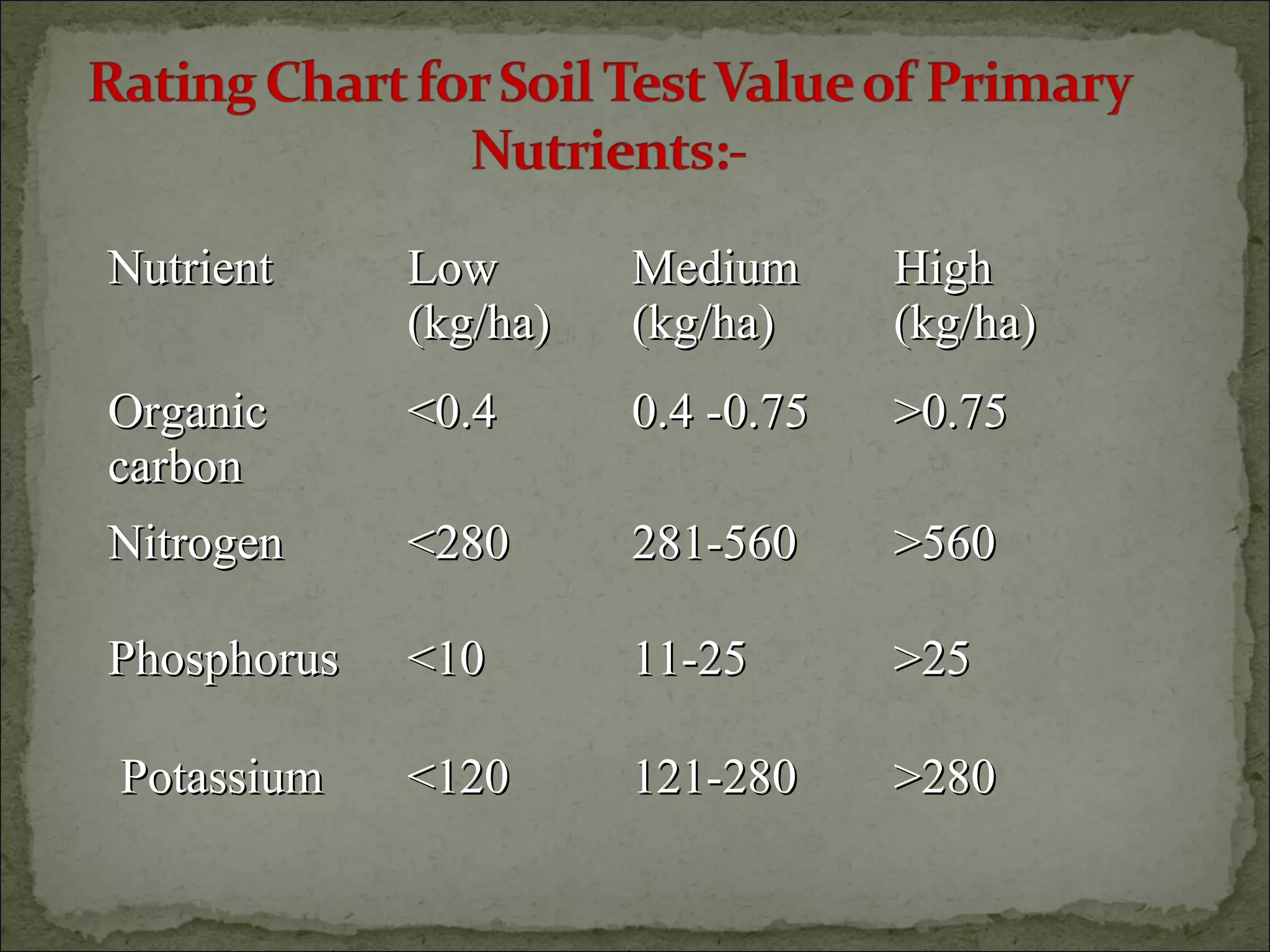
NutrientNutrient LowLow
(kg/ha)(kg/ha)
MediumMedium
(kg/ha)(kg/ha)
HighHigh
(kg/ha)(kg/ha)
OrganicOrganic
carboncarbon
<0.4<0.4 0.4 -0.750.4 -0.75 >0.75>0.75
NitrogenNitrogen <280<280 281-560281-560 >560>560
PhosphorusPhosphorus <10<10 11-2511-25 >25>25
PotassiumPotassium <120<120 121-280121-280 >280>280
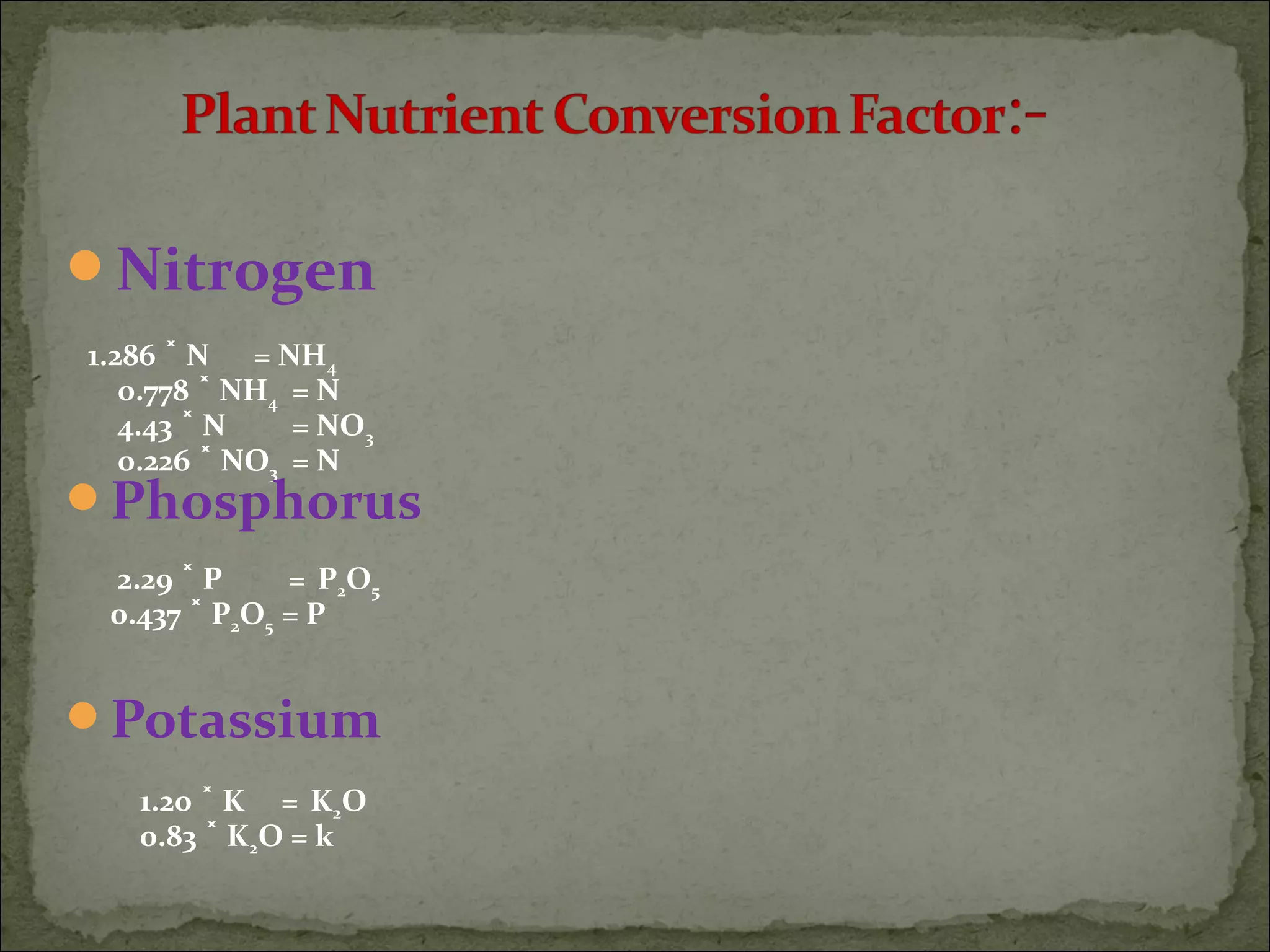
Nitrogen
1.286 N = NH˟ 4
0.778 NH˟ 4 = N
4.43 N = NO˟ 3
0.226 NO˟ 3 = N
Phosphorus
2.29 P =˟ P2O5
0.437 P˟ 2O5 = P
Potassium
1.20 K =˟ K2O
0.83 K˟ 2O = k
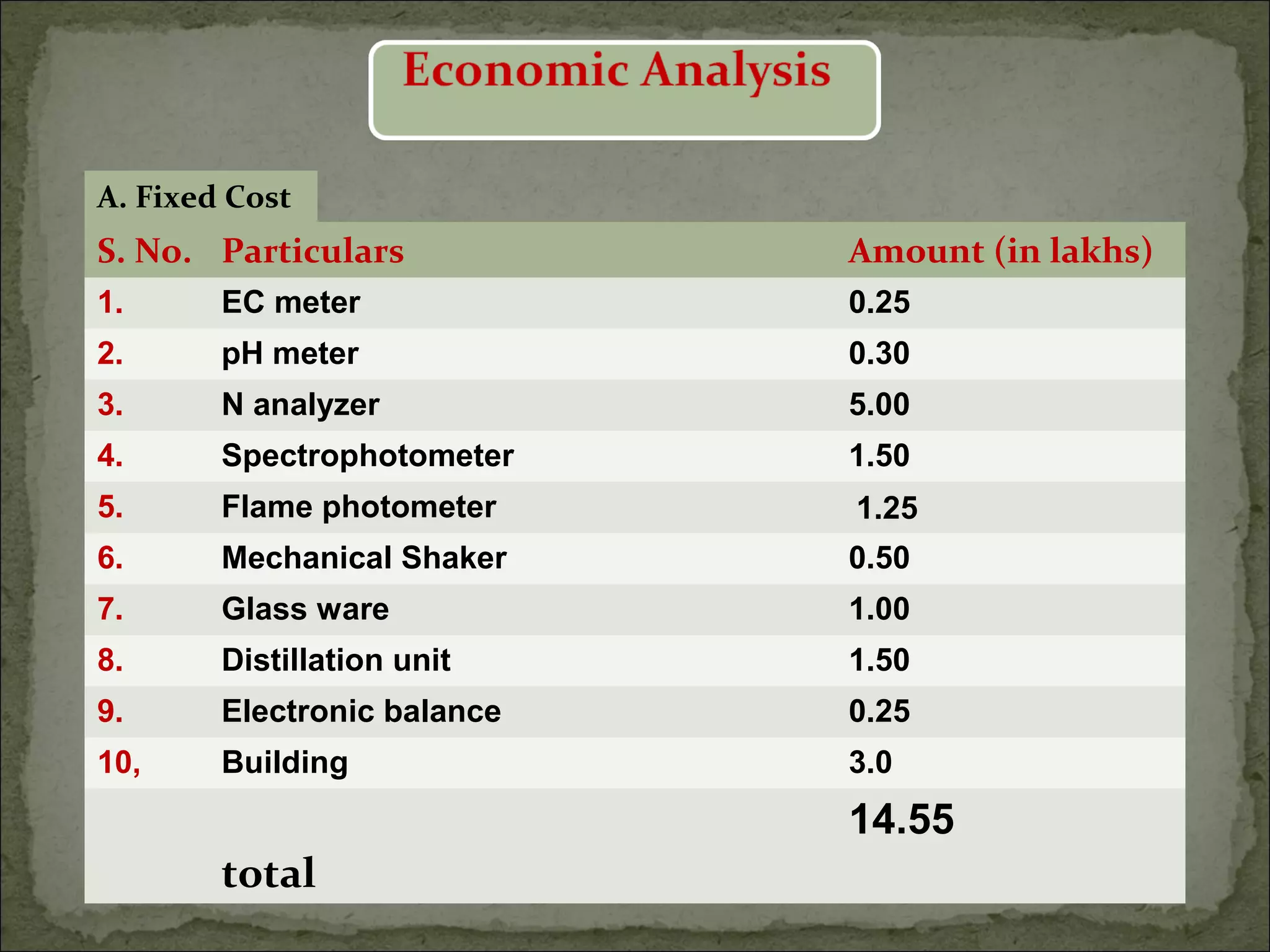
S. No. Particulars Amount (in lakhs)
1. EC meter 0.25
2. pH meter 0.30
3. N analyzer 5.00
4. Spectrophotometer 1.50
5. Flame photometer 1.25
6. Mechanical Shaker 0.50
7. Glass ware 1.00
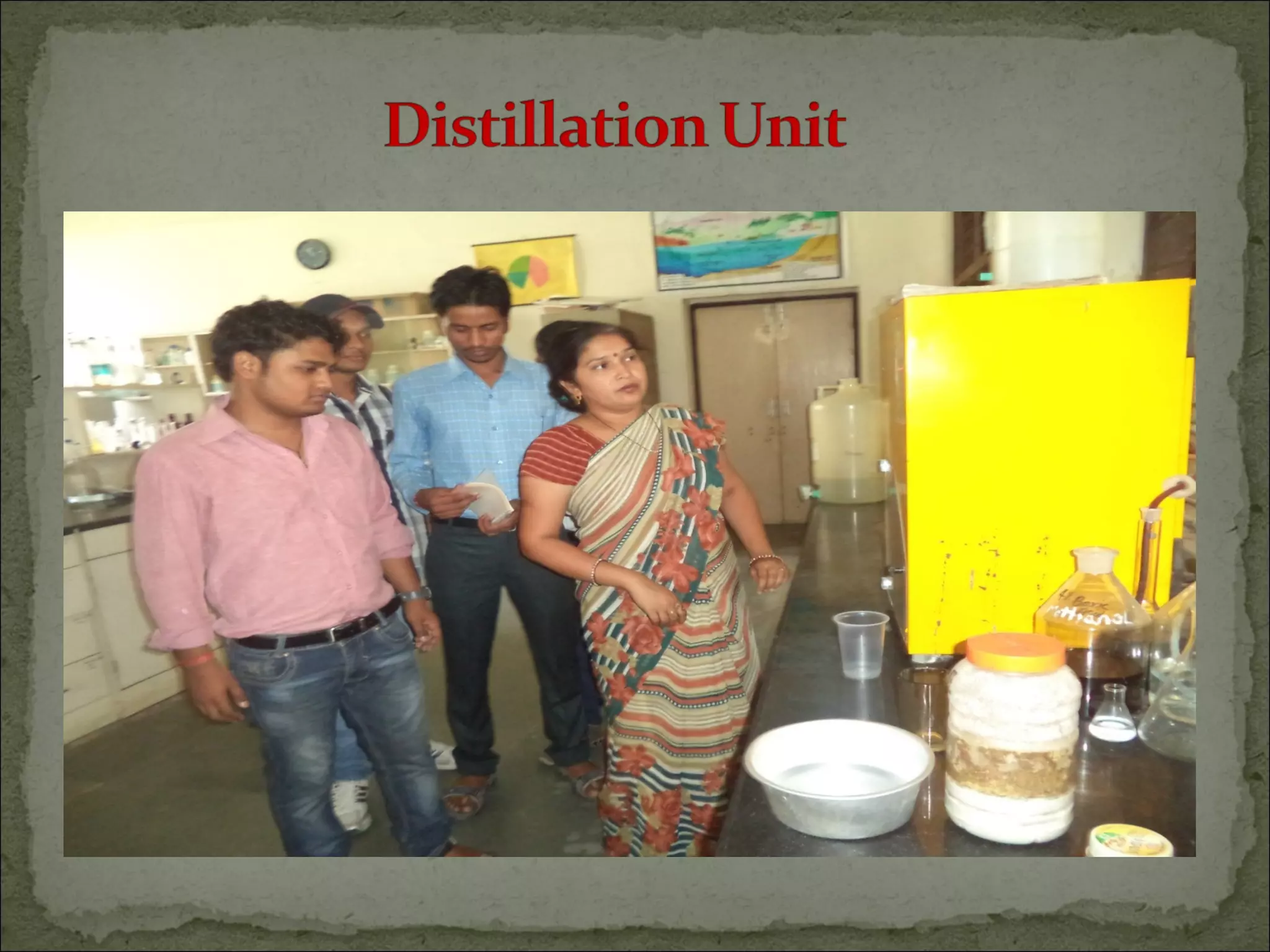
8. Distillation unit 1.50
9. Electronic balance 0.25
10, Building 3.0
total
14.55
A. Fixed Cost
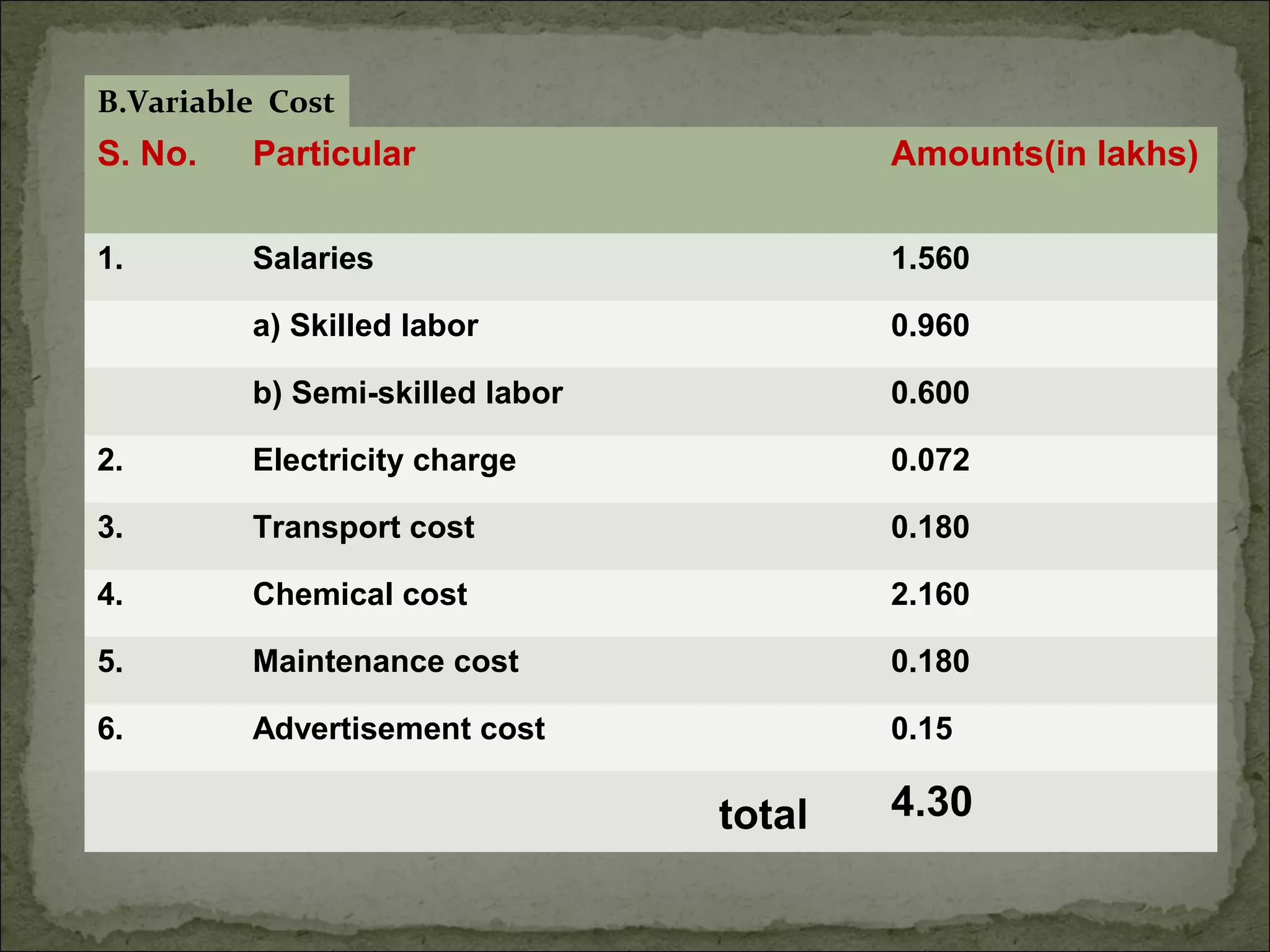
S. No. Particular Amounts(in lakhs)
1. Salaries 1.560
a) Skilled labor 0.960
b) Semi-skilled labor 0.600
2. Electricity charge 0.072
3. Transport cost 0.180
4. Chemical cost 2.160
5. Maintenance cost 0.180
6. Advertisement cost 0.15
total 4.30
B.Variable Cost
S.
No.
Particular Amount ( Rs)
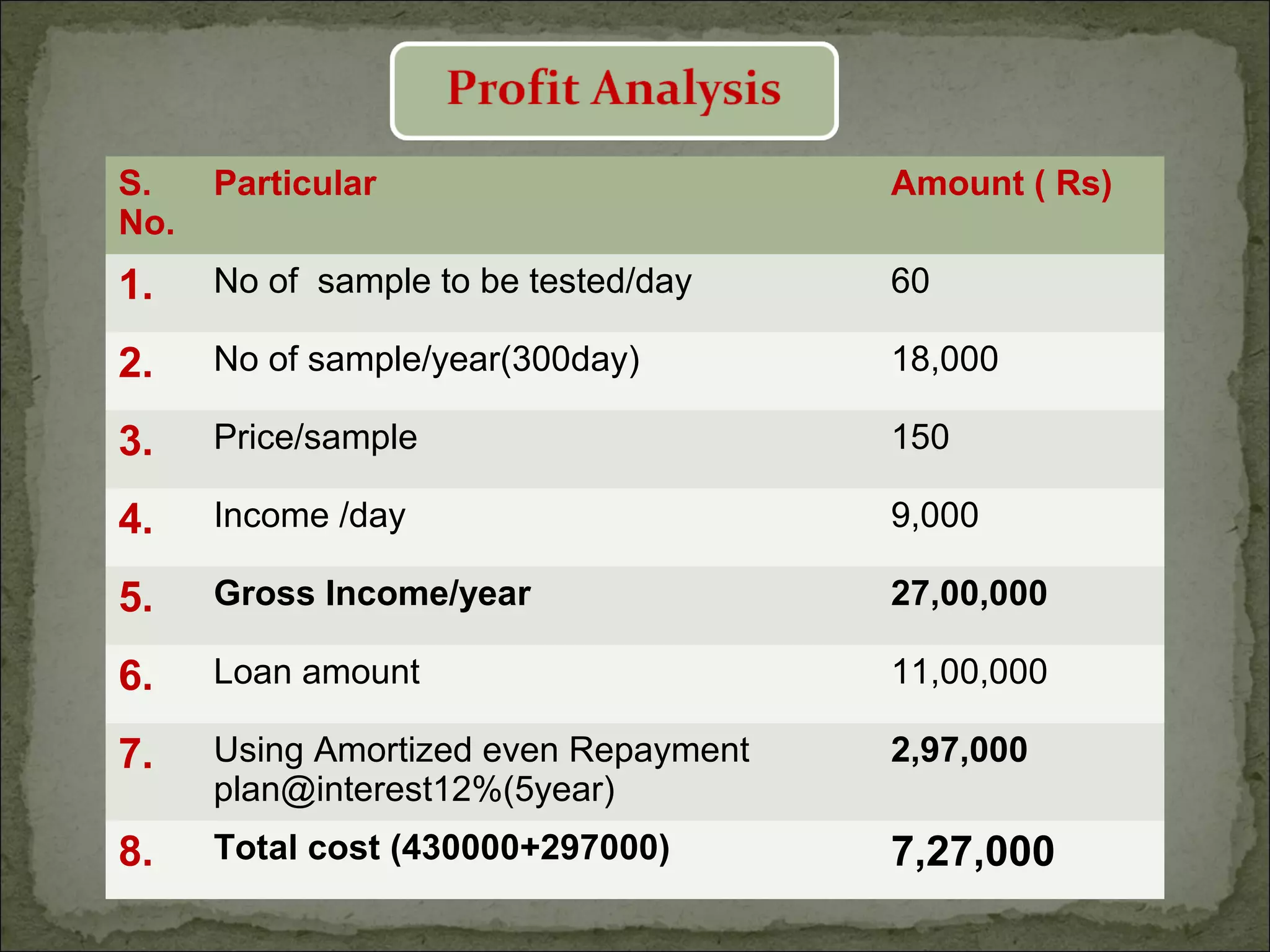
1. No of sample to be tested/day 60
2. No of sample/year(300day) 18,000
3. Price/sample 150
4. Income /day 9,000
5. Gross Income/year 27,00,000
6. Loan amount 11,00,000
7. Using Amortized even Repayment
plan@interest12%(5year)
2,97,000
8. Total cost (430000+297000) 7,27,000
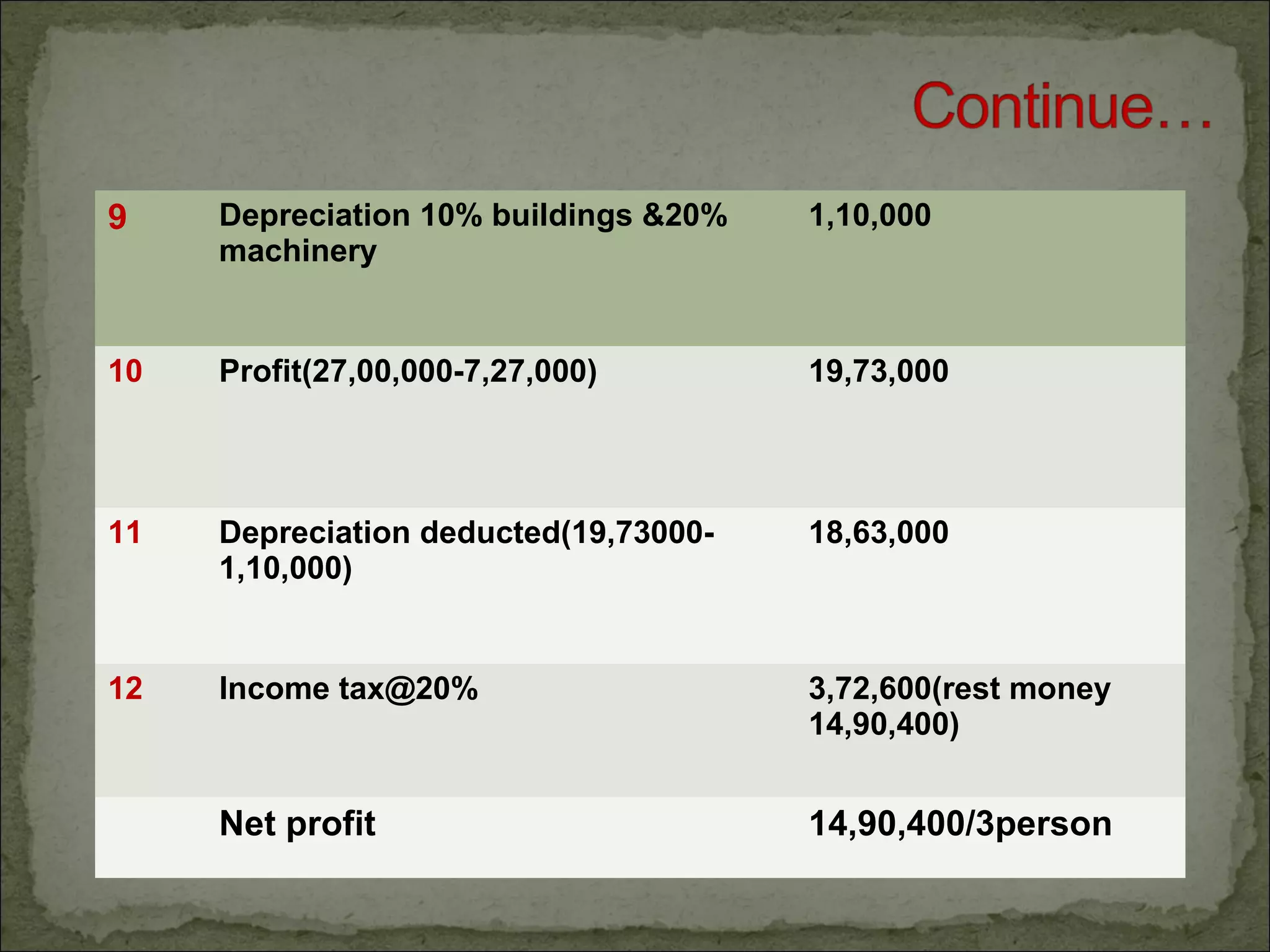
9 Depreciation 10% buildings &20%
machinery
1,10,000
10 Profit(27,00,000-7,27,000) 19,73,000
11 Depreciation deducted(19,73000-
1,10,000)
18,63,000
12 Income tax@20% 3,72,600(rest money
14,90,400)
Net profit 14,90,400/3person
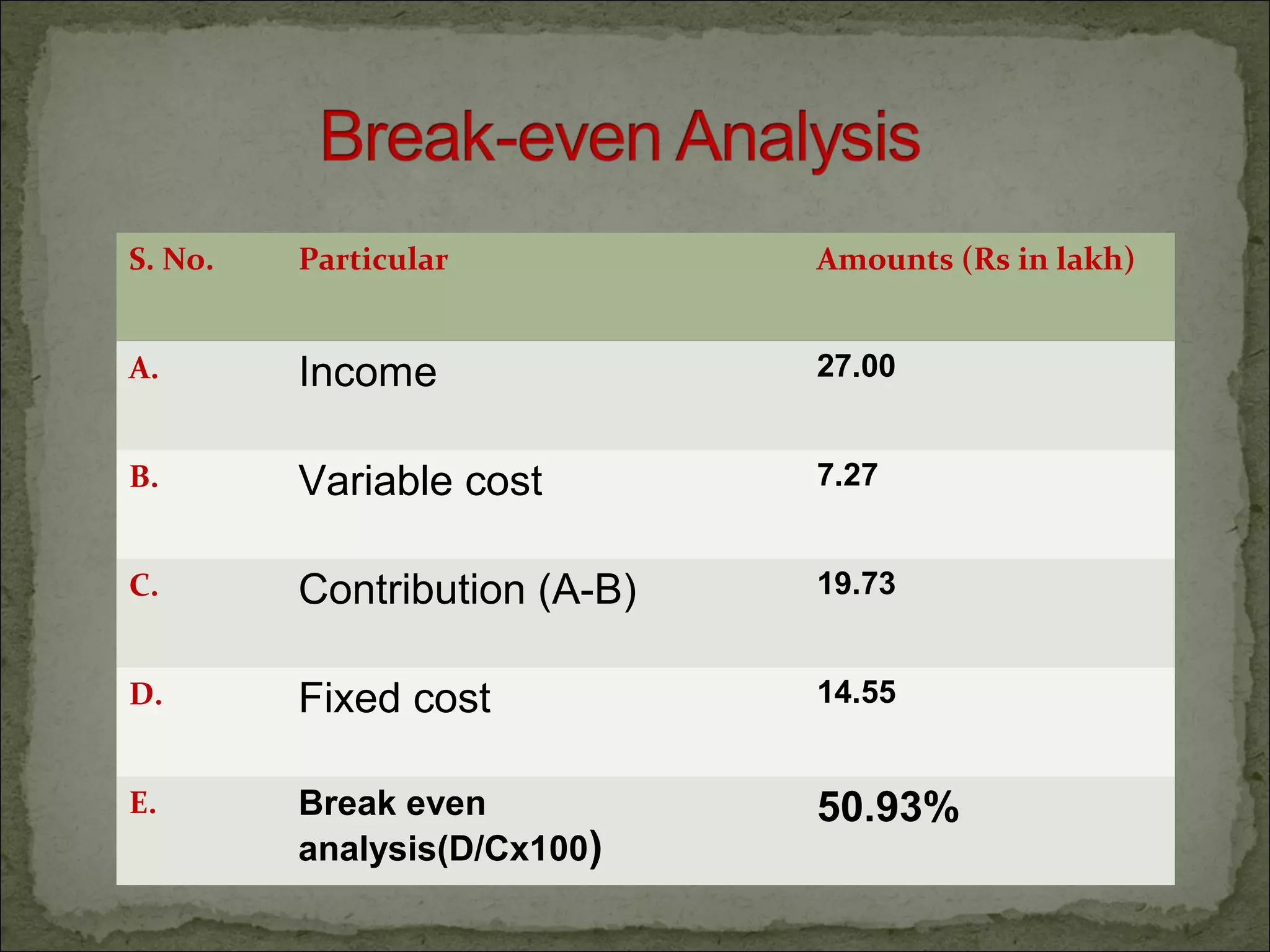
S. No. Particular Amounts (Rs in lakh)
A. Income 27.00
B. Variable cost 7.27
C. Contribution (A-B) 19.73
D. Fixed cost 14.55
E. Break even
analysis(D/Cx100)
50.93%
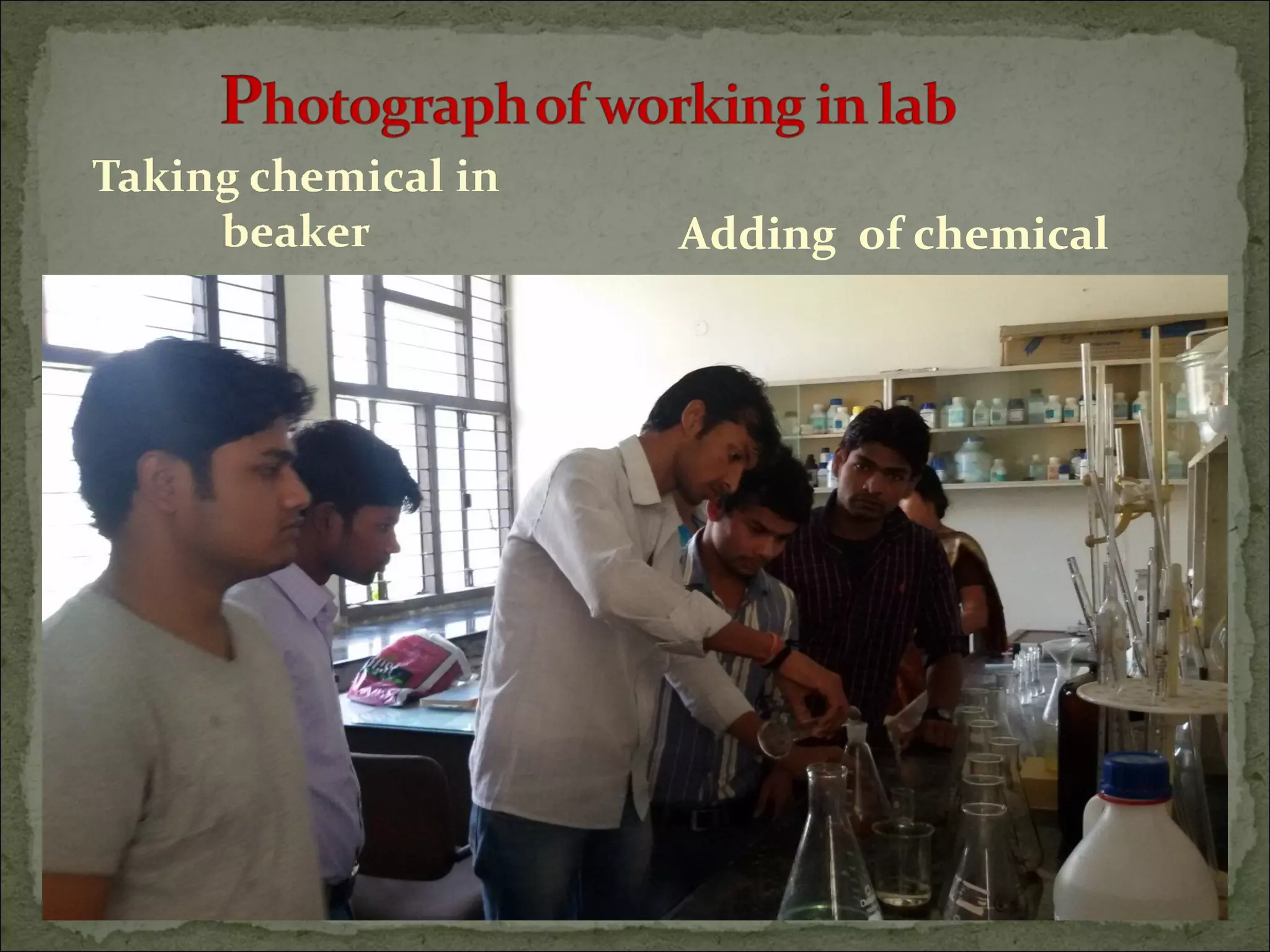
Adding of chemical
AmanPOWER POINT
AmanPOWER POINT
AmanPOWER POINT
AmanPOWER POINT
AmanPOWER POINT

AmanPOWER POINT

  • 2.
    Dr. R.B. YadavDr. S.P.Singh Course Coordinator Unit incharge Associate Prof. Assistant Prof. Dept. of Agronomy Dept. of Soil Science
  • 4.
    1. We canstart a diploma programme for one month education upon soil testing analysis by fifty hundred rupees per month. 2.We can provide better transport facilities related to Our work..For example after testing we can send the result of testing at our responsibility. 3.For advertisement I have also put ads in the newspaper and weekly classified pages. All in all ,though ,my posters pinups have brought me the majority of my customers.
  • 5.
    4. along witheach set of test results . I send a cover letter and ,if the customer tells me where he or she saw my ad, a plant pH-preference chart by this I could know what is my feedback. 5.We can also open many collection centers on which we can collect the soil sample on the basic level by this we can collect and test many types of sample per day. 6. Purity in the work must be essential fallow al the criteria of testing and analysis. 7.From my point of view this work is based on your ability ,skill , knowledge and interest .
  • 6.
    S.No. Months No.of Sample 1 June 4200 2 July 1800 3 August 360 4 September 6890 5 October 7740 6 November 428 7 December 258 8 January 1238 9 February 3672 10 March 764 11 April 1060 12 May 1580
  • 7.
    Soil sampling isa perhaps the most vital step for any analysis. As very small fraction of the huge soil mass is used for analysis, it becomes extremely important to get a true representative soil sample of the field. For collecting a representative soil sample, due consideration must be given on the following.  The sample must truly represent the field it belongs to.
  • 8.
     A fieldcan be treated as single sampling unit if it is appreciably uniform. Generally an area not exceeding 0.4 ha is taken as one sampling unit.  Variation is slope, color, texture, crop growth and management practices are the important factor that should be taken into account for sampling. Separate sample are required from areas differing in these characteristics.  Sampling from recently fertilized plots, bunds, channels, marshy tract and area under trees, wells pit, manure dumping sites or other non representative locations must be carefully avoided.  Larger area must be divided into appropriate number of smaller homogeneous unit for better representation.
  • 9.
    1.Khurpi 2. Spade 3.Augers 4. Bucket 5.Vernier calipers 6. Scale 7. Rack 8. wooden roller 9. Mortar and pestle 10. Sieve 11. Polythene/paper/cloth bags 12. Labels 13. Cardboard cartons 14. Aluminum boxes.
  • 11.
     Depending onfield and the objective of sampling, select proper sampling tools.  Based on difference in soil type, color, crop growth or slope, divide the area in different homogeneous units.  At the sampling site, remove the surface litter with khurpi or spade. With the help of the sampling tool collect a sample in a bucket. If a khurpi is used, make a ‘V’ shape cut up to 15 cm depth and collect the soil. This sample is known as ‘primary’ sample.  Collect such primary samples from different areas of the field in a Zigzag fashion. Such primary samples should have approximately the same weight.  After collecting 30-35 sample per hectare, mix the soil sample in the bucket thoroughly and draw ½ to 1 kg soil in a cloth, paper or polythene bag. This is known as composite sample.0
  • 12.
  • 14.
     Name ofthe farmer.  Location of the field.  Field number.  Soil depth of which sample is collected.  Date of collection.  Name of the person who collected the sample.  Cropping pattern.  Irrigation facility, etc.  Place one label in the bag and tie another outside the bag. On two labels write the following information :
  • 15.
     After bringingthe sample from the field, spread it on a dry tray. Be sure that the tray has proper label. Do not keep tray where fertilizer or manure is stored.  Allow the sample to dry in shade (on a drying rack) for 24-48 hours, so that the samples become air dry.  Using a mortar and pestle or a wooden roller grind the sample and pass it through a 2mm sieves
  • 16.
     Special carein collection and handling the soil samples is required for preventing contamination. Following precaution should be taken to taken to minimize error:  Avoid contact of the sample with chemicals, fertilizer or manures.  Use stainless steel augers instead of rusted iron khurpi for sampling for micronutrient analysis.  Do not use bags or boxes previously used for storing fertilizers, salt or any chemical.  Store soil sample preferably in clean cloth or polythene bags.  Use glass, porcelain or polythene jar for long duration storage.
  • 17.
    Scope and Application:- Thisstandard operating procedure (SOP) describes the measurement of pH (the ratio of hydrogen [H+] and hydroxyl [OH-] ion activities at a given temperature) of soils using a Cole-Palmer Digi-Sense® digital pH/millivolt/oxidation reduction potential (pH/mV/ORP) meter
  • 18.
    Soil and waterratio 1:2.5 Shake in 5 minutes pH scale dip in solution and note the value Procedure:-
  • 20.
    Scope:- The electrical conductivityindicates the amount of soluble (salt) ions in soil. Principle:- The determination of electrical conductivity (EC) is made with a conductivity cell by measuring the electrical resistance of a 1:2 soil:water suspension. Special Apparatus:-  .Conductivity meter and cell.  Shaking bottles.
  • 21.
    Distilled or deionisedwater The water is to have an electrical conductivity of <1 µS/cm and have a CO2 concentration no more than atmosphere equilibrium. 0.01M Potassium Chloride Reference Solution Dissolve 0.746 g KCl AR (previously dried at 105 °C for 2 hours and make volume to 1 L with CO2 free deionised water. This solution has an electrical conductivity of 1.413 dS/m at 25 °C.
  • 22.
    1. Prepare a1:5 soil:water suspension by weighing 10gm air-dry soil (<2 mm) into a bottle. Add 50 ml deionised water. Mechanically shake at 15 rpm for 1 hour to dissolve soluble salts. 2. Calibrate the conductivity meter according to the manufacturer's instructions using the KCl reference solution to obtain the cell constant. 3. Rinse the cell thoroughly. Measure the electrical conductivity of the 0.01M KCl at the same temperature as the soil suspensions.
  • 23.
    Principle:- The determination ofsoil organic carbon is based on the Walkey-Black chromic acid wet oxidation method. Oxidisable matter in the soil is oxidised by 1 N K2Cr2O7 solution. The reaction is assisted by the heat generated when two volumes of H2SO4 are mixed with one volume of the dichromate. The remaining dichromate is titrated with ferrous sulphate. The titre is inversely related to the amount of C present in the soil sample.
  • 24.
     Hot platewith simmerstate control or electric nest as used in macro-nitrogen determinations burner with tripod and gauze.  Heat-resistant sheet on which to cool flasks.  Fume cupboard.  10 ml automatic zero pipette or syringe pipette.  250 ml dry conical flasks. 250 ml tall form beakers can be used as an alternative to conical flasks for titration.  200 °C thermometer.  50 ml burette or automatic titration unit.  1000 ml volumetric flask.  100 ml volumetric flask.
  • 25.
    Diphenyl amine (DPA) : =0.5 gm (DPA) =100 ml concentrated Sulphuric acid. Ferrous ammonium sulphate : =196 gm (FAS). =500 ml d.water =20 ml concentrated Sulphuric acid. =Make up the volume 1 litre.
  • 26.
    1 gm soil 10ml Potassium dicromate 20 ml Salphuric acid 200 ml distilled water
  • 27.
    1 ml (DPA) Titratewith (FAS) 10 ml Ortho phosphoric acid
  • 31.
    Apparatus :- 1. Flamephotometer 2. Mechanical shaker 3. pH meter
  • 32.
    1 1N Ammoniumacetate:- Dissolve 77.09 gm of ammonium acetate in about 500 ml of distilled water and make the volume to 1 liter. Adjust the pH to 7.0 with glacial acetic solution. This reagent may also prepared by taking 800 ml of distilled water and adding to it 57 ml of glacial acetic acid and 68 ml of ammonia solution (sp. gr. 0.91), followed by dilution to 1 liter and adjusting pH at 7.0 after cooling. 2 Standard K solution:- Prepare 1000 mg /l K solution b K solution b dissolving 1.908 gm of AR grade potassium chloride (dried in oven at 700C for two hours) per liter solution. Dilute suitable volume of this solution to get 100ml of working standards containing 5, 10, 15, 20, 25, 30, and 40 mg K L-1. The working standards should be prepared in the medium of extraction (ammonium acetate in this case).
  • 33.
    Weigh 5 gmof soil sample in 100 ml conical flask.  Add 25 ml of the neutral 1N ammonium acetate solution and shake for 5 minutes. Filter through Whatman No. 1 filter paper.  Measure K concentration in the filtrate using flame photometer
  • 34.
    Calculation:- Available K (kgha-1) = C × 2.24 Where, C Stands for the concentration (mg L-1) of potassium in the sample filtrate obtained on X-axis, against the reading.
  • 36.
    S.No . pH value EC value (ds/m2) Organic carbon (in %) Availa bleN (Kg/ha) Availa ble P (Kg/ha ) Availa ble K (Kg/ha ) 1. 7.6 >4 0.28 231.04 19.25 105.20 2. 8.2 <4 0.35 226.53 18.06 107.60 3. 7.8 >4 0.40 216.10 17.25 106.50
  • 37.
    S. No. ParticularOptimum Results 1. Nitrogen (kg/ha) 280 -500 232.06 2. Phasphorus (kg/ha) 20 – 50 18.66 3. Potassium (kg/ha) 120 – 300 108.40 4. pH 5.8 -7.5 7.8 5. Electrical conductivity (dS/m) < 4 0.4
  • 38.
    Cereal crops :-N - 120 , P - 60 , K – 40, ( Kg/ ha.) Pulse crops :- N – 20, P – 60 , K – 40 ( Kg/ha.) Oilseed crops :- N – 80, P – 40, K- 20, S – 25 - 45 ( Kg/ha.)
  • 39.
    S. No. CropsOptimum Fertilizer requirement (Kg/ha.) . N P K Resource 1. Wheat 327.80 145.65 86 Urea ,DAP& MOP 2. Chick pea 109.41 145.65 86 Urea, DAP& MOP 3. Mustered 139.89 86.95 33.33 Urea, DAP & MOP
  • 40.
    NutrientNutrient LowLow (kg/ha)(kg/ha) MediumMedium (kg/ha)(kg/ha) HighHigh (kg/ha)(kg/ha) OrganicOrganic carboncarbon <0.4<0.4 0.4-0.750.4 -0.75 >0.75>0.75 NitrogenNitrogen <280<280 281-560281-560 >560>560 PhosphorusPhosphorus <10<10 11-2511-25 >25>25 PotassiumPotassium <120<120 121-280121-280 >280>280
  • 41.
    Nitrogen 1.286 N =NH˟ 4 0.778 NH˟ 4 = N 4.43 N = NO˟ 3 0.226 NO˟ 3 = N Phosphorus 2.29 P =˟ P2O5 0.437 P˟ 2O5 = P Potassium 1.20 K =˟ K2O 0.83 K˟ 2O = k
  • 45.
    S. No. ParticularsAmount (in lakhs) 1. EC meter 0.25 2. pH meter 0.30 3. N analyzer 5.00 4. Spectrophotometer 1.50 5. Flame photometer 1.25 6. Mechanical Shaker 0.50 7. Glass ware 1.00 8. Distillation unit 1.50 9. Electronic balance 0.25 10, Building 3.0 total 14.55 A. Fixed Cost
  • 46.
    S. No. ParticularAmounts(in lakhs) 1. Salaries 1.560 a) Skilled labor 0.960 b) Semi-skilled labor 0.600 2. Electricity charge 0.072 3. Transport cost 0.180 4. Chemical cost 2.160 5. Maintenance cost 0.180 6. Advertisement cost 0.15 total 4.30 B.Variable Cost
  • 47.
    S. No. Particular Amount (Rs) 1. No of sample to be tested/day 60 2. No of sample/year(300day) 18,000 3. Price/sample 150 4. Income /day 9,000 5. Gross Income/year 27,00,000 6. Loan amount 11,00,000 7. Using Amortized even Repayment plan@interest12%(5year) 2,97,000 8. Total cost (430000+297000) 7,27,000
  • 48.
    9 Depreciation 10%buildings &20% machinery 1,10,000 10 Profit(27,00,000-7,27,000) 19,73,000 11 Depreciation deducted(19,73000- 1,10,000) 18,63,000 12 Income tax@20% 3,72,600(rest money 14,90,400) Net profit 14,90,400/3person
  • 49.
    S. No. ParticularAmounts (Rs in lakh) A. Income 27.00 B. Variable cost 7.27 C. Contribution (A-B) 19.73 D. Fixed cost 14.55 E. Break even analysis(D/Cx100) 50.93%
  • 50.