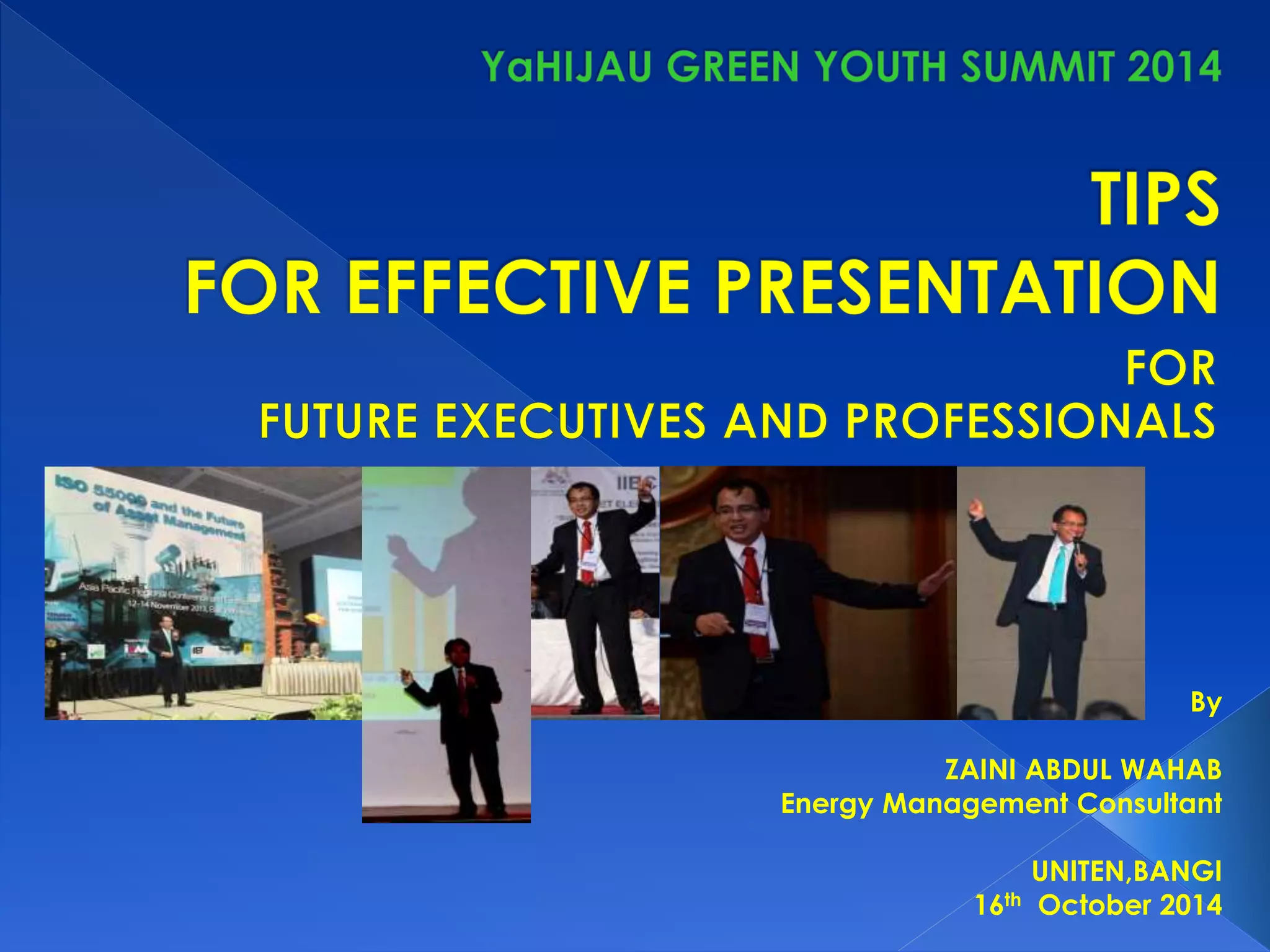
By 
ZAINI ABDUL WAHAB 
Energy Management Consultant 
UNITEN,BANGI 
16th October 2014
 Prerequisites 
 Tips to SPEAK 
 Tips to PRESENT
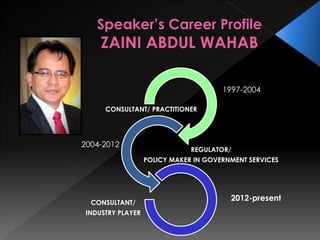
CONSULTANT/ PRACTITIONER 
REGULATOR/ 
POLICY MAKER IN GOVERNMENT SERVICES 
CONSULTANT/ 
INDUSTRY PLAYER 
1997-2004 
2004-2012 
2012-present
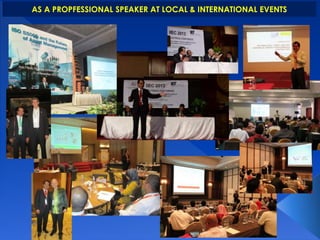
AS A PROPFESSIONAL SPEAKER AT LOCAL & INTERNATIONAL EVENTS
AS A TRAINER FOR CAPACITY BUILDING PROGRAMS
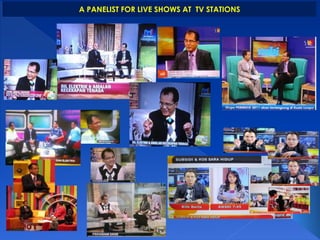
A PANELIST FOR LIVE SHOWS AT TV STATIONS
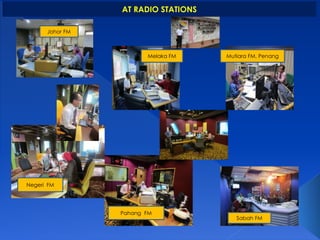
Johor FM 
Melaka FM Mutiara FM, Penang 
Sabah FM 
Pahang FM 
Negeri FM 
AT RADIO STATIONS
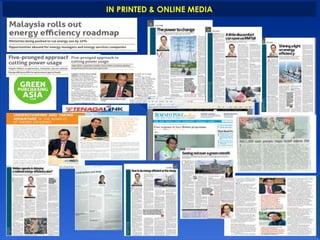
IN PRINTED & ONLINE MEDIA
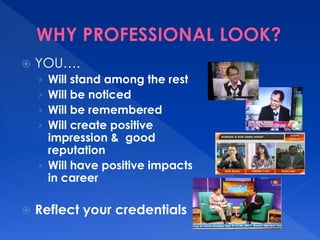
 YOU…. 
› Will stand among the rest 
› Will be noticed 
› Will be remembered 
› Will create positive 
impression & good 
reputation 
› Will have positive impacts 
in career 
 Reflect your credentials
Formal attire is for everyone as a part of the 
international business language
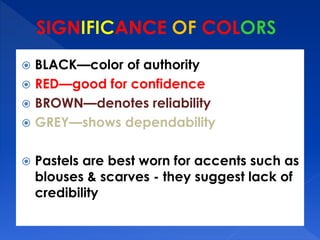
 BLACK—color of authority 
 RED—good for confidence 
 BROWN—denotes reliability 
 GREY—shows dependability 
 Pastels are best worn for accents such as 
blouses & scarves - they suggest lack of 
credibility
 May be the biggest part of effective 
workplace communication 
 It “tells”—gestures and facial expressions tell 
the listener what you are thinking or what your 
attitude is regardless of what you are 
verbalizing 
 Hidden signals conveyed by your body 
 The ‘smile’ factor, building posture, facial 
expressions & eye contact & gestures
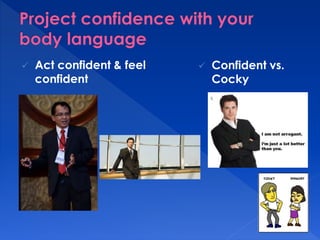
 Act confident & feel 
confident 
 Confident vs. 
Cocky
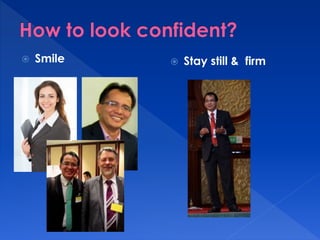
 Smile  Stay still & firm
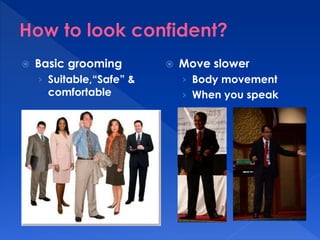
 Basic grooming 
› Suitable,“Safe” & 
comfortable 
 Move slower 
› Body movement 
› When you speak
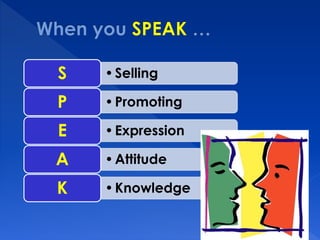
S •Selling 
P •Promoting 
E •Expression 
A •Attitude 
K •Knowledge
 When we speak, our 
listeners get an 
impression of how we feel 
from our tone of voice 
 We can sound pleasant & 
friendly, angry & upset, or 
irritated & frustrated 
 Need to be cautious 
about the tone we use, 
so that we convey our 
message effectively 
 How do you want to be 
perceived? 
 Do you let your 
underlying emotions 
interfere in your daily 
conversations with 
others? 
› If you do, then you 
may be sending the 
wrong messages!
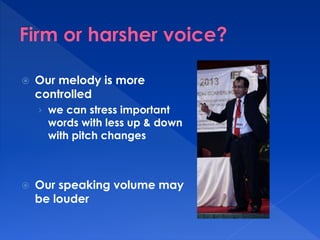
 Our melody is more 
controlled 
› we can stress important 
words with less up & down 
with pitch changes 
 Our speaking volume may 
be louder
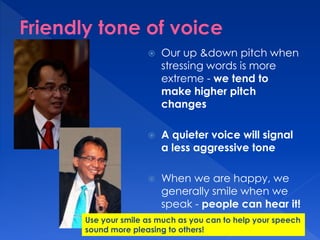
 Our up &down pitch when 
stressing words is more 
extreme - we tend to 
make higher pitch 
changes 
 A quieter voice will signal 
a less aggressive tone 
 When we are happy, we 
generally smile when we 
speak - people can hear it! 
Use your smile as much as you can to help your speech 
sound more pleasing to others!
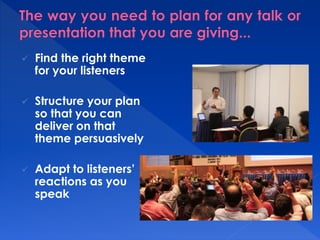
 Find the right theme 
for your listeners 
 Structure your plan 
so that you can 
deliver on that 
theme persuasively 
 Adapt to listeners’ 
reactions as you 
speak
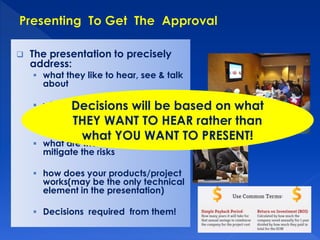
 The presentation to precisely 
address: 
 what they like to hear, see & talk 
about 
Decisions will be based on what 
THEY WANT TO HEAR rather than 
what YOU WANT TO PRESENT! 
 what is the return from the 
investment & how soon they can 
get back the return 
 what are the risks & measures to 
mitigate the risks 
 how does your products/project 
works(may be the only technical 
element in the presentation) 
 Decisions required from them!
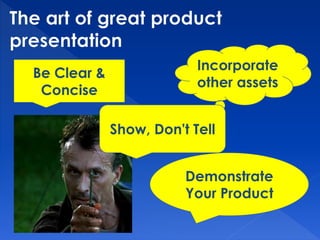
Be Clear & 
Concise 
Incorporate 
other assets 
Show, Don't Tell 
Demonstrate 
Your Product
 Don't have to get 
fancy, make it 
simple! - What's 
the most concise 
way to showcase 
what your 
product/project 
does? 
 How to 
highlight the 
best things 
about it 
› What makes it 
special/unique 
› What would 
make you want 
to get/buy it? 
Be Clear & Concise 
Put yourself on the other side of the fence and sell yourself 
on your own product
Show, Don't Tell 
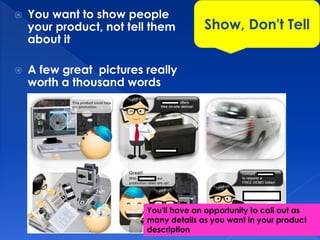
 You want to show people 
your product, not tell them 
about it 
 A few great pictures really 
worth a thousand words 
You'll have an opportunity to call out as 
many details as you want in your product 
description
Demonstrate Your 
Product 
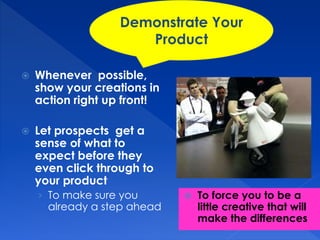
 Whenever possible, 
show your creations in 
action right up front! 
 Let prospects get a 
sense of what to 
expect before they 
even click through to 
your product 
› To make sure you 
already a step ahead 
 To force you to be a 
little creative that will 
make the differences
Incorporate other assets as 
aids your presentation 
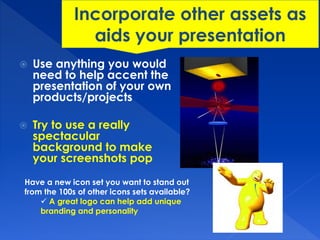
 Use anything you would 
need to help accent the 
presentation of your own 
products/projects 
 Try to use a really 
spectacular 
background to make 
your screenshots pop 
Have a new icon set you want to stand out 
from the 100s of other icons sets available? 
 A great logo can help add unique 
branding and personality
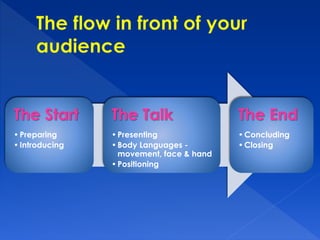
The Start 
• Preparing 
• Introducing 
The Talk 
• Presenting 
• Body Languages - 
movement, face & hand 
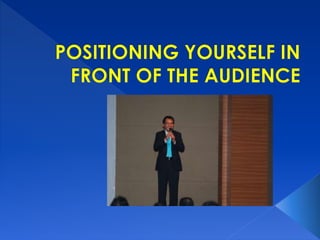
• Positioning 
The End 
•Concluding 
• Closing
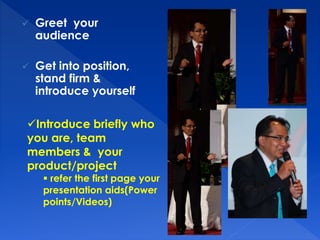
 Greet your 
audience 
 Get into position, 
stand firm & 
introduce yourself 
Introduce briefly who 
you are, team 
members & your 
product/project 
 refer the first page your 
presentation aids(Power 
points/Videos)
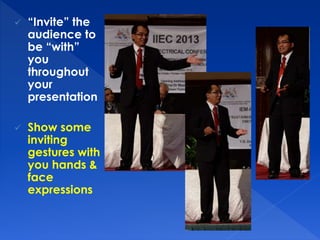
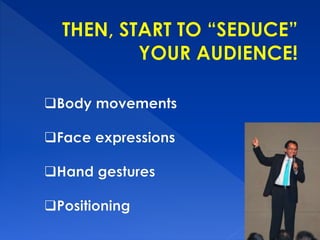
 “Invite” the 
audience to 
be “with” 
you 
throughout 
your 
presentation 
 Show some 
inviting 
gestures with 
you hands & 
face 
expressions
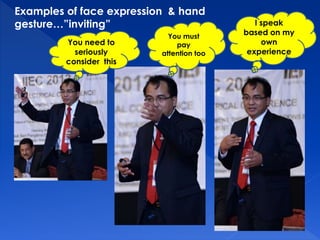
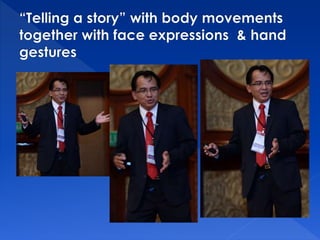
Examples of face expression & hand 
gesture…”inviting” 
You need to 
seriously 
consider this 
You must 
pay 
attention too 
I speak 
based on my 
own 
experience
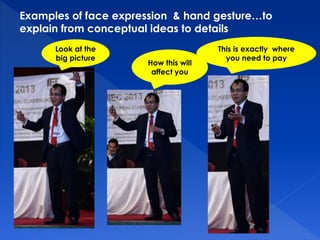
Examples of face expression & hand gesture…to 
explain from conceptual ideas to details 
Look at the 
big picture 
How this will 
affect you 
This is exactly where 
you need to pay
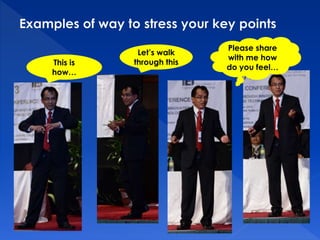
This is 
how… 
Let’s walk 
through this 
Please share 
with me how 
do you feel…
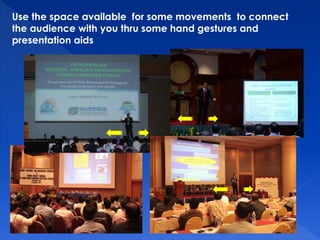
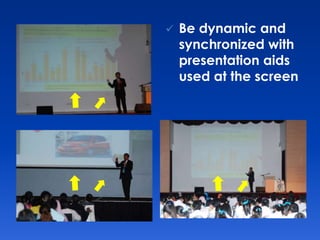
Use the space available for some movements to connect 
the audience with you thru some hand gestures and 
presentation aids
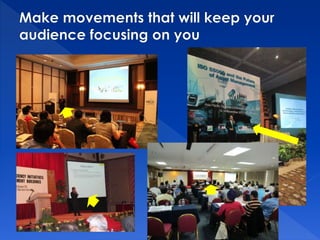
 Be dynamic and 
synchronized with 
presentation aids 
used at the screen
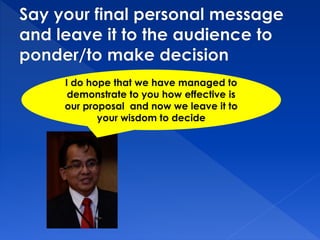
I do hope that we have managed to 
demonstrate to you how effective is 
our proposal and now we leave it to 
your wisdom to decide
PRESENT LIKE A GREAT SALES MAN!
TIPS FOR ON STAGE PRESENTATION FOR EXECUTIVES AND PROFESSIONALS

TIPS FOR ON STAGE PRESENTATION FOR EXECUTIVES AND PROFESSIONALS

  • 1.
    By ZAINI ABDULWAHAB Energy Management Consultant UNITEN,BANGI 16th October 2014
  • 2.
     Prerequisites Tips to SPEAK  Tips to PRESENT
  • 3.
    CONSULTANT/ PRACTITIONER REGULATOR/ POLICY MAKER IN GOVERNMENT SERVICES CONSULTANT/ INDUSTRY PLAYER 1997-2004 2004-2012 2012-present
  • 4.
    AS A PROPFESSIONALSPEAKER AT LOCAL & INTERNATIONAL EVENTS
  • 5.
    AS A TRAINERFOR CAPACITY BUILDING PROGRAMS
  • 6.
    A PANELIST FORLIVE SHOWS AT TV STATIONS
  • 7.
    Johor FM MelakaFM Mutiara FM, Penang Sabah FM Pahang FM Negeri FM AT RADIO STATIONS
  • 8.
    IN PRINTED &ONLINE MEDIA
  • 10.
     YOU…. ›Will stand among the rest › Will be noticed › Will be remembered › Will create positive impression & good reputation › Will have positive impacts in career  Reflect your credentials
  • 11.
    Formal attire isfor everyone as a part of the international business language
  • 12.
     BLACK—color ofauthority  RED—good for confidence  BROWN—denotes reliability  GREY—shows dependability  Pastels are best worn for accents such as blouses & scarves - they suggest lack of credibility
  • 13.
     May bethe biggest part of effective workplace communication  It “tells”—gestures and facial expressions tell the listener what you are thinking or what your attitude is regardless of what you are verbalizing  Hidden signals conveyed by your body  The ‘smile’ factor, building posture, facial expressions & eye contact & gestures
  • 14.
     Act confident& feel confident  Confident vs. Cocky
  • 15.
     Smile Stay still & firm
  • 16.
     Basic grooming › Suitable,“Safe” & comfortable  Move slower › Body movement › When you speak
  • 17.
    S •Selling P•Promoting E •Expression A •Attitude K •Knowledge
  • 18.
     When wespeak, our listeners get an impression of how we feel from our tone of voice  We can sound pleasant & friendly, angry & upset, or irritated & frustrated  Need to be cautious about the tone we use, so that we convey our message effectively  How do you want to be perceived?  Do you let your underlying emotions interfere in your daily conversations with others? › If you do, then you may be sending the wrong messages!
  • 19.
     Our melodyis more controlled › we can stress important words with less up & down with pitch changes  Our speaking volume may be louder
  • 20.
     Our up&down pitch when stressing words is more extreme - we tend to make higher pitch changes  A quieter voice will signal a less aggressive tone  When we are happy, we generally smile when we speak - people can hear it! Use your smile as much as you can to help your speech sound more pleasing to others!
  • 21.
     Find theright theme for your listeners  Structure your plan so that you can deliver on that theme persuasively  Adapt to listeners’ reactions as you speak
  • 23.
     The presentationto precisely address:  what they like to hear, see & talk about Decisions will be based on what THEY WANT TO HEAR rather than what YOU WANT TO PRESENT!  what is the return from the investment & how soon they can get back the return  what are the risks & measures to mitigate the risks  how does your products/project works(may be the only technical element in the presentation)  Decisions required from them!
  • 25.
    Be Clear & Concise Incorporate other assets Show, Don't Tell Demonstrate Your Product
  • 26.
     Don't haveto get fancy, make it simple! - What's the most concise way to showcase what your product/project does?  How to highlight the best things about it › What makes it special/unique › What would make you want to get/buy it? Be Clear & Concise Put yourself on the other side of the fence and sell yourself on your own product
  • 27.
    Show, Don't Tell  You want to show people your product, not tell them about it  A few great pictures really worth a thousand words You'll have an opportunity to call out as many details as you want in your product description
  • 28.
    Demonstrate Your Product  Whenever possible, show your creations in action right up front!  Let prospects get a sense of what to expect before they even click through to your product › To make sure you already a step ahead  To force you to be a little creative that will make the differences
  • 29.
    Incorporate other assetsas aids your presentation  Use anything you would need to help accent the presentation of your own products/projects  Try to use a really spectacular background to make your screenshots pop Have a new icon set you want to stand out from the 100s of other icons sets available?  A great logo can help add unique branding and personality
  • 30.
    The Start •Preparing • Introducing The Talk • Presenting • Body Languages - movement, face & hand • Positioning The End •Concluding • Closing
  • 32.
     Greet your audience  Get into position, stand firm & introduce yourself Introduce briefly who you are, team members & your product/project  refer the first page your presentation aids(Power points/Videos)
  • 34.
     “Invite” the audience to be “with” you throughout your presentation  Show some inviting gestures with you hands & face expressions
  • 36.
    Examples of faceexpression & hand gesture…”inviting” You need to seriously consider this You must pay attention too I speak based on my own experience
  • 37.
    Examples of faceexpression & hand gesture…to explain from conceptual ideas to details Look at the big picture How this will affect you This is exactly where you need to pay
  • 38.
    This is how… Let’s walk through this Please share with me how do you feel…
  • 41.
    Use the spaceavailable for some movements to connect the audience with you thru some hand gestures and presentation aids
  • 43.
     Be dynamicand synchronized with presentation aids used at the screen
  • 46.
    I do hopethat we have managed to demonstrate to you how effective is our proposal and now we leave it to your wisdom to decide
  • 47.
    PRESENT LIKE AGREAT SALES MAN!

Editor's Notes

  • #22 • Find the right theme for your listener – in the case of the main theme around which you are talking, it is extremely helpful if you have a pithy and punchy headline which sums up your topic. This may sound obvious but even at this initial stage you should be engaging your creative right brain. What will add colour, imagination and excitement to your words? Get creative and find a headline that stimulates your listener curiosity, so that they arrive in an inquisitive frame of mind. • Structure your plan so that you can deliver on that theme persuasively – As to how to structure your words, this is even more critical for anyone who wants to be able to improvise. The reality is that when it comes to thinking on your feet, your plan will help with engagement by imposing order on your communication. And the three essential planks of your planning process are to define the central core of your topic, to separate ideas out distinctly from one another, and to create momentum in your words so that you move your listeners smoothly from point A to B to C.   Adapt to listeners’ reactions as you speak – don’t slavishly prepare a script; rather base your communication around the knowledge you have, ask questions and trust that it is in the interaction that the power and memorability of presentation occurs.  
  • #26 Be Clear & Concise There's a great quote from Mark Twain that says "Use the right word, not its second cousin.", which is not only great advice for writers, but designers as well. You don't have to get fancy when you present your products. Instead, think simply. What's the clearest and most concise way to showcase what your product does? Figure out how you can highlight the best things about a particular item. What makes it special? Unique? What would make you want to buy it? Since you're also a customer, put yourself on the other side of the fence and sell yourself on your own product.
  • #27 Be Clear & Concise There's a great quote from Mark Twain that says "Use the right word, not its second cousin.", which is not only great advice for writers, but designers as well. You don't have to get fancy when you present your products. Instead, think simply. What's the clearest and most concise way to showcase what your product does? Figure out how you can highlight the best things about a particular item. What makes it special? Unique? What would make you want to buy it? Since you're also a customer, put yourself on the other side of the fence and sell yourself on your own product.
  • #28 Show, Don't Tell This is an old writing adage that some of us may remember from our freshman composition courses, but it's no less relevant here. When you have limited space to work with, you probably don't want to use up precious real estate with a lot of words. You want to show people your product, not tell them about it. Don't worry, you'll have an opportunity to call out as many details as you want in your product description, but when it comes to your screenshots, a picture really is worth a thousand words.
  • #29 Demonstrate Your Product When it's possible, show your creations in action right up front. If customers can get a sense of what to expect before they even click through to your product, you're already a step ahead. This can be easier to do with some products over others, but that just forces you to be a little creative. And often times, a little creativity goes a long way.
  • #30 Incorporate Other Assets With a marketplace full of amazing design goods at your disposal, you can find just about anything you would need to help accent the presentation of your own products. Have a really great font you're selling? Try using a really spectacular background to make your screenshots pop. Do you have a new icon set you want to stand out from the 100s of other icons sets available? A great logo can help add unique branding and personality. You might even ask another designer to help you create something really special.