By
ZAINI ABDUL WAHAB
ENERGY AUDIT :
APPROACH & METHODOLOGY (PART 3)
1
ENERGY EFFICIENCY INFORMATION
SHARING SERIES
PART 3:
Energy Audit Report &
Presentation
2
Prepare Energy Audit Report
 After successfully carried out energy audit
energy manager/energy auditor should report to
the top management for effective
communication and implementation
 The report format should be tailored to make it
more attractive to the management
3
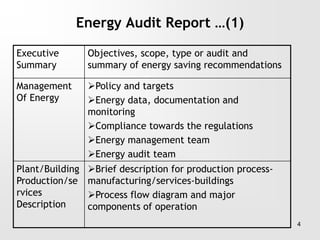
Energy Audit Report …(1)
Executive
Summary
Objectives, scope, type or audit and
summary of energy saving recommendations
Management
Of Energy
Policy and targets
Energy data, documentation and
monitoring
Compliance towards the regulations
Energy management team
Energy audit team
Plant/Building
Production/se
rvices
Description
Brief description for production process-
manufacturing/services-buildings
Process flow diagram and major
components of operation
4
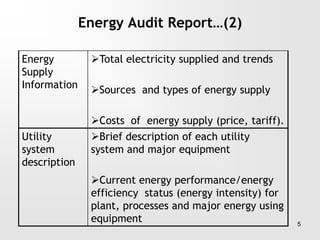
Energy Audit Report…(2)
Energy
Supply
Information
Total electricity supplied and trends
Sources and types of energy supply
Costs of energy supply (price, tariff).
Utility
system
description
Brief description of each utility
system and major equipment
Current energy performance/energy
efficiency status (energy intensity) for
plant, processes and major energy using
equipment 5
6
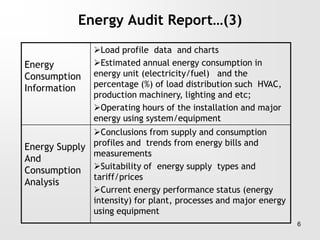
Energy Audit Report…(3)
Energy
Consumption
Information
Load profile data and charts
Estimated annual energy consumption in
energy unit (electricity/fuel) and the
percentage (%) of load distribution such HVAC,
production machinery, lighting and etc;
Operating hours of the installation and major
energy using system/equipment
Energy Supply
And
Consumption
Analysis
Conclusions from supply and consumption
profiles and trends from energy bills and
measurements
Suitability of energy supply types and
tariff/prices
Current energy performance status (energy
intensity) for plant, processes and major energy
using equipment
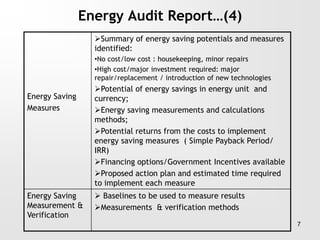
Energy Audit Report…(4)
Energy Saving
Measures
Summary of energy saving potentials and measures
identified:
•No cost/low cost : housekeeping, minor repairs
•High cost/major investment required: major
repair/replacement / introduction of new technologies
Potential of energy savings in energy unit and
currency;
Energy saving measurements and calculations
methods;
Potential returns from the costs to implement
energy saving measures ( Simple Payback Period/
IRR)
Financing options/Government Incentives available
Proposed action plan and estimated time required
to implement each measure
Energy Saving
Measurement &
Verification
 Baselines to be used to measure results
Measurements & verification methods
7
What is the next steps?
• To convince the decision makers and
key players in the organization
• Mostly decision makers are with no or
little technical background and
generally more concern on core
businesses and financial returns!
8
ACTIVITY#2
9
Please list the possible selling points to
implement ESMs to the management
• ………………………………………………
………………………………………………
………………………………………………
………………………………………………
………………………………………………
………………………………………………
………………………………………………
………………………………………………
……………………………………………...
10
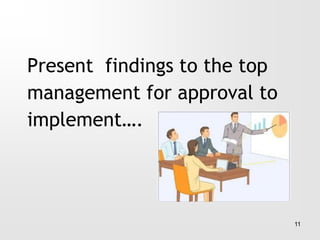
Present findings to the top
management for approval to
implement….
11
Present Findings
 To convince the top management to implement
energy saving measures – require investments
 To present key data that the management team
members are keen to see for making decisions
12
Tips to convince the top management
1. Convince other key players -supports from other key
departments/division(finance, production & etc)
2. Prepare effective presentation materials or write ups
 Strong business case in key points
 Specifically structured and prepared
 All possible key points to attract their attention must be carefully studied and
identified
 To be tailored in the proposal- all possible doubts, concerns or points to argue
have been addressed
3. The presentation
 The presenter must be able to present it confidently and convincingly
 To highlight key points
• economic benefits
• contribution to profitability
• improvement of energy performance
• faster and high returns for investments
• high success factors
• technical feasibility -proven technologies and case studies 13
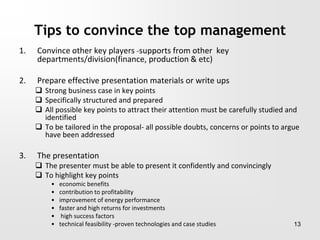
Example of Successful ESMs Implementation:
Private Commercial Shopping Complex …(1)
Areas of Implementation:
 Transformers
 Cooling System – Chillers, Cooling Towers, AHUs, CHW & CDW Pumps
 Lighting System – Internal, External & Parking
 Demand Controls
Total Actual Saving Achieved
= RM 1,495,000/year
14
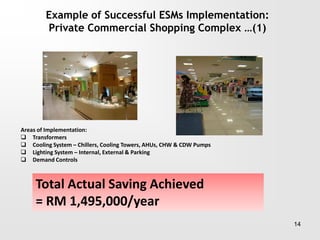
Example of Successful ESMs Implementation:
Private Industrial Warehouse …(2)
Application Areas:
- Fluorescent Lamps
- High bay Lighting - HID
Total Annual Actual Saving Achieved
= 42.2%
= 3,283,200 kWh,
= RM 920,000 15
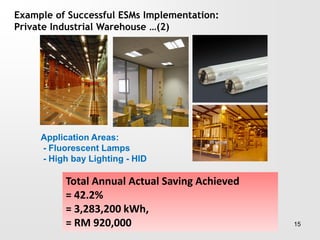
Example of Successful ESMs Implementation : Pilot Project for
Public Lighting -Comparison Before & After Implementation
(Before) Conventional HID 250W (After) LED 150W
16
17
Make the findings from energy
audit useful!
zainiabdulwahab@yahoo.com
019 2152700
www.goingee.blogspot.com.my
www.facebook/zaini.abdulwahab1 18
THANK YOU!

Introduction to energy audit part 3

  • 1.
    By ZAINI ABDUL WAHAB ENERGYAUDIT : APPROACH & METHODOLOGY (PART 3) 1 ENERGY EFFICIENCY INFORMATION SHARING SERIES
  • 2.
    PART 3: Energy AuditReport & Presentation 2
  • 3.
    Prepare Energy AuditReport  After successfully carried out energy audit energy manager/energy auditor should report to the top management for effective communication and implementation  The report format should be tailored to make it more attractive to the management 3
  • 4.
    Energy Audit Report…(1) Executive Summary Objectives, scope, type or audit and summary of energy saving recommendations Management Of Energy Policy and targets Energy data, documentation and monitoring Compliance towards the regulations Energy management team Energy audit team Plant/Building Production/se rvices Description Brief description for production process- manufacturing/services-buildings Process flow diagram and major components of operation 4
  • 5.
    Energy Audit Report…(2) Energy Supply Information Totalelectricity supplied and trends Sources and types of energy supply Costs of energy supply (price, tariff). Utility system description Brief description of each utility system and major equipment Current energy performance/energy efficiency status (energy intensity) for plant, processes and major energy using equipment 5
  • 6.
    6 Energy Audit Report…(3) Energy Consumption Information Loadprofile data and charts Estimated annual energy consumption in energy unit (electricity/fuel) and the percentage (%) of load distribution such HVAC, production machinery, lighting and etc; Operating hours of the installation and major energy using system/equipment Energy Supply And Consumption Analysis Conclusions from supply and consumption profiles and trends from energy bills and measurements Suitability of energy supply types and tariff/prices Current energy performance status (energy intensity) for plant, processes and major energy using equipment
  • 7.
    Energy Audit Report…(4) EnergySaving Measures Summary of energy saving potentials and measures identified: •No cost/low cost : housekeeping, minor repairs •High cost/major investment required: major repair/replacement / introduction of new technologies Potential of energy savings in energy unit and currency; Energy saving measurements and calculations methods; Potential returns from the costs to implement energy saving measures ( Simple Payback Period/ IRR) Financing options/Government Incentives available Proposed action plan and estimated time required to implement each measure Energy Saving Measurement & Verification  Baselines to be used to measure results Measurements & verification methods 7
  • 8.
    What is thenext steps? • To convince the decision makers and key players in the organization • Mostly decision makers are with no or little technical background and generally more concern on core businesses and financial returns! 8
  • 9.
  • 10.
    Please list thepossible selling points to implement ESMs to the management • ……………………………………………… ……………………………………………… ……………………………………………… ……………………………………………… ……………………………………………… ……………………………………………… ……………………………………………… ……………………………………………… ……………………………………………... 10
  • 11.
    Present findings tothe top management for approval to implement…. 11
  • 12.
    Present Findings  Toconvince the top management to implement energy saving measures – require investments  To present key data that the management team members are keen to see for making decisions 12
  • 13.
    Tips to convincethe top management 1. Convince other key players -supports from other key departments/division(finance, production & etc) 2. Prepare effective presentation materials or write ups  Strong business case in key points  Specifically structured and prepared  All possible key points to attract their attention must be carefully studied and identified  To be tailored in the proposal- all possible doubts, concerns or points to argue have been addressed 3. The presentation  The presenter must be able to present it confidently and convincingly  To highlight key points • economic benefits • contribution to profitability • improvement of energy performance • faster and high returns for investments • high success factors • technical feasibility -proven technologies and case studies 13
  • 14.
    Example of SuccessfulESMs Implementation: Private Commercial Shopping Complex …(1) Areas of Implementation:  Transformers  Cooling System – Chillers, Cooling Towers, AHUs, CHW & CDW Pumps  Lighting System – Internal, External & Parking  Demand Controls Total Actual Saving Achieved = RM 1,495,000/year 14
  • 15.
    Example of SuccessfulESMs Implementation: Private Industrial Warehouse …(2) Application Areas: - Fluorescent Lamps - High bay Lighting - HID Total Annual Actual Saving Achieved = 42.2% = 3,283,200 kWh, = RM 920,000 15
  • 16.
    Example of SuccessfulESMs Implementation : Pilot Project for Public Lighting -Comparison Before & After Implementation (Before) Conventional HID 250W (After) LED 150W 16
  • 17.
    17 Make the findingsfrom energy audit useful!
  • 18.