Dr. Jagannath K. Dange
Department of Education
Kuvempu University
Shankaraghatta
Dist: Shimoga. Karnataka.India.
jkdange@gmail.com
http://jkdange.blogspot.com
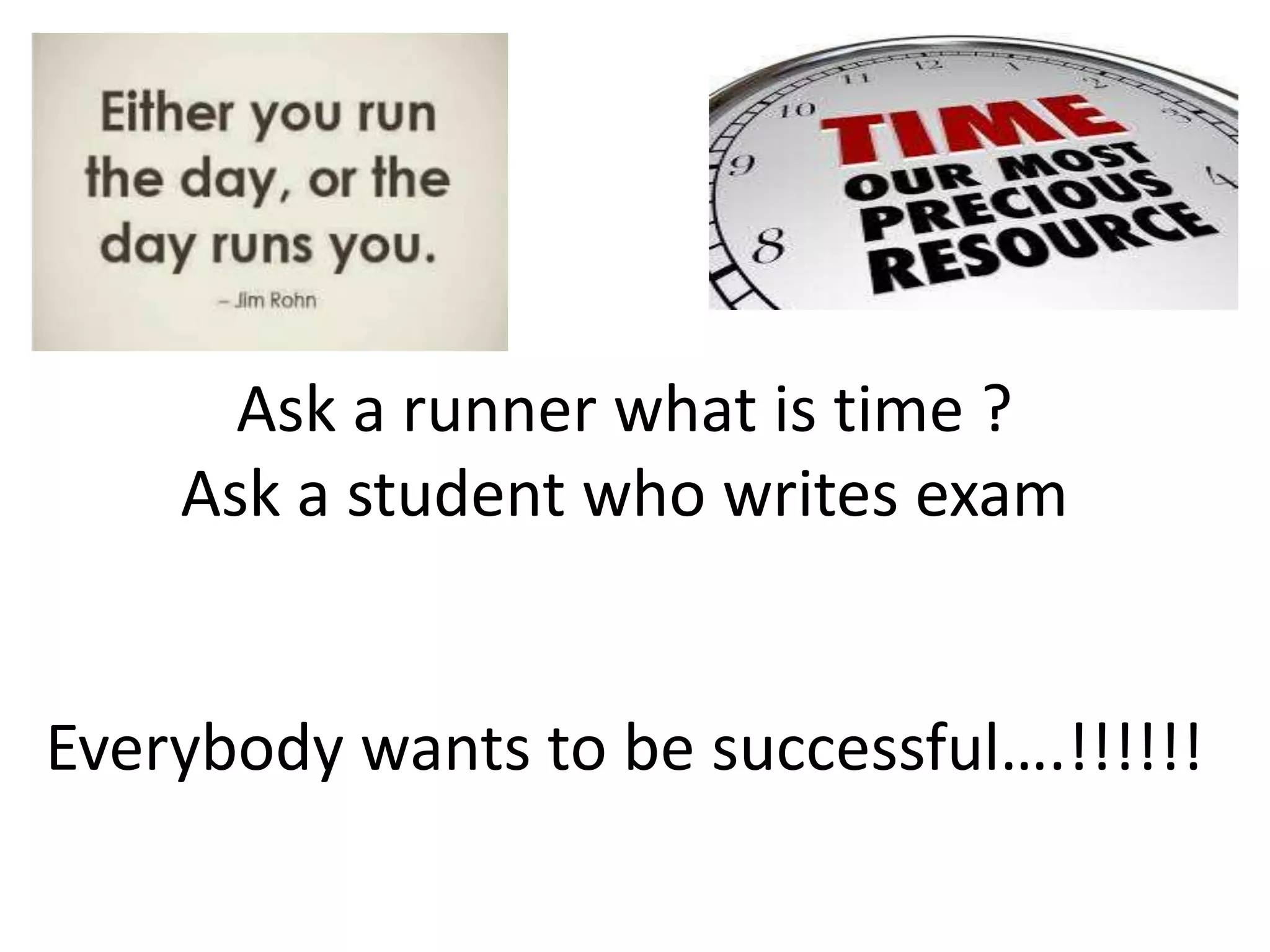
Ask a runner what is time ?
Ask a student who writes exam
Everybody wants to be successful….!!!!!!
3
Hear me Now, Believe me Later
• Being successful doesn’t make
you manage your time well.
• Managing your time well makes
you successful.
4
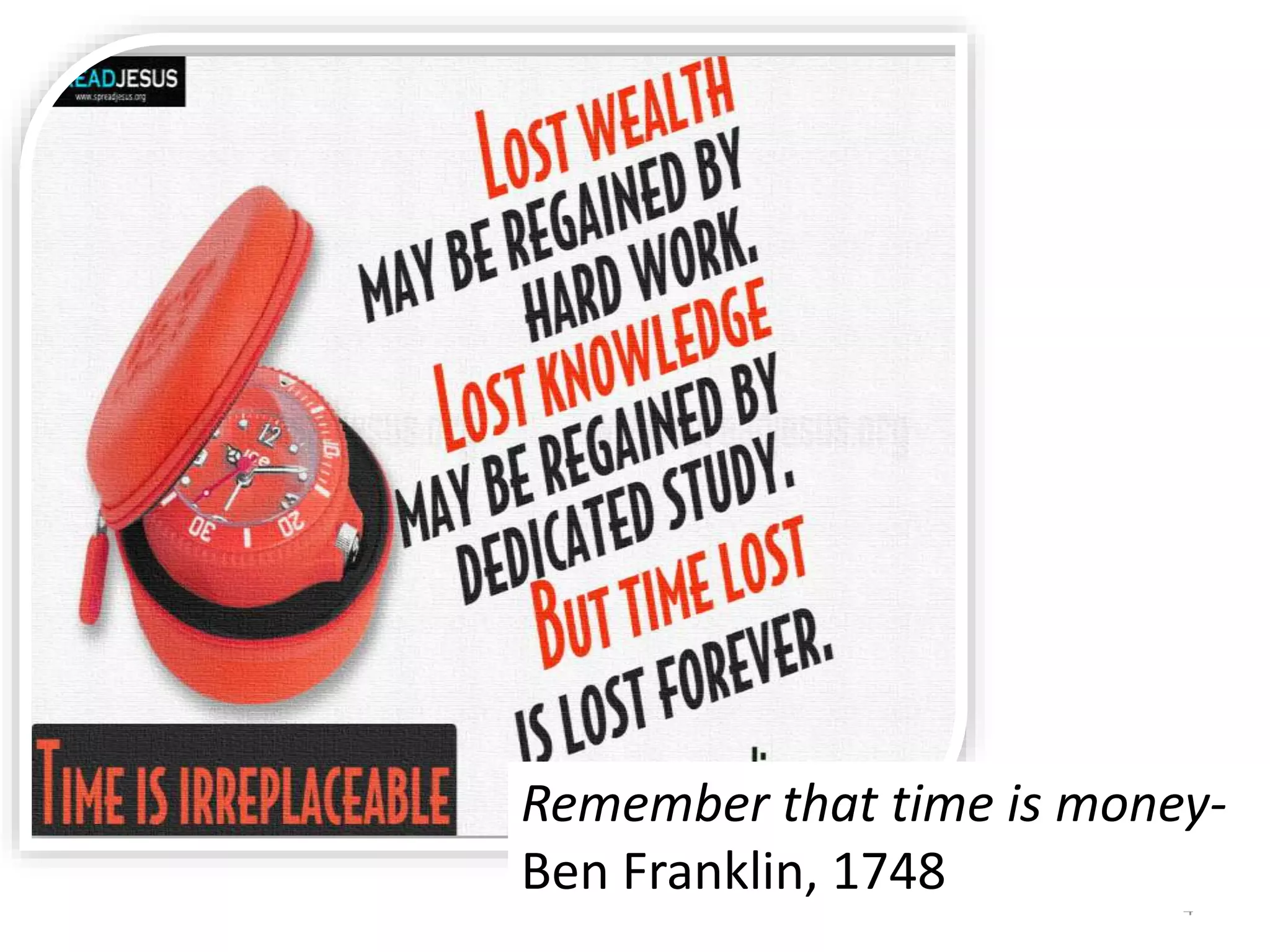
Remember that time is money-
Ben Franklin, 1748
Time and Opportunities never wait for any
body
Time can buy you anything only when you
can respect it and accept as it comes
Never blame for time (situation) you are in –
as you are the one who make for it
Time Management
Time Management refers to managing time
effectively so that the right time is allocated to
the right activity.
Time management is the act of taking conscious
control over the amount of time spent on
specific activities.
You exercise time management to increase
productivity, effectiveness and efficiency.
You practice skills and use tools and techniques
to aid you when accomplishing tasks, projects or
are working toward goals and deadlines.
Why Do We Need TM?
• To save time.
• To reduce stress.
• To increase our work output.
• To have more control over our job/
responsibilities.
Time Management 8
Obstacles to effective time management
Unclear objectives
Disorganization
Inability to say “no”
Time Management 9
Interruptions
More interruptions
Periods of inactivity
Time Management 10
Too many things at once
Stress and fatigue
All work and no play
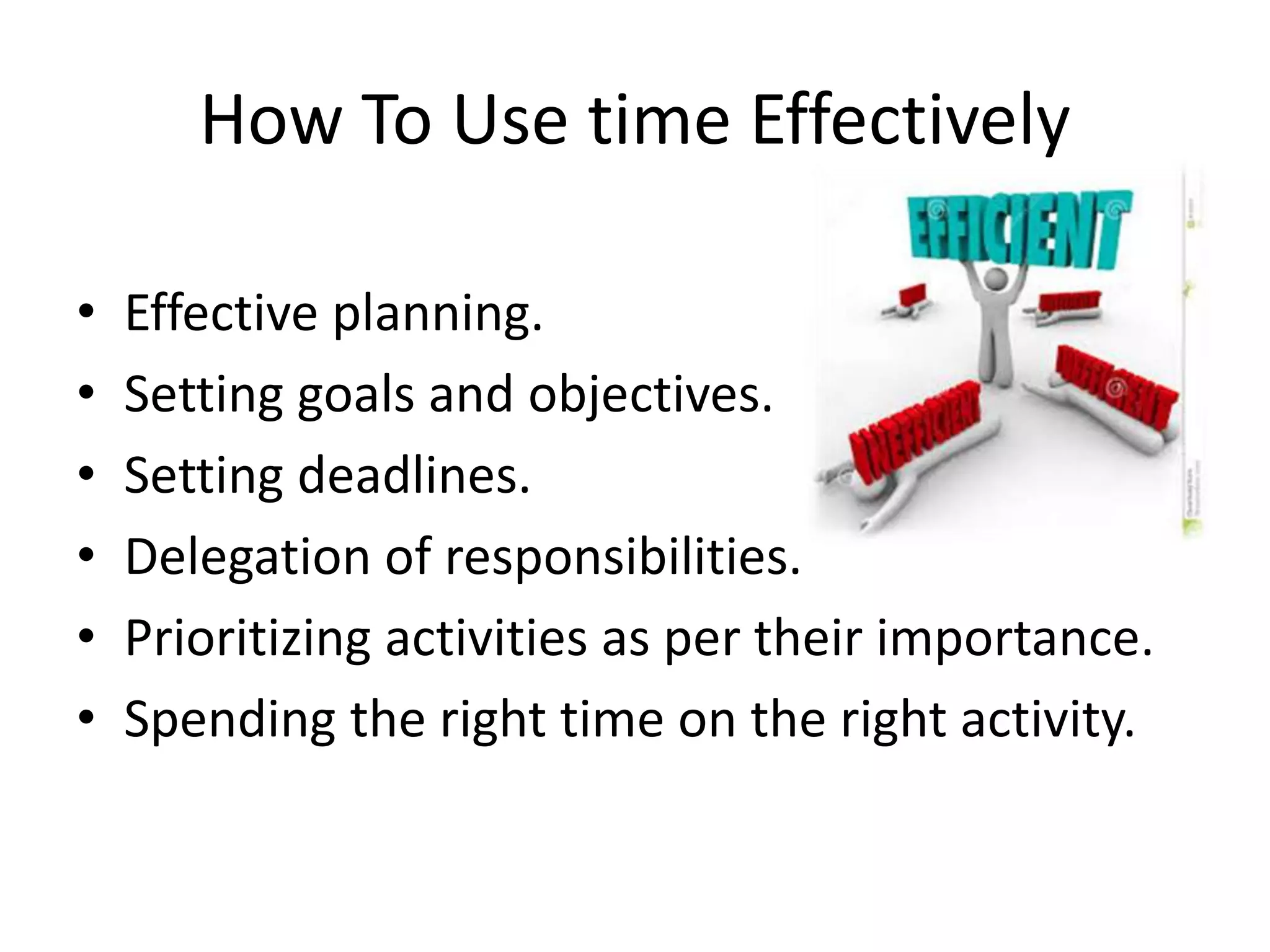
How To Use time Effectively
• Effective planning.
• Setting goals and objectives.
• Setting deadlines.
• Delegation of responsibilities.
• Prioritizing activities as per their importance.
• Spending the right time on the right activity.
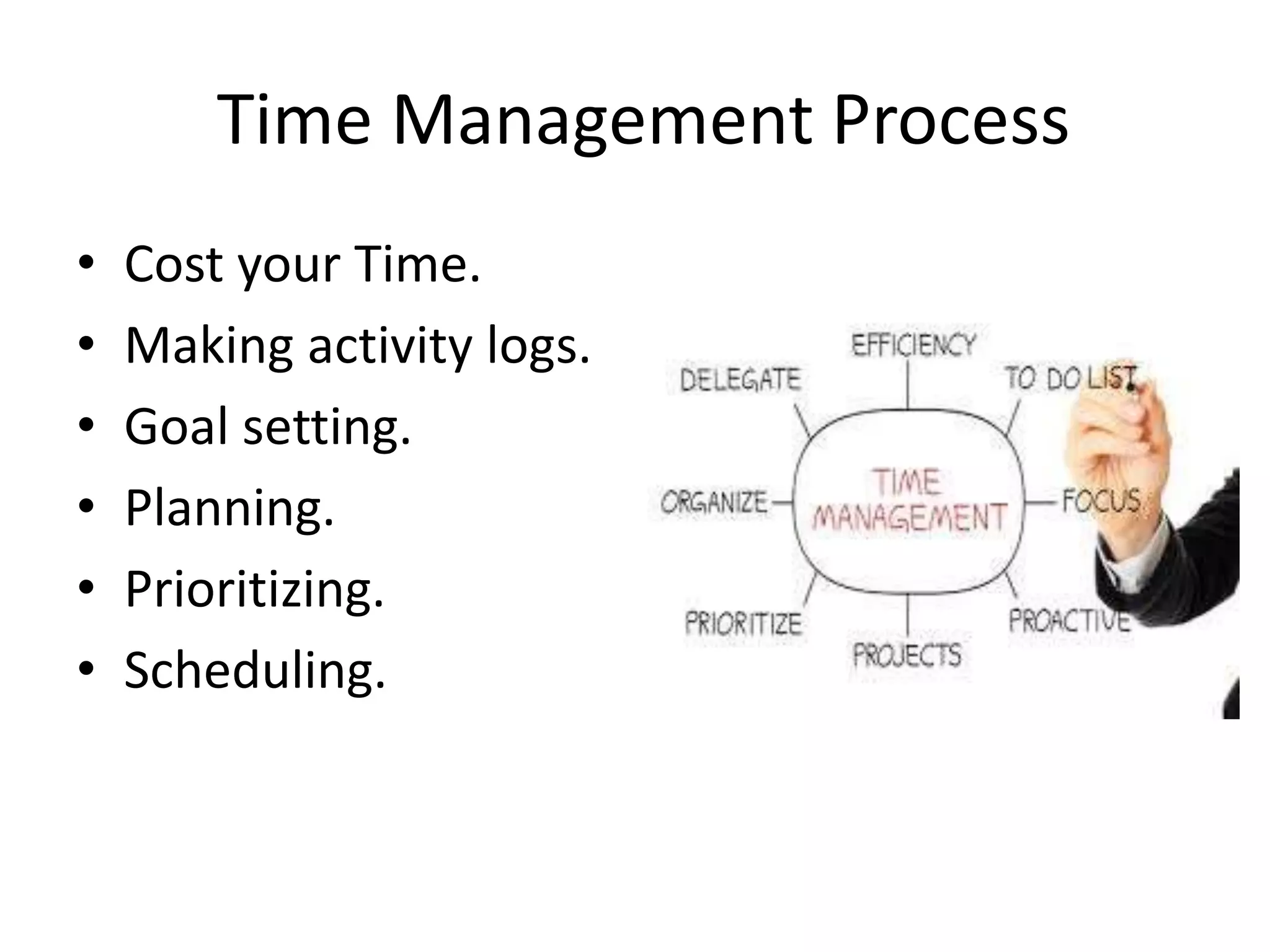
Time Management Process
• Cost your Time.
• Making activity logs.
• Goal setting.
• Planning.
• Prioritizing.
• Scheduling.
1,Costing your Time
• Understand the true value by calculating your
cost per year
• Cost per year=(MONEY + EFFORT + space +
equipment + profit you generate)
2,Making Activity Logs
• Make a realistic estimate of time spend during
day on ACTIVITIES.
• Pinpoint the critical areas.
• Finding the high yeilding time of our day.
3,Goal Setting
• Setting lifetime goals help to chart your life
course and your career path.
• Breakup your lifetime goal in smaller goals.
• Make a daily To-Do list.
• Revise and update your list on daily bases and
judge your performance.
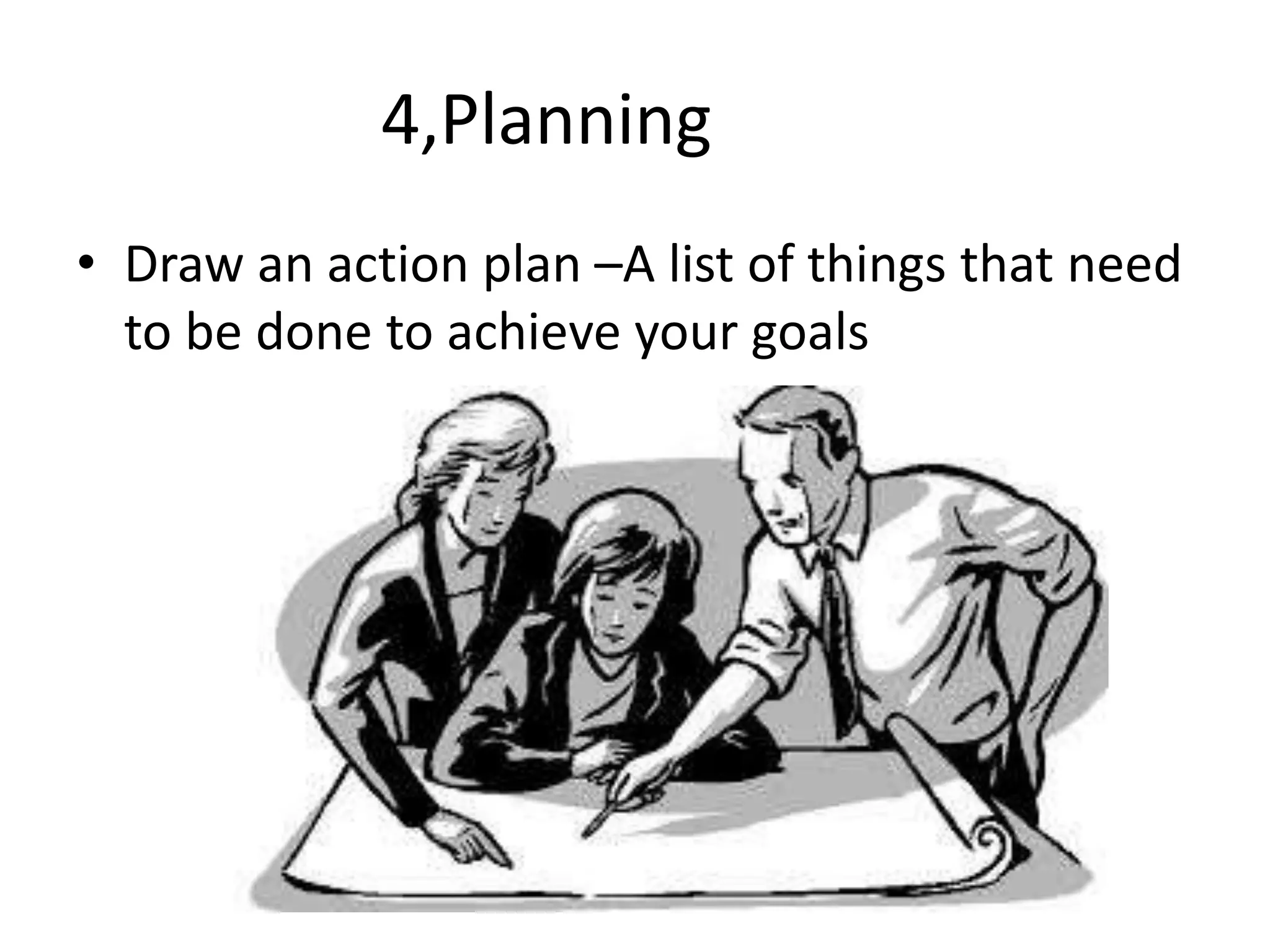
4,Planning
• Draw an action plan –A list of things that need
to be done to achieve your goals
5,Prioritizing
• Make a To-Do List.
• Consider the value of the task before to Do-
• Is it worth spending your time and resources.
• Prioritize your task- The most important jobs
should be completed first followed by other
jobs.
Scheduling
• Make a realistic estimate of how much
you can do.
• Plan to make the best use of the available
time.
• Reserve some contingency time to deal
with ‘unexpected jobs’.
• Minimize stress by avoiding commitment
by yourself and others.
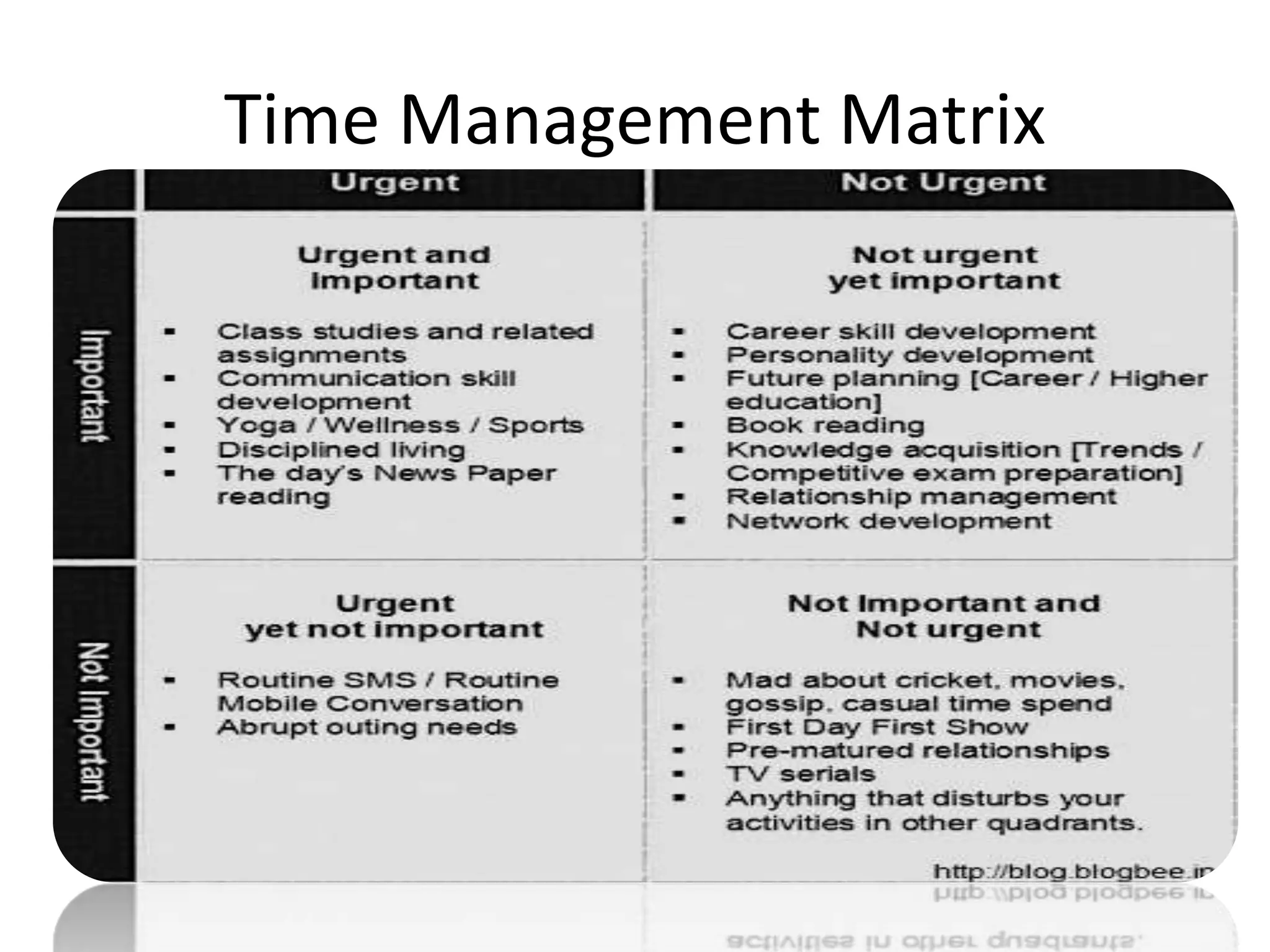
Time Management Matrix
20
Scheduling Yourself
• You don’t find time for important things, you
make it
• Everything you do is an opportunity cost
• Learn to say “No” -
• Gentle No-“I’ll do it if nobody else steps
forward” or “I’ll be your deep fall back,” but
you have to keep searching.
21
Everyone has Good and Bad Times
• Find your creative/thinking time.
• Defend it ruthlessly, spend it alone, maybe at
home.
• Find your dead time. Schedules/classes/
meetings, phone calls.
22
Cutting Things Short
• “I’m in the middle of something now…”
• Start with “I only have 5 minutes” – you can always
extend this
• Stand up, stroll to the door, complement, thank,
shake hands
• Clock-watching; on wall behind them
23
Procrastination
“Procrastination is the
thief of time”
Edward Young
Night Thoughts, 1742
24
Avoiding Procrastination
• Doing things at the last minute is much more
expensive than just before the last minute
• Deadlines are really important: establish
them yourself!
25
Technology
• “Computers are faster but they take longer”
--Janitor, UCF
26
Technology
• Laptop/ computer (and docking station)
– You can scavenge time & work anywhere
• WWW; only do things once (post them)
• Google (now with image search!)
• Digital Library (I haven’t been in the library in over
five years)
27
General Advice
• Kill your television(how
badly do you want tenure or your degree?)
• Eat and sleep and exercise.Above
all else!
How To Manage Time
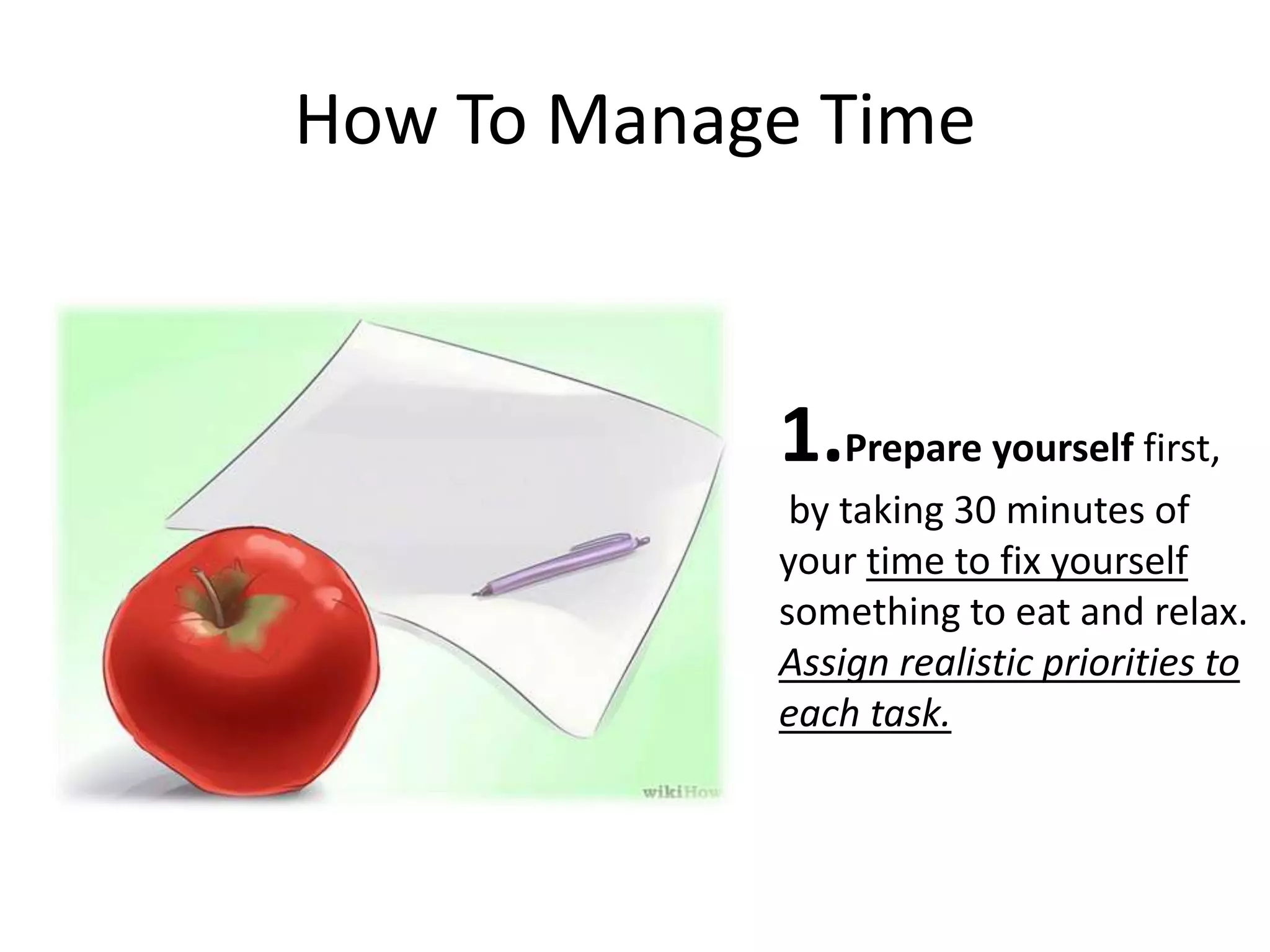
1.Prepare yourself first,
by taking 30 minutes of
your time to fix yourself
something to eat and relax.
Assign realistic priorities to
each task.
2.Balance your effort.
Work on small portions every
day of work that will be due
by the end of the week,
starting with the most
important tasks first.
How To Manage Time
How To Manage Time
3.Focus on your most productive
time of day.
Some people work better in the
morning, and some are more
focused in the evening.
How To Manage Time
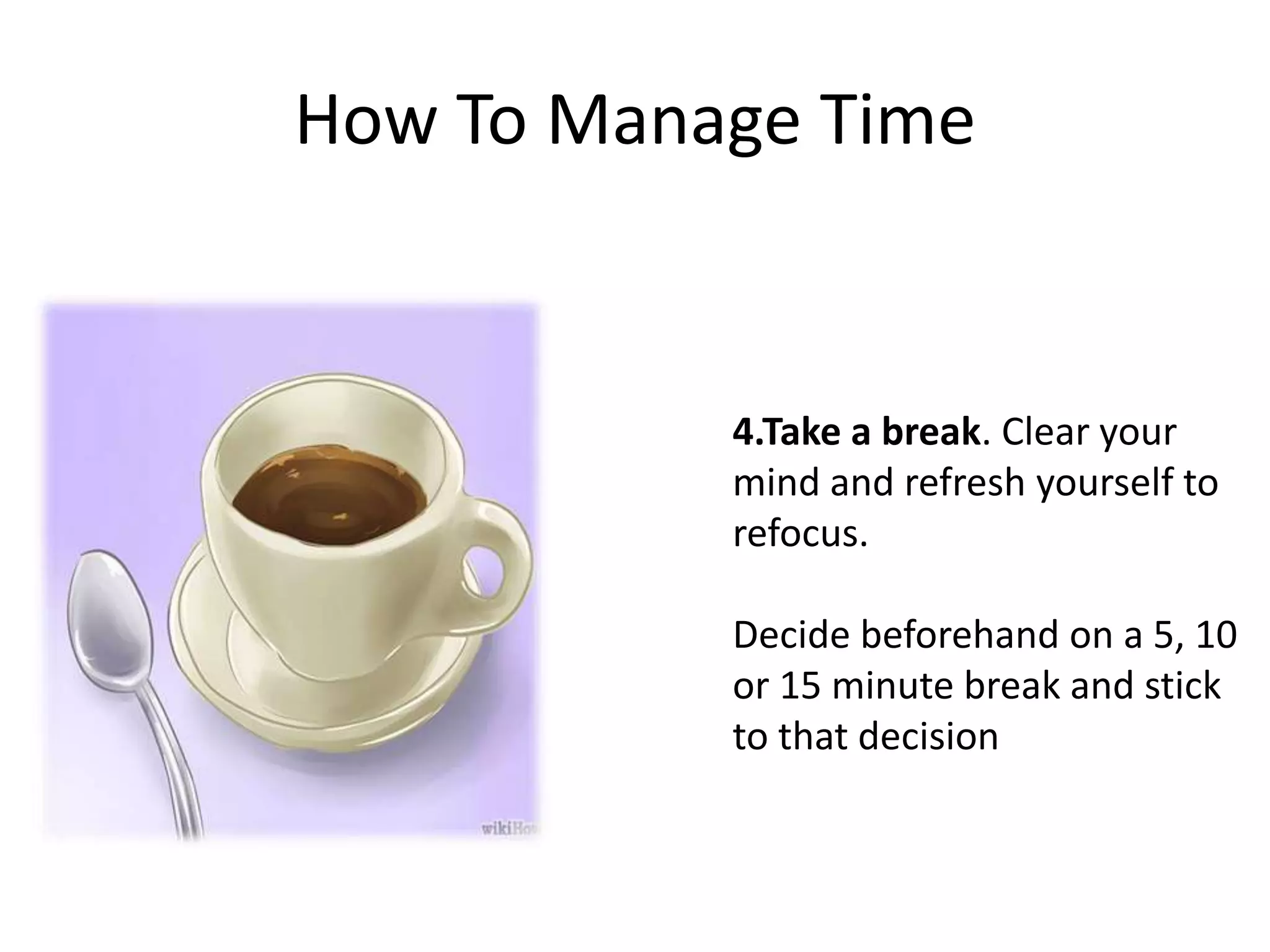
4.Take a break. Clear your
mind and refresh yourself to
refocus.
Decide beforehand on a 5, 10
or 15 minute break and stick
to that decision
How To Manage Time
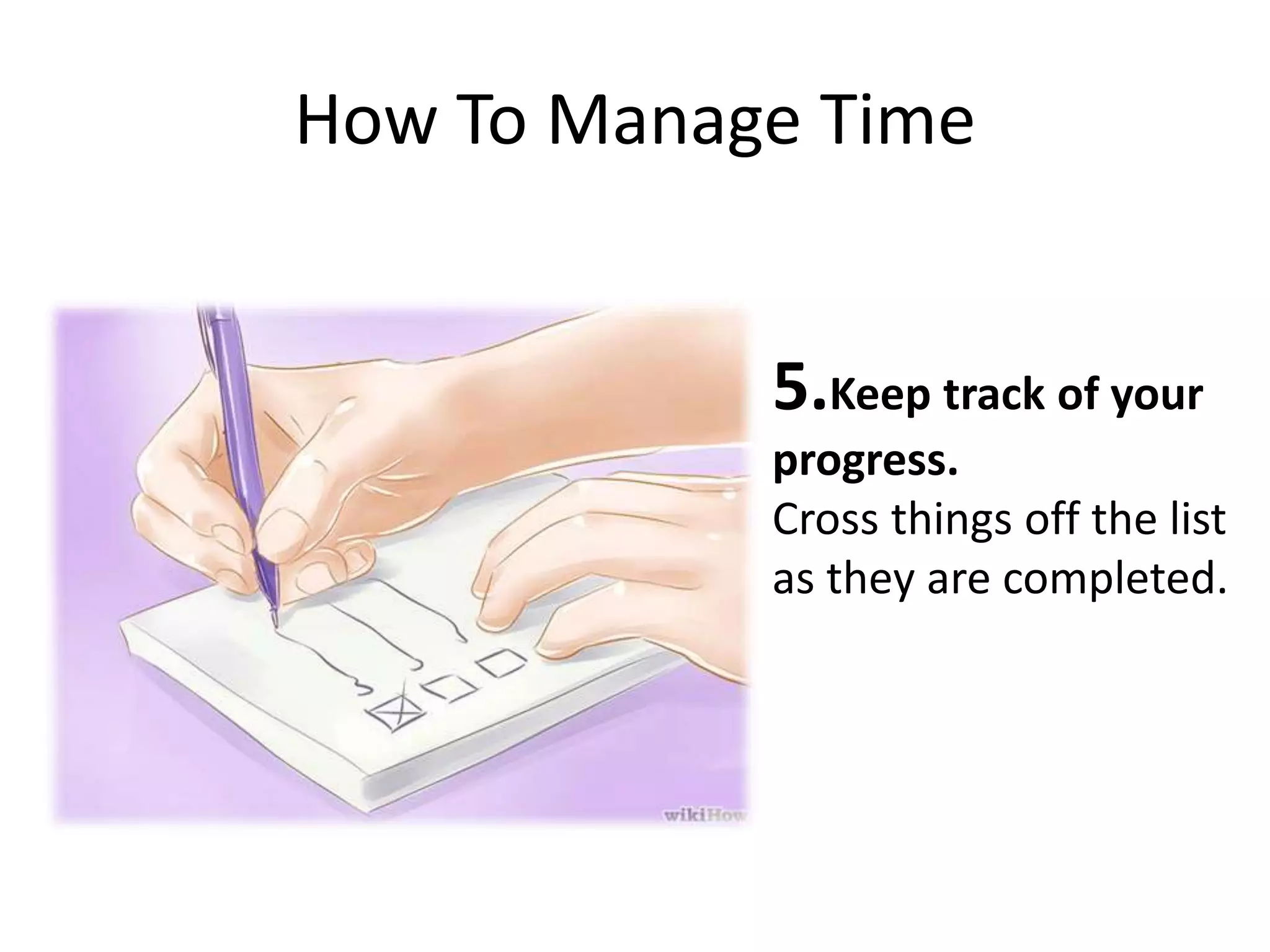
5.Keep track of your
progress.
Cross things off the list
as they are completed.
How To Manage Time
6.Reassess the list.
Rewrite and prioritize
your list on a regular
basis.
How To Manage Time
7.Leave time for fun.
While there are times
when we just need to
power through a large
project, it's important
to give yourself time to
let loose
How To Manage Time
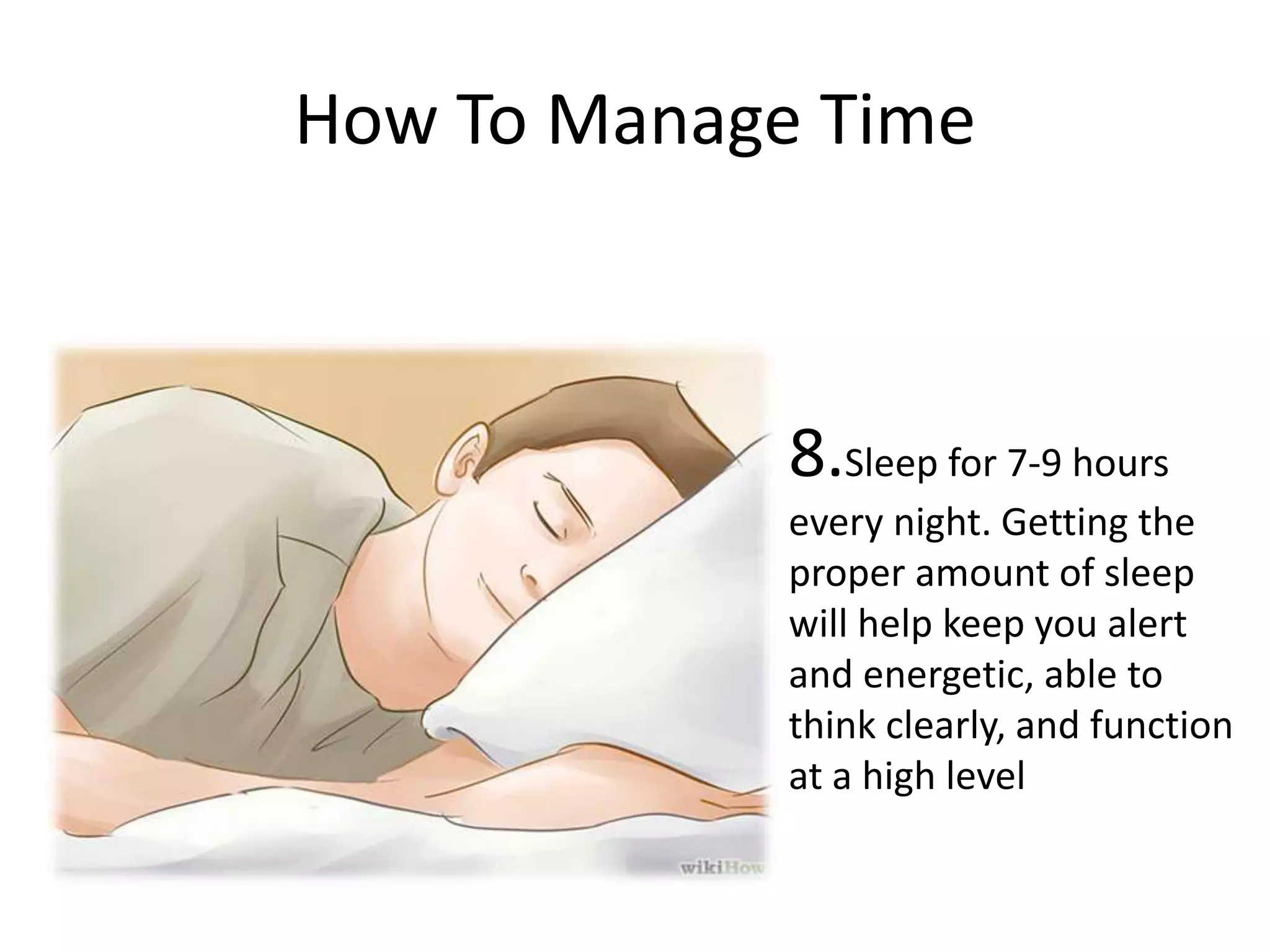
8.Sleep for 7-9 hours
every night. Getting the
proper amount of sleep
will help keep you alert
and energetic, able to
think clearly, and function
at a high level
Time Management 36
Benefits of time management
• Efficient
• Successful
• Healthy
• Earning a degree is a cumulative process.
• If you develop good time management habits
early on – you’ll be able to reward yourself
with a college degree sooner, rather than later.
Thank YOU for your valuable Time….

Time management

  • 1.
    Dr. Jagannath K.Dange Department of Education Kuvempu University Shankaraghatta Dist: Shimoga. Karnataka.India. jkdange@gmail.com http://jkdange.blogspot.com
  • 2.
    Ask a runnerwhat is time ? Ask a student who writes exam Everybody wants to be successful….!!!!!!
  • 3.
    3 Hear me Now,Believe me Later • Being successful doesn’t make you manage your time well. • Managing your time well makes you successful.
  • 4.
    4 Remember that timeis money- Ben Franklin, 1748
  • 5.
    Time and Opportunitiesnever wait for any body Time can buy you anything only when you can respect it and accept as it comes Never blame for time (situation) you are in – as you are the one who make for it
  • 6.
    Time Management Time Managementrefers to managing time effectively so that the right time is allocated to the right activity. Time management is the act of taking conscious control over the amount of time spent on specific activities. You exercise time management to increase productivity, effectiveness and efficiency. You practice skills and use tools and techniques to aid you when accomplishing tasks, projects or are working toward goals and deadlines.
  • 7.
    Why Do WeNeed TM? • To save time. • To reduce stress. • To increase our work output. • To have more control over our job/ responsibilities.
  • 8.
    Time Management 8 Obstaclesto effective time management Unclear objectives Disorganization Inability to say “no”
  • 9.
    Time Management 9 Interruptions Moreinterruptions Periods of inactivity
  • 10.
    Time Management 10 Toomany things at once Stress and fatigue All work and no play
  • 11.
    How To Usetime Effectively • Effective planning. • Setting goals and objectives. • Setting deadlines. • Delegation of responsibilities. • Prioritizing activities as per their importance. • Spending the right time on the right activity.
  • 12.
    Time Management Process •Cost your Time. • Making activity logs. • Goal setting. • Planning. • Prioritizing. • Scheduling.
  • 13.
    1,Costing your Time •Understand the true value by calculating your cost per year • Cost per year=(MONEY + EFFORT + space + equipment + profit you generate)
  • 14.
    2,Making Activity Logs •Make a realistic estimate of time spend during day on ACTIVITIES. • Pinpoint the critical areas. • Finding the high yeilding time of our day.
  • 15.
    3,Goal Setting • Settinglifetime goals help to chart your life course and your career path. • Breakup your lifetime goal in smaller goals. • Make a daily To-Do list. • Revise and update your list on daily bases and judge your performance.
  • 16.
    4,Planning • Draw anaction plan –A list of things that need to be done to achieve your goals
  • 17.
    5,Prioritizing • Make aTo-Do List. • Consider the value of the task before to Do- • Is it worth spending your time and resources. • Prioritize your task- The most important jobs should be completed first followed by other jobs.
  • 18.
    Scheduling • Make arealistic estimate of how much you can do. • Plan to make the best use of the available time. • Reserve some contingency time to deal with ‘unexpected jobs’. • Minimize stress by avoiding commitment by yourself and others.
  • 19.
  • 20.
    20 Scheduling Yourself • Youdon’t find time for important things, you make it • Everything you do is an opportunity cost • Learn to say “No” - • Gentle No-“I’ll do it if nobody else steps forward” or “I’ll be your deep fall back,” but you have to keep searching.
  • 21.
    21 Everyone has Goodand Bad Times • Find your creative/thinking time. • Defend it ruthlessly, spend it alone, maybe at home. • Find your dead time. Schedules/classes/ meetings, phone calls.
  • 22.
    22 Cutting Things Short •“I’m in the middle of something now…” • Start with “I only have 5 minutes” – you can always extend this • Stand up, stroll to the door, complement, thank, shake hands • Clock-watching; on wall behind them
  • 23.
    23 Procrastination “Procrastination is the thiefof time” Edward Young Night Thoughts, 1742
  • 24.
    24 Avoiding Procrastination • Doingthings at the last minute is much more expensive than just before the last minute • Deadlines are really important: establish them yourself!
  • 25.
    25 Technology • “Computers arefaster but they take longer” --Janitor, UCF
  • 26.
    26 Technology • Laptop/ computer(and docking station) – You can scavenge time & work anywhere • WWW; only do things once (post them) • Google (now with image search!) • Digital Library (I haven’t been in the library in over five years)
  • 27.
    27 General Advice • Killyour television(how badly do you want tenure or your degree?) • Eat and sleep and exercise.Above all else!
  • 28.
    How To ManageTime 1.Prepare yourself first, by taking 30 minutes of your time to fix yourself something to eat and relax. Assign realistic priorities to each task.
  • 29.
    2.Balance your effort. Workon small portions every day of work that will be due by the end of the week, starting with the most important tasks first. How To Manage Time
  • 30.
    How To ManageTime 3.Focus on your most productive time of day. Some people work better in the morning, and some are more focused in the evening.
  • 31.
    How To ManageTime 4.Take a break. Clear your mind and refresh yourself to refocus. Decide beforehand on a 5, 10 or 15 minute break and stick to that decision
  • 32.
    How To ManageTime 5.Keep track of your progress. Cross things off the list as they are completed.
  • 33.
    How To ManageTime 6.Reassess the list. Rewrite and prioritize your list on a regular basis.
  • 34.
    How To ManageTime 7.Leave time for fun. While there are times when we just need to power through a large project, it's important to give yourself time to let loose
  • 35.
    How To ManageTime 8.Sleep for 7-9 hours every night. Getting the proper amount of sleep will help keep you alert and energetic, able to think clearly, and function at a high level
  • 36.
    Time Management 36 Benefitsof time management • Efficient • Successful • Healthy
  • 37.
    • Earning adegree is a cumulative process. • If you develop good time management habits early on – you’ll be able to reward yourself with a college degree sooner, rather than later. Thank YOU for your valuable Time….