Time management overview
Unit objectives
 Identify the benefits of time
  management
 Evaluate productivity
 Identify goals and set priorities
Time management overview
 Topic A: Principles of time
  management
 Topic B: Productivity cycles
 Topic C: Goals and priorities
Principles of time management
 Time management
  – What we are able to accomplish
  – Breaking old habits
  – Enhance your work experience
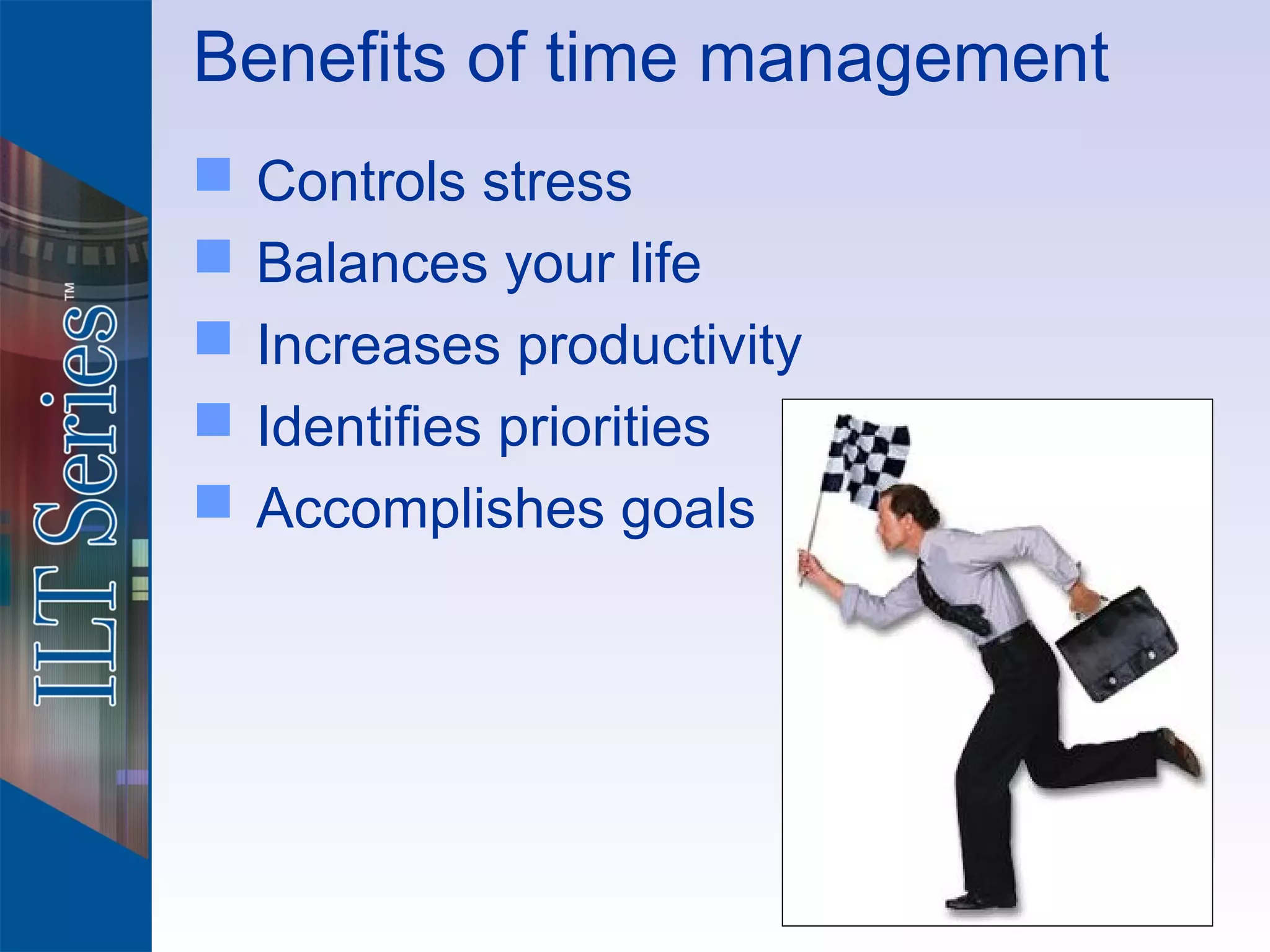
Benefits of time management
   Controls stress
   Balances your life
   Increases productivity
   Identifies priorities
   Accomplishes goals
Activity


 A-1: Understanding the benefits of time
Personality types
   Procrastinator
   Perpetually late
   Perfectionist
   Easily distracted
   Do-it-all
Activity


A-2: Identifying different personality types
Self assessment
 Do I wait until the last minute to
  accomplish a task?
 Do I often arrive late?
 Do I re-work assignments more than
  twice?
 Do I often switch between projects
  before completing them?
 Do I have difficulty turning down
  requests?
Activity


           A-3: Assessing yourself
Self assessment questions
1. Do you wait until the last minute to
   accomplish a task?
2. Do you often arrive late for work or
   meetings?
3. Do you work on an assignment more than
   twice?
4. Do you often shift from one project to
   another before completing the initial
   project?
5. Do you have difficulty turning down
   requests even when you do not have the
   time for them?
Time management overview
 Topic A: Principles of time
  management
 Topic B: Productivity cycles
 Topic C: Goals and priorities
Productivity cycles
 Periods of time when you feel your
  energy dips or rises
 Vary from person to person
   – Morning person?
   – Night owl?
 Recognize personal cycle and try to
  schedule tasks accordingly
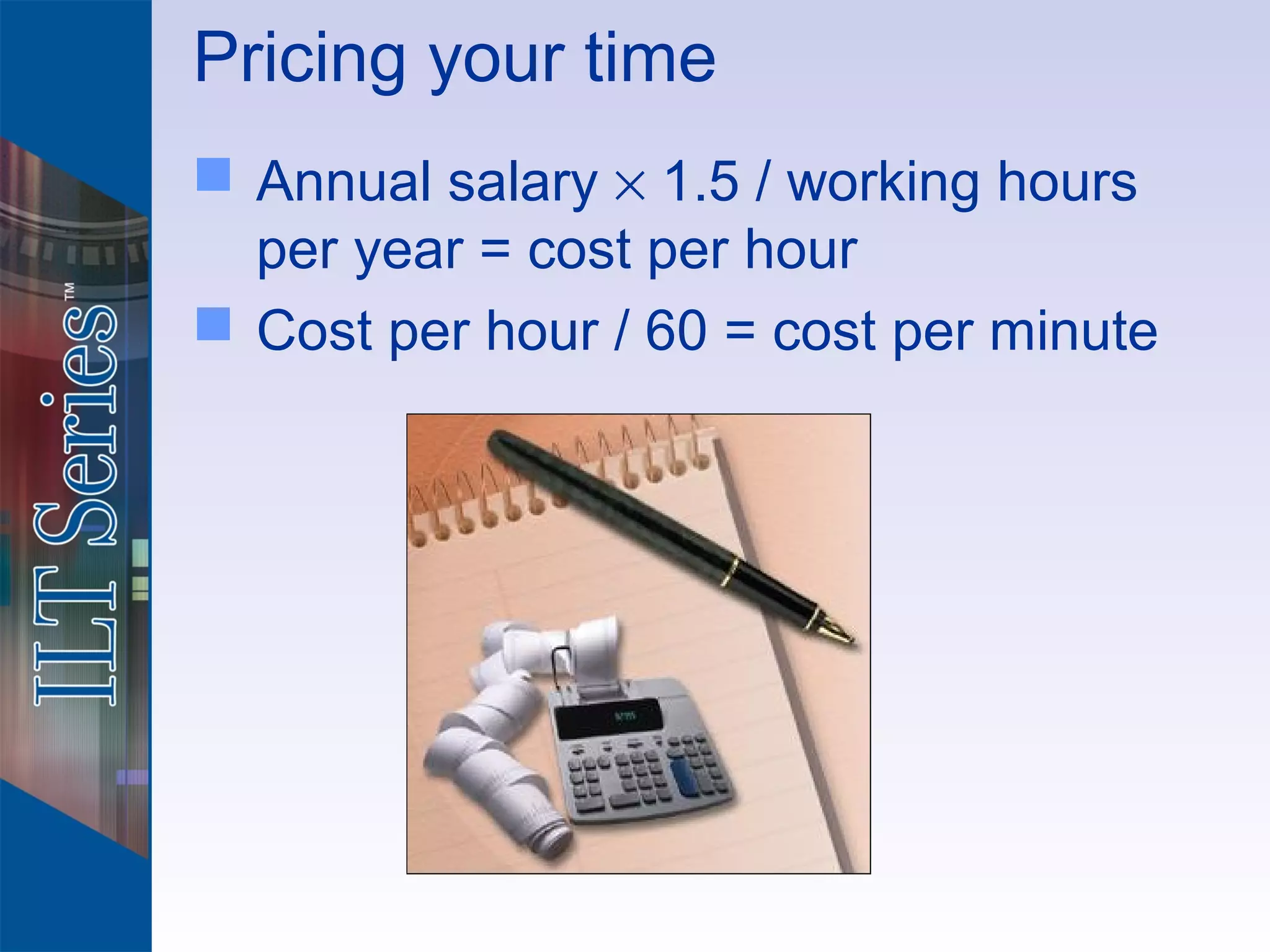
Pricing your time
 Annual salary × 1.5 / working hours
  per year = cost per hour
 Cost per hour / 60 = cost per minute
Activity


           B-1: Pricing your time
Creating a time audit
1. List daily tasks
2. Set a deadline for each task
3. Record every task, noting
   interruptions
4. Note amount of time spent on each
   task
5. Evaluate amount of time spent on
   priority tasks
Activity


       B-2: Creating a time audit
Pareto principle
 80% of group value of activities is
  concentrated in 20% of activities
 20% of priorities produce 80% of
  result
 The first 20% of time spent on an
  activity produces 80% of the result
 20% of your employees cause 80% of
  the problems
Activity


     B-3: Using the Pareto principle
Time management overview
 Topic A: Principles of time
  management
 Topic B: Productivity cycles
 Topic C: Goals and priorities
“To do” list
 To-do list should not be:
   – A wish list
   – Overwhelming
 Not-to-do list helps you:
   – Make smart choices about priorities
   – Delegate tasks
To-do list guidelines
   Do not include too many tasks
   Overestimate time
   List the most important tasks first
   Schedule the time for breaks
   Schedule for long-range and short-
    range goals
Activity


           C-1: Making a to-do list
Goals and objectives
 Goal
  – Focuses on how you spend your time
  – Builds your confidence
  – Increases productivity
 Objective
  – Intermediate step that helps you
    accomplish the goal
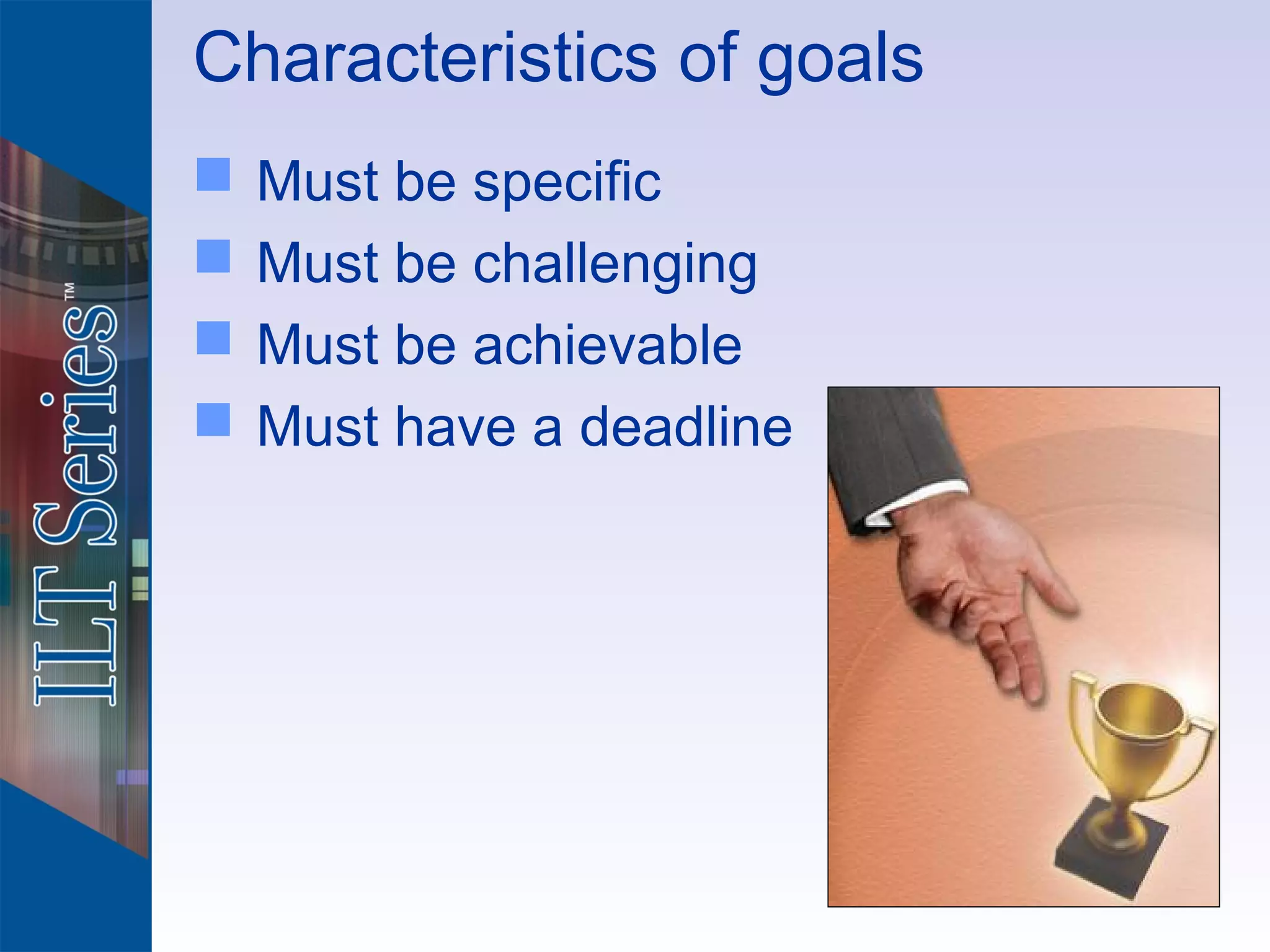
Characteristics of goals
   Must be specific
   Must be challenging
   Must be achievable
   Must have a deadline
GOALS
 Generate goals on paper
 Organize daily activities
 Align goals with company goals
 Line up tasks according to priority
 Stay focused
Activity


           C-2: Identifying goals
Priorities
 Determine how to spend energy
 Schedule days more effectively
 Provide direction
Setting priorities
1. List daily tasks
2. Ask yourself whether you want or
   need to accomplish certain tasks
3. Rank tasks in order of priority
4. Match your priorities with those of
   your organization
5. Schedule top ranked priorities during
   productivity cycles
Activity


           C-3: Setting priorities
Time management overview
Unit summary
 Identified the benefits of time
  management and the relationship to
  personality types
 Calculated the cost of your time and
  performed a time audit
 Created to-do lists, identified goals,
  and set priorities

Time management

  • 1.
    Time management overview Unitobjectives  Identify the benefits of time management  Evaluate productivity  Identify goals and set priorities
  • 2.
    Time management overview Topic A: Principles of time management  Topic B: Productivity cycles  Topic C: Goals and priorities
  • 3.
    Principles of timemanagement  Time management – What we are able to accomplish – Breaking old habits – Enhance your work experience
  • 4.
    Benefits of timemanagement  Controls stress  Balances your life  Increases productivity  Identifies priorities  Accomplishes goals
  • 5.
    Activity A-1: Understandingthe benefits of time
  • 6.
    Personality types  Procrastinator  Perpetually late  Perfectionist  Easily distracted  Do-it-all
  • 7.
  • 8.
    Self assessment  DoI wait until the last minute to accomplish a task?  Do I often arrive late?  Do I re-work assignments more than twice?  Do I often switch between projects before completing them?  Do I have difficulty turning down requests?
  • 9.
    Activity A-3: Assessing yourself
  • 10.
    Self assessment questions 1.Do you wait until the last minute to accomplish a task? 2. Do you often arrive late for work or meetings? 3. Do you work on an assignment more than twice? 4. Do you often shift from one project to another before completing the initial project? 5. Do you have difficulty turning down requests even when you do not have the time for them?
  • 11.
    Time management overview Topic A: Principles of time management  Topic B: Productivity cycles  Topic C: Goals and priorities
  • 12.
    Productivity cycles  Periodsof time when you feel your energy dips or rises  Vary from person to person – Morning person? – Night owl?  Recognize personal cycle and try to schedule tasks accordingly
  • 13.
    Pricing your time Annual salary × 1.5 / working hours per year = cost per hour  Cost per hour / 60 = cost per minute
  • 14.
    Activity B-1: Pricing your time
  • 15.
    Creating a timeaudit 1. List daily tasks 2. Set a deadline for each task 3. Record every task, noting interruptions 4. Note amount of time spent on each task 5. Evaluate amount of time spent on priority tasks
  • 16.
    Activity B-2: Creating a time audit
  • 17.
    Pareto principle  80%of group value of activities is concentrated in 20% of activities  20% of priorities produce 80% of result  The first 20% of time spent on an activity produces 80% of the result  20% of your employees cause 80% of the problems
  • 18.
    Activity B-3: Using the Pareto principle
  • 19.
    Time management overview Topic A: Principles of time management  Topic B: Productivity cycles  Topic C: Goals and priorities
  • 20.
    “To do” list To-do list should not be: – A wish list – Overwhelming  Not-to-do list helps you: – Make smart choices about priorities – Delegate tasks
  • 21.
    To-do list guidelines  Do not include too many tasks  Overestimate time  List the most important tasks first  Schedule the time for breaks  Schedule for long-range and short- range goals
  • 22.
    Activity C-1: Making a to-do list
  • 23.
    Goals and objectives Goal – Focuses on how you spend your time – Builds your confidence – Increases productivity  Objective – Intermediate step that helps you accomplish the goal
  • 24.
    Characteristics of goals  Must be specific  Must be challenging  Must be achievable  Must have a deadline
  • 25.
    GOALS  Generate goalson paper  Organize daily activities  Align goals with company goals  Line up tasks according to priority  Stay focused
  • 26.
    Activity C-2: Identifying goals
  • 27.
    Priorities  Determine howto spend energy  Schedule days more effectively  Provide direction
  • 28.
    Setting priorities 1. Listdaily tasks 2. Ask yourself whether you want or need to accomplish certain tasks 3. Rank tasks in order of priority 4. Match your priorities with those of your organization 5. Schedule top ranked priorities during productivity cycles
  • 29.
    Activity C-3: Setting priorities
  • 30.
    Time management overview Unitsummary  Identified the benefits of time management and the relationship to personality types  Calculated the cost of your time and performed a time audit  Created to-do lists, identified goals, and set priorities