Tidal
Energy
Ismile Hossain
1403EEE00052
Department of Electrical & Electronic Engineering
Conte
nts
 Tidal Power
 History
 Tides
 Tides Formation
 How does it works?
 Types of Tidal Plants
 Advantages
 Limitation
 Global Environment Impacts
Tidal
Power
Tidal power, also called tidal energy, is a form
of hydropower that converts the energy
of tides into useful forms of power - mainly
electricity.
Histo
ry
• First tidal Power
Plant was built by
General De-Gaulle
at La Rance in 1966.
• Generates 240MW.
• The average tidal
range is 8.4m .
• The maximum
range is 13.5m.
Tide
s
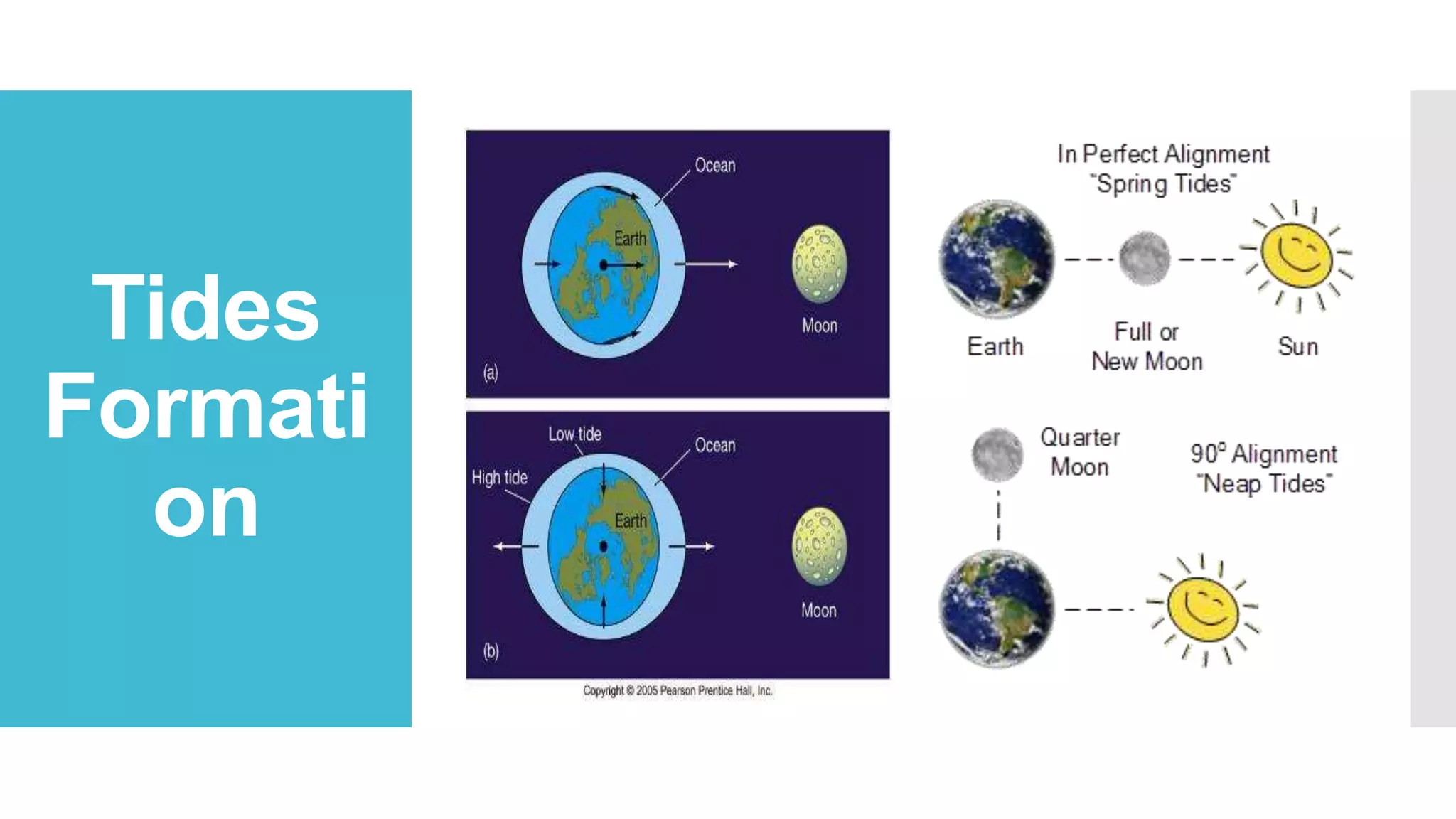
Tides are the rise & fall of sea levels caused by
the combined effects of the gravitational forces
exerted by the Moon & the Sun & the rotation
of the Earth.
Tides
Formati
on
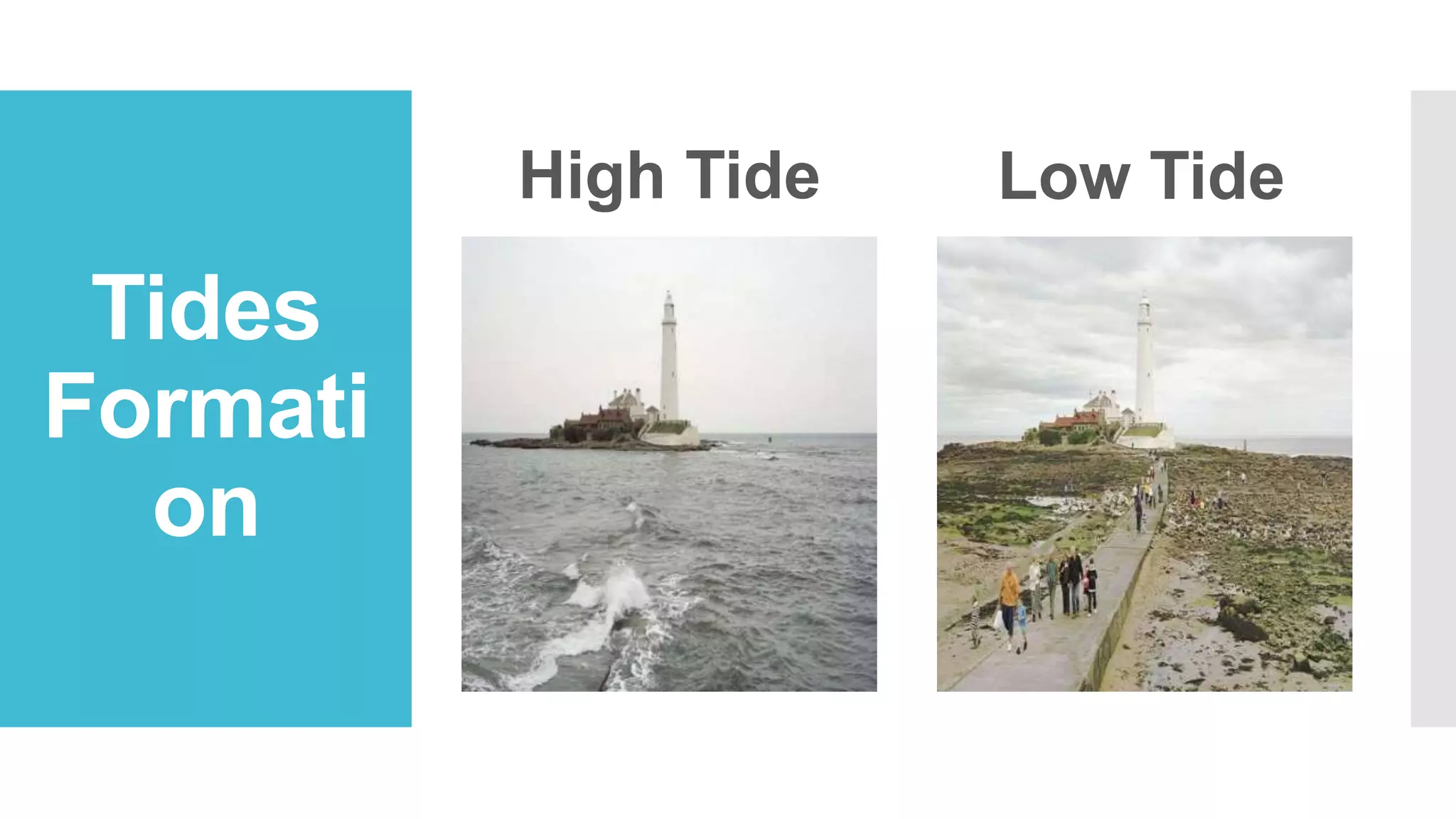
Tides
Formati
on
High Tide Low Tide
How
does it
works?
Tidal power is actuated by a turbine under water
that spins making the mechanical energy to
electrical through a generator.
The tide flows in two directions under the water.
How
does it
works?
Forward flowing tides
turn the propellers
anti-clockwise.
Backward flowing
tides turn the
propellers clockwise.
Types
Of Tidal
Plants
Tidal Barrage – Are typically dams,
built across on estuary of bay.
Tidal Current Turbines – Make use o
the kinetic energy of moving water to
power turbines in a similar way to
wind turbines that use to power
turbines.
Types
Of Tidal
Plants
Tidal Barrage
Tidal Current
Turbines
Advanta
ges
Renewable source of energy.
Environment friendly energy.
Needs no fuel.
Produces electricity reliably.
Not expansive to maintain.
Tides are totally predictable.
Efficiency is far greater as
compared to coal, solar & wind
energy.
Limitati
ons
Construction cost is high.
Actual generation is for a short
period of time.
Transmission is expensive &
difficult.
Very few ideal locations for
construction of plant.
Influences aquatic life adversely &
can disrupt migration of fish.
Global
Environm
ental
Impact
 The tidal power scheme is a long term
source of electricity.
 This decreases the output of
greenhouse gases into the atmosphere.
 Restriction on movement of aquatic
organism.
 Tidal power is one of the alternative
source of energy that will need to be
developed to satisfy the human demand
for energy.
The
End

Tidal Energy

  • 1.
    Tidal Energy Ismile Hossain 1403EEE00052 Department ofElectrical & Electronic Engineering
  • 2.
    Conte nts  Tidal Power History  Tides  Tides Formation  How does it works?  Types of Tidal Plants  Advantages  Limitation  Global Environment Impacts
  • 3.
    Tidal Power Tidal power, alsocalled tidal energy, is a form of hydropower that converts the energy of tides into useful forms of power - mainly electricity.
  • 4.
    Histo ry • First tidalPower Plant was built by General De-Gaulle at La Rance in 1966. • Generates 240MW. • The average tidal range is 8.4m . • The maximum range is 13.5m.
  • 5.
    Tide s Tides are therise & fall of sea levels caused by the combined effects of the gravitational forces exerted by the Moon & the Sun & the rotation of the Earth.
  • 6.
  • 7.
  • 8.
    How does it works? Tidal poweris actuated by a turbine under water that spins making the mechanical energy to electrical through a generator. The tide flows in two directions under the water.
  • 9.
    How does it works? Forward flowingtides turn the propellers anti-clockwise. Backward flowing tides turn the propellers clockwise.
  • 10.
    Types Of Tidal Plants Tidal Barrage– Are typically dams, built across on estuary of bay. Tidal Current Turbines – Make use o the kinetic energy of moving water to power turbines in a similar way to wind turbines that use to power turbines.
  • 11.
  • 12.
    Advanta ges Renewable source ofenergy. Environment friendly energy. Needs no fuel. Produces electricity reliably. Not expansive to maintain. Tides are totally predictable. Efficiency is far greater as compared to coal, solar & wind energy.
  • 13.
    Limitati ons Construction cost ishigh. Actual generation is for a short period of time. Transmission is expensive & difficult. Very few ideal locations for construction of plant. Influences aquatic life adversely & can disrupt migration of fish.
  • 14.
    Global Environm ental Impact  The tidalpower scheme is a long term source of electricity.  This decreases the output of greenhouse gases into the atmosphere.  Restriction on movement of aquatic organism.  Tidal power is one of the alternative source of energy that will need to be developed to satisfy the human demand for energy.
  • 15.