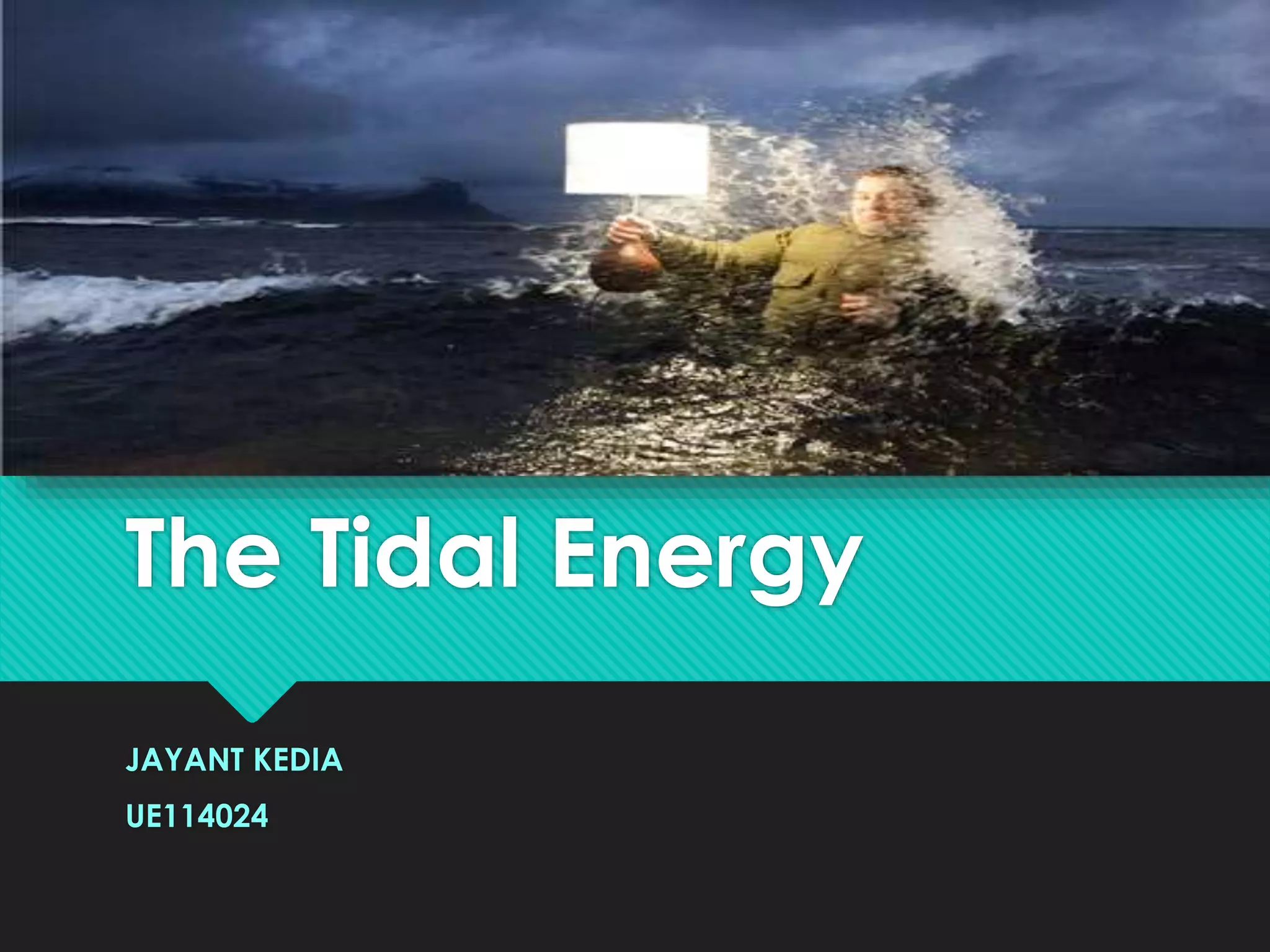
The Tidal Energy
JAYANT KEDIA
UE114024
Index
• Introduction
• Tides
• Tidal power
• How does it works?
• Types of tidal plants
• Pros and Cons of Tidal Power
• Major tidal power plants
Introduction
Tidal power, also called tidal energy, is a
form of hydropower that converts the
energy of tides into useful forms of power -
mainly electricity. This is the only form of
energy whose source is the moon.
Tides
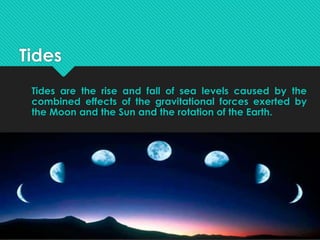
Tides are the rise and fall of sea levels caused by the
combined effects of the gravitational forces exerted by
the Moon and the Sun and the rotation of the Earth.
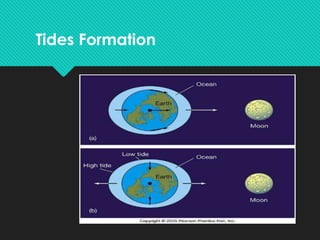
Tides Formation
The high tide
The low tide
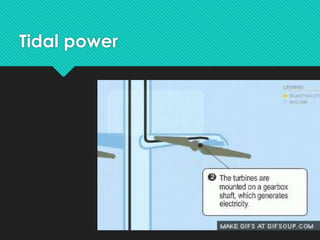
Tidal power
Tidal Power
Tidal power is actuated by a turbine under
water that spins making the mechanical
energy to electrical through a generator
that send the electrical energy to the
shore.
How does it work?
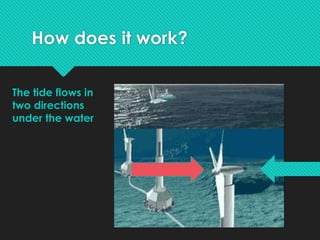
The tide flows in
two directions
under the water
How does it work?
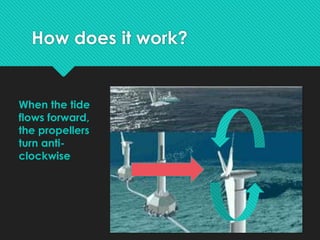
When the tide
flows forward,
the propellers
turn anti-
clockwise
How does it work?
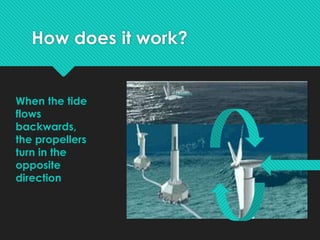
When the tide
flows
backwards,
the propellers
turn in the
opposite
direction
Tidal Energy
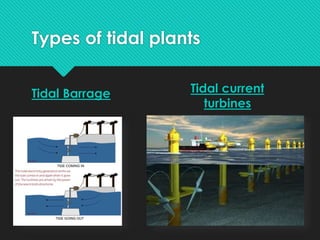
Types of tidal plants
Tidal Barrage
Are Typically dams, built
across on estuary of bay
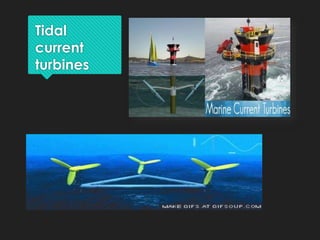
Tidal current
turbines
Make use of the kinetic energy
of moving water to power
turbines in a similar way to
wind turbines that use wind to
power turbines
Types of tidal plants
Tidal Barrage Tidal current
turbines
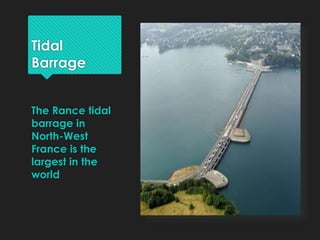
Tidal
Barrage
The Rance tidal
barrage in
North-West
France is the
largest in the
world
Tidal
current
turbines
Significant benefits from using
Tidal Energy include:
Electrification of isolated communities
 Generation for the grid Regrowth of
coral reefs using mineral accretion
technology
Substitution of imported petroleum used
to generate electricity
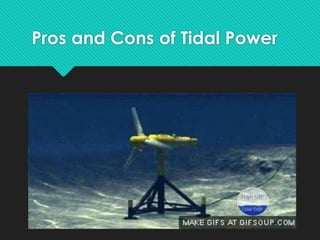
Pros and Cons of Tidal Power
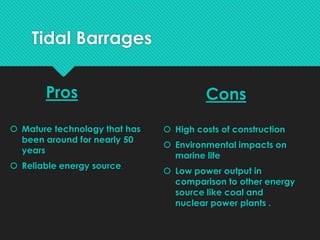
Tidal Barrages
Pros
 Mature technology that has
been around for nearly 50
years
 Reliable energy source.
Cons
 High costs of construction
 Environmental impacts on
marine life
 Low power output in
comparison to other energy
source like coal and
nuclear power plants .
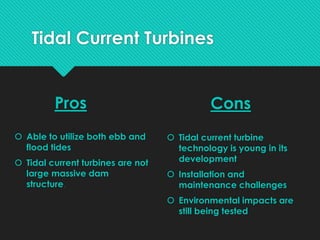
Tidal Current Turbines
Pros
 Able to utilize both ebb and
flood tides
 Tidal current turbines are not
large massive dam
structure.
Cons
 Tidal current turbine
technology is young in its
development
 Installation and
maintenance challenges
 Environmental impacts are
still being tested
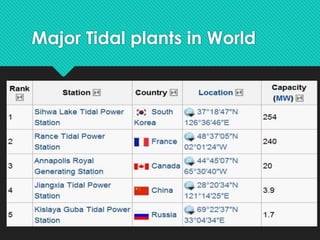
Major Tidal plants in World
Tidal plants in India
 West Bengal Renewable Energy Development Agency in
sunderbans.
 The Indian state of Gujarat is planning to host South
Asia's first commercial-scale tidal power station. The
company Atlantis Resources is to install a 50MW tidal
farm in the Gulf of Kutch on India's west coast, with
construction starting early in 2012. later on it is decided
to increase the capacity up to 250MW plants.
Tidal plant in Kerala
 Situated near the breakwaters of Vizhinjam Port which is
about 20 km from Thiruvananthapuram city. The station
started its commercial operation in 1991. This oscillating
water column (OWC) produces about 150 kw of power
Thank you for your
attention.

Tidal Energy

  • 1.
  • 2.
    Index • Introduction • Tides •Tidal power • How does it works? • Types of tidal plants • Pros and Cons of Tidal Power • Major tidal power plants
  • 3.
    Introduction Tidal power, alsocalled tidal energy, is a form of hydropower that converts the energy of tides into useful forms of power - mainly electricity. This is the only form of energy whose source is the moon.
  • 4.
    Tides Tides are therise and fall of sea levels caused by the combined effects of the gravitational forces exerted by the Moon and the Sun and the rotation of the Earth.
  • 5.
  • 6.
  • 7.
  • 8.
  • 9.
    Tidal Power Tidal poweris actuated by a turbine under water that spins making the mechanical energy to electrical through a generator that send the electrical energy to the shore.
  • 10.
    How does itwork? The tide flows in two directions under the water
  • 11.
    How does itwork? When the tide flows forward, the propellers turn anti- clockwise
  • 12.
    How does itwork? When the tide flows backwards, the propellers turn in the opposite direction
  • 13.
  • 14.
    Types of tidalplants Tidal Barrage Are Typically dams, built across on estuary of bay Tidal current turbines Make use of the kinetic energy of moving water to power turbines in a similar way to wind turbines that use wind to power turbines
  • 15.
    Types of tidalplants Tidal Barrage Tidal current turbines
  • 16.
    Tidal Barrage The Rance tidal barragein North-West France is the largest in the world
  • 17.
  • 18.
    Significant benefits fromusing Tidal Energy include: Electrification of isolated communities  Generation for the grid Regrowth of coral reefs using mineral accretion technology Substitution of imported petroleum used to generate electricity
  • 19.
    Pros and Consof Tidal Power
  • 20.
    Tidal Barrages Pros  Maturetechnology that has been around for nearly 50 years  Reliable energy source. Cons  High costs of construction  Environmental impacts on marine life  Low power output in comparison to other energy source like coal and nuclear power plants .
  • 21.
    Tidal Current Turbines Pros Able to utilize both ebb and flood tides  Tidal current turbines are not large massive dam structure. Cons  Tidal current turbine technology is young in its development  Installation and maintenance challenges  Environmental impacts are still being tested
  • 22.
  • 23.
    Tidal plants inIndia  West Bengal Renewable Energy Development Agency in sunderbans.  The Indian state of Gujarat is planning to host South Asia's first commercial-scale tidal power station. The company Atlantis Resources is to install a 50MW tidal farm in the Gulf of Kutch on India's west coast, with construction starting early in 2012. later on it is decided to increase the capacity up to 250MW plants.
  • 24.
    Tidal plant inKerala  Situated near the breakwaters of Vizhinjam Port which is about 20 km from Thiruvananthapuram city. The station started its commercial operation in 1991. This oscillating water column (OWC) produces about 150 kw of power
  • 25.
    Thank you foryour attention.