- MUHAMMAD
SIRAJ
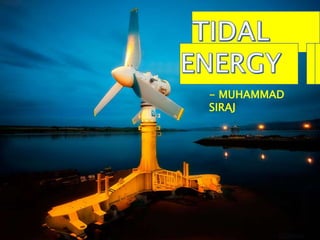
TIDAL ENERGY
TIDAL ENERGYISA FORM OF
HYDROPOWER THAT CONVERTS THE
ENERGYOF TIDES INTO USEFULFORMS OF
POWER.
INTRODUCTION TO TIDAL ENERGY
 Demand of electricity is increasing and global warming also
threaten human life. It’s time to move away from fossil fuel
and other source.
 The tides contain energy that can be harnessed to produce
electricity. Two types of tidal energy can be extracted.
Kinetic energy can be harnessed from the ebbing and
surging tides. Potential energy can be harnessed from
differences in the high and low tides. Using tidal currents
remains the primary method of generating electricity.
 Tidal power has huge potential due to the size of the
 oceans and predictability of the tides.
BASIC PHYSICS OF TIDES
 Gravitational pull of the sun and moon.
 The pull of the centrifugal force of
rotation of the earth-moon system.
 There are two high tides and low tides
during each period of rotation of the
earth.
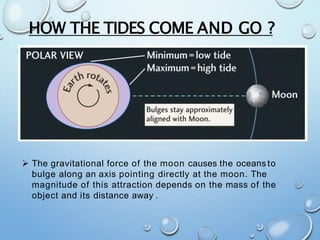
HOW THE TIDES COME AND GO ?
 The gravitational force of the moon causes the oceans to
bulge along an axis pointing directly at the moon. The
magnitude of this attraction depends on the mass of the
object and its distance away .
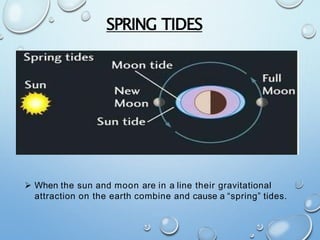
SPRING TIDES
 When the sun and moon are in a line their gravitational
attraction on the earth combine and cause a “spring” tides.
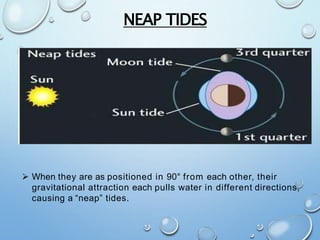
NEAP TIDES
 When they are as positioned in 90° from each other, their
gravitational attraction each pulls water in different directions,
causing a “neap” tides.
ENERGYFROM THE MOON
 Tides generated by the combination of the
moon and sun’s gravitational forces.
 Greatest affect in spring when moon and
sun combine forces.
 for energy production, the height difference
needs to be at least 5 meters.
 Overall potential of 3000 GWfrom movement
of tides.
ELECTRICITY GENERATION THROUGH
TIDAL ENERGY
TWO TYPES OF TIDAL PLANT
FACILITIES.
 Tidal barrages
 Tidal currents turbine
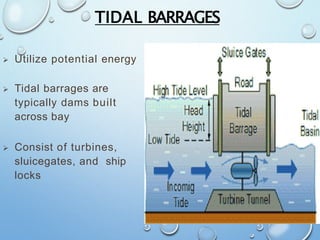
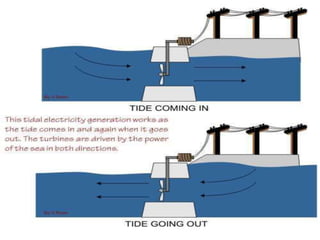
TIDAL BARRAGES
 Utilize potential energy
 Tidal barrages are
typically dams built
across bay
 Consist of turbines,
sluicegates, and ship
locks
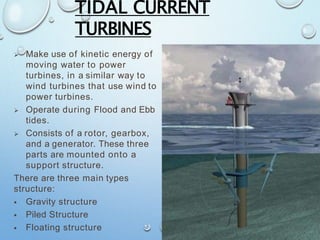
TIDAL CURRENT
TURBINES
 Make use of kinetic energy of
moving water to power
turbines, in a similar way to
wind turbines that use wind to
power turbines.
 Operate during Flood and Ebb
tides.
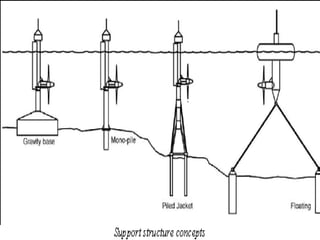
 Consists of a rotor, gearbox,
and a generator. These three
parts are mounted onto a
support structure.
There are three main types
structure:
 Gravity structure
 Piled Structure
 Floating structure
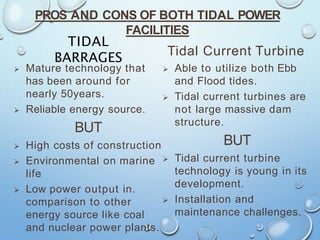
PROS AND CONS OF BOTH TIDAL POWER
FACILITIES
TIDAL
BARRAGES
 Mature technology that
has been around for
nearly 50years.
 Reliable energy source.
BUT
 High costs of construction
 Environmental on marine
life
 Low power output in.
comparison to other
energy source like coal
and nuclear power plants.
Tidal Current Turbine
 Able to utilize both Ebb
and Flood tides.
 Tidal current turbines are
not large massive dam
structure.
BUT
 Tidal current turbine
technology is young in its
development.
 Installation and
maintenance challenges.
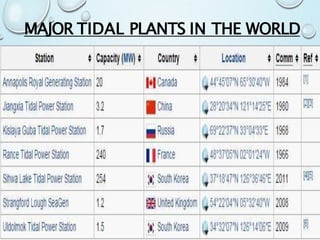
MAJOR TIDAL PLANTS IN THE WORLD
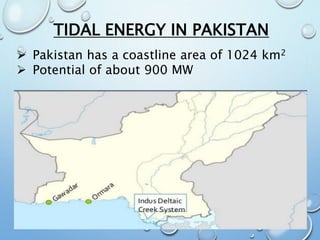
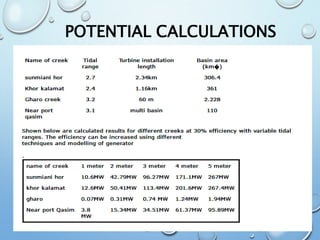
TIDAL ENERGY IN PAKISTAN
 Pakistan has a coastline area of 1024 km2
 Potential of about 900 MW
POTENTIAL CALCULATIONS
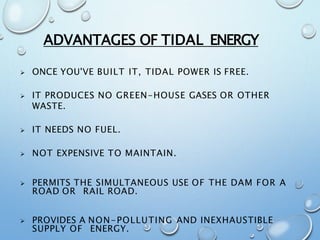
ADVANTAGES OF TIDAL ENERGY
 ONCE YOU'VE BUILT IT, TIDAL POWER IS FREE.
 IT PRODUCES NO GREEN-HOUSE GASES OR OTHER
WASTE.
 IT NEEDS NO FUEL.
 NOT EXPENSIVE TO MAINTAIN.
 PERMITS THE SIMULTANEOUS USE OF THE DAM FOR A
ROAD OR RAIL ROAD.
 PROVIDES A NON-POLLUTING AND INEXHAUSTIBLE
SUPPLY OF ENERGY.
DISADVANTAGES OF TIDAL
ENERGY
 Building of barrage is expensive
 Needs a wide area
 Few suitable sites available
CONCLUSION
 Tidal power is a proven technology and has the
potential to generate significant amounts of electricity
at certain sites around the world.
 Although, our entire electricity needs could never be
met by tidal power alone, it can be invaluable source
of renewable energy.
Tidal

Tidal

  • 1.
  • 2.
    TIDAL ENERGY TIDAL ENERGYISAFORM OF HYDROPOWER THAT CONVERTS THE ENERGYOF TIDES INTO USEFULFORMS OF POWER.
  • 3.
    INTRODUCTION TO TIDALENERGY  Demand of electricity is increasing and global warming also threaten human life. It’s time to move away from fossil fuel and other source.  The tides contain energy that can be harnessed to produce electricity. Two types of tidal energy can be extracted. Kinetic energy can be harnessed from the ebbing and surging tides. Potential energy can be harnessed from differences in the high and low tides. Using tidal currents remains the primary method of generating electricity.  Tidal power has huge potential due to the size of the  oceans and predictability of the tides.
  • 4.
    BASIC PHYSICS OFTIDES  Gravitational pull of the sun and moon.  The pull of the centrifugal force of rotation of the earth-moon system.  There are two high tides and low tides during each period of rotation of the earth.
  • 5.
    HOW THE TIDESCOME AND GO ?  The gravitational force of the moon causes the oceans to bulge along an axis pointing directly at the moon. The magnitude of this attraction depends on the mass of the object and its distance away .
  • 6.
    SPRING TIDES  Whenthe sun and moon are in a line their gravitational attraction on the earth combine and cause a “spring” tides.
  • 7.
    NEAP TIDES  Whenthey are as positioned in 90° from each other, their gravitational attraction each pulls water in different directions, causing a “neap” tides.
  • 8.
    ENERGYFROM THE MOON Tides generated by the combination of the moon and sun’s gravitational forces.  Greatest affect in spring when moon and sun combine forces.  for energy production, the height difference needs to be at least 5 meters.  Overall potential of 3000 GWfrom movement of tides.
  • 9.
    ELECTRICITY GENERATION THROUGH TIDALENERGY TWO TYPES OF TIDAL PLANT FACILITIES.  Tidal barrages  Tidal currents turbine
  • 10.
    TIDAL BARRAGES  Utilizepotential energy  Tidal barrages are typically dams built across bay  Consist of turbines, sluicegates, and ship locks
  • 12.
    TIDAL CURRENT TURBINES  Makeuse of kinetic energy of moving water to power turbines, in a similar way to wind turbines that use wind to power turbines.  Operate during Flood and Ebb tides.  Consists of a rotor, gearbox, and a generator. These three parts are mounted onto a support structure. There are three main types structure:  Gravity structure  Piled Structure  Floating structure
  • 14.
    PROS AND CONSOF BOTH TIDAL POWER FACILITIES TIDAL BARRAGES  Mature technology that has been around for nearly 50years.  Reliable energy source. BUT  High costs of construction  Environmental on marine life  Low power output in. comparison to other energy source like coal and nuclear power plants. Tidal Current Turbine  Able to utilize both Ebb and Flood tides.  Tidal current turbines are not large massive dam structure. BUT  Tidal current turbine technology is young in its development.  Installation and maintenance challenges.
  • 15.
    MAJOR TIDAL PLANTSIN THE WORLD
  • 16.
    TIDAL ENERGY INPAKISTAN  Pakistan has a coastline area of 1024 km2  Potential of about 900 MW
  • 17.
  • 18.
    ADVANTAGES OF TIDALENERGY  ONCE YOU'VE BUILT IT, TIDAL POWER IS FREE.  IT PRODUCES NO GREEN-HOUSE GASES OR OTHER WASTE.  IT NEEDS NO FUEL.  NOT EXPENSIVE TO MAINTAIN.  PERMITS THE SIMULTANEOUS USE OF THE DAM FOR A ROAD OR RAIL ROAD.  PROVIDES A NON-POLLUTING AND INEXHAUSTIBLE SUPPLY OF ENERGY.
  • 19.
    DISADVANTAGES OF TIDAL ENERGY Building of barrage is expensive  Needs a wide area  Few suitable sites available
  • 20.
    CONCLUSION  Tidal poweris a proven technology and has the potential to generate significant amounts of electricity at certain sites around the world.  Although, our entire electricity needs could never be met by tidal power alone, it can be invaluable source of renewable energy.