PREPARED BY,
TULASI
EEE
SOLAR PV-WIND HYBRID
POWER
GENERATION SYSTEM
ABSTRACT
Renewable energy sources i.e.,energy
generated from solar, wind, biomass,
hydropower,geothermal and ocean resources
are considered as a technological option for
generating clean energy. But the energy
generated from solar and wind is much less
than the production by fossil fuels, however,
electricity generation by utilizing PV
cells and wind turbine increased rapidly in
recent years.
INTRODUCTION
We all know that the world is facing a major threat of
fast depletion of the fossil fuel reserves. Most of the present
energy demand is met by fossil and nuclear power plants. A
small part is met by renewable energy technologies such as
the wind, solar, biomass, geothermal etc. There will soon be
a time when we will face a severe fuel shortage. As per
the law of conservation of energy, “Energy can neither be
created, nor be destroyed, but it can only be converted from
one form to another”. Most of the research now is about how
to conserve the energy and how to utilize the energy in a
better way. Research has also been into the development of
reliable and robust systems to harness energy from
nonconventional energy resources. Among them, the wind
and solar power sources have experienced a remarkably
rapid growth in the past 10 years. Both are pollution free
sources of abundant power.
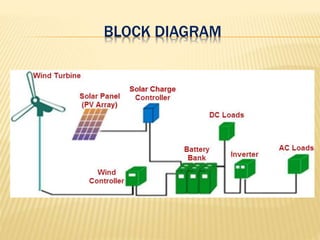
BLOCK DIAGRAM
IMPLEMENTATION OF HYBRID ENERGY SYSTEM
Intermittent energy resources and energy
resources unbalance are the most important reason
to install a hybrid energy supply system. The Solar
PV wind hybrid system suits to conditions where
sunlight and wind has seasonal shifts. As the wind
does not blow throughout the day and the sun does
not shine for the entire day, using a single source will
not be a suitable choice. A hybrid arrangement of
combining the power harnessed from both the wind
and the sun and stored in a battery can be a much
more reliable and realistic power source. The load
can still be powered using the stored energy in the
batteries even when there is no sun or wind.
SYSTEM COMPONENTS
1.Photovoltaic solar power
2. Wind Power
3. Batteries
4. Inverter
5. Microcontroller
PHOTOVOLTAIC SOLAR POWER
Solar panels are the medium to convert solar energy
into the electrical energy. Solar panels can convert the
energy directly or heat the water with the induced energy.
PV (Photovoltaic) cells are made up from semiconductor
structures as in the computer technologies. Sun rays are
absorbed with this material and electrons are emitted
from the atoms. This release activates a current.
Photovoltaic is known as the process between radiation
absorbed and the electricityinduced. Solar power is
converted into the electric power by a common principle
called photo electric effect. The solarcell array or panel
consists of an appropriate number of solar cell modules
connected in series or parallel based on the required
current and voltage.
WIND POWER
The wind energy is a renewable source of energy.
Wind
turbines are used to convert the wind power into
electric power. Electric generator inside the turbine
converts the
mechanical power into the electric power. Wind
turbine systems are available ranging from 50W to 3-
4 MW. The
energy production by wind turbines depends on the
wind velocity acting on the turbine. Wind power is
able to feed both energy production and demand in
the rural areas. It is used to run a windmill which in
turn drives a wind generator or wind turbine to
BATTERIES
The batteries in the system provide to store
the electricity that is generated from the wind or
the solar power. Any required capacity can be
obtained by serial or parallel connections of the
batteries. The battery that provides the most
advantageous operation in the solar and wind
power systems are maintenance free dry type
and utilizes the special
electrolytes. These batteries provide a perfect
performance for long discharges.
INVERTER
Energy stored in the battery is
drawn by electricals loads through the
inverter, which converts DC power into AC
power. The inverter has in-built protection for
Short-Circuit, Reverse Polarity, Low Battery
Voltage and Over Load.
MICROCONTROLLER
The microcontroller compares the input of
both Power system and gives the signal to the
particular relay and charges the DC Battery. The
DC voltage is converted into AC Supply by
Inverter Circuit. The MOSFET (IRF 540) is
connected to the Secondary of the centre
tapped transformer. By triggering of MOSFET
alternatively, the current flow in the Primary
winding is also alternative in nature and we get
the AC supply in the primary winding of the
transformer.
CONCLUSION
In the present work a Solar PV Wind Hybrid
Energy System was implemented. A portion of the
energy requirement for a private house, farm house,
a small company, an educational institution or an
apartment house depending on the need at the site
where used has been supplied with the electricity
generated from the wind and solar power. It reduces
the dependence on one single source and has
increased the reliability. Hence we could improve the
efficiency of the system as
compared with their individual mode of generation.
SOLAR PV-WIND HYBRID POWER GENERATION SYSTEM

SOLAR PV-WIND HYBRID POWER GENERATION SYSTEM

  • 1.
    PREPARED BY, TULASI EEE SOLAR PV-WINDHYBRID POWER GENERATION SYSTEM
  • 2.
    ABSTRACT Renewable energy sourcesi.e.,energy generated from solar, wind, biomass, hydropower,geothermal and ocean resources are considered as a technological option for generating clean energy. But the energy generated from solar and wind is much less than the production by fossil fuels, however, electricity generation by utilizing PV cells and wind turbine increased rapidly in recent years.
  • 3.
    INTRODUCTION We all knowthat the world is facing a major threat of fast depletion of the fossil fuel reserves. Most of the present energy demand is met by fossil and nuclear power plants. A small part is met by renewable energy technologies such as the wind, solar, biomass, geothermal etc. There will soon be a time when we will face a severe fuel shortage. As per the law of conservation of energy, “Energy can neither be created, nor be destroyed, but it can only be converted from one form to another”. Most of the research now is about how to conserve the energy and how to utilize the energy in a better way. Research has also been into the development of reliable and robust systems to harness energy from nonconventional energy resources. Among them, the wind and solar power sources have experienced a remarkably rapid growth in the past 10 years. Both are pollution free sources of abundant power.
  • 4.
  • 5.
    IMPLEMENTATION OF HYBRIDENERGY SYSTEM Intermittent energy resources and energy resources unbalance are the most important reason to install a hybrid energy supply system. The Solar PV wind hybrid system suits to conditions where sunlight and wind has seasonal shifts. As the wind does not blow throughout the day and the sun does not shine for the entire day, using a single source will not be a suitable choice. A hybrid arrangement of combining the power harnessed from both the wind and the sun and stored in a battery can be a much more reliable and realistic power source. The load can still be powered using the stored energy in the batteries even when there is no sun or wind.
  • 6.
    SYSTEM COMPONENTS 1.Photovoltaic solarpower 2. Wind Power 3. Batteries 4. Inverter 5. Microcontroller
  • 7.
    PHOTOVOLTAIC SOLAR POWER Solarpanels are the medium to convert solar energy into the electrical energy. Solar panels can convert the energy directly or heat the water with the induced energy. PV (Photovoltaic) cells are made up from semiconductor structures as in the computer technologies. Sun rays are absorbed with this material and electrons are emitted from the atoms. This release activates a current. Photovoltaic is known as the process between radiation absorbed and the electricityinduced. Solar power is converted into the electric power by a common principle called photo electric effect. The solarcell array or panel consists of an appropriate number of solar cell modules connected in series or parallel based on the required current and voltage.
  • 8.
    WIND POWER The windenergy is a renewable source of energy. Wind turbines are used to convert the wind power into electric power. Electric generator inside the turbine converts the mechanical power into the electric power. Wind turbine systems are available ranging from 50W to 3- 4 MW. The energy production by wind turbines depends on the wind velocity acting on the turbine. Wind power is able to feed both energy production and demand in the rural areas. It is used to run a windmill which in turn drives a wind generator or wind turbine to
  • 9.
    BATTERIES The batteries inthe system provide to store the electricity that is generated from the wind or the solar power. Any required capacity can be obtained by serial or parallel connections of the batteries. The battery that provides the most advantageous operation in the solar and wind power systems are maintenance free dry type and utilizes the special electrolytes. These batteries provide a perfect performance for long discharges.
  • 10.
    INVERTER Energy stored inthe battery is drawn by electricals loads through the inverter, which converts DC power into AC power. The inverter has in-built protection for Short-Circuit, Reverse Polarity, Low Battery Voltage and Over Load.
  • 11.
    MICROCONTROLLER The microcontroller comparesthe input of both Power system and gives the signal to the particular relay and charges the DC Battery. The DC voltage is converted into AC Supply by Inverter Circuit. The MOSFET (IRF 540) is connected to the Secondary of the centre tapped transformer. By triggering of MOSFET alternatively, the current flow in the Primary winding is also alternative in nature and we get the AC supply in the primary winding of the transformer.
  • 12.
    CONCLUSION In the presentwork a Solar PV Wind Hybrid Energy System was implemented. A portion of the energy requirement for a private house, farm house, a small company, an educational institution or an apartment house depending on the need at the site where used has been supplied with the electricity generated from the wind and solar power. It reduces the dependence on one single source and has increased the reliability. Hence we could improve the efficiency of the system as compared with their individual mode of generation.