Produced and Presented by:
     Group 6 of 2-Sampaguita
Members:
     Nadeen Caasi
     Adeli Manliclic
     Gerard Duran
     Carlos Baquiran
     Cedric Perez
WHAT IS GEOTHERMAL ENERGY???

•The word geothermal originated from the
Greek roots geo, meaning earth, and thermos,
meaning heat.
• In simple means, Geothermal
energy is thermal energy generated and stored
in the Earth.

*P.S.:
Thermal energy is the energy that determines
the temperature of matter
WHERE DOES IT COME FROM???
 Initially,
          the energy transformed starts
  from way down the Earth’s core – 4,000
  miles down. At the core, temperatures
  may reach over 9,000 degrees
  Fahrenheit. Heat conducts from the core
  to surrounding rock. Extremely high
  temperature and pressure cause some
  rock to melt, which is commonly known
  as magma.
Magma convents upward since it is
lighter than the solid rock. This magma
then heats rock and water in the crust,
sometimes up to 700 degrees
Fahrenheit. This magma near the
Earth’s surface is what is used and
transformed in power-plants.
   Geothermal energy is produced through
    reservoirs, power plants and systems.
    Geothermal reservoirs are generally classified
    as being either low temperature (<150°C) or
    high temperature (>150°C). Generally
    speaking, the high temperature reservoirs are
    the ones suitable for, and sought out for,
    commercial production of electricity.
    Geothermal reservoirs are found in
    “geothermal systems,” which are regionally
    localized geologic settings where the earth’s
    naturally occurring heat flow is near enough to
    the earth’s surface to bring steam or hot water,
    to the surface.
WHAT DO POWERPLANTS USE IN PRODUCING
GEOTHERMAL ENERGY???
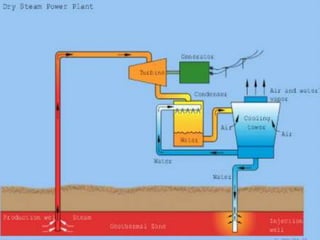
   Dry Steam- Steam is produced directly from the
    geothermal reservoir to run the turbines that power
    the generator, and no separation is necessary
    because wells only produce steam. The image below
    is a more simplified version of the process.

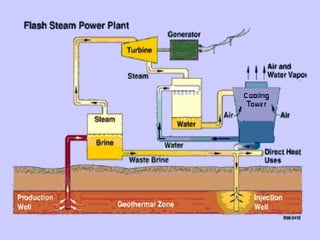
   Flash Steam- Geothermally heated water under
    pressure is separated in a surface vessel (called a
    steam separator) into steam and hot water (called
    “brine” in the accompanying image). The steam is
    delivered to the turbine, and the turbine powers a
    generator. The liquid is injected back into the
    reservoir.
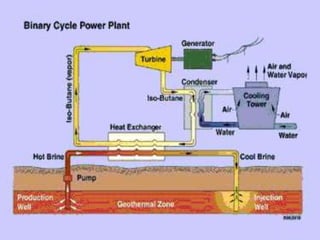
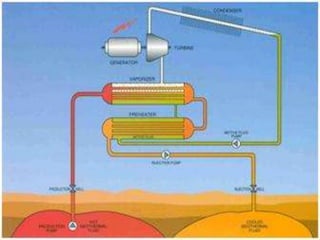
   Binary Cycle- Known as binary geothermal plants,
    the facilities that make this possible reduce
    geothermal energy’s already low emission rate to
    zero. The geothermal water (called “geothermal fluid”
    in the accompanying image) heats another liquid,
    such as isobutane or other organic fluids such as
    pentafluoropropane, which boils at a lower
    temperature than water. The two liquids are kept
    completely separate through the use of a heat
    exchanger, which transfers the heat energy from the
    geothermal water to the working fluid. The secondary
    fluid expands into gaseous vapor. The force of the
    expanding vapor, like steam, turns the turbines that
    power the generators. All of the produced geothermal
    water is injected back into the reservoir.
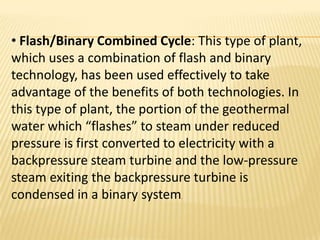
• Flash/Binary Combined Cycle: This type of plant,
which uses a combination of flash and binary
technology, has been used effectively to take
advantage of the benefits of both technologies. In
this type of plant, the portion of the geothermal
water which “flashes” to steam under reduced
pressure is first converted to electricity with a
backpressure steam turbine and the low-pressure
steam exiting the backpressure turbine is
condensed in a binary system .
WHAT ARE THE ADVANTAGES OF GEOTHERMAL
ENERGY PRODUCTION AND USAGE?
   Geothermal energy does not produce any pollution, and does
    not contribute to the greenhouse effect.
   The power stations do not take up much room, so there is not
    much impact on the environment.
   Geothermal energy generally involves low running costs since it
    saves 80% costs over fossil fuels and no fuel is used to
    generate the power.
   Dependence on fossil fuels decreases with the increase in the
    use of geothermal energy. With the sky-rocketing prices of oil,
    many countries are pushing companies to adopt these clean
    sources of energy.
   Since ancient times, people having been using this source of
    energy for taking bath, heating homes, preparing food and today
    this is also used for direct heating of homes and offices.
   Geothermal energy on the other hand has created many jobs for
    the local people.
WHAT ARE ITS DISADVANTAGES???
   The big problem is that there are not many places where
    you can build a geothermal power station. You need hot
    rocks of a suitable type, at a depth where we can drill
    down to them. The type of rock above is also important, it
    must be of a type that we can easily drill through.
   Sometimes a geothermal site may "run out of steam",
    perhaps for decades.
   Hazardous gases and minerals may come up from
    underground, and can be difficult to safely dispose of.
   To get geothermal energy, requires installation of power
    plants, to get steam from deep within the earth and this
    require huge one time investment and require to hire a
    certified installer and skilled staff needs to be recruited
    and relocated to plant location. Moreover, electricity
    towers, stations need to set up to move the power from
    geothermal plant to consumer.
TRIVIA:

The Philippines, which generates 23% of its
 electricity from geothermal energy, is the
 world’s second biggest producer behind the
 U.S.
 The first geothermal power station was built
 at Landrello, in Italy, and the second was at
 Wairekei in New Zealand.
Sources:

•http://www.darvill.clara.net/altenerg/geother
mal.htm
•http://geo-energy.org/Basics.aspx

•https://inlportal.inl.gov/port
al/server.pt/community/geot
hermal/422/what_is_geothe
rmal_energy_

Geothermal energy

  • 1.
    Produced and Presentedby: Group 6 of 2-Sampaguita Members: Nadeen Caasi Adeli Manliclic Gerard Duran Carlos Baquiran Cedric Perez
  • 2.
    WHAT IS GEOTHERMALENERGY??? •The word geothermal originated from the Greek roots geo, meaning earth, and thermos, meaning heat. • In simple means, Geothermal energy is thermal energy generated and stored in the Earth. *P.S.: Thermal energy is the energy that determines the temperature of matter
  • 3.
    WHERE DOES ITCOME FROM???  Initially, the energy transformed starts from way down the Earth’s core – 4,000 miles down. At the core, temperatures may reach over 9,000 degrees Fahrenheit. Heat conducts from the core to surrounding rock. Extremely high temperature and pressure cause some rock to melt, which is commonly known as magma.
  • 4.
    Magma convents upwardsince it is lighter than the solid rock. This magma then heats rock and water in the crust, sometimes up to 700 degrees Fahrenheit. This magma near the Earth’s surface is what is used and transformed in power-plants.
  • 5.
    Geothermal energy is produced through reservoirs, power plants and systems. Geothermal reservoirs are generally classified as being either low temperature (<150°C) or high temperature (>150°C). Generally speaking, the high temperature reservoirs are the ones suitable for, and sought out for, commercial production of electricity. Geothermal reservoirs are found in “geothermal systems,” which are regionally localized geologic settings where the earth’s naturally occurring heat flow is near enough to the earth’s surface to bring steam or hot water, to the surface.
  • 6.
    WHAT DO POWERPLANTSUSE IN PRODUCING GEOTHERMAL ENERGY???  Dry Steam- Steam is produced directly from the geothermal reservoir to run the turbines that power the generator, and no separation is necessary because wells only produce steam. The image below is a more simplified version of the process.  Flash Steam- Geothermally heated water under pressure is separated in a surface vessel (called a steam separator) into steam and hot water (called “brine” in the accompanying image). The steam is delivered to the turbine, and the turbine powers a generator. The liquid is injected back into the reservoir.
  • 7.
    Binary Cycle- Known as binary geothermal plants, the facilities that make this possible reduce geothermal energy’s already low emission rate to zero. The geothermal water (called “geothermal fluid” in the accompanying image) heats another liquid, such as isobutane or other organic fluids such as pentafluoropropane, which boils at a lower temperature than water. The two liquids are kept completely separate through the use of a heat exchanger, which transfers the heat energy from the geothermal water to the working fluid. The secondary fluid expands into gaseous vapor. The force of the expanding vapor, like steam, turns the turbines that power the generators. All of the produced geothermal water is injected back into the reservoir.
  • 8.
    • Flash/Binary CombinedCycle: This type of plant, which uses a combination of flash and binary technology, has been used effectively to take advantage of the benefits of both technologies. In this type of plant, the portion of the geothermal water which “flashes” to steam under reduced pressure is first converted to electricity with a backpressure steam turbine and the low-pressure steam exiting the backpressure turbine is condensed in a binary system .
  • 13.
    WHAT ARE THEADVANTAGES OF GEOTHERMAL ENERGY PRODUCTION AND USAGE?  Geothermal energy does not produce any pollution, and does not contribute to the greenhouse effect.  The power stations do not take up much room, so there is not much impact on the environment.  Geothermal energy generally involves low running costs since it saves 80% costs over fossil fuels and no fuel is used to generate the power.  Dependence on fossil fuels decreases with the increase in the use of geothermal energy. With the sky-rocketing prices of oil, many countries are pushing companies to adopt these clean sources of energy.  Since ancient times, people having been using this source of energy for taking bath, heating homes, preparing food and today this is also used for direct heating of homes and offices.  Geothermal energy on the other hand has created many jobs for the local people.
  • 14.
    WHAT ARE ITSDISADVANTAGES???  The big problem is that there are not many places where you can build a geothermal power station. You need hot rocks of a suitable type, at a depth where we can drill down to them. The type of rock above is also important, it must be of a type that we can easily drill through.  Sometimes a geothermal site may "run out of steam", perhaps for decades.  Hazardous gases and minerals may come up from underground, and can be difficult to safely dispose of.  To get geothermal energy, requires installation of power plants, to get steam from deep within the earth and this require huge one time investment and require to hire a certified installer and skilled staff needs to be recruited and relocated to plant location. Moreover, electricity towers, stations need to set up to move the power from geothermal plant to consumer.
  • 15.
    TRIVIA: The Philippines, whichgenerates 23% of its electricity from geothermal energy, is the world’s second biggest producer behind the U.S.  The first geothermal power station was built at Landrello, in Italy, and the second was at Wairekei in New Zealand.
  • 16.