Thyroiditis
Dr Shahjada Selim
Department of Endocrinology
Bangabandhu Sheikh Mujib Medical University
Email: selimshahjada@gmail.com
THYROIDITIS
A heterogeneous group of inflammatory
disorders involving the thyroid gland, of
which the etiologies range from autoimmune
to infectious origins.
The clinical course may be acute, subacute,
or chronic.
Classification of Tyroiditis:
1. Acute thyroiditis
Infectious
Non-infectious
2. Subacute thyroiditis
Classification of Thyroiditis:
3.Autoimmune thyroiditis
a. Chronic autoimmune thyroiditis:
o Hashimoto’s thyroiditis
o Atrophic thyroiditis
o Focal thyroiditis
o Juvenile thyroiditis
b. Silent thyroiditis
c. Postpartum thyroiditis
4. Riedel’s
thyroiditis
ACUTE INFECTIOUS THYROIDITIS
Rare, serious, bacterial
inflammatory disease of the thyroid.
Protective mechanisms of the thyroid
gland:
very good perfusion
efficient lymphatic drainage
capsulation of the thyroid
high concentration of iodine
Etiologic agents:
Streptococcus pyogenes
Streptococcus pneumoniae
Escherichia coli
Pseudomonas aeruginosa
Salmonella typhi
anaerobes of the oropharyngeal cavity.
Rare Forms of Infectious Thyroiditis
The thyroid is rarely the seat of
tuberculosis, syphilis, fungal infections
(Aspergillus species), or parasites.
Pneumocystis carinii infection of the
thyroid has been reported in patients with
AIDS.
hematogenous seeding
from distant foci
extension from
adjacent infected structures
direct
trauma
through
a persistent
thyroglossal duct
Infection to the
thyroid occurs by::
How thyroid becomes infected
Clinical Picture of Acute Infectious
Thyroiditis
severe anterior neck pain of abrupt onset, pain
may radiate to the ear, mandible, or occiput;
dysphagia, dysphonia, fever, rigor, diaphoresis
palpation shows a unilateral or less-frequently
bilateral tender swelling of the thyroid which is
associated with cervical lymphadenopathy
Clinical Picture of Acute Infectious
Thyroiditis
the skin over the infected area is erythematous
and warm
the white cell count and erythrocyte
sedimentation rate are elevated
thyroid antibodies are absent
serum T4 and T3 levels are usually normal as
well as thyroid RAIU
Clinical Picture of Acute Infectious
Thyroiditis
the isotope scans reveal a “cold” defect in the
involved lobe
ultrasonography shows an enlarged irregular
mass of mixed echogenicity
the presence at fine-needle aspiration of purulent
material is confirmatory of suppurative thyroiditis
and allows for the identification of the causative
agent
Ultrasonography of acute bacterial
thyroiditis
Ultrasonography of acute bacterial
thyroiditis
Treatment of Infectious
Thyroidtis
•This type of thyroiditis requires the
administration of appropriate antibiotics
based on the findings of the culture
from a fine-needle aspirate, and
surgical drainage (or excision) of any
area of fluctuance or abscess.
Before the results of the
culture
a combined regimen of nafcilin and
gentamicin or a third generation
cephalosporin would be appropriate
treatment.
NON-INFECTIOUS THYROIDITIS
Clinical picture depends on
causative agents
NON-INFECTIOUS
THYROIDITIS
AFTER 131
I THERAPY
(hyperthyroidism, thyroid cancer)
tender swelling of the thyroid
itching of the skin over thyroid
subfebrile body temperature
NON-INFECTIOUS
THYROIDITIS
AFTER RADIOTHERAPY
(external radiotherapy of the thyroid cancer,
complementary external radiotherapy in
patients with breast cancer):
asymptomatic or oligosymptomatic course,
leading into hypothyroidism
NON-INFECTIOUS
THYROIDITIS
After Neck Trauma
(bleeding to thyroid parenchyma
or thyroid cyst)
severe anterior neck pain of abrupt onset,
swelling of the thyroid,
fluctuation
NON-INFECTIOUS
THYROIDITIS
TREATMENT
In milder cases disappear
spontaneously
In some cases:
Salicylates or non steroidal anti-inflammatory
drugs(Polopiryni S 2-3 g/day,
Paracetamol 1.5-2.0g/day)
Exceptionally:
Corticosteroids (Prednisone 20-30mg/day)
SUBACUTE (GRANULOMATOUS)
THYROIDITIS
(DE QUERVAIN’S DISEASE)
A spontaneously remitting, painful, inflammatory
disease of the thyroid, probably of viral origin.
It is the most frequent cause of anterior neck
pain.
Most prevalent in the temperate zone.
Afflicts more frequently women between the third
and sixth decades of life.
SUBACUTE THYROIDITIS
ETIOLOGY
Probably viral infections;
There are some evidence:
Often preceded by an upper
respiratory tract viral infection
Prodromal viral symptoms
Seasonal distribution (summer and fall)
SUBACUTE THYROIDITIS
ETIOLOGY
Occurs in coincidence with outbreaks of
viral diseases (mumps, measles,
influenza)
Elevated titers of viral antibodies
(coxsackievirus, adenovirus, mumps)
have been found in convalescent sera of
patients with subacute thyroiditis
SUBACUTE THYROIDITIS
HISTOPATHOLOGICAL
CHANGES
 infiltration with neutrophils and
mononuclear cells,
 disruption of follicles,
 typical lesion characterized by a central
core of colloid surrounded by a large
number of individual histiocytes (giant
multinucleated cells).
SUBACUTE THYROIDITIS
CLINICAL PICTURE
There is usually a viral prodrome
with:
 myalgias,
 low-grade fever,
 sore-throat
 dysphagia
SUBACUTE THYROIDITIS
CLINICAL PICTURE
• Anterior neck pain occurs abruptly, which is
sometimes unilateral, and may radiate to the
ear, mandible or occiput
• pain may shift to the contralateral lobe
(creeping thyroiditis) moving the head,
swallowing, or coughing aggravate the pain.
SUBACUTE THYROIDITIS
CLINICAL PICTURE
Symptoms of thyrotoxicosis
may occur

the release of performed thyroid
hormones from disrupted follicles
SUBACUTE THYROIDITIS
CLINICAL PICTURE
On palpation:
 the thyroid is slightly to moderately
enlarged,
 sometimes asymmetrical or even
nodular
 Firm, tender, and painful
Laboratory Findings
of Subacute Thyroiditis
 elevated erythrocyte sedimentation rate
(>55mm/h),
 normal or slightly elevated leukocyte counts,
 increased serum IL-6 and Tg concentrations
during the thyrotoxic phase,
 thyroid antibodies are transiently detectable at
low titers in a minority of patients
THE PHASES OF SUBACUTE
THYROIDITIS
THYROTOXIC:
 high T4 and/or T3 level,
 low TSH level,
 RAIU value <5%
(isotope scans show a cold area in the involved
section of the gland or no uptake at all)
THE PHASES OF
SUBACUTE THYROIDITIS
HYPOTHYROID:
 low T4,
 high TSH level,
 normal RAIU value
THE PHASES OF
SUBACUTE THYROIDITIS
RECOVERY:
 normal T4 and T3 level,
 normal TSH level,
 normal RAIU value
SUBACUTE THYROIDITIS
The course of the disease may last 2 to 6
months without treatment.
Recurrences of the subacute thyroiditis are
reported in about one-fifth of the patients.
Permanent hypothyroidism is rare
(1-5%).
The disease may evolve into chronic
autoimmune thyroiditis.
SUBACUTE THYROIDITIS
TREATMENT
In milder cases:
 salicylates or non steroidal anti-
inflammatory drugs provide some
relief of pain and tendernees.
SUBACUTE THYROIDITIS
TREATMENT
In more severe cases:
 corticosteroids (prednisone 40-
60mg/day) have a more dramatic and
rapid effect;
the corticosteroid is slowly tapered over
the next 6 to 8 weeks and then
discontinued.
SUBACUTE THYROIDITIS
TREATMENT
Symptoms of thyrotoxicosis
should be managed with B-adrenergic
blocking agents (Propranolol 20-40mg,
3 to 4 times daily)
In patients with hypothyroidism L-T4
replacement is needed.
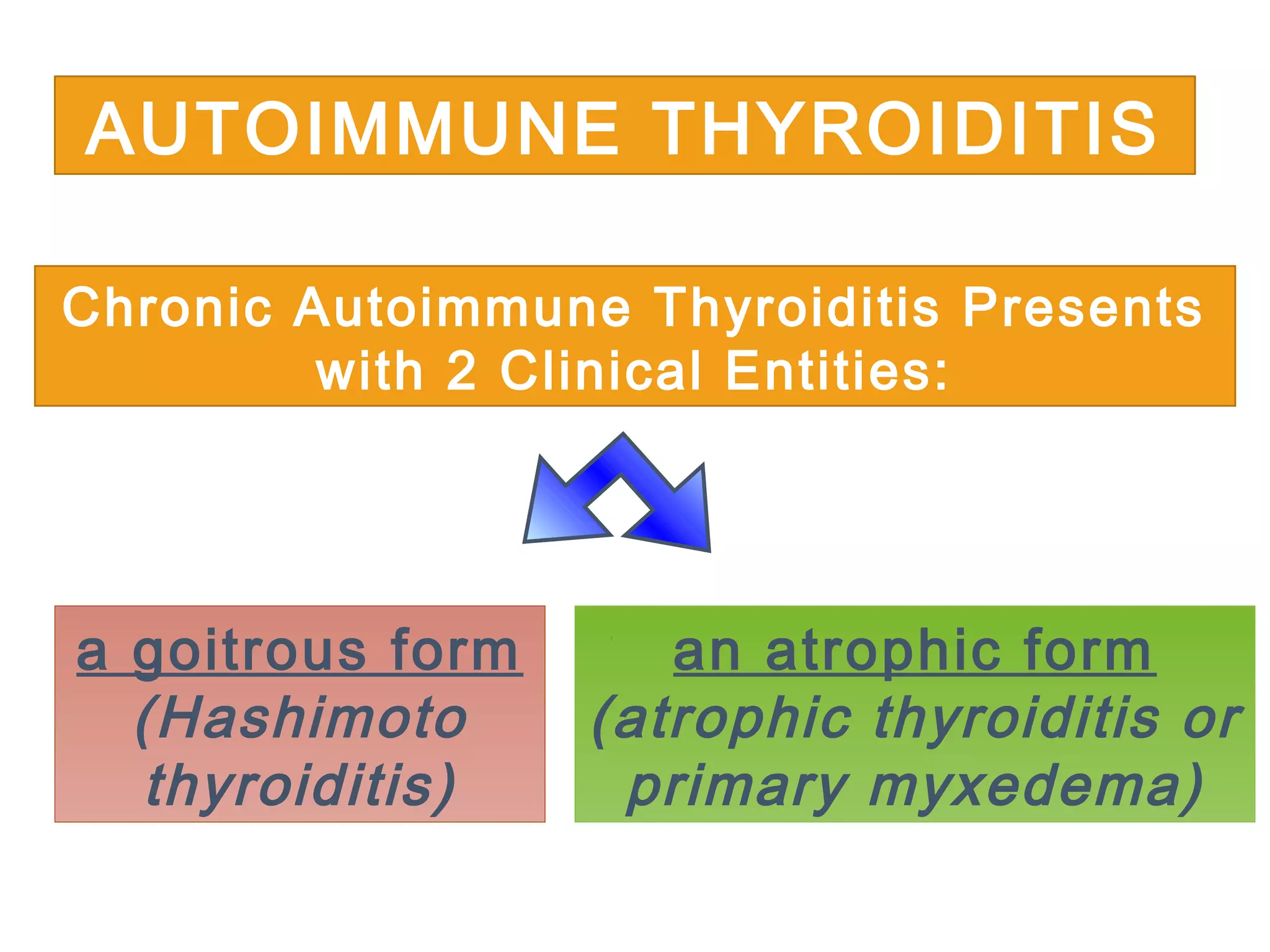
a goitrous form
(Hashimoto
thyroiditis)
an atrophic form
(atrophic thyroiditis or
primary myxedema)
AUTOIMMUNE THYROIDITIS
Chronic Autoimmune Thyroiditis Presents
with 2 Clinical Entities:
 Treatment with immunosuppressive
agents (corticosteroids) is not
recommended in autoimmune
thyroiditis.
 Lifelong substitution therapy with L-
thyroxine is indicated in hypothyroid
patients.
AUTOIMMUNE
THYROIDITIS
 Among children living in areas of iodine
sufficiency, juvenile lymphocytic thyroiditis is
the cause of euthyroid goiter in about one-half
to two-thirds of patients.
 Silent thyroiditis is characterized by transient
thyrotoxicosis with low thyroid radioiodone
uptake and a small, painless, nontender
goiter.
AUTOIMMUNE THYROIDITIS
 The postpartum rebound of immunity
may be accompanied by destructive
thyroiditis (postpartum thyroiditis),
resulting in transient thyrotoxicosis
evolving to hypothyroidism, or
hypothyroidism alone, followed by
gradual recovery.
AUTOIMMUNE THYROIDITIS
 Organ-specific autoimmunity is the cause
of the disease,
 the thyroid is infiltrated by lymphocytes,
 thyroid antibodies are present in serum,
 and there is a clinical or immunological
overlap with other autoimmune diseases.
AUTOIMMUNE THYROIDITIS
ETIOLOGY
 Activated, autoreactive T-helper recruit in
the thyroid: cytotoxic T cells (T cells
may kill directly thyroid cells or also cause
tissue injury by release of cytokines)
and
B cells (are transformed into plasmacytes
which produce antithyroid antibodies)
AUTOIMMUNE THYROIDITIS
ETIOLOGY
ANTITHYROID ANTIBODIES:
 thyroid peroxidase antibodies
(TPOAb),
 thyroglobulin antibodies (TgAb),
 TSH-blocking antibodies
AUTOIMMUNE THYROIDITIS
ETIOLOGY
Environmental factors
(infectious agents, therapeutically
administered interferon alpha, physical
and emotional stress, and increased
iodine intake) may be important for the
development of autoimmune thyroiditis.
AUTOIMMUNE THYROIDITIS
ETIOLOGY
 the disease is most often diagnosed
between the ages of 50 - 60 years,
 5 to 7 times more frequently in women than
in men;
 the prevalence of thyroid antibodies (which
correlates with autoimmune thyroiditis) is
higher in communities with sufficient iodine
intake and increases from 6% to 27% in the
second to sixth decades of life in women.
AUTOIMMUNE THYROIDITIS
ETIOLOGY
 Patients may present a goiter with or
without hypothyroidism.
 A feeling of tightnees in the neck may
occur, but compression of the trachea
is uncommon.
AUTOIMMUNE THYROIDITIS
Clinical Feature
 On physical examination
 most Hashimoto’s glands are diffusely
enlarged, but one lobe may be larger than
the other, and the pyramidal lobe may be
palpable;
 the goiter is generally moderate in size,
though massive enlargements may occur;
AUTOIMMUNE THYROIDITIS
Clinical Feature
 On physical examination
 the gland is nontender, firm or rubbery in
consistency, with a bosselated surface;
 the thyroid gland is reduced in size in atrophic
thyroiditis.
AUTOIMMUNE THYROIDITIS
Clinical Feature
Thyrotoxicosis (Hashitoxicosis)
rarely occurs, due to a combination of
Hashimoto’s thyroiditis with Graves’
disease in the same patient or to the
transient discharge of performed
thyroid hormones as a result of the
inflammatory process.
AUTOIMMUNE THYROIDITIS
Clinical Feature
AUTOIMMUNE THYROIDITIS
DIAGNOSTIC PROCEDURES
TSH, FT4 and FT3 serum levels
HASHITOXICOSIHASHITOXICOSI
SS
FTFT44 FTFT33
TSHTSH
HYPOTHYROIDISHYPOTHYROIDIS
MMFTFT44 FTFT33  ↔↔
TSHTSH 
AUTOIMMUNE
THYROIDITIS
DIAGNOSTIC PROCEDURES
Antithyroid antibodies are positive:
• TPOAb ⇒95% patients
• TgAb ⇒60-80% patients
In a few patients antithyroid antibodies are
in low or undetectable titers (seronegative
Hashimoto’s thyroiditis)
AUTOIMMUNE THYROIDITIS
DIAGNOSTIC
PROCEDURES
Thyroid radionuclide scan and radioactive iodine
uptake (RAIU) are not crucial to the diagnosis
(normal, low, or high).
An ultrasound pattern of the thyroid:

diffusely reduced echogenicity
AUTOIMMUNE THYROIDITIS
DIAGNOSTIC
PROCEDURES
• FNAB- cytological smears of Hashimoto’s
thyroiditis are rich in lymphocytes and
oxyphil cells(it is advisable in patients with
suspicious nodules or a rapidly enlarging
goiter in order to rule out malignancy).
Chronic autoimmune thyroiditis is a
component of type 2 autoimmune
polyglandular syndrome, a condition
characterized by a coexistence of two or
more of the following disorders:
Addison’s disease, autoimmune
thyroiditis, insulin dependent diabetes
mellitus, atrophic gastritis with or without
pernicious anemia, vitiligo, alopecia,
myasthenia gravis, and hypophysitis.
AUTOIMMUNE
THYROIDITIS
TREATMENT
Corticosteroids are not recommended
Substitution therapy with L-T4 at a dose that
normalizes serum TSH levels : the average
daily replacement dose of L-T4 in adults is 1.6ug/kg
body weight
=75-100ug/day in women and 100-150ug/day in men.
SILENT (PAINLESS) THYROIDITIS is
characterized by transient thyrotoxicosis with
low RAIU, and a small, painless, nondender
goiter.
Thyrotoxicosis results from damage of follicular
cells
by the inflammatory process, with leakage of
performed thyroid hormones in the bloodstream.
SILENT (PAINLESS) THYROIDITIS
The overall prevalence of silent thyroiditis
as a cause of thyrotoxicosis ranges from 4
to 15%;
greater prevalence in previously iodine-
deficient areas, but recently exposed to
sufficient iodine;
the female/male ratio is ~ 2:1;
SILENT (PAINLESS)
THYROIDITIS
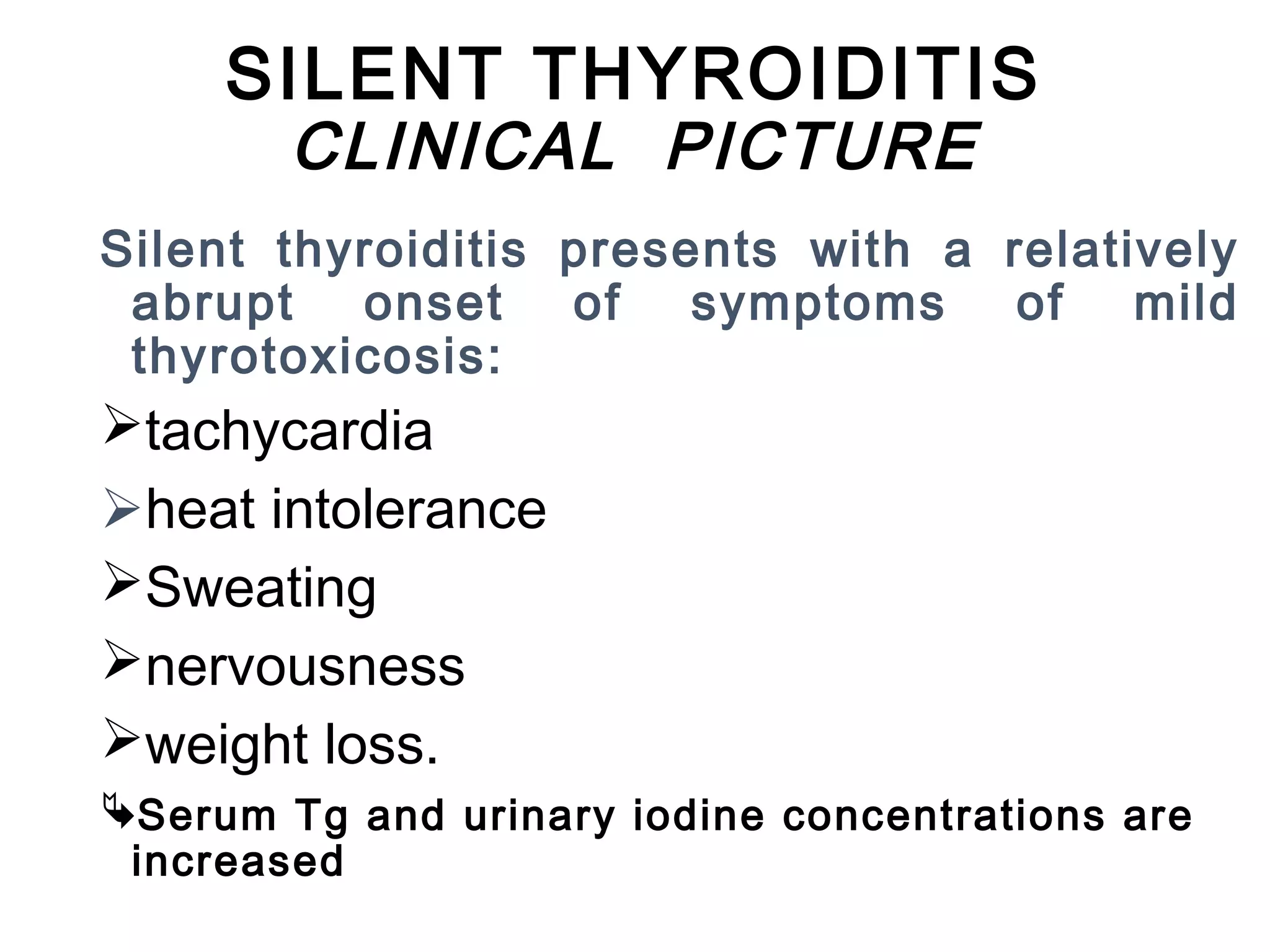
SILENT THYROIDITIS
CLINICAL PICTURE
Silent thyroiditis presents with a relatively
abrupt onset of symptoms of mild
thyrotoxicosis:
tachycardia
heat intolerance
Sweating
nervousness
weight loss.
Serum Tg and urinary iodine concentrations are
increased
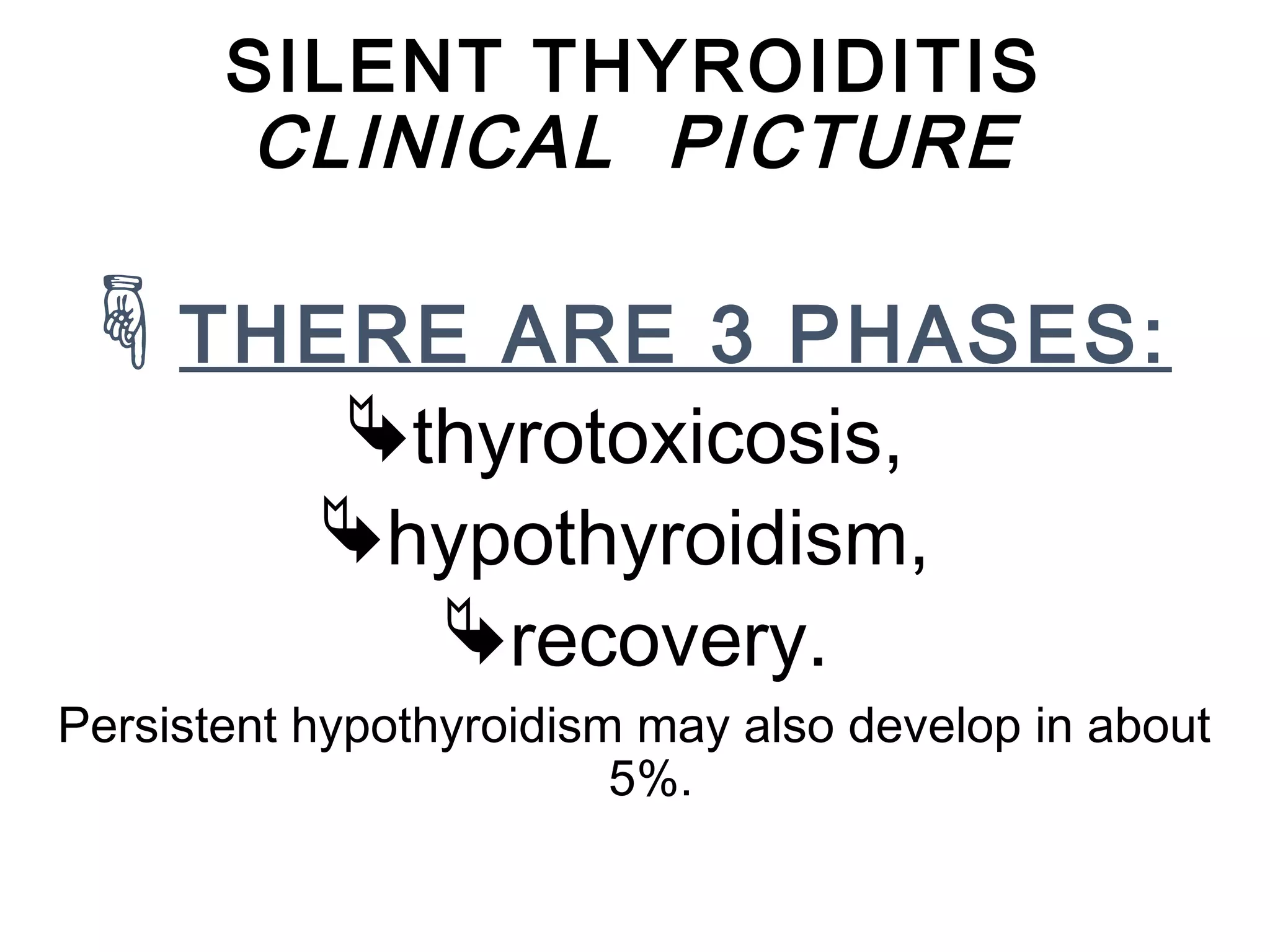
SILENT THYROIDITIS
CLINICAL PICTURE
THERE ARE 3 PHASES:
thyrotoxicosis,
hypothyroidism,
recovery.
Persistent hypothyroidism may also develop in about
5%.
SILENT THYROIDITIS
CLINICAL PICTURE
Differentiation from Graves’
hyperthyroidism is important.
In silent thyroiditis
 abrupt onset
thyrotoxicosis less severe
duration of thyrotoxicosis < 3 months,
SILENT THYROIDITIS
CLINICAL PICTURE
thyroid bruit, ophthalmopathy and
dermopathy absent,
T3/T4 ratio < 20/1,
 RAIU low,
TSH-R antibodies usually negative,
thyrotoxicosis transient.
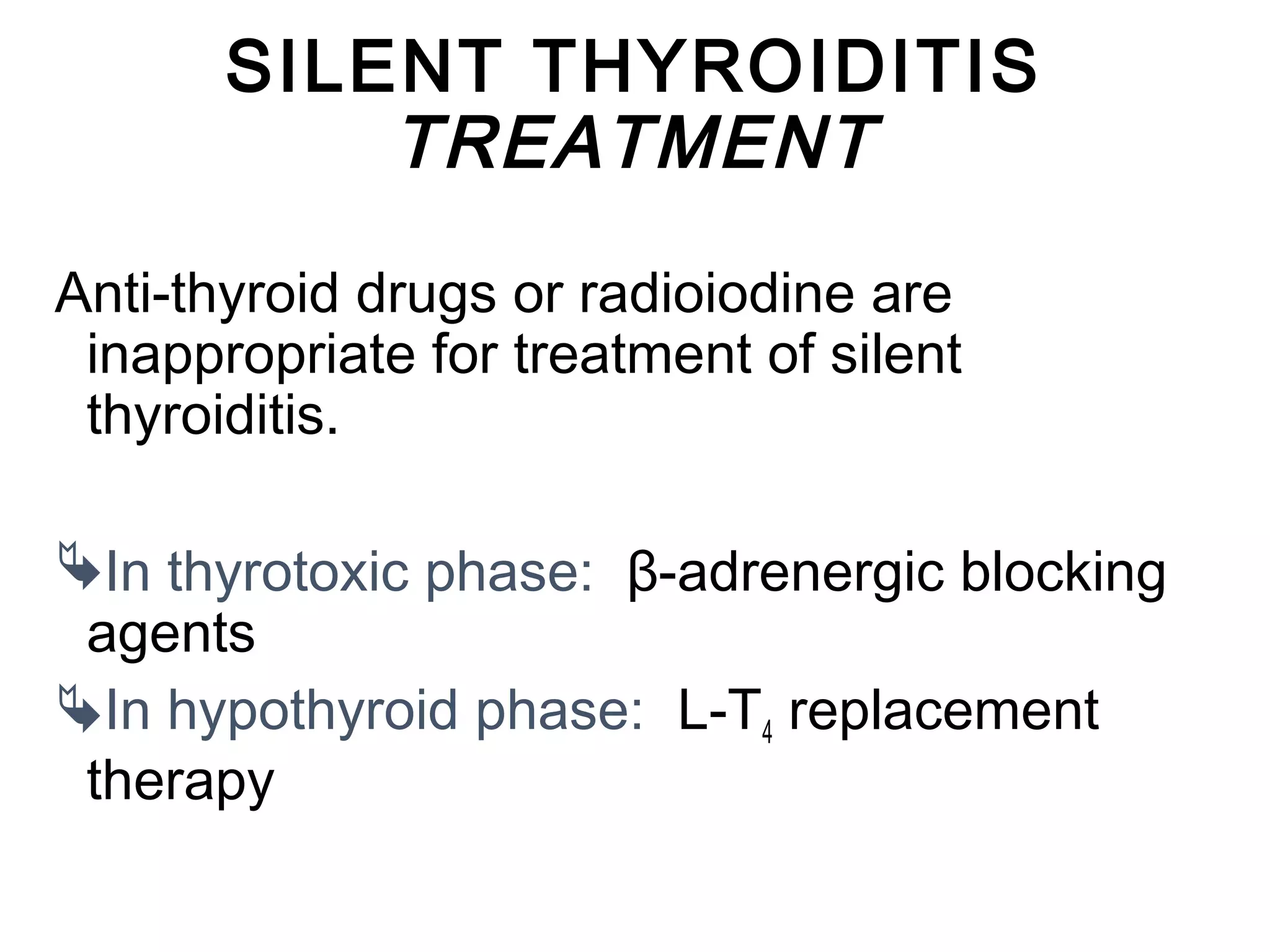
SILENT THYROIDITIS
TREATMENT
Anti-thyroid drugs or radioiodine are
inappropriate for treatment of silent
thyroiditis.
In thyrotoxic phase: β-adrenergic blocking
agents
In hypothyroid phase: L-T4 replacement
therapy
During pregnancy all autoimmune
reactions are inhibited by a number
of physiologic factors, and following
delivery there is a reversal of these
alterations with rebound of autoimmune
phenomena.
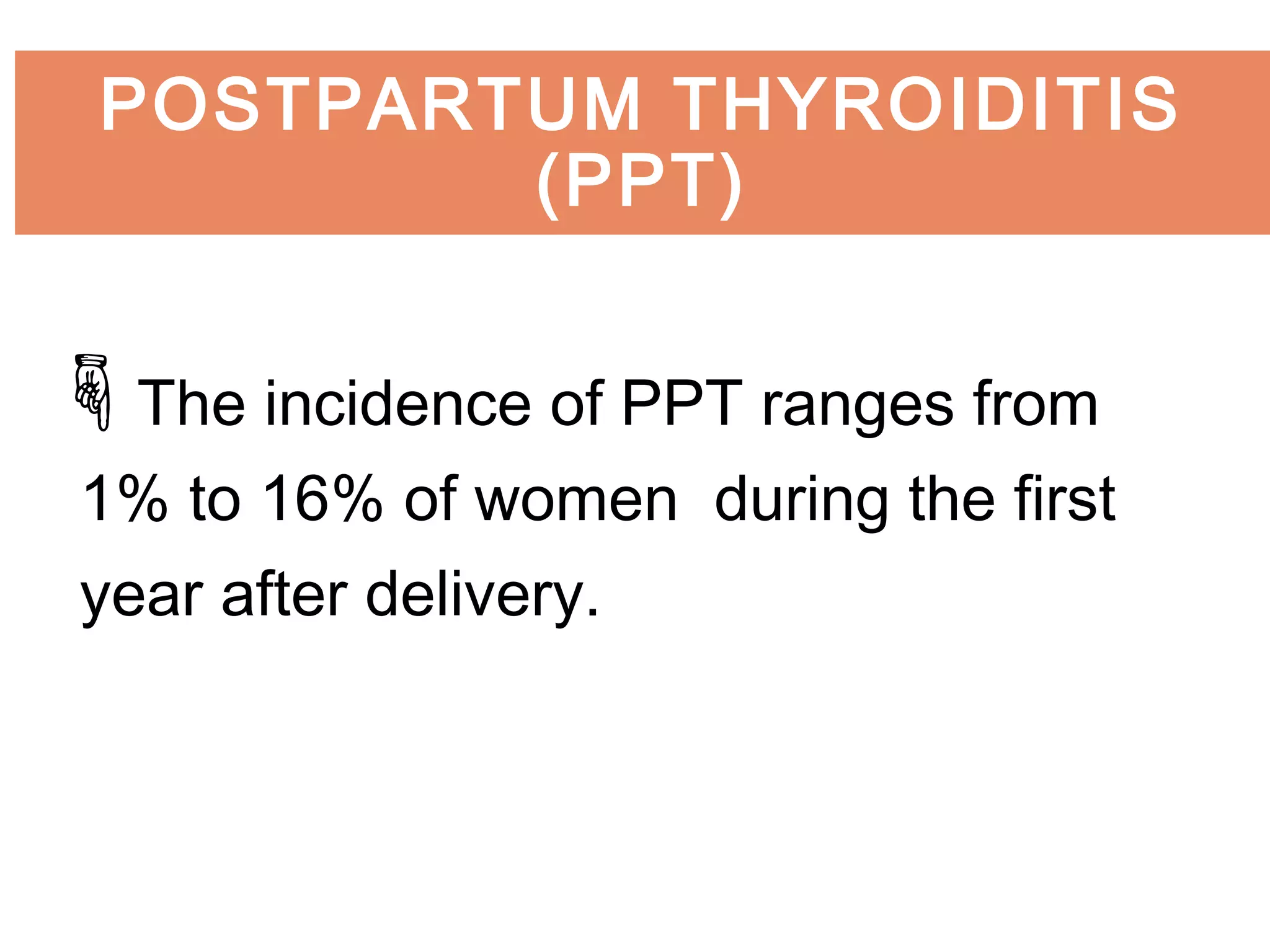
POSTPARTUM THYROIDITIS
(PPT)
The incidence of PPT ranges from
1% to 16% of women during the first
year after delivery.
POSTPARTUM THYROIDITIS
(PPT)
Risk factors for the development of
PPT include:
positive TPOAb in the first trimester of
pregnancy,
 type 1 diabetes mellitus,
a history of chronic autoimmune thyroiditis
or Graves’ disease, or a previous episode of
PPT during a preceding pregnancy.
POSTPARTUM THYROIDITIS
(PPT)
The clinical course and treatment are
the same as described above for silent
thyroiditis
POSTPARTUM THYROIDITIS
(PPT)
It is a rare, chronic inflammatory disorder of
unknown etiology, characterized by dense
fibrosis involving the thyroid and adjacent
tissues, and extracervical areas (fibrous
mediastinitis, retroperitoneal fibrosis, retro-
orbital fibrosis, sclerosing cholangitis, and
pancreatitis).
It occurs mainly in middle-age or elderly
women.
RIEDEL’S THYROIDITIS
(SCLEROSING THYROIDITIS, INVASIVE FIBROUS
THYROIDITIS)
 A patient will present with a long history of
a painless, progressively increasing
anterior neck mass.
 Pressure symptoms: dysphagia, cough,
hoarseness, stridor, attacks of suffocation)
may appear.
Most patients are euthyroid
RIEDEL’S THYROIDITIS
CLINICAL PICTURE
On physical examination:

a stony-hard or woody thyroid mass that varies in
size from small to very large, may involve one or
both lobes, and is fixed to surrounding
structures.
RIEDEL’S THYROIDITIS
CLINICAL PICTURE
 Thyroid antibodies are present in up to
45% of patients.
 Serum calcium may be low due to
parathyroid invasion.
 Differentiation from thyroid carcinoma or
lymphoma of the thyroid requires open
biopsy, since FNAB may be difficult to
interpret.
RIEDEL’S THYROIDITIS
CLINICAL PICTURE
 Surgical treatment is necessary to relieve
pressure on the trachea and to establish
diagnosis.
 Corticosteroids are of little or no value.
 The course of the lesion may be slowly
progressive, may stabilize, or remit.
 Extrathyroidal fibrotic lesions may
complicate the prognosis.
RIEDEL’S THYROIDITIS
CLINICAL PICTURE
Thanks

Thyroiditis by Dr Selim

  • 1.
    Thyroiditis Dr Shahjada Selim Departmentof Endocrinology Bangabandhu Sheikh Mujib Medical University Email: selimshahjada@gmail.com
  • 2.
    THYROIDITIS A heterogeneous groupof inflammatory disorders involving the thyroid gland, of which the etiologies range from autoimmune to infectious origins. The clinical course may be acute, subacute, or chronic.
  • 3.
    Classification of Tyroiditis: 1.Acute thyroiditis Infectious Non-infectious 2. Subacute thyroiditis
  • 4.
    Classification of Thyroiditis: 3.Autoimmunethyroiditis a. Chronic autoimmune thyroiditis: o Hashimoto’s thyroiditis o Atrophic thyroiditis o Focal thyroiditis o Juvenile thyroiditis b. Silent thyroiditis c. Postpartum thyroiditis 4. Riedel’s thyroiditis
  • 5.
    ACUTE INFECTIOUS THYROIDITIS Rare,serious, bacterial inflammatory disease of the thyroid.
  • 6.
    Protective mechanisms ofthe thyroid gland: very good perfusion efficient lymphatic drainage capsulation of the thyroid high concentration of iodine
  • 7.
    Etiologic agents: Streptococcus pyogenes Streptococcuspneumoniae Escherichia coli Pseudomonas aeruginosa Salmonella typhi anaerobes of the oropharyngeal cavity.
  • 8.
    Rare Forms ofInfectious Thyroiditis The thyroid is rarely the seat of tuberculosis, syphilis, fungal infections (Aspergillus species), or parasites. Pneumocystis carinii infection of the thyroid has been reported in patients with AIDS.
  • 9.
    hematogenous seeding from distantfoci extension from adjacent infected structures direct trauma through a persistent thyroglossal duct Infection to the thyroid occurs by:: How thyroid becomes infected
  • 10.
    Clinical Picture ofAcute Infectious Thyroiditis severe anterior neck pain of abrupt onset, pain may radiate to the ear, mandible, or occiput; dysphagia, dysphonia, fever, rigor, diaphoresis palpation shows a unilateral or less-frequently bilateral tender swelling of the thyroid which is associated with cervical lymphadenopathy
  • 11.
    Clinical Picture ofAcute Infectious Thyroiditis the skin over the infected area is erythematous and warm the white cell count and erythrocyte sedimentation rate are elevated thyroid antibodies are absent serum T4 and T3 levels are usually normal as well as thyroid RAIU
  • 12.
    Clinical Picture ofAcute Infectious Thyroiditis the isotope scans reveal a “cold” defect in the involved lobe ultrasonography shows an enlarged irregular mass of mixed echogenicity the presence at fine-needle aspiration of purulent material is confirmatory of suppurative thyroiditis and allows for the identification of the causative agent
  • 13.
    Ultrasonography of acutebacterial thyroiditis
  • 14.
    Ultrasonography of acutebacterial thyroiditis
  • 15.
    Treatment of Infectious Thyroidtis •Thistype of thyroiditis requires the administration of appropriate antibiotics based on the findings of the culture from a fine-needle aspirate, and surgical drainage (or excision) of any area of fluctuance or abscess.
  • 16.
    Before the resultsof the culture a combined regimen of nafcilin and gentamicin or a third generation cephalosporin would be appropriate treatment.
  • 17.
  • 18.
    NON-INFECTIOUS THYROIDITIS AFTER 131 I THERAPY (hyperthyroidism,thyroid cancer) tender swelling of the thyroid itching of the skin over thyroid subfebrile body temperature
  • 19.
    NON-INFECTIOUS THYROIDITIS AFTER RADIOTHERAPY (external radiotherapyof the thyroid cancer, complementary external radiotherapy in patients with breast cancer): asymptomatic or oligosymptomatic course, leading into hypothyroidism
  • 20.
    NON-INFECTIOUS THYROIDITIS After Neck Trauma (bleedingto thyroid parenchyma or thyroid cyst) severe anterior neck pain of abrupt onset, swelling of the thyroid, fluctuation
  • 21.
    NON-INFECTIOUS THYROIDITIS TREATMENT In milder casesdisappear spontaneously In some cases: Salicylates or non steroidal anti-inflammatory drugs(Polopiryni S 2-3 g/day, Paracetamol 1.5-2.0g/day) Exceptionally: Corticosteroids (Prednisone 20-30mg/day)
  • 22.
    SUBACUTE (GRANULOMATOUS) THYROIDITIS (DE QUERVAIN’SDISEASE) A spontaneously remitting, painful, inflammatory disease of the thyroid, probably of viral origin. It is the most frequent cause of anterior neck pain. Most prevalent in the temperate zone. Afflicts more frequently women between the third and sixth decades of life.
  • 23.
    SUBACUTE THYROIDITIS ETIOLOGY Probably viralinfections; There are some evidence: Often preceded by an upper respiratory tract viral infection Prodromal viral symptoms Seasonal distribution (summer and fall)
  • 24.
    SUBACUTE THYROIDITIS ETIOLOGY Occurs incoincidence with outbreaks of viral diseases (mumps, measles, influenza) Elevated titers of viral antibodies (coxsackievirus, adenovirus, mumps) have been found in convalescent sera of patients with subacute thyroiditis
  • 25.
    SUBACUTE THYROIDITIS HISTOPATHOLOGICAL CHANGES  infiltrationwith neutrophils and mononuclear cells,  disruption of follicles,  typical lesion characterized by a central core of colloid surrounded by a large number of individual histiocytes (giant multinucleated cells).
  • 26.
    SUBACUTE THYROIDITIS CLINICAL PICTURE Thereis usually a viral prodrome with:  myalgias,  low-grade fever,  sore-throat  dysphagia
  • 27.
    SUBACUTE THYROIDITIS CLINICAL PICTURE •Anterior neck pain occurs abruptly, which is sometimes unilateral, and may radiate to the ear, mandible or occiput • pain may shift to the contralateral lobe (creeping thyroiditis) moving the head, swallowing, or coughing aggravate the pain.
  • 28.
    SUBACUTE THYROIDITIS CLINICAL PICTURE Symptomsof thyrotoxicosis may occur  the release of performed thyroid hormones from disrupted follicles
  • 29.
    SUBACUTE THYROIDITIS CLINICAL PICTURE Onpalpation:  the thyroid is slightly to moderately enlarged,  sometimes asymmetrical or even nodular  Firm, tender, and painful
  • 30.
    Laboratory Findings of SubacuteThyroiditis  elevated erythrocyte sedimentation rate (>55mm/h),  normal or slightly elevated leukocyte counts,  increased serum IL-6 and Tg concentrations during the thyrotoxic phase,  thyroid antibodies are transiently detectable at low titers in a minority of patients
  • 31.
    THE PHASES OFSUBACUTE THYROIDITIS THYROTOXIC:  high T4 and/or T3 level,  low TSH level,  RAIU value <5% (isotope scans show a cold area in the involved section of the gland or no uptake at all)
  • 32.
    THE PHASES OF SUBACUTETHYROIDITIS HYPOTHYROID:  low T4,  high TSH level,  normal RAIU value
  • 33.
    THE PHASES OF SUBACUTETHYROIDITIS RECOVERY:  normal T4 and T3 level,  normal TSH level,  normal RAIU value
  • 34.
    SUBACUTE THYROIDITIS The courseof the disease may last 2 to 6 months without treatment. Recurrences of the subacute thyroiditis are reported in about one-fifth of the patients. Permanent hypothyroidism is rare (1-5%). The disease may evolve into chronic autoimmune thyroiditis.
  • 35.
    SUBACUTE THYROIDITIS TREATMENT In mildercases:  salicylates or non steroidal anti- inflammatory drugs provide some relief of pain and tendernees.
  • 36.
    SUBACUTE THYROIDITIS TREATMENT In moresevere cases:  corticosteroids (prednisone 40- 60mg/day) have a more dramatic and rapid effect; the corticosteroid is slowly tapered over the next 6 to 8 weeks and then discontinued.
  • 37.
    SUBACUTE THYROIDITIS TREATMENT Symptoms ofthyrotoxicosis should be managed with B-adrenergic blocking agents (Propranolol 20-40mg, 3 to 4 times daily) In patients with hypothyroidism L-T4 replacement is needed.
  • 38.
    a goitrous form (Hashimoto thyroiditis) anatrophic form (atrophic thyroiditis or primary myxedema) AUTOIMMUNE THYROIDITIS Chronic Autoimmune Thyroiditis Presents with 2 Clinical Entities:
  • 39.
     Treatment withimmunosuppressive agents (corticosteroids) is not recommended in autoimmune thyroiditis.  Lifelong substitution therapy with L- thyroxine is indicated in hypothyroid patients. AUTOIMMUNE THYROIDITIS
  • 40.
     Among childrenliving in areas of iodine sufficiency, juvenile lymphocytic thyroiditis is the cause of euthyroid goiter in about one-half to two-thirds of patients.  Silent thyroiditis is characterized by transient thyrotoxicosis with low thyroid radioiodone uptake and a small, painless, nontender goiter. AUTOIMMUNE THYROIDITIS
  • 41.
     The postpartumrebound of immunity may be accompanied by destructive thyroiditis (postpartum thyroiditis), resulting in transient thyrotoxicosis evolving to hypothyroidism, or hypothyroidism alone, followed by gradual recovery. AUTOIMMUNE THYROIDITIS
  • 42.
     Organ-specific autoimmunityis the cause of the disease,  the thyroid is infiltrated by lymphocytes,  thyroid antibodies are present in serum,  and there is a clinical or immunological overlap with other autoimmune diseases. AUTOIMMUNE THYROIDITIS ETIOLOGY
  • 43.
     Activated, autoreactiveT-helper recruit in the thyroid: cytotoxic T cells (T cells may kill directly thyroid cells or also cause tissue injury by release of cytokines) and B cells (are transformed into plasmacytes which produce antithyroid antibodies) AUTOIMMUNE THYROIDITIS ETIOLOGY
  • 44.
    ANTITHYROID ANTIBODIES:  thyroidperoxidase antibodies (TPOAb),  thyroglobulin antibodies (TgAb),  TSH-blocking antibodies AUTOIMMUNE THYROIDITIS ETIOLOGY
  • 45.
    Environmental factors (infectious agents,therapeutically administered interferon alpha, physical and emotional stress, and increased iodine intake) may be important for the development of autoimmune thyroiditis. AUTOIMMUNE THYROIDITIS ETIOLOGY
  • 46.
     the diseaseis most often diagnosed between the ages of 50 - 60 years,  5 to 7 times more frequently in women than in men;  the prevalence of thyroid antibodies (which correlates with autoimmune thyroiditis) is higher in communities with sufficient iodine intake and increases from 6% to 27% in the second to sixth decades of life in women. AUTOIMMUNE THYROIDITIS ETIOLOGY
  • 47.
     Patients maypresent a goiter with or without hypothyroidism.  A feeling of tightnees in the neck may occur, but compression of the trachea is uncommon. AUTOIMMUNE THYROIDITIS Clinical Feature
  • 48.
     On physicalexamination  most Hashimoto’s glands are diffusely enlarged, but one lobe may be larger than the other, and the pyramidal lobe may be palpable;  the goiter is generally moderate in size, though massive enlargements may occur; AUTOIMMUNE THYROIDITIS Clinical Feature
  • 49.
     On physicalexamination  the gland is nontender, firm or rubbery in consistency, with a bosselated surface;  the thyroid gland is reduced in size in atrophic thyroiditis. AUTOIMMUNE THYROIDITIS Clinical Feature
  • 50.
    Thyrotoxicosis (Hashitoxicosis) rarely occurs,due to a combination of Hashimoto’s thyroiditis with Graves’ disease in the same patient or to the transient discharge of performed thyroid hormones as a result of the inflammatory process. AUTOIMMUNE THYROIDITIS Clinical Feature
  • 51.
    AUTOIMMUNE THYROIDITIS DIAGNOSTIC PROCEDURES TSH,FT4 and FT3 serum levels HASHITOXICOSIHASHITOXICOSI SS FTFT44 FTFT33 TSHTSH HYPOTHYROIDISHYPOTHYROIDIS MMFTFT44 FTFT33  ↔↔ TSHTSH 
  • 52.
    AUTOIMMUNE THYROIDITIS DIAGNOSTIC PROCEDURES Antithyroid antibodiesare positive: • TPOAb ⇒95% patients • TgAb ⇒60-80% patients In a few patients antithyroid antibodies are in low or undetectable titers (seronegative Hashimoto’s thyroiditis)
  • 53.
    AUTOIMMUNE THYROIDITIS DIAGNOSTIC PROCEDURES Thyroid radionuclidescan and radioactive iodine uptake (RAIU) are not crucial to the diagnosis (normal, low, or high). An ultrasound pattern of the thyroid:  diffusely reduced echogenicity
  • 54.
    AUTOIMMUNE THYROIDITIS DIAGNOSTIC PROCEDURES • FNAB-cytological smears of Hashimoto’s thyroiditis are rich in lymphocytes and oxyphil cells(it is advisable in patients with suspicious nodules or a rapidly enlarging goiter in order to rule out malignancy).
  • 55.
    Chronic autoimmune thyroiditisis a component of type 2 autoimmune polyglandular syndrome, a condition characterized by a coexistence of two or more of the following disorders: Addison’s disease, autoimmune thyroiditis, insulin dependent diabetes mellitus, atrophic gastritis with or without pernicious anemia, vitiligo, alopecia, myasthenia gravis, and hypophysitis.
  • 56.
    AUTOIMMUNE THYROIDITIS TREATMENT Corticosteroids are notrecommended Substitution therapy with L-T4 at a dose that normalizes serum TSH levels : the average daily replacement dose of L-T4 in adults is 1.6ug/kg body weight =75-100ug/day in women and 100-150ug/day in men.
  • 57.
    SILENT (PAINLESS) THYROIDITISis characterized by transient thyrotoxicosis with low RAIU, and a small, painless, nondender goiter. Thyrotoxicosis results from damage of follicular cells by the inflammatory process, with leakage of performed thyroid hormones in the bloodstream. SILENT (PAINLESS) THYROIDITIS
  • 58.
    The overall prevalenceof silent thyroiditis as a cause of thyrotoxicosis ranges from 4 to 15%; greater prevalence in previously iodine- deficient areas, but recently exposed to sufficient iodine; the female/male ratio is ~ 2:1; SILENT (PAINLESS) THYROIDITIS
  • 59.
    SILENT THYROIDITIS CLINICAL PICTURE Silentthyroiditis presents with a relatively abrupt onset of symptoms of mild thyrotoxicosis: tachycardia heat intolerance Sweating nervousness weight loss. Serum Tg and urinary iodine concentrations are increased
  • 60.
    SILENT THYROIDITIS CLINICAL PICTURE THEREARE 3 PHASES: thyrotoxicosis, hypothyroidism, recovery. Persistent hypothyroidism may also develop in about 5%.
  • 61.
    SILENT THYROIDITIS CLINICAL PICTURE Differentiationfrom Graves’ hyperthyroidism is important. In silent thyroiditis  abrupt onset thyrotoxicosis less severe duration of thyrotoxicosis < 3 months,
  • 62.
    SILENT THYROIDITIS CLINICAL PICTURE thyroidbruit, ophthalmopathy and dermopathy absent, T3/T4 ratio < 20/1,  RAIU low, TSH-R antibodies usually negative, thyrotoxicosis transient.
  • 63.
    SILENT THYROIDITIS TREATMENT Anti-thyroid drugsor radioiodine are inappropriate for treatment of silent thyroiditis. In thyrotoxic phase: β-adrenergic blocking agents In hypothyroid phase: L-T4 replacement therapy
  • 64.
    During pregnancy allautoimmune reactions are inhibited by a number of physiologic factors, and following delivery there is a reversal of these alterations with rebound of autoimmune phenomena. POSTPARTUM THYROIDITIS (PPT)
  • 65.
    The incidence ofPPT ranges from 1% to 16% of women during the first year after delivery. POSTPARTUM THYROIDITIS (PPT)
  • 66.
    Risk factors forthe development of PPT include: positive TPOAb in the first trimester of pregnancy,  type 1 diabetes mellitus, a history of chronic autoimmune thyroiditis or Graves’ disease, or a previous episode of PPT during a preceding pregnancy. POSTPARTUM THYROIDITIS (PPT)
  • 67.
    The clinical courseand treatment are the same as described above for silent thyroiditis POSTPARTUM THYROIDITIS (PPT)
  • 68.
    It is arare, chronic inflammatory disorder of unknown etiology, characterized by dense fibrosis involving the thyroid and adjacent tissues, and extracervical areas (fibrous mediastinitis, retroperitoneal fibrosis, retro- orbital fibrosis, sclerosing cholangitis, and pancreatitis). It occurs mainly in middle-age or elderly women. RIEDEL’S THYROIDITIS (SCLEROSING THYROIDITIS, INVASIVE FIBROUS THYROIDITIS)
  • 69.
     A patientwill present with a long history of a painless, progressively increasing anterior neck mass.  Pressure symptoms: dysphagia, cough, hoarseness, stridor, attacks of suffocation) may appear. Most patients are euthyroid RIEDEL’S THYROIDITIS CLINICAL PICTURE
  • 70.
    On physical examination:  astony-hard or woody thyroid mass that varies in size from small to very large, may involve one or both lobes, and is fixed to surrounding structures. RIEDEL’S THYROIDITIS CLINICAL PICTURE
  • 71.
     Thyroid antibodiesare present in up to 45% of patients.  Serum calcium may be low due to parathyroid invasion.  Differentiation from thyroid carcinoma or lymphoma of the thyroid requires open biopsy, since FNAB may be difficult to interpret. RIEDEL’S THYROIDITIS CLINICAL PICTURE
  • 72.
     Surgical treatmentis necessary to relieve pressure on the trachea and to establish diagnosis.  Corticosteroids are of little or no value.  The course of the lesion may be slowly progressive, may stabilize, or remit.  Extrathyroidal fibrotic lesions may complicate the prognosis. RIEDEL’S THYROIDITIS CLINICAL PICTURE
  • 73.