Dr.Azad A Haleem AL.Brefkani
University Of Duhok
Faculty of Medical Science
School Of Medicine
Pediatrics Department
azad82d@gmail.com
2015
DEFINITION:
Myocarditis is defined as:
Acute or chronic inflammation of the
myocardium.
characterized by:
1. Inflammatory cells infiltrates in myocardium.
2. Myocyte degeneration or necrosis.
Etiology
Etiology
• Viral Infections
• Coxsackievirus and other enteroviruses, adenovirus,
parvovirus, Epstein-Barr virus, and cytomegalovirus are
the most common causative agents in children, though
most known viral agents have been reported.
• Bacterial Infections
• Bacterial myocarditis has become far less common
with the advent of advanced public health measures,
which have minimized infectious causes such as
diphtheria. Diphtheritic myocarditis cauesd by bacterial
toxin.
Pathogenesis
Characterized by:
Myocardial inflammation,necrosis and
fibrosis.
Cardiomegaly and diminished systolic
function occur due to myocardial damage.
Typical signs of CHF occur which may
progress to shock,arrythmias and sudden
death.
Virus act on myocardium in three phases.
1) Virus Replication Or Acute Phase
2) Autoimmune Injury Phase
3) Dilated Cardiomyopathy Phase Or Chronic
Phase
Pathogenesis
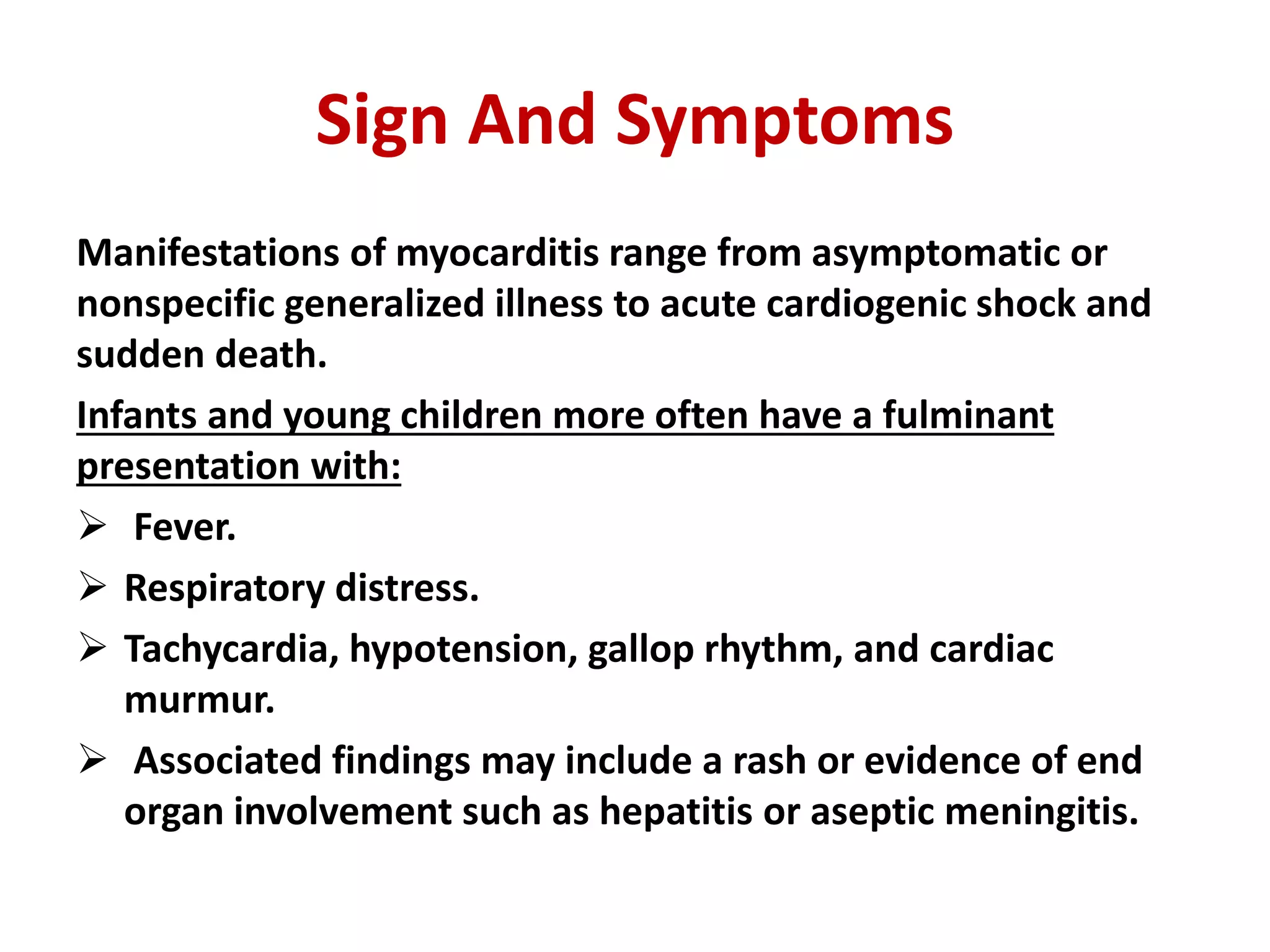
Sign And Symptoms
Manifestations of myocarditis range from asymptomatic or
nonspecific generalized illness to acute cardiogenic shock and
sudden death.
Infants and young children more often have a fulminant
presentation with:
 Fever.
 Respiratory distress.
 Tachycardia, hypotension, gallop rhythm, and cardiac
murmur.
 Associated findings may include a rash or evidence of end
organ involvement such as hepatitis or aseptic meningitis.
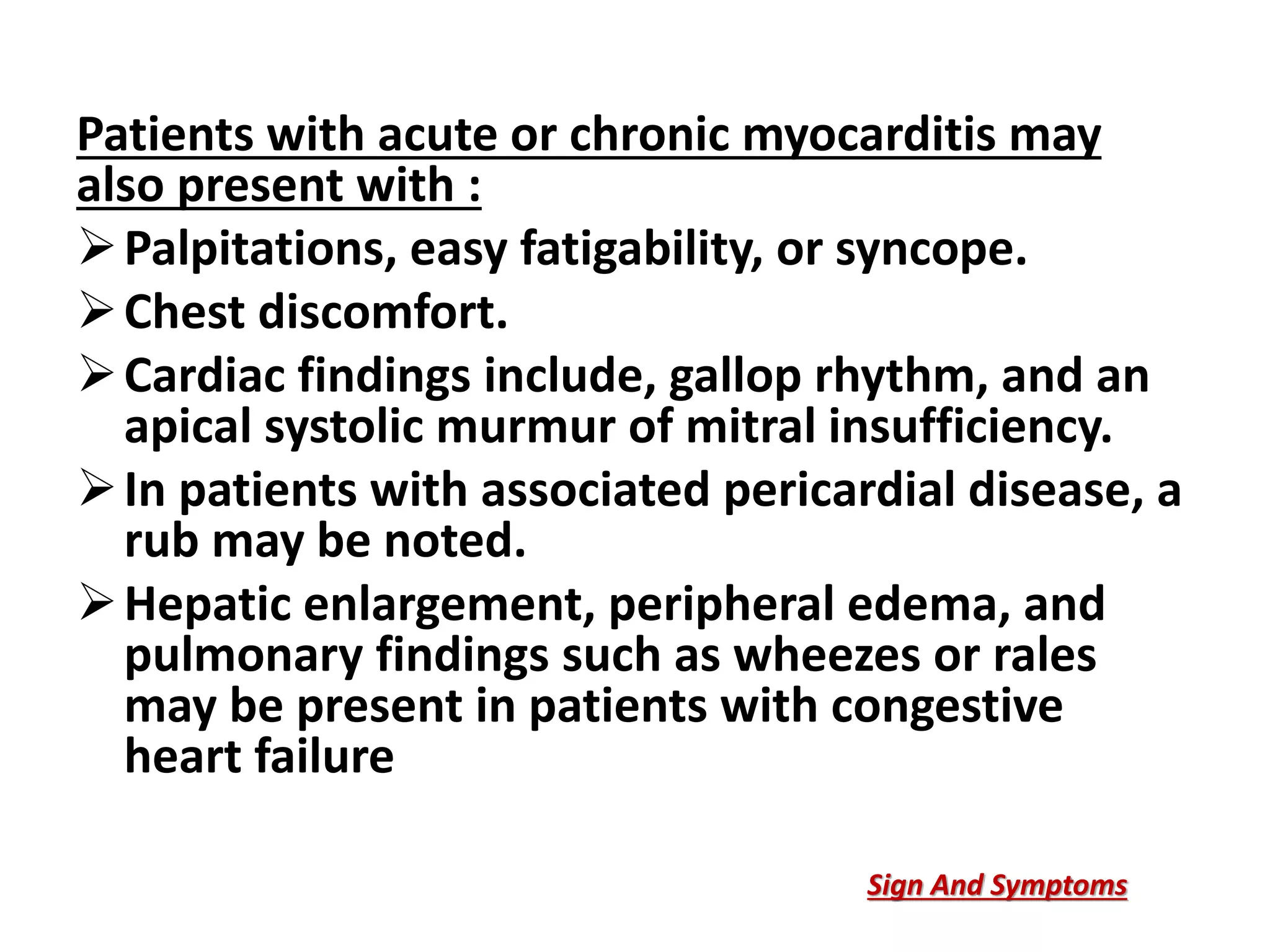
Patients with acute or chronic myocarditis may
also present with :
Palpitations, easy fatigability, or syncope.
Chest discomfort.
Cardiac findings include, gallop rhythm, and an
apical systolic murmur of mitral insufficiency.
In patients with associated pericardial disease, a
rub may be noted.
Hepatic enlargement, peripheral edema, and
pulmonary findings such as wheezes or rales
may be present in patients with congestive
heart failure
Sign And Symptoms
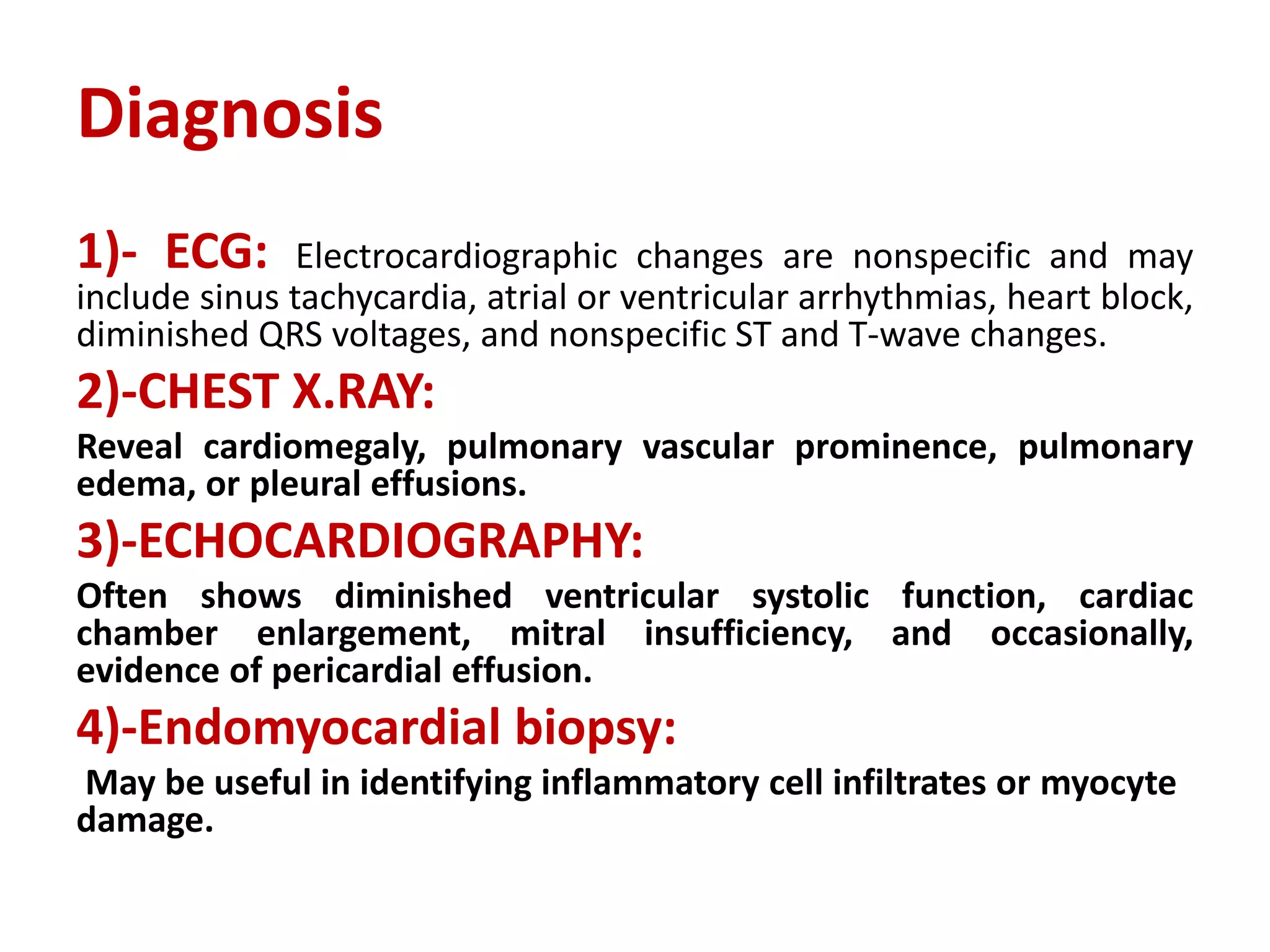
Diagnosis
1)- ECG: Electrocardiographic changes are nonspecific and may
include sinus tachycardia, atrial or ventricular arrhythmias, heart block,
diminished QRS voltages, and nonspecific ST and T-wave changes.
2)-CHEST X.RAY:
Reveal cardiomegaly, pulmonary vascular prominence, pulmonary
edema, or pleural effusions.
3)-ECHOCARDIOGRAPHY:
Often shows diminished ventricular systolic function, cardiac
chamber enlargement, mitral insufficiency, and occasionally,
evidence of pericardial effusion.
4)-Endomyocardial biopsy:
May be useful in identifying inflammatory cell infiltrates or myocyte
damage.
5)-OTHER SUPPORTIVE BUT NONSPECIFIC TESTS
INCLUDE:
 WBC; often elevated.
ESR increased.
Troponins elevated in 1/3rd cases.
CK (Creatine kinase) may be elevated.
AST (aspartate aminotransferase) may be
elevated.
Treatment
• Primary therapy for acute myocarditis is supportive
• Management is done according to clinical signs and
symptoms.
Conventional heart failure therapy is currently the
only accepted therapy for myocarditis including:
1. ACE inhibitors.
2. Angiotensin receptor blocking agents.
3. Diuretics.
4. β-blockers.
5. In patients manifesting with significant atrial or
ventricular arrhythmias, specific antiarrhythmic
agents (for example, amiodarone) should be given.
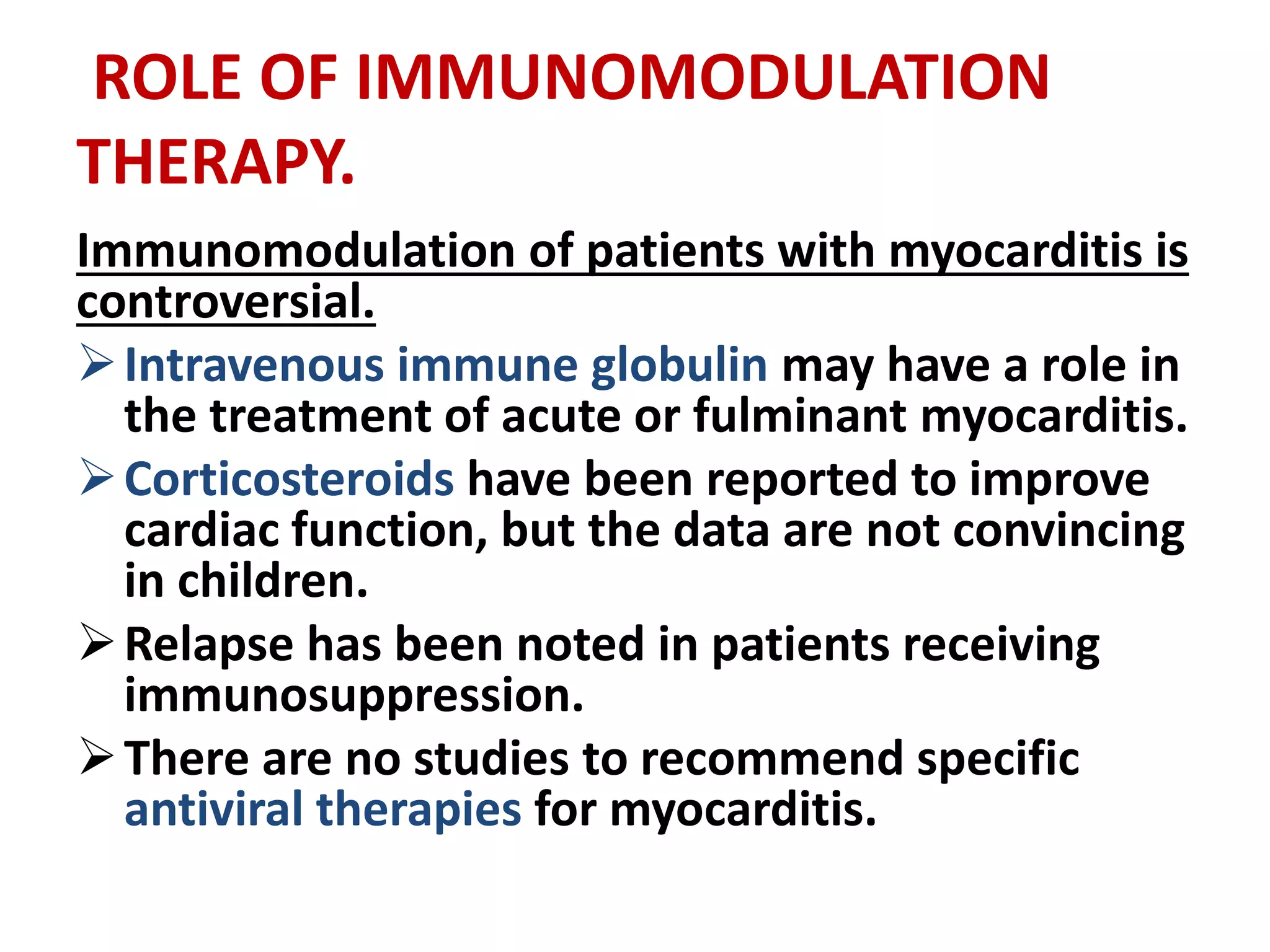
ROLE OF IMMUNOMODULATION
THERAPY.
Immunomodulation of patients with myocarditis is
controversial.
Intravenous immune globulin may have a role in
the treatment of acute or fulminant myocarditis.
Corticosteroids have been reported to improve
cardiac function, but the data are not convincing
in children.
Relapse has been noted in patients receiving
immunosuppression.
There are no studies to recommend specific
antiviral therapies for myocarditis.
Prognosis
The prognosis of symptomatic myocarditis:
 in newborns is poor and 75% mortality has been
reported.
 The prognosis is better for children and adolescents.
 Recovery of ventricular function has been reported
in 10-50% of patients.
THANK YOU

Myocarditis in children

  • 1.
    Dr.Azad A HaleemAL.Brefkani University Of Duhok Faculty of Medical Science School Of Medicine Pediatrics Department azad82d@gmail.com 2015
  • 2.
    DEFINITION: Myocarditis is definedas: Acute or chronic inflammation of the myocardium. characterized by: 1. Inflammatory cells infiltrates in myocardium. 2. Myocyte degeneration or necrosis.
  • 3.
  • 4.
    Etiology • Viral Infections •Coxsackievirus and other enteroviruses, adenovirus, parvovirus, Epstein-Barr virus, and cytomegalovirus are the most common causative agents in children, though most known viral agents have been reported. • Bacterial Infections • Bacterial myocarditis has become far less common with the advent of advanced public health measures, which have minimized infectious causes such as diphtheria. Diphtheritic myocarditis cauesd by bacterial toxin.
  • 5.
    Pathogenesis Characterized by: Myocardial inflammation,necrosisand fibrosis. Cardiomegaly and diminished systolic function occur due to myocardial damage. Typical signs of CHF occur which may progress to shock,arrythmias and sudden death.
  • 6.
    Virus act onmyocardium in three phases. 1) Virus Replication Or Acute Phase 2) Autoimmune Injury Phase 3) Dilated Cardiomyopathy Phase Or Chronic Phase Pathogenesis
  • 7.
    Sign And Symptoms Manifestationsof myocarditis range from asymptomatic or nonspecific generalized illness to acute cardiogenic shock and sudden death. Infants and young children more often have a fulminant presentation with:  Fever.  Respiratory distress.  Tachycardia, hypotension, gallop rhythm, and cardiac murmur.  Associated findings may include a rash or evidence of end organ involvement such as hepatitis or aseptic meningitis.
  • 8.
    Patients with acuteor chronic myocarditis may also present with : Palpitations, easy fatigability, or syncope. Chest discomfort. Cardiac findings include, gallop rhythm, and an apical systolic murmur of mitral insufficiency. In patients with associated pericardial disease, a rub may be noted. Hepatic enlargement, peripheral edema, and pulmonary findings such as wheezes or rales may be present in patients with congestive heart failure Sign And Symptoms
  • 9.
    Diagnosis 1)- ECG: Electrocardiographicchanges are nonspecific and may include sinus tachycardia, atrial or ventricular arrhythmias, heart block, diminished QRS voltages, and nonspecific ST and T-wave changes. 2)-CHEST X.RAY: Reveal cardiomegaly, pulmonary vascular prominence, pulmonary edema, or pleural effusions. 3)-ECHOCARDIOGRAPHY: Often shows diminished ventricular systolic function, cardiac chamber enlargement, mitral insufficiency, and occasionally, evidence of pericardial effusion. 4)-Endomyocardial biopsy: May be useful in identifying inflammatory cell infiltrates or myocyte damage.
  • 10.
    5)-OTHER SUPPORTIVE BUTNONSPECIFIC TESTS INCLUDE:  WBC; often elevated. ESR increased. Troponins elevated in 1/3rd cases. CK (Creatine kinase) may be elevated. AST (aspartate aminotransferase) may be elevated.
  • 11.
    Treatment • Primary therapyfor acute myocarditis is supportive • Management is done according to clinical signs and symptoms. Conventional heart failure therapy is currently the only accepted therapy for myocarditis including: 1. ACE inhibitors. 2. Angiotensin receptor blocking agents. 3. Diuretics. 4. β-blockers. 5. In patients manifesting with significant atrial or ventricular arrhythmias, specific antiarrhythmic agents (for example, amiodarone) should be given.
  • 12.
    ROLE OF IMMUNOMODULATION THERAPY. Immunomodulationof patients with myocarditis is controversial. Intravenous immune globulin may have a role in the treatment of acute or fulminant myocarditis. Corticosteroids have been reported to improve cardiac function, but the data are not convincing in children. Relapse has been noted in patients receiving immunosuppression. There are no studies to recommend specific antiviral therapies for myocarditis.
  • 13.
    Prognosis The prognosis ofsymptomatic myocarditis:  in newborns is poor and 75% mortality has been reported.  The prognosis is better for children and adolescents.  Recovery of ventricular function has been reported in 10-50% of patients.
  • 14.