Ratheesh.R
SLMGNC
Introduction
• Thyroiditis is the medical term for inflammation
(swelling) of the thyroid gland, which can either
cause abnormally high or low levels of thyroid
hormones in the blood.
• The thyroid gland is a butterfly-shaped gland
found in the neck. It produces hormones that are
released into the bloodstream to control the
body's growth and metabolism.
• They affect processes such as heart rate and body
temperature, and help convert food into energy
to keep the body going.
Harrisons principles of internal medicine 18th edition, Dan L. Longo, Anthony S. Fauci, Mc graw hill medical publications, pp 2927-
Definition
• Thyroiditis is an inflammation (not an
infection) of the thyroid gland.
Types
• Hashimoto's thyroiditis (the most common)
• De Quervain's or subacute thyroiditis
• Post-partum thyroiditis (triggered after giving
birth)
• Silent or painless thyroiditis
• Drug-induced thyroiditis
• Radiation-induced thyroiditis
• Acute or infectious thyroiditis
Cont….
Hashimoto's thyroiditis:
• Hashimoto's thyroiditis is an autoimmune
condition. This means your immune system
mistakenly attacks your thyroid gland, causing it
to gradually swell and become damaged.
De Quervain's (subacute) thyroiditis:
• De Quervain's thyroiditis (sometimes called
subacute thyroiditis) is a painful swelling of the
thyroid gland that is thought to be triggered by a
viral infection, such as mumps or the flu.
Cont….
Post-partum thyroiditis:
• Like Hashimoto's thyroiditis, post-partum
thyroiditis is an autoimmune condition, but it only
happens in women who have recently given birth.
• In post-partum thyroiditis, the immune system
attacks your thyroid gland within around six
months of giving birth, causing a temporary rise
in thyroid hormone levels (thyrotoxicosis).
Cont….
Silent (painless) thyroiditis:
• Silent thyroiditis is very similar to post-partum
thyroiditis. It is also an autoimmune condition,
but is not related to giving birth and can occur in
both men and women.
Drug-induced thyroiditis:
• Thyroiditis can also be triggered by medications
including interferon, amiodarone, lithium and a
class of drugs to treat certain cancers (which
include sunitinib), if these medicines damage the
thyroid gland.
Cont….
Radiation-induced thyroiditis:
• Radioactive iodine treatment for an overactive thyroid
gland or radiotherapy for certain cancers can also damage
the thyroid gland, leading to symptoms of an overactive
thyroid gland or symptoms of an underactive thyroid
gland.
Acute or infectious thyroiditis:
• Acute or infectious thyroiditis is usually triggered by a
bacterial infection. It is rare and is associated with either
a weakened immune system or, in children, with a
problem in the development of the thyroid.
Causes
• Auto immune destruction
• Genetic Pre-Disposition
• Viral invasion
• Respiratory infection
• Streptococcus pyogenic
• Staphylococcus aureus
• Fungi invasion
Pathophysiology
• Due to any factors
• Enlargement of the thyroid gland caused by
infiltration of lymphocyte
• Destruction of the parenchyma of thyroid caused
by autoimmune deficiency
• Hypothyroidism, if untreated
Clinical Features
• Fatigue
• Drowsiness
• Difficulty with learning
• Dry, brittle hair and nails
• Dry, itchy skin
• Puffy face
• Constipation.
• Heavy menstrual flow
• Malaise
• Chills
• Thyroid tenderness
• Nervousness
• Increased sensitivity to
many medications.
• Swelling
• Dysphagia
• Dysphonia
• Anterior neck pain
• Fever , Sore throat
• Irritability
• Low BMR
• Enlargement of thyroid
gland
Special investigations
• TSH
• Thyroid auto antibodies test
• Histology- diffuse lymphocytic and plasma cell
infiltration with formation of lymphoid follicles
from follicular hyperplasia.
- Damage to the follicular basement membrane.
-Atrophy of the thyroid parenchyma
Cont….
Blood tests to measure….
• increased levels of thyroid hormone in the
bloodstream .
• the abnormal antibodies, anti-microsomal
and antithyroglobulin antibodies.
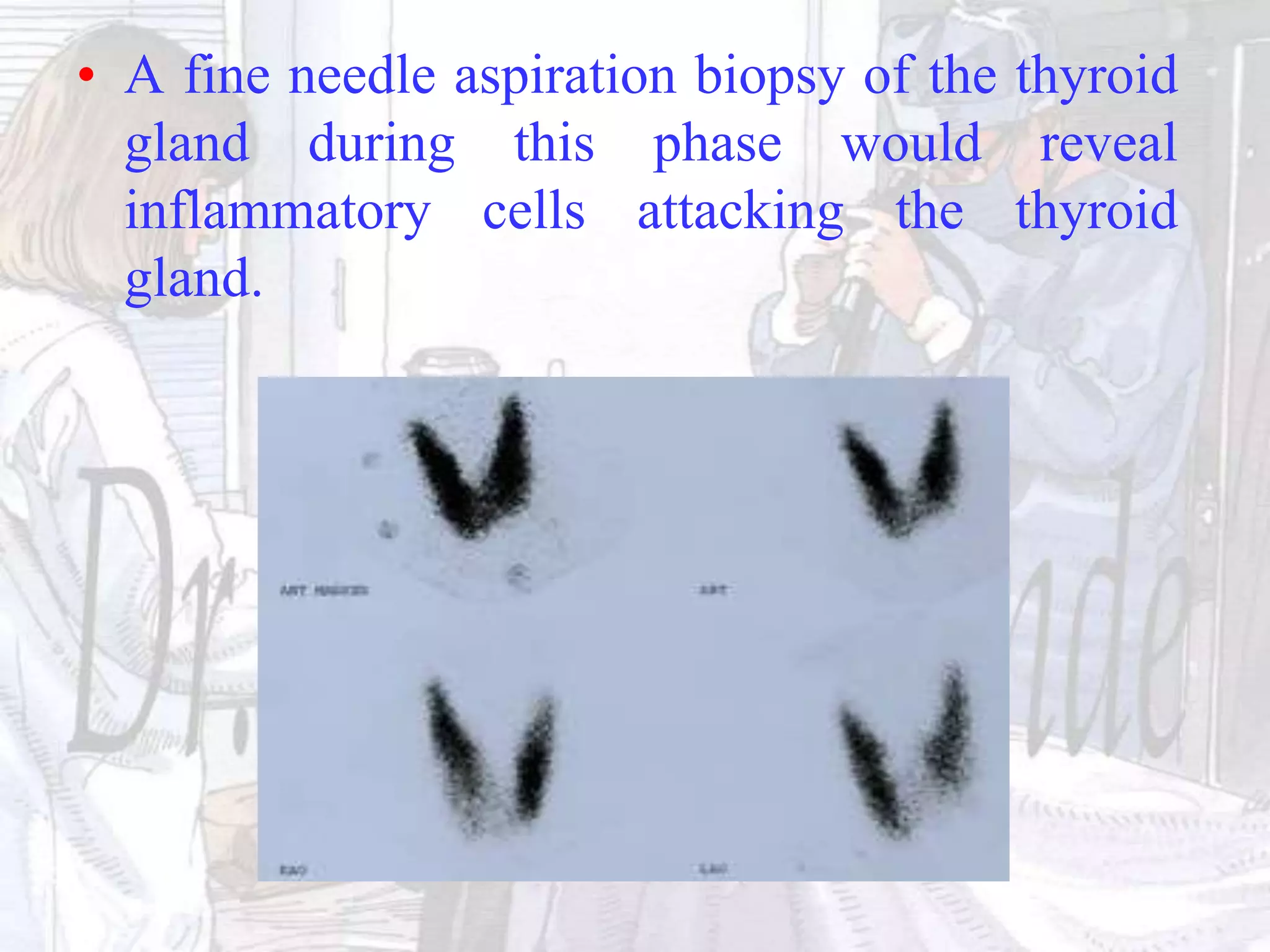
• A fine needle aspiration biopsy of the thyroid
gland during this phase would reveal
inflammatory cells attacking the thyroid
gland.
Treatment
• Anti microbial medication
• Fluid Replacement
• Antibiotic therapy parenterally
• Anti-inflammatory agents
• Analgesics
• Mild Sedative
• Steroids drugs may be (pain, fever and malaise)
• Beta adrenergic blocking(Reduce thyrotoxicisis)
Treatment:
• During this hyperthyroid phase, treatment is
usually not recommended because this
phase usually lasts for a short period of
time, about 2 to 4 months.
• However, if the symptoms are extreme, beta
blockers may be used to slow the heart rate
and decrease nervousness.
Treatment
• Thyroid hormone medication for about six
months.
• After this time, the medication is stopped to
determine whether or not the thyroid has
recovered its normal function.
• If so, the medication may be stopped
permanently, otherwise the medication must be
resumed because of permanent injury to the
thyroid gland.
Special Treatment
• Treatment depends on the type of thyroiditis
and the clinical presentation.
Thyrotoxicosis Hypothyroidism Thyroidal pain
Thyrotoxicosis
• Beta blockers to decrease palpitations
and reduce shakes and tremors may be
helpful.
Hypothyroidism
• Thyroid hormone replacement.
Thyroidal pain
• Anti-inflamatory medications such as
aspirin .
• Steroid therapy with prednisone.
Surgery
• Surgical incision and Drainage may be
needed, if any abscess is present.
• Surgical resection Goitre, if tracheal
compression, cough or hoarseness occur.
• Fine Needle biopsy is done.
Complications
• Airway obstruction
• Dysphonia
• Hoarseness - Due to recurrent laryngeal
involvement
• Hypothyroidism
• Hypo para thyroidism
• Dysphagia
• Stridor - Due to tracheal compression
Nursing Diagnosis
• Pain r/t inflammation of thyroid gland.
• Anxiety r/t Enlargement of neck/thyroid gland.
• Risk for Ineffective Airway Clearance related to
obstruction of the trachea, swelling, bleeding and
laryngeal spasm.
• Impaired Verbal Communication related to vocal
cord injury / damage to the larynx, tissue edema,
pain, discomfort.

Thyroiditis

  • 1.
  • 2.
    Introduction • Thyroiditis isthe medical term for inflammation (swelling) of the thyroid gland, which can either cause abnormally high or low levels of thyroid hormones in the blood. • The thyroid gland is a butterfly-shaped gland found in the neck. It produces hormones that are released into the bloodstream to control the body's growth and metabolism. • They affect processes such as heart rate and body temperature, and help convert food into energy to keep the body going. Harrisons principles of internal medicine 18th edition, Dan L. Longo, Anthony S. Fauci, Mc graw hill medical publications, pp 2927-
  • 3.
    Definition • Thyroiditis isan inflammation (not an infection) of the thyroid gland.
  • 4.
    Types • Hashimoto's thyroiditis(the most common) • De Quervain's or subacute thyroiditis • Post-partum thyroiditis (triggered after giving birth) • Silent or painless thyroiditis • Drug-induced thyroiditis • Radiation-induced thyroiditis • Acute or infectious thyroiditis
  • 5.
    Cont…. Hashimoto's thyroiditis: • Hashimoto'sthyroiditis is an autoimmune condition. This means your immune system mistakenly attacks your thyroid gland, causing it to gradually swell and become damaged. De Quervain's (subacute) thyroiditis: • De Quervain's thyroiditis (sometimes called subacute thyroiditis) is a painful swelling of the thyroid gland that is thought to be triggered by a viral infection, such as mumps or the flu.
  • 6.
    Cont…. Post-partum thyroiditis: • LikeHashimoto's thyroiditis, post-partum thyroiditis is an autoimmune condition, but it only happens in women who have recently given birth. • In post-partum thyroiditis, the immune system attacks your thyroid gland within around six months of giving birth, causing a temporary rise in thyroid hormone levels (thyrotoxicosis).
  • 7.
    Cont…. Silent (painless) thyroiditis: •Silent thyroiditis is very similar to post-partum thyroiditis. It is also an autoimmune condition, but is not related to giving birth and can occur in both men and women. Drug-induced thyroiditis: • Thyroiditis can also be triggered by medications including interferon, amiodarone, lithium and a class of drugs to treat certain cancers (which include sunitinib), if these medicines damage the thyroid gland.
  • 8.
    Cont…. Radiation-induced thyroiditis: • Radioactiveiodine treatment for an overactive thyroid gland or radiotherapy for certain cancers can also damage the thyroid gland, leading to symptoms of an overactive thyroid gland or symptoms of an underactive thyroid gland. Acute or infectious thyroiditis: • Acute or infectious thyroiditis is usually triggered by a bacterial infection. It is rare and is associated with either a weakened immune system or, in children, with a problem in the development of the thyroid.
  • 9.
    Causes • Auto immunedestruction • Genetic Pre-Disposition • Viral invasion • Respiratory infection • Streptococcus pyogenic • Staphylococcus aureus • Fungi invasion
  • 10.
    Pathophysiology • Due toany factors • Enlargement of the thyroid gland caused by infiltration of lymphocyte • Destruction of the parenchyma of thyroid caused by autoimmune deficiency • Hypothyroidism, if untreated
  • 11.
    Clinical Features • Fatigue •Drowsiness • Difficulty with learning • Dry, brittle hair and nails • Dry, itchy skin • Puffy face • Constipation. • Heavy menstrual flow • Malaise • Chills • Thyroid tenderness • Nervousness • Increased sensitivity to many medications. • Swelling • Dysphagia • Dysphonia • Anterior neck pain • Fever , Sore throat • Irritability • Low BMR • Enlargement of thyroid gland
  • 12.
    Special investigations • TSH •Thyroid auto antibodies test • Histology- diffuse lymphocytic and plasma cell infiltration with formation of lymphoid follicles from follicular hyperplasia. - Damage to the follicular basement membrane. -Atrophy of the thyroid parenchyma
  • 13.
    Cont…. Blood tests tomeasure…. • increased levels of thyroid hormone in the bloodstream . • the abnormal antibodies, anti-microsomal and antithyroglobulin antibodies.
  • 14.
    • A fineneedle aspiration biopsy of the thyroid gland during this phase would reveal inflammatory cells attacking the thyroid gland.
  • 15.
    Treatment • Anti microbialmedication • Fluid Replacement • Antibiotic therapy parenterally • Anti-inflammatory agents • Analgesics • Mild Sedative • Steroids drugs may be (pain, fever and malaise) • Beta adrenergic blocking(Reduce thyrotoxicisis)
  • 16.
    Treatment: • During thishyperthyroid phase, treatment is usually not recommended because this phase usually lasts for a short period of time, about 2 to 4 months. • However, if the symptoms are extreme, beta blockers may be used to slow the heart rate and decrease nervousness.
  • 17.
    Treatment • Thyroid hormonemedication for about six months. • After this time, the medication is stopped to determine whether or not the thyroid has recovered its normal function. • If so, the medication may be stopped permanently, otherwise the medication must be resumed because of permanent injury to the thyroid gland.
  • 18.
    Special Treatment • Treatmentdepends on the type of thyroiditis and the clinical presentation. Thyrotoxicosis Hypothyroidism Thyroidal pain
  • 19.
    Thyrotoxicosis • Beta blockersto decrease palpitations and reduce shakes and tremors may be helpful.
  • 20.
  • 21.
    Thyroidal pain • Anti-inflamatorymedications such as aspirin . • Steroid therapy with prednisone.
  • 22.
    Surgery • Surgical incisionand Drainage may be needed, if any abscess is present. • Surgical resection Goitre, if tracheal compression, cough or hoarseness occur. • Fine Needle biopsy is done.
  • 23.
    Complications • Airway obstruction •Dysphonia • Hoarseness - Due to recurrent laryngeal involvement • Hypothyroidism • Hypo para thyroidism • Dysphagia • Stridor - Due to tracheal compression
  • 24.
    Nursing Diagnosis • Painr/t inflammation of thyroid gland. • Anxiety r/t Enlargement of neck/thyroid gland. • Risk for Ineffective Airway Clearance related to obstruction of the trachea, swelling, bleeding and laryngeal spasm. • Impaired Verbal Communication related to vocal cord injury / damage to the larynx, tissue edema, pain, discomfort.