THERMOPLASTICS
MADE BY – ROHIT SINGH
S . E MECHANICAL(2013-2017)
ARMY INSTITUTE OF TECHNOLOGY
THERMOPLASTICS
A thermoplastic, also called a thermosoftening
plastic is a polymer which becomes pliable or
moldable above a specific temperature and returns
to a solid state upon cooling.
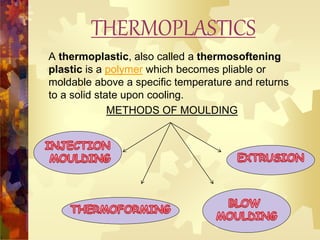
METHODS OF MOULDING
INJECTION MOULDING PROCESS
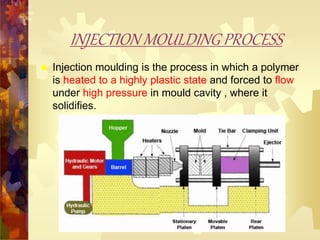
 Injection moulding is the process in which a polymer
is heated to a highly plastic state and forced to flow
under high pressure in mould cavity , where it
solidifies.
 Granulated material is fed from hooper
 Temp. – 150 to 300 degree c
 Pressure-100 Mpa to 150 Mpa
 Moulding die is water cooled
 Two principal units—
1.Plastic injection unit
-melt and homogenize the polymer
-inject the liquid plastic into mould cavity
2.Clamping unit
-hold two halves
-to keep the mould closed during injection
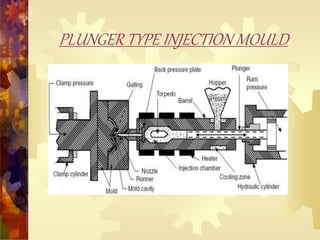
PLUNGER TYPE INJECTION MOULD
SCREW TYPE INJECTION MOULD
ADVANTAGES and application s OF INJECTION
MOULDING
 Advantages:-
 Faster process.
 Higher speed (Used for mass production)
 Complicated shape with high accuracy.
 Material wastage is low.
 Applications:-
 Cups, Chairs, Toys, Container, Knobs,
Automobile parts, Air conditional parts,
Eletrical fitting.
BLOW MOULDING
 It is a moulding process in which air pressure
is used to inflate soft plastic into a mould
cavity.
 Blow moulding performed in two steps:
1). Fabrication of starting tube of molten plastic
which is called as parison.
2). Inflation of the tube to the required
foundation.
 Pressure :- 400 – 800 kPa.
APPLICATIONS
THERMOFORMING
 It is a series of processes for forming thermo
plastic sheet or film over a mould. With the
application of heat and pressure.
 Used in packaging of consumer product and
to fabricate large parts like bath tubs , internal
door liners etc.
 Two methods of Thermoforming
1. Vacuum Forming
2. Pressure Forming
VACUUM FORMING
 Plastic sheet thickness-0.125 to 3.2 mm
 Temperature- 55 to 90 degree c
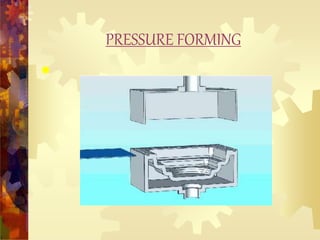
PRESSURE FORMING

ADVANTAGES OF THERMOFORMING
 Initial setup cost is low.
 Intricate shapes are easily formed.
 Production cost is low.
 Less thermal stress during process.
 Holes less than equal to 0.5mm.
 Cost of tooling is low.
 Aluminium moulds are used.
 Example:- Jelly containers, luggage
belts,Refrigerator inner pannels
THERMOFOFMING PRODUCTS
Thermoplastics

Thermoplastics

  • 1.
    THERMOPLASTICS MADE BY –ROHIT SINGH S . E MECHANICAL(2013-2017) ARMY INSTITUTE OF TECHNOLOGY
  • 2.
    THERMOPLASTICS A thermoplastic, alsocalled a thermosoftening plastic is a polymer which becomes pliable or moldable above a specific temperature and returns to a solid state upon cooling. METHODS OF MOULDING
  • 3.
    INJECTION MOULDING PROCESS Injection moulding is the process in which a polymer is heated to a highly plastic state and forced to flow under high pressure in mould cavity , where it solidifies.
  • 4.
     Granulated materialis fed from hooper  Temp. – 150 to 300 degree c  Pressure-100 Mpa to 150 Mpa  Moulding die is water cooled  Two principal units— 1.Plastic injection unit -melt and homogenize the polymer -inject the liquid plastic into mould cavity 2.Clamping unit -hold two halves -to keep the mould closed during injection
  • 5.
  • 6.
  • 7.
    ADVANTAGES and applications OF INJECTION MOULDING  Advantages:-  Faster process.  Higher speed (Used for mass production)  Complicated shape with high accuracy.  Material wastage is low.  Applications:-  Cups, Chairs, Toys, Container, Knobs, Automobile parts, Air conditional parts, Eletrical fitting.
  • 8.
    BLOW MOULDING  Itis a moulding process in which air pressure is used to inflate soft plastic into a mould cavity.  Blow moulding performed in two steps: 1). Fabrication of starting tube of molten plastic which is called as parison. 2). Inflation of the tube to the required foundation.  Pressure :- 400 – 800 kPa.
  • 9.
  • 10.
    THERMOFORMING  It isa series of processes for forming thermo plastic sheet or film over a mould. With the application of heat and pressure.  Used in packaging of consumer product and to fabricate large parts like bath tubs , internal door liners etc.  Two methods of Thermoforming 1. Vacuum Forming 2. Pressure Forming
  • 12.
    VACUUM FORMING  Plasticsheet thickness-0.125 to 3.2 mm  Temperature- 55 to 90 degree c
  • 13.
  • 14.
    ADVANTAGES OF THERMOFORMING Initial setup cost is low.  Intricate shapes are easily formed.  Production cost is low.  Less thermal stress during process.  Holes less than equal to 0.5mm.  Cost of tooling is low.  Aluminium moulds are used.  Example:- Jelly containers, luggage belts,Refrigerator inner pannels
  • 15.