STRUCTURAL FOAM
MOLDING
AND
SANDWICH MOLDING
INJECTION MOLDING
To produce the parts by injecting a
material.
Performed with metals, ,
thermoplastic and thermosetting
polymer.
STRUCTURAL FOAM MOULDING
Definition.
Process
WHAT IS STRUCTURAL FOAM MOLDING?
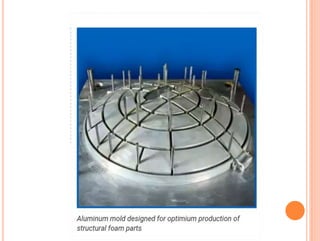
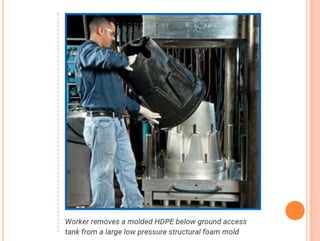
 Low pressure injection moulding process.
 Inert gas is introduced into molten polymer for reducing
density and weight.
 Used in mass production of large parts or multiple parts
produced in single machine.
 It requires less pressure than other moulding process so
parts are likely to have thicker wall section.
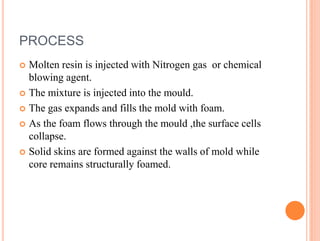
PROCESS
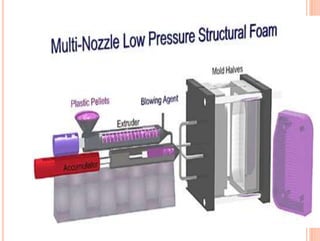
 Molten resin is injected with Nitrogen gas or chemical
blowing agent.
 The mixture is injected into the mould.
 The gas expands and fills the mold with foam.
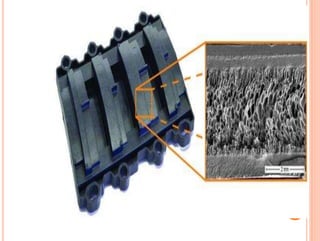
 As the foam flows through the mould ,the surface cells
collapse.
 Solid skins are formed against the walls of mold while
core remains structurally foamed.
PROCESS.
 The outer skin is solid and the centre of the wall is foam.
 The part weight is reduced upto 20%.
 Part densities are as low as 40% of density of solid
plastic.
 Thermoplastic material used in structural foam
applications include polycarbonate,ABS.
APPLICATIONS
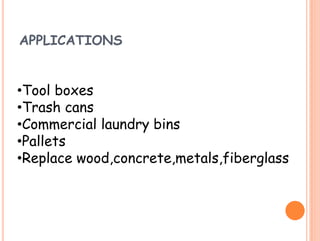
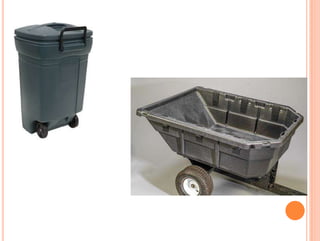
•Tool boxes
•Trash cans
•Commercial laundry bins
•Pallets
•Replace wood,concrete,metals,fiberglass
ADVANTAGES OF STRUCTURAL FOAM
MOLDING
ADVANTAGES
 Low cost tooling
 Different materials can be run simultaneously
 Low pressure process for optimum product quality
 Large parts can be produced
 Superior design flexibility
 High strength to weight (specific strength) ratio
 Reduced part weight with high stiffness to weight
(specific modulus) ratio
ADVANTAGES
 Can achieve between 10% to 30% weight reduction
without affecting structural integrity
 Finished products is glossier than other low pressure
methods
 Less energy and materials are used , resulting in energy
savings
 Superior impact resistance
 Dimensional accuracy over the entire production run
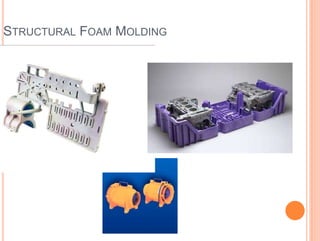
STRUCTURAL FOAM MOLDING
DISADVANTAGES OF STRUCTURAL
FOAM MOLDING
DISADVANTAGES
 Air trapped in mold causing the burning
 Bubbles are showing in the finished part due to the
moisture
 Shrinkage occurs due to not enough plastic for molding
 In the product surface , there are some marks due to
unbalanced flow of mold in the gates and runners
SANDWICH MOLDING
SANDWICH MOULDING
Two or more polymers are injected one
after another through the same gate in
one or more cavities.
Core and skin material different or
same.
Also called as co-injection molding
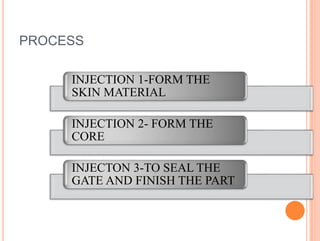
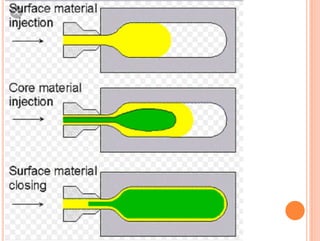
PROCESS
INJECTION 1-FORM THE
SKIN MATERIAL
INJECTION 2- FORM THE
CORE
INJECTON 3-TO SEAL THE
GATE AND FINISH THE PART
PROPERTIES OF SKIN MATERIAL
Will be thin
Surface structure of the material.
Transparent material
Paintable surface
E.g.: glass, thermoplastics,
thermosets , sheet material ,
plywood
PROPERTIES OF CORE MATERIAL
Thick but will be lightweight.
Low density material
High bending stiffness.
Recycled material.
E.g. :PVC, polyethylene ,polystyrene ,
metal foams.
METHODS:
 Autoclave molding
 Adhesive bonding
 Liquid molding
 Continuous lamination
 Compression molding
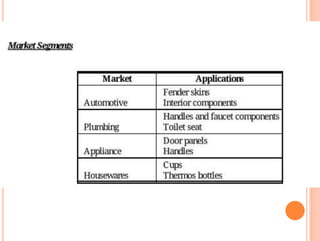
APPLICATIONS OF SANDWICH
MOLDING
APPLICATIONS
Door handles in car industry
Electronic housings
Decks in ships
In aerospace, making doors in
airplane
Antennas
ADVANTAGES AND
DISADVANTAGES OF
SANDWICH MOLDING
BENEFITS OF CO INJECTION MOULDING
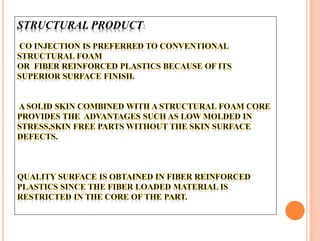
STRUCTURAL PRODUCT:
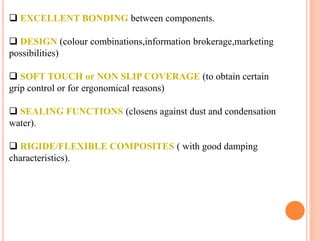
 EXCELLENT BONDING between components.
 DESIGN (colour combinations,information brokerage,marketing
possibilities)
 SOFT TOUCH or NON SLIP COVERAGE (to obtain certain
grip control or for ergonomical reasons)
 SEALING FUNCTIONS (closens against dust and condensation
water).
 RIGIDE/FLEXIBLE COMPOSITES ( with good damping
characteristics).
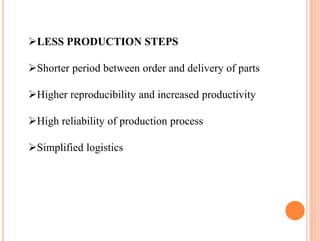
LESS PRODUCTION STEPS
Shorter period between order and delivery of parts
Higher reproducibility and increased productivity
High reliability of production process
Simplified logistics
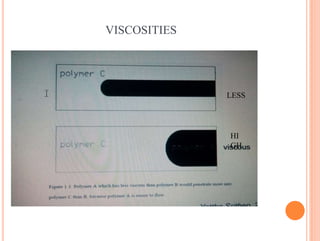
VISCOSITIES
LESS
HI
GH
VISCOSITY LIMITATION OF 2 MATERIALS
TWO MATERIALS CAN ONLY BE PROCESSED SUCCESSFULLY BY
CO INJECTION MOULDING IF THEIR PROCESSING PROPERTIES
MATCH.
THAT IS THE VISCOSITY RATIO OF CORE/SKIN SHOULD BE
BETWEEN 0.5 AND 5.
LOWER VISCOSITY RATIOS WOULD LEAD TO BREAK THROUGH
OF CORE MATERIAL.
HIGHER VISCOSITY RATIOS WOULD LEAD TO POOR MOLD
FILLING, FINGER LIKE DEFECTS AND VARIABLE CORE THICKNESS
THROUGH THE PART
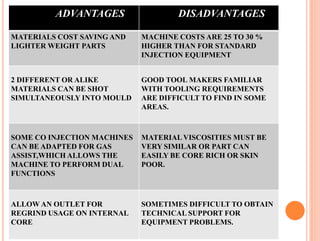
ADVANTAGES DISADVANTAGES
MATERIALS COST SAVING AND
LIGHTER WEIGHT PARTS
MACHINE COSTS ARE 25 TO 30 %
HIGHER THAN FOR STANDARD
INJECTION EQUIPMENT
2 DIFFERENT OR ALIKE
MATERIALS CAN BE SHOT
SIMULTANEOUSLY INTO MOULD
GOOD TOOL MAKERS FAMILIAR
WITH TOOLING REQUIREMENTS
ARE DIFFICULT TO FIND IN SOME
AREAS.
SOME CO INJECTION MACHINES
CAN BE ADAPTED FOR GAS
ASSIST,WHICH ALLOWS THE
MACHINE TO PERFORM DUAL
FUNCTIONS
MATERIAL VISCOSITIES MUST BE
VERY SIMILAR OR PART CAN
EASILY BE CORE RICH OR SKIN
POOR.
ALLOW AN OUTLET FOR
REGRIND USAGE ON INTERNAL
CORE
SOMETIMES DIFFICULT TO OBTAIN
TECHNICAL SUPPORT FOR
EQUIPMENT PROBLEMS.

Structural foam molding 1

  • 1.
  • 2.
    INJECTION MOLDING To producethe parts by injecting a material. Performed with metals, , thermoplastic and thermosetting polymer.
  • 3.
  • 4.
    WHAT IS STRUCTURALFOAM MOLDING?  Low pressure injection moulding process.  Inert gas is introduced into molten polymer for reducing density and weight.  Used in mass production of large parts or multiple parts produced in single machine.  It requires less pressure than other moulding process so parts are likely to have thicker wall section.
  • 5.
    PROCESS  Molten resinis injected with Nitrogen gas or chemical blowing agent.  The mixture is injected into the mould.  The gas expands and fills the mold with foam.  As the foam flows through the mould ,the surface cells collapse.  Solid skins are formed against the walls of mold while core remains structurally foamed.
  • 6.
    PROCESS.  The outerskin is solid and the centre of the wall is foam.  The part weight is reduced upto 20%.  Part densities are as low as 40% of density of solid plastic.  Thermoplastic material used in structural foam applications include polycarbonate,ABS.
  • 9.
    APPLICATIONS •Tool boxes •Trash cans •Commerciallaundry bins •Pallets •Replace wood,concrete,metals,fiberglass
  • 13.
  • 14.
    ADVANTAGES  Low costtooling  Different materials can be run simultaneously  Low pressure process for optimum product quality  Large parts can be produced  Superior design flexibility  High strength to weight (specific strength) ratio  Reduced part weight with high stiffness to weight (specific modulus) ratio
  • 15.
    ADVANTAGES  Can achievebetween 10% to 30% weight reduction without affecting structural integrity  Finished products is glossier than other low pressure methods  Less energy and materials are used , resulting in energy savings  Superior impact resistance  Dimensional accuracy over the entire production run
  • 16.
  • 17.
  • 18.
    DISADVANTAGES  Air trappedin mold causing the burning  Bubbles are showing in the finished part due to the moisture  Shrinkage occurs due to not enough plastic for molding  In the product surface , there are some marks due to unbalanced flow of mold in the gates and runners
  • 19.
  • 20.
    SANDWICH MOULDING Two ormore polymers are injected one after another through the same gate in one or more cavities. Core and skin material different or same. Also called as co-injection molding
  • 21.
    PROCESS INJECTION 1-FORM THE SKINMATERIAL INJECTION 2- FORM THE CORE INJECTON 3-TO SEAL THE GATE AND FINISH THE PART
  • 22.
    PROPERTIES OF SKINMATERIAL Will be thin Surface structure of the material. Transparent material Paintable surface E.g.: glass, thermoplastics, thermosets , sheet material , plywood
  • 23.
    PROPERTIES OF COREMATERIAL Thick but will be lightweight. Low density material High bending stiffness. Recycled material. E.g. :PVC, polyethylene ,polystyrene , metal foams.
  • 25.
    METHODS:  Autoclave molding Adhesive bonding  Liquid molding  Continuous lamination  Compression molding
  • 26.
  • 27.
    APPLICATIONS Door handles incar industry Electronic housings Decks in ships In aerospace, making doors in airplane Antennas
  • 32.
  • 33.
    BENEFITS OF COINJECTION MOULDING
  • 34.
  • 35.
     EXCELLENT BONDINGbetween components.  DESIGN (colour combinations,information brokerage,marketing possibilities)  SOFT TOUCH or NON SLIP COVERAGE (to obtain certain grip control or for ergonomical reasons)  SEALING FUNCTIONS (closens against dust and condensation water).  RIGIDE/FLEXIBLE COMPOSITES ( with good damping characteristics).
  • 36.
    LESS PRODUCTION STEPS Shorterperiod between order and delivery of parts Higher reproducibility and increased productivity High reliability of production process Simplified logistics
  • 37.
  • 38.
    VISCOSITY LIMITATION OF2 MATERIALS TWO MATERIALS CAN ONLY BE PROCESSED SUCCESSFULLY BY CO INJECTION MOULDING IF THEIR PROCESSING PROPERTIES MATCH. THAT IS THE VISCOSITY RATIO OF CORE/SKIN SHOULD BE BETWEEN 0.5 AND 5. LOWER VISCOSITY RATIOS WOULD LEAD TO BREAK THROUGH OF CORE MATERIAL. HIGHER VISCOSITY RATIOS WOULD LEAD TO POOR MOLD FILLING, FINGER LIKE DEFECTS AND VARIABLE CORE THICKNESS THROUGH THE PART
  • 39.
    ADVANTAGES DISADVANTAGES MATERIALS COSTSAVING AND LIGHTER WEIGHT PARTS MACHINE COSTS ARE 25 TO 30 % HIGHER THAN FOR STANDARD INJECTION EQUIPMENT 2 DIFFERENT OR ALIKE MATERIALS CAN BE SHOT SIMULTANEOUSLY INTO MOULD GOOD TOOL MAKERS FAMILIAR WITH TOOLING REQUIREMENTS ARE DIFFICULT TO FIND IN SOME AREAS. SOME CO INJECTION MACHINES CAN BE ADAPTED FOR GAS ASSIST,WHICH ALLOWS THE MACHINE TO PERFORM DUAL FUNCTIONS MATERIAL VISCOSITIES MUST BE VERY SIMILAR OR PART CAN EASILY BE CORE RICH OR SKIN POOR. ALLOW AN OUTLET FOR REGRIND USAGE ON INTERNAL CORE SOMETIMES DIFFICULT TO OBTAIN TECHNICAL SUPPORT FOR EQUIPMENT PROBLEMS.

Editor's Notes

  • #3 Is a manufacturing process for producing the parts by injecting a material into the mould Can be performed with a host of materials including metals, elastomers, thermoplastic and thermosetting polymer.
  • #10 Custom plastic enclosures, toolboxes, truck bedliners, roll around carts, pallets, commercial laundry bins, wine hopper bins, trash cans, in ground pool form, pet carriers