Thermoforming
Thermoforming is the process where thermoplastic
polymer sheet is heated & deformed into desired
shape.
Process :
• Heating plastic sheet to the temperature where in
softens.
• Stretching the softening polymer against a cold
mold surface.
• Cooling the finished part and trimming excess
plastics.
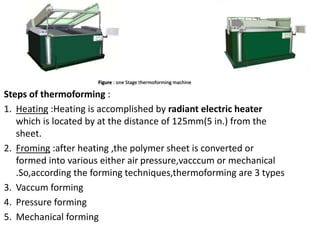
Figure : one Stage thermoforming machine
Steps of thermoforming :
1. Heating :Heating is accomplished by radiant electric heater
which is located by at the distance of 125mm(5 in.) from the
sheet.
2. Froming :after heating ,the polymer sheet is converted or
formed into various either air pressure,vacccum or mechanical
.So,according the forming techniques,thermoforming are 3 types
3. Vaccum forming
4. Pressure forming
5. Mechanical forming
Vaccum froming
 It is the earliest method of thermoforming.
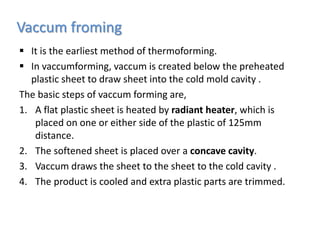
 In vaccumforming, vaccum is created below the preheated
plastic sheet to draw sheet into the cold mold cavity .
The basic steps of vaccum forming are,
1. A flat plastic sheet is heated by radiant heater, which is
placed on one or either side of the plastic of 125mm
distance.
2. The softened sheet is placed over a concave cavity.
3. Vaccum draws the sheet to the sheet to the cold cavity .
4. The product is cooled and extra plastic parts are trimmed.
Figure: Vaccum forming
Vaccum forming :
Advantage:
1. Operated comparatively low vaccum pressure.
2. Relatively cheap.
Disadvantage:
1. Uneven wall thickness at the corner of the product.
2. Bad finishing or non uniform plastic concentration.
3. Therefore the thinnest area occur at the corner, near the clamp
Thin corner
Fig: thin area at the corner
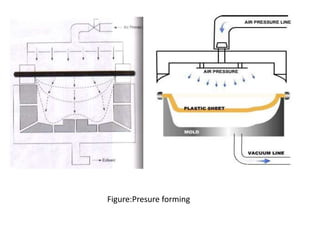
Pressure forming
• Alternative to vacum forming.
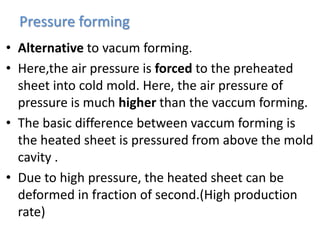
• Here,the air pressure is forced to the preheated
sheet into cold mold. Here, the air pressure of
pressure is much higher than the vaccum forming.
• The basic difference between vaccum forming is
the heated sheet is pressured from above the mold
cavity .
• Due to high pressure, the heated sheet can be
deformed in fraction of second.(High production
rate)
Figure:Presure forming
Pressure forming:
Advantage:
• High production rate .
• Efficient for large parts.
• Low tooling cost.
Disadvantage:
• Limited shape complexity.
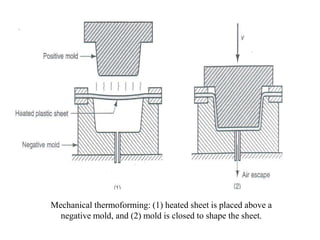
Mechanical thermoforming
• In mechanical forming, air pressure or vaccum pressure do not
use to drag the plastic sheet.
• Here, positive(male) and negaive (female) molds are brought
against s heated plastic sheet,forcing it to the assumed shape.
• Air between the die and sheet is evacuated by using vacuum
pump , and sheet conforms to the mold shape.
• Formed part is cooled and ejected.
j
Mechanical thermoforming: (1) heated sheet is placed above a
negative mold, and (2) mold is closed to shape the sheet.
Mechanical froming
Advantages:
• Better dimensional control.
• Opportunity for surface detailing of both sides of the
parts.
Disadvantages:
• Two mold halves are required
• Relatively costly.
Materials Used:
• ABS (Acrylonitrile butadiene styrene)
• Cellulose acetate
• LDPE (Low density polyethylene)
• HDPE (High density polyethylene)
• PVC etc.
Applications:
Thermoforming has many applications like
I. Food packaging
II. Automotive parts
III. Aircraft windscreens
IV. Vehicle doors etc.
Thermoforming:
Advantages:
• Flexible design .
• Rapid prototype development
• High production rate
• Low set up cost
• Less thermal stress.
Disadvantage:
• Not eligible for thermosets
• All parts need to be trimmed
• Parts may non uniform thickness.

Thermoforming

  • 1.
    Thermoforming Thermoforming is theprocess where thermoplastic polymer sheet is heated & deformed into desired shape. Process : • Heating plastic sheet to the temperature where in softens. • Stretching the softening polymer against a cold mold surface. • Cooling the finished part and trimming excess plastics.
  • 2.
    Figure : oneStage thermoforming machine Steps of thermoforming : 1. Heating :Heating is accomplished by radiant electric heater which is located by at the distance of 125mm(5 in.) from the sheet. 2. Froming :after heating ,the polymer sheet is converted or formed into various either air pressure,vacccum or mechanical .So,according the forming techniques,thermoforming are 3 types 3. Vaccum forming 4. Pressure forming 5. Mechanical forming
  • 3.
    Vaccum froming  Itis the earliest method of thermoforming.  In vaccumforming, vaccum is created below the preheated plastic sheet to draw sheet into the cold mold cavity . The basic steps of vaccum forming are, 1. A flat plastic sheet is heated by radiant heater, which is placed on one or either side of the plastic of 125mm distance. 2. The softened sheet is placed over a concave cavity. 3. Vaccum draws the sheet to the sheet to the cold cavity . 4. The product is cooled and extra plastic parts are trimmed.
  • 4.
  • 5.
    Vaccum forming : Advantage: 1.Operated comparatively low vaccum pressure. 2. Relatively cheap. Disadvantage: 1. Uneven wall thickness at the corner of the product. 2. Bad finishing or non uniform plastic concentration. 3. Therefore the thinnest area occur at the corner, near the clamp Thin corner Fig: thin area at the corner
  • 6.
    Pressure forming • Alternativeto vacum forming. • Here,the air pressure is forced to the preheated sheet into cold mold. Here, the air pressure of pressure is much higher than the vaccum forming. • The basic difference between vaccum forming is the heated sheet is pressured from above the mold cavity . • Due to high pressure, the heated sheet can be deformed in fraction of second.(High production rate)
  • 7.
  • 8.
    Pressure forming: Advantage: • Highproduction rate . • Efficient for large parts. • Low tooling cost. Disadvantage: • Limited shape complexity.
  • 9.
    Mechanical thermoforming • Inmechanical forming, air pressure or vaccum pressure do not use to drag the plastic sheet. • Here, positive(male) and negaive (female) molds are brought against s heated plastic sheet,forcing it to the assumed shape. • Air between the die and sheet is evacuated by using vacuum pump , and sheet conforms to the mold shape. • Formed part is cooled and ejected.
  • 10.
    j Mechanical thermoforming: (1)heated sheet is placed above a negative mold, and (2) mold is closed to shape the sheet.
  • 11.
    Mechanical froming Advantages: • Betterdimensional control. • Opportunity for surface detailing of both sides of the parts. Disadvantages: • Two mold halves are required • Relatively costly.
  • 12.
    Materials Used: • ABS(Acrylonitrile butadiene styrene) • Cellulose acetate • LDPE (Low density polyethylene) • HDPE (High density polyethylene) • PVC etc. Applications: Thermoforming has many applications like I. Food packaging II. Automotive parts III. Aircraft windscreens IV. Vehicle doors etc.
  • 13.
    Thermoforming: Advantages: • Flexible design. • Rapid prototype development • High production rate • Low set up cost • Less thermal stress. Disadvantage: • Not eligible for thermosets • All parts need to be trimmed • Parts may non uniform thickness.