 An organic polymer material ( with carbon and
hydrogen base ) with the ability to flow into a
desired shape when heat and pressure are
applied to it and retain the shape when they are
withdrawn.
 In more technical terms, a plastic is a material
that can be heated and molded so that it keeps
its molded shape after it cools.
 Polymer is composed of a large number of
repetitive structures called mer.
 A single mer is called monomers.
 Thus, a polymer is made up of thousands of
monomers joined chemically together to form
a large molecule.
 Polymerisation is the process of forming a
polymer
 There are two types of plastics
1)Thermoplastics
2)Thermosetting
 Thermoplastics are the plastics that do not
undergo chemical change in their
composition when heated and can be
moulded again and again.
 Deformable at higher temperatures and
becomes hard again after cooling.
 Can be softened and hardened by heating and
cooling any number of times.
 Since the flow easily by heating, they are
suitable for processing by extrusion or injection
moulding.
 Easy to be machined on.
 A thermosetting plastic, also known as a
thermoset, is polymeric material that
irreversibly cures. The cure may be done
through heat (generally above 200 °C (392
°F)), and involve a chemical reaction
 Are soft or soften upon heating.
 Cannot be re-softened once they have set
and hardened.
 Due to cross-linking of molecule chains,
thermosetting materials are hard, tough,
non-swelling and brittle.
 Ideal for moulding and casting into
components.
THERMOPLASTICS THERMOSETTING
Composed of chain molecules Cross linked molecules.
Addition polymerisation Condensation polymerisation
Deforms at high temperature Cannot be deformed at high
temperature
Plasticity increases with temperature Plasticity does not increase with
temperature
Easily moulded and remoulded into
any shapes
Cannot remoulded into new shapes
 1) Injection Moulding
 2) Extrusion Moulding
 3) Compression Moulding
 4) Blow Moulding
 Plastic granules are melted down and with
screw injected into the mold.
 : The mold is held under pressure (hold
pressure) until the plastic material cools and
hardens.
 Once the material ( plastic ) hardens, the
mold is opened and the part is removed from
mould.
 Mould again closed and the process can be
repeated.
 Compression moulding is principally used for
thermosetting plastics.
 Preheated resin is placed into a hot mould
cavity. The upper section of the mould is
subsequently forced down onto the resin to
create the desired product shape. The
applied pressure and heat forces the liquified
polymer to fill the cavity.
 Following the compression, a period of
heating is required to force cross-linking of
the thermosetting polymer.
 Throughout the process heat and pressure
are maintained until the polymer has cured.
 Compression moulding is a high-volume,
high-pressure plastic moulding method that
is suitable for moulding complex, high-
strength objects. And with its short cycle time
and high production rate, many
organizations in the automotive industry
have chosen compression moulding to
produce parts.
 In this process a plastic tabular form
produced by extrusion or injection moulding,
is used to form the part.
› Injection moulding
› Extrusion moulding
› Stretch blow moulding
 The resins or pellets are inserted into the hopper,
 With gravity manipulating, the materials enter the
injection or extrusion chamber or cylinder which
surrounded with heater,
 When the materials become softened ( plasticizers ),
it will be injected or extruded using screw rotator or
torpedo plunger,
 The hot and softened material is called a parison.
 The materials will be flow straight to the nozzle and
enter the mould cavity.
 Top of the parison will be cut off using a blade,
 The air then blowed into the parison through a cavity at the
top of the mould,
 The plastic will be cooled, then solidified in the mould
under water system cycling in the channels in the mould,
 After that the mould and the product will be retrieved,
 The connecting opener will retrieved the product using
ejector pin to eject the product out the mould.
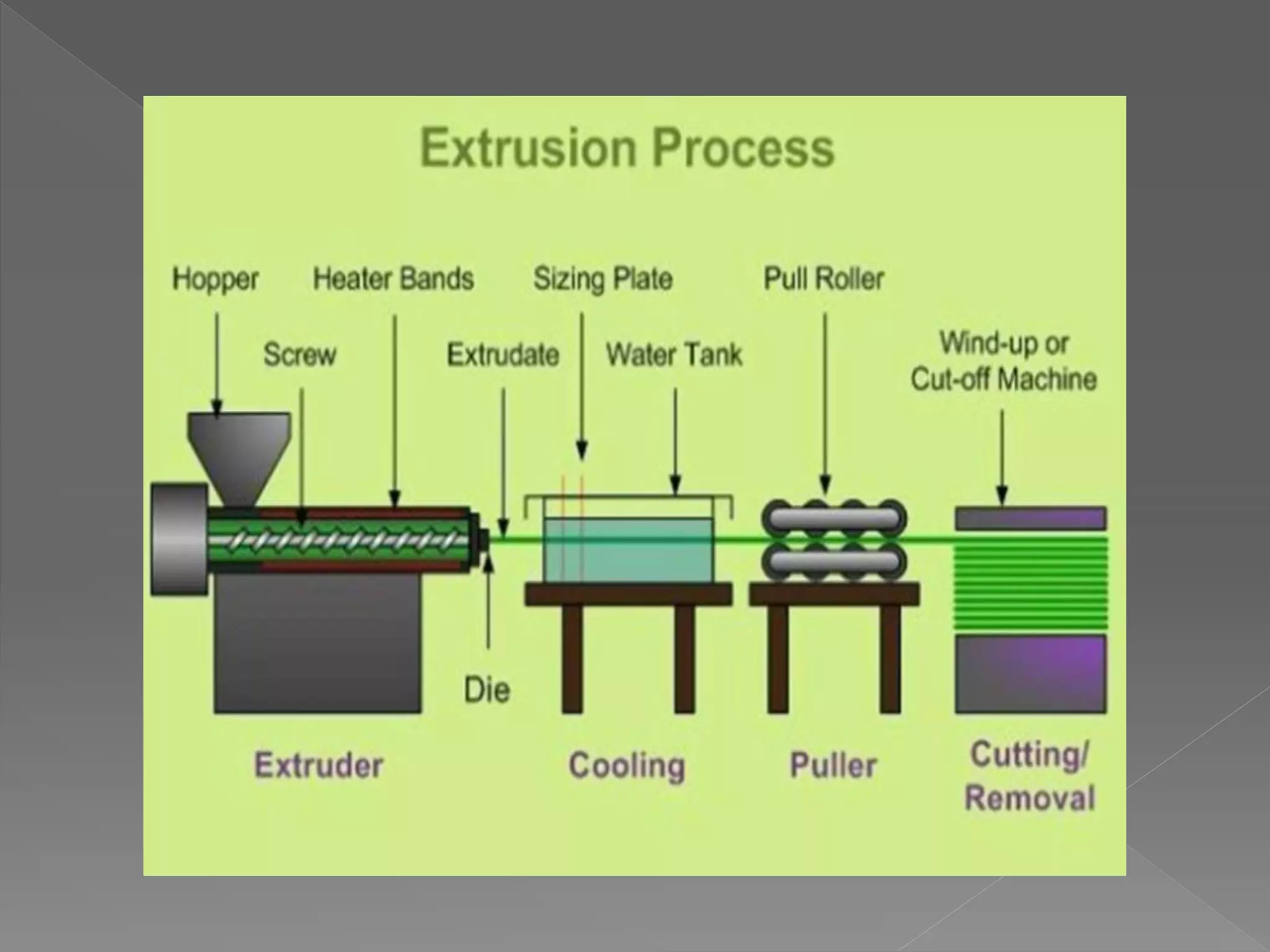
 Process that supplies a continuous stream of
thermoplastic material with equally cross
section where it is directly produced through
a shaping tool or to some other subsequent
shaping process(dies) placed directly on the
end of the extrusion machine.
 The pellets or resins are inserted into the hopper
 The material then fed into the heated cylinder by rotating
screw
 When the material become softer,it will be forced continously
by the rotating screw ram.
 The products or outcomes are formed into continous shape.
 After the product exiting from the die,it will be cooled by
air,water or become cold by interact with cold roll surface
where then it will be solidifies while rolling
 Extruded product such as pipe,rod,etc,extrude this way
because it can be curved or bended after extruded with
hotwater by sinking it in it.
 It is a series of processes for forming thermo
plastic sheet or film over a mould. With the
application of heat and pressure.
 Used in packaging of consumer product and
to fabricate large parts like bath tubs ,
internal door liners etc.
 Two methods of Thermoforming
1. Vacuum Forming
2. Pressure Forming
PROCESSING   OF PLASTIC  COMPONENTS

PROCESSING OF PLASTIC COMPONENTS

  • 2.
     An organicpolymer material ( with carbon and hydrogen base ) with the ability to flow into a desired shape when heat and pressure are applied to it and retain the shape when they are withdrawn.  In more technical terms, a plastic is a material that can be heated and molded so that it keeps its molded shape after it cools.
  • 4.
     Polymer iscomposed of a large number of repetitive structures called mer.  A single mer is called monomers.  Thus, a polymer is made up of thousands of monomers joined chemically together to form a large molecule.
  • 5.
     Polymerisation isthe process of forming a polymer
  • 6.
     There aretwo types of plastics 1)Thermoplastics 2)Thermosetting
  • 7.
     Thermoplastics arethe plastics that do not undergo chemical change in their composition when heated and can be moulded again and again.
  • 9.
     Deformable athigher temperatures and becomes hard again after cooling.  Can be softened and hardened by heating and cooling any number of times.  Since the flow easily by heating, they are suitable for processing by extrusion or injection moulding.  Easy to be machined on.
  • 11.
     A thermosettingplastic, also known as a thermoset, is polymeric material that irreversibly cures. The cure may be done through heat (generally above 200 °C (392 °F)), and involve a chemical reaction
  • 12.
     Are softor soften upon heating.  Cannot be re-softened once they have set and hardened.  Due to cross-linking of molecule chains, thermosetting materials are hard, tough, non-swelling and brittle.  Ideal for moulding and casting into components.
  • 15.
    THERMOPLASTICS THERMOSETTING Composed ofchain molecules Cross linked molecules. Addition polymerisation Condensation polymerisation Deforms at high temperature Cannot be deformed at high temperature Plasticity increases with temperature Plasticity does not increase with temperature Easily moulded and remoulded into any shapes Cannot remoulded into new shapes
  • 16.
     1) InjectionMoulding  2) Extrusion Moulding  3) Compression Moulding  4) Blow Moulding
  • 18.
     Plastic granulesare melted down and with screw injected into the mold.
  • 19.
     : Themold is held under pressure (hold pressure) until the plastic material cools and hardens.
  • 20.
     Once thematerial ( plastic ) hardens, the mold is opened and the part is removed from mould.
  • 21.
     Mould againclosed and the process can be repeated.
  • 25.
     Compression mouldingis principally used for thermosetting plastics.  Preheated resin is placed into a hot mould cavity. The upper section of the mould is subsequently forced down onto the resin to create the desired product shape. The applied pressure and heat forces the liquified polymer to fill the cavity.
  • 29.
     Following thecompression, a period of heating is required to force cross-linking of the thermosetting polymer.  Throughout the process heat and pressure are maintained until the polymer has cured.
  • 30.
     Compression mouldingis a high-volume, high-pressure plastic moulding method that is suitable for moulding complex, high- strength objects. And with its short cycle time and high production rate, many organizations in the automotive industry have chosen compression moulding to produce parts.
  • 31.
     In thisprocess a plastic tabular form produced by extrusion or injection moulding, is used to form the part. › Injection moulding › Extrusion moulding › Stretch blow moulding
  • 32.
     The resinsor pellets are inserted into the hopper,  With gravity manipulating, the materials enter the injection or extrusion chamber or cylinder which surrounded with heater,  When the materials become softened ( plasticizers ), it will be injected or extruded using screw rotator or torpedo plunger,  The hot and softened material is called a parison.  The materials will be flow straight to the nozzle and enter the mould cavity.
  • 33.
     Top ofthe parison will be cut off using a blade,  The air then blowed into the parison through a cavity at the top of the mould,  The plastic will be cooled, then solidified in the mould under water system cycling in the channels in the mould,  After that the mould and the product will be retrieved,  The connecting opener will retrieved the product using ejector pin to eject the product out the mould.
  • 38.
     Process thatsupplies a continuous stream of thermoplastic material with equally cross section where it is directly produced through a shaping tool or to some other subsequent shaping process(dies) placed directly on the end of the extrusion machine.
  • 41.
     The pelletsor resins are inserted into the hopper  The material then fed into the heated cylinder by rotating screw  When the material become softer,it will be forced continously by the rotating screw ram.  The products or outcomes are formed into continous shape.  After the product exiting from the die,it will be cooled by air,water or become cold by interact with cold roll surface where then it will be solidifies while rolling  Extruded product such as pipe,rod,etc,extrude this way because it can be curved or bended after extruded with hotwater by sinking it in it.
  • 42.
     It isa series of processes for forming thermo plastic sheet or film over a mould. With the application of heat and pressure.  Used in packaging of consumer product and to fabricate large parts like bath tubs , internal door liners etc.  Two methods of Thermoforming 1. Vacuum Forming 2. Pressure Forming