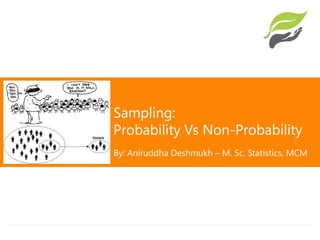
Sampling:
Probability Vs Non-Probability
By: Aniruddha Deshmukh – M. Sc. Statistics, MCM
Probability Sampling
• The sampling method in which all the members of the population
has a pre-specified and an equal chance to be a part of the
sample.
• This technique is based on the randomization principle, wherein
the procedure is so designed, which guarantees that each and
every individual of the population has an equal selection
opportunity.
• This helps to reduce the possibility of bias.
• The methods of probability sampling:
– Simple Random Sampling
– Stratified Sampling
– Cluster Sampling
– Systematic Sampling
By Aniruddha Deshmukh - M. Sc. Statistics, MCM 2
Non-Probability Sampling
• When all the individuals of the population are not given an
equal opportunity of becoming a part of the sample, the
method is said to be Non-probability sampling.
• There is no probability attached to the unit of the
population and the selection relies on the subjective
judgment of the researcher.
• The methods of non-probability sampling:
– Convenience Sampling
– Quota Sampling
– Judgment or Purposive Sampling
– Snowball Sampling
By Aniruddha Deshmukh - M. Sc. Statistics, MCM 3
Key Differences
By Aniruddha Deshmukh - M. Sc. Statistics, MCM 4
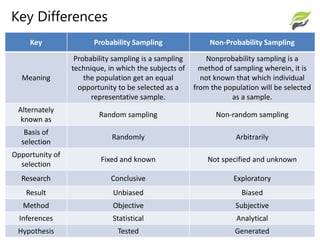
Key Probability Sampling Non-Probability Sampling
Meaning
Probability sampling is a sampling
technique, in which the subjects of
the population get an equal
opportunity to be selected as a
representative sample.
Nonprobability sampling is a
method of sampling wherein, it is
not known that which individual
from the population will be selected
as a sample.
Alternately
known as
Random sampling Non-random sampling
Basis of
selection
Randomly Arbitrarily
Opportunity of
selection
Fixed and known Not specified and unknown
Research Conclusive Exploratory
Result Unbiased Biased
Method Objective Subjective
Inferences Statistical Analytical
Hypothesis Tested Generated
• Probability Sampling can be more expensive and time-
consuming compared to Non-Probability Sampling.
• While probability sampling is based on the principle of
randomization where every entity gets a fair chance to be a
part of the sample, non-probability sampling relies on the
assumption that the characteristics are evenly distributed
within the population, which make the sampler believe that
any sample so selected would represent the whole
population and the results drawn would be accurate.
By Aniruddha Deshmukh - M. Sc. Statistics, MCM 5
Summary
Aniruddha Deshmukh – M. Sc. Statistics, MCM
email: annied23@gmail.com
For more information please contact:

Sampling - Probability Vs Non-Probability

  • 1.
    Sampling: Probability Vs Non-Probability By:Aniruddha Deshmukh – M. Sc. Statistics, MCM
  • 2.
    Probability Sampling • Thesampling method in which all the members of the population has a pre-specified and an equal chance to be a part of the sample. • This technique is based on the randomization principle, wherein the procedure is so designed, which guarantees that each and every individual of the population has an equal selection opportunity. • This helps to reduce the possibility of bias. • The methods of probability sampling: – Simple Random Sampling – Stratified Sampling – Cluster Sampling – Systematic Sampling By Aniruddha Deshmukh - M. Sc. Statistics, MCM 2
  • 3.
    Non-Probability Sampling • Whenall the individuals of the population are not given an equal opportunity of becoming a part of the sample, the method is said to be Non-probability sampling. • There is no probability attached to the unit of the population and the selection relies on the subjective judgment of the researcher. • The methods of non-probability sampling: – Convenience Sampling – Quota Sampling – Judgment or Purposive Sampling – Snowball Sampling By Aniruddha Deshmukh - M. Sc. Statistics, MCM 3
  • 4.
    Key Differences By AniruddhaDeshmukh - M. Sc. Statistics, MCM 4 Key Probability Sampling Non-Probability Sampling Meaning Probability sampling is a sampling technique, in which the subjects of the population get an equal opportunity to be selected as a representative sample. Nonprobability sampling is a method of sampling wherein, it is not known that which individual from the population will be selected as a sample. Alternately known as Random sampling Non-random sampling Basis of selection Randomly Arbitrarily Opportunity of selection Fixed and known Not specified and unknown Research Conclusive Exploratory Result Unbiased Biased Method Objective Subjective Inferences Statistical Analytical Hypothesis Tested Generated
  • 5.
    • Probability Samplingcan be more expensive and time- consuming compared to Non-Probability Sampling. • While probability sampling is based on the principle of randomization where every entity gets a fair chance to be a part of the sample, non-probability sampling relies on the assumption that the characteristics are evenly distributed within the population, which make the sampler believe that any sample so selected would represent the whole population and the results drawn would be accurate. By Aniruddha Deshmukh - M. Sc. Statistics, MCM 5 Summary
  • 6.
    Aniruddha Deshmukh –M. Sc. Statistics, MCM email: annied23@gmail.com For more information please contact: