
Atomic Theory and
the Structure of
Atoms
CHAPTERS 4 & 5
An overview of the atom..
Atoms are extremely small
Atoms are mostly empty
space.
Reactions are the
rearrangements of atoms.
Law of Definite Proportions
The same compound always has the
same ratios of elements (mass)
Water – 2 hydrogen and 1oxygen
Carbon Dioxide-1 carbon and 2oxygen
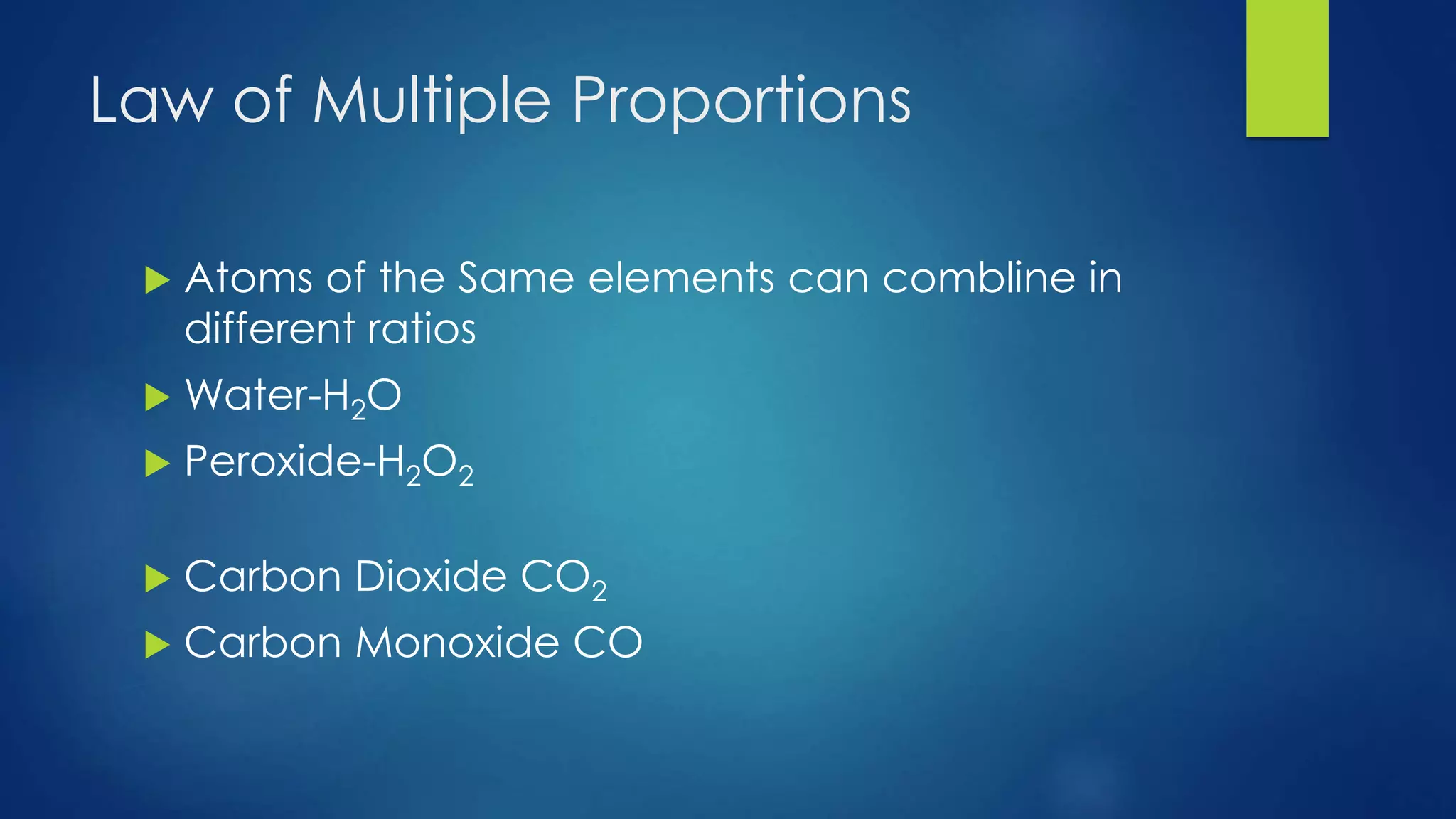
Law of Multiple Proportions
 Atoms of the Same elements can combine in
different ratios
 Water-H2O
 Peroxide-H2O2
 Carbon Dioxide CO2
 Carbon Monoxide CO
Dalton’s Atomic Theory
 All matter is composed of extremely small particles called atoms.
 Atoms of a given element are identical in size, mass, and other
properties. Atoms of different elements differ in size, mass, and other
properties.
 Atoms cannot be subdivided, created, or destroyed.
 Atoms of different elements can combine in simple whole number
ratios to form chemical compounds.
 In chemical reactions, atoms are combined, separated, or
rearranged
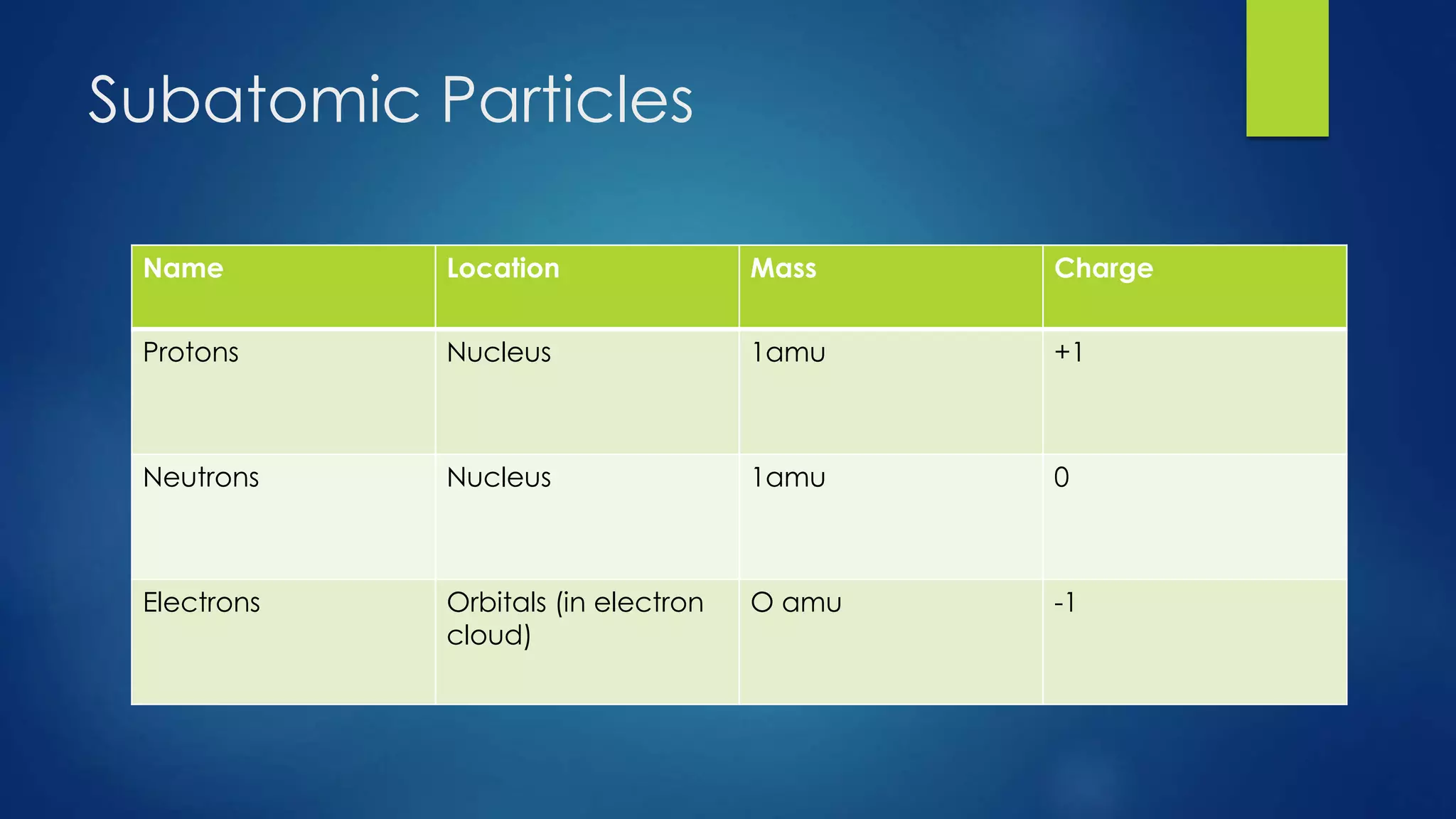
Subatomic Particles
Name Location Mass Charge
Protons Nucleus 1amu +1
Neutrons Nucleus 1amu 0
Electrons Orbitals (in electron
cloud)
O amu -1
What is the Structure of an Atom?
Elements are different because
they have different numbers of
protons.
The Atomic Number is the number
of protons.
Mass
The mass of an atom is the
total number of protons and
neutrons. So the mass of an
atom is located…
These are sometimes called
nucleons
Charge
An atom is neutral, so the
number of electrons is the
same as the number of
protons.
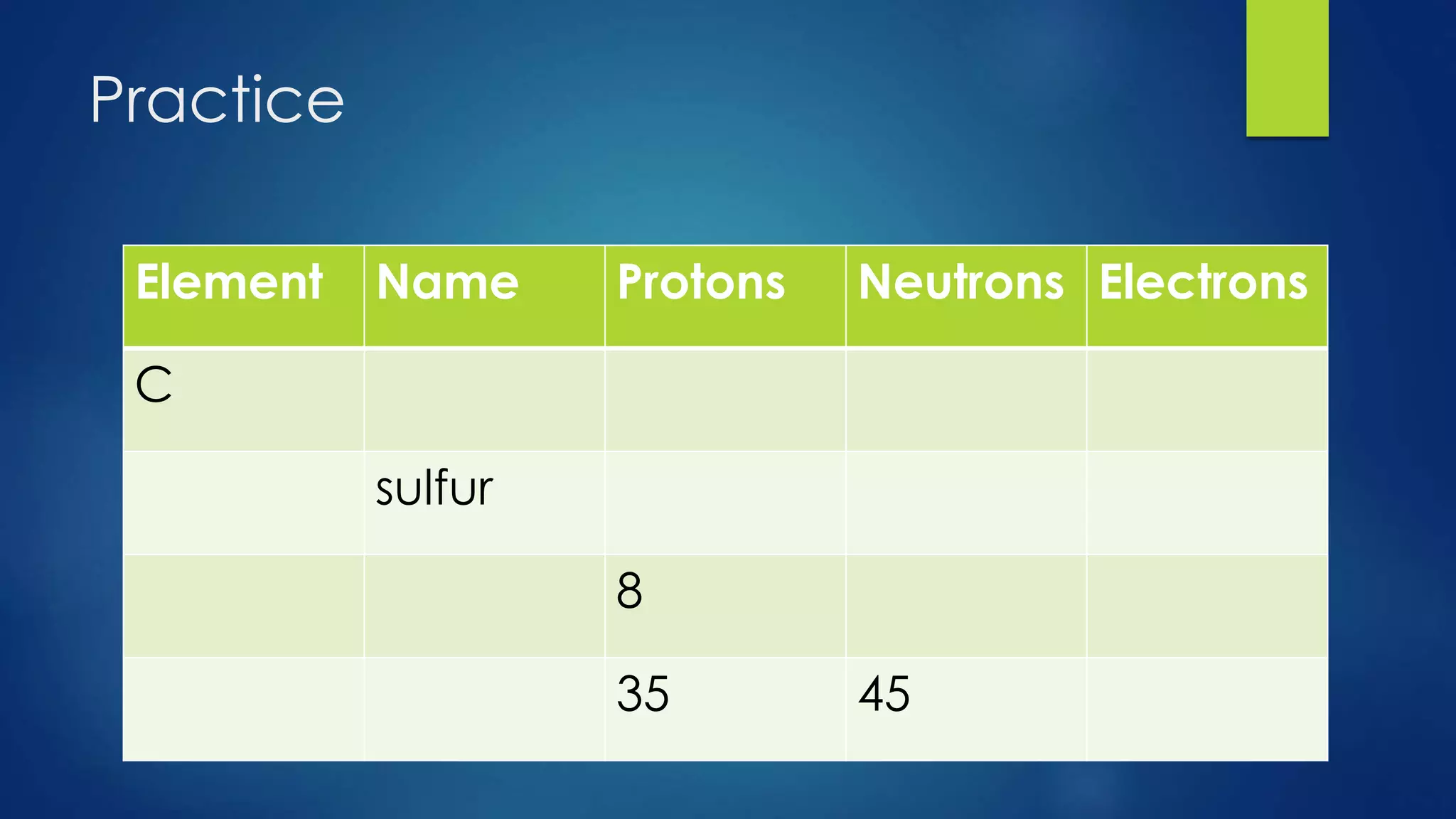
Practice
Element Name Protons Neutrons Electrons
C
sulfur
8
35 45
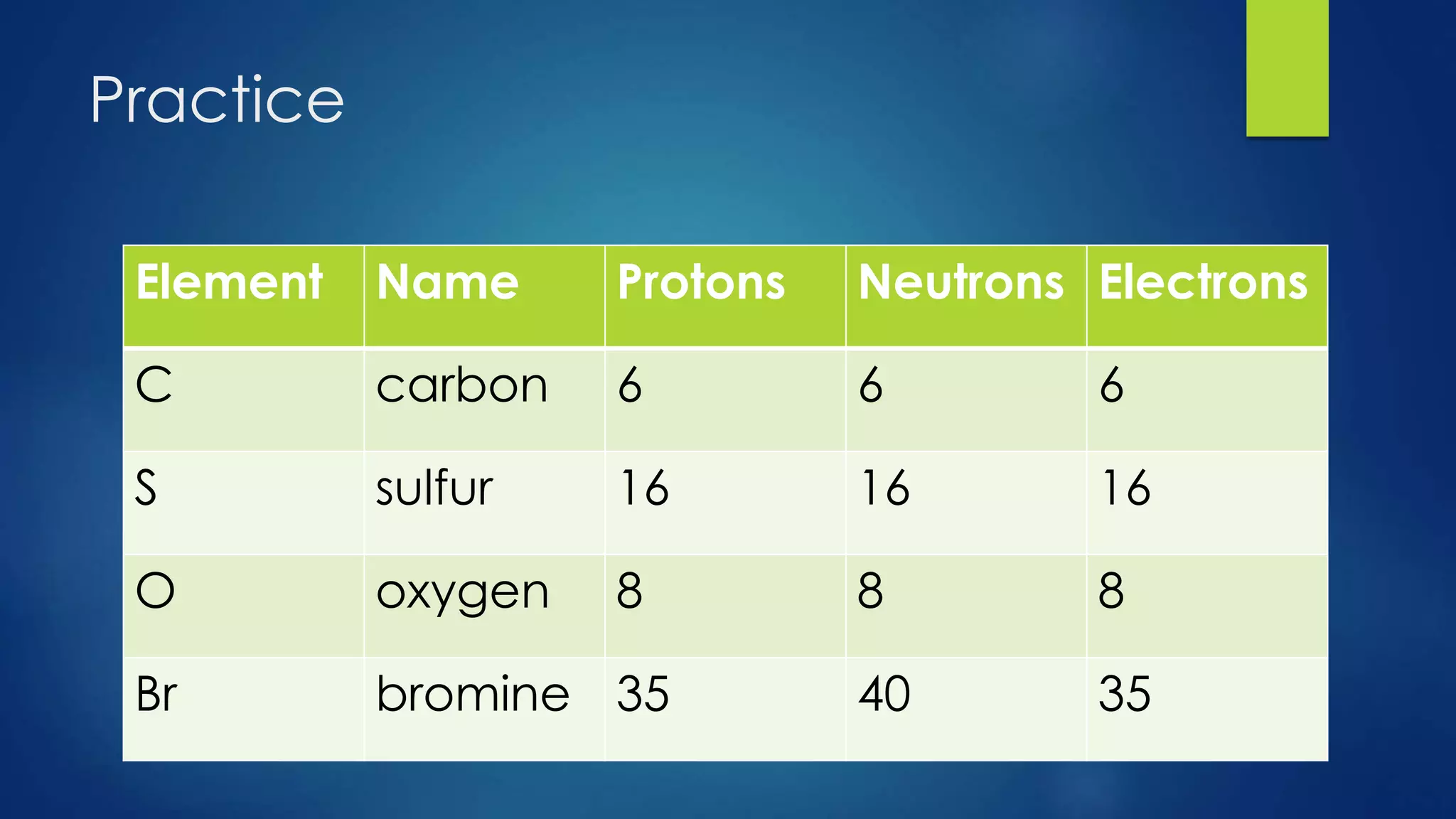
Practice
Element Name Protons Neutrons Electrons
C carbon 6 6 6
S sulfur 16 16 16
O oxygen 8 8 8
Br bromine 35 40 35
Isotopes: versions of an element
with differing number of neutrons
 Because the number of neutrons is
different the mass is different and that is
how the isotopes are named.
Examples to KNOW:
Carbon-12 & carbon-14
Hydrogen, deuterium, and tritium
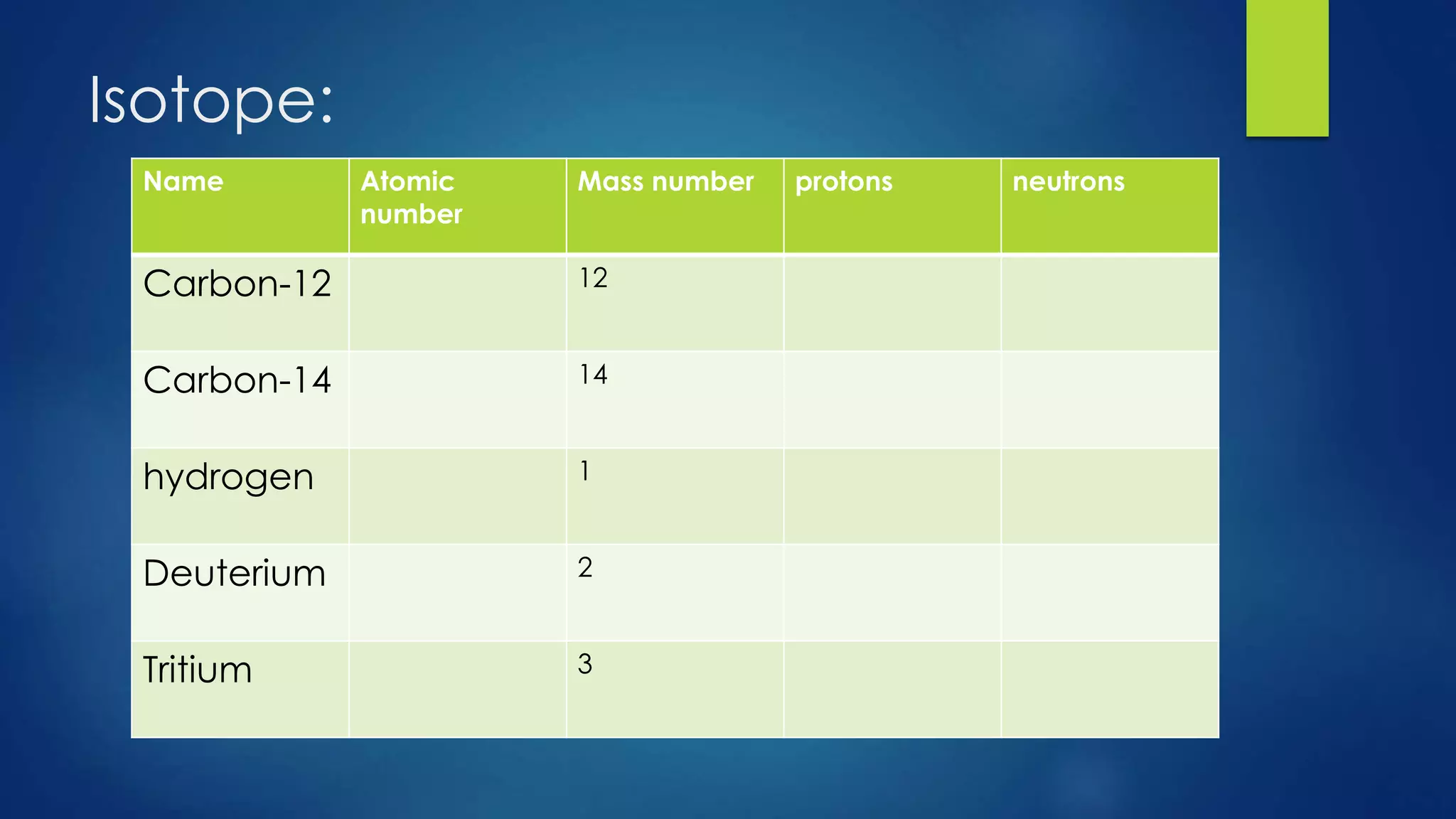
Isotope:
Name Atomic
number
Mass number protons neutrons
Carbon-12 12
Carbon-14 14
hydrogen 1
Deuterium 2
Tritium 3
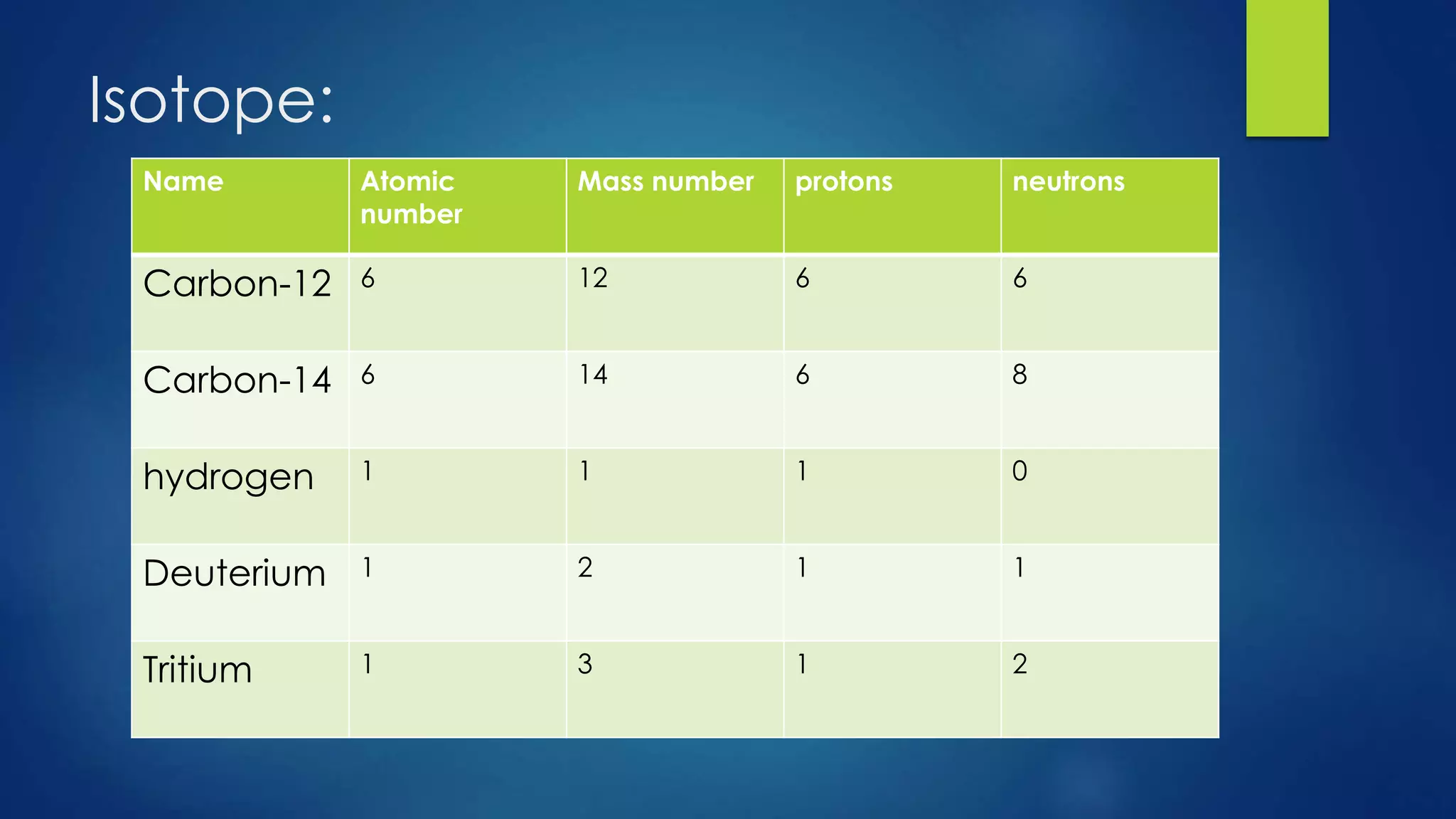
Isotope:
Name Atomic
number
Mass number protons neutrons
Carbon-12 6 12 6 6
Carbon-14 6 14 6 8
hydrogen 1 1 1 0
Deuterium 1 2 1 1
Tritium 1 3 1 2
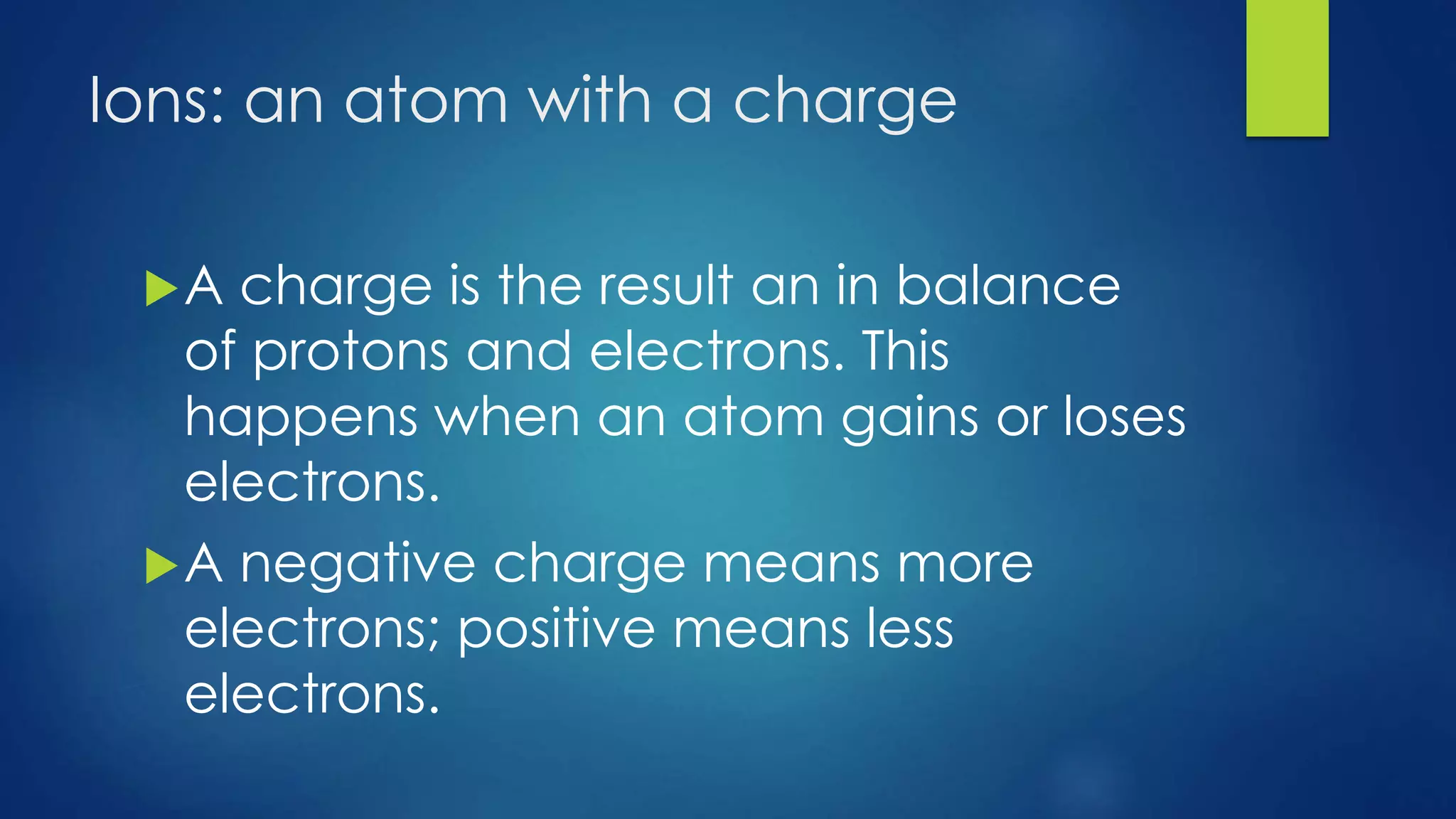
Ions: an atom with a charge
A charge is the result an in balance
of protons and electrons. This
happens when an atom gains or loses
electrons.
A negative charge means more
electrons; positive means less
electrons.
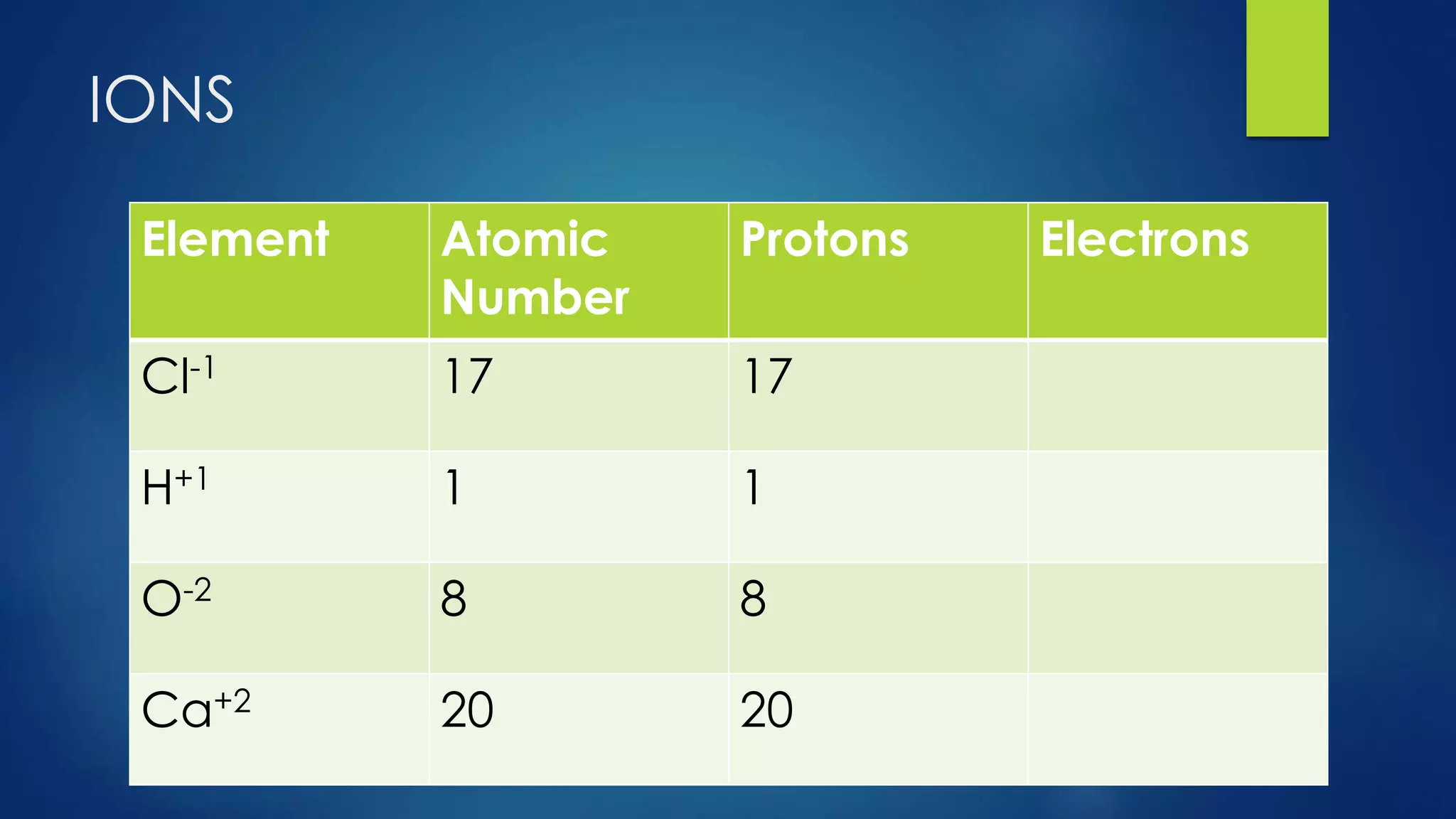
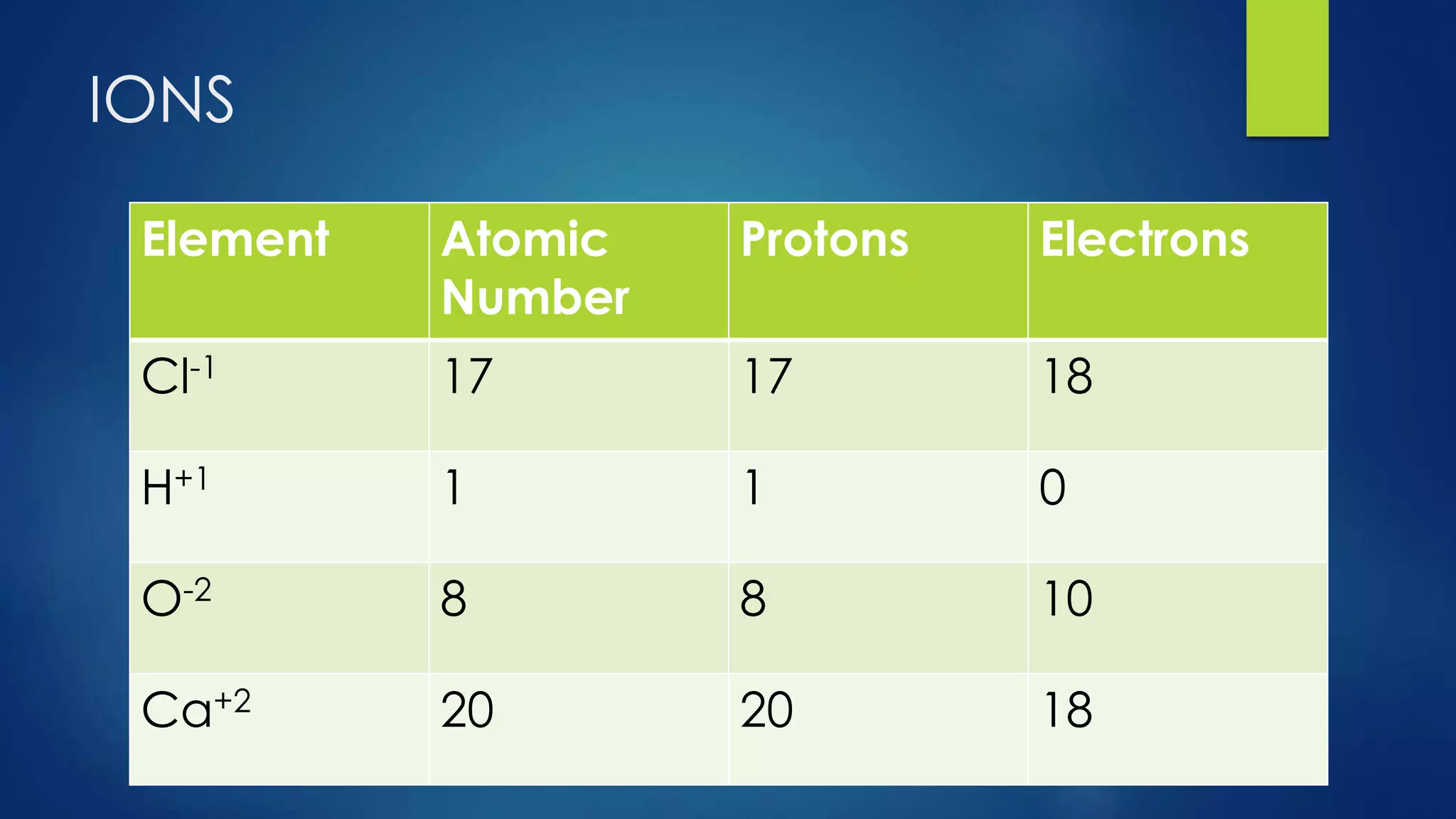
IONS
Element Atomic
Number
Protons Electrons
Cl-1 17 17
H+1 1 1
O-2 8 8
Ca+2 20 20
IONS
Element Atomic
Number
Protons Electrons
Cl-1 17 17 18
H+1 1 1 0
O-2 8 8 10
Ca+2 20 20 18
Mass Number
 The mass number of an atom, ion or
isotope is the total number of nucleons.
 Carbon-14; 14C; mass = 14amu
 Carbon; carbon-12; 12C; mass = 12 amu
 So how could you write
Dueterium
Tritium
Average Atomic Mass(atomic mass)
The weighted average of the
isotopes found in a natural sample.
 for each isotope multiple mass by
decimal form of %abundance
Find the sum.
Sample Problem
 Copy one of the Many examples !
MODELS
Models are constructs to
explain ideas and theories.
As _____ are gather the
models have been improved
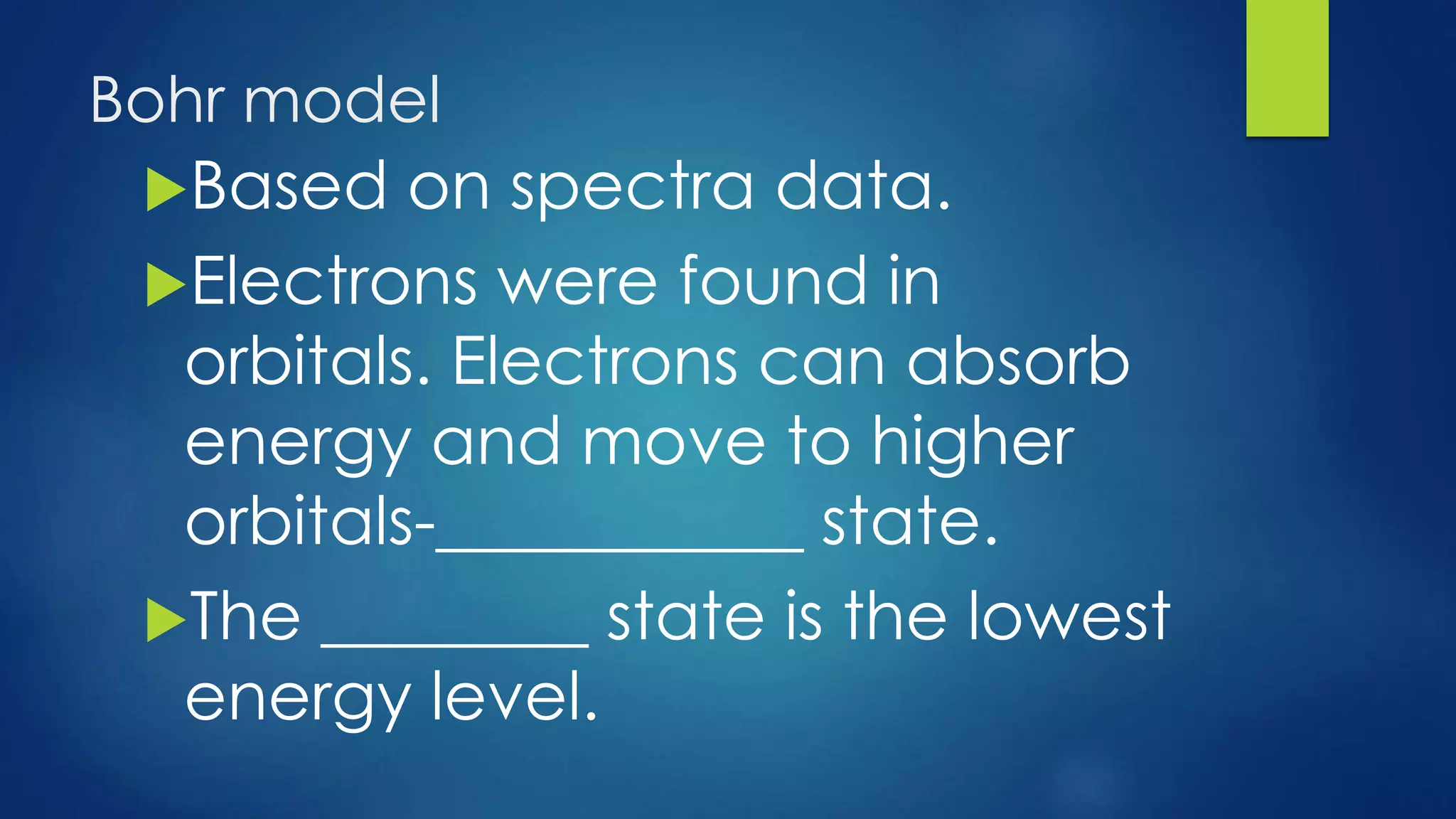
Bohr model
Based on spectra data.
Electrons were found in
orbitals. Electrons can absorb
energy and move to higher
orbitals-___________ state.
The ________ state is the lowest
energy level.
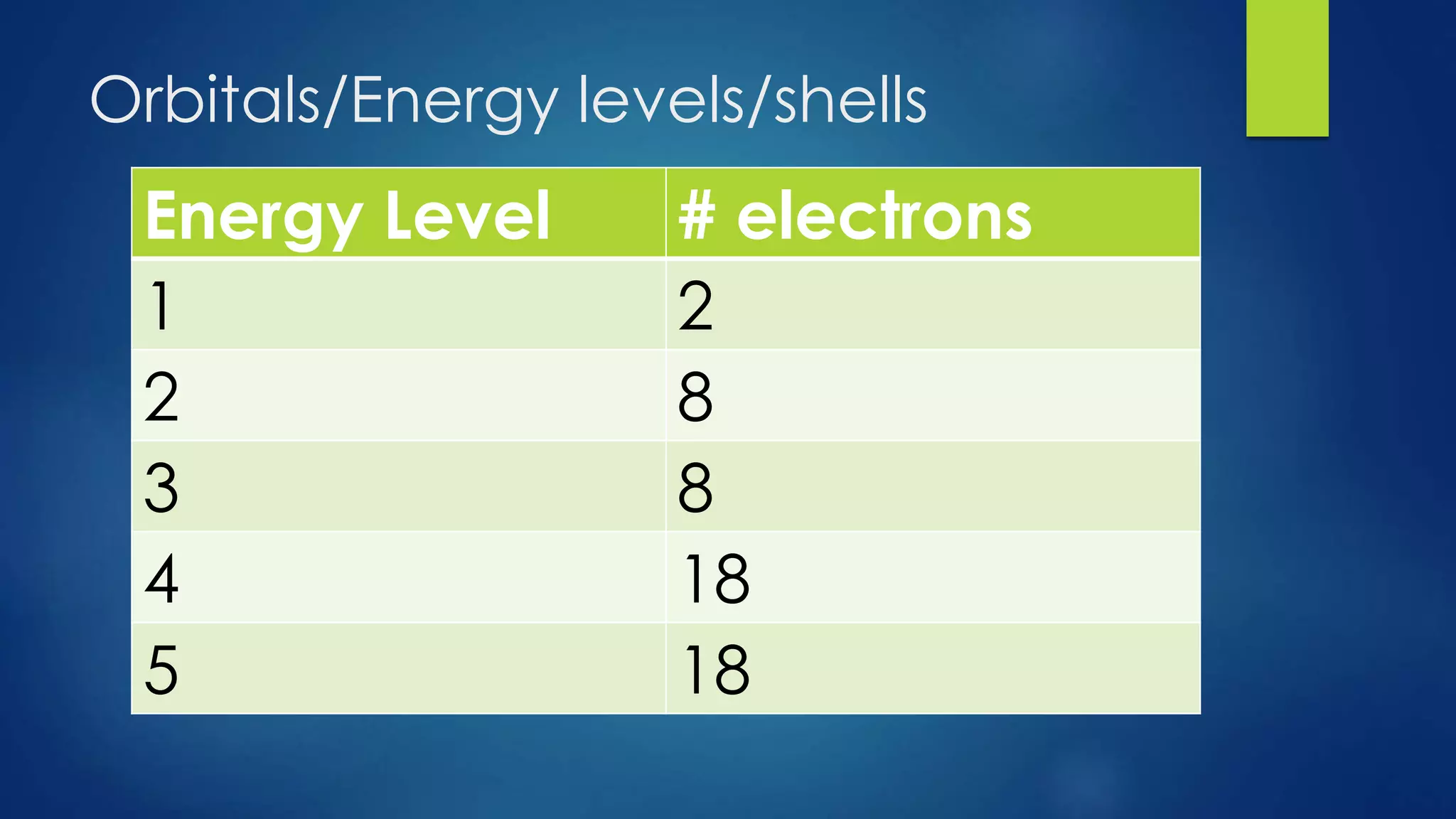
Orbitals/Energy levels/shells
Energy Level # electrons
1 2
2 8
3 8
4 18
5 18
Skill: You should be able to draw a
Bohr diagram for elements 1-20
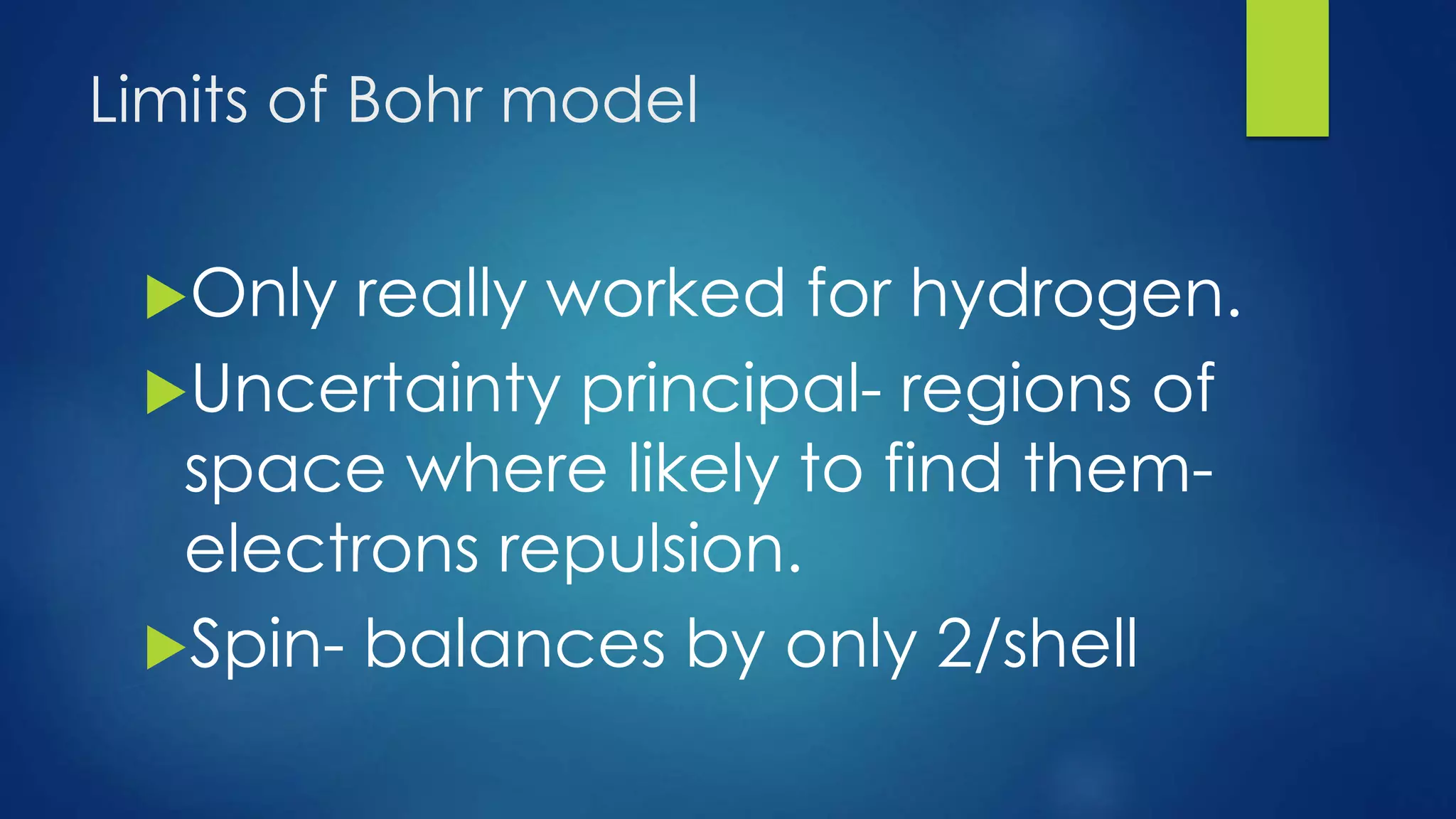
Limits of Bohr model
Only really worked for hydrogen.
Uncertainty principal- regions of
space where likely to find them-
electrons repulsion.
Spin- balances by only 2/shell
The Electron Cloud
LEQ: How electron arranged in the
electron cloud?
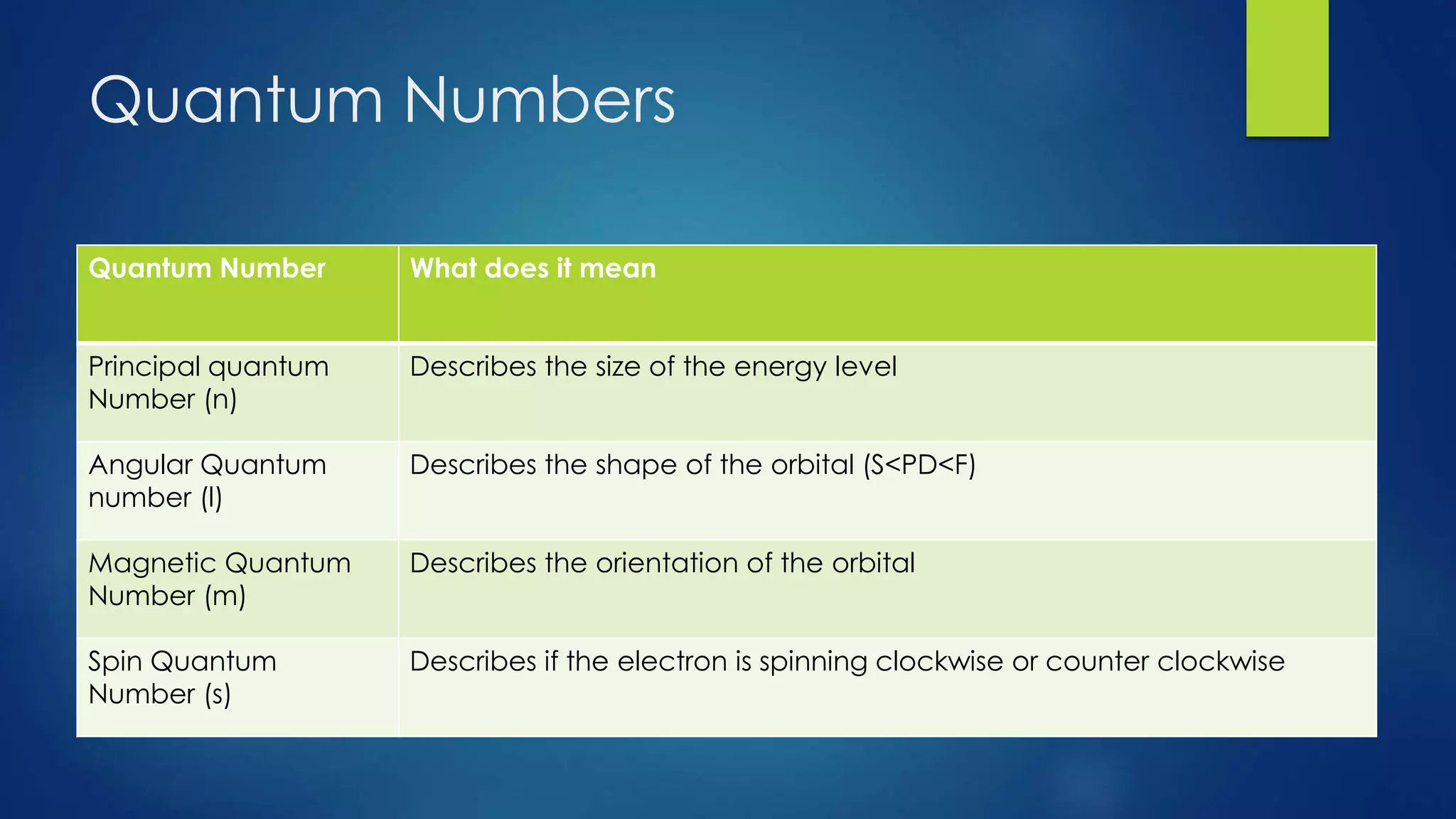
Quantum Numbers
Quantum Number What does it mean
Principal quantum
Number (n)
Describes the size of the energy level
Angular Quantum
number (l)
Describes the shape of the orbital (S<PD<F)
Magnetic Quantum
Number (m)
Describes the orientation of the orbital
Spin Quantum
Number (s)
Describes if the electron is spinning clockwise or counter clockwise
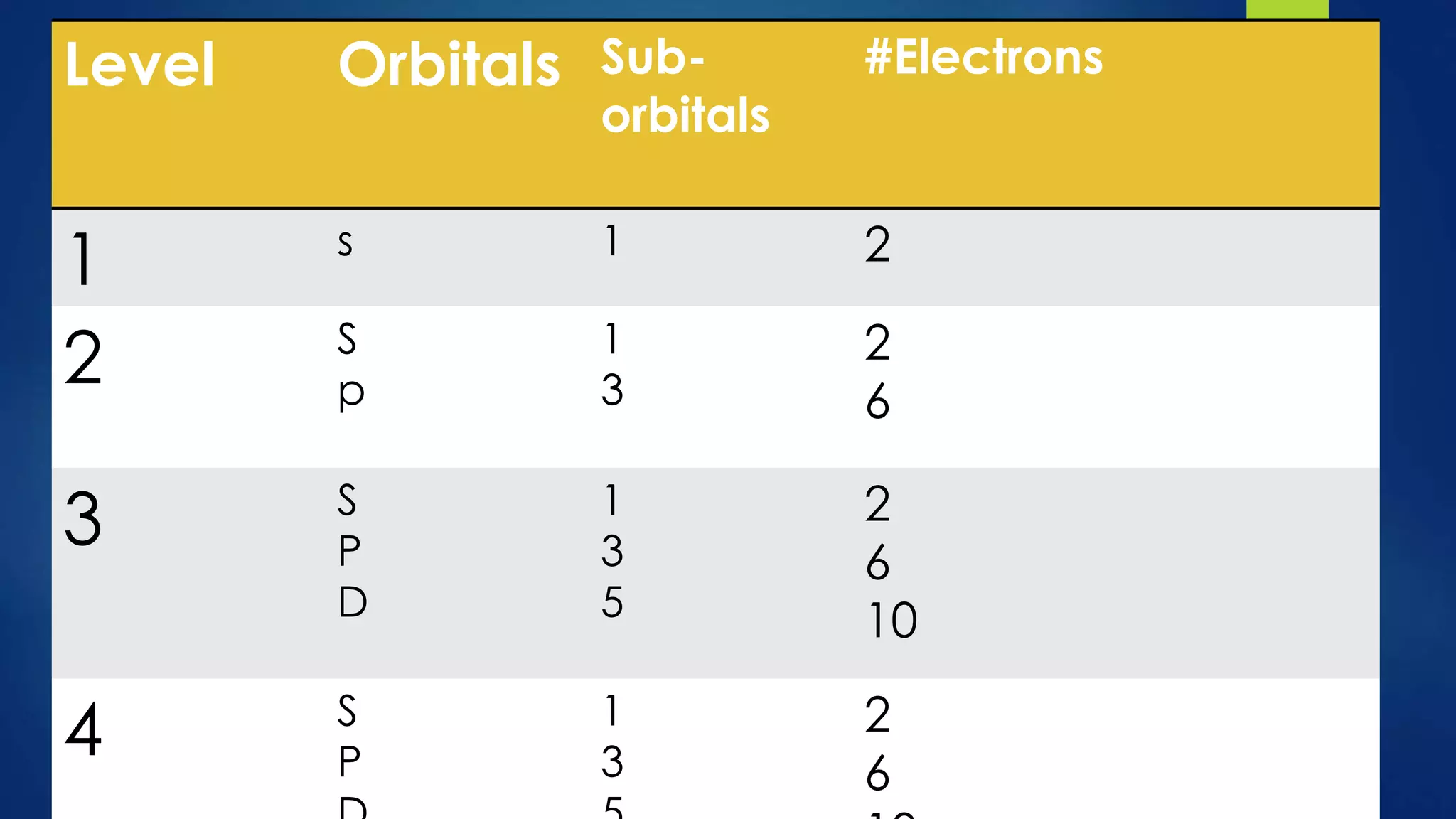
Level Orbital
s
Sub-
orbitals
Number
of
orbitals
#Electrons
1 s 1 1 2
2 S
p
1
3
4 2
6 =8
3 S
P
D
1
3
5
9 2
6
10 =18
4 S
P
1
3
16 2
6
SKILL: Put an example of each.
 Orbital Diagram
 Electron Configuration Notation (spdf)
 Lewis Dot Diagrams
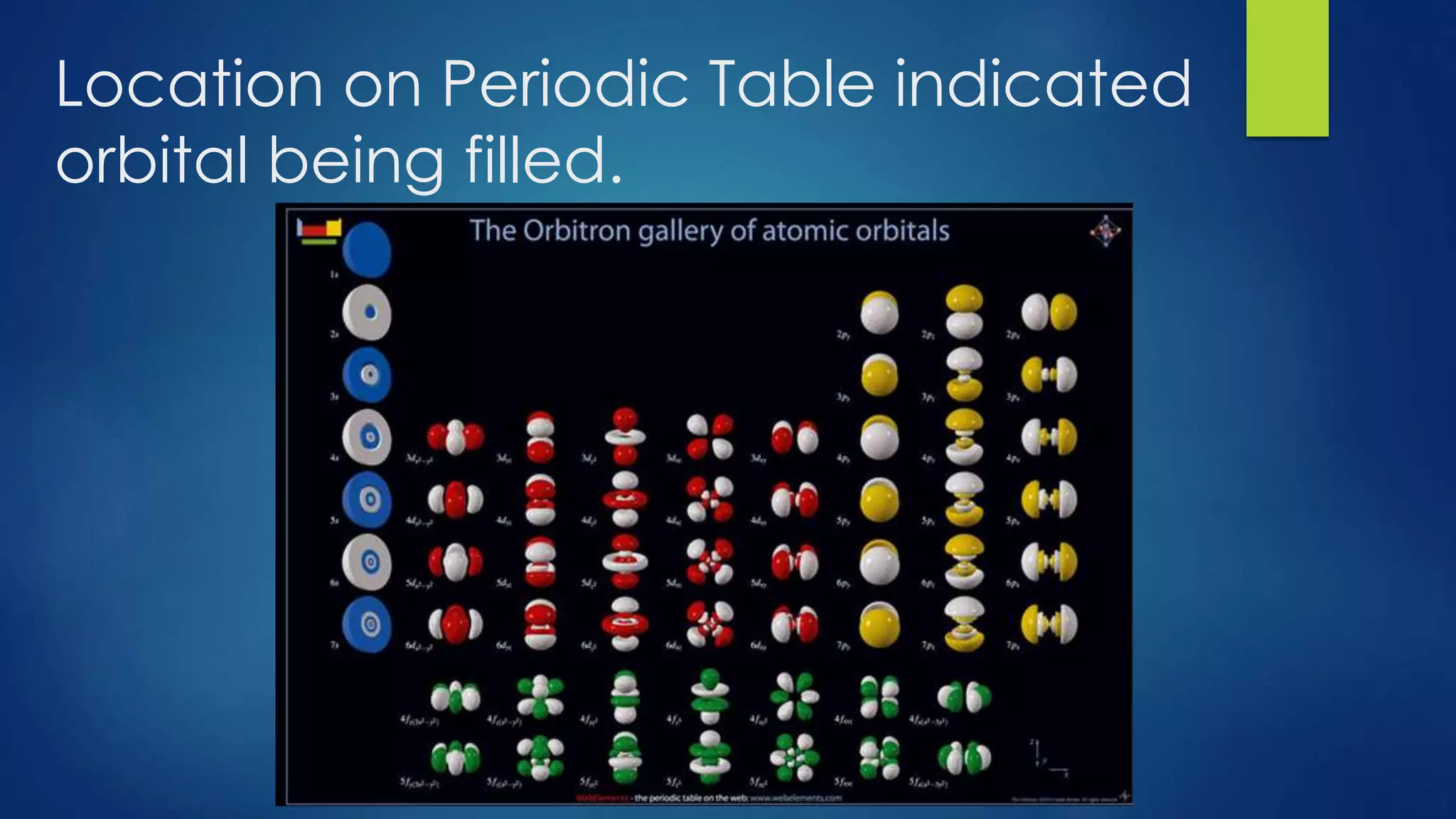
Location on Periodic Table indicated
orbital being filled.
The Structure of the Atom

The Structure of the Atom

  • 1.
    Atomic Theory and theStructure of Atoms CHAPTERS 4 & 5
  • 2.
    An overview ofthe atom.. Atoms are extremely small Atoms are mostly empty space. Reactions are the rearrangements of atoms.
  • 3.
    Law of DefiniteProportions The same compound always has the same ratios of elements (mass) Water – 2 hydrogen and 1oxygen Carbon Dioxide-1 carbon and 2oxygen
  • 4.
    Law of MultipleProportions  Atoms of the Same elements can combine in different ratios  Water-H2O  Peroxide-H2O2  Carbon Dioxide CO2  Carbon Monoxide CO
  • 5.
    Dalton’s Atomic Theory All matter is composed of extremely small particles called atoms.  Atoms of a given element are identical in size, mass, and other properties. Atoms of different elements differ in size, mass, and other properties.  Atoms cannot be subdivided, created, or destroyed.  Atoms of different elements can combine in simple whole number ratios to form chemical compounds.  In chemical reactions, atoms are combined, separated, or rearranged
  • 6.
    Subatomic Particles Name LocationMass Charge Protons Nucleus 1amu +1 Neutrons Nucleus 1amu 0 Electrons Orbitals (in electron cloud) O amu -1
  • 7.
    What is theStructure of an Atom? Elements are different because they have different numbers of protons. The Atomic Number is the number of protons.
  • 8.
    Mass The mass ofan atom is the total number of protons and neutrons. So the mass of an atom is located… These are sometimes called nucleons
  • 9.
    Charge An atom isneutral, so the number of electrons is the same as the number of protons.
  • 10.
    Practice Element Name ProtonsNeutrons Electrons C sulfur 8 35 45
  • 11.
    Practice Element Name ProtonsNeutrons Electrons C carbon 6 6 6 S sulfur 16 16 16 O oxygen 8 8 8 Br bromine 35 40 35
  • 12.
    Isotopes: versions ofan element with differing number of neutrons  Because the number of neutrons is different the mass is different and that is how the isotopes are named. Examples to KNOW: Carbon-12 & carbon-14 Hydrogen, deuterium, and tritium
  • 13.
    Isotope: Name Atomic number Mass numberprotons neutrons Carbon-12 12 Carbon-14 14 hydrogen 1 Deuterium 2 Tritium 3
  • 14.
    Isotope: Name Atomic number Mass numberprotons neutrons Carbon-12 6 12 6 6 Carbon-14 6 14 6 8 hydrogen 1 1 1 0 Deuterium 1 2 1 1 Tritium 1 3 1 2
  • 15.
    Ions: an atomwith a charge A charge is the result an in balance of protons and electrons. This happens when an atom gains or loses electrons. A negative charge means more electrons; positive means less electrons.
  • 16.
    IONS Element Atomic Number Protons Electrons Cl-117 17 H+1 1 1 O-2 8 8 Ca+2 20 20
  • 17.
    IONS Element Atomic Number Protons Electrons Cl-117 17 18 H+1 1 1 0 O-2 8 8 10 Ca+2 20 20 18
  • 18.
    Mass Number  Themass number of an atom, ion or isotope is the total number of nucleons.  Carbon-14; 14C; mass = 14amu  Carbon; carbon-12; 12C; mass = 12 amu  So how could you write Dueterium Tritium
  • 19.
    Average Atomic Mass(atomicmass) The weighted average of the isotopes found in a natural sample.  for each isotope multiple mass by decimal form of %abundance Find the sum.
  • 20.
    Sample Problem  Copyone of the Many examples !
  • 21.
    MODELS Models are constructsto explain ideas and theories. As _____ are gather the models have been improved
  • 22.
    Bohr model Based onspectra data. Electrons were found in orbitals. Electrons can absorb energy and move to higher orbitals-___________ state. The ________ state is the lowest energy level.
  • 23.
    Orbitals/Energy levels/shells Energy Level# electrons 1 2 2 8 3 8 4 18 5 18
  • 24.
    Skill: You shouldbe able to draw a Bohr diagram for elements 1-20
  • 25.
    Limits of Bohrmodel Only really worked for hydrogen. Uncertainty principal- regions of space where likely to find them- electrons repulsion. Spin- balances by only 2/shell
  • 26.
    The Electron Cloud LEQ:How electron arranged in the electron cloud?
  • 27.
    Quantum Numbers Quantum NumberWhat does it mean Principal quantum Number (n) Describes the size of the energy level Angular Quantum number (l) Describes the shape of the orbital (S<PD<F) Magnetic Quantum Number (m) Describes the orientation of the orbital Spin Quantum Number (s) Describes if the electron is spinning clockwise or counter clockwise
  • 28.
    Level Orbital s Sub- orbitals Number of orbitals #Electrons 1 s1 1 2 2 S p 1 3 4 2 6 =8 3 S P D 1 3 5 9 2 6 10 =18 4 S P 1 3 16 2 6
  • 29.
    SKILL: Put anexample of each.  Orbital Diagram  Electron Configuration Notation (spdf)  Lewis Dot Diagrams
  • 30.
    Location on PeriodicTable indicated orbital being filled.