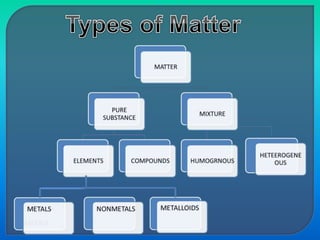
Chemistry is the study of matter ,
physical and chemistry
Properties and the physical and
chemistry changes it Undergoes
under different conditions
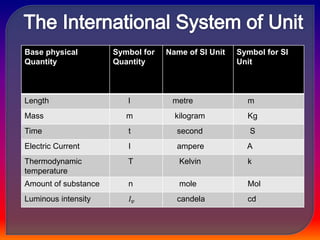
Base physical
Quantity
Symbol for
Quantity
Name of SI Unit Symbol for SI
Unit
Length l metre m
Mass m kilogram Kg
Time t second S
Electric Current I ampere A
Thermodynamic
temperature
T Kelvin k
Amount of substance n mole Mol
Luminous intensity 𝐼𝑣 candela cd
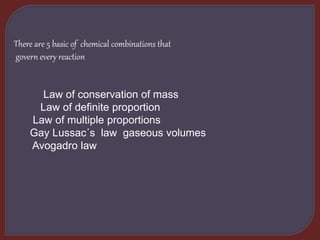
There are 5 basic of chemical combinations that
govern every reaction
Law of conservation of mass
Law of definite proportion
Law of multiple proportions
Gay Lussac´s law gaseous volumes
Avogadro law
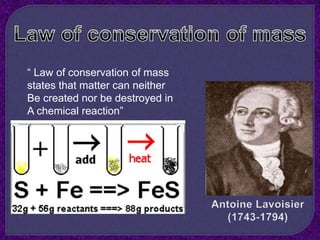
“ Law of conservation of mass
states that matter can neither
Be created nor be destroyed in
A chemical reaction”
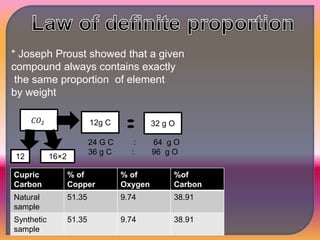
* Joseph Proust showed that a given
compound always contains exactly
the same proportion of element
by weight
Cupric
Carbon
% of
Copper
% of
Oxygen
%of
Carbon
Natural
sample
51.35 9.74 38.91
Synthetic
sample
51.35 9.74 38.91
𝐶𝑂2
12 16×2
12g C 32 g O
24 G C : 64 g O
36 g C : 96 g O
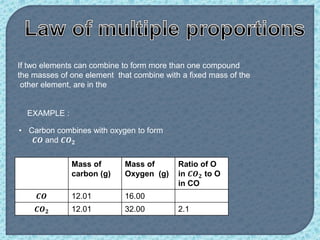
If two elements can combine to form more than one compound
the masses of one element that combine with a fixed mass of the
other element, are in the
Mass of
carbon (g)
Mass of
Oxygen (g)
Ratio of O
in 𝑪𝑶𝟐 to O
in CO
𝑪𝑶 12.01 16.00
𝑪𝑶𝟐 12.01 32.00 2.1
• Carbon combines with oxygen to form
𝑪𝑶 and 𝑪𝑶𝟐
EXAMPLE :
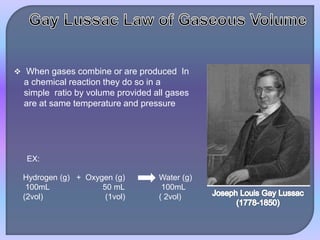
 When gases combine or are produced In
a chemical reaction they do so in a
simple ratio by volume provided all gases
are at same temperature and pressure
EX:
Hydrogen (g) + Oxygen (g)
100mL 50 mL
(2vol) (1vol)
Water (g)
100mL
( 2vol)
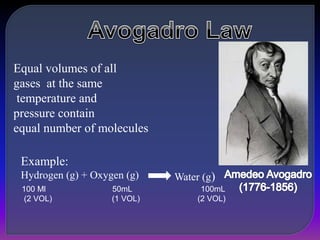
Equal volumes of all
gases at the same
temperature and
pressure contain
equal number of molecules
Example:
Hydrogen (g) + Oxygen (g) Water (g)
100 Ml 50mL 100mL
(2 VOL) (1 VOL) (2 VOL)
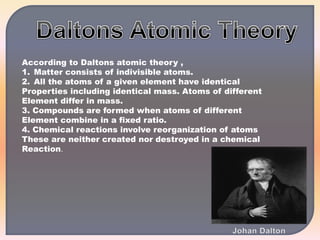
According to Daltons atomic theory ,
1. Matter consists of indivisible atoms.
2. All the atoms of a given element have identical
Properties including identical mass. Atoms of different
Element differ in mass.
3. Compounds are formed when atoms of different
Element combine in a fixed ratio.
4. Chemical reactions involve reorganization of atoms
These are neither created nor destroyed in a chemical
Reaction.
o Masses of atoms , molecules , and formula units are given
In amu (atomic mass unit)
o Example
o Sodium chloride
o (22.99 amu +35.45amu=)58.44amu
o Sulfur dioxide :
o (32.07 amu + 2×16.00 amu =)64.07 amu
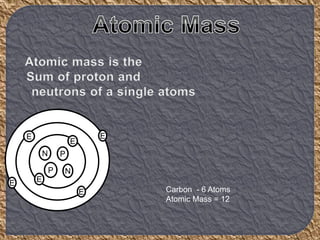
E
E
E
E
E
E
E
Carbon - 6 Atoms
Atomic Mass = 12
N P
P N
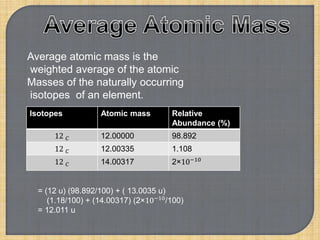
Isotopes Atomic mass Relative
Abundance (%)
12 𝐶 12.00000 98.892
12 𝐶 12.00335 1.108
12 𝐶 14.00317 2×10⁻¹⁰
Average atomic mass is the
weighted average of the atomic
Masses of the naturally occurring
isotopes of an element.
= (12 u) (98.892/100) + ( 13.0035 u)
(1.18/100) + (14.00317) (2×10⁻¹⁰
/100)
= 12.011 u
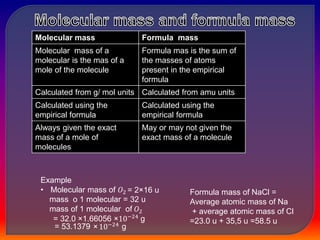
Molecular mass Formula mass
Molecular mass of a
molecular is the mas of a
mole of the molecule
Formula mas is the sum of
the masses of atoms
present in the empirical
formula
Calculated from g/ mol units Calculated from amu units
Calculated using the
empirical formula
Calculated using the
empirical formula
Always given the exact
mass of a mole of
molecules
May or may not given the
exact mass of a molecule
Example
• Molecular mass of 𝑂2
mass o 1 molecular = 32 u
mass of 1 molecular of 𝑂2
= 2×16 u
= 32.0 ×1.66056 ×10−24
g
= 53.1379 10−24
× g
Formula mass of NaCl =
Average atomic mass of Na
+ average atomic mass of Cl
=23.0 u + 35,5 u =58.5 u
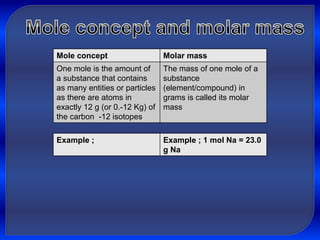
Mole concept Molar mass
One mole is the amount of
a substance that contains
as many entities or particles
as there are atoms in
exactly 12 g (or 0.-12 Kg) of
the carbon -12 isotopes
The mass of one mole of a
substance
(element/compound) in
grams is called its molar
mass
Example ; Example ; 1 mol Na = 23.0
g Na
Some basic concepts of chemistry SlideShare

Some basic concepts of chemistry SlideShare

  • 3.
    Chemistry is thestudy of matter , physical and chemistry Properties and the physical and chemistry changes it Undergoes under different conditions
  • 6.
    Base physical Quantity Symbol for Quantity Nameof SI Unit Symbol for SI Unit Length l metre m Mass m kilogram Kg Time t second S Electric Current I ampere A Thermodynamic temperature T Kelvin k Amount of substance n mole Mol Luminous intensity 𝐼𝑣 candela cd
  • 7.
    There are 5basic of chemical combinations that govern every reaction Law of conservation of mass Law of definite proportion Law of multiple proportions Gay Lussac´s law gaseous volumes Avogadro law
  • 8.
    “ Law ofconservation of mass states that matter can neither Be created nor be destroyed in A chemical reaction”
  • 9.
    * Joseph Proustshowed that a given compound always contains exactly the same proportion of element by weight Cupric Carbon % of Copper % of Oxygen %of Carbon Natural sample 51.35 9.74 38.91 Synthetic sample 51.35 9.74 38.91 𝐶𝑂2 12 16×2 12g C 32 g O 24 G C : 64 g O 36 g C : 96 g O
  • 10.
    If two elementscan combine to form more than one compound the masses of one element that combine with a fixed mass of the other element, are in the Mass of carbon (g) Mass of Oxygen (g) Ratio of O in 𝑪𝑶𝟐 to O in CO 𝑪𝑶 12.01 16.00 𝑪𝑶𝟐 12.01 32.00 2.1 • Carbon combines with oxygen to form 𝑪𝑶 and 𝑪𝑶𝟐 EXAMPLE :
  • 11.
     When gasescombine or are produced In a chemical reaction they do so in a simple ratio by volume provided all gases are at same temperature and pressure EX: Hydrogen (g) + Oxygen (g) 100mL 50 mL (2vol) (1vol) Water (g) 100mL ( 2vol)
  • 12.
    Equal volumes ofall gases at the same temperature and pressure contain equal number of molecules Example: Hydrogen (g) + Oxygen (g) Water (g) 100 Ml 50mL 100mL (2 VOL) (1 VOL) (2 VOL)
  • 13.
    According to Daltonsatomic theory , 1. Matter consists of indivisible atoms. 2. All the atoms of a given element have identical Properties including identical mass. Atoms of different Element differ in mass. 3. Compounds are formed when atoms of different Element combine in a fixed ratio. 4. Chemical reactions involve reorganization of atoms These are neither created nor destroyed in a chemical Reaction.
  • 14.
    o Masses ofatoms , molecules , and formula units are given In amu (atomic mass unit) o Example o Sodium chloride o (22.99 amu +35.45amu=)58.44amu o Sulfur dioxide : o (32.07 amu + 2×16.00 amu =)64.07 amu
  • 15.
    E E E E E E E Carbon - 6Atoms Atomic Mass = 12 N P P N
  • 16.
    Isotopes Atomic massRelative Abundance (%) 12 𝐶 12.00000 98.892 12 𝐶 12.00335 1.108 12 𝐶 14.00317 2×10⁻¹⁰ Average atomic mass is the weighted average of the atomic Masses of the naturally occurring isotopes of an element. = (12 u) (98.892/100) + ( 13.0035 u) (1.18/100) + (14.00317) (2×10⁻¹⁰ /100) = 12.011 u
  • 17.
    Molecular mass Formulamass Molecular mass of a molecular is the mas of a mole of the molecule Formula mas is the sum of the masses of atoms present in the empirical formula Calculated from g/ mol units Calculated from amu units Calculated using the empirical formula Calculated using the empirical formula Always given the exact mass of a mole of molecules May or may not given the exact mass of a molecule Example • Molecular mass of 𝑂2 mass o 1 molecular = 32 u mass of 1 molecular of 𝑂2 = 2×16 u = 32.0 ×1.66056 ×10−24 g = 53.1379 10−24 × g Formula mass of NaCl = Average atomic mass of Na + average atomic mass of Cl =23.0 u + 35,5 u =58.5 u
  • 18.
    Mole concept Molarmass One mole is the amount of a substance that contains as many entities or particles as there are atoms in exactly 12 g (or 0.-12 Kg) of the carbon -12 isotopes The mass of one mole of a substance (element/compound) in grams is called its molar mass Example ; Example ; 1 mol Na = 23.0 g Na