The Physiological & Psychological  Impact of Ageing Part I  Systemic Impact
Structure of Lecture 1. Cardiovascular system 2. Respiratory System 3. Musculo-skeletal system 4. Nervous system
1. Cardiovascular system
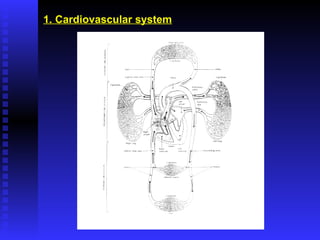
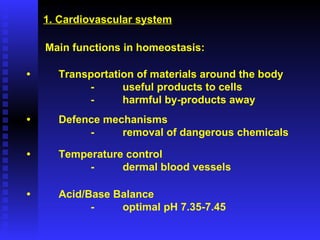
1. Cardiovascular system Main functions in homeostasis: • Transportation of materials around the body - useful products to cells - harmful by-products away • Defence mechanisms - removal of dangerous chemicals • Temperature control - dermal blood vessels • Acid/Base Balance -  optimal pH 7.35-7.45
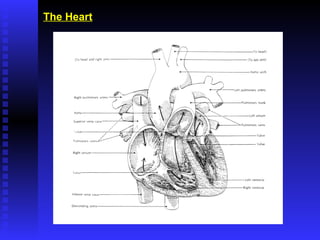
The Heart
Deposits of collagen and fatty tissue into heart muscle. Walls of arterioles = thicker with less elasticity. Longer time between diastole and systole of heart muscles. Decreased cardiac output (1/3 less Oxygen from 20-80 years). More difficult to do strenuous exercise. Ageing changes of the Heart
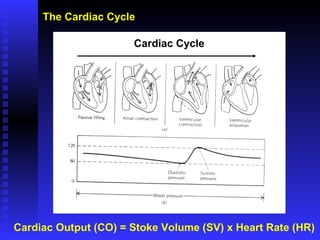
Cardiac Output (CO) = Stoke Volume (SV) x Heart Rate (HR) The Cardiac Cycle Cardiac Cycle
Blood Pressure Changes Associated with Ageing • 40% of the elderly have systolic pressure above the safe maximum (160 mmHg) • Systolic Blood Pressure -   5-8 mmHg per decade after 40-50 yrs - in females systolic BP stops rising after 70 yrs • Diastolic Blood Pressure -     1 mmHg per decade
Pulmonary Congestion • Induced by blood remaining in the left ventricle  after contraction. • Inhibits blood flow from the lungs & raises blood pressure in the lung capillaries which forces fluid  out of the capillary walls • This PULMONARY OEDEMA reduces respiratory function and causes individuals to feel out of breath more quickly.
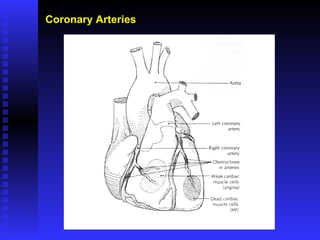
Coronary Artery Disease • The older heart requires more oxygen to pump the  same amount of blood around the body as a young heart. • This is not important as long as the coronary arteries remain normal. • However, age changes cause deficiencies in the  normal functioning of coronary arteries. • ATHEROSCLEROSIS prevents adequate blood supply to the heart. • This causes MYOCARDIAL INFARCTION
Coronary Arteries
Age Changes in Arteries • Loss of elasticity - accumulation of calcium & lipids - breakage of elastic fibres This loss of elasticity means that vessels are less  able to be stretched by blood flow. -   systolic blood pressure
• Widening & Lengthening At first this compensates for elasticity loss but fibres are eventually stretched until they stretch no more. Each heart contraction causes a rapid and dramatic  rise in systolic BP This leads to increases in cardiac O 2  demand • Diminished Elastic Recoil Causes slowing of blood flow through arteries
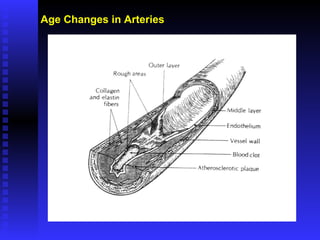
ATHEROSCLEROSIS • Most common form of arterial disease forming one of a group of arterial diseases known as  ARTERIOSCLEROSIS. • Causes the formation and enlargement of scar like material called PLAQUE in the walls of arteries. • Plaque cases arteries to narrow and thus reduces  blood flow. • It also causes stiffening of the arteries reducing their ability to dilate when oxygen demands in crease.
Age Changes in Arteries
• Atherosclerosis also involves roughening of the  inner lining of arteries and exposure of underlying  collagen.  • Both of these factors promote the formation of clots which can impede and totally block blood flow. • Atherosclerosis causes: - heart attacks - strokes -  aneurysms - kidney disease -  muscle problems in the legs
Mechanisms Promoting Atherosclerosis • Endothelial Dysfunction • Free Radicals - formation of lipid peroxides • Blood Low Density Lipoproteins (LDLs) - eg cholesterol & triglycerides • Elastase - an enzyme that breaks down elastic fibres • Glycation - the use of glucose to form cross links  between protein molecules - produces age-related glycation end products (AGEs) and FRs
Risk Factors in Atherosclerosis Smoking Blood pressure High blood LDLs Diabetes Mellitus Family history Advancing age
Age Changes in Capillaries • Become narrower and irregular in shape • Decrease in number • Walls become thicker • Decreased permeability • Reduce the ability of the circulatory system to adjust quickly to changes in the demands of the  body
Age Changes in Veins • Thickening of the walls and valves • Varicose veins -   vein diameter - promotes clot formation  thrombus     embolus
2. The Respiratory System Main functions for homeostasis: • Gaseous exchange -  obtaining 0 2  & eliminating CO 2   Ventilation  (breathing) Perfusion (pulmonary circulation) Diffusion (0 2  in &  CO 2  out)
Age Changes Affecting Ventilation • Narrowing of Bronchioles • Decreased alveolar surface area • Respiratory muscles become weaker • Decrease in lung elasticity Consequences: Rate at which air can circulate through the system Ventilation is made more difficult and this    0 2  supply and   CO 2  in the blood.
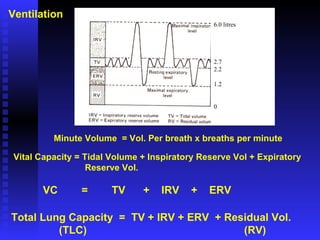
Ventilation Minute Volume  = Vol. Per breath x breaths per minute Vital Capacity = Tidal Volume + Inspiratory Reserve Vol + Expiratory    Reserve Vol.  VC  =  TV  +  IRV  +  ERV Total Lung Capacity  =  TV + IRV + ERV  + Residual Vol. (TLC)   (RV) 6.0 litres 2.7 2.2 1.2 0
• Ageing does not affect the TLC but does affect the volumes of air that can be moved. • The loss in elasticity of the lungs  leads to  IRV  & ERV • Tidal volume increases and there are increases in residual volume • The vital capacity of the lungs decreases • These volume changes have two effects: 1) decrease in maximum minute volume. 2)    VC with   RV means less fresh air is inspired.   This    rate of diffusion.
Diseases of the Respiratory System • Respiratory diseases (excluding lung cancer) are the fourth leading cause of death in the elderly. • Lung cancer • Chronic Bronchitis - inflammation of the bronchioles -   mucous production    ventilation by making airways narrower • Emphysema - destruction of parts of the the lungs  e.g. bronchioles & alveoli • Pneumonia - inflammation of the lungs    infection
3. Musculo-Skeletal System Main functions in homeostasis: - movement  - support -  heat production - protection - mineral storage -  blood cell production
Age changes in muscles •    nerve-muscle interactions •    muscle mass •    blood flow in muscles Consequences •    Reaction Times (RTs) •    speed of movement •    endurance
Skeletal Age Changes • Loss of bone matrix (more extensive in post menopausal females) OSTEOPOROSIS • Stiffening of hyaline Cartilage between joints due  to loss of H 2 O and Ca 2+  deposition. OSTEOARTHRITIS Consequences • Generalised weakening of the bone (falls tend to cause more fractures in elderly) •    joint mobility
4. Nervous System Main functions for homeostasis: • monitoring • communication • stimulation • memory • information processing
Age Changes in the Nervous System • Loss of brain volume •    neurotransmitters, slower  nerve conduction  rate. •    numbers & changes in the  structure of synapses •    numbers of motor neurons • slower reflexes
• memory loss -   short term memory (STM) - greatest decline in STM is for information presented verbally and quickly. - long term memory is largely unaffected • increase reaction time (   accidents?) • vocabulary & conversation • sleep pattern changes. • personality changes?
Diseases of the Nervous System Cerebro-Vascular Accidents (CVAs) or Strokes • third leading cause of death in the over 65 age  group • occur when blood supply to the brain is disrupted - common result of atherosclerosis - hypertensive haemorrhagic stokes • Effects depend upon the site of blockage/leakage in the brain: - paralysis/paresis - loss of language skills - visual field defects
Dementias A broad category of diseases which involve a serious  decline in memory and a decline in at least one other  major function. - sufferers cannot carry out normal activities - difficulties must be experienced on a long term  basis - caused by an identifiable physical abnormality • Number and rate of dementia cases are   • Incidence rate rises exponentially with age • Effects:    STM, loss of motor function, personality    changes
Alzheimer’s Disease (AD) • Fifth leading cause of death in the US • AD is becoming a more important factor of ageing as risks of heart disease & cancer decline • Early onset or familial AD Late onset or senile dementia of the Alzheimer type • Causes: Genetic abnormalities? Normal part of the ageing process ? • Changes in the brain: senile plaques  beta amyloid neurofibrillar tangles      dead neurons low levels of acetylcholine

The Physiology of Aging1

  • 1.
    The Physiological &Psychological Impact of Ageing Part I Systemic Impact
  • 2.
    Structure of Lecture1. Cardiovascular system 2. Respiratory System 3. Musculo-skeletal system 4. Nervous system
  • 3.
  • 4.
    1. Cardiovascular systemMain functions in homeostasis: • Transportation of materials around the body - useful products to cells - harmful by-products away • Defence mechanisms - removal of dangerous chemicals • Temperature control - dermal blood vessels • Acid/Base Balance - optimal pH 7.35-7.45
  • 5.
  • 6.
    Deposits of collagenand fatty tissue into heart muscle. Walls of arterioles = thicker with less elasticity. Longer time between diastole and systole of heart muscles. Decreased cardiac output (1/3 less Oxygen from 20-80 years). More difficult to do strenuous exercise. Ageing changes of the Heart
  • 7.
    Cardiac Output (CO)= Stoke Volume (SV) x Heart Rate (HR) The Cardiac Cycle Cardiac Cycle
  • 8.
    Blood Pressure ChangesAssociated with Ageing • 40% of the elderly have systolic pressure above the safe maximum (160 mmHg) • Systolic Blood Pressure -  5-8 mmHg per decade after 40-50 yrs - in females systolic BP stops rising after 70 yrs • Diastolic Blood Pressure -  1 mmHg per decade
  • 9.
    Pulmonary Congestion •Induced by blood remaining in the left ventricle after contraction. • Inhibits blood flow from the lungs & raises blood pressure in the lung capillaries which forces fluid out of the capillary walls • This PULMONARY OEDEMA reduces respiratory function and causes individuals to feel out of breath more quickly.
  • 10.
    Coronary Artery Disease• The older heart requires more oxygen to pump the same amount of blood around the body as a young heart. • This is not important as long as the coronary arteries remain normal. • However, age changes cause deficiencies in the normal functioning of coronary arteries. • ATHEROSCLEROSIS prevents adequate blood supply to the heart. • This causes MYOCARDIAL INFARCTION
  • 11.
  • 12.
    Age Changes inArteries • Loss of elasticity - accumulation of calcium & lipids - breakage of elastic fibres This loss of elasticity means that vessels are less able to be stretched by blood flow. -  systolic blood pressure
  • 13.
    • Widening &Lengthening At first this compensates for elasticity loss but fibres are eventually stretched until they stretch no more. Each heart contraction causes a rapid and dramatic rise in systolic BP This leads to increases in cardiac O 2 demand • Diminished Elastic Recoil Causes slowing of blood flow through arteries
  • 14.
    ATHEROSCLEROSIS • Mostcommon form of arterial disease forming one of a group of arterial diseases known as ARTERIOSCLEROSIS. • Causes the formation and enlargement of scar like material called PLAQUE in the walls of arteries. • Plaque cases arteries to narrow and thus reduces blood flow. • It also causes stiffening of the arteries reducing their ability to dilate when oxygen demands in crease.
  • 15.
  • 16.
    • Atherosclerosis alsoinvolves roughening of the inner lining of arteries and exposure of underlying collagen. • Both of these factors promote the formation of clots which can impede and totally block blood flow. • Atherosclerosis causes: - heart attacks - strokes - aneurysms - kidney disease - muscle problems in the legs
  • 17.
    Mechanisms Promoting Atherosclerosis• Endothelial Dysfunction • Free Radicals - formation of lipid peroxides • Blood Low Density Lipoproteins (LDLs) - eg cholesterol & triglycerides • Elastase - an enzyme that breaks down elastic fibres • Glycation - the use of glucose to form cross links between protein molecules - produces age-related glycation end products (AGEs) and FRs
  • 18.
    Risk Factors inAtherosclerosis Smoking Blood pressure High blood LDLs Diabetes Mellitus Family history Advancing age
  • 19.
    Age Changes inCapillaries • Become narrower and irregular in shape • Decrease in number • Walls become thicker • Decreased permeability • Reduce the ability of the circulatory system to adjust quickly to changes in the demands of the body
  • 20.
    Age Changes inVeins • Thickening of the walls and valves • Varicose veins -  vein diameter - promotes clot formation thrombus  embolus
  • 21.
    2. The RespiratorySystem Main functions for homeostasis: • Gaseous exchange - obtaining 0 2 & eliminating CO 2 Ventilation (breathing) Perfusion (pulmonary circulation) Diffusion (0 2 in & CO 2 out)
  • 22.
    Age Changes AffectingVentilation • Narrowing of Bronchioles • Decreased alveolar surface area • Respiratory muscles become weaker • Decrease in lung elasticity Consequences: Rate at which air can circulate through the system Ventilation is made more difficult and this  0 2 supply and  CO 2 in the blood.
  • 23.
    Ventilation Minute Volume = Vol. Per breath x breaths per minute Vital Capacity = Tidal Volume + Inspiratory Reserve Vol + Expiratory Reserve Vol. VC = TV + IRV + ERV Total Lung Capacity = TV + IRV + ERV + Residual Vol. (TLC) (RV) 6.0 litres 2.7 2.2 1.2 0
  • 24.
    • Ageing doesnot affect the TLC but does affect the volumes of air that can be moved. • The loss in elasticity of the lungs leads to  IRV & ERV • Tidal volume increases and there are increases in residual volume • The vital capacity of the lungs decreases • These volume changes have two effects: 1) decrease in maximum minute volume. 2)  VC with  RV means less fresh air is inspired. This  rate of diffusion.
  • 25.
    Diseases of theRespiratory System • Respiratory diseases (excluding lung cancer) are the fourth leading cause of death in the elderly. • Lung cancer • Chronic Bronchitis - inflammation of the bronchioles -  mucous production  ventilation by making airways narrower • Emphysema - destruction of parts of the the lungs e.g. bronchioles & alveoli • Pneumonia - inflammation of the lungs  infection
  • 26.
    3. Musculo-Skeletal SystemMain functions in homeostasis: - movement - support - heat production - protection - mineral storage - blood cell production
  • 27.
    Age changes inmuscles •  nerve-muscle interactions •  muscle mass •  blood flow in muscles Consequences •  Reaction Times (RTs) •  speed of movement •  endurance
  • 28.
    Skeletal Age Changes• Loss of bone matrix (more extensive in post menopausal females) OSTEOPOROSIS • Stiffening of hyaline Cartilage between joints due to loss of H 2 O and Ca 2+ deposition. OSTEOARTHRITIS Consequences • Generalised weakening of the bone (falls tend to cause more fractures in elderly) •  joint mobility
  • 29.
    4. Nervous SystemMain functions for homeostasis: • monitoring • communication • stimulation • memory • information processing
  • 30.
    Age Changes inthe Nervous System • Loss of brain volume •  neurotransmitters, slower nerve conduction rate. •  numbers & changes in the structure of synapses •  numbers of motor neurons • slower reflexes
  • 31.
    • memory loss-  short term memory (STM) - greatest decline in STM is for information presented verbally and quickly. - long term memory is largely unaffected • increase reaction time (  accidents?) • vocabulary & conversation • sleep pattern changes. • personality changes?
  • 32.
    Diseases of theNervous System Cerebro-Vascular Accidents (CVAs) or Strokes • third leading cause of death in the over 65 age group • occur when blood supply to the brain is disrupted - common result of atherosclerosis - hypertensive haemorrhagic stokes • Effects depend upon the site of blockage/leakage in the brain: - paralysis/paresis - loss of language skills - visual field defects
  • 33.
    Dementias A broadcategory of diseases which involve a serious decline in memory and a decline in at least one other major function. - sufferers cannot carry out normal activities - difficulties must be experienced on a long term basis - caused by an identifiable physical abnormality • Number and rate of dementia cases are  • Incidence rate rises exponentially with age • Effects:  STM, loss of motor function, personality changes
  • 34.
    Alzheimer’s Disease (AD)• Fifth leading cause of death in the US • AD is becoming a more important factor of ageing as risks of heart disease & cancer decline • Early onset or familial AD Late onset or senile dementia of the Alzheimer type • Causes: Genetic abnormalities? Normal part of the ageing process ? • Changes in the brain: senile plaques  beta amyloid neurofibrillar tangles  dead neurons low levels of acetylcholine