Hypoxia
D.A. Asir John Samuel, BSc (Psy), MPT (Neuro Paed),
             MAc, DYScEd, C/BLS, FAGE
      Lecturer, Alva’s college of Physiotherapy,
                      Moodbidri

                    Dr.Asir John Samuel (PT)
Hypoxia

• An abnormally reduced O2 supply to tissue

• A pathological condition in which the body as
  a whole (generalized hypoxia) or a region of
  the body (regional hypoxia) is deprived of
  adequate oxygen supply


                   Dr.Asir John Samuel (PT)
Causes of Hypoxia

• Inadequate oxygenation

- Deficiency of oxygen in atmosphere

- Hypoventilation (neuromuscular disorders)

• Venous-to-arterial shunts (right-left cardiac
  shunts)

- Eisenmenger's syndrome
                   Dr.Asir John Samuel (PT)
Causes of Hypoxia

• Pulmonary disease

- Hypoventilation due to increased airway
 resistance or decreased compliance

- Abnormal VA/Q ratio

- Diminished respiratory membrane diffusion

                  Dr.Asir John Samuel (PT)
Causes of Hypoxia

• Inadequate oxygen transport to tissues

- Anaemia or abnormal Hb

- General circulatory deficiency

- Localized circulatory deficiency

- Tissue oedema

                    Dr.Asir John Samuel (PT)
Causes of Hypoxia

• Inadequate tissue capability of using oxygen

- Poisoning of cellular oxidation enzymes

- Diminished cellular metabolic capacity for
  using oxygen, because of toxicity, vitamin
  deficiency or other factors


                    Dr.Asir John Samuel (PT)
Effects of Hypoxia on body

• Hypoxia, if severe

- can cause death of cells throughout the body

• In less severe degrees

- Depressed mental activity, sometimes results
  in coma

- Reduced work capacity of muscles
                       Dr.Asir John Samuel (PT)
Types of Hypoxia

• Atmospheric Hypoxia (Hypoxic Hypoxia)

• Hypoventilation Hypoxia

• Anemic Hypoxia

• Stagnant or ischemic Hypoxia

• Histotoxic or cytotoxic Hypoxia

                   Dr.Asir John Samuel (PT)
Atmospheric Hypoxia (Hypoxic Hypoxia)

• An insufficient O2 supply reaches the blood

• Due to

- Decreased atmospheric PO2 at high altitudes

- Reduced alveolar ventilation

- Impaired alveolar gas exchange

                   Dr.Asir John Samuel (PT)
Hypoventilation Hypoxia

• A reduced amount of air enters the alveoli in
  your lungs, resulting in hypoxia and hypercapnia
• COPD
• Scoliosis, nasal septum deformation
• Weakened respiratory muscles - motor neurone
  disease
                    Dr.Asir John Samuel (PT)
Anemic Hypoxia

• Reduced O2-carrying capacity of blood

• Due to decreased total Hb or RBC


                   Dr.Asir John Samuel (PT)
Stagnant or ischemic Hypoxia

• Insufficient O2 reaches the tissue due to
  reduced blood flow

• Systemic or local


                      Dr.Asir John Samuel (PT)
Histotoxic or cytotoxic Hypoxia

• Impaired utilization of O2 by the tissues
 despite a sufficient supply of O2 in the
 mitochondria

• Cyanide poisoning

• Cyanide   (HCN)      blocks                  oxidative   cellular
 metabolism by inhibiting cytochromoxidase
                    Dr.Asir John Samuel (PT)
Hyper Baric Oxygen Therapy (HBOT)

• Medical use of oxygen at a level higher than
  atmospheric pressure
• Hyperbaric oxygen therapy involves breathing
  pure oxygen in a pressurized room/chamber
• Raised upto 5 times
• 100% O2 is given
                     Dr.Asir John Samuel (PT)
HBOT – indications
• Atherosclerosis

• Stroke

• Peripheral vascular disease

• Diabetic ulcers

• Wound healing

• Cerebral palsy

• Brain injury

• Multiple sclerosis

• Many other disorders. Dr.Asir John Samuel (PT)
Hypercapnoea

• Excess carbon dioxide (CO2) in the body (> 45
  mm Hg in blood)

• Associated with hypoxia

- Hypoventilation

- Circulatory deficiency

• Hypoxia caused by reduced availability of O2
                    Dr.Asir John Samuel (PT)
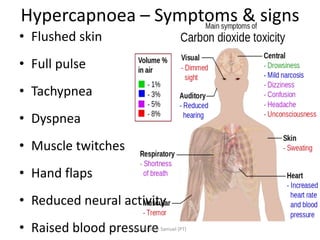
Hypercapnoea – Symptoms & signs
• Flushed skin
• Full pulse
• Tachypnea
• Dyspnea
• Muscle twitches
• Hand flaps
• Reduced neural activity
• Raised blood pressure
                    Dr.Asir John Samuel (PT)
Raised PCO2

• 60 to 75 mm Hg – air hunger (rapidly & deeply)

- Dyspnea

• 80 to 100 mm Hg – lethargic & semicomatose

• 120 to 150 mm Hg – anesthesia and death


                   Dr.Asir John Samuel (PT)
Dysbarism

• Decompression sickness

• Nitrogen   dissolved          in
  body develops nitrogen
  bubbles and cause minor
  or serious damage


                      Dr.Asir John Samuel (PT)
Decompression sickenss
• Caisson’s disease


                      Dr.Asir John Samuel (PT)
Dysbarism -symptoms

• Blocks many blood vessels in different tissues

• At first smallest vessels then larger vessels

• Tissue ischaemia and tissue death

• Pain in joints, muscles of leg or arms

• Dizziness or collapse and unconsciousness

• Shortness of breath, pulmonary edema
                     Dr.Asir John Samuel (PT)
Acclimatization

• Acclimatization or acclimation is the process

  of an individual organism adjusting to a

  gradual change in its environment such as

  pressure, temperature, etc


                   Dr.Asir John Samuel (PT)
Acclimatization

• Decrease in barometric pressure is the basic
 cause of all hypoxia problems in high-altitude
 physiology
• As   barometric      pressure                decreases,   the
 atmospheric oxygen partial pressure decreases
 proportionately

                    Dr.Asir John Samuel (PT)
Effects of Acclimatization
• Drowsiness

• Lassitude

• Mental and muscle fatigue

• Headache

• Nausea

• Twitchings or seizures
                   Dr.Asir John Samuel (PT)
Effects of Acclimatization

• Decreased mental proficiency

• Decreases judgment

• Memory

• Performance of discrete motor movements

                  Dr.Asir John Samuel (PT)

Hypoxia

  • 1.
    Hypoxia D.A. Asir JohnSamuel, BSc (Psy), MPT (Neuro Paed), MAc, DYScEd, C/BLS, FAGE Lecturer, Alva’s college of Physiotherapy, Moodbidri Dr.Asir John Samuel (PT)
  • 2.
    Hypoxia • An abnormallyreduced O2 supply to tissue • A pathological condition in which the body as a whole (generalized hypoxia) or a region of the body (regional hypoxia) is deprived of adequate oxygen supply Dr.Asir John Samuel (PT)
  • 3.
    Causes of Hypoxia •Inadequate oxygenation - Deficiency of oxygen in atmosphere - Hypoventilation (neuromuscular disorders) • Venous-to-arterial shunts (right-left cardiac shunts) - Eisenmenger's syndrome Dr.Asir John Samuel (PT)
  • 4.
    Causes of Hypoxia •Pulmonary disease - Hypoventilation due to increased airway resistance or decreased compliance - Abnormal VA/Q ratio - Diminished respiratory membrane diffusion Dr.Asir John Samuel (PT)
  • 5.
    Causes of Hypoxia •Inadequate oxygen transport to tissues - Anaemia or abnormal Hb - General circulatory deficiency - Localized circulatory deficiency - Tissue oedema Dr.Asir John Samuel (PT)
  • 6.
    Causes of Hypoxia •Inadequate tissue capability of using oxygen - Poisoning of cellular oxidation enzymes - Diminished cellular metabolic capacity for using oxygen, because of toxicity, vitamin deficiency or other factors Dr.Asir John Samuel (PT)
  • 7.
    Effects of Hypoxiaon body • Hypoxia, if severe - can cause death of cells throughout the body • In less severe degrees - Depressed mental activity, sometimes results in coma - Reduced work capacity of muscles Dr.Asir John Samuel (PT)
  • 8.
    Types of Hypoxia •Atmospheric Hypoxia (Hypoxic Hypoxia) • Hypoventilation Hypoxia • Anemic Hypoxia • Stagnant or ischemic Hypoxia • Histotoxic or cytotoxic Hypoxia Dr.Asir John Samuel (PT)
  • 9.
    Atmospheric Hypoxia (HypoxicHypoxia) • An insufficient O2 supply reaches the blood • Due to - Decreased atmospheric PO2 at high altitudes - Reduced alveolar ventilation - Impaired alveolar gas exchange Dr.Asir John Samuel (PT)
  • 10.
    Hypoventilation Hypoxia • Areduced amount of air enters the alveoli in your lungs, resulting in hypoxia and hypercapnia • COPD • Scoliosis, nasal septum deformation • Weakened respiratory muscles - motor neurone disease Dr.Asir John Samuel (PT)
  • 11.
    Anemic Hypoxia • ReducedO2-carrying capacity of blood • Due to decreased total Hb or RBC Dr.Asir John Samuel (PT)
  • 12.
    Stagnant or ischemicHypoxia • Insufficient O2 reaches the tissue due to reduced blood flow • Systemic or local Dr.Asir John Samuel (PT)
  • 13.
    Histotoxic or cytotoxicHypoxia • Impaired utilization of O2 by the tissues despite a sufficient supply of O2 in the mitochondria • Cyanide poisoning • Cyanide (HCN) blocks oxidative cellular metabolism by inhibiting cytochromoxidase Dr.Asir John Samuel (PT)
  • 14.
    Hyper Baric OxygenTherapy (HBOT) • Medical use of oxygen at a level higher than atmospheric pressure • Hyperbaric oxygen therapy involves breathing pure oxygen in a pressurized room/chamber • Raised upto 5 times • 100% O2 is given Dr.Asir John Samuel (PT)
  • 15.
    HBOT – indications •Atherosclerosis • Stroke • Peripheral vascular disease • Diabetic ulcers • Wound healing • Cerebral palsy • Brain injury • Multiple sclerosis • Many other disorders. Dr.Asir John Samuel (PT)
  • 16.
    Hypercapnoea • Excess carbondioxide (CO2) in the body (> 45 mm Hg in blood) • Associated with hypoxia - Hypoventilation - Circulatory deficiency • Hypoxia caused by reduced availability of O2 Dr.Asir John Samuel (PT)
  • 17.
    Hypercapnoea – Symptoms& signs • Flushed skin • Full pulse • Tachypnea • Dyspnea • Muscle twitches • Hand flaps • Reduced neural activity • Raised blood pressure Dr.Asir John Samuel (PT)
  • 18.
    Raised PCO2 • 60to 75 mm Hg – air hunger (rapidly & deeply) - Dyspnea • 80 to 100 mm Hg – lethargic & semicomatose • 120 to 150 mm Hg – anesthesia and death Dr.Asir John Samuel (PT)
  • 19.
    Dysbarism • Decompression sickness •Nitrogen dissolved in body develops nitrogen bubbles and cause minor or serious damage Dr.Asir John Samuel (PT)
  • 20.
    Decompression sickenss • Caisson’sdisease Dr.Asir John Samuel (PT)
  • 21.
    Dysbarism -symptoms • Blocksmany blood vessels in different tissues • At first smallest vessels then larger vessels • Tissue ischaemia and tissue death • Pain in joints, muscles of leg or arms • Dizziness or collapse and unconsciousness • Shortness of breath, pulmonary edema Dr.Asir John Samuel (PT)
  • 22.
    Acclimatization • Acclimatization oracclimation is the process of an individual organism adjusting to a gradual change in its environment such as pressure, temperature, etc Dr.Asir John Samuel (PT)
  • 23.
    Acclimatization • Decrease inbarometric pressure is the basic cause of all hypoxia problems in high-altitude physiology • As barometric pressure decreases, the atmospheric oxygen partial pressure decreases proportionately Dr.Asir John Samuel (PT)
  • 24.
    Effects of Acclimatization •Drowsiness • Lassitude • Mental and muscle fatigue • Headache • Nausea • Twitchings or seizures Dr.Asir John Samuel (PT)
  • 25.
    Effects of Acclimatization •Decreased mental proficiency • Decreases judgment • Memory • Performance of discrete motor movements Dr.Asir John Samuel (PT)