ROBOTII CARE AU
EXPLORAT PLANETA
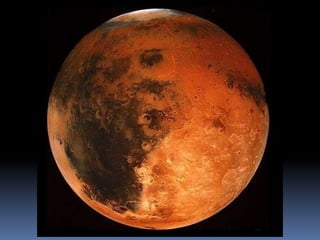
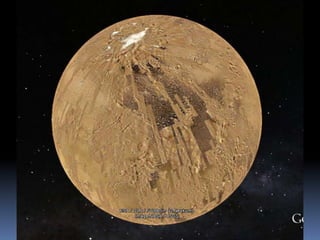
MARTE
TEODORESCU ROBERTA
MAMUT ERHAN
POPA ŞTEFAN
MANOLE BOGDAN
VELESCU BOGDAN
ALI EDIS
CLASA a X-a A, LICEULTEORETIC “TRAIAN”-CONSTANŢA
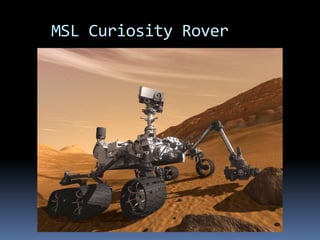
MSL Curiosity Rover
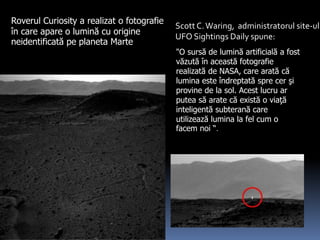
Roverul Curiosity a realizat o fotografie
în care apare o lumină cu origine
neidentificată pe planeta Marte
Scott C.Waring, administratorul site-ul
UFO Sightings Daily spune:
"O sursă de lumină artificială a fost
văzută în această fotografie
realizată de NASA, care arată că
lumina este îndreptată spre cer şi
provine de la sol. Acest lucru ar
putea să arate că există o viaţă
inteligentă subterană care
utilizează lumina la fel cum o
facem noi “.
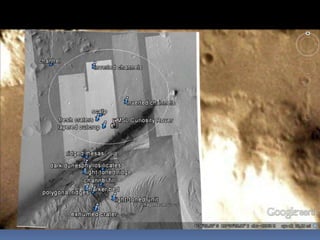
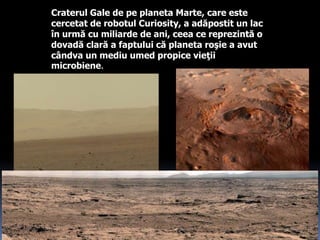
Craterul Gale de pe planeta Marte, care este
cercetat de robotul Curiosity, a adăpostit un lac
în urmă cu miliarde de ani, ceea ce reprezintă o
dovadă clară a faptului că planeta roşie a avut
cândva un mediu umed propice vieţii
microbiene.
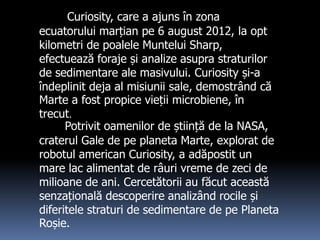
Potrivit oamenilor de știință de la NASA,
craterul Gale de pe planeta Marte, explorat de
robotul american Curiosity, a adăpostit un
mare lac alimentat de râuri vreme de zeci de
milioane de ani. Cercetătorii au făcut această
senzațională descoperire analizând rocile și
diferitele straturi de sedimentare de pe Planeta
Roșie.
Curiosity, care a ajuns în zona
ecuatorului marțian pe 6 august 2012, la opt
kilometri de poalele Muntelui Sharp,
efectuează foraje și analize asupra straturilor
de sedimentare ale masivului. Curiosity și-a
îndeplinit deja al misiunii sale, demostrând că
Marte a fost propice vieții microbiene, în
trecut.
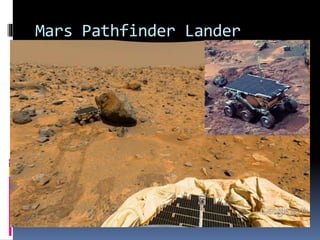
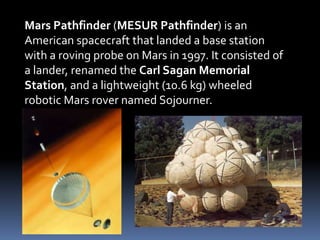
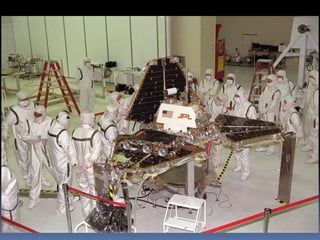
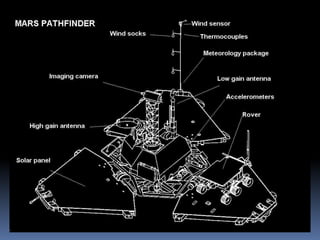
Mars Pathfinder Lander
Mars Pathfinder (MESUR Pathfinder) is an
American spacecraft that landed a base station
with a roving probe on Mars in 1997. It consisted of
a lander, renamed the Carl Sagan Memorial
Station, and a lightweight (10.6 kg) wheeled
robotic Mars rover named Sojourner.
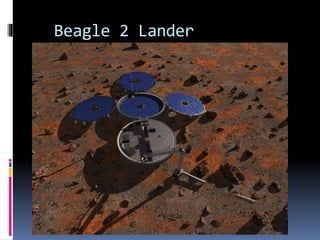
Beagle 2 Lander
Beagle 2 is a British landing spacecraft that formed part
of the European Space Agency's 2003 Mars Express mission.
Beagle 2 is named after HMS Beagle.
The spacecraft was successfully deployed from the Mars
Express on 19 December 2003 and was scheduled to land on
the surface of Mars on 25 December; however, no contact
was received at the expected time of landing on Mars, with
the ESA declaring the mission lost in February 2004, after
numerous attempts to contact the spacecraft were made.
The spacecraft's fate remained a mystery until it was
announced in January 2015 that Beagle 2 had been located
intact on the surface of Mars in a series of images from
NASA's Mars Reconnaissance Orbiter HiRISE instrument.The
images suggest that two of the spacecraft's four solar panels
failed to deploy, blocking the spacecraft's communications
antenna. Beagle 2 is the first British and first European probe
to achieve a soft landing on Mars.
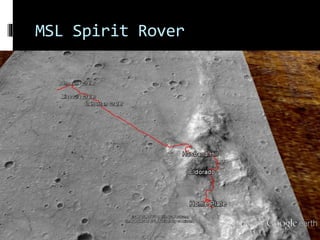
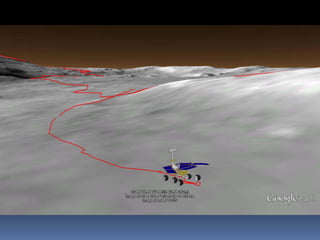
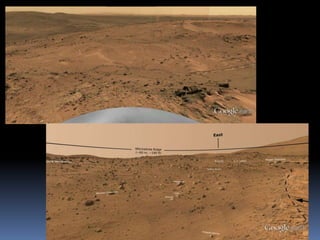
MSL Spirit Rover
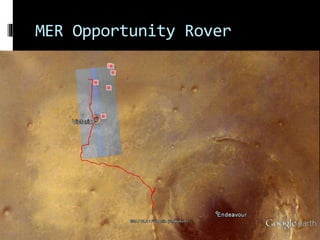
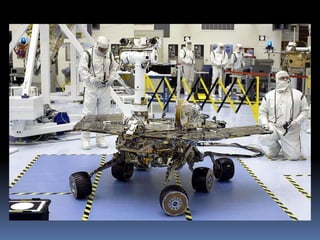
MER Opportunity Rover
Opportunity, also known as MER-B (Mars Exploration
Rover – B) or MER-1, is a robotic rover active on the planet
Mars since 2004.Launched on July 7, 2003, Opportunity
landed on Mars' Meridiani Planum on January 25, 2004 at
05:05 Ground UTC (about 13:15 Mars local time), three
weeks after its twin Spirit (MER-A), also part of NASA's
Mars Exploration Rover Mission, touched down on the
other side of the planet.With a planned 90 sol (Martian
days) duration of activity, Spirit functioned until getting
stuck in 2009 and ceased communications in 2010, while
Opportunity remains active as of 2015, having already
exceeded its operating plan by 10 years, 299 days (in Earth
time).
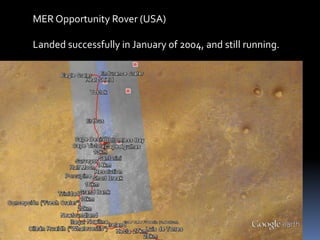
MER Opportunity Rover (USA)
Landed successfully in January of 2004, and still running.
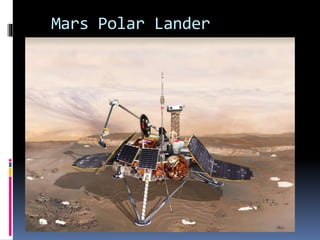
Mars Polar Lander
The Mars Polar Lander was proposed in 1994
as part of the Mars Surveyor Program that aimed to
send a spacecraft to Mars every 26 months for a
decade – MPL was set to be the first landing of the
program in December 1999. Its goal wasn’t to find
life but rather to understand the climate history of
Mars. Its landing point was an area suspected to
have at one time been wet – water is, after all, one
of the necessary building blocks for life.The mission
also supported what is still NASA’s long-term plan
of a sample return mission by identifying the types
of samples worth bringing home.
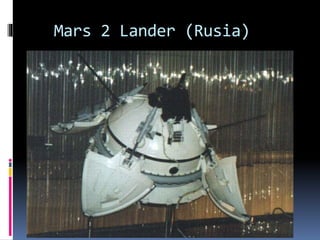
Mars 2 Lander (Rusia)
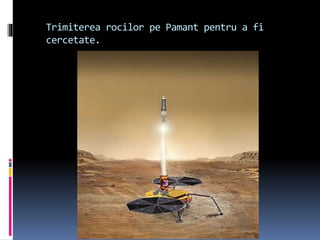
Trimiterea rocilor pe Pamant pentru a fi
cercetate.
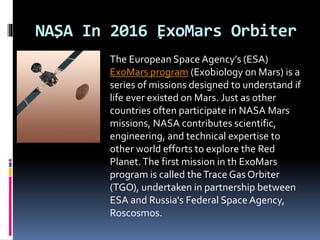
NASA In 2016 ExoMars Orbiter
The European Space Agency’s (ESA)
ExoMars program (Exobiology on Mars) is a
series of missions designed to understand if
life ever existed on Mars. Just as other
countries often participate in NASA Mars
missions, NASA contributes scientific,
engineering, and technical expertise to
other world efforts to explore the Red
Planet.The first mission in th ExoMars
program is called theTrace Gas Orbiter
(TGO), undertaken in partnership between
ESA and Russia's Federal Space Agency,
Roscosmos.
THE EXPERT TEAM IN ROBOTICS AND TECHNOLOGY

THE EXPERT TEAM IN ROBOTICS AND TECHNOLOGY

  • 1.
    ROBOTII CARE AU EXPLORATPLANETA MARTE TEODORESCU ROBERTA MAMUT ERHAN POPA ŞTEFAN MANOLE BOGDAN VELESCU BOGDAN ALI EDIS CLASA a X-a A, LICEULTEORETIC “TRAIAN”-CONSTANŢA
  • 4.
  • 6.
    Roverul Curiosity arealizat o fotografie în care apare o lumină cu origine neidentificată pe planeta Marte Scott C.Waring, administratorul site-ul UFO Sightings Daily spune: "O sursă de lumină artificială a fost văzută în această fotografie realizată de NASA, care arată că lumina este îndreptată spre cer şi provine de la sol. Acest lucru ar putea să arate că există o viaţă inteligentă subterană care utilizează lumina la fel cum o facem noi “.
  • 7.
    Craterul Gale depe planeta Marte, care este cercetat de robotul Curiosity, a adăpostit un lac în urmă cu miliarde de ani, ceea ce reprezintă o dovadă clară a faptului că planeta roşie a avut cândva un mediu umed propice vieţii microbiene.
  • 8.
    Potrivit oamenilor deștiință de la NASA, craterul Gale de pe planeta Marte, explorat de robotul american Curiosity, a adăpostit un mare lac alimentat de râuri vreme de zeci de milioane de ani. Cercetătorii au făcut această senzațională descoperire analizând rocile și diferitele straturi de sedimentare de pe Planeta Roșie. Curiosity, care a ajuns în zona ecuatorului marțian pe 6 august 2012, la opt kilometri de poalele Muntelui Sharp, efectuează foraje și analize asupra straturilor de sedimentare ale masivului. Curiosity și-a îndeplinit deja al misiunii sale, demostrând că Marte a fost propice vieții microbiene, în trecut.
  • 9.
  • 10.
    Mars Pathfinder (MESURPathfinder) is an American spacecraft that landed a base station with a roving probe on Mars in 1997. It consisted of a lander, renamed the Carl Sagan Memorial Station, and a lightweight (10.6 kg) wheeled robotic Mars rover named Sojourner.
  • 13.
  • 14.
    Beagle 2 isa British landing spacecraft that formed part of the European Space Agency's 2003 Mars Express mission. Beagle 2 is named after HMS Beagle. The spacecraft was successfully deployed from the Mars Express on 19 December 2003 and was scheduled to land on the surface of Mars on 25 December; however, no contact was received at the expected time of landing on Mars, with the ESA declaring the mission lost in February 2004, after numerous attempts to contact the spacecraft were made. The spacecraft's fate remained a mystery until it was announced in January 2015 that Beagle 2 had been located intact on the surface of Mars in a series of images from NASA's Mars Reconnaissance Orbiter HiRISE instrument.The images suggest that two of the spacecraft's four solar panels failed to deploy, blocking the spacecraft's communications antenna. Beagle 2 is the first British and first European probe to achieve a soft landing on Mars.
  • 15.
  • 18.
  • 20.
    Opportunity, also knownas MER-B (Mars Exploration Rover – B) or MER-1, is a robotic rover active on the planet Mars since 2004.Launched on July 7, 2003, Opportunity landed on Mars' Meridiani Planum on January 25, 2004 at 05:05 Ground UTC (about 13:15 Mars local time), three weeks after its twin Spirit (MER-A), also part of NASA's Mars Exploration Rover Mission, touched down on the other side of the planet.With a planned 90 sol (Martian days) duration of activity, Spirit functioned until getting stuck in 2009 and ceased communications in 2010, while Opportunity remains active as of 2015, having already exceeded its operating plan by 10 years, 299 days (in Earth time).
  • 21.
    MER Opportunity Rover(USA) Landed successfully in January of 2004, and still running.
  • 22.
  • 23.
    The Mars PolarLander was proposed in 1994 as part of the Mars Surveyor Program that aimed to send a spacecraft to Mars every 26 months for a decade – MPL was set to be the first landing of the program in December 1999. Its goal wasn’t to find life but rather to understand the climate history of Mars. Its landing point was an area suspected to have at one time been wet – water is, after all, one of the necessary building blocks for life.The mission also supported what is still NASA’s long-term plan of a sample return mission by identifying the types of samples worth bringing home.
  • 24.
  • 25.
    Trimiterea rocilor pePamant pentru a fi cercetate.
  • 26.
    NASA In 2016ExoMars Orbiter The European Space Agency’s (ESA) ExoMars program (Exobiology on Mars) is a series of missions designed to understand if life ever existed on Mars. Just as other countries often participate in NASA Mars missions, NASA contributes scientific, engineering, and technical expertise to other world efforts to explore the Red Planet.The first mission in th ExoMars program is called theTrace Gas Orbiter (TGO), undertaken in partnership between ESA and Russia's Federal Space Agency, Roscosmos.