
TETANUS
Vd Rakesh Shukla
Lecturer,
Dept of Swasthavritta
GAAC, Ahmedabad
Vd Rakesh Shukla, GAAC, Ahmedabad
INTRODUCTION
• Tetanus is an acute infectious disease.:
• Also known as lock jaw & 8.th day diseases.
• One among 6 killer diseases.
• Occurs through wound contamination.
Vd Rakesh Shukla, GAAC, Ahmedabad
DEFINITION
• Tetanus is an acute infectious diseases induced by
exotoxin of clostridium tetani & characterized by rigidity,
intermittent spasm of the voluntary muscles
&convulsions..
• Tetanus occurs when a wound becomes infected with
bacterial spores.
Vd Rakesh Shukla, GAAC, Ahmedabad
AGENT
• Cl.tetani is a gram-positive, anaerobic, spore bearing
&highly resistant organism
• Remains strictly localized to the site of multiplication
• Produce exotoxin.
1. a powerful neurotoxins- tetanospasmin-resposible for
clinical diagnosis because it causes disinhibition of
motor system leading to muscle rigidity
2. a hemolysin -tetanolysin
• Lethal dose- 0.1mg for 70 kg man.
Vd Rakesh Shukla, GAAC, Ahmedabad
PATHOLOGY
• SEQUENCE IS ;-
• Introduction of the spores
• Germination
• Elaboration of the toxins
• binding to the receptor
Vd Rakesh Shukla, GAAC, Ahmedabad
RESERVOIR OF
INFECTION
• Natural habit is soil &dust
• Also found in the intestines of many herbivorous
animals e.g. cattle, horses, goat,
• Excreted in their faeces of animals
Vd Rakesh Shukla, GAAC, Ahmedabad
HOST FACTORS
• AGE : Active age(5-40)
• SEX : Higher incidents found in males
• OCCUPATION : Agriculture workers at a special risk
because of contact with soil
• IMMUNITY : No age is immune unless protected by
previous immunization.
• Tetanus toxoids effective for several years
Vd Rakesh Shukla, GAAC, Ahmedabad
INCUBATOIN PERIOD
• Generally less than 2 weeks
• Also range from 2- 60 days
• Shorter period indicate greater risk
Vd Rakesh Shukla, GAAC, Ahmedabad
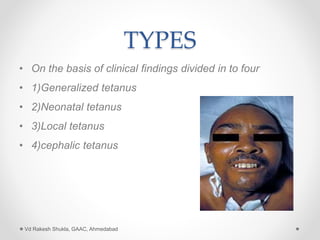
TYPES
• On the basis of clinical findings divided in to four
• 1)Generalized tetanus
• 2)Neonatal tetanus
• 3)Local tetanus
• 4)cephalic tetanus
Vd Rakesh Shukla, GAAC, Ahmedabad
SIGNS & SYMPTOMS
• Vague discomfort
• Pain around the site of injury & restlessness
• Increased tone of masseter muscle
• dysphagia
• Abdominal & trunk muscles become spastic
• With prolonged &sustained spasm leads to muscular
exhaustion, hypertension &cardiac failure.
Vd Rakesh Shukla, GAAC, Ahmedabad
• Rigidity & spasm of the back muscles result in
hypertension of spine & neck-opisthotonous
• Grinning expressions brought about by the sustained
contraction of facial muscles-Risus sardonicus
• Interval between the first symptom & the first convulsions
is called –onset period
Vd Rakesh Shukla, GAAC, Ahmedabad
GENERAL TETANUS
• Effects all skeletal muscles
• Most common &most severe
Vd Rakesh Shukla, GAAC, Ahmedabad
LOCAL TETANUS
• Rigidity & other symptoms confine to parts near the site
of injury
• It’s a mild course &ends in complete recovery
Vd Rakesh Shukla, GAAC, Ahmedabad
CEPHALIC TETANUS
• Local tetanus involves the facial muscles only
• Can be unilateral or bilateral.
Vd Rakesh Shukla, GAAC, Ahmedabad
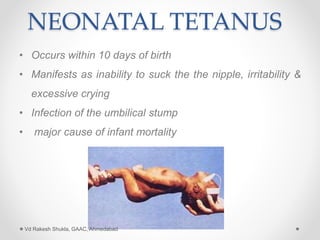
NEONATAL TETANUS
• Occurs within 10 days of birth
• Manifests as inability to suck the the nipple, irritability &
excessive crying
• Infection of the umbilical stump
• major cause of infant mortality
Vd Rakesh Shukla, GAAC, Ahmedabad
DIAGNOSIS
• Entirely on clinical findings
• Elevated leukocyte count
• Normal cerebrospinal fluids
• Electromyograms may show continuous discharge motor
units
Vd Rakesh Shukla, GAAC, Ahmedabad
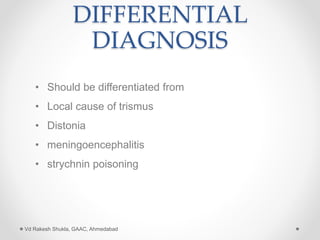
DIFFERENTIAL
DIAGNOSIS
• Should be differentiated from
• Local cause of trismus
• Distonia
• meningoencephalitis
• strychnin poisoning
Vd Rakesh Shukla, GAAC, Ahmedabad
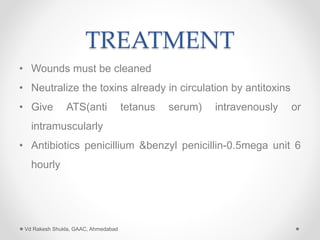
TREATMENT
• Wounds must be cleaned
• Neutralize the toxins already in circulation by antitoxins
• Give ATS(anti tetanus serum) intravenously or
intramuscularly
• Antibiotics penicillium &benzyl penicillin-0.5mega unit 6
hourly
Vd Rakesh Shukla, GAAC, Ahmedabad
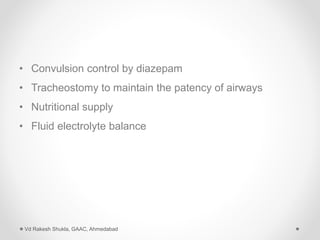
• Convulsion control by diazepam
• Tracheostomy to maintain the patency of airways
• Nutritional supply
• Fluid electrolyte balance
Vd Rakesh Shukla, GAAC, Ahmedabad
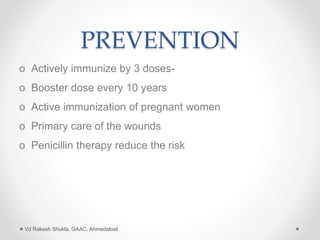
PREVENTION
o Actively immunize by 3 doses-
o Booster dose every 10 years
o Active immunization of pregnant women
o Primary care of the wounds
o Penicillin therapy reduce the risk
Vd Rakesh Shukla, GAAC, Ahmedabad
Thank you.
Follow us:
Facebook: https://www.facebook.com/SwasthavrittaGAAC
Youtube:
https://www.youtube.com/channel/UCPvrBlyheQcqwBXs1egx
zWw
SlideShare: https://www.slideshare.net/SwasthvrittaAkhandan
Vd Rakesh Shukla, GAAC, Ahmedabad

Tetanus

  • 1.
    TETANUS Vd Rakesh Shukla Lecturer, Deptof Swasthavritta GAAC, Ahmedabad Vd Rakesh Shukla, GAAC, Ahmedabad
  • 2.
    INTRODUCTION • Tetanus isan acute infectious disease.: • Also known as lock jaw & 8.th day diseases. • One among 6 killer diseases. • Occurs through wound contamination. Vd Rakesh Shukla, GAAC, Ahmedabad
  • 3.
    DEFINITION • Tetanus isan acute infectious diseases induced by exotoxin of clostridium tetani & characterized by rigidity, intermittent spasm of the voluntary muscles &convulsions.. • Tetanus occurs when a wound becomes infected with bacterial spores. Vd Rakesh Shukla, GAAC, Ahmedabad
  • 4.
    Vd Rakesh Shukla,GAAC, Ahmedabad
  • 5.
    AGENT • Cl.tetani isa gram-positive, anaerobic, spore bearing &highly resistant organism • Remains strictly localized to the site of multiplication • Produce exotoxin. 1. a powerful neurotoxins- tetanospasmin-resposible for clinical diagnosis because it causes disinhibition of motor system leading to muscle rigidity 2. a hemolysin -tetanolysin • Lethal dose- 0.1mg for 70 kg man. Vd Rakesh Shukla, GAAC, Ahmedabad
  • 6.
    PATHOLOGY • SEQUENCE IS;- • Introduction of the spores • Germination • Elaboration of the toxins • binding to the receptor Vd Rakesh Shukla, GAAC, Ahmedabad
  • 7.
    RESERVOIR OF INFECTION • Naturalhabit is soil &dust • Also found in the intestines of many herbivorous animals e.g. cattle, horses, goat, • Excreted in their faeces of animals Vd Rakesh Shukla, GAAC, Ahmedabad
  • 8.
    HOST FACTORS • AGE: Active age(5-40) • SEX : Higher incidents found in males • OCCUPATION : Agriculture workers at a special risk because of contact with soil • IMMUNITY : No age is immune unless protected by previous immunization. • Tetanus toxoids effective for several years Vd Rakesh Shukla, GAAC, Ahmedabad
  • 9.
    INCUBATOIN PERIOD • Generallyless than 2 weeks • Also range from 2- 60 days • Shorter period indicate greater risk Vd Rakesh Shukla, GAAC, Ahmedabad
  • 10.
    TYPES • On thebasis of clinical findings divided in to four • 1)Generalized tetanus • 2)Neonatal tetanus • 3)Local tetanus • 4)cephalic tetanus Vd Rakesh Shukla, GAAC, Ahmedabad
  • 11.
    SIGNS & SYMPTOMS •Vague discomfort • Pain around the site of injury & restlessness • Increased tone of masseter muscle • dysphagia • Abdominal & trunk muscles become spastic • With prolonged &sustained spasm leads to muscular exhaustion, hypertension &cardiac failure. Vd Rakesh Shukla, GAAC, Ahmedabad
  • 12.
    • Rigidity &spasm of the back muscles result in hypertension of spine & neck-opisthotonous • Grinning expressions brought about by the sustained contraction of facial muscles-Risus sardonicus • Interval between the first symptom & the first convulsions is called –onset period Vd Rakesh Shukla, GAAC, Ahmedabad
  • 13.
    GENERAL TETANUS • Effectsall skeletal muscles • Most common &most severe Vd Rakesh Shukla, GAAC, Ahmedabad
  • 14.
    LOCAL TETANUS • Rigidity& other symptoms confine to parts near the site of injury • It’s a mild course &ends in complete recovery Vd Rakesh Shukla, GAAC, Ahmedabad
  • 15.
    CEPHALIC TETANUS • Localtetanus involves the facial muscles only • Can be unilateral or bilateral. Vd Rakesh Shukla, GAAC, Ahmedabad
  • 16.
    NEONATAL TETANUS • Occurswithin 10 days of birth • Manifests as inability to suck the the nipple, irritability & excessive crying • Infection of the umbilical stump • major cause of infant mortality Vd Rakesh Shukla, GAAC, Ahmedabad
  • 17.
    DIAGNOSIS • Entirely onclinical findings • Elevated leukocyte count • Normal cerebrospinal fluids • Electromyograms may show continuous discharge motor units Vd Rakesh Shukla, GAAC, Ahmedabad
  • 18.
    DIFFERENTIAL DIAGNOSIS • Should bedifferentiated from • Local cause of trismus • Distonia • meningoencephalitis • strychnin poisoning Vd Rakesh Shukla, GAAC, Ahmedabad
  • 19.
    TREATMENT • Wounds mustbe cleaned • Neutralize the toxins already in circulation by antitoxins • Give ATS(anti tetanus serum) intravenously or intramuscularly • Antibiotics penicillium &benzyl penicillin-0.5mega unit 6 hourly Vd Rakesh Shukla, GAAC, Ahmedabad
  • 20.
    • Convulsion controlby diazepam • Tracheostomy to maintain the patency of airways • Nutritional supply • Fluid electrolyte balance Vd Rakesh Shukla, GAAC, Ahmedabad
  • 21.
    PREVENTION o Actively immunizeby 3 doses- o Booster dose every 10 years o Active immunization of pregnant women o Primary care of the wounds o Penicillin therapy reduce the risk Vd Rakesh Shukla, GAAC, Ahmedabad
  • 22.
    Thank you. Follow us: Facebook:https://www.facebook.com/SwasthavrittaGAAC Youtube: https://www.youtube.com/channel/UCPvrBlyheQcqwBXs1egx zWw SlideShare: https://www.slideshare.net/SwasthvrittaAkhandan Vd Rakesh Shukla, GAAC, Ahmedabad