WELCOME TO THEWORLD OF
MICROBIAL DISEASES: TETANUS
Hii friends, I am
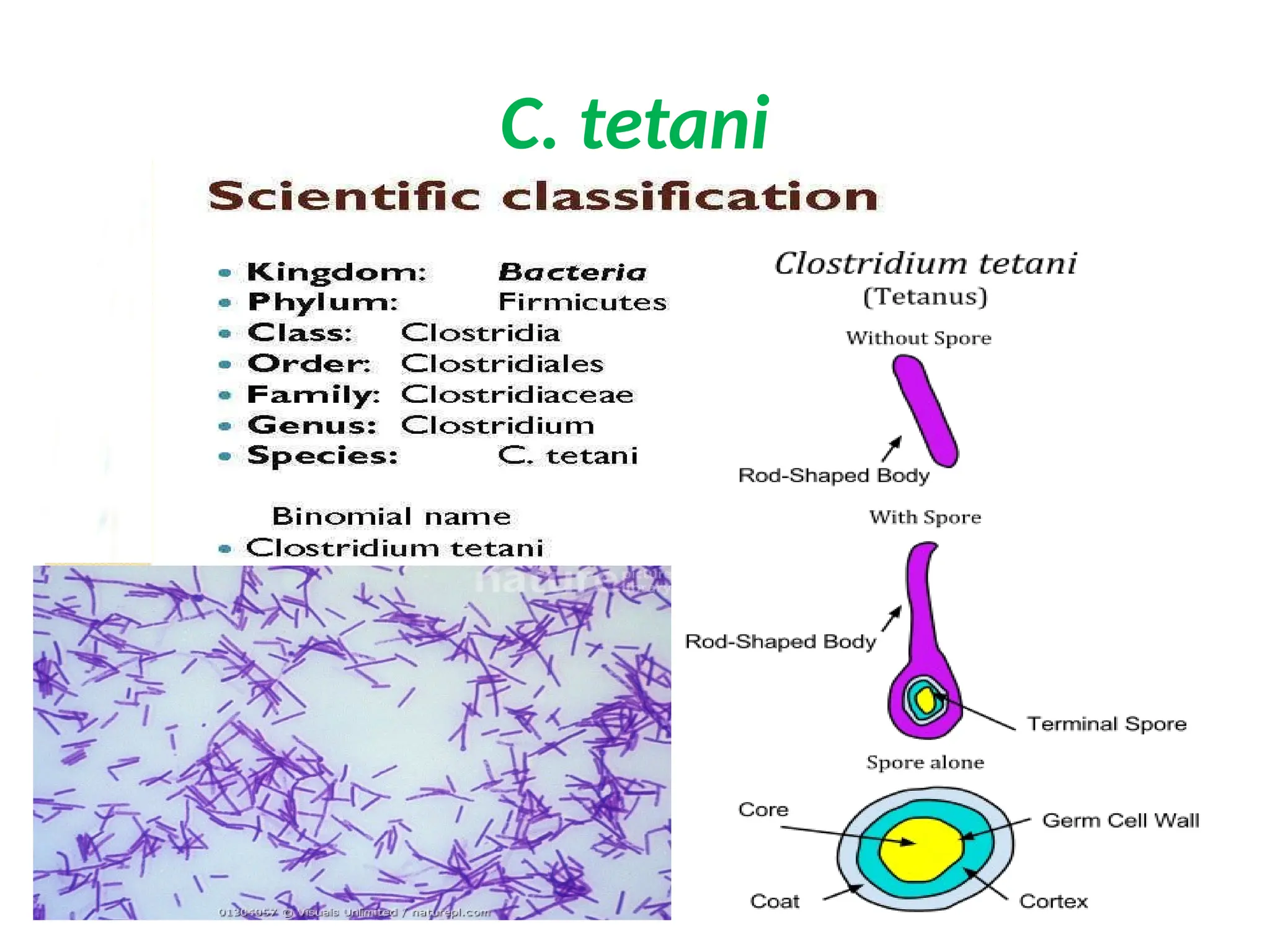
Clostridium tetani
2.
TETANUS
Tetanus is abacterial infection also known as lockjaw. It causes stiffness in
various muscles present in different parts of the body. It affects the nervous
system. The first affected parts are mostly jaw and neck but it may soon cause
muscle contractions in other parts of the body.
• Tetanus disease is found in all parts of the world, but it more occurs in the
location having hot and wet climates where the soil contains a lot of
organic matter.
3.
ETIOLOGY
• Tetanus isa fatal disease of the nervous system caused by
nerve toxins released by the bacterium Clostridium tetani.
• The bacterium is found in the soil and in the faeces and
digestive tract of animals.
• Clostridium tetani is a rod-shaped, Gram-positive bacterium,
typically up to 0.5 μm wide and 2.5 μm long. It is motile by
way of various flagella that surround its body. C. tetani
cannot grow in the presence of oxygen. It grows best at
temperatures ranging from 33 to 37°C.
PROCESS OF PATHOGENICITY
•C. tetani enters the body through a minor cut or wound when a person comes
in contact with the contaminated matter.
• In the presence of anaerobic conditions, the spores germinate and produce
toxins(tetanospasmin).
• Toxins disseminated via blood and lymphatics.
• Toxins act at CNS sites including peripheral motor end plates, spinal cord, and
brain ,and in the sympathetic nervous system.
• The toxin interferes with the release of inhibitor neurotransmitter , leading to
muscle contraction and spasm.
6.
TRANSMISSION
• Tetanus isspread by the direct transfer of C. tetani spores from soil and
excreta of animals and humans to wounds and cuts. It is not transmitted
from person to person.
• Contaminated puncture wounds, compound fractures, burns, frostbites,
ulcers, gangrene, unclean deliveries and unhygienic cord care practices are
risk factors for tetanus in unvaccinated or partly vaccinated populations.
• The incubation period for neonatal tetanus (age at first symptom) is
between the first 3–14 days of life, and is most common between days 6–
8 days.
7.
SYMPTOMS
• Tetanus oftenstarts in the jaw or better known as lockjaw. The spasm
can cause stiffness in several muscles of various organs, e.g. facial
muscles, neck, back, abdomen, etc. It can lead to breathing
complications if muscles taking part in the breathing process are affected
by spasm.
• Some of the common symptoms are
• Fever
• Drooling
• Irritability
• Rapid heart rate
• Excessive Sweating
• High blood pressure
• Swallowing difficulty
• Hands or feet spasms
• Uncontrolled urination or defecation
8.
TREATMENT
Treatment for tetanusdepends on the severity of the symptoms. However, it is
typically treated with a variety of therapies and medications, such as:
• Cleaning the wound
• Muscle Relaxers to control muscle spasms
• Taking antibiotics like penicillin, chloramphenicol, erythromycin, tetracyclin to
kill the bacteria
• Tetanus Immune Globulin (TIG) to neutralize the toxins
• Tetanus vaccine, also known as tetanus toxoid(TT), is a toxoid vaccine used to
prevent tetanus.
9.
PREVENTION
• Good WoundCare
• Vaccination and good wound care are important to help prevent tetanus infection.
Doctors can also use a medicine to help prevent tetanus in cases where someone is
seriously hurt and doesn’t have protection from tetanus vaccines.
• Don’t delay first aid of even minor, non-infected wounds like blisters, scrapes, or any
break in the skin.
• Wash hands often with soap and water or use an alcohol-based hand rub if washing
is not possible.
• Being up to date with your tetanus vaccine is the best tool to prevent tetanus.
Protection from vaccines, as well as a prior infection, do not last a lifetime. This
means that if you had tetanus or got the vaccine before, you still need to get the
vaccine regularly to keep a high level of protection against this serious disease.